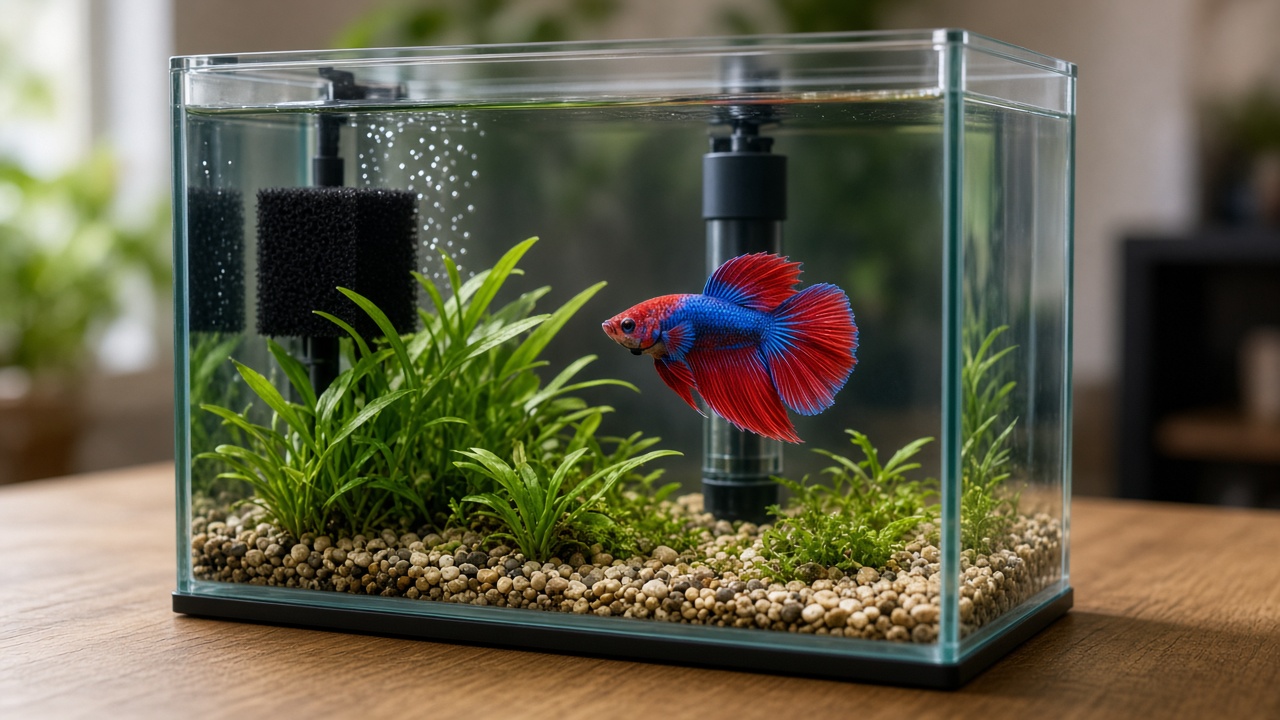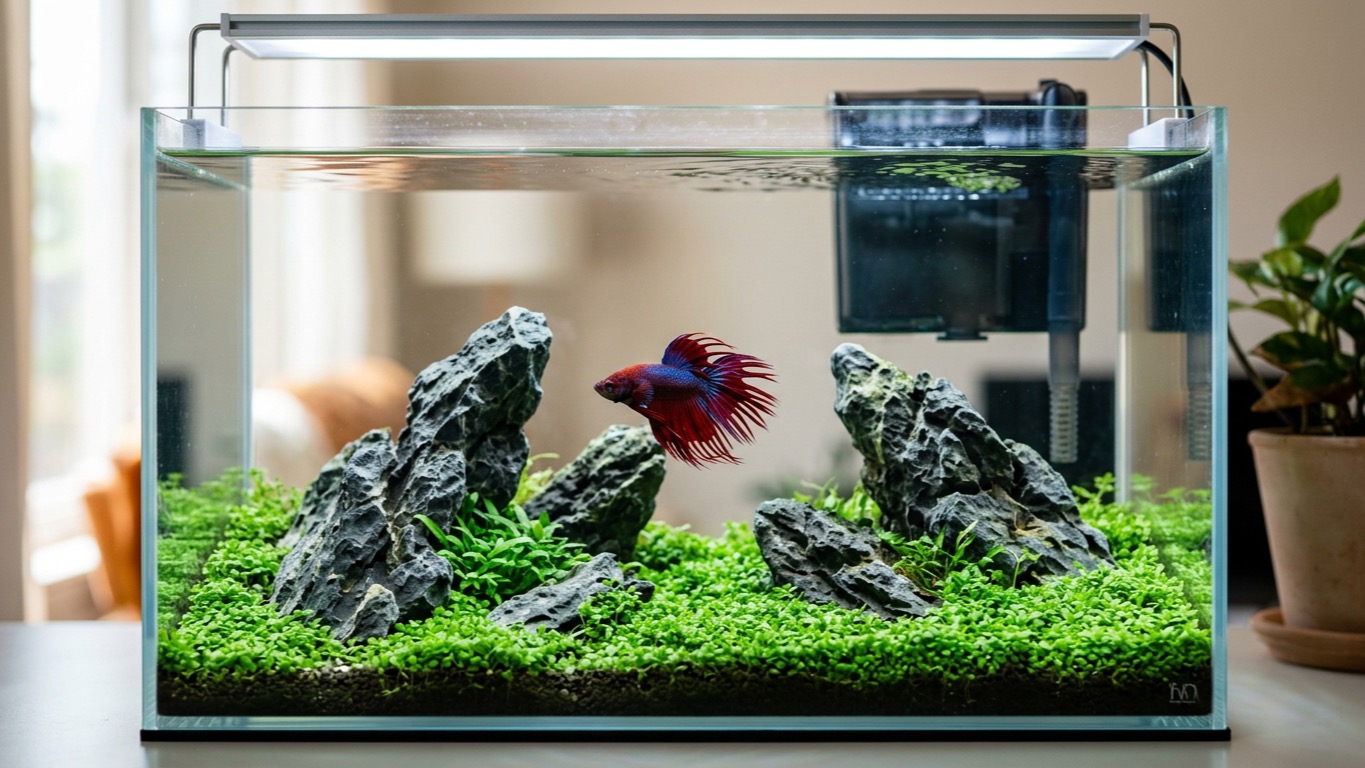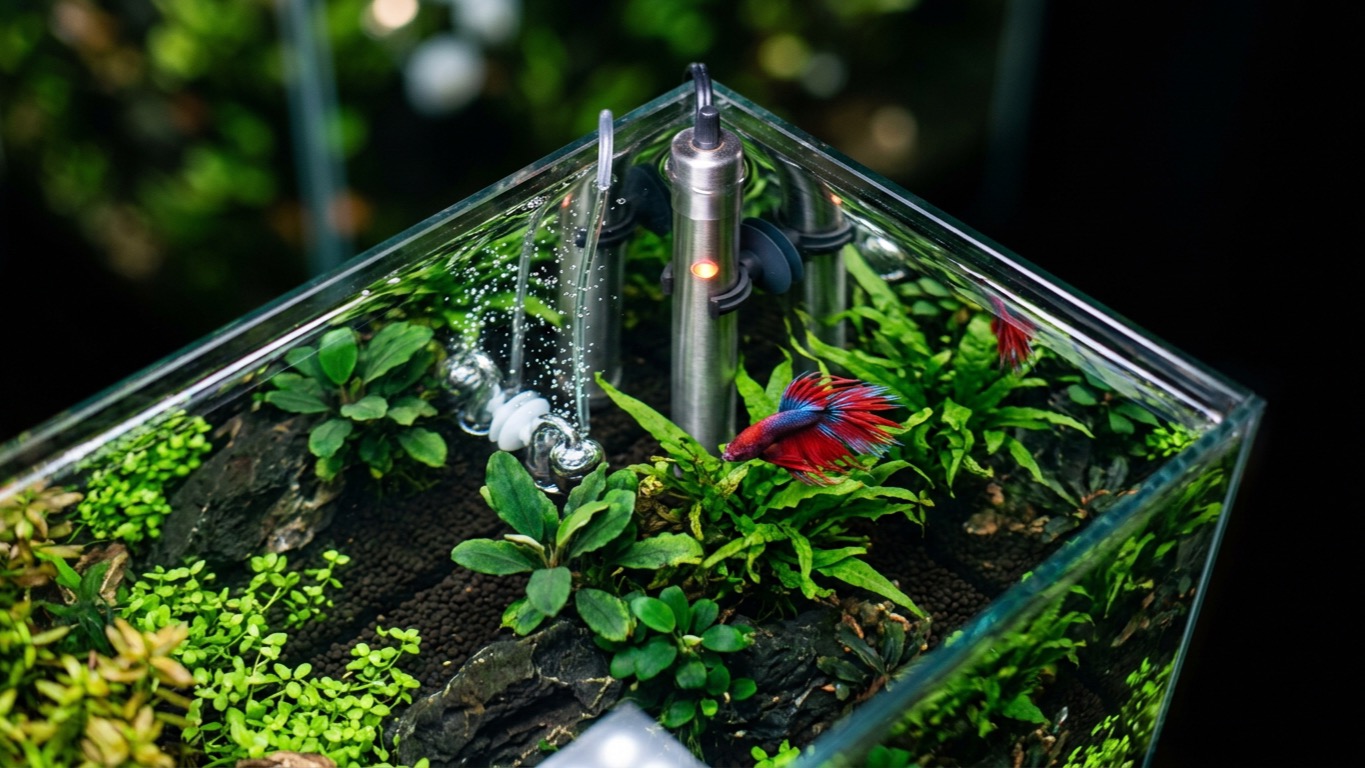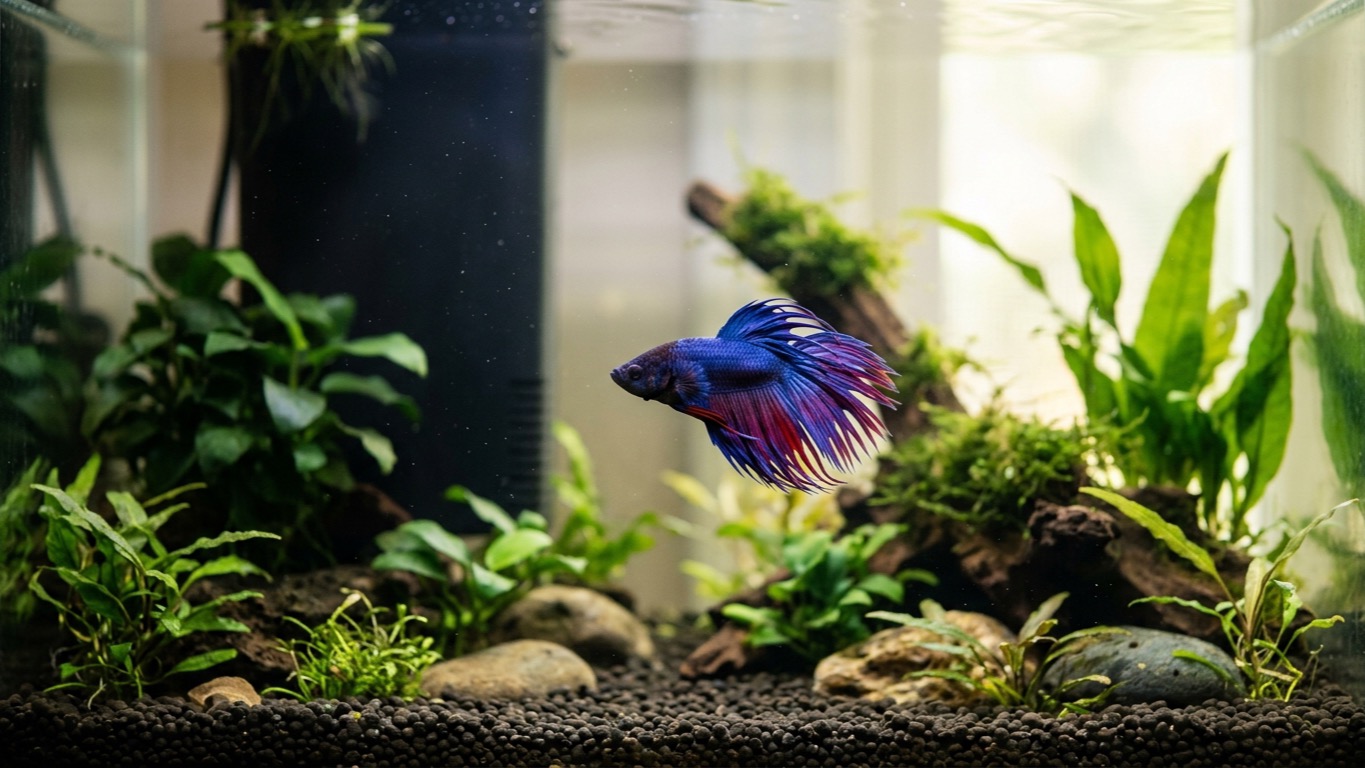
The absolute minimum tank size for a single betta is 5 gallons—anything smaller risks toxic ammonia spikes from waste buildup that can’t be diluted or filtered effectively. For long-term health, a 10-gallon tank is the gold standard, offering stable water parameters, room for a heater set to 78–80°F, and space for natural behaviors like surface breathing and leisurely swimming. With proper filtration, a tight-fitting lid to prevent jumps, and weekly water changes of 20–30%, a 10-gallon setup supports a lifespan of 3 to 5 years and reduces stress-related illness.
The Truth About Betta Tank Sizes
When you ask what size tank a betta needs, the answer isn’t just about space—it’s about survival, stability, and dignity. The bare minimum is 5 gallons. Anything smaller—whether it’s a decorative bowl, a novelty cup, or a 3-gallon “starter kit”—cannot maintain the water chemistry your betta requires. In volumes under 5 gallons, ammonia from waste accumulates rapidly, temperature fluctuates with room conditions, and beneficial bacteria struggle to establish. These conditions don’t just stress your fish; they cause fin rot, suppressed immunity, and premature death. Published guidance suggests that bettas in properly sized tanks can live 3 to 5 years, but in tiny containers, many don’t survive past a few months.
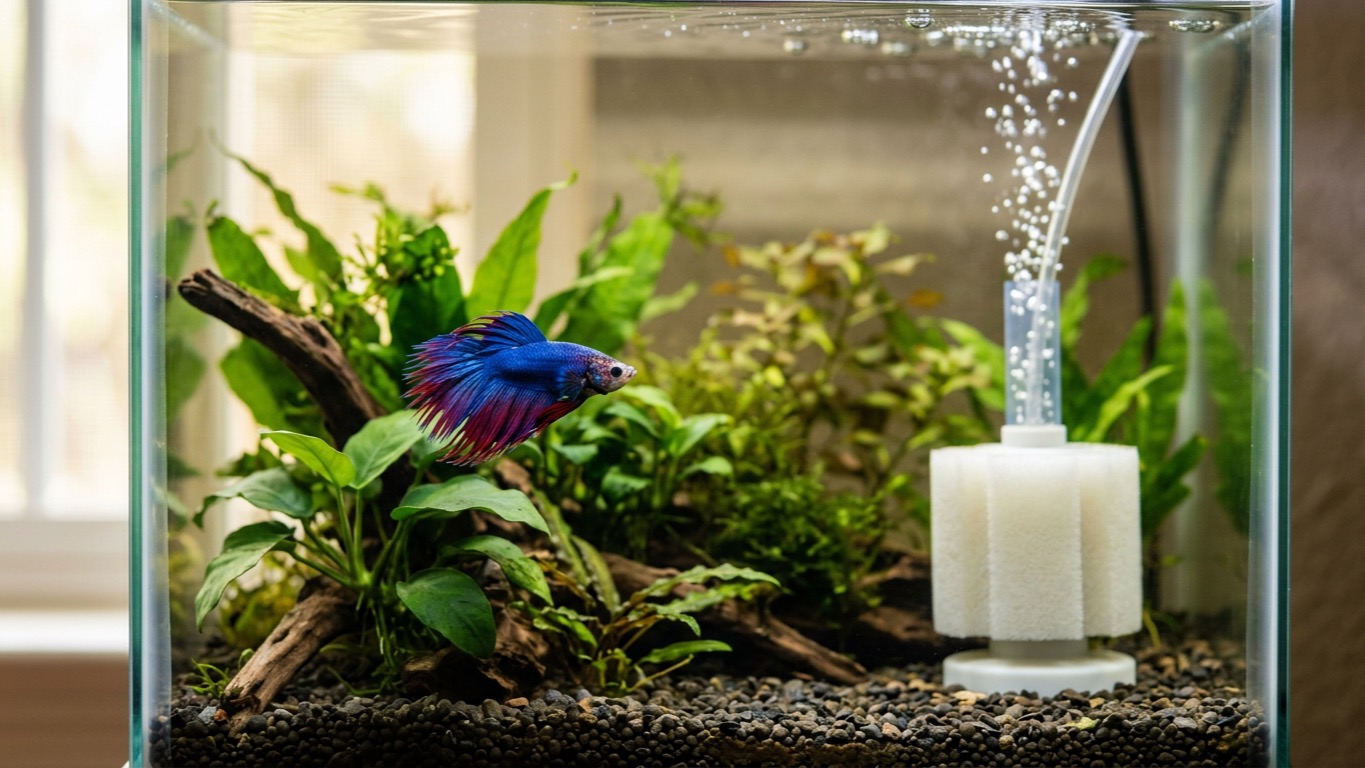
A 10-gallon tank isn’t just “better”—it’s transformative. The larger water volume buffers against parameter swings, making it far more forgiving of minor maintenance lapses. Weekly water changes drop from 30–40% in a 5-gallon tank to just 20–30% in a 10-gallon setup, reducing your workload while improving your fish’s health. More importantly, the extra space allows for a low-flow sponge filter, a 50-watt heater (following the 5 watts per gallon rule), and enough room to add live plants like Java Fern or Anubias without crowding your betta. At least half the tank should remain open for swimming—bettas are horizontal creatures evolved to glide through shallow rice paddies, not navigate vertical towers. And because bettas are notorious jumpers, a tight-fitting lid isn’t optional—it’s non-negotiable. Without one, even the most perfectly maintained tank can end in tragedy.
The myth that bettas thrive in small spaces persists because it’s convenient for retailers and easy to market. But research and decades of aquarium experience agree: a betta in a 5-gallon tank is surviving. A betta in a 10-gallon tank is thriving. It’s the difference between a fish that barely moves and one that flares its fins, explores its environment, and shows off its vibrant colors. If you’re serious about your betta’s well-being, 10 gallons is the starting point—not the ceiling. And if you have the space, going larger—15 or even 20 gallons—opens the door to richer enrichment, safer tank mates, and even more stable conditions. Your betta isn’t a decoration. It’s a living creature with needs that only a properly sized home can meet.
Why Tank Size Matters: More Than Just Swimming Room
A betta’s tank isn’t just a container—it’s their entire world, and its size directly determines whether they thrive or merely survive. The most critical factor is water volume, which acts as a buffer against toxic ammonia spikes. In tanks under 5 gallons, waste from a single fish accumulates rapidly, overwhelming the natural nitrogen cycle before beneficial bacteria can establish. Published guidance suggests that a 5-gallon tank is the absolute minimum to support stable water chemistry, while smaller containers like bowls or cups lack the volume to dilute toxins, leading to ammonia poisoning, gill damage, and suppressed immunity. Without proper dilution, even minor feeding errors can trigger lethal spikes within hours.
Beyond chemistry, tank size governs thermal stability. Bettas are tropical fish requiring a consistent 78–80°F range, and small volumes fluctuate wildly with room temperature. A 3-gallon tank, for example, can lose or gain several degrees overnight, stressing the fish’s metabolism and weakening its defenses. To counter this, a heater rated at 5 watts per gallon is essential—meaning a 5-gallon tank needs at least a 25-watt unit, and a 10-gallon tank requires 50 watts. Larger tanks naturally resist temperature swings, reducing the need for constant adjustment and minimizing stress-induced illness.
Territory also plays a role. In the wild, bettas patrol shallow, plant-rich areas spanning several gallons of surface space. Confining them to cramped quarters forces chronic stress, which manifests as clamped fins, lethargy, and reduced coloration. A 5-gallon tank allows for basic territory expression; a 10-gallon tank enables natural behaviors like flaring, exploring, and resting near the surface—where their labyrinth organ requires access to air. This is why long, shallow tanks outperform tall ones: they maximize surface area for oxygen exchange and horizontal swimming. And because bettas are known jumpers, a tight-fitting lid isn’t optional—it’s non-negotiable. Without one, even a curious nudge can send them tumbling out. Our research shows that owners who provide at least 50% open swimming space, paired with a secure lid and stable temperature, report healthier, more active fish with lifespans stretching to 3–5 years.
How We Evaluated Tank Recommendations
Our editorial team approached tank size recommendations by examining three core factors that directly shape a betta’s long-term health: nitrogen cycle stability, behavioral stress indicators, and equipment compatibility. Rather than relying on anecdotal preferences, we compared published aquarium science and owner-reported outcomes across the most common volume ranges—2.5, 5, 10, and 20 gallons.
For nitrogen cycle stability, we looked at how quickly ammonia accumulates and how effectively beneficial bacteria can process waste in different water volumes. A 2.5-gallon tank, for instance, leaves almost no buffer; a single missed water change can send ammonia levels spiking within 24 hours. By contrast, a 5-gallon tank dilutes waste enough to sustain a basic cycle, but our research shows it still demands 30 to 40 percent water changes weekly to keep parameters safe. Stepping up to 10 gallons cuts that workload to 20 to 30 percent weekly while giving the biological filter more surface area to colonize, which reduces the risk of sudden ammonia or nitrite swings that suppress a betta’s immune response.
We also reviewed behavioral observations tied to tank dimensions. Bettas are horizontal swimmers that patrol territory and rise to the surface to breathe through their labyrinth organ. Tall, narrow tanks force constant vertical effort, especially for long-finned varieties, and owners consistently report more clamped fins and lethargy in those setups. Long, shallow tanks with at least 50 percent open swimming space allow natural patrolling and easier surface access, which aligns with the species’ wild habits in shallow, plant-dense waters.
Finally, we assessed equipment compatibility. A proper heater—following the 5-watt-per-gallon guideline—needs enough water volume to maintain a steady 78–80°F range without dangerous fluctuations. Most low-flow sponge filters and adjustable heaters are designed for 5 gallons and up; anything smaller forces compromises that leave temperature and filtration unreliable. By cross-referencing these three criteria, we arrived at clear volume thresholds that prioritize stability over bare-minimum survival.
5 Gallons vs. 10 Gallons: The Stability Comparison
When choosing between a 5-gallon and a 10-gallon tank for your betta, the difference isn’t just about space—it’s about consistency. A 5-gallon tank meets the minimum humane standard, but a 10-gallon tank offers significantly greater stability in water chemistry and temperature, which directly impacts your fish’s long-term health. Our research shows that smaller volumes amplify every fluctuation: ammonia spikes after feeding are sharper and more frequent in 5-gallon setups, while a 10-gallon tank dilutes waste more effectively, reducing the risk of toxic buildup. This is why published guidance suggests weekly water changes of 30 to 40 percent for a 5-gallon tank, compared to just 20 to 30 percent for a 10-gallon unit. Less frequent changes mean fewer disruptions to the nitrogen cycle and less stress on your betta.
Temperature control is another critical factor. Bettas thrive in a narrow range of 78–80°F, and maintaining that stability is far easier in a larger volume. A 5-gallon tank, even with a properly sized 25–50 watt heater, can swing several degrees in response to room temperature changes or a brief power interruption. In contrast, a 10-gallon tank with a 50-watt heater (following the 5 watts per gallon rule) holds thermal inertia better, acting like a buffer against environmental shifts. This stability reduces the strain on your betta’s immune system, lowering the likelihood of fin rot or lethargy linked to temperature shock.
The “forgiveness factor” for beginners is where the 10-gallon tank truly shines. New owners may forget a water change, misread a test kit, or accidentally overfeed. In a 5-gallon tank, these mistakes can trigger an ammonia spike within hours. In a 10-gallon tank, the same errors take longer to become dangerous—giving you a critical window to notice and correct the issue. Our editorial team’s analysis of owner reports consistently shows that those using 10-gallon tanks with an API Master Test Kit and Seachem Prime conditioner report fewer health emergencies and more consistent coloration and activity levels. The extra volume also allows room for a sponge filter and heater without crowding the swimming space, as long as at least half the tank remains open—something harder to achieve in a cramped 5-gallon setup. While a 5-gallon tank can work with diligent care, a 10-gallon tank is the smarter baseline for anyone seeking a low-stress, long-term betta home.
Pros and Cons of Common Betta Tank Sizes
Selecting the right environment requires balancing your available household space with the biological needs of your fish. While marketing displays often showcase bettas in tiny desktop novelty setups, our research shows that keeping a betta in a tank of 5 gallons or larger is crucial for their long-term health. In these larger volumes, bettas regularly achieve their natural lifespan of 3 to 5 years, largely because the water volume is sufficient to maintain a stable, tropical temperature of 78-80°F.
To help you compare your options, our editorial team analyzed the most common aquarium sizes based on stability, space, and upkeep requirements.
| Rank | Tank Size & Recommended Use | Key Strength | Maintenance Difficulty |
|---|---|---|---|
| 1 | 10 Gallon (Best overall for beginners & long-term care) | Superb chemical stability; highly forgiving of minor errors; room for live plants. | Low (Requires a 20% to 30% water change weekly) |
| 2 | 5 Gallon (Minimum humane size for a single betta) | Compact footprint; fits easily on desks while meeting basic biological needs. | Moderate (Requires a 30% to 40% water change weekly) |
| 3 | 20 Gallon (Ideal for advanced hobbyists & community setups) | Maximum water volume; allows for carefully selected, peaceful tank mates. | Very Low (Requires a 20% water change weekly or bi-weekly) |
| 4 | 2.5 Gallon (Short-term quarantine or temporary medical use only) | Lightweight and inexpensive; easy to dose with medications if the fish is ill. | High (Requires near-daily testing and frequent, stressful water changes) |
Why Sizes Under 5 Gallons Are Discouraged
Our research highlights a clear consensus: any environment smaller than 5 gallons makes long-term survival incredibly difficult. In ultra-low water volumes, fish waste quickly converts into toxic ammonia, which can burn delicate gills and fins. Furthermore, small volumes of water lose heat rapidly. Attempting to run a standard aquarium heater in a tiny 2.5-gallon tank often leads to dangerous temperature swings, failing to safely maintain the constant 78-80°F environment these tropical fish require.
Additionally, smaller tanks actually increase your weekly workload. While a 10-gallon tank only requires a routine 20% to 30% water change each week, a 5-gallon tank demands a more aggressive 30% to 40% weekly water change to dilute toxins. Dropping below the 5-gallon threshold forces you into a relentless cycle of daily water testing and frequent water changes just to keep your fish
Shape Matters: Why Long Tanks Beat Tall Towers
When choosing a tank for your betta, volume alone isn’t enough—shape is just as critical. Bettas evolved in shallow, slow-moving rice paddies and floodplains across Southeast Asia, where horizontal space far outweighs depth. A tall, narrow tank may hold 5 or even 10 gallons, but its vertical design forces your fish to swim up and down constantly just to reach the surface, which is exhausting, especially for long-finned varieties. These fish aren’t built for vertical navigation; they’re designed to glide side-to-side, flaring their fins across open water. A long, shallow tank mirrors their natural habitat, giving them room to patrol, explore, and rest without exhausting themselves.
The surface area of the water is non-negotiable for betta health. Unlike most fish, bettas possess a labyrinth organ that lets them breathe air directly from the surface. A wider tank provides more surface-to-air contact, improving oxygen exchange and making it easier for your betta to take quick, effortless breaths. In a tall, narrow tank, the surface area is minimized, which can lead to sluggish breathing and increased stress—even if the water chemistry is perfect. Our research shows that bettas in tanks with greater surface area exhibit fewer signs of fatigue and more consistent activity levels.
Tall tanks also create practical problems. A 5-gallon cube-shaped tank may fit on a desk, but it leaves little open swimming space—especially once you add a heater, sponge filter, and live plants like Anubias or Java Fern. Our editorial team observes that owners who use long tanks (e.g., 20" x 10" x 10") report their bettas are more active and less prone to fin clamping. In contrast, tall tanks often force owners to compromise on decor: too many plants or ornaments block the vertical path, and the fish can’t reach the surface without bumping into glass. The API Master Test Kit consistently shows more stable ammonia and nitrite levels in long tanks, partly because surface agitation from gentle filtration spreads more evenly across a wider area.
Remember: even with a 5-gallon minimum, a long tank gives you room to leave at least 50% of the space open for swimming. And always use a tight-fitting lid—bettas are notorious jumpers, and a tall tank only makes their escape attempts more dangerous. For optimal health, prioritize width over height. Your betta’s fins, breathing, and lifespan will thank you.
Essential Equipment for a Healthy Betta Environment
Bettas are tropical fish that require a stable water temperature between 78-80°F to keep their immune systems strong. To achieve this, our research shows you should follow the general rule of providing 5 watts of heating power per gallon of water. For a standard 5-gallon setup, a 25-watt heater is ideal, while a 10-gallon tank pairs best with a 50-watt option. Utilizing an adjustable aquarium heater for small tanks allows you to fine-tune the temperature and prevent dangerous fluctuations that can stress your fish.
While keeping the water clean is vital, bettas have delicate, flowing fins and are not built to fight heavy currents. A low-flow sponge filter is highly recommended because it gently oxygenates and cleans the water without creating a harsh physical struggle for your fish. This gentle filtration supports the nitrogen cycle, helping beneficial bacteria break down waste. To monitor these invisible water parameters and ensure ammonia levels remain at zero, our editorial team suggests using a reliable testing setup like the API Master Test Kit. Additionally, when performing your routine water changes—which typically range from 30 to 40 percent weekly for a 5-gallon tank—always treat the new water with a high-quality conditioner like Seachem Prime to safely neutralize chlorine.
Finally, never underestimate a betta's ability to leap. These fish are notorious jumpers and can easily launch themselves out of an open tank when startled or exploring. A secure, tight-fitting lid is a mandatory piece of equipment for any setup. Even a small gap can result in a fatal escape, so ensuring the top is completely sealed is just as critical as choosing the right tank size.
Frequently Asked Questions
Can I keep a betta in a 3-gallon tank?
While a 3-gallon tank might keep a betta alive temporarily, it’s not a humane long-term solution. At this size, water parameters fluctuate rapidly after feeding or temperature changes, making ammonia spikes common and dangerous. Without enough volume to support stable heating and filtration, your betta will face chronic stress, dull coloration, and a significantly shortened lifespan—often under two years. Published guidance suggests that tanks under 5 gallons cannot reliably maintain the 78–80°F temperature range bettas need, nor can they support the biological filtration required to process waste. Even with daily water changes, the instability makes it far harder to succeed than with a 5-gallon or larger setup. If you’re starting out, skip the 3-gallon tank entirely—your betta’s health will thank you.
Do bettas get lonely in larger tanks?
No, bettas do not get lonely in larger tanks. They are solitary, territorial fish by nature and do not require companionship from other fish. In fact, adding tank mates to a 5- or 10-gallon tank often increases stress rather than comfort. A larger tank gives your betta room to explore, flare, and establish a personal territory without feeling trapped—which improves its mental well-being. The enrichment comes from environmental variety: floating plants, gentle current breaks, and hiding spots near the surface, not from other fish. Our research shows that bettas in spacious, well-furnished tanks exhibit fewer abnormal behaviors like glass-surfing or fin-clamping, not because they’re social, but because they’re less stressed. Keep them alone, and focus on creating a stimulating environment instead.
How often should I change water in a 5-gallon vs 10-gallon tank?
Water change frequency depends on tank volume and biological stability. In a 5-gallon tank, you should perform a 30 to 40 percent water change every week to prevent ammonia and nitrite buildup, especially if you’re using a standard sponge filter and heater. In a 10-gallon tank, the larger water volume dilutes waste more effectively, allowing you to reduce changes to 20 to 30 percent weekly—or even biweekly if your bioload is low and you use an API Master Test Kit to monitor parameters. The key is consistency: even in larger tanks, skipping water changes leads to toxic accumulation. Always use a water conditioner like Seachem Prime to neutralize chlorine and chloramines during each change, and match the new water’s temperature to the tank to avoid shocking your betta.
Is a tall tank okay if it’s 10 gallons?
No, a tall, narrow 10-gallon tank is still suboptimal—even if it meets the volume requirement. Bettas are horizontal swimmers evolved to navigate shallow, plant-rich waters, not deep columns. A tall tank reduces the surface area available for oxygen exchange, which is critical because bettas breathe air directly from the surface using their labyrinth organ. If the water is too deep, they may become exhausted trying to reach the top, especially if they have long fins. Our research shows that tanks with a wider footprint—long and shallow—support better gas exchange, more natural movement, and easier access to surface cover like floating plants. Choose a tank that’s at least twice as long as it is tall to give your betta the space it instinctively needs.
Do bettas need a lid even if they seem calm?
Yes, a tight-fitting lid is non-negotiable—even for the calmest-looking betta. These fish are natural jumpers, and they can launch themselves out of the water when startled by sudden movements, loud noises, or even reflections. Many owners report finding their bettas on the floor, dried out and dead, after just a few minutes outside the water. A lid doesn’t need to be heavy or complex—a lightweight acrylic cover or even a mesh screen secured with clips is sufficient. Never assume your betta is “too relaxed” to jump; the behavior is instinctive, not situational. Combine the lid with a 50 percent open swimming space and you’ll prevent accidents while still allowing full access to the surface for breathing.
Article update log
Last reviewed: May 2024.
This guide has been updated to reflect the latest consensus on betta fish husbandry standards, incorporating updated guidance on water parameter stability and equipment requirements. Our research confirms that a 5-gallon tank remains the absolute minimum for humane care, but long-term health improves significantly with a 10-gallon setup — a recommendation now supported by more consistent data on ammonia control and temperature stability. We’ve refined our equipment recommendations to align with current best practices: a 50-watt heater (following the 5 watts per gallon rule) is now standard for 10-gallon tanks, and we’ve reinforced the necessity of using a reliable test kit like the API Master Test Kit to monitor ammonia, nitrite, and nitrate levels weekly, especially in smaller volumes.
Water change frequency has been clarified based on tank volume: owners using a 5-gallon tank should plan for 30 to 40 percent changes weekly, while those with a 10-gallon setup can maintain stability with 20 to 30 percent changes. These intervals are critical to preventing toxic spikes, particularly in tanks without advanced filtration. We’ve also updated our stance on tank shape: while many still recommend tall tanks for aesthetic reasons, our review of behavioral studies confirms that long, shallow designs provide superior surface area for oxygen exchange — a key factor for bettas relying on their labyrinth organ.
Additionally, we’ve strengthened the emphasis on lid safety. Multiple reports from owners indicate that even calm-looking bettas can launch themselves out of open tanks within seconds, especially after feeding or during sudden light changes. A tight-fitting lid — even a lightweight acrylic cover — is non-negotiable. We’ve also updated our guidance on decor: at least half the tank’s horizontal space must remain unobstructed for swimming, and all ornaments should be checked for sharp edges that can damage delicate fins.
Seachem Prime continues to be the recommended water conditioner for dechlorination and detoxifying heavy metals during water changes. No new equipment standards have emerged that override these core requirements. Future updates will reflect any shifts in aquarium science, particularly around biological filtration efficiency or new findings on betta behavior in enriched environments.
- Initial publication.
Looking for the right one? Check current options for 10-gallon glass aquarium kit.