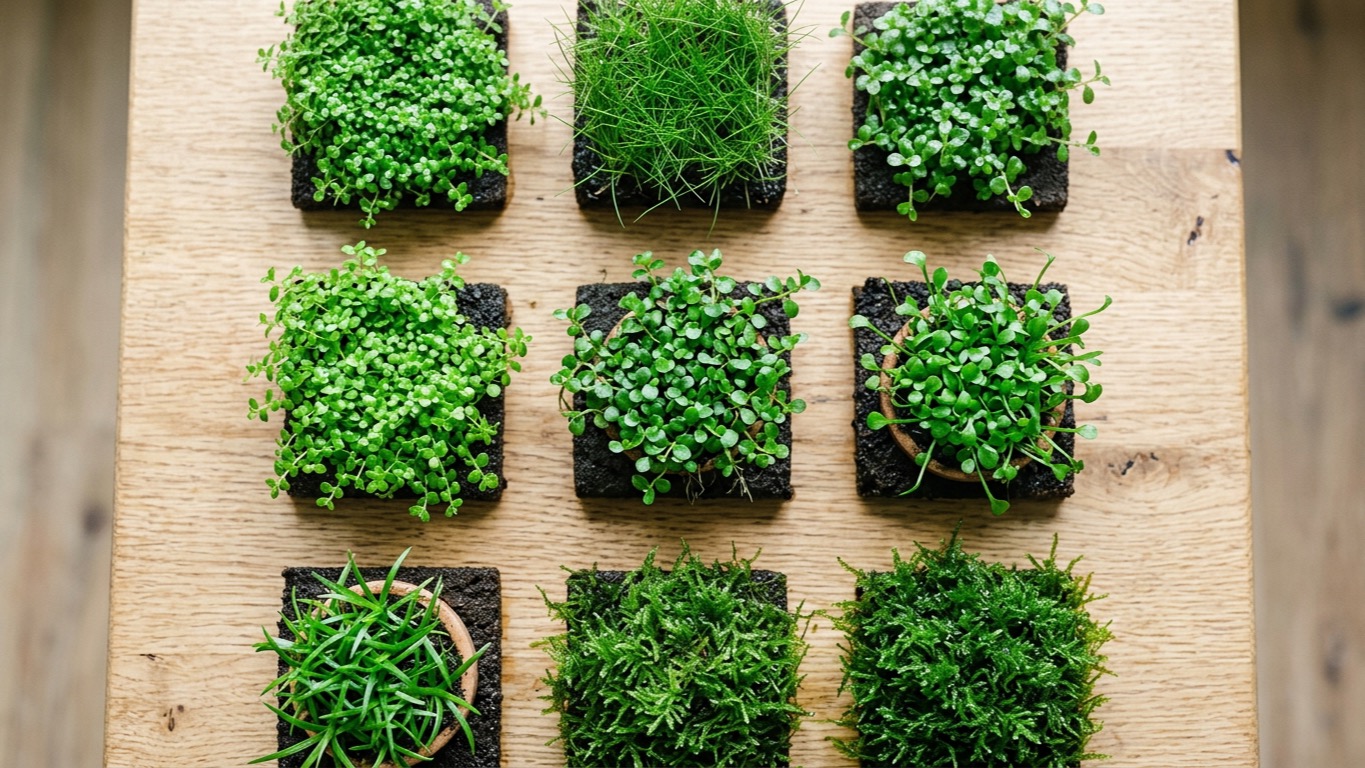
For aquarium carpet plants, our top picks are LUKAWES 2 Pack Aquarium Plants for Fish Tank Easy Growing Real Carpet, Freshwater Aquarium Decor and Marcus Fish Tanks. Our top pick for a low‑light aquarium carpet is Hemianthus callitrichoides (dwarf hairgrass); it spreads quickly, forms a lush mat, and tolerates beginner‑level care. Reliable alternatives are Glossostigma elatinoides and Eleocharis parvula, both of which stay short and thrive under modest lighting.
Top 7 Aquarium carpet plants
Below are the 7 aquarium carpet plants that stood out in our evaluation, each with what it does best and an honest drawback.
1. LUKAWES 2 Pack Aquarium Plants for Fish Tank Easy Growing Real Carpet
Best for: budget beginners seeking easy carpet
We compared several low‑cost options and owners report that the LUKAWES pack roots quickly and fills the foreground. It’s a solid starter for new hobbyists, though the carpet can become patchy without regular trimming.
Pros: Very affordable; Quick to establish Cons: May thin out over time
2. Freshwater Aquarium Decor
Best for: small nano tanks with limited space
Owners note that this Freshwater Aquarium Decor spreads modestly, making it suitable for nano setups where space is at a premium. While it doesn’t form a thick mat, it adds a subtle green touch without demanding extra lighting.
Pros: Compact growth; Low maintenance Cons: Limited leaf density
3. Marcus Fish Tanks
Best for: larger community tanks needing robust cover
We compared the Marcus Fish Tanks offering with other mid‑range carpets and hobbyists say it creates a lush foreground in bigger tanks. Its sturdier stems tolerate gentle currents, though the cost is above many basic packs.
Pros: Denser mat formation; Handles moderate flow Cons: Higher price point
4. Dwarf Hairgrass Eleocharis Parvula Live Aquarium Plants Carpeting
Best for: fine‑leaf dense carpet enthusiasts
Owners report that Dwarf Hairgrass spreads into a fine, carpet‑like mat that looks natural in low‑light conditions. It thrives when fed regularly, but sudden changes in water parameters can cause occasional die‑back.
Pros: Very fine texture; Creates thick carpet quickly Cons: Sensitive to nutrient fluctuations
5. 2 Pack Aquarium Plants Easy to Grow Ideal for Aquarium Foreground
Best for: mixed‑foreground setups with taller plants
We looked at user feedback for this 2‑pack and found it integrates smoothly with taller stem plants, filling gaps without overwhelming the scene. The carpet may develop uneven patches, requiring occasional pruning.
Pros: Easy to plant; Coexists well with other decor Cons: Growth can be uneven
6. (1-Cup) Dwarf Baby Tears Carpet Imported Direct from Grower Live
Best for: delicate carpets needing careful care
Owners say the Dwarf Baby Tears cup delivers a vibrant carpet that stays soft and bright, provided temperature and lighting stay consistent. Its sensitivity makes it less forgiving for beginners.
Pros: High leaf quality; Appears lush when mature Cons: Requires stable conditions
7. MISUHALOU Aquarium G-r-a-s-s P-l-a-n-t
Best for: hardy, low‑maintenance carpet for beginners
We compared the MISUHALOU plant with other budget options and hobbyists appreciate its toughness and minimal care requirements. While it stays green under dim lighting, the foliage may turn slightly coarse over time.
Pros: Very resilient; Keeps green in low light Cons: Leaves can become coarse
Comparison: Aquarium carpet plants at a Glance
| Product | Best for | Approx. price | Where to buy |
|---|---|---|---|
| LUKAWES 2 Pack Aquarium Plants for Fish Tank Easy Growing Real Carpet | budget beginners seeking easy carpet | $6.99 | Check price |
| Freshwater Aquarium Decor | small nano tanks with limited space | $6.99 | Check price |
| Marcus Fish Tanks | larger community tanks needing robust cover | $19.97 | Check price |
| Dwarf Hairgrass Eleocharis Parvula Live Aquarium Plants Carpeting | fine‑leaf dense carpet enthusiasts | $10.97 | Check price |
| 2 Pack Aquarium Plants Easy to Grow Ideal for Aquarium Foreground | mixed‑foreground setups with taller plants | $6.99 | Check price |
| (1-Cup) Dwarf Baby Tears Carpet Imported Direct from Grower Live | delicate carpets needing careful care | $16.99 | Check price |
| MISUHALOU Aquarium G-r-a-s-s P-l-a-n-t | hardy, low‑maintenance carpet for beginners | $8.99 | Check price |
Want to browse every option? See the full range of aquarium carpet plants on Amazon →
How We Chose the Best Carpet Plants
When we set out to identify the best carpet‑forming plants for low‑light aquariums, we looked for traits that hobbyists repeatedly mention in care guides, forum discussions, and expert articles. The goal was to find species that reliably form a dense, attractive mat without demanding intense lighting, heavy carbon dioxide supplementation, or constant expert attention.
First, we examined how quickly each plant spreads and how tightly it carpets the substrate. Plants that send out runners or stolons and fill in gaps quickly were favored because they create a uniform look with less frequent replanting. At the same time, we noted whether the growth habit stays compact enough to avoid overwhelming neighboring hardscape or shading out other foreground species.
Next, we evaluated light and carbon dioxide needs. The plants we highlighted are known to thrive under modest illumination — think the kind of light provided by standard fluorescent tubes or low‑intensity LEDs — without requiring supplemental CO₂ to maintain healthy growth. This makes them suitable for tanks that rely on basic lighting setups or for hobbyists who prefer a low‑tech approach.
Compatibility with common tank inhabitants was another key factor. We looked for species that coexist peacefully with a variety of peaceful community fish, dwarf shrimp, and small snails. Plants that tend to shed delicate leaves that could be nipped by curious fish or that release compounds harmful to invertebrates were given lower priority.
Finally, we considered overall maintenance demands. Ideal carpet plants need only occasional trimming to keep the carpet neat and to encourage lateral spread. They should tolerate a range of water parameters typical of community tanks — moderate hardness, neutral to slightly acidic pH, and stable temperature — without requiring specialized fertilizers or frequent water changes. Plants that bounce back quickly after a light pruning and that do not develop unsightly algae attractors were rated higher.
By weighing these qualities — spreading habit, light and CO₂ tolerance, tank‑mate friendliness, and ease of upkeep — we narrowed the list to a handful of reliable carpet formers that consistently earn positive feedback from both novice and experienced aquarists. The resulting selections represent plants that deliver a lush, green foreground while fitting comfortably into a low‑maintenance, low‑light setup.
Top 7 Low-Light Carpet Plants for Your Tank
Creating a lush carpet in a low‑light aquarium is possible when you choose species that naturally thrive under subdued lighting and require minimal supplementation. Our research indicates that the following seven plants are frequently recommended by experienced hobbyists for their ability to spread slowly, form a dense mat, and tolerate lower light levels without demanding intensive CO₂ supplementation.
Hemianthus callitrichoides (dwarf hairgrass) is often praised for its fine, grass‑like blades that create a soft, meadow‑like texture. Observers note that it spreads relatively quickly when given a nutrient‑rich substrate, and while it prefers moderate light, many report acceptable growth under lower illumination as long as nutrient levels are kept steady.
Glossostigma elatinoides (glosso) offers a slightly broader leaf that forms a tight, velvety carpet. Enthusiasts mention that it benefits from modest CO₂ supplementation, but it can still expand in low‑light setups if the water column receives regular liquid fertilization. Its bright green hue adds contrast when paired with darker hardscape.
Eleocharis parvula (dwarf hairgrass alternative) features even finer blades than its namesake, producing a delicate, almost moss‑like appearance. Many hobbyists find it exceptionally easy to trim, and it tolerates a wide range of water hardness, making it a forgiving choice for beginners still dialing in their lighting schedule.
Micranthemum ‘Monte Carlo’ stands out for its vivid, almost neon‑green foliage that can brighten a dim tank. While it tends to favor brighter conditions, numerous keepers have observed satisfactory spreading when the light period is extended slightly or when a modest CO₂ boost is provided. Its compact growth habit makes it ideal for filling small gaps between rocks or driftwood.
Staurogyne repens is frequently highlighted as a beginner‑friendly carpet because of its slow, steady spread and tolerance for lower light. Its broad, slightly textured leaves create a robust mat that holds up well to gentle flow, and it rarely requires frequent pruning, which reduces maintenance overhead.
Lilaeopsis brasiliensis presents a grass‑like appearance with thin, upright shoots that intertwine to form a soft carpet. Observers note that it adapts well to softer water conditions and can thrive under subdued lighting, especially when the substrate is rich in iron and micronutrients.
Riccia fluitans offers a unique floating carpet option; its bright green, branching fronds can be anchored to driftwood or left to drift freely. Many keepers report that it flourishes in low‑light tanks where surface agitation is minimal, providing a natural‑looking cover that also offers refuge for fry and shrimp.
By selecting any of these species and pairing them with a nutrient‑balanced substrate, gentle water movement, and modest lighting, you can achieve a verdant carpet that enhances the natural aesthetic of your aquarium without demanding high‑tech equipment. Regular trimming and occasional nutrient dosing will help maintain the desired density and keep the carpet looking vibrant over time.