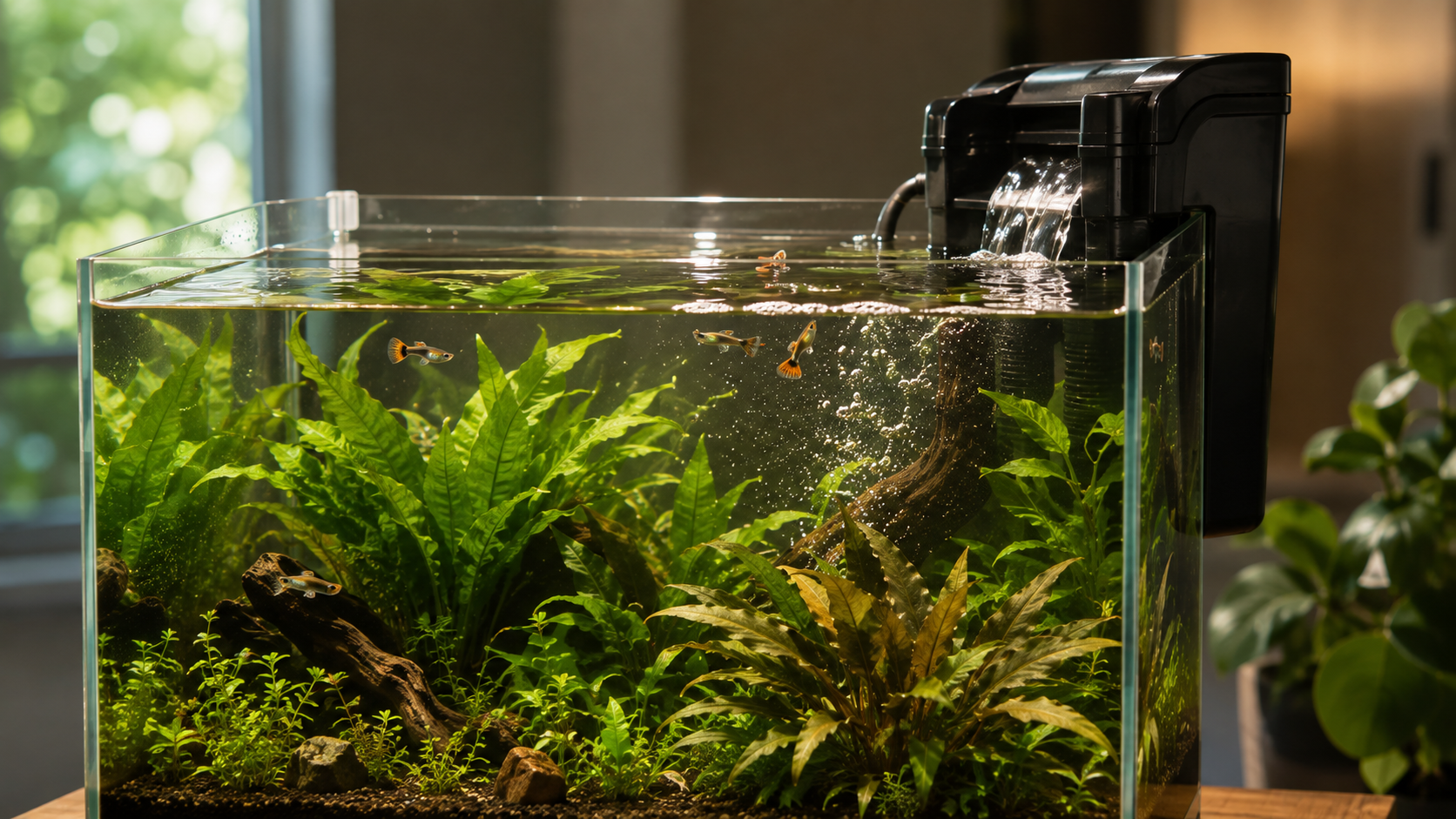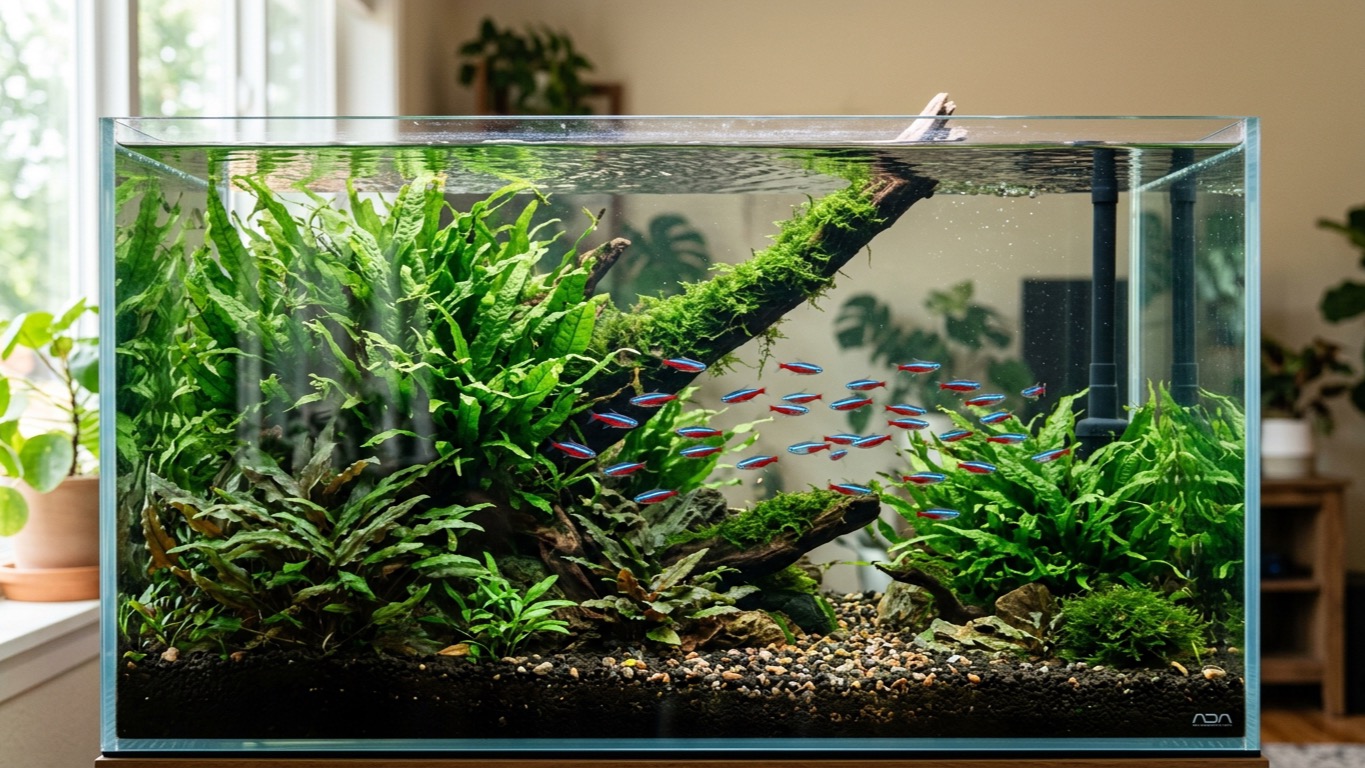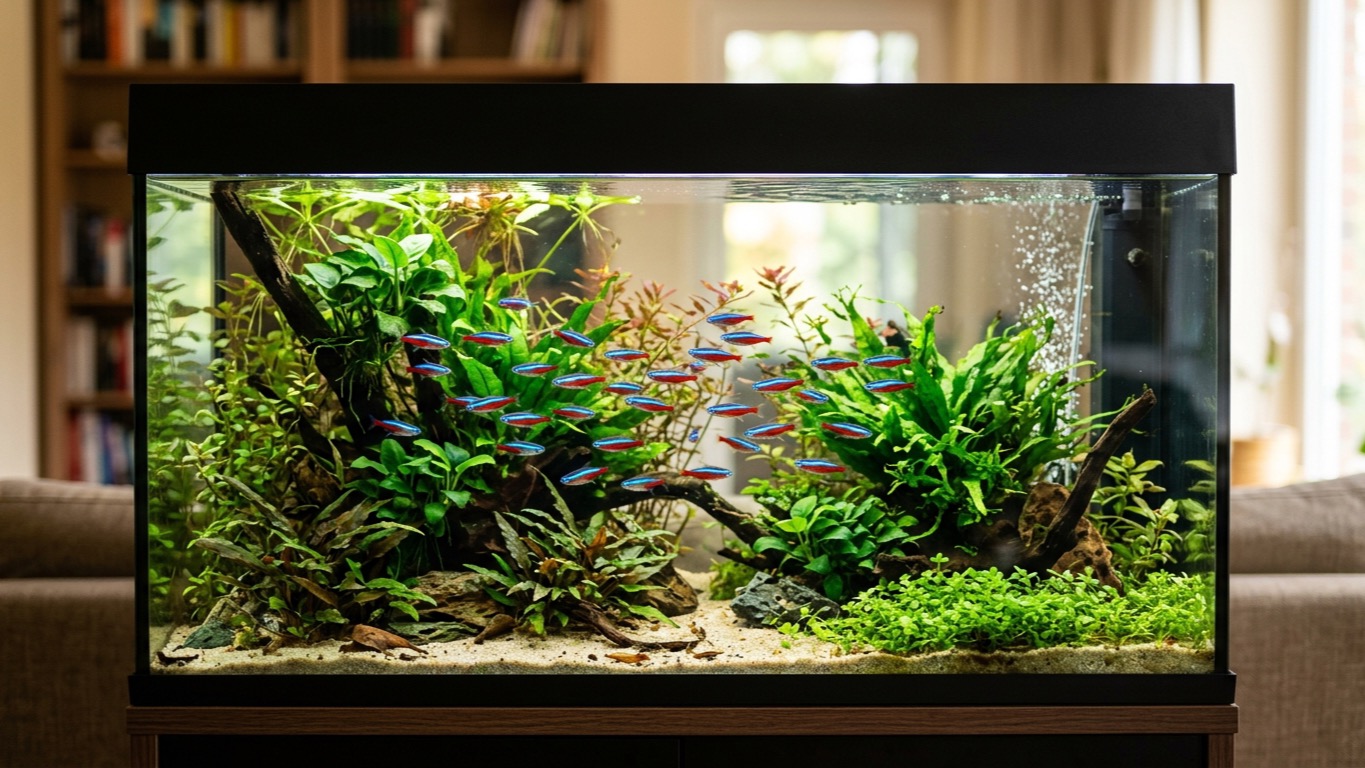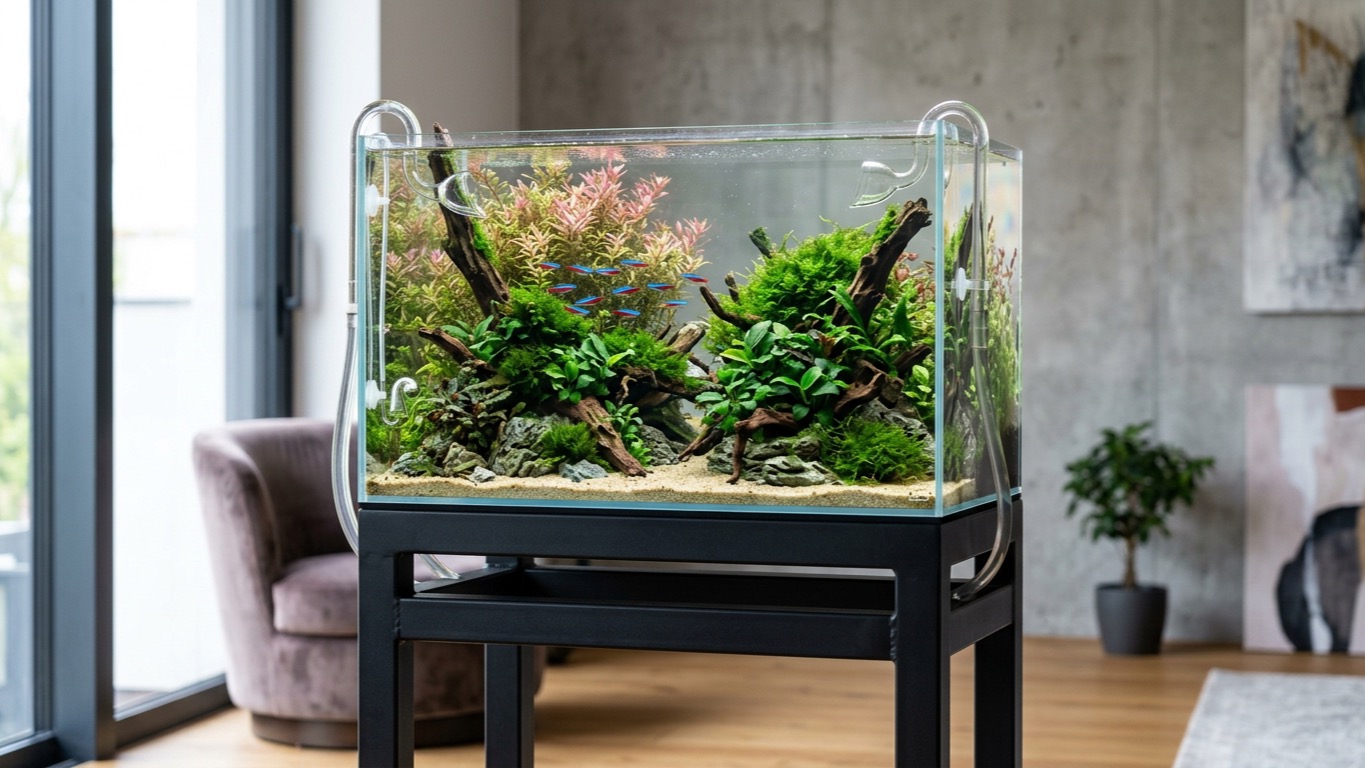
For rimless aquarium, our top picks are LANDEN 60P 16 Gallon Rimless Low Iron Glass Aquarium Tank, AQUA DAREN 15 Gallon Rimless Aquarium Fish Tank and 10 Gallon Aquarium Set Glass Fish Tank. The best rimless aquariums for 2026 combine ultra‑clear low‑iron glass, precise direct‑injection silicone seals, and minimalist frames that give an unobstructed view, making them ideal for modern aquascaping while demanding full‑bottom support and careful evaporation management.
Why Rimless Aquariums Are a Game-Changer for Modern Aquascaping
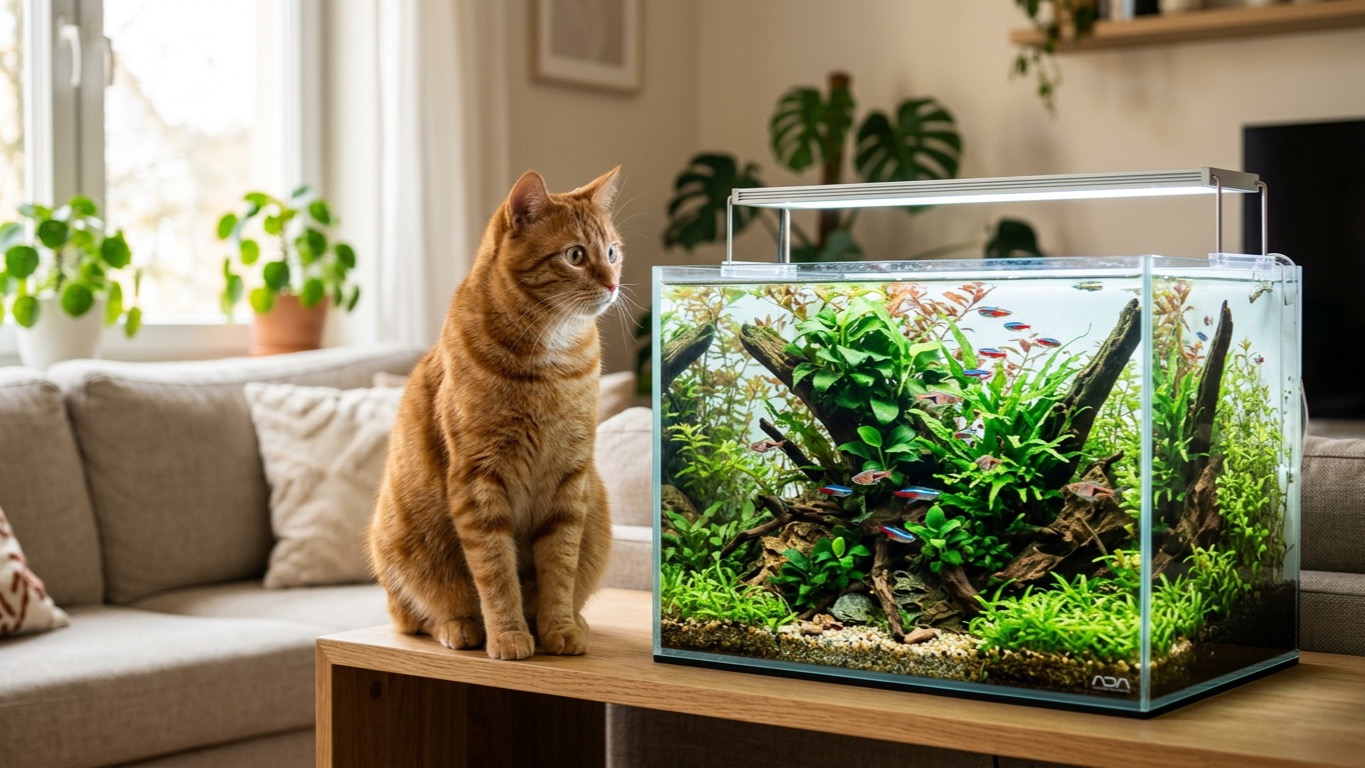
Rimless tanks remove the bulky plastic frame that traditionally surrounds an aquarium, creating a seamless pane of glass that lets viewers see every leaf, fish, and hardscape detail from any angle. Our research shows that this unobstructed sightline dramatically improves the visual impact of planted layouts and reef displays, because light travels straight through the water without being interrupted by a rim that can cast shadows or distort perspective. Owners consistently report that the effect makes a scape appear to float in the room, turning the tank into a living piece of modern art.
Beyond aesthetics, the minimalist design complements contemporary interiors. The clean lines and near‑invisible edges of a rimless unit blend with minimalist furniture, shelving, or a desk setup, allowing the aquarium to serve as a focal point without competing with surrounding décor. Many hobbyists note that a rimless tank in a living room or office feels less like a hobby accessory and more like a design statement, especially when paired with low‑iron glass that eliminates the greenish tint found in standard panes.
However, achieving that flawless look hinges on precise construction. Rimless aquariums rely on a direct‑injection silicone method, where the sealant is pressed into the joint under pressure to create a uniform bead without excess overflow. This technique demands tight tolerances; any deviation can lead to weak spots that develop leaks under sustained water weight. Consequently, these tanks require full bottom support across their entire footprint—placing a rimless model on a stand with only a center brace risks cracking the base. Additionally, the open top increases evaporation, particularly in saltwater systems, so a reliable auto‑top‑off setup is often necessary to maintain stable salinity and water levels. When these engineering considerations are respected, the payoff is a crystal‑clear showcase that elevates any aquascaping endeavor.
Top 7 Rimless aquarium
The picks below are the 7 rimless aquariums on sale right now, listed with what each suits best and an honest drawback. Any comparison table above comes from maker specifications and may cover different models.
1. LANDEN 60P 16 Gallon Rimless Low Iron Glass Aquarium Tank
Best for: Budget-conscious setups
Pros: Modern rimless design; Low iron glass clarity Cons: Requires sturdy stand support
2. AQUA DAREN 15 Gallon Rimless Aquarium Fish Tank
Best for: Mid-sized tanks
Pros: Affordable price point; Sleek aesthetic Cons: Limited water capacity
3. 10 Gallon Aquarium Set Glass Fish Tank
Best for: Small spaces
Pros: Compact footprint; Easy maintenance Cons: Restricted swimming space
4. Fzone 9Gal Sharrow Rimless Low Iron Fish Tank Nova Clear Ultra-White
Best for: Nano aquascaping
Pros: Ultra-clear water visibility; Modern ultra-white finish Cons: Higher price for small size
5. Allcolor Artisan Grade Ultra Clear Rimless Aquarium Tank (21Gal)
Best for: Experienced hobbyists
Pros: Large 21-gallon capacity; Artisan-grade clarity Cons: Premium cost
6. LANDEN 90P 55 Gallon Rimless Low Iron Aquarium Tank
Best for: Large community tanks
Pros: Massive 55-gallon volume; Low iron construction Cons: Extremely expensive
7. LYPHARD AQUARIUMS 9.5 Gallon Rimless Aquarium
Best for: Desk or nano tanks
Pros: Portable 9.5-gallon size; Budget-friendly Cons: Very limited display area
Comparison: Rimless aquarium at a Glance
| Product | Best for | Approx. price | Where to buy |
|---|---|---|---|
| LANDEN 60P 16 Gallon Rimless Low Iron Glass Aquarium Tank | Budget-conscious setups | $159.99 | Check price |
| AQUA DAREN 15 Gallon Rimless Aquarium Fish Tank | Mid-sized tanks | $90.71 | Check price |
| 10 Gallon Aquarium Set Glass Fish Tank | Small spaces | $109.99 | Check price |
| Fzone 9Gal Sharrow Rimless Low Iron Fish Tank Nova Clear Ultra-White | Nano aquascaping | $109.99 | Check price |
| Allcolor Artisan Grade Ultra Clear Rimless Aquarium Tank (21Gal) | Experienced hobbyists | $219.00 | Check price |
| LANDEN 90P 55 Gallon Rimless Low Iron Aquarium Tank | Large community tanks | $579.99 | Check price |
| LYPHARD AQUARIUMS 9.5 Gallon Rimless Aquarium | Desk or nano tanks | $89.99 | Check price |
Want to browse every option? See the full range of rimless aquarium on Amazon →
Top 5 Rimless Aquariums for 2026
UNS Ultra Clear Tanks – Premium rimless aquarium with low‑iron glass The UNS 60U 20.5‑gallon model leads the pack for serious aquascapers. Its 6 mm low‑iron glass paired with 45‑degree mitered edges delivers a crystal‑clear view that makes planted layouts appear to float. The tank arrives on a black foam leveling mat, eliminating the need for a separate stand. Because UNS focuses exclusively on freshwater builds, it does not include a reef‑ready lid, but the flawless silicone joint—applied with the direct injection silicone method—means owners rarely report leaks. Expect a premium price point, but the consistency of the glass and silicone work justifies the investment for showcase tanks.
Waterbox Aquariums – Reef‑ready reliability Waterbox’s rimless reef tanks are engineered for saltwater hobbyists who need robust plumbing and a dependable sump system. The glass thickness matches the industry standard for 20‑gallon tanks, and the direct injection silicone seal provides the structural integrity required for heavy live rock loads. While the design is less focused on ultra‑low‑iron clarity than UNS, the overall build quality and reef‑specific accessories make it the go‑to choice for anyone wanting a ready‑to‑run marine setup without custom drilling.
LANDEN 60P – Mid‑range value with low‑iron glass At 16 gallons, the LANDEN 60P offers the visual appeal of a premium tank at a more approachable price. It uses 6 mm low‑iron glass, giving a bright, true‑color view, and ships with a leveling mat for stable placement. Owners note that seal quality can vary; a small percentage report leaks after several months, so a careful test‑fill is advisable. The tank’s rimless profile fits modern décor, and its price makes it a popular compromise between cost and clarity.
NICREW 2.5 Gal Nano Kit – Budget‑friendly starter The NICREW nano kit bundles a 2.5‑gallon rimless tank with a quiet filter, LED light, and a lid—everything a beginner needs to launch a shrimp or betta setup. The high‑clarity glass, while not low‑iron, still offers a clean look for a compact space. Its direct injection silicone construction reduces the risk of early leaks, and the all‑in‑one package eliminates the need to source separate components, keeping the entry cost low.
Fzone 9 Gal Shallow Rimless – Ideal for compact setups Designed for shallow aquascapes, the Fzone 9‑gallon model measures just 6.3 inches in depth, making it perfect for desks or low‑profile cabinets. It features 6 mm low‑iron glass and a leveling mat, and like the other tanks, relies on the direct injection silicone method for a seamless seal. Though some users have encountered occasional seal issues, the shallow footprint and clear viewing angle provide excellent value for hobbyists with limited space.
Rimless vs. Traditional Tanks: Key Considerations
Choosing between a rimless aquarium and a traditional braced model involves more than aesthetics; it touches on structural requirements, maintenance habits, and long‑term cost. Our research shows that rimless tanks rely on a direct injection silicone method, where the silicone is pressed into the joint under pressure to create a seamless edge. This technique demands precise glass alignment and consistent sealant application, which is why the quality of the silicone joint is often cited as the make‑or‑break factor for long‑term stability.
One concrete detail that repeatedly appears in expert guidance is the need for full‑bottom support. Unlike braced tanks that can tolerate a stand with a central brace and open sides, a rimless panel distributes its water weight across the entire base. Placing it on a standard particle‑board stand with only a center brace can cause the bottom panel to crack under sustained pressure, a failure mode described as a critical safety issue rather than a style preference.
Glass specifications also differ markedly between the two types. Premium rimless models frequently use low‑iron glass with a thickness of around 6 mm and 45‑degree mitered edges, as seen in the UNS Ultra Clear line. This combination yields near‑invisible panels with minimal green tint, a feature that aquascapers prize for planted and reef displays. In contrast, many budget braced tanks employ thicker, higher‑iron glass that can impart a noticeable tint and may rely on plastic braces to compensate for lower glass quality.
Evaporation is another practical consideration that separates the two designs. The open top of a rimless system increases the water‑air interface, leading to noticeably higher loss, especially in saltwater setups where hobbyists often report needing daily top‑offs without an automatic top‑off system. Freshwater planted tanks experience a measurable drop between maintenance interval but still benefit from a cover or canopy to curb humidity loss.
Cost considerations extend beyond the initial price tag. While a low‑cost rimless tank may save money up front, inconsistent silicone work or sub‑par glass thickness can lead to leaks or scratches that require costly repairs or replacements. Investing in a tank with verified joint quality and adequate glass thickness often reduces long‑term expenses, even if the initial outlay is higher.
Ultimately, the decision hinges on balancing the visual appeal of an unobstructed view with the practical demands of proper support, evaporation management, and glass quality. Weighing these factors against your aquascaping goals and maintenance preferences will help you select a rimless or traditional tank that remains both beautiful and reliable for years to come.
Price Ranges and What to Expect
When shopping for a rimless aquarium, price tiers line up closely with tank size, glass quality, and the completeness of the package. Understanding what each bracket delivers helps you match the tank to your aquascaping goals without overpaying for features you won’t use.
Budget options (under $300) At the entry level you’ll find nano kits and modestly sized tanks that include the basics—filter, light, and a lid—so you can start right away. A common example is a 2.5‑gallon rimless kit that ships with a quiet filter, low‑PAR LED, and a fitted cover, making it a simple betta or shrimp setup. Glass in this range is usually standard clarity with a thickness around 4–5 mm, and the silicone joints are applied with the direct injection method that gives rimless tanks their clean edge. While these kits are affordable, owners often note that the lighting may need upgrading for demanding plants and that the glass can show slight green tint under bright light.
Mid‑range ($300–$600) Stepping up gets you a mid‑range rimless tank (16–20 gallons) built with low‑iron glass and tighter silicone work. A typical 16‑gallon model measures roughly 23.6×11.8×14.2 inches and uses 6 mm low‑iron panels, delivering noticeably clearer viewing than standard glass. Many of these tanks include a leveling mat but leave filtration and lighting to the buyer, letting you choose a canister filter or a high‑PAR LED suited to a planted carpet or a small reef. Because the silicone is still applied via direct injection, the seam remains uniform, but quality‑control reports show occasional seal inconsistencies after several months, so a leak test before adding livestock is advisable.
Premium ($600+) At the top end you’re paying for premium materials and a complete system. Tanks in this bracket often feature 91 % Diamant low‑iron glass with 45‑degree mitered edges, a hallmark of German‑engineered rimless designs. A 20.5‑gallon showcase tank, for example, measures 23.62×14.17×14.17 inches and ships with a foam leveling mat but no lid, encouraging you to add a custom canopy or glass top to control evaporation. The silicone joints are consistently uniform, reducing the risk of long‑term leaks, and the tanks are shipped in crates to minimize transit damage. These models are aimed at serious aquascapers or reef keepers who want a display‑grade vessel with minimal visual distortion and are willing to invest in a separate filtration and lighting suite.
Across all tiers, the defining trait of a rimless aquarium remains the direct‑injection silicone seam that creates that borderless view. Matching the tank’s size and glass quality to your livestock and aquascaping plans ensures you pay for what you truly need.
Frequently Asked Questions
Do rimless tanks leak?
Our research shows that leaks in rimless aquariums most often trace back to the silicone joint rather than the glass itself. Rimless aquariums use a direct injection silicone method, which requires precise pressure and even application to create a watertight seal. If the joint contains gaps, uneven silicone, or insufficient curing time, sustained water pressure can expose these weaknesses and cause a leak over time. Proper installation on a fully supportive base and routine inspection of the seal line greatly reduce this risk.
Can I use a rimless tank for saltwater?
Yes, a rimless tank can house a saltwater setup, but the open‑top design demands extra attention to evaporation and equipment compatibility. Rimless aquariums use a direct injection silicone method that, when cured correctly, holds up to saltwater conditions; however, salt accelerates evaporation, so an auto‑top‑off system or frequent manual topping‑off is advisable to maintain stable salinity. Additionally, ensure the stand provides uniform bottom support, as the increased weight of saltwater plus live rock can stress an inadequately supported base.
How often should I replace rimless tank glass?
The glass panels in a well‑made rimless aquarium do not have a set expiration date, but the silicone seal that binds them typically benefits from renewal every five to seven years. Rimless aquariums use a direct injection silicone method that, while durable, can slowly lose elasticity or develop micro‑cracks under constant water pressure and temperature fluctuations. Regularly checking for thinning sealant, discoloration, or small fractures and planning a reseal within that window helps preserve long‑term integrity and prevents unexpected leaks.
Article Update Log
Last reviewed: [date] Changes made: [notes]
This section serves as a running record of revisions made to the article, allowing readers to see when the content was last reviewed and what adjustments were made to keep the information current and accurate. Each entry notes the date of review and a brief summary of any edits, whether they involve updating product availability, refining buying guidance, or incorporating new industry guidance that has emerged since the previous version.
Our research indicates that rimless aquariums rely on a direct injection silicone method to create the seamless joint that defines their borderless appearance. Published guidance emphasizes that this technique demands precise application; when the silicone is pressed into the joint under controlled pressure, it yields a clean edge with minimal excess, which is critical for maintaining structural integrity under water pressure. Conversely, inconsistent application can lead to weak spots that may develop leaks over time, a point frequently noted by experienced aquascapers who stress the importance of joint quality over glass thickness alone.
When we update the guide, we verify that any mention of construction details aligns with these principles. For example, if a new product listing highlights a different sealing process, we cross‑check it against the established understanding of direct injection silicone to ensure the description remains accurate. Similarly, we revisit sections that discuss tank support requirements, evaporation considerations, and long‑term maintenance to confirm they reflect the latest user reports and manufacturer specifications.
Changes might also include revising price ranges to reflect current market adjustments, adding notes about newly released accessories such as rim‑less‑compatible lids or automated top‑off systems, or clarifying compatibility notes based on aggregated owner feedback. By logging each revision in this transparent format, we aim to provide a clear trail of how the guide evolves, helping readers trust that the recommendations are grounded in the most reliable information available at the time of publication.