Quick answer: Attach Anubias barteri to wood or rock and keep the thick rhizome uncovered. Give low to moderate light so algae stays off the slow leaves. Trim mushy rhizome early, and treat underwater flowers as a healthy bonus, not a problem.
Attach Anubias so the rhizome stays uncovered, and keep light low to moderate to limit leaf algae.
This page is a home-aquarium care guide for Anubias barteri and its common varieties. Our research team compared grower plant sheets and retailer care notes.
Selection rule: We include attach method, light demand, rhizome-rot cues, and flowering notes from named grower or retailer pages. We exclude wild-collection tips, miracle growth gels, and high-tech-only recipes that bury the rhizome. We also skip price or rank columns for plant packs.
How to attach Anubias without burying the rhizome
The thick horizontal rhizome must stay open to water, not sealed under gravel.
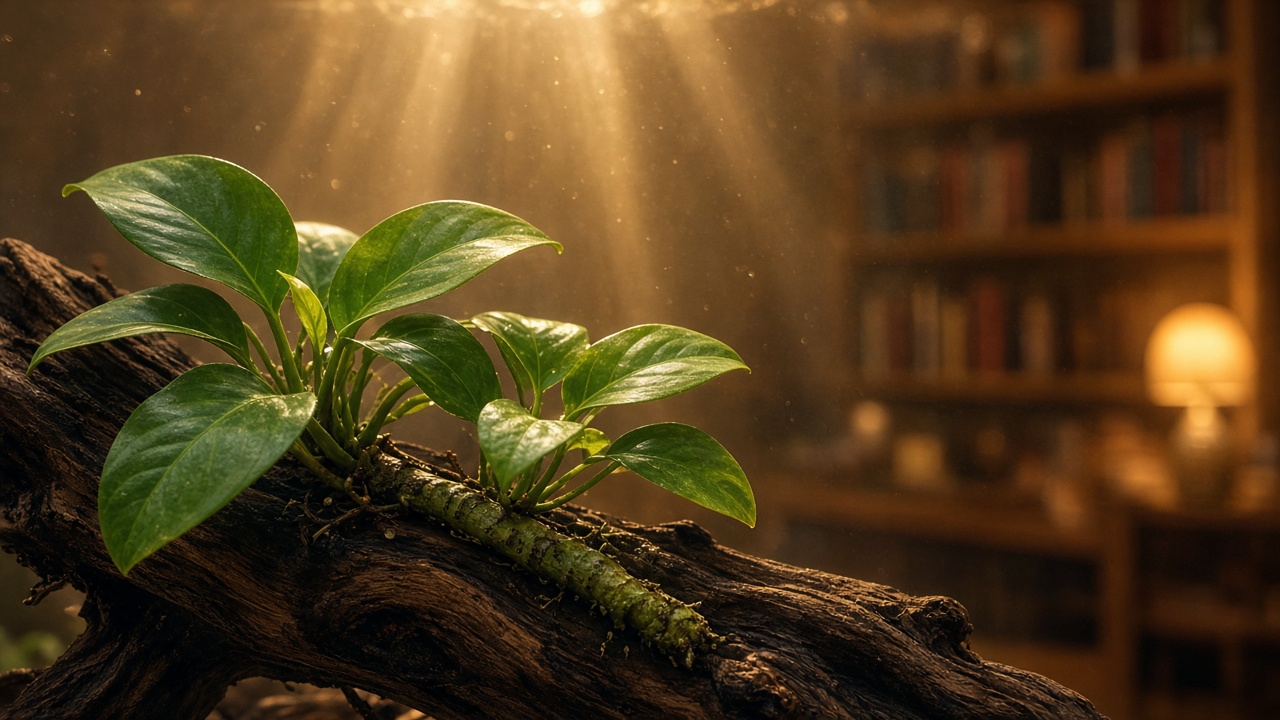
Grower sheets warn that if planted on the bottom, the rhizome must not be covered because it tends to rot. Aquarium Co-Op’s rhizome planting FAQ says you can mount plants with super glue gel or sewing thread, or wedge them in rock cracks. Roots may sit in substrate, but the rhizome itself should rest on top.
Attach steps:
- Rinse rock wool and remove the basket if the plant arrives potted
- Find the thick horizontal rhizome between leaves and roots
- Glue or tie the rhizome to wood or rough stone
- Leave leaves free to face open water
- Wait for roots to grip before you cut the thread, if you used thread
Do not force the whole plant deep like a stem plant. Pressing roots in and then lifting the rhizome back to the surface works when you want a grounded look. The common mistake is hiding the rhizome “so it looks planted,” which starts soft rot weeks later.
Light levels that fit slow leaves
Low light protects tough leaves better than a bright spotlight.
Tropica lists light demand as low for Anubias barteri var. barteri, with slow growth and low CO₂ need. It also advises a shady spot to minimize algae on the leaves. For smaller nana forms, low light around 10–20 PAR is a common retailer target. Use shade under taller or floating plants when the fixture is brighter.
Practical light habits:
- Place Anubias midground or under taller plants
- Keep photoperiods moderate instead of all-day blasts
- Use floaters to cut glare on slow leaves
- Wipe or trim algae-coated old leaves at the base
- Do not “fix slow growth” with extreme light alone
Slow leaves cannot outrun algae the way fast stems can. Extra PAR without matching CO₂ and nutrients often paints the leaf green with fuzz. Dimmer placement usually beats another bottle of algaecide.
Rhizome rot: what it looks like and what to cut
Mushy rhizome tissue is the red flag, not one yellow leaf.
Aquarium Co-Op’s Anubias rot guide says a healthy rhizome should feel firm and look green. Infected tissue often feels mushy or squishy. It may look clear-jelly, white, yellow, brown, or black. Roots near the bad zone may discolor and fall away, and a foul smell can appear in advanced cases.
Rot response list:
- Lift the plant and feel along the whole rhizome
- Cut away every soft or discolored section with clean scissors
- Keep only firm green tissue with some leaves if possible
- Remount the healthy piece on clean hardscape
- Improve flow and stop burying the remaining rhizome
Chemical “cures” are unreliable for this problem in retailer guidance. Cutting to healthy tissue is the practical rescue. The edge case is a plant that looks fine on top while the underside is already soft. Flip and feel before you wait another month.
Water, fertilizer, and growth pace
Anubias is a water-column feeder with a slow calendar.
Var. barteri is undemanding and often about 25–45 cm tall in grower notes, with a creeping rhizome from about 10–15 cm or more. Two-month height listings often sit in the 20–30+ cm band. CO₂ demand stays low on those sheets. Liquid fertilizers in the water help more than root tabs under a floating rhizome.
Care targets many keepers use:
- Tropical community temperatures near the low to mid 70s through low 80s°F
- Stable pH in a broad near-neutral band
- Gentle to moderate flow across leaves
- Steady lean dosing rather than feast-and-famine dumps
- Patience measured in months, not days
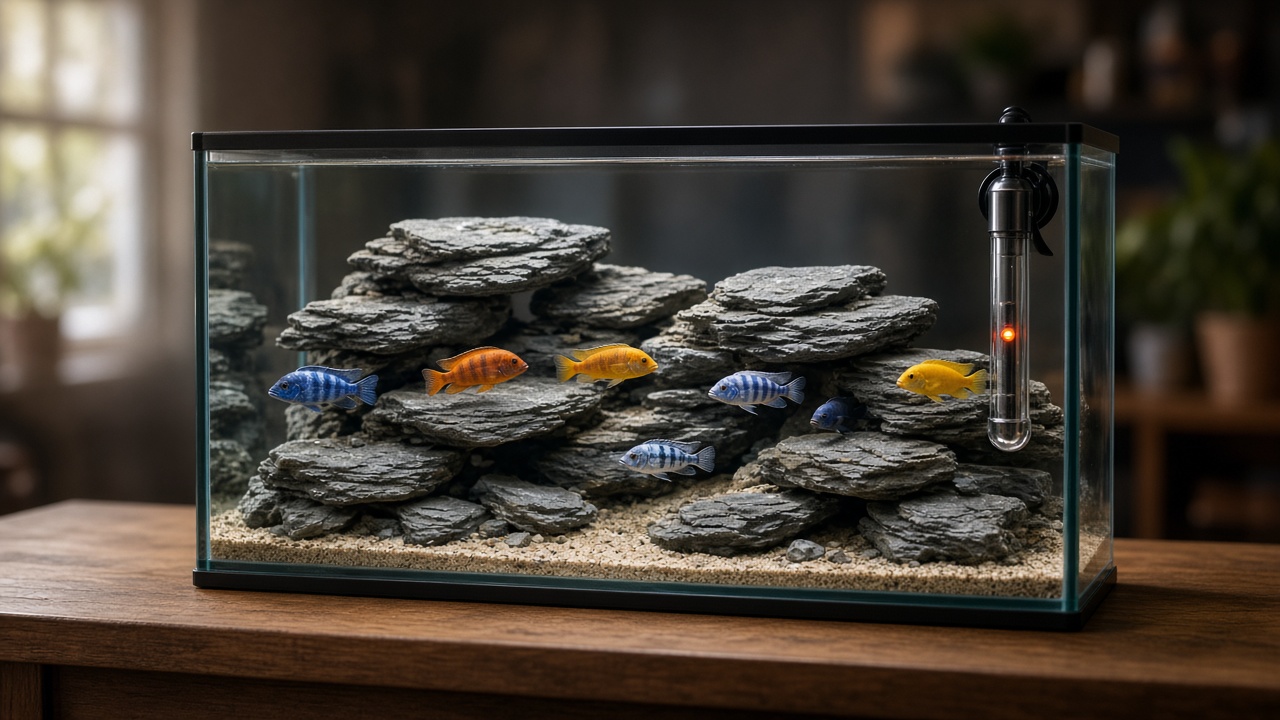
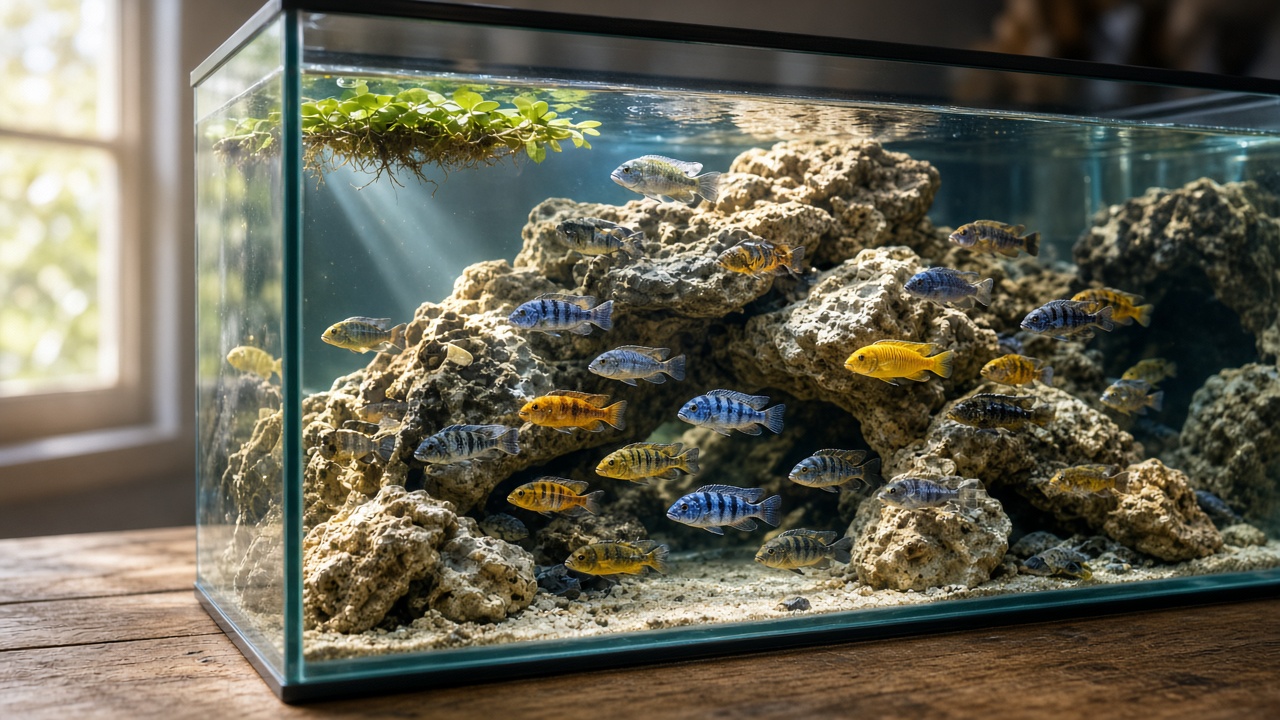
Yellowing can mean nutrient gaps or old leaf age. Pinholes often point keepers toward potassium needs in planted tanks. Trim dead leaves at the base without gouging the rhizome. Herbivorous fish often leave the tough leaves alone, which is why Anubias shows up in cichlid hardscape tanks.
Flowering underwater and emersed
Flowers are a spathe-and-spadix show, not a fish-egg lookalike.
Grower notes say Anubias barteri var. nana flowers frequently under water and thrives in shady places. Larger barteri types can flower too when mature and settled. Emersed growth in paludariums and humid lids often flowers more readily than a deep, dark tank.
Flower care tips:
- Leave the bloom if you enjoy the look
- Trim the stalk at the base if algae coats it
- Do not assume seeds will fill the tank
- Treat flowering as a health signal, not a crisis
- Keep light modest so the slow plant still resists leaf algae
The common misconception is that a flower means the plant is “going to seed and dying.” Healthy Anubias can flower and keep growing new leaves from the same rhizome. Cutting the flower does not harm the plant when you leave the rhizome intact.
Varieties, placement, and tank mates
Barteri is a species group with several garden forms for different heights.
Var. barteri grows larger than var. nana. Nana stays shorter for foreground and nano hardscape. Glabra and other narrow-leaf forms fill midground niches. All share the same rhizome rule and low-light comfort zone. Pick height for the scape first, then match the variety to that space.
Placement ideas:
- Nana on small wood near the front
- Standard barteri on larger branches midground
- Shaded corners behind tall stems
- Cichlid tanks that need tough leaves
- Paludariums with humid air over damp wood
Avoid goldfish that shred everything and digging fish that repeatedly bury the rhizome under sand. Shrimp and peaceful community fish usually ignore the plant. Glue beads should be aquarium-safe gel, used sparingly on the rhizome, not smeared across every leaf.
Attribute table for Anubias barteri planning
| Cue | Number or rule | Notes |
|---|---|---|
| Light demand | Low (grower sheets) | Shade reduces leaf algae |
| CO₂ demand | Low | Optional, not required |
| Rhizome rule | Never bury | Roots may enter substrate |
| Var. barteri height notes | About 25–45 cm tall in text | Slow creeper |
| Nana PAR note | About 10–20 PAR | Retailer low-light tip |
| Rot cue | Mushy, discolored rhizome | Cut to firm green tissue |
FAQ
Can I plant Anubias barteri in the substrate?
You can tuck roots into the substrate, but the rhizome must stay uncovered. Burying the thick horizontal stem is the fastest path to rot. Mounting on wood or rock is usually cleaner for long-term health. The common mistake is pressing the whole plant down so it “looks natural,” then wondering why the base turns soft.
How much light does Anubias barteri need?
Low to moderate light is the safe home band. Strong direct light invites algae on slow leaves more than it speeds useful growth. Shade from taller plants or floaters helps under bright fixtures. If leaves look painted with green dust, reduce light or move the plant before you dose harsh algaecides.
What causes rhizome rot?
Covered rhizomes, damaged tissue, and unchecked soft spots are the usual story. Firm green rhizome is healthy; mushy or foul-smelling tissue is not. Cut away soft sections early and remount what is left. Waiting for a chemical cure while the mush spreads is the edge case that loses the whole plant.
Why is my Anubias flowering underwater?
Flowering is normal on settled plants and often shows up in shady, stable tanks. It does not mean the plant is finished growing. You can leave the bloom or trim the stalk if algae coats it. Do not expect a tank full of seedlings from aquarium flowers.
How do I propagate Anubias barteri?
Divide the rhizome with a clean cut so each piece has leaves and some roots when you can. Remount each piece with the rhizome exposed. Growth stays slow, so judge success over months. Tiny scraps with no leaves may take longer, and that delay is normal, not instant failure.
Do I need CO₂ and root tabs?
CO₂ demand is low on grower sheets, and many low-tech tanks keep Anubias without injection. Water-column fertilizer matters more than root tabs under a floating rhizome. Root tabs help neighboring rooted plants more than the Anubias itself. Extra CO₂ can speed growth a little, but it will not fix a buried rhizome.
Why are the leaves covered in algae?
Slow leaves sit still under light long enough for algae to settle. Lower light, shorter photoperiods, and better shade usually help more than scrubbing until the leaf tears. Trim the worst leaves at the base and keep the rhizome. Spotless glass with a sunburned Anubias is a common high-light mismatch.
This guide is for general information and does not replace the manufacturer’s instructions.