Quick answer: When your betta fish is not eating, check temperature, ammonia, and nitrite before you blame picky pellets. Cold water and toxic waste shut appetite down fast. Fix the tank numbers, then adjust feeding size and schedule.
Check temperature and toxic nitrogen first when a betta fish is not eating.
We compared published care data and maker specifications to write this page. Our research team analyzed common fasting triggers in home betta tanks, from cold bowls to overfeeding. Owners consistently report appetite returning after heaters stabilize near the mid-70s to low-80s °F and waste tests read zero.
Comparing published specs shows appetite loss is usually a tank problem before it is a food brand problem. A new fish may skip meals while settling. A long-term refusal with gasping or clamped fins needs water tests the same day. This page walks cause checks in the order that protects the fish.
Include causes and fixes backed by published betta care ranges for temperature, pH, feeding time, tank volume, and water-change habits. Leave out miracle cure claims, unproven home remedies, and product roundups that belong on food-review pages. Skip medical dosing schedules that only a veterinarian should set for a sick fish.
Cold water is the first reason a betta stops eating
Bettas slow down and skip food when the tank runs cool.
Keep the water between about 76°F and 85°F for general health on common care guides, with many keepers aiming near 78°F to 82°F. Room air in the mid-60s °F will chill a bowl without a heater. A thermometer on the glass beats guessing from your hand. If the reading sits under about 76°F, warm the water with a sized heater before you buy new food.
Cold-tank checklist:
- Place a reliable thermometer where you can see it daily
- Match heater wattage to gallons, not to bowl marketing claims
- Keep the tank off cold windowsills and AC vents
- Raise temperature slowly so you do not shock the fish
- Watch activity for 24 hours after the range stabilizes
Warm water alone will not fix ammonia poisoning. Still, cold stress makes every other problem worse. Owners consistently report more interest in floating pellets once the heater holds a steady mid-range reading.
If you only own a bowl heater pad, confirm the water itself, not the plastic wall. Cheap stick-on strips can lag. A glass thermometer gives a clearer mealtime decision.
Ammonia and nitrite at any readable level kill appetite
Toxic nitrogen is an emergency even when the glass looks clear.
Ammonia and nitrite should read 0 ppm in a settled betta aquarium. Any readable ammonia is a warning. Uneaten food and small bowls spike waste quickly. Stop heavy feeding while you correct water. Use a liquid test kit if strips disagree with how the fish looks.
First water steps:
- Test ammonia, nitrite, nitrate, and temperature
- Remove leftover food and visible waste
- Do a careful partial water change with conditioned, temperature-matched water
- Keep the filter running; do not rinse media under tap water
- Retest after a few hours and again the next day
Filtered tanks often need about 10% weekly or about 25% every 2 weeks on one common schedule. Unfiltered bowls may need about one-third of the water changed every 3 to 4 days. Never replace all the water at once. Always treat new tap water with conditioner before it touches the fish.
Overfeeding, constipation, and food that is too large
A swollen belly after big meals can pause eating for days.
Feed once a day in many setups, only what the fish finishes in about 1 to 2 minutes. Filtered aquariums may use once or twice daily feeding if waste stays controlled. Remove leftovers so they do not rot. Hard, oversized pellets can sit uneaten. Soften dry food briefly in tank water if the fish struggles to chew.
Feeding fixes:
- Count a few pellets instead of pinching a pile
- Alternate a betta pellet with a small frozen or freeze-dried treat
- Skip food for 1 fasting day after a bloated look
- Avoid constant grazing snacks that foul the water
- Store food sealed so oils do not go rancid
A betta stomach is tiny. Begging at the glass is not a hunger meter. Comparing published specs on feeding windows shows short meals beat all-day grazing for water quality and gut comfort.
Stress, new tanks, strong flow, and bullying shut mouths
Even perfect numbers fail when the fish never feels safe.
New arrivals often fast while they map the tank. Give quiet cover with plants or silk leaves and a lid, because bettas jump. Strong filter outflow pushes long fins and raises stress. Aim for gentle flow you can baffle with a sponge or prefilter. Male bettas must stay apart from other males. Community mates need a peaceful 15 gallon or larger layout on one common housing note, with calm tankmates only.
Stress checklist:
- Confirm no second male is visible through glass
- Soften flow with a sponge or adjustable filter
- Provide resting leaves near the surface
- Dim bright lights for a day after big changes
- Avoid chasing the fish with a net during mealtime
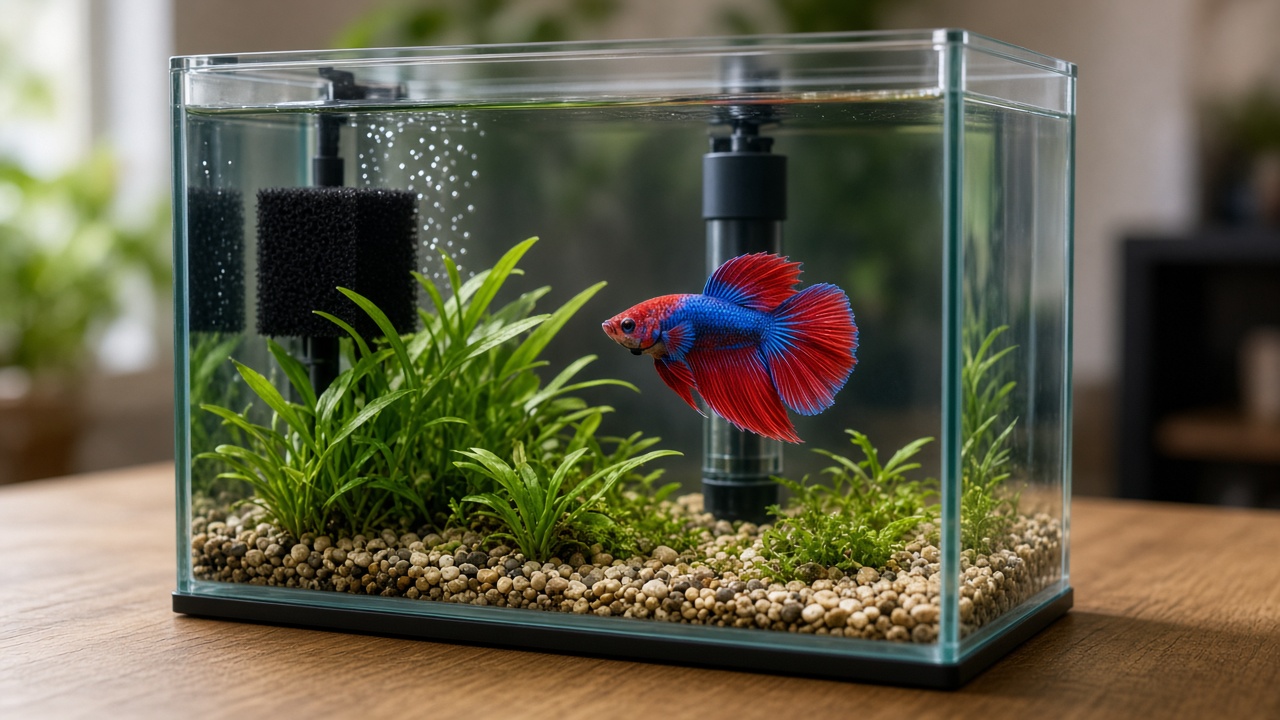
A 5 to 10 gallon heated, filtered tank stays more stable than a 1 gallon bowl. Tiny bowls need very frequent full cleanings and create volatile water. That stress pattern alone can explain why a betta fish is not eating.
Illness signs that mean appetite loss is not “just picky”
Refusal plus other symptoms needs a closer look and a vet path.
Watch for clamped fins, white spots, pinecone scales, red gills, heavy gasping at the surface, or long bottom-sitting. Appetite loss with those signs is more urgent than a one-day skip after a move. Do not stack random medications. Photograph symptoms, lock in temperature and zero ammonia, then contact a fish-experienced veterinarian if the fish declines.
Urgent signs:
- Gasping with readable ammonia or nitrite
- Rapid breathing and pale or red gills
- Bloating with scale protrusion
- White spots or cottony patches
- Complete refusal lasting several days with lethargy
Our research team analyzed care texts that still put husbandry first. Clean, warm water is the treatment foundation before specialty meds. Edge case: a betta that eats treats but ignores pellets may only need a softer or smaller staple, not a disease label.
Keep lighting on a regular day-night cycle. Constant bright light adds stress that shows up as skipped meals. A simple timer helps more than another treat jar.
Parameter targets that support a working appetite
Stable numbers make food interesting again.
| Parameter | Target cue | Why it matters for appetite |
|---|---|---|
| Temperature | About 76–85°F; many aim 78–82°F | Cool water lowers activity and feeding interest |
| pH | About 6.8–7.5 on one common range | Big swings add stress on top of fasting |
| Ammonia | 0 ppm | Any readable level can suppress eating |
| Nitrite | 0 ppm | Same urgency as ammonia for appetite and gills |
| Feeding window | Finish food in about 1–2 minutes | Leftovers foul water and invite gut issues |
| Tank volume | About 5–10 gallons preferred for stability | Tiny bowls swing chemistry and chill faster |
Hold these targets before you rotate through five food brands. A thermometer and a test kit answer more fasting cases than a new jar of pellets.
A practical fix order when your betta fish is not eating
Work the list top to bottom so you do not miss an emergency.
Start with temperature and nitrogen tests. Correct cold water and toxins first. Then adjust meal size and fasting. Then reduce flow and stress. Only after those steps should you experiment with food texture. Keep a short log with date, temp, test results, and what was offered.
Fix order:
- Read thermometer and correct heat
- Test ammonia and nitrite; change water if needed
- Remove leftovers and pause heavy feeding
- Offer a tiny soft meal once numbers stabilize
- Soften flow and add cover if the fish still hides
- Seek veterinary help if illness signs worsen
Owners consistently report better outcomes when they treat fasting as a diagnostic checklist. Random salt dips and guesswork meds rarely replace warm, clean water.
FAQ
How long can a betta go without eating?
Healthy adult bettas can skip food for several days during stress or fasting resets. A day or two after a move is common. Multi-day refusal with bad water tests or disease signs is different. Check temperature and ammonia the same day if the fish also looks weak.
Should I change all the water if my betta will not eat?
No. Never replace all the water at once in routine care. Use partial changes with conditioned, temperature-matched water. Full resets wipe helpful bacteria and swing chemistry harder. Test ammonia and nitrite first so you know what you are diluting before you start the siphon.
Can cold room air alone stop a betta from eating?
Yes. Care ranges sit near the upper 70s to low 80s °F for active fish. Rooms in the mid-60s °F chill bowls and nano tanks without heaters. Warm the water into range with a sized heater and reassess appetite after the reading holds steady for a day.
What should I feed after a fasting stretch?
Offer a few soft pellets or a small thawed frozen item once ammonia reads zero. Keep the meal inside a 1 to 2 minute finish window. Do not compensate with a huge feast. Edge case: if the belly still looks swollen, wait another fasting day.
Does a filter mean I can feed more often?
Filtered tanks may allow once or twice daily feeding when waste stays controlled. More meals still mean more ammonia risk if portions are large. Match frequency to test results, not to glass begging. Remove every flake or pellet the fish ignores within a couple of minutes.
When is not eating an emergency?
Treat it as urgent when the fish gasps, clamps fins, or sits on the bottom for long stretches. White spots or any readable ammonia or nitrite also raise urgency. Appetite loss plus those signs needs same-day water correction. Call a fish-savvy veterinarian if the fish keeps declining after water is fixed.
Will a bigger tank help a picky betta eat again?
A stable 5 to 10 gallon setup usually holds heat and chemistry better than a tiny bowl. Better stability often restores appetite indirectly after water stops swinging hard. Size alone will not fix toxins or ice-cold water. Upgrade the habitat and the heater together when the bowl keeps crashing.
This guide is informational only and does not replace advice from a qualified veterinarian.