Quick answer: Set up a cichlid aquarium with a long tank, heavy rock caves, and hard alkaline water matched to the lake group you chose. Cycle fully before stocking. Strong filtration and weekly water changes carry the bioload.
Build a long rocky tank with hard alkaline water, then cycle before any cichlids.
We compared published care data and maker specifications to write this page. Our research team analyzed tank footprint, rock stacking, and water chemistry steps for home African and other territorial cichlid setups. Owners consistently report fewer injuries when caves break sight lines and volume is not skimmed to the sticker minimum.
Comparing published specs shows setup order matters as much as shopping lists. Stand, tank, substrate, rock, filter, heater, conditioner, and a real cycle come before livestock. This page walks that order so you do not stock a pretty empty glass box that crashes in week two.
Include tank size floors, rock and substrate choices, hard-water targets, equipment order, and cycling cues for territorial cichlids. Leave out soft-water planted community recipes, saltwater reef gear lists, and medication protocols. Skip veterinary treatment plans for sick fish. This page stops at setup and first stocking discipline.
Pick tank size and footprint before species shopping
Long swimming length beats a tall show cube.
Wider aquariums give territorial fish room to claim caves without constant face-offs. Tall narrow boxes hold fewer fish per gallon for active diggers. Many mbuna keepers treat about 55 gallons as a practical floor and prefer about 75 gallons or more. Peacock and hap layouts often want still more open water. Plan adult size, not the cute juvenile in the bag.
Size checklist:
- Prefer length and width over height
- Treat 55 gallons as a common mbuna floor
- Prefer 75+ gallons when budget allows
- Add more length for mixed open-water fish
- Confirm the stand rating for water, rock, and substrate
A filled aquarium with gravel and décor weighs about 10 pounds per gallon. Use a stand built for that load. Level it so seams do not stress. Place the tank away from direct sun and cold drafts that swing temperature all day. Aqueon placement notes also warn against uneven stands and high-traffic bump zones.
Substrate choices that survive digging
Sand and mineral substrates beat sharp junk gravel.
Cichlids dig. Fine sand lets mouthbrooders sift without shredding gills on jagged stone. Aragonite or crushed coral blends can raise and buffer alkalinity when tap water is soft. Medium or coarse gravel is sometimes used for heavy diggers, yet sharp edges injure mouths. Rinse substrate in plain water only. Soap residues kill fish.
Substrate steps:
- Rinse until the water runs clearer
- Slope slightly if you want deeper back caves
- Keep depth modest under tall rock stacks
- Leave open front sand for feeding lanes
- Avoid glitter substrates that shed coatings
Darker beds hide waste and show color well. Light sand shows digging maps that help you spot territory borders. Either works when chemistry and cleaning stay honest. Vacuum open lanes weekly so mulm does not rot under rock skirts.
Rockwork that breaks sight lines without crushing fish
Rocks are the habitat, not optional décor.
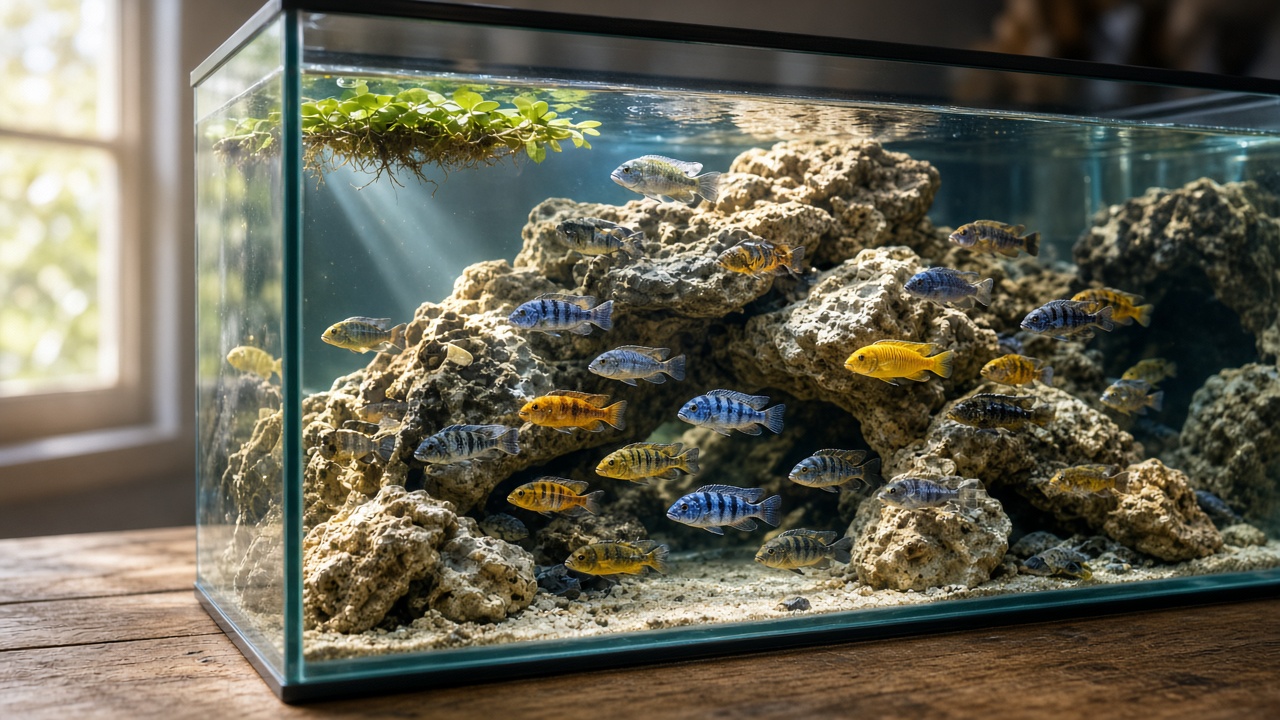
Stack limestone, slate, or lava into caves from the bottom glass upward so digging cannot collapse a mountain. Build multiple cave sizes. Break sight lines so a chased fish can leave a bully’s view. Leave open swimming lanes between piles. Artificial caves work when they are stable and free of metal toxins.
Rock rules:
- Seat piles on the glass, not on deep sand alone
- Create caves of different mouth sizes
- Avoid unstable tippy towers
- Keep a lid on; cichlids jump when startled
- Rearrange gently after major restocks to reset territories
Owners consistently report calmer groups once subordinate fish can vanish behind a wall of stone. Comparing published specs on territorial mbuna always returns to caves and length, not plastic castles alone. Recheck pile stability after the first big dig week because cichlids redesign sand overnight. A loose keystone rock is an injury waiting for lights-out chasing.
Water chemistry for hard alkaline African setups
Match the lake group before you add color fish.
Many Malawi and Victoria products buffer toward about pH 7.8 to 8.4. Seachem Malawi/Victoria Buffer is formulated for that band and raises KH without changing GH. Pair mineral salts such as Seachem Cichlid Lake Salt when you build from soft or RO water. Soft acidic community water is the wrong default for rift lake mbuna.
Water targets to verify with tests:
| Cue | Typical planning band | Note |
|---|---|---|
| Temperature | About 75–80°F tropical start | Confirm species needs |
| pH (Malawi/Victoria style) | About 7.8–8.4 | Stable beats perfect |
| KH | Buffered and steady | Supports pH |
| GH | Matched to lake group | Salt products help RO setups |
| Ammonia / nitrite | 0 ppm before stocking | Non-negotiable |
| Chlorine / chloramine | 0 ppm | Condition every fill |
Condition tap water every fill. Test kits are not optional on a new cichlid tank. Our research team analyzed setup guides that put chemistry before livestock every time. Write your target numbers on the cabinet door so every water change matches the same plan.
Equipment order: filter, heater, thermometer, lid
Install gear before rock cosmetics steal the afternoon.
Filters are the most important machine because fish live in their waste. Slightly oversized filtration helps heavy cichlid bioloads. Place heater near flow so heat spreads. Aqueon setup guidance suggests about 75–80°F as a common tropical dial starting point, then verify with a thermometer opposite the heater. Multiple heaters help very large tanks. Secure a hood so jumpers stay wet.
Equipment checklist:
- Filter sized at or above tank volume needs
- Heater matched to gallons and room climate
- Thermometer away from the heater tube
- Conditioner for every new water volume
- Lid and timer for a steady day length
Do not plug heaters until they have soaked per maker instructions. Use drip loops on cords. Keep air stones from starving filter intakes with bubbles. Oversized filters and frequent changes beat hoping a small hang-on can hide a crowded rock city.
Cycle the tank, then stock with a plan
Fish on day one is how tanks crash.
Fill with conditioned water. Run filter and heater. Prove ammonia and nitrite hit zero through a cycle before livestock. Seed media from a healthy tank when you can. Add fish in sensible groups for the species plan, not one lonely male in an empty rock desert. Weekly large water changes support busy cichlid tanks after stocking.
Stocking discipline:
- Finish the cycle first
- Match lake group and adult size
- Prefer harems over two rival males in small tanks
- Quarantine new arrivals when you can
- Watch for torn fins and rehome early
Owners consistently report that “just one more fish” without filtration headroom recreates the ammonia spike they already survived once. Your setup is ready when chemistry is stable, rock is safe, and you have a written stocking list. Print that list and tape it inside the cabinet so impulse buys do not wreck the plan.
Step-by-step first weekend build
Follow a calm order so nothing gets plugged wet by accident.
- Attach the background with the tank empty and dry
- Level the stand and set the empty tank
- Rinse and place substrate
- Seat rock piles on the glass with open lanes
- Install filter, heater, and thermometer unplugged
- Fill halfway with conditioned room-temperature water
- Finish décor, then fill to about one inch below the rim
- Prime and start the filter, then the heater after a soak
- Cover, light on a timer, and begin cycling tests
This order mirrors common maker freshwater setup guidance while keeping cichlid rock and hard water in the middle, not as afterthoughts. Take photos of rock seats before you fill so you remember what is stable. After the first week of cycling tests, resist the urge to add “just a few hardy fish” early.
Owners who skip the cycle often blame the fish when the filter was never ready. Give bacteria time. Record test strips or kit numbers in a notebook for the first month so patterns show before livestock arrives.
FAQ
What tank size should I start with for cichlids?
Plan a long footprint first for any territorial cichlid setup. Many mbuna keepers treat about 55 gallons as a hard floor and prefer 75 gallons or more. Peacocks and larger haps often need still more open swimming length. A short tall tank fights territorial fish even when gallons look fine on the sticker.
Do I need sand or gravel for cichlids?
Sand or fine substrate suits diggers and mouthbrooders better than sharp coarse gravel in most home tanks. Aragonite or crushed coral blends can help buffer alkaline water when your tap runs soft. Rinse substrate with plain water before it goes in. Never wash gravel or sand with household soap.
What pH should African rift cichlids have?
Malawi and Victoria buffers commonly target about 7.8 to 8.4 for home African setups. Hard water with stable KH supports that band better than soft acidic community recipes. Test after every large water change so chemistry stays matched to the plan. Set parameters before you add the first fish.
How should I stack rocks safely?
Build caves on the glass bottom so digging cannot topple a pile onto fish below. Create broken sight lines from front to back across the entire rockscape. Leave open sand lanes for swimming and feeding each day. Secure lids because startled cichlids jump when chased across the tank.
How long should I cycle before stocking?
Run the filter and heater with conditioned water until ammonia and nitrite read zero through a full cycle. Adding fish on day one is the classic crash pattern for brand-new tanks. Seed media from a healthy tank when you can. Test daily during the first cycle weeks without skipping.
Can I mix mbuna with peacocks in one setup?
Many keepers keep rock-dwelling mbuna separate from open-water peacocks and larger haps. Different space needs and aggression styles clash in average home tanks. Match lake group, adult size, and temperament before you shop the store. Rehome early if one fish owns the whole rock pile.
How much filtration does a cichlid tank need?
Oversized filtration helps because cichlids create a heavy bioload every single day. Aim for strong mechanical and biological capacity with good circulation through the rockwork. Pair that gear with large weekly water changes after stocking. Clear water alone does not prove nitrogen waste is safe.
This guide is informational only and does not replace advice from a qualified veterinarian.