Quick answer: Most tropical community tanks sit near 74–80°F. Bettas often prefer warmer water, goldfish need cooler ranges, and discus-type fish push hotter still.
Match the heater to the fish, not a single myth number.
We compared published care data on tropical, coldwater, and specialty freshwater temperature bands. Our research team analyzed heater sizing rules, thermometer placement notes, and species overlap charts. Owners consistently report fewer disease flares when temperature stays steady inside the right band for every fish in the tank.
Comparing published specs, many tropical community fish thrive near about 74–80°F, with a common sweet spot around about 78–80°F. Betta care notes often list about 76–85°F. Fancy goldfish notes often list about 68–74°F, while common comet-type goldfish notes often list about 60–70°F. Warm specialists such as discus and some rams often prefer near about 85°F. Heater planning often uses about 5 watts per gallon when raising water about 10°F under a lid. This page covers ranges by fish type, stability, heaters, thermometers, and mixing mistakes.
Include a verified thermometer, species-matched targets, and a properly sized heater when room air runs cool. Leave out goldfish in hot tropical community tanks. Skip guessing without a thermometer or running a heater dry during water changes.
Scope board:
| Include | Leave | Skip |
|---|---|---|
| Species overlap temperature math | One “perfect” number for all fish | Goldfish with warm tropical schools |
| Separate thermometer checks | Unheated tropical tanks in cold rooms | Running heaters exposed to air |
| Dual heaters on large loads | Ignoring daily swings | Mystery unbranded heater guesses |
| Maker install wait times | Mixing axolotl-cool with tropical heat | Drug protocols without a veterinarian |
Start with tropical community ranges near the mid to high seventies
Most beginner freshwater fish cluster in a warm band.
Tropical community species such as many tetras, livebearers, and peaceful barbs commonly thrive near about 75–80°F. Hobby setup notes often cite about 74–80°F for the majority of freshwater pets when homes run cooler. A steady target near about 78°F sits inside many overlaps. Stability matters as much as the exact degree. Rapid swings stress immune systems even when the average looks fine on paper.
Tropical board:
| Group | Common published band |
|---|---|
| Broad tropical community | About 74–80°F |
| Everyday sweet spot theme | About 78–80°F |
| Many livebearers and tetras | Overlap near mid-70s to 80°F |
| African cichlid community themes | Often about 74–80°F |
| Brackish beginner themes | Often about 75–80°F |
Our research team analyzed community stocking notes that prioritize overlap over any one species’ peak. Comparing published specs rejects mixing coldwater goldfish into this band. Owners consistently report calmer fish when heaters hold the line overnight. Confirm every new species before you buy. Edge case: some “room-temperature” hardy fish still suffer in winter drafts.
Set betta tanks warmer and keep coldwater goldfish clearly cooler
Labyrinth bettas and goldfish do not share one heater setting.
Betta care notes commonly keep water between about 76°F and 85°F for activity and disease resistance. Cooler water may leave them sluggish and vulnerable. Fancy goldfish notes often prefer about 68–74°F. Comet and shubunkin notes often prefer about 60–70°F. Broad coldwater hobby summaries often cite about 65–75°F for goldfish groups. Never force goldfish into a hot tropical community just to share a heater.
Cool versus warm board:
| Fish type | Common temperature theme |
|---|---|
| Betta splendens | About 76–85°F |
| Fancy goldfish | About 68–74°F |
| Comets and shubunkins | About 60–70°F |
| Goldfish coldwater summary | About 65–75°F |
| White cloud and ricefish themes | Often fine without tropical heat |
Owners consistently report betta lethargy in unheated bowls kept in cool rooms. Our research team analyzed coldwater notes that still demand strong filtration even without tropical heaters. Comparing published specs favors separate tanks when ranges refuse to overlap. Follow each manufacturer heater label for bowl versus glass tanks. Call a veterinarian if gasping or clamped fins follow a temperature crash.
Reserve hotter targets for discus, rams, and similar warm specialists
Some fish want water near the mid-eighties.
Discus, ram cichlids, and certain Apistogramma notes often prefer hotter water near about 85°F. Discus hobby bands commonly span about 82–86°F. These fish need heaters that can hold heat without wild overshoot. Community tetras that prefer cooler tropical water may struggle at those peaks. Stock only species that share the hot band.
Warm specialist board:
| Fish | Common published theme |
|---|---|
| Discus | About 82–86°F |
| Rams and hot dwarf cichlids | Often near about 78–85°F |
| Some Apistogramma | Wide warm bands; confirm species |
| Everyday tropical community | Usually cooler than discus peaks |
| Overlap rule | Every fish must fit the target |
Our research team analyzed warm-specialist notes that treat 78°F as too cool for many discus plans. Comparing published specs favors dedicated hot tanks over forcing mixed communities. Owners consistently report better color and appetite when heat stays locked in range. Size heaters for the full rise from room air. Seek veterinary help for lingering ich after cold snaps.
Size heaters with watt guidelines, dual units, and maker wait times
Equipment choices protect fish when rooms run cool.
A common rule uses about 5 watts per gallon when you must raise water about 10°F and a lid limits evaporative cooling. A 29-gallon example at that rise points toward about 100 watts. Homes near about 65°F that need a 15°F rise may need extra capacity or a second heater. Large 200-watt loads often split into two 100-watt units for safer failure modes. Nano tanks about 6 gallons or less often use about 25 watts or less depending on room air.
Heater checklist:
- Match watts to gallons and the needed temperature rise
- Prefer dual heaters when total load climbs high
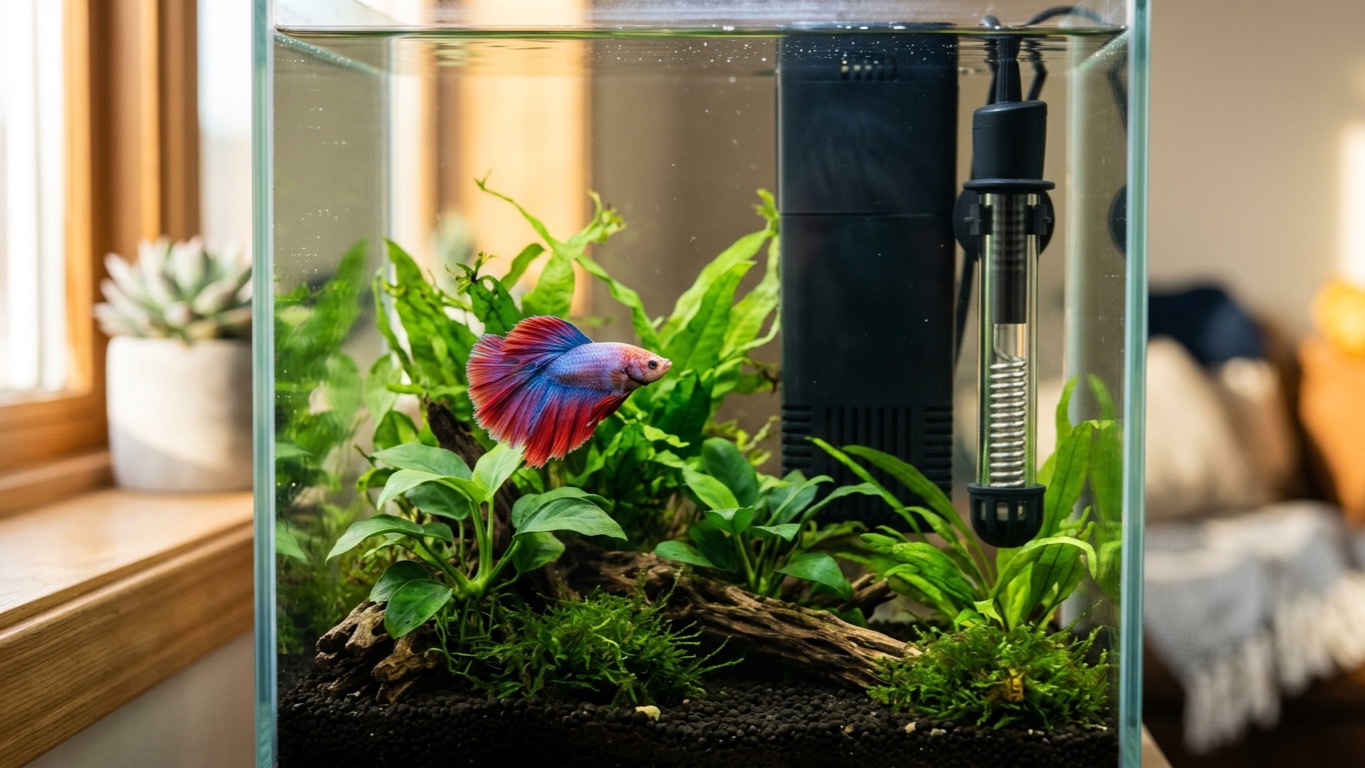
- Place the heater in strong flow near filter output
- Wait about 20–30 minutes submerged before plugging in
- Unplug before water drops below the minimum fill line
When naming gear, follow Aqueon and similar manufacturer install sheets for preset, mini, and submersible heaters. Our research team analyzed failure notes that blame dry-firing during water changes. Comparing published specs favors a second thermometer opposite the heater. Owners consistently report fewer disasters with dual mid-size heaters than one oversized stick. Replace aging heaters on a planned schedule.
Treat stability, thermometers, and daily checks as non-negotiable
A correct average still fails if the tank swings hard.
Install an independent thermometer away from the heater so you verify real water temperature. Glance at readings during daily feeding. Heaters can stick on or fail off without warning. Lids reduce evaporative cooling and help hold setpoints. Lights and large canister filters also add heat, so recheck after equipment changes.
Stability board:
| Practice | Why it matters |
|---|---|
| Separate thermometer | Catches stuck or dead heaters |
| Opposite-corner placement | Confirms heat reaches the far end |
| Daily glance at feeding | Spots overnight failures early |
| Lid on tropical tanks | Limits evaporative cooling |
| Recheck after gear changes | Filters and lights add heat |
Owners consistently report losses after unnoticed heater failures on workdays. Our research team analyzed stress notes tied to multi-degree daily swings. Comparing published specs favors boring steady charts over chasing a perfect single digit. Keep a spare heater for emergencies when possible. Contact a veterinarian if many fish flash, clamp, or gasp after a swing.
Never mix incompatible temperature groups in one display
Stocking errors create chronic stress no medicine fixes cleanly.
Goldfish and warm tropical schools are the classic mismatch. Axolotl-cool themes near the low sixties clash with betta heat. White cloud mountain minnows and some ricefish tolerate cooler rooms, yet they still need stable water and good filtration. Build the species list first, then pick one temperature both can share. If ranges barely kiss at an edge, choose different tanks.
Mixing rules:
- List every species’ published band before buying
- Pick a target inside the full overlap, not one edge
- Separate coldwater and tropical livestock permanently
- Avoid “temporary” heat compromises that linger for months
- Rehome rather than force a doomed community
Our research team analyzed beginner failure notes that start with cute mismatched bag fish. Comparing published specs treats overlap math as mandatory. Owners consistently report calmer tanks after splitting incompatible groups. Stability still matters inside each correct band. Ask a veterinarian about recovery care after severe temperature accidents.
FAQ
What temperature should a typical tropical fish tank be?
Many tropical community tanks do well near about 74–80°F, often targeting about 78°F inside the overlap. Confirm every species before locking the heater for the long term. Stability beats chasing one famous number from a forum post. Use a separate thermometer daily at feeding time. Adjust only inside published bands for your exact fish list.
What temperature is best for betta fish?
Betta notes commonly recommend about 76–85°F so fish stay active and resilient. Cooler unheated bowls in drafty rooms leave them sluggish. Use an appropriately sized heater and follow the manufacturer instructions. Recheck with an independent thermometer. Call a veterinarian if lethargy follows a cold spell.
Do goldfish need a heater?
Often no, when room temperatures already sit inside their cooler bands. Fancy goldfish notes often cite about 68–74°F; comet-type notes often cite about 60–70°F. They still need strong filtration and protection from summer overheating. Never house them long-term with hot tropical communities. Seek veterinary care for buoyancy or appetite crashes.
How many watts should my aquarium heater be?
A common starting rule is about 5 watts per gallon for roughly a 10°F rise under a lid. Colder rooms need more capacity or a second unit. Split large watt totals across dual heaters when possible. Always follow the specific manufacturer sizing chart. Verify results with a thermometer for several days.
Where should I place the heater and thermometer?
Mount the heater in strong flow, often near the filter output, sometimes at about a 45° angle for long tubes. Place a thermometer in the opposite corner to confirm even heat. Keep the heater fully submerged to the marked line. Unplug before water changes. Wait about 20–30 minutes after submerging a new cold heater before powering it.
Can tropical and coldwater fish share one tank temperature?
Only if every species’ published range truly overlaps at your target. Goldfish plus warm tropical fish usually fail that test. Barely overlapping edges leave no safety margin for swings. Separate tanks are safer than chronic compromise. Ask a knowledgeable seller or veterinarian before mixing odd pairs.
What if my tank temperature suddenly spikes or crashes?
Check the heater, room climate, and thermometer immediately. Correct gradually toward the species band rather than shocking fish with ice or boiling water tricks from social media. Increase aeration if heat soars and oxygen falls. Monitor for disease after the event. Contact a veterinarian if fish gasp, flash, or die.
This guide is informational only and does not replace advice from a qualified veterinarian. Always follow the manufacturer instructions for any aquarium heater you install.