Quick answer: Musk turtles and painted turtles are the best pet turtles for beginners because they stay smaller than sliders. A common musk turtle reaches about 4 to 5 inches as an adult, so it fits a home aquarium better than a red-eared slider. Skip any turtle sold with a shell under 4 inches, because that sale is illegal in the United States.
The CDC August 2024 investigation update recorded 63 Salmonella illnesses in 22 states, and 28 people were hospitalized.
Use the Three-Gate Beginner Test before you buy
A first turtle should pass three gates: legal size, adult size, and a lifespan you can honestly keep.
Most shop tanks fail the second gate, because hatchlings look tiny and many species do not stay that way. Treat a failed gate as a hard stop.
- Legal size. The turtle’s upper shell, called the carapace, must be at least 4 inches. The FDA page Pet Turtles: A Source of Germs states the 1975 ban on smaller pet turtles.
- Adult size. Pick a species that stays near 5 inches as an adult, not a species that reaches 10 inches.
- Years in the home. Plan for 20 years or more, because some captives live far longer than a family dog.
If a seller skips any gate, walk away, because a cheap hatchling is not a cheap pet. The best pet turtles for beginners are the ones that still fit your room when they are grown.
Common musk turtles are the smallest reliable starter
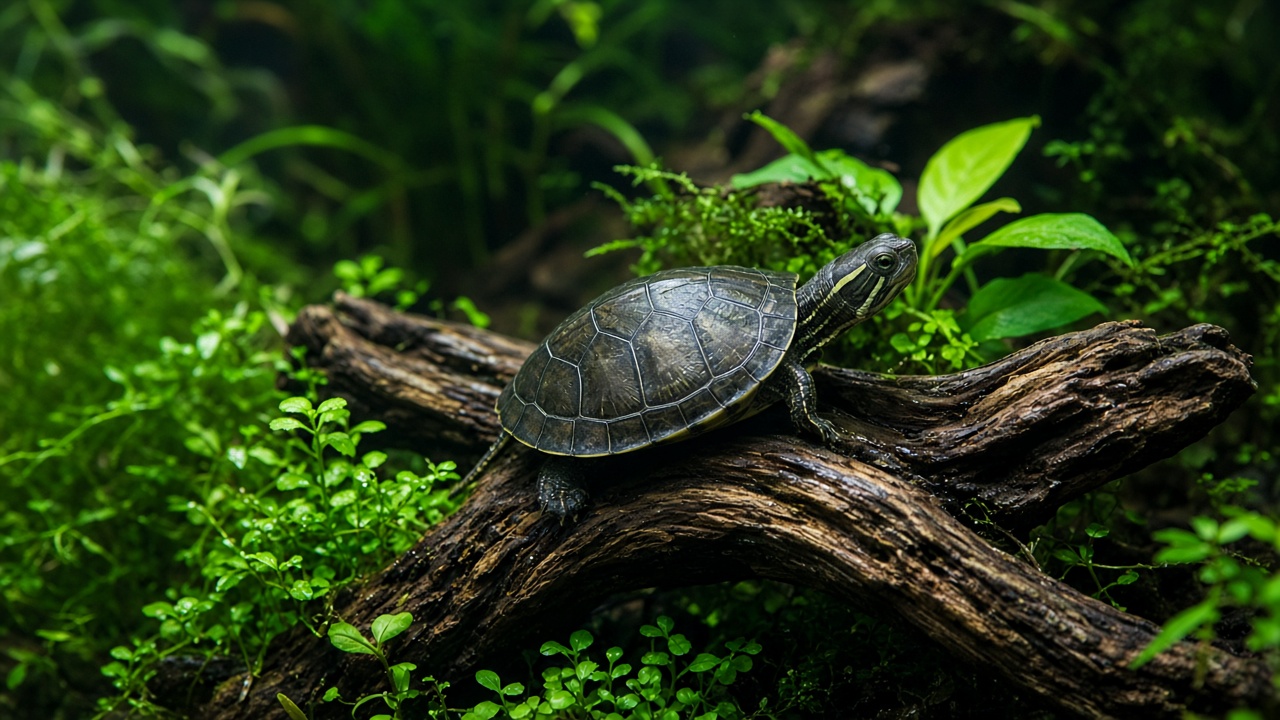
A common musk turtle, also called a stinkpot, is the best first aquatic turtle for a home tank.
The U.S. Fish and Wildlife Service musk turtle page lists this species at 3 to 5 inches long. The University of Michigan Animal Diversity Web account for Sternotherus odoratus lists adult length at 100 to 127 mm, or 4 to 5 inches. That high end is half the 25.4 cm adult female slider length on the same database.
These turtles walk the bottom more than they race across open water. They live in still or slow water in the wild, so a shorter, wider tank suits them better than a deep tower tank.
They can spray a musky smell when they feel scared, so handle them little and watch them instead. The same Fish and Wildlife Service page maps common musk turtles in 34 U.S. states, so many rescues already hold this species.
Adopt before you buy a farmed hatchling if a healthy adult is available nearby. That agency page says females lay one to seven eggs, and those eggs hatch after 60 to 90 days.
Adults may live more than 50 years, and the Animal Diversity Web lists a captive record of 54.8 years. That last number is the real cost of the pet.
Painted turtles work if you have a bigger tank
A painted turtle is a fair beginner pick only if you already have space for a large aquarium.
Painted turtles sit between musk turtles and sliders in adult size, so they need more swim room than a stinkpot. They bask often and need a dry dock, a heat lamp, and a UVB lamp that covers the dock.
They also need open swim lanes, because they paddle more than musk turtles do. A musk turtle can use shallower water, while a painted turtle wants a longer stretch of open water.
Plan on decades in the same home, even if many pets will not reach a record age. Buy a captive-bred painted turtle, and do not take one from a pond.
State collection rules vary, and a wild turtle is not a starter pet. If your room cannot hold a wide tank, choose the musk turtle instead.
Red-eared sliders are common, not beginner-sized
A red-eared slider is the turtle most shops still push, yet it is a poor first turtle for a small room.
The USGS Nonindigenous Aquatic Species profile lists red-eared slider shell length at 125 to 289 mm, which is about 5 to 11 inches. The University of Michigan Animal Diversity Web account for Trachemys scripta lists slider length at 10 to 29 cm. Average adult females reach 25.4 cm, and average adult males reach 17.78 cm.
Females can weigh up to 3,200 grams, which is a pond animal, not a desk pet. A grown slider needs pond-scale water, strong filtration, and a large basking platform that stays fully dry.
That Animal Diversity Web account says sliders can live up to 30 years in the wild and 41.3 years in captivity. The same USGS species profile says most nonnative sliders arrive through pet releases and escapes, and those releases have gone on since the 1930s.
Do not dump a grown slider in a park pond, because released pets can crowd native turtles. Keep a slider only if you can house an adult for decades; if you cannot, pick a musk turtle instead.
The 4-inch rule is a health law, not a shop myth
Small turtles spread Salmonella, and U.S. law treats that risk as settled fact.
The FDA page Pet Turtles: A Source of Germs records the 1975 ban on live turtles with shells under 4 inches. The same rule covers viable turtle eggs.
The CDC report Reptile-Associated Salmonellosis — Selected States, 1998–2002 says the 1975 ban prevented an estimated 100,000 Salmonella cases in children each year. That later FoodNet analysis tied about 74,000 Salmonella infections a year to reptile and amphibian contact.
That load was 6 percent of sporadic cases, and 11 percent of cases in people under 21. The CDC August 2024 investigation update shows the old risk is not gone. Of 29 people who reported turtle size, 27 had turtles under 4 inches.
That share is 93 percent, and it matches the reason the 4-inch rule exists. Wash your hands after every tank chore, and keep turtles out of kitchens and bathrooms used for food or infant care.
Do not let children under 5 handle a turtle, and do not kiss a turtle or put it near your mouth. A healthy-looking turtle can still shed Salmonella, and clean water does not erase that fact.
Build the tank around waste, not the hatchling
Turtle tanks fail when the filter is sized for fish, not for a messy reptile.
Turtles eat a lot and soil water fast, so you should over-filter from day one. The Fluval FX6 canister filter page rates circulation at 563 U.S. gallons per hour and lists the unit for tanks up to 400 U.S. gallons.
That class of canister is the scale a large slider needs as an adult. A musk turtle needs less water volume, but it still needs strong flow and a filter you can clean without a fight.
Set the tank up in this order, and do not skip a dry dock:
- Pick the largest footprint you can stand, heat, and service each week.
- Add a filter rated far above the actual water volume in the tank.
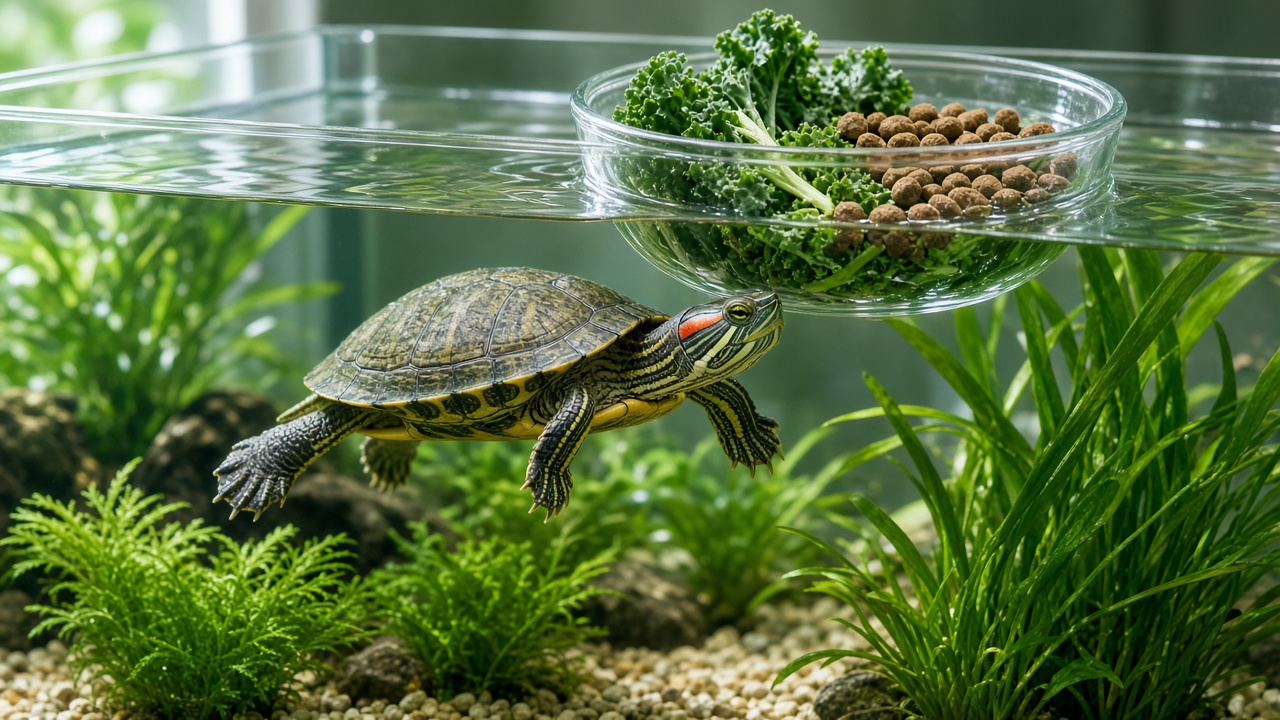
- Keep a dry dock that lets the turtle leave the water with a dry shell.
- Add a heat lamp over the dock and a UVB lamp on a day-night timer.
- Use a water heater, and check temperature with a second thermometer.
- Skip loose gravel that a turtle can swallow during feeding.
Musk turtles do well in shallower water, where they can stretch a neck to air without a long swim. Painted turtles and sliders need deeper swim space plus that same dry dock.
Change water on a fixed schedule, and test ammonia and nitrite after you feed. If either reading rises, your filter or your feeding rate is wrong.
Do not house two males in a small tank, because they can fight over space. A pair needs more floor space than one turtle.
Feed for shell growth, then cut the protein
A beginner turtle stays healthier on a simple, scheduled diet than on daily treats.
Young musk turtles eat more animal food, so offer sinking turtle pellets, earthworms, and other meaty items. Painted turtles and sliders take more plant matter as they age, which matches how they feed in the wild.
The USGS Nonindigenous Aquatic Species profile notes that adult sliders tend to eat more plants than juveniles, though both still take prey. Use this feeding pattern and pull leftovers the same day, because uneaten food rots in hours.
- Hatchlings and young turtles: small daily meals that they can finish.
- Adults: several meaty meals a week, not a full bowl every morning.
- Leafy greens for painted turtles and sliders on most days.
- Calcium with vitamin D3 as directed on the product label.
- No raw hamburger, no salty human food, and no prey from polluted water.
A turtle that sits in dirty water can develop shell rot and swollen eyes. Those are tank problems first, so fix the water, then seek a clinician who treats reptiles.
Compare the main beginner options by size
Adult size, not hatchling price, should decide which turtle you bring home.
- Common musk turtle. The U.S. Fish and Wildlife Service musk turtle page lists adults at 3 to 5 inches, and the Animal Diversity Web lists 100 to 127 mm. Plan on 50-plus years, including the 54.8-year captive record on the Animal Diversity Web. This is the best first pick.
- Painted turtle. Adults grow larger than a musk turtle and need a wider swim lane plus a basking dock. This is a good pick only if the tank is already large.
- Pond slider, including the red-eared slider. The USGS Nonindigenous Aquatic Species profile lists shells at 125 to 289 mm, and the Animal Diversity Web lists average females at 25.4 cm. Plan on up to 30 years in the wild or 41.3 years in captivity. This is a poor first pick.
- Any turtle under 4 inches. The FDA page Pet Turtles: A Source of Germs records the ban on these sales. This is not a starter size, so do not buy it.
Skip wild-caught box turtles and any Asian species sold without papers. A beginner does not need a rare turtle; a beginner needs a legal, small, well-started animal.
Never release a pet turtle into a local pond, ditch, or park lake. Released sliders are a documented source of new wild populations, and dumped pets also spread disease.
What first-year care actually looks like
The first year is about water quality and routine, not handling time on the couch.
Expect this weekly load, and keep it beside the tank:
- Daily: feed, remove leftovers, and check that lamps and filters still run.
- Two to three times a week: spot-clean waste and wipe the water line.
- Weekly: test water, rinse filter foam if flow drops, and top up evaporated water.
- Monthly: deep-clean the dock, and replace UVB bulbs on the maker’s schedule.
Budget for power, because heaters, lamps, and a large canister run all year. The electric bill is part of the pet.
Plan a holiday sitter who can do water changes. Dirty water cannot wait a week.
If you move, the tank moves with you, because that 50-year musk turtle does not go to a pond.
FAQ
What is the easiest pet turtle for a first aquarium?
A common musk turtle is the easiest aquatic starter for most homes. It stays 3 to 5 inches, per the U.S. Fish and Wildlife Service musk turtle page, and it uses shallow water well.
Can a red-eared slider live in a 20-gallon tank?
A 20-gallon tank cannot house an adult red-eared slider. The USGS Nonindigenous Aquatic Species profile lists adult shells at 125 to 289 mm, so that tank is a short nursery at best.
Why are turtles under 4 inches illegal to sell?
The FDA page Pet Turtles: A Source of Germs records the 1975 ban because small turtles spread Salmonella, especially to young children.
How long will a beginner turtle live?
Plan on decades, not a school-year project. The Animal Diversity Web lists a 54.8-year captive musk turtle and a 41.3-year captive slider.
Are pet turtles safe around young children?
They are not hold-and-cuddle pets for small kids. The CDC August 2024 investigation update hospitalized 28 people and hit young children hardest. Keep turtles out of kitchens and away from kids under 5.