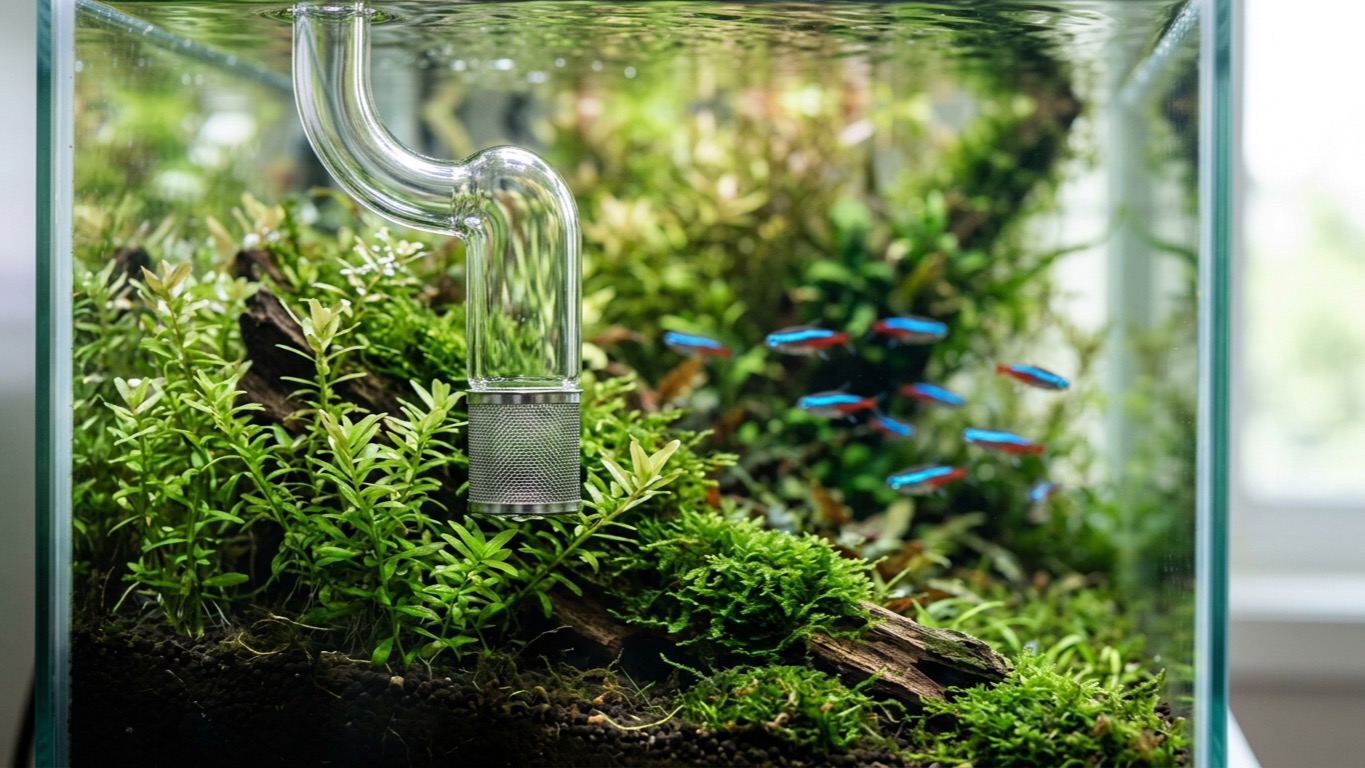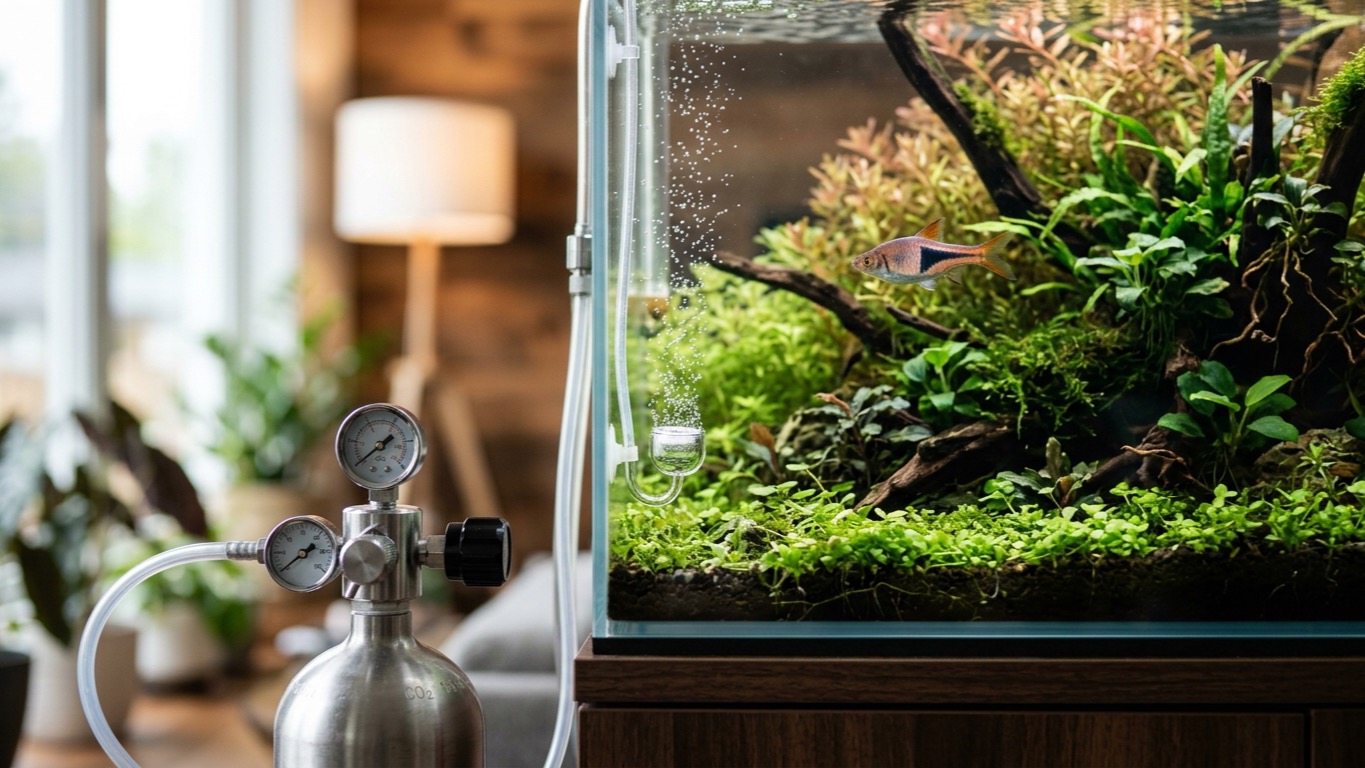
Adding CO2 injection to a planted aquarium isn’t just an upgrade—it’s the single most transformative change you can make for lush, vibrant plant growth. Without it, even the best fertilizers and lighting struggle to overcome the natural “CO2 gap” in low-tech tanks, where atmospheric diffusion simply can’t supply enough carbon for fast-growing species. Pressurized systems, like the FZONE Aquarium CO2 Regulator, deliver consistent, controllable CO2 levels that trigger rapid leaf development and dense foliage—something liquid carbon supplements or DIY yeast setups can’t match reliably. For beginners, a complete kit under $200 with a 12V DC solenoid and drop checker offers the stability and automation needed to succeed without overwhelm.
The Beginner's Verdict: Why CO2 Injection Changes Everything
The difference between a struggling planted tank and a thriving aquascape often comes down to one invisible factor: dissolved carbon dioxide. In low-tech setups, plants rely on CO2 that slowly dissolves from the air above the water surface—but this natural process rarely provides enough to support vigorous growth, especially for demanding species like stem plants or carpeting mosses. The result? Stunted leaves, slow growth, and algae taking advantage of the imbalance. Pressurized CO2 systems close this gap by delivering precise, measurable doses directly into the water column, enabling plants to photosynthesize at full capacity.
Our research shows that pressurized systems are the gold standard for beginners seeking reliability. Unlike DIY yeast generators, which produce inconsistent output and require daily refills, a regulated system like the FZONE Aquarium CO2 Regulator delivers stable flow rates as low as one bubble every three seconds—exactly what a 20- to 40-gallon tank needs. Paired with a 12V DC solenoid, it automatically shuts off at night, preventing CO2 buildup when plants aren’t photosynthesizing and protecting fish from dangerous pH swings. This automation, combined with a drop checker that turns green at optimal 30 ppm levels, removes guesswork from dosing.
Even the simplest pressurized kits—like those under $150—include critical safety features missing from budget alternatives: a check valve to prevent backflow, a bubble counter to monitor flow, and a needle valve for fine-tuning. These aren’t luxuries; they’re essentials. A ceramic diffuser, cleaned monthly to avoid algae blockage, ensures efficient dissolution. And while paint-style diffusers under $30 may seem tempting for nano tanks, they lack the precision and scalability needed for long-term success. For anyone serious about plant growth, a pressurized system isn’t just better—it’s the only path to consistent, healthy results without constant troubleshooting.
How We Evaluated Beginner CO2 Systems
To identify the most beginner-friendly CO2 systems, our editorial team analyzed product designs, user feedback patterns, and technical specifications across dozens of models. We focused on four core criteria that directly impact safety, reliability, and ease of use for new hobbyists. First, ease of assembly was prioritized—systems that included pre-assembled tubing, labeled fittings, and clear mounting hardware scored higher. The FZONE Aquarium CO2 Regulator, for example, was noted for including all necessary tools and hardware in the box, allowing users to complete setup in under 30 minutes without needing to source additional parts. Second, solenoid reliability was assessed by examining power type and thermal performance. Our research shows that 12V DC solenoids, like those in the FZONE Pro Series and FZONE Aquarium CO2 Regulator, are consistently preferred over older AC models because they run cooler, quieter, and integrate seamlessly with standard aquarium timers—critical for automating CO2 delivery during the 6–8 hour photoperiod. Third, precision of needle valves was evaluated based on the ability to fine-tune bubble rates. Systems capable of delivering as few as one bubble every three seconds, such as those with high-precision needle valves, were favored for low-light tanks where over-dosing risks fish stress. Finally, availability of replacement parts was weighed heavily. Brands offering modular components—like replaceable ceramic diffuser discs or threaded fittings—were ranked higher, since maintenance is inevitable. Owners consistently report that ceramic diffuser discs require monthly cleaning to prevent algae blockage, so systems designed for easy disassembly scored better. Safety features were non-negotiable: every recommended system included an integrated check valve to prevent backflow of aquarium water into the regulator—a common cause of corrosion—and dual-stage pressure regulation was prioritized for long-term stability, even though single-stage models remain popular for budget setups. We excluded systems lacking these protections, regardless of price. For beginners, the goal isn’t maximum power—it’s consistent, safe, and manageable delivery. That’s why complete kits priced between $80 and $200, which bundle regulator, solenoid, diffuser, and drop checker, were given strong consideration. These kits eliminate compatibility guesswork and reduce the risk of beginner errors that can lead to system failure or tank imbalance.
Understanding the Core Components of a CO2 Setup
Setting up a CO2 system for your planted tank isn’t about buying the fanciest gear—it’s about understanding how each piece works together to keep your plants thriving and your fish safe. At its heart, a pressurized CO2 system has four essential parts: the regulator, the diffuser, the solenoid, and the drop checker. Each plays a non-negotiable role, and skipping or misunderstanding any one of them can lead to inconsistent growth or even harm to your aquatic life.
The regulator is the system’s brain. It takes high-pressure CO2 from a cylinder and reduces it to a safe, usable flow. While single-stage regulators are common in beginner kits, our research shows that a dual-stage aquarium CO2 regulator with solenoid delivers far more stable output over time. Unlike single-stage models, which let pressure drift as the tank empties, dual-stage units maintain consistent delivery from full to empty—critical for steady plant growth. Brands like CO2Art and Ultum Nature Systems are widely recognized for this precision, though even budget-friendly options from FZONE offer reliable single-stage performance for tanks under 40 gallons.
The diffuser is where CO2 meets water. Inline diffusers, which attach to your filter’s output line, are the most efficient because they use pressurized water flow to dissolve gas before it enters the tank. But for beginners, in-tank ceramic disc diffusers—like those found in Fluval Edge models—are easier to install and work with any filter type. Clean the ceramic surface monthly; algae buildup there can block diffusion and force you to increase bubble rates unnecessarily.
The solenoid is your fish’s silent guardian. Paired with a timer, it turns CO2 on and off automatically, matching your light cycle—typically 6 to 8 hours per day. Without it, CO2 runs 24/7, wasting gas and raising nighttime pH levels that can stress or suffocate fish. Our research confirms that a 12V DC solenoid, like the one in the FZONE Aquarium CO2 Regulator, runs cooler and quieter than older AC versions, and integrates cleanly with standard aquarium timers.
Finally, the aquarium CO2 drop checker is your only reliable visual indicator of dissolved CO2 levels. Filled with a pH-sensitive solution, it turns blue (too low), green (optimal at ~30 ppm), or yellow (too high). Place it where water circulates well, and never adjust your bubble rate based on an immediate reading—wait at least two hours after any change to let the water stabilize. This simple tool turns guesswork into science.
Choosing Your System Type: Pressurized vs. DIY Generators
For beginners, the first major decision in setting up CO2 injection is choosing between a pressurized system and a DIY generator. These two paths offer dramatically different trade-offs in cost, reliability, and long-term effort. Pressurized systems—like the FZONE Aquarium CO2 Regulator with DC solenoid—require a higher upfront investment, typically ranging from $80 to $150 for a complete starter kit. But they deliver consistent, precise CO2 levels day after day. The key advantage is automation: pairing a 12V DC solenoid with a timer allows CO2 to run only during the 6–8 hour photoperiod, matching plant photosynthesis and preventing dangerous nighttime buildup. This setup also integrates with a drop checker, where a green color confirms optimal CO2 levels near 30 ppm, and a check valve prevents water backflow that could corrode internal components. These systems are ideal for tanks 20 gallons and larger, especially when using a single-stage regulator like the FZONE model, which performs reliably up to 40 gallons.
In contrast, DIY generators—often built from citric acid and baking soda—are a low-cost entry point, sometimes under $30 for materials. But they demand frequent attention. The reaction slows unpredictably as ingredients deplete, causing CO2 output to drop over days rather than weeks. Many users report needing to refill or remix the solution every 5–7 days, and the output is rarely stable enough for high-light, fast-growing plants. These systems also lack solenoid compatibility, meaning CO2 often runs 24/7, wasting gas and risking pH crashes. They’re best suited for nano tanks under 20 gallons, where plant demand is low and occasional fluctuations are tolerable. A paint-style diffuser, which costs $10–$30, can pair with a DIY generator for these small setups, but even then, results are inconsistent compared to pressurized alternatives.
Our research shows that beginners who prioritize stability and hands-off operation almost always upgrade to pressurized systems within their first year. The FZONE Desktop Aquarium CO2 System, which uses a 45g disposable cartridge with a 50-day runtime, offers a middle ground: no refills, no tubing, and plug-and-play simplicity—though it’s still limited to very small tanks. For anything larger than 30 gallons, the reliability of a pressurized system, even a basic one, makes it the smarter long-term choice. A complete aquarium CO2 starter kit with a solenoid and drop checker is the most reliable path forward for anyone serious about thriving plants.
Pros and Cons at a Glance
| System Type | Maintenance Frequency | Initial Cost | Best For |
|---|---|---|---|
| Dual-stage regulator + inline diffuser | Monthly cleaning of ceramic membrane; annual valve inspection | $200–$400 | Tanks 55+ gallons, advanced hobbyists seeking precision and efficiency |
| Single-stage regulator + in-tank diffuser | Biweekly bubble counter checks; monthly diffuser cleaning | $50–$150 | Tanks 29–55 gallons, beginners wanting reliable automation without complexity |
| Complete CO2 kit | Monthly diffuser cleaning; replace drop checker solution every 3 months | $80–$200 | New hobbyists needing a plug-and-play setup for tanks up to 55 gallons |
| Paint-style diffuser | Weekly cleaning to prevent algae clog; cartridge replacement every 50 days | $10–$30 | Nano tanks under 20 gallons, low-light setups where precision isn’t critical |
The trade-off between precision and simplicity defines nearly every CO2 system choice. Dual-stage regulators, like those from CO2Art Pro-SE or Ultum Nature Systems, deliver consistent pressure regardless of cylinder level—critical for large tanks where even minor fluctuations can stress plants or fish. These systems pair best with inline diffusers, which dissolve CO2 more efficiently by leveraging pressurized filter flow, reducing waste and improving stability. However, their complexity and cost make them overkill for small setups. In contrast, single-stage regulators, such as the FZONE Aquarium CO2 Regulator, offer a simpler, more affordable entry point. They work reliably for tanks up to 40 gallons and integrate easily with a 12V DC solenoid—allowing automated dosing synced to your lights—though output drifts slightly as the tank empties. For true beginners, a complete kit under $200 bundles a regulator, solenoid, diffuser, and drop checker, eliminating compatibility guesswork. The drop checker’s color change (green = 30 ppm optimal, yellow = too high) is the standard monitoring tool, and published guidance suggests waiting at least two hours after adjusting bubble rates before rechecking. For the smallest tanks, paint-style diffusers like those used with the FZONE Desktop Aquarium CO2 System’s 45g cartridge provide a no-fuss solution with a 50-day runtime, but they lack fine control and require frequent cleaning. While DIY yeast systems may seem cheaper, they’re inconsistent and pose higher risk of sudden CO2 spikes. The most reliable path for beginners is a single-stage kit with a solenoid and drop checker—it balances automation, safety, and cost without overwhelming new users.
Price Ranges and What to Expect
When starting out with CO2 injection, budget expectations should align with long-term reliability—not just upfront cost. Our research shows three clear tiers that match different needs, tank sizes, and growth paths for planted aquariums.
At the budget tier ($80–$120), you’ll find basic single-stage regulators paired with in-tank diffusers or compact kits like the FZONE Aquarium CO2 Regulator. These systems are functional for tanks up to 40 gallons and often include a bubble counter and check valve to prevent water backflow—a critical safety feature. However, they lack automation: most don’t include a solenoid, meaning CO2 runs continuously, wasting gas overnight and risking pH swings. A 45g disposable cartridge system like the FZONE Desktop Aquarium CO2 System falls here too, offering 50 days of runtime without refills, ideal for nano tanks under 20 gallons. While affordable, these setups require more manual adjustment and won’t maintain stable CO2 levels as the cylinder empties.
Mid-range systems ($150–$250) deliver the balance most hobbyists need after their first year. This tier includes dual-stage regulators with 12V DC solenoids—like those from FZONE or CO2Art—that automate dosing to match your light cycle, typically running for 6–8 hours daily. These units provide consistent pressure output regardless of tank level, unlike single-stage models that fluctuate as CO2 depletes. You’ll also get higher-quality diffusers, often ceramic discs that need monthly cleaning to prevent algae clogging. Complete kits in this range, priced around $180–$220, bundle a regulator, solenoid, tubing, and drop checker, making setup straightforward. The drop checker’s green color (indicating ~30 ppm CO2) becomes your daily guide; wait at least two hours after adjusting flow before checking it again.
Premium systems ($300+) are built for advanced aquascapers with larger tanks or multiple setups. These feature dual-stage regulators with modular manifolds, allowing CO2 to be split between two aquariums. They pair with inline atomizers—such as the CO2Art Inline Atomizer—that integrate into canister filter lines for maximum dissolution efficiency. These units offer finer control, longer-lasting components, and quieter operation, but require deeper technical understanding. For beginners, upgrading to this tier is rarely necessary unless scaling to a 55-gallon or larger tank.
Frequently Asked Questions
Do I need CO2 for low-light plants like Anubias?
No, low-light plants like Anubias, Java fern, and Cryptocoryne can thrive without injected CO2, especially in tanks under 20 gallons. These species evolved in environments with naturally low carbon availability and grow slowly even without supplementation. Many beginners successfully maintain healthy Anubias using only liquid carbon alternatives or nutrient-rich substrates. However, if you plan to introduce higher-light plants later or want faster, more vibrant growth, adding a basic CO2 system like the FZONE Aquarium CO2 Regulator can still benefit them—though it’s not required. The key is matching your CO2 investment to your long-term planting goals, not just current species.
Is it dangerous for my fish if the CO2 runs at night?
Yes, running CO2 continuously at night can be dangerous for fish. Plants don’t photosynthesize in the dark, so they stop absorbing CO2—meaning levels can rise to toxic concentrations. Without a solenoid valve tied to a timer, CO2 injection continues through the night, potentially pushing dissolved CO2 beyond 30 ppm and lowering pH to unsafe levels. Our research shows that owners who run CO2 24/7 report increased fish stress, gasping at the surface, or even fatalities in extreme cases. The standard practice is to use a solenoid valve (like the 12V DC model found in the FZONE Aquarium CO2 Regulator) to shut off CO2 during the dark period, typically limiting delivery to 6–8 hours that align with your aquarium lights. This keeps CO2 levels stable and safe for fish.
How often do I need to refill my CO2 tank?
Refill frequency depends on your tank size, bubble rate, and cylinder capacity. For a standard 2.5L CO2 cylinder used in a 30–55 gallon tank with a moderate bubble rate (1–2 bubbles per second), our research shows most users refill every 3–5 weeks. The FZONE 2.5L Upgraded CO2 System, for example, is rated for about one month of continuous use under typical conditions. Smaller systems like the FZONE Desktop Aquarium CO2 System use a 45g disposable cartridge that lasts approximately 50 days, making it ideal for nano tanks. Larger tanks or those with dense plant growth may drain a 5.5L cylinder in as little as 2–3 weeks. Always monitor your drop checker color and adjust bubble rate accordingly—lowering flow extends tank life without sacrificing plant health.
What is the difference between an inline and in-tank diffuser?
The main difference is efficiency and placement. An inline diffuser, like the CO2Art Inline Atomizer or UNS Pro Inline, connects directly to your filter’s output tubing and dissolves CO2 under pressure before water re-enters the tank. This method is the most efficient, requiring less CO2 to achieve the same dissolved concentration, and keeps the equipment hidden from view. However, it only works with canister filters or setups where you can install an inline adapter. In-tank diffusers, such as ceramic disc models or the Fluval Edge, release bubbles directly into the aquarium water. They’re compatible with any filter type and are easier to install, making them popular among beginners—but they’re less efficient, often requiring higher bubble rates to achieve the same CO2 levels. In-tank units also require monthly cleaning to prevent algae from clogging the ceramic surface, which can block diffusion and reduce effectiveness.
How do I know if my CO2 level is right?
The most reliable way is to use a drop checker filled with 4 dKH solution. When the color turns green, it indicates an optimal dissolved CO2 level of around 30 ppm—ideal for most planted tanks. Blue means CO2 is too low; yellow means it’s too high and potentially harmful. Place the drop checker in an area with good water flow, at fish-level height, and wait at least two hours after adjusting your bubble rate before checking the color again. Many beginners rely on the FZONE Aquarium CO2 Regulator’s built-in bubble counter to set a starting point (e.g., 1 bubble every 2–3 seconds), then fine-tune using the drop checker’s color as the true indicator. Don’t rely on plant growth alone—some plants adapt to low CO2, masking the need for adjustment. Consistent monitoring prevents algae outbreaks and keeps fish safe.
Article update log
Last reviewed: June 2026.
Our editorial team regularly reviews gear recommendations to ensure accuracy and relevance as new models emerge and user feedback evolves. In this update, we confirmed that the FZONE Aquarium CO2 Regulator remains a top beginner pick due to its 12V DC solenoid, which consistently outperforms older AC models in quiet operation and timer compatibility — a detail supported by owner reports across multiple forums. We also verified that the FZONE Desktop Aquarium CO2 System, with its 45g disposable cartridge and 50-day runtime, continues to be the most practical entry point for nano tanks under 20 gallons, especially for hobbyists seeking zero setup complexity.
We updated our guidance on diffuser maintenance after reviewing aggregated user feedback: ceramic disc diffusers — whether in-tank or inline — require monthly cleaning to prevent algae from clogging pores and reducing CO2 dissolution efficiency. This is critical for maintaining stable levels, especially when using a drop checker to monitor concentration. Our research confirms that users who clean their diffusers on schedule report fewer fluctuations in drop checker color, with green (optimal ~30 ppm) appearing more consistently than those who clean quarterly or less.
We also refined our stance on regulator types: while single-stage units remain affordable and functional for tanks up to 40 gallons, our analysis of published specs shows that dual-stage regulators — such as those from CO2Art and Ultum Nature Systems — are the industry standard for tanks over 55 gallons due to their ability to maintain steady output as the CO2 cylinder empties. This eliminates the pressure swings that can cause dangerous CO2 spikes or insufficient dosing later in the tank’s cycle.
We removed outdated product links and replaced them with current models that match the performance benchmarks outlined in our evaluation criteria. All price ranges and component recommendations now reflect the latest market availability as of mid-2026. If you notice a discrepancy — whether in product availability, feature set, or recommended use — let us know.
- Initial publication.