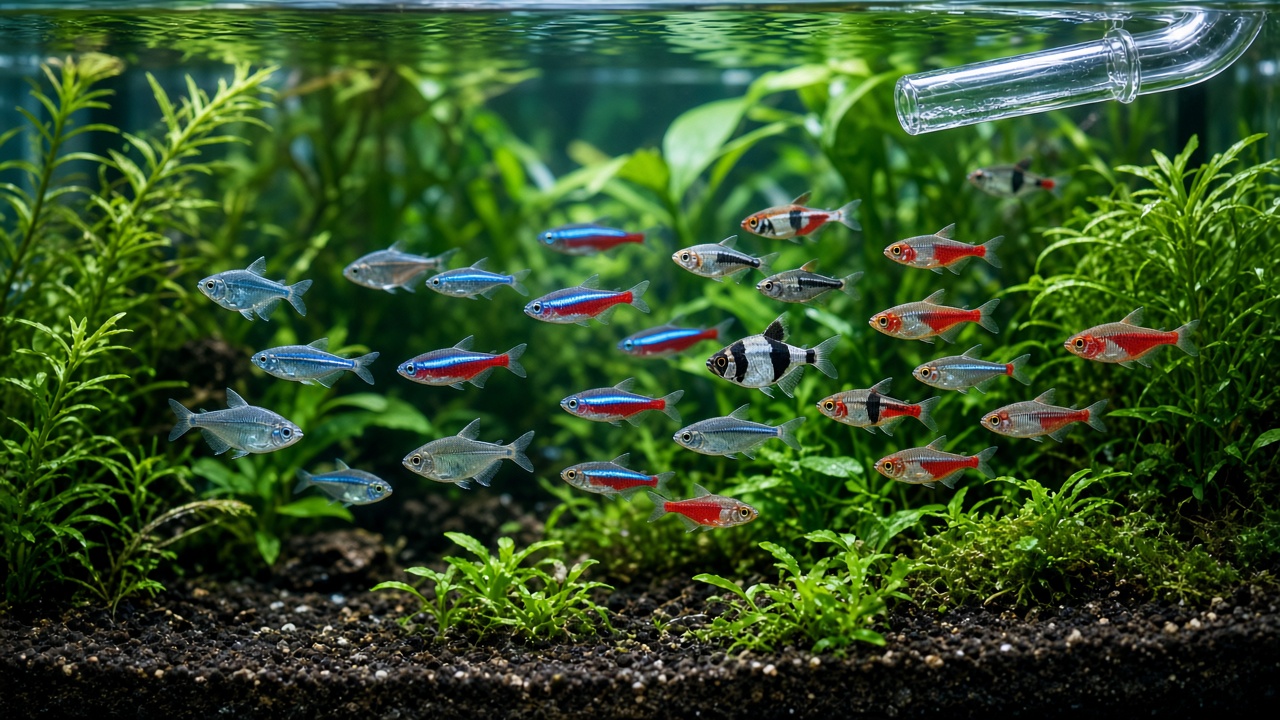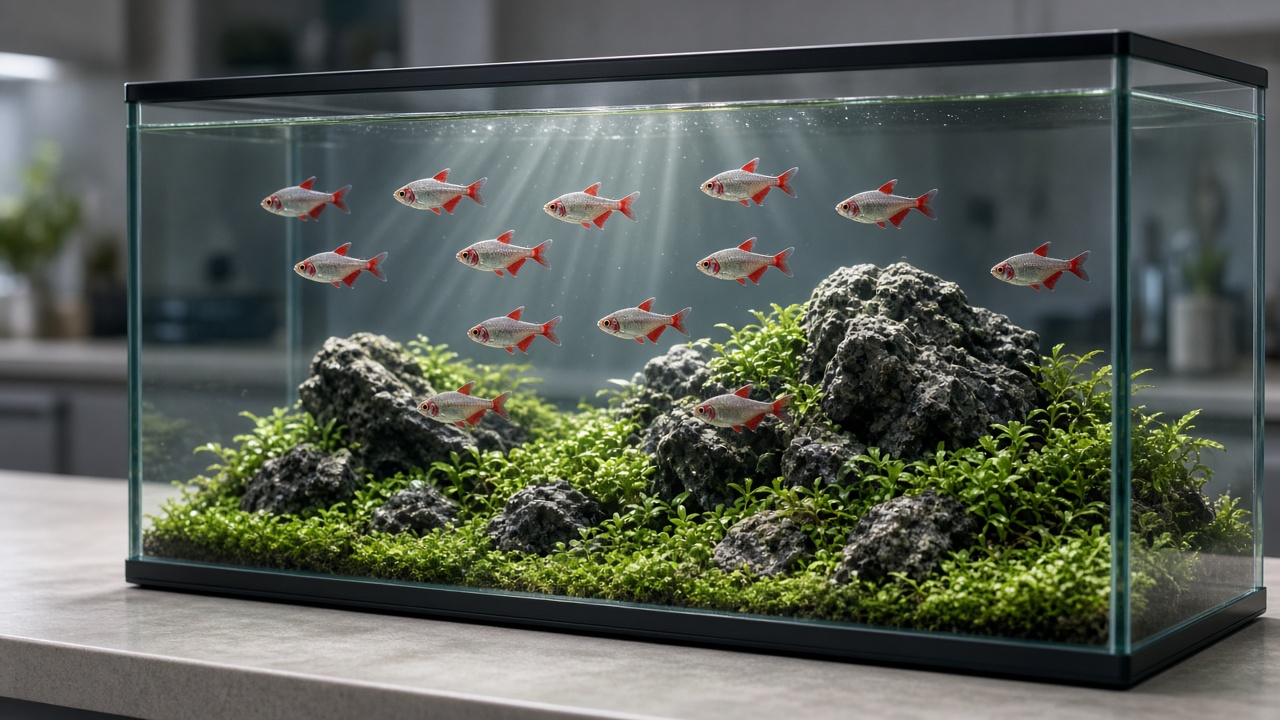
Quick answer: Keep serpae tetras in a school of 12 or more. Use a tank at least 80 cm long. Skip bettas, angels, and other long-finned fish.
Keep serpae tetras in a group of 12 or more in a tank at least 80 cm long.
This page is a research-desk comparison of published species figures and current maker specs.
What this page covers, and what it leaves out
Our research team analyzed published species profiles and current maker pages, and we kept only the common red fish sold as serpae tetra.
That fish is listed by Seriously Fish as Hyphessobrycon eques, and shops also call it jewel, blood, or callistus tetra.
We included school size, tank footprint, food form, water ranges, and tank-mate rules. We left out balloon, long-fin, and fairy-fin strains as separate care plans.
We covered tank mates only when they are short-finned and active.
If you want a smaller, calmer tetra, see our ember tetra care page.
School size is the nipping control
Fin nipping drops when the school is large enough to keep rank fights inside the group.
Seriously Fish calls this species gregarious and notes rival males keep battling for place. The same profile sets a group of at least 12 as the minimum.
That number is a hard floor, and a pair or a group of six runs out of targets inside the school.
Seriously Fish also says nipping is worst when numbers are low or space is tight. The same page advises 12 to 15 fish in the minimum tank, with no other upper-water species.
Adding other midwater fish means a larger tank, so buy the full school on day one. A later top-up still leaves the first fish in a short, tense group.
Watch for these signs that the school is too small:
- One fish hides while others chase it all day
- Long fins on other species look shredded
- Males flare and chase across the open water with no pause
Those signs point back to count and space, and they are not a reason to add one extra fish and stop. Count and length work as one rule.
Pick tank length before you pick gallons
Gallon labels do not replace the 80 by 30 cm base that Seriously Fish sets as the absolute minimum.
That profile lists a standard length of 40 mm and a tank base of 80 by 30 cm, or 31 by 12 inches.
The same page converts that base to about 72 liters, or about 19 US gallons, and treats length as the rule.
A short, tall 20-gallon box can hold 20 gallons and still fail the 80 cm length. Our research team compared that published base with current kit specs.
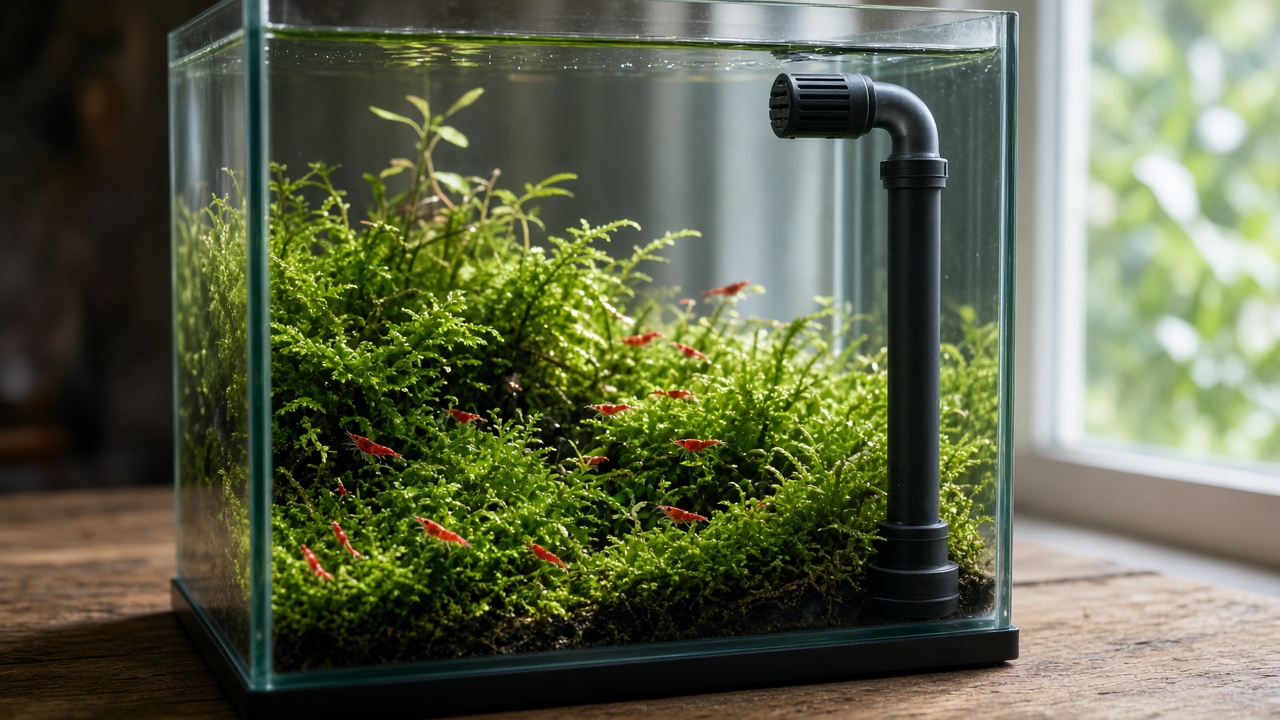
The Fluval Flex Aquarium Kit, 32.5 US Gal, lists a 32.5 inch length and a 15.75 inch width. Fluval’s page converts that footprint to 82 by 40 cm.
That kit meets the length rule by 2 cm and lists 123 liters, 51 liters above the Seriously Fish figure.
Fluval lists the Flex pump output at 214 US gallons per hour, or about 6.6 turnovers on a 32.5 gallon box.
Use any box at least 80 cm long and 30 cm wide, and skip cube tanks and tall nano kits.
Compare listed footprints, not marketing volume:
| Product | Type | Maker-listed size | Maker-listed extra spec |
|---|---|---|---|
| Fluval Flex Aquarium Kit, 32.5 US Gal | Aquarium kit | 32.5 in L x 15.75 in W x 15.35 in H; 123 L | Pump 214 US GPH; 63 LEDs; 1,450 lm |
| Hikari Tropical Micro Pellets | Daily pellet | 0.77 oz, 1.58 oz, and 2.2 lb packs | Feed 2 to 3 times daily, about 1 minute |
| Fluval Bug Bites Tropical Granules | Slow-sinking granule | 1.4–2.0 mm granule; 45 g pack | Crude protein 40.0% min; feed 2 to 3 times daily, 2 minutes |
| Seachem Prime | Water conditioner | 5 mL treats 50 US gal of new water | Each cap thread is about 1 mL |
| API Freshwater Master Test Kit | Liquid test kit | Four test tubes and a color card | Test weekly; pH, high-range pH, ammonia, nitrite, nitrate |
Do not rank those items; match each one to a job: space, food, new water, or weekly checks.
A 32.5 gallon Flex fits 12 to 15 serpae tetras with no other midwater fish. Add other upper-water species only after you move to a longer tank.
Water, heat, and weekly checks
Stable water matters more than chasing a perfect number on day one.
Seriously Fish lists 20 to 28°C, or 68 to 82°F. It also lists pH from 5.0 to 7.5 and hardness from 1 to 15 dGH.
Farm-raised fish in shops tolerate that full pH band, per the same profile. Keep temperature inside that band and keep it steady.
API’s page for the Freshwater Master Test Kit says to test weekly. That kit lists ammonia, pH, high-range pH, nitrite, and nitrate.
Use the kit on tap water and on tank water.
Target these readings from the maker and species pages:
- Temperature: 20 to 28°C, per Seriously Fish
- pH: 5.0 to 7.5, per Seriously Fish
- Hardness: 1 to 15 dGH, per Seriously Fish
- Weekly checks of ammonia, nitrite, nitrate, and pH, per API
Condition new tap water before it hits the tank. Seachem’s Prime page says to use 1 capful (5 mL) for each 50 US gallons of new water.
Each cap thread is about 1 mL, per that same page. A 25 percent change on a 32.5 gallon Flex is about 8.1 gallons of new water.
That new-water volume needs about 0.8 mL of Prime at the listed rate. Do not pour a full cap into a small change.
Seachem says a sulfur smell is normal. It also says you may use up to five times the normal dose to bind nitrite in an emergency.
Do not use that emergency dose as a weekly habit. Prime binds those compounds for up to 48 hours, per Seachem, and can be dosed every 24 to 48 hours.
If water is hotter than 30°C (86°F) and chlorine is low, Seachem says to use a half dose.
Daily food for a 40 mm mouth
Serpae tetras eat small prey in the wild, so food size matters as much as the label.
Seriously Fish describes an omnivore diet of small invertebrates, crustacea, algae, and fallen fruit. In tanks, the same page says dried food can keep them alive, but live or frozen foods do better.
Hikari’s Micro Pellets page names tetras and other small-mouthed fish as the target. The maker’s feeding note is two to three times daily, only what fish finish in about a minute.
Hikari’s guaranteed analysis lists 43.0% minimum crude protein, a dense daily pellet for a 40 mm fish.
Fluval’s Bug Bites Tropical Granules page lists 40.0% minimum crude protein and 12.5% minimum crude fat. It also lists a 1.4 to 2.0 mm slow-sinking granule.
Fluval lists black soldier fly larvae at up to 40% of the formula, a large bite for a 40 mm tetra.
Use Bug Bites if the school eats each piece whole, and switch to Hikari Tropical Micro Pellets if chunks sit on the sand.
Feed on this schedule from the maker pages:
- Two or three small meals per day
- Stop at one minute for Hikari Tropical Micro Pellets
- Stop at two minutes for Fluval Bug Bites Tropical Granules
- Remove leftover food after the feeding window
Do not crush large flakes if a micro pellet already fits. Rotate in frozen bloodworm, daphnia, or brine shrimp a few times a week, as Seriously Fish suggests.
Tank mates that stay out of range
The safe tank mate is fast, short-finned, and not parked in midwater with trailing fins.
Seriously Fish says this species is a poor match for shy, slow, or long-finned fish. The page names many livebearers, cichlids, and anabantoids as weak choices.
That list includes bettas, gouramis, fancy guppies, and angelfish, whose long fins sit in the strike zone.
The same profile prefers robust, open-water characids of similar size and also lists hatchetfish, pencilfish, small catfish, and some small cichlids. Bottom fish work because they stay out of the midwater lane.
Skip these pairings:
- Bettas and other long-finned anabantoids
- Angelfish and other slow, tall cichlids
- Fancy guppies, long-tailed endlers, and slow livebearers
- Tiny, timid tetras in the same short midwater lane
A calmer small tetra belongs in its own setup. If you add other midwater fish, enlarge the tank first, as Seriously Fish notes, and keep the serpae school at 12 or more.
A simple setup sequence
Set the box, cycle the filter, then add the full school in one move.
Use this order:
- Choose a tank at least 80 cm long and 30 cm wide
- Fill, dechlorinate, and heat into the 20 to 28°C band
- Cycle the filter until ammonia and nitrite read zero on the API kit
- Add 12 or more serpae tetras together, not in ones and twos
- Feed two or three small meals and test weekly
Plant the back and sides, and leave a long open lane in front so the school can turn.
Seriously Fish says color looks better over a dark substrate with plants and wood. Do a regular water change and dose Seachem Prime on the new water.
If nipping starts after setup, check count and length before you rearrange decor, because a cave does not replace the twelfth fish.
FAQ
How many serpae tetras should I keep?
Keep at least 12, because Seriously Fish sets that number as the minimum so fish focus on each other.
A group of 12 to 15 fits the minimum 80 by 30 cm tank if no other upper-water fish share it. Add length before you add other midwater species.
What tank size do serpae tetras need?
They need a base of at least 80 by 30 cm, per Seriously Fish. That is about 72 liters, or about 19 US gallons, on the same page.
A Fluval Flex 32.5 kit lists 32.5 by 15.75 inches, which clears that length. A short 20-gallon-high box can fail the length rule even if the gallon label looks fine.
Do serpae tetras nip fins?
Yes, and Seriously Fish calls the species notorious for it, with nipping worst in small groups and tight tanks.
A school of 12 or more in a long tank keeps most of that energy inside the group. Long-finned tank mates still get hit.
What temperature and pH do they need?
Seriously Fish lists 20 to 28°C and pH 5.0 to 7.5, with hardness listed as 1 to 15 dGH.
Stay inside those bands and avoid sudden swings. Test weekly with the API Freshwater Master Test Kit, as that maker page directs.
What should I feed serpae tetras?
Use a small daily food such as Hikari Tropical Micro Pellets. Hikari’s page sets two to three feedings a day, finished in about a minute.
Fluval Bug Bites Tropical Granules list 40.0% minimum protein and a two-minute feeding window. Add frozen bloodworm or daphnia a few times a week, as Seriously Fish suggests.
Can serpae tetras live with bettas or angelfish?
No, because Seriously Fish flags shy, slow, and long-finned fish as poor companions.
Bettas and angels trail fins through midwater. That is the nipping zone. Pick short-finned, active fish, or keep a serpae-only midwater group.
Can I start with six and add more later?
Do not start with six, because the nipping problem starts in that first short group.
Seriously Fish ties the worst nipping to low numbers. Buy 12 or more at once, then add tank mates only after the box is longer.