Quick answer: Add a chloramine-rated liquid conditioner to every batch of new tap water. Measure the dose for the new water only. Then pour the treated water into the tank.
A chloramine-rated liquid conditioner dechlorinates tap water in one label dose; aging overnight does not remove chloramine.
This page is a four-method desk comparison of published labels and EPA disinfectant rules. We did not run tank trials, chlorine assays, or animal-health exams.
Selection rule. We kept a method only if a home keeper can do it with tap water plus a published label or an EPA rule.
We compared four current conditioners with a listed milliliter dose for chlorine and chloramine. We left out pond-only bottles, saltwater-only additives, ultraviolet units, and unlabeled products.
Why city tap water is not tank-ready
City tap water is treated to kill microbes in pipes, and those same disinfectants harm fish gills and filter bacteria.
The U.S. Environmental Protection Agency sets a 4.0 mg/L cap for chlorine residual in drinking water. The same EPA table sets 4.0 mg/L for chloramines, counted as chlorine.
That number is a human drinking-water limit, not a fish-safe target.
The EPA table also lists chlorine dioxide at 0.8 mg/L. Your city report will name which residual the plant uses.
Chloramine is chlorine bound to ammonia, and the EPA’s chloramines page says utilities have used it since the 1930s. The same page says more than one in five Americans drinks chloramine-treated water.
Chloramine lasts longer in pipes than free chlorine, which is why cities use it. That staying power is why a bucket on a porch is not a plan.
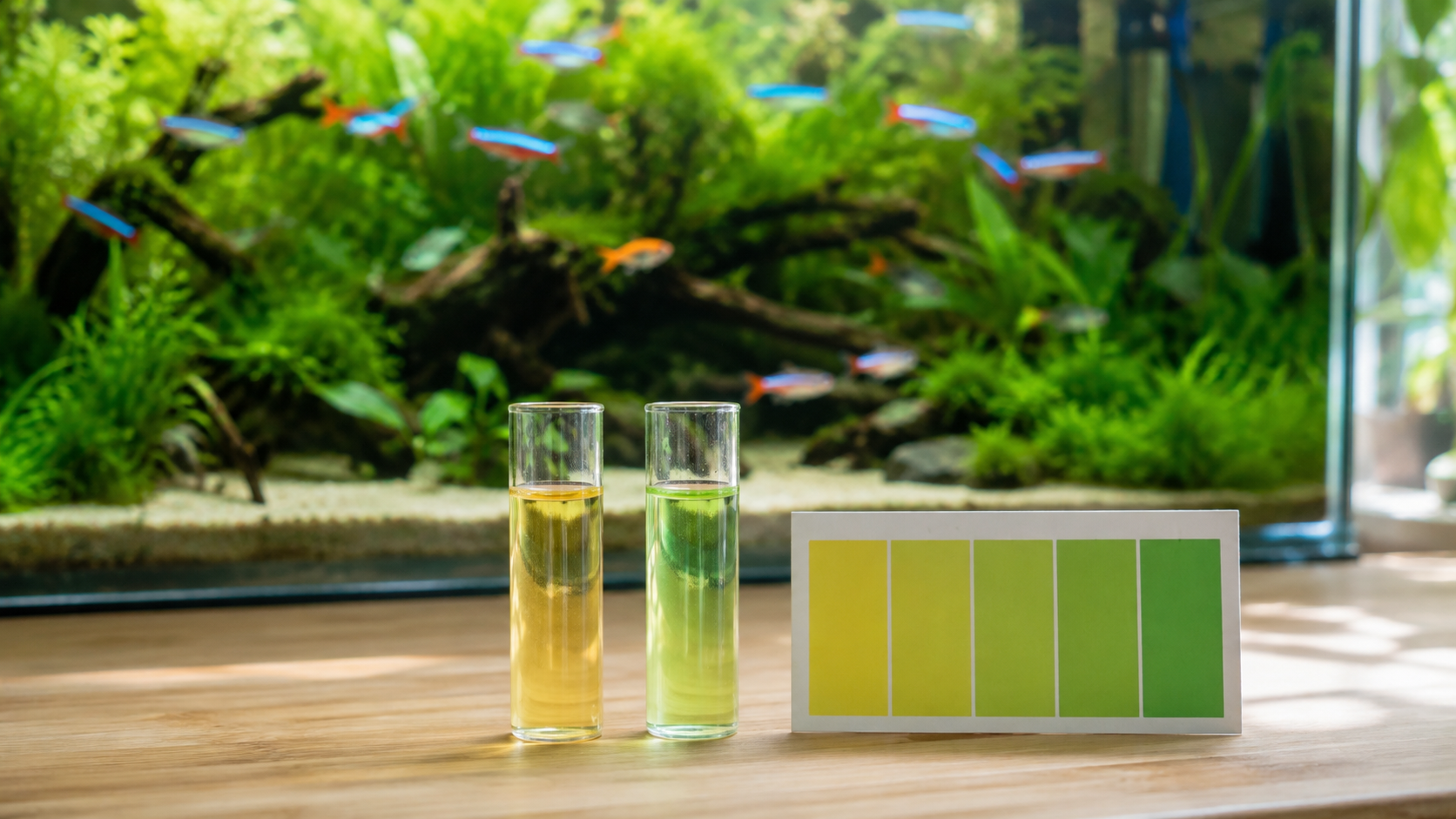
Read your utility’s Consumer Confidence Report and look for free chlorine, chloramine, or total chlorine. If the report lists chloramine, do not use aging water as your only step.
Method 1: Use a liquid water conditioner
A labeled liquid conditioner is the default home-tank method, and it is the only one here with a published milliliter dose for both residuals.
Our research team compared four maker pages, and the standard doses fall into two camps.
- Seachem Prime uses 5 mL per 50 U.S. gallons (200 L) of new water.
- Fritz Complete uses 5 mL per 50 U.S. gallons (189 L).
- API Stress Coat uses 5 mL per 10 gallons.
- Tetra AquaSafe Plus uses 5 mL, or one teaspoon, per 10 gallons (38 L).
That is a five-fold spread in milliliters per gallon. Seachem’s Prime page states the product is up to 5x more concentrated than competing products, and the published doses match that claim.
Seachem’s Prime page also states each cap thread is about 1 mL, and a full cap is 5 mL. Prime may go in the tank, but the page says it is better in the new water first. If you dose the tank, base the dose on tank volume.
Fritz Aquatics’ Complete page lists the same 5 mL per 50 gallon rate. Each listed dose, per Fritz, can neutralize up to 0.5 ppm ammonia, 1.0 ppm nitrite, and 15 ppm nitrate.
API’s Stress Coat page says to add 5 mL per 10 gallons, then double that dose if you want the slime-coat function.
Tetra’s AquaSafe Plus page says to shake the bottle first. Fill the cap to the inner ring for 10 gallons, or use one full capful for 20 gallons.
See our best water conditioner for a freshwater aquarium guide for more product detail.
Use this method when you fill a new tank, add water after a change, or top off with tap. Also use treated water, not raw tap, if you rinse filter media.
How to dose a bucket
- Fill a clean, tank-only bucket with the tap water you will add.
- Read the label dose for that volume.
- Add the conditioner to the bucket and stir for several seconds.
- Match the temperature to the tank, then pour the treated water in slowly.
You can add the water right away, because Seachem’s Prime page and Fritz’s Complete page both describe instant mixing. Tetra’s AquaSafe Plus page says the product works in seconds.
Method 2: Age tap water in an open container
Aging water only helps with free chlorine that can leave as a gas, and it is not a chloramine method.
The EPA’s chloramines page says chloramines give longer-lasting disinfection as water moves through pipes. A chemical built to persist in a city’s mains will not vanish in a kitchen bucket overnight.
Use aging only if every item below is true.
- Your utility report lists free chlorine, not chloramine.
- You can leave the water uncovered.
- You have a chlorine test that later reads zero.
- You still match temperature before you pour.
Skip aging if any item below is true.
- The report lists chloramine, or it lists total chlorine only.
- You cannot confirm a zero chlorine test.
- You need the water the same day.
- You keep shrimp, turtles, or a tank that is still cycling.
Turtle tanks use tap water too, so treat every refill. For the rest of that build, see our turtle tank setup guide.
Aging also does not bind the ammonia that appears when chloramine breaks. A conditioner that lists chloramine does that job on the label.
Method 3: Run tap water through activated carbon
Activated carbon can react with chlorine as water passes the media, but it is a helper, not a set-and-forget tap.
Carbon beds wear out, and a dark cartridge does not prove the carbon still has capacity. If you use a pitcher, a faucet filter, or filter carbon, test the outflow for chlorine.
- Run tap water through fresh carbon media and collect it in a clean bucket.
- Test that water for chlorine.
- Add a conditioner if the test is not zero.
- Replace the carbon on the filter’s listed schedule.
Do not rinse biological filter sponges under raw tap water. Chlorine in that stream can hit the bacteria you are trying to keep. Rinse media in old tank water or in already treated water.
Carbon does not replace a labeled dose when your city uses chloramine. Combined chlorine is slower to strip, so add conditioner if a test still shows chlorine.
Method 4: Strip tap water with reverse osmosis
Reverse osmosis (RO) can lower disinfectant when the unit includes a carbon stage, but RO water is not finished tank water.
RO water is low in minerals, and most freshwater fish and plants need some hardness back.
If you mix RO water with tap water, treat the tap share. Dose the conditioner for the tap gallons, not the RO gallons.
Use RO when you already remineralize for soft-water fish, or when you want a blank base for a known salt mix. Skip RO as your only dechlorination step if you still add untreated tap water. For most community tanks, method 1 is enough.
How to dose conditioner during a water change
Dose the new tap water and do not guess the volume.
How often you swap water is a separate question. See how often to change aquarium water for that schedule.
Bucket refill
- Measure the gallons you removed and fill that many gallons of tap water.
- Dose only those gallons and match the temperature.
- Add the treated water slowly.
Hose refill
- Add conditioner to the tank first for the full tank volume, or for the new water if the label allows it.
- Seachem’s Prime page says to base a direct tank dose on aquarium volume.
- Start the hose after the dose is in, then stop at the fill line.
Fritz’s Complete page says to add the product to tap water in a separate container when you can.
Seachem’s Prime page allows a double dose for high chloramine. It allows up to 5 times the normal dose to detoxify nitrite in an emergency. If water is above 30 °C (86 °F) and chlorine or ammonia is low, Seachem’s page says to use a half dose.
Fritz’s Complete page allows a repeat or increase up to 5 times in 24 hours for high chloramine or nitrite. If you add more than one dose above 86 °F (30 °C), Fritz’s page says to keep the water well oxygenated.
API’s Stress Coat page says a double dose is for slime-coat replacement and damaged skin or fins. That is a label function, not a rank.
Label-dose comparison
Our research team pulled these attributes from the four maker pages, and this is not a ranked list.
| Product | Label dose | Chloramine listed | Extra bind listed | Published size or treat volume |
|---|---|---|---|---|
| Seachem Prime | 5 mL per 50 U.S. gal | Yes | Ammonia, nitrite, nitrate | Sizes from 50 mL to 4 L |
| API Stress Coat | 5 mL per 10 gal | Yes | Heavy metals; double dose for slime coat | Listed sizes include 4, 8, 16, 32, and 64 fl oz, plus 5 gal |
| Tetra AquaSafe Plus | 5 mL per 10 gal | Yes | Heavy metals; slime colloids | Listed sizes: 1.69, 3.38, 8.45, 16.9, and 33.8 fl oz |
| Fritz Complete | 5 mL per 50 U.S. gal | Yes | Up to 0.5 ppm ammonia, 1.0 ppm nitrite, 15 ppm nitrate per dose | 16 oz treats 4,800 gal; 8 oz treats 2,400 gal |
A 250 mL bottle of Seachem Prime holds 50 standard 5 mL doses. At 50 gallons per dose, that bottle treats 2,500 gallons of new water. Fritz’s page states a 16 oz (473 mL) bottle treats 4,800 gallons.
Tetra’s 16.9 fl oz bottle is about 500 mL. At Tetra’s 5 mL per 10 gallons, our research team calculated 1,000 gallons per bottle.
On setup day, fill the tank, dose conditioner for the full volume, then start the heater and filter. Cycle the tank before you add fish.
Seachem’s Prime page says you can dose every 24 to 48 hours. The same page says Prime can bind ammonia, nitrite, and nitrate for up to 48 hours. After that window, leftover nitrogen can return unless you dose again.
The sulfur smell on Prime and Complete is listed as normal on both maker pages. Fritz’s Complete page warns that some ich treatments do not mix with sulfinate or sulfoxylate conditioners.
FAQ
Can I put fish straight into untreated tap water?
Tap water can hold chlorine or chloramine up to the EPA’s 4.0 mg/L residual cap. That residual is legal for drinking water, but it is not a fish-safe target. Add a chloramine-rated conditioner first.
Does sitting tap water overnight make it safe?
Not if your city uses chloramine, because the EPA’s chloramines page says more than one in five Americans has chloramine-treated water. Use a labeled conditioner unless a test shows zero chlorine.
Do I dose the whole tank or only the new water?
Dose the new tap water when you treat a bucket. If you add conditioner straight to the tank, Seachem’s Prime page says to base the dose on aquarium volume. Fritz’s Complete page says to base an ammonia or nitrite treatment on total tank volume.
How do I know if my tap has chloramine?
Read the utility Consumer Confidence Report and look for chloramine, monochloramine, or total chlorine. If the report is unclear, use a conditioner that lists both chlorine and chloramine.
Can I use more than the label dose?
Follow the maker’s own ceiling. Seachem’s Prime page allows a double dose for high chloramine and up to 5 times the normal dose for nitrite emergencies. Fritz’s Complete page allows up to 5 times in 24 hours, while API’s Stress Coat page doubles the dose only for the slime-coat function.
Do planted tanks and shrimp tanks still need dechlorination?
Yes, chlorine and chloramine do not spare plants or shrimp. Use the same chloramine-rated dose on every tap refill.
Does a fridge filter or pitcher replace conditioner?
Only if a chlorine test on the filtered water reads zero, because filters clog and age. If any tap water still enters the tank, add a labeled conditioner for those gallons.