Quick answer: Thai micro crabs need mature nano tanks, gentle flow, and biofilm-rich plants. Keep groups in about five to ten gallons. Choose only peaceful nano mates that will not eat them.
Give Limnopilos naiyanetri a mature planted nano, soft foods, and defenseless-safe mates.
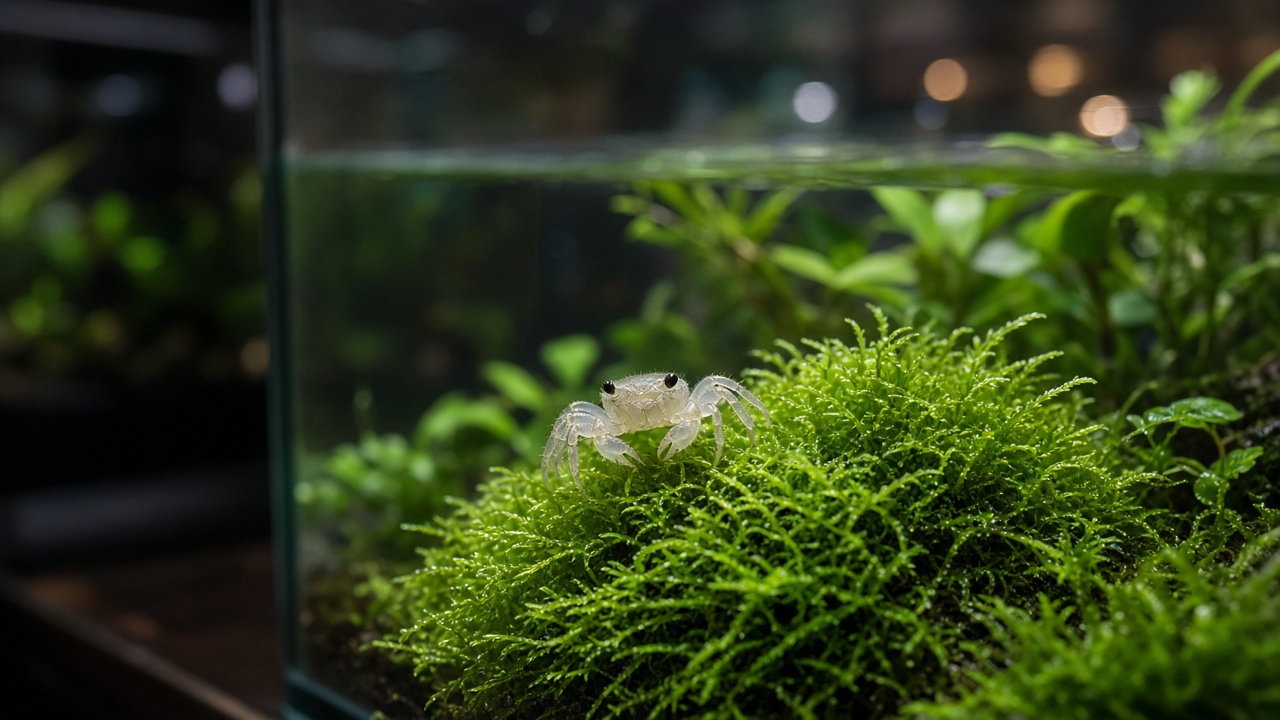
We compared published care data on Limnopilos naiyanetri, the Thai micro crab or false spider crab. Our research team analyzed nano tank volumes, filter-feeding notes, and invertebrate compatibility lists. Owners consistently report better viewing when crabs stay in smaller planted tanks with dark contrast substrate and moss.
Comparing published specs, adults reach about one centimeter across the carapace with leg spans near about 2.5 centimeters. Care sheets commonly start near five gallons for a small group, with ten gallons favored for stability. Temperature bands often sit near about seventy to eighty-two degrees Fahrenheit, or about twenty-two to twenty-eight degrees Celsius. pH notes commonly cluster near 6.5 to 7.5. This page covers tank size, setup, water, diet, mates, molting, and breeding cautions.
Include cycled mature aquariums, sponge filtration, and shrimp-style foods. Leave out large fish communities and copper meds. Skip drug protocols that belong with a veterinarian.
Scope board:
| Include | Leave | Skip |
|---|---|---|
| Mature 5–10 gal nanos | Huge display hideaways | Copper meds and ferts |
| Moss, wood, sponge flow | Bare sterile glass boxes | Bettas and crayfish |
| Shrimp-style fine foods | Large frozen chunks only | Land beaches they ignore |
| Groups of peaceful crabs | Lone stressed singles | Unsolved breeding promises |
Plan a five to ten gallon mature nano for visibility
Small crabs vanish in big display tanks.
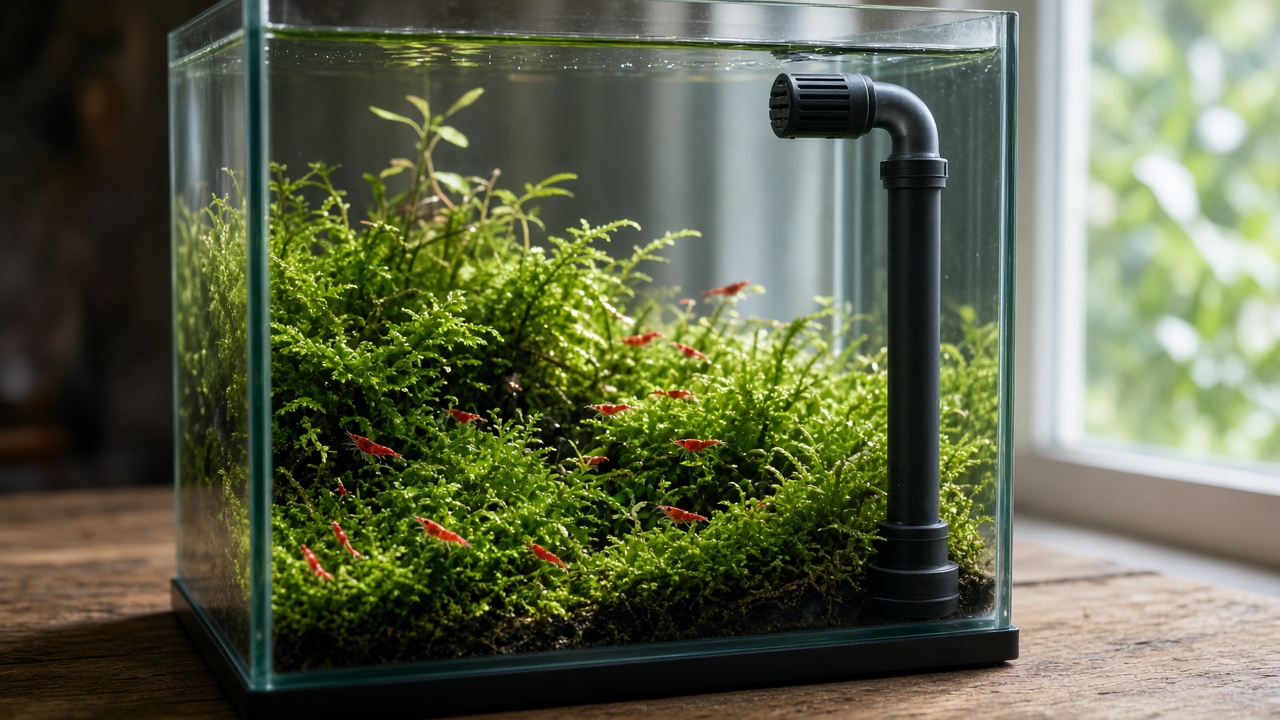
A colony of about five to six crabs often fits a five gallon class when filtration and maturity are solid. Ten gallons cushions chemistry swings and still keeps animals findable. Twenty gallon and larger tanks make pale crabs nearly invisible for many keepers. Fully aquatic crabs need no land beach. Add them only after the nitrogen cycle is proven and biofilm has grown for weeks to months.
Tank board:
| Volume | Role |
|---|---|
| About 5 gal / ~20 L | Small group floor in many sheets |
| About 10 gal | Stability and viewing balance |
| 20+ gal | Often poor visibility |
| Maturity | Cycled; biofilm established |
| Group size | Often 3–6+ for confidence |
Owners consistently report “mystery disappearances” that were hiding, not escapes. Our research team analyzed nano notes that prefer sponge filters crabs can graze. Comparing published specs treats maturity as mandatory, not optional. Dark sand or soil contrasts gray-brown bodies. Soft drip acclimation beats dump-and-pray.
Build moss, wood, and gentle sponge flow they can cling to
Habitat copies plant-root clutter more than open sand stadiums.
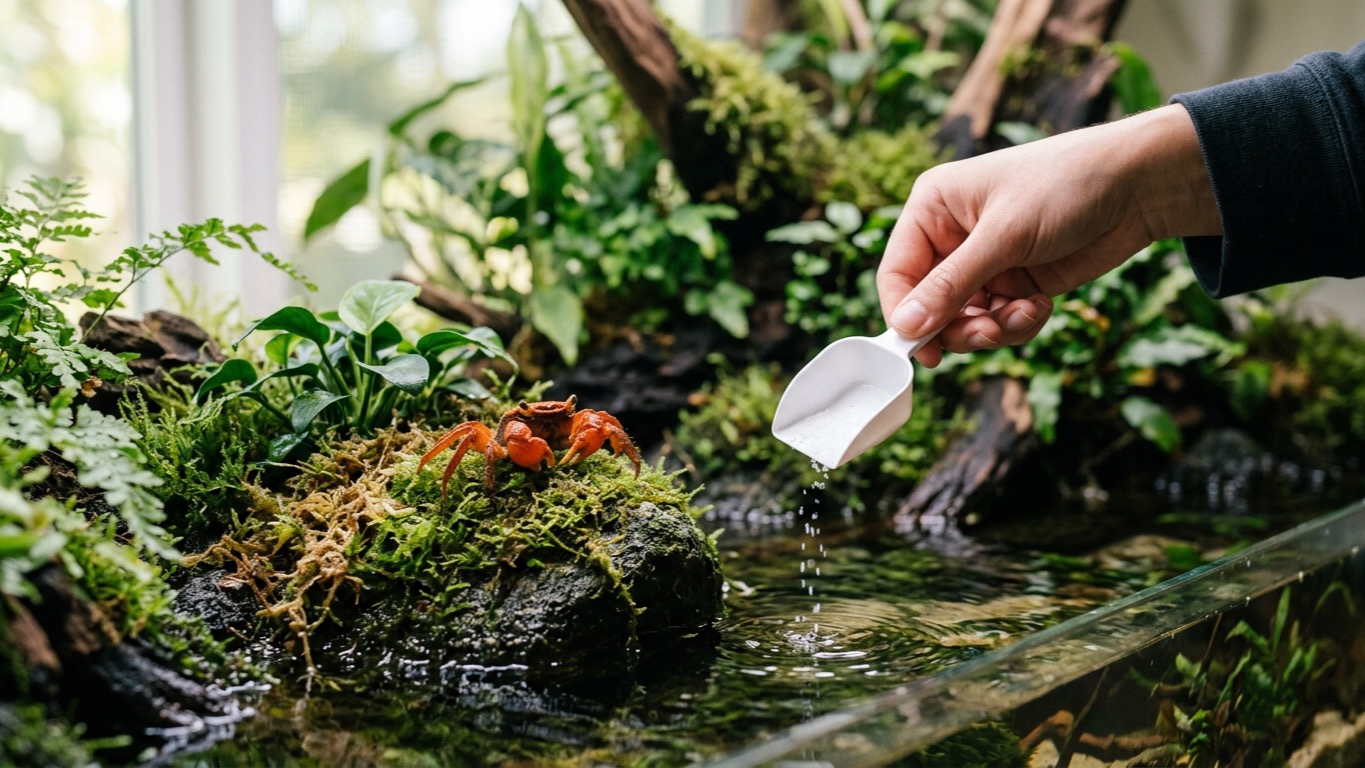
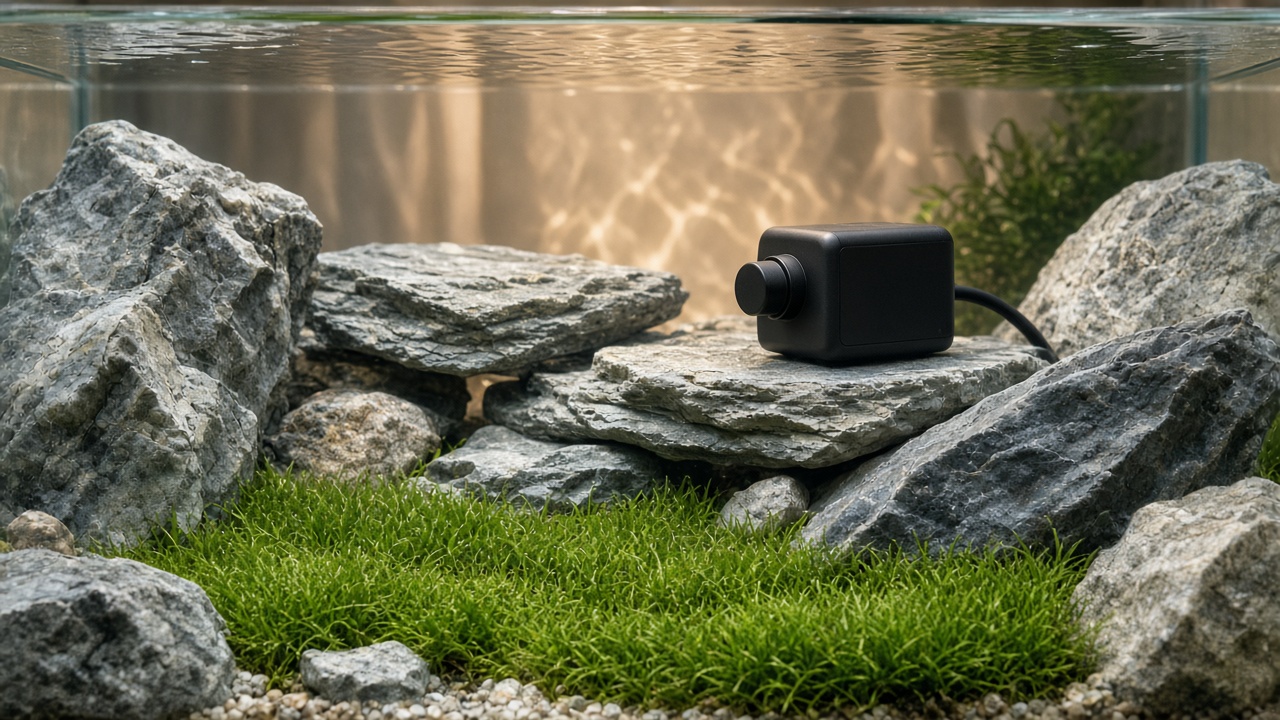
Wild notes place the species among floating plant roots in Thailand’s Tha Chin River system. In aquaria, java moss, fine stems, Anubias roots, and textured driftwood give foraging surfaces. Gentle sponge or matten-style filtration protects tiny legs and feeds biofilm. Strong canister returns knock filter-feeding setae off their rhythm. Floating plants add shade and root forests.
Setup checklist:
- Mature planted nano with moss coverage
- Soft sponge or matten filtration
- Driftwood and leaf litter for grazing
- Low to moderate light with shaded corners
- Contrast substrate for spotting crabs
Our research team analyzed feeding notes that link setae hairs to particle capture from flow. Comparing published specs favors some current without sandblasting. Owners consistently report more daytime sightings once cover feels safe. Skip copper fertilizers and medications. Rinse new décor in conditioned water only.
Hold shrimp-like water bands with zero copper
Stable chemistry matters more than chasing exotic numbers.
Published care tables often list temperature near about seventy to eighty-two degrees Fahrenheit, with many keepers preferring the mid seventies. pH commonly sits near 6.5 to 7.5, sometimes tighter near 6.5 to 7.3. General hardness notes often span about four to fifteen dGH. Carbonate hardness often sits near two to six dKH. Some sheets widen KH near two to eight. TDS targets near about one hundred twenty to one hundred eighty ppm appear in breeder notes. Ammonia and nitrite must stay at zero; nitrate is often kept under about twenty ppm.
Water board:
| Parameter | Common published band |
|---|---|
| Temperature | About 70–82°F (22–28°C) |
| pH | About 6.5–7.5 |
| GH | About 4–15 dGH |
| KH | About 2–6 or 2–8 dKH |
| Nitrate | Often under ~20 ppm |
| Copper | 0 — fatal risk |
Weekly water changes near about fifteen to twenty percent with temperature-matched water help many shrimp-style tanks. Remineralize carefully if you use reverse osmosis. Match Neocaridina or Caridina bands when crabs share a shrimp colony. Test before every medicated plant dose. Log GH after large plant fertilizer changes.
Feed biofilm first, then fine shrimp powders and wafers
They filter and scavenge; they do not hunt like true predators.
Setae on the body and claws catch fine particles from the water. In mature tanks, biofilm and microfauna do much of the daily work. Supplement with powdered shrimp foods, crushed wafers, liquid invertebrate feeds, or blanched soft vegetables a few times weekly. Target feed after lights-out with a pipette so shrimp do not steal everything. Overfeeding fouls nanos faster than it helps crabs.
Diet list:
| Food type | How to offer |
|---|---|
| Biofilm and aufwuchs | Mature moss and sponge surfaces |
| Powdered shrimp foods | Dust lightly into flow |
| Crushed wafers | Tiny pieces near caves |
| Liquid invert feeds | Follow label sparingly |
| Soft blanched veggies | Remove leftovers same night |
Owners consistently report thin crabs in sterile new tanks. Our research team analyzed competition notes that favor feeding shrimp at one end first. Comparing published specs treats filter feeding as primary, not a gimmick. Skip large frozen chunks they cannot manage. Keep portions microscopic.
Choose only defenseless-safe nano mates
Claws are for feeding, not fighting off fish.
Ideal companions are Neocaridina or parameter-matched Caridina shrimp, nerite and ramshorn snails, and other tiny peaceful invertebrates. Careful nano fish such as chili rasboras or ember tetras appear on some lists. Otocinclus and pygmy corydoras also show up when well fed. Dense crab cover remains mandatory. Skip bettas, dwarf cichlids, crayfish, larger crabs, and anything with a mouth that fits a one centimeter crab. Groups of crabs usually coexist peacefully.
Mate board:
| Safer themes | Risky themes |
|---|---|
| Dwarf shrimp colonies | Bettas and gouramis |
| Nerite and ramshorn snails | Crayfish and larger crabs |
| Otocinclus, pygmy corys | Puffers and loaches that hunt |
| Tiny rasboras when well fed | Any fish that swallows shrimp |
| Species-only crab nanos | Crowded community free-for-alls |
Owners consistently report overnight losses when “peaceful” fish still snack. Our research team analyzed defenseless notes that start with mouth gape, not temperament labels. Comparing published specs favors shrimp-only tanks for best viewing. Feed fish away from crab stations. Be ready to remove fish at the first missing legs.
Support molts and know breeding stays extremely hard
Growth and reproduction need calm water more than gadgets.
Molting crabs fill and split the old shell, then hide while soft. Leave shed exoskeletons alone; they are not waste emergencies. Avoid décor reshuffles and heavy vacuuming during soft stages. Lifespan notes in captivity often sit near one to one and a half years. Captive breeding remains poorly solved; larvae have been seen, yet raising them past early days fails for most keepers.
Molt and breeding cues:
- Extra hiding moss during soft stages
- Stable GH and zero ammonia for shell health
- No copper at any life stage
- Do not expect pet-store captive-bred colonies yet
- Call a veterinarian for unexplained mass deaths
Our research team analyzed hobby reports of orange-to-gray egg masses under female pleons and light-seeking larvae. Comparing published specs treats successful grow-out as unsolved for most homes. Owners consistently report females releasing larvae that vanish within days. Enjoy adults as display animals, not easy breeders. Protect wild populations by not demanding constant restock without care plans.
Care snapshot:
| Topic | Published cue |
|---|---|
| Carapace | About 1 cm |
| Leg span | About 2.5 cm |
| Lifespan | About 1–1.5 years |
| Min volume | About 5 gal group floor |
| Sweet spot | About 10 gal for many keepers |
FAQ
What tank size is best for Thai micro crabs?
Many sheets start near five gallons for a small group of about five to six crabs. Ten gallons often balances stability and visibility better for daily viewing. Larger tanks hide pale crabs for months after release. Fully aquatic animals need no land area at all. Mature, cycled water matters more than raw gallons on the sticker.
What do Thai micro crabs eat?
They filter fine particles with setae and scavenge biofilm on moss and sponges. Supplement with powdered shrimp foods, crushed wafers, and occasional soft vegetables. Target feed after lights dim so shrimp do not steal every speck. Mature planted tanks supply much of the daily ration. Tiny portions beat cloudy leftovers in nano volumes.
Can they live with shrimp?
Yes, dwarf shrimp are among the best companions when parameters match the colony. Feed enough so shrimp do not outcompete every meal at the station. Watch very young shrimplets in dense crab groups for rare scavenging. Snails usually coexist without drama. Skip copper products that kill both taxa fast.
Do Thai micro crabs need land?
No. Limnopilos naiyanetri is fully aquatic and stays underwater for life. Provide moss and wood instead of beaches or dry shelves. Secure lids still help with evaporation and curious pets. Focus on gentle filtration and dense cover they can grip. Land areas waste footprint these crabs will not use.
What water temperature should I keep?
Care notes commonly span about seventy to eighty-two degrees Fahrenheit for this species. Many keepers prefer stable mid-seventies over hot peaks. Avoid rapid swings that punish nano volumes. Use a heater with a guard and a thermometer you can read daily. Stability beats chasing the top of the published range.
Why can’t I find my crabs?
They are shy, pale, and often nocturnal by nature. Check sponge faces, moss, and wood after lights-out with a dim light. Dark substrate helps contrast their gray-brown bodies. Large tanks worsen the vanishing act for tiny legs. Missing for days can be normal hiding, not automatic death.
Can beginners breed Thai micro crabs?
Captive breeding remains very difficult for home aquarists. Females may carry eggs and release larvae in display tanks. Raising zoea past early days rarely succeeds without specialized protocols. Focus on adult husbandry and stable water first. Do not buy crabs solely to breed them. Protect wild stocks with realistic expectations.
This guide is informational only and does not replace advice from a qualified veterinarian.