Quick answer: Dilute the tank with dechlorinated, temperature-matched water, then retest. Keep the filter running, skip new fish, and use a conditioner only as a short bind, not as a substitute for the water change.
Nitrite sits between ammonia and nitrate, so you need a kit to see it.
If replacement water reads 0 ppm, a half-tank change removes about half the nitrite.
This page is a research-desk comparison of published product pages and one EPA table.
Confirm the number before you treat
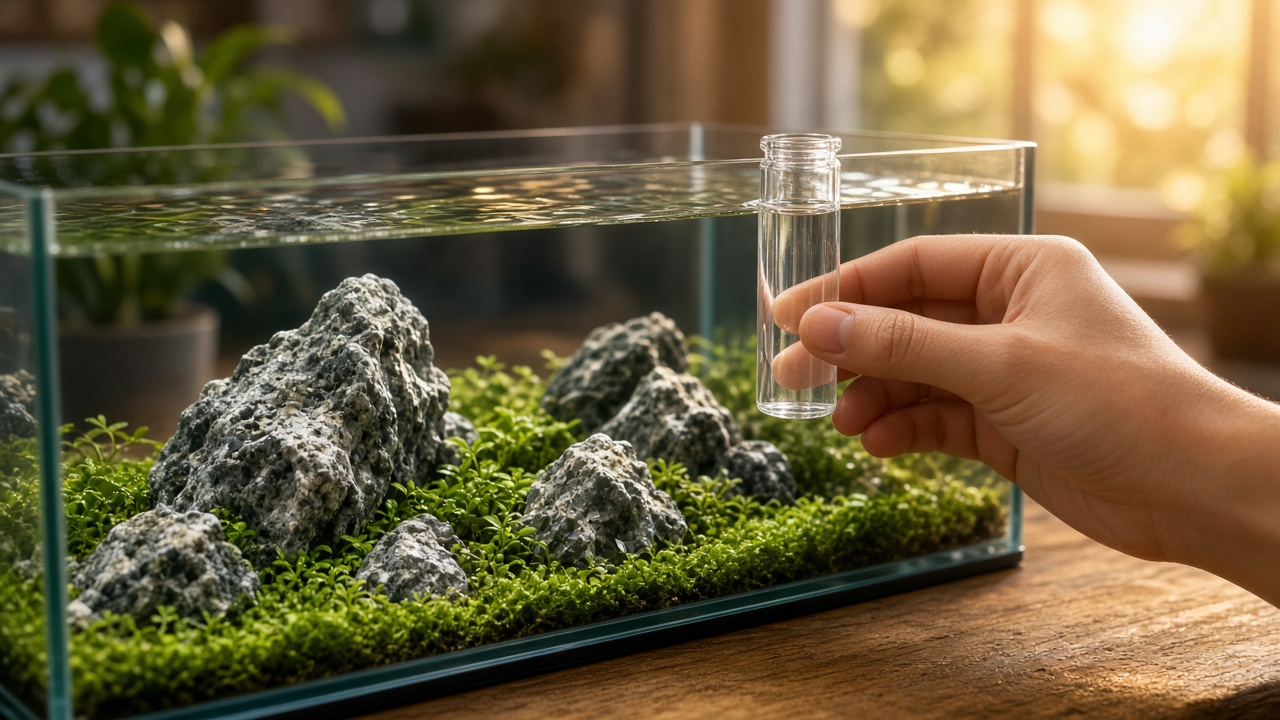
A liquid nitrite kit tells you if the toxin is present before you change water.
API’s Nitrite Test Kit page lists a scale from 0 to 5 ppm. The same page says low nitrite inhibits respiration, and high nitrite causes suffocation.
Test the tank and the bucket of new water. If the new water is not 0 ppm, a change will not finish the job.
Our research team analyzed five current maker pages for this article. We used each page’s own numbers, not reseller copy.
API’s page says to test every other day in a new tank or pond. After the filter is established, it says to test once a week, and it puts that window at about 4 to 6 weeks.
API 5-in-1 Test Strips are a faster check, so use the liquid kit when the strip color is hard to read. The strip page says to dip, swirl two times, and wait 30 seconds before you read nitrite.
Do this before you dose anything:
- Test tank water for nitrite.
- Test ammonia if you have that kit.
- Test the replacement water in a clean bucket.
The Environmental Protection Agency’s drinking-water table lists a nitrite MCL of 1 mg/L, measured as nitrogen. That rule is for public tap systems, not aquariums.
Do not treat 1 mg/L as a safe tank target, because API’s kit still starts its published scale at 0 ppm.
The EPA table lists nitrate at 10 mg/L, also measured as nitrogen. Nitrate is the later waste step, not the same chemical as nitrite.
Fast dilution steps that drop the reading
The fastest drop comes from removing old water and replacing it with water that tests 0 ppm nitrite.
Match temperature as closely as you can, and treat tap water with a conditioner before it touches the fish. Seachem’s Prime page says to add the dose to new water first when you can.
Use this order:
- Raise surface movement or add an air stone.
- Pause feeding while the fish still look alert.
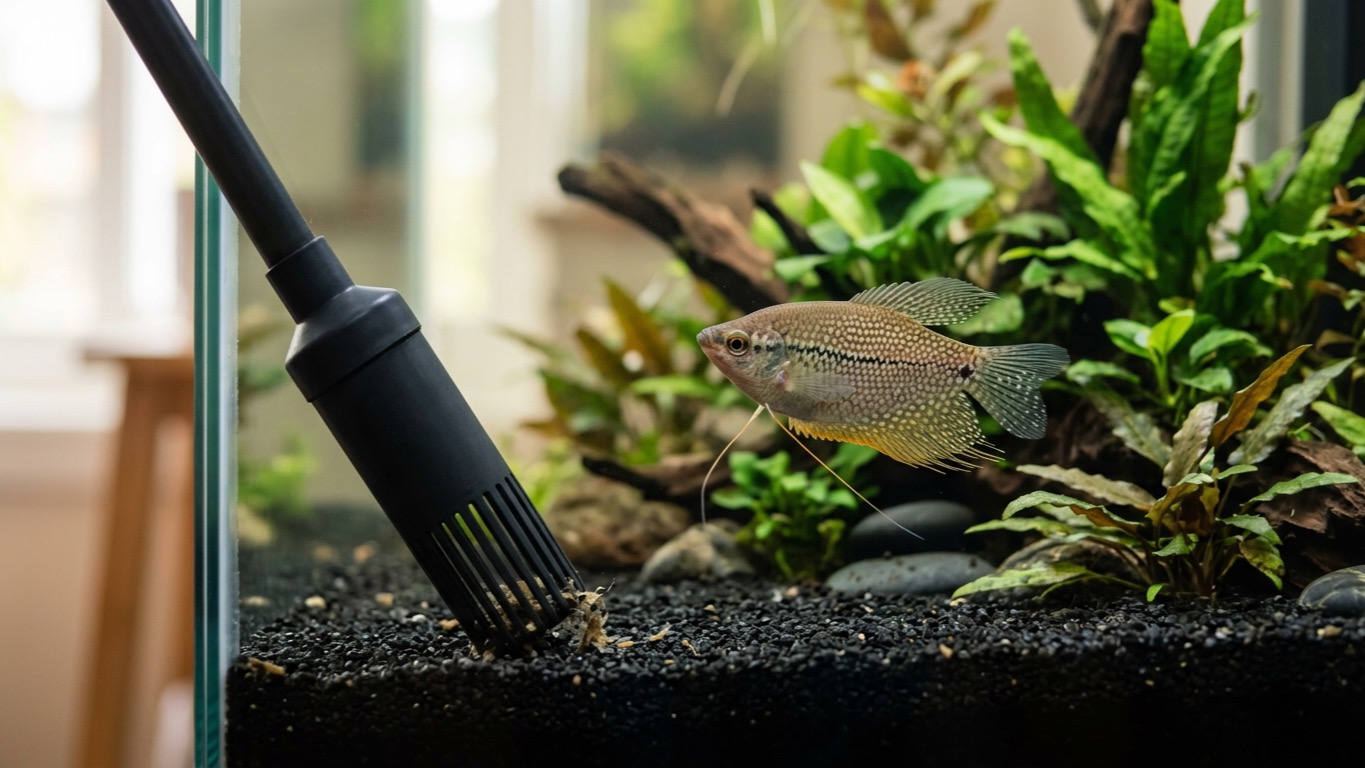
- Remove leftover food and any dead plant bits.
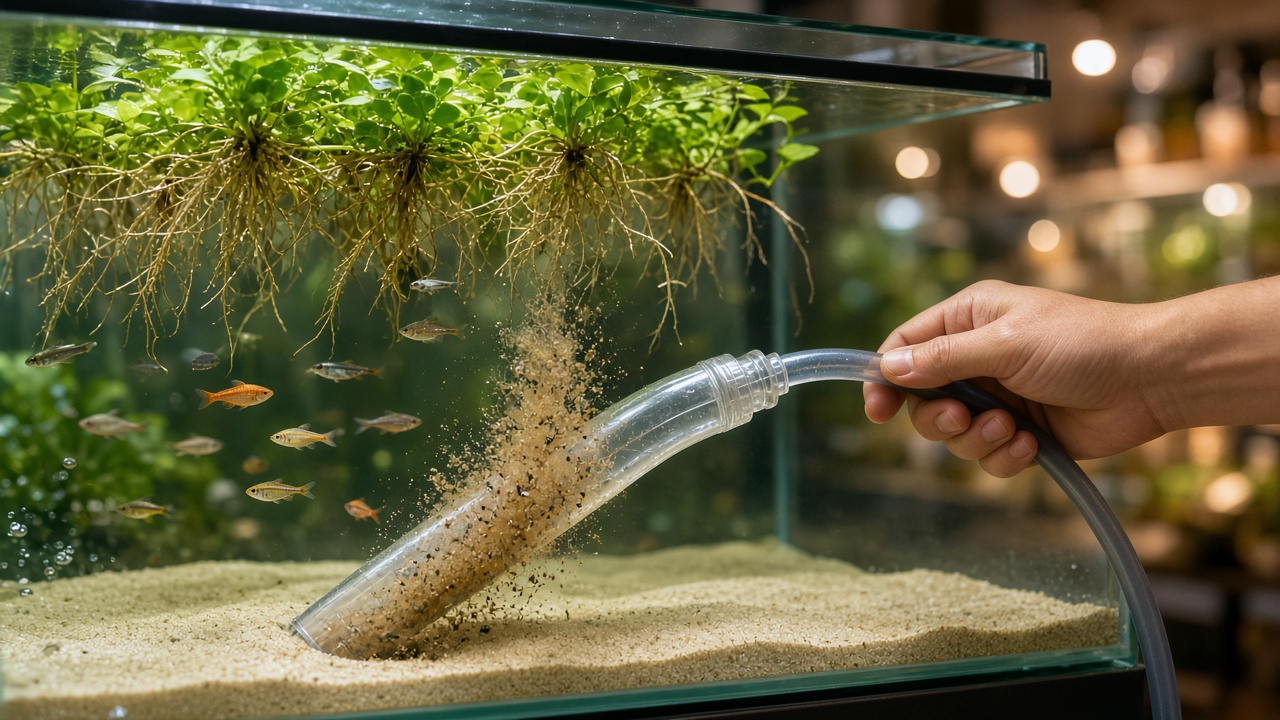
- Siphon out a large share of the old water.
- Refill with dechlorinated water that tested 0 ppm nitrite.
- Retest the tank after the water mixes.
Dilution is a ratio. If the new water is 0 ppm, leftover nitrite tracks leftover water.
- Replace one-quarter of the water and about three-quarters of the old nitrite remains.
- Replace one-half of the water and about one-half of the old nitrite remains.
- Repeat after the next test if the kit is still above 0 ppm.
Do not drain the tank to the glass, because a full reset can crash the bacteria you still have. Keep the filter wet and running the whole time.
Seachem’s Prime page lists a standard dose of 1 capful, which is 5 mL, for each 50 US gallons of new water. Each cap thread is about 1 mL, and a nitrite emergency allows up to five times that normal dose.
The same Prime page says the bind lasts up to 48 hours. It also says you may dose again every 24 to 48 hours if ammonia or nitrite is still rising.
Use the 5-times dose only if the reading is above 2 ppm. That 2 ppm line is on Seachem’s page.
Prime does not delete nitrite. Seachem’s page says it binds the compound so bacteria can still use it.
If the water is hotter than 86°F, and chlorine and ammonia are low, Seachem’s Prime page says to use a half dose.
Why nitrite rose in the first place
API’s Nitrite Test Kit page ties nitrite to fish waste and uneaten food.
Nitrite appears when ammonia-eating bacteria are working, but nitrite-eating bacteria are not yet keeping up. That gap is common in a new tank and after a filter crash.
Look for one of these events:
- The tank is still in the first 4 to 6 weeks.
- You added several fish at once.
- You cleaned the filter in tap water or replaced all media at once.
- Food sat on the sand after a heavy feeding.
- The filter ran dry, or a fish died unnoticed.
API’s page says the biological filter is often established in about 4 to 6 weeks. Seachem’s Stability page uses that same window for most tanks, and those are maker estimates, not a clock you can set.
If you need the longer cycling picture, read how long to cycle a fish tank. Do not add more livestock while nitrite is still readable.
A conditioner binds nitrite for a short window. A bacteria bottle adds microbes that may consume it later.
We included a product only if its current maker page names nitrite. The page had to say the product measures it, detoxifies it, or helps bacteria consume it.
We left out heaters, décor, plant food, and any bottle we could not read on the maker’s own page.
Seachem’s Stability page says the blend helps break down waste organics, ammonia, nitrite, and nitrate. Day-one dose is 1 capful, 5 mL, for each 10 US gallons.
Then use 1 capful for each 20 US gallons daily for 7 days, and turn off UV or ozone while you dose.
The Stability page lists a 6-year shelf life from the date of manufacture. Later upkeep is 1 capful per 20 US gallons once a month, at a water change, or when adding fish.
API QUICK START’s page says to shake well, then add 2 tsp, which is 10 mL, per 10 gallons, or 38 L. Double that dose in saltwater.
Use it when you start a tank, add fish, change water or media, medicate, or detect ammonia or nitrite.
API’s QUICK START page also says you may add fish right after the dose, which we treat as a maker claim. Our rule on this desk is still to wait until nitrite reads 0 ppm before you add more fish.
Comparing those published doses per gallon of tank water:
- Prime’s standard dose is 5 mL per 50 gallons, or 0.1 mL per gallon.
- Prime’s 5-times emergency dose is 0.5 mL per gallon.
- Stability’s day-one dose is 5 mL per 10 gallons, or 0.5 mL per gallon.
- QUICK START’s freshwater dose is 10 mL per 10 gallons, or 1.0 mL per gallon.
Our research team compared those four listed rates. QUICK START’s freshwater liquid volume per gallon is ten times a standard Prime dose.
Published attributes of five current products
These five products met the nitrite-on-the-maker-page rule. The table uses listed attributes only.
| Product | Maker-stated nitrite role | Listed dose or method | Listed sizes | Maker time note |
|---|---|---|---|---|
| Seachem Prime | Detoxifies ammonia, nitrite, and nitrate | 5 mL per 50 US gal; up to 5× in a nitrite emergency | 50 mL through 4 L | Binds up to 48 hours; may re-dose every 24–48 hours |
| Seachem Stability | Bacteria that break down ammonia, nitrite, and nitrate | Day 1: 5 mL per 10 US gal; then 5 mL per 20 US gal daily for 7 days | 50 mL through 4 L | 6-year shelf life from manufacture; turn off UV or ozone |
| API QUICK START | Live nitrifying bacteria that consume ammonia and nitrite | 10 mL per 10 gal (38 L); double the dose in saltwater | 1, 4, 8, 16, and 32 fl oz | Use when nitrite is detected |
| API Nitrite NO2 Test Kit | Measures nitrite from 0 to 5 ppm | Test every other day in a new tank; weekly after the filter is established | 1-count kit | Filter often established in about 4–6 weeks |
| API 5-in-1 Test Strips | Measures nitrite plus four other parameters | Dip and swirl 2 times; wait 30 seconds to read nitrite | 4-count and 25-count | Store in a cool, dry place |
Pick the liquid kit when you need a clear 0 to 5 ppm nitrite number, and use strips only as a quick extra check.
Keep the filter wet and the bacteria alive
The long fix is a living film of bacteria on wet media, not a second bottle.
Do not replace every sponge and ceramic ring on the same day. If flow is weak, rinse mechanical media in tank water, not tap water. Chlorine can kill the film you need.
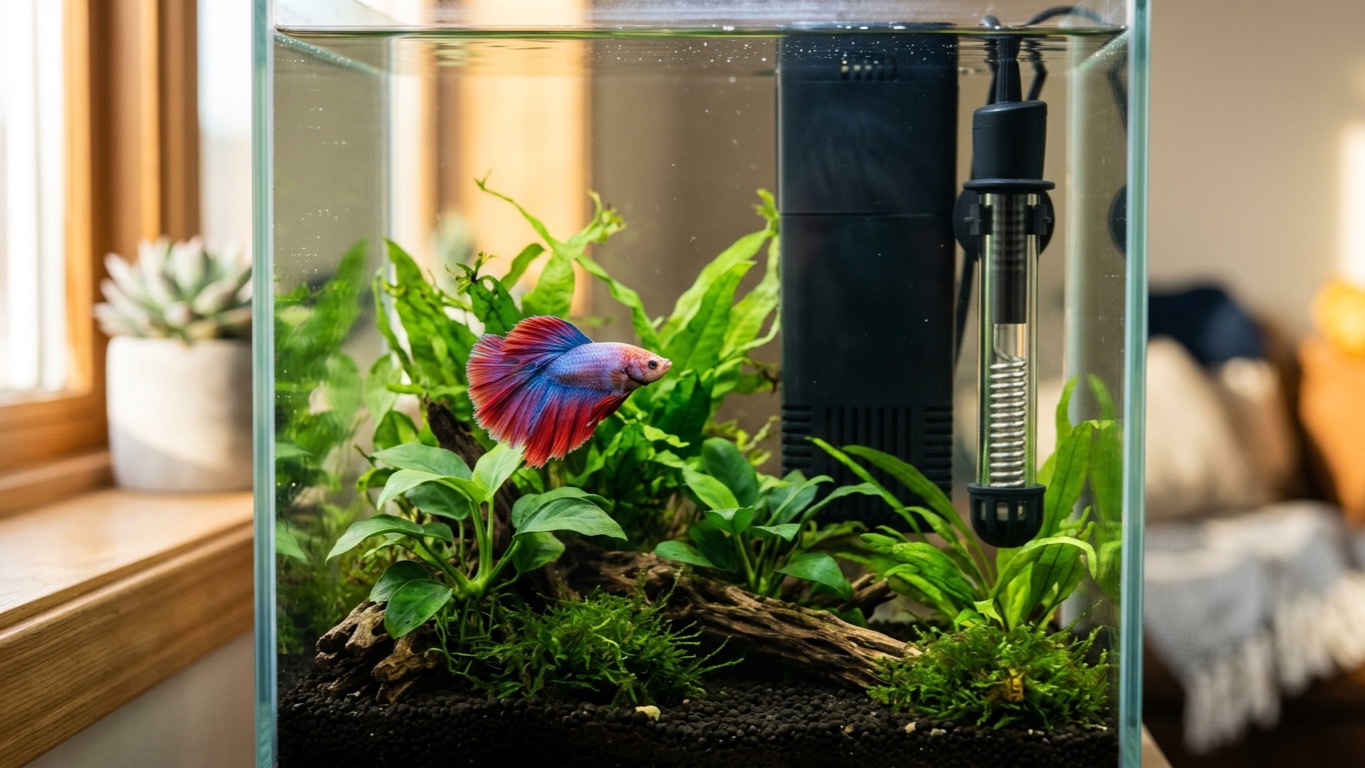
Keep a filter and heater in one running during the change, and heat the new water in a bucket instead.
Seachem’s Stability page says to turn UV or ozone off for the 7 dosing days on a new cycle. For a later add, keep UV or ozone off for at least 24 hours. Those lights can kill the bacteria you just poured in.
Leave the lights on a normal day length. Extra light does not eat nitrite, but extra food does make more of it.
Do not add more fish until the kit reads 0 ppm
New fish add waste, and that waste becomes ammonia, then nitrite.
Wait until nitrite reads 0 ppm on two tests before you add anyone. Also wait until ammonia reads 0 ppm if you can test it.
That rule matters for community fish as much as it does for a single betta. A peaceful stocking list does not cancel a nitrite spike.
Resume feeding in small pinches only after the kit stays at 0 ppm. Watch them eat, then remove what they ignore.
If a fish is gasping at the surface, raise aeration first, then do the next water change. Do not add a second species as a cleanup crew during a spike.
FAQ
How fast can I lower nitrites in a fish tank?
A water change drops nitrite as soon as the new water mixes, if that water tested 0 ppm. A half-tank change removes about half the old nitrite by simple dilution. API and Seachem both publish a 4 to 6 week window for a filter to settle.
Is 1 ppm nitrite safe for fish?
API’s Nitrite Test Kit page says low nitrite already inhibits respiration, and high nitrite causes suffocation. The EPA’s 1 mg/L nitrite MCL is a drinking-water limit measured as nitrogen, not a tank care target. Keep changing water until the aquarium kit reads 0 ppm.
Does Seachem Prime remove nitrite for good?
No. Seachem’s Prime page says the product binds nitrite for up to 48 hours. After that window, leftover nitrite can return unless you dose again or the filter has consumed it.
Should I replace filter media during a spike?
No. The media holds the bacteria that turn nitrite into nitrate. Rinse a clogged sponge in old tank water only, and keep a combo filter running while you work.
Can I add more community fish while nitrite is high?
No. Extra fish add extra waste and keep the reading up. Wait until nitrite is 0 ppm on two tests, then add only a small group from a community fish list that matches your tank size.
How often should I test during a spike?
API’s Nitrite Test Kit page says every other day in a new setup. During a spike, test once after each water change and again the next morning. After the filter is established, that page returns you to a weekly check.
Do API 5-in-1 strips replace a liquid nitrite kit?
Not when the color is faint or the fish look stressed. The strip page says to swirl two times and wait 30 seconds to read nitrite. Use the liquid API Nitrite Test Kit when you need the 0 to 5 ppm scale in clearer steps.