Quick answer: Change part of the tank water with treated water that tests lower in nitrate. Then cut the waste that makes more nitrate. Test weekly so you know the number moved.
A 30 percent water change from 100 mg/L nitrate leaves about 70 mg/L if the new water has no nitrate.
This page is a nitrate-methods desk guide, and
Our research team analyzed maker pages and one federal drinking-water table, and we used only numbers those pages print.
Selection rule. We included a method only if it dilutes nitrate already in the water or cuts the waste that becomes nitrate. We left out saltwater reactors, carbon-dosing recipes, sulfur units, and livestock medical protocols.
That rule is the Dilute-then-Cut check we used on every section below.
Read the nitrate number before you change water
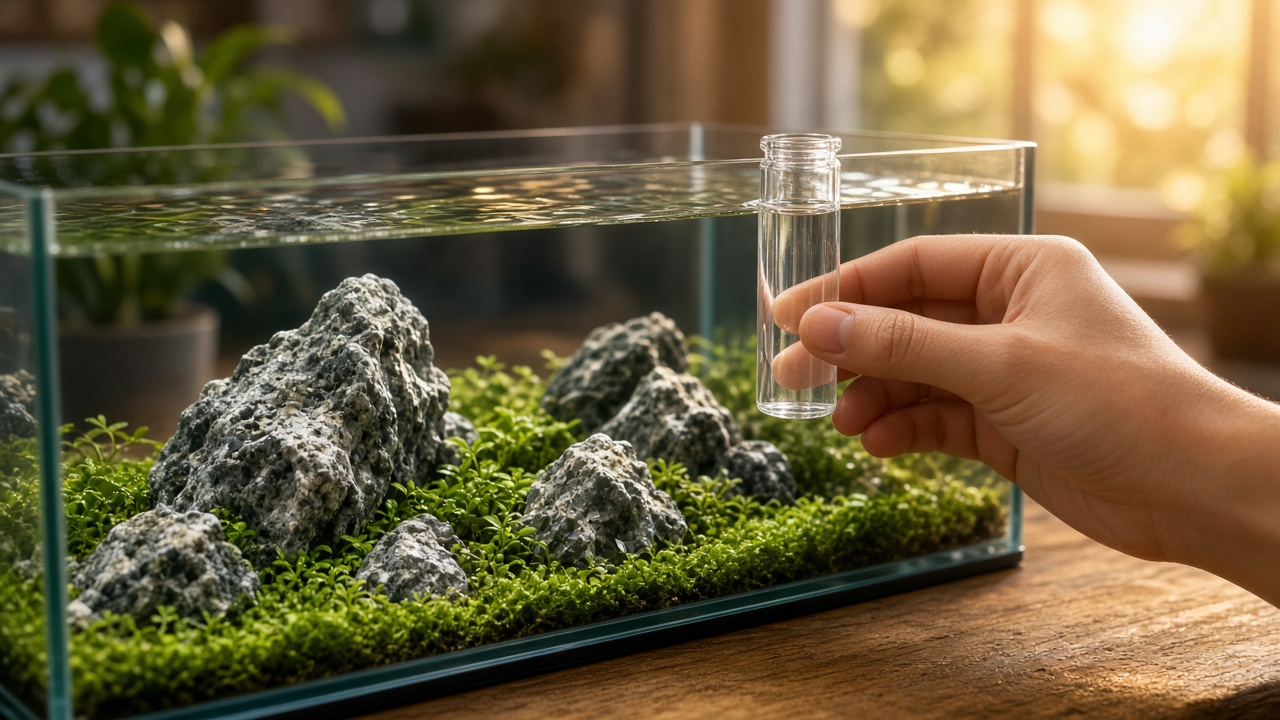
Test the tank and the tap first, because you cannot lower nitrate with water that already matches the tank.
API’s page for the Nitrate NO3 our editorial team says the kit reads total nitrate as NO3 from 0 to 160 ppm. That page also says ppm equals milligrams per liter on this test. It tells you to test aquarium water for nitrate once a week.
Comparing published specs, that kit reports nitrate as NO3. The EPA’s National Primary Drinking Water Regulations table lists nitrate measured as nitrogen at 10 mg/L for public tap water.
Those are different unit labels for related chemistry, so do not treat the EPA figure as a fish-tank target.
Use the EPA number only as a tap-water clue, because public water can legally contain nitrate and still pass that federal limit.
Seachem’s nitrate guide says nitrate should not build far above about 40 mg/L in any system type it discusses.
Our research team lined up the published gates that appear later in this page:
| Publisher | Printed number | What the page is measuring |
|---|---|---|
| EPA | 10 mg/L | Nitrate as nitrogen in public drinking water |
| API Nitrate NO3 Test Kit | 0–160 ppm | Total nitrate as NO3 in tank water |
| Seachem nitrate guide | about 40 mg/L | General aquarium ceiling on that page |
| API Nitra-Zorb | 20 ppm | Use and recharge trigger |
| Seachem de*nitrate | 4–5 mg/L | Level-off range after the media is in use |
| Seachem de*nitrate | less than 20 mg/L | Water-change gate before relying on the media |
Nitrate is the last step of the nitrogen cycle, where beneficial bacteria turn ammonia into nitrite, then into nitrate.
If you are still waiting on that cycle, read how long to cycle a fish tank before you chase a nitrate drop.
Lower nitrate with a measured water change
A partial change drops nitrate only when the new water tests lower than the tank.
Seachem’s nitrate guide walks through the math in plain numbers. If the tank reads 100 mg/L and you change 30 percent, the new reading is 70 mg/L.
The same page continues that series:
- A second 30 percent change leaves 49 mg/L.
- A third 30 percent change leaves 34.3 mg/L.
That Seachem page says you cannot reach 0 mg/L by water changes alone unless you change 100 percent of the water. It also says a 100 percent change is never recommended.
API’s nitrogen-cycle page lists a 25 percent water change when harmful levels are detected. That page is written around ammonia and nitrite as well as the cycle.
Use the API 25 percent figure as a published change size, not as a nitrate-only formula. For the nitrate example on this page, we follow Seachem’s printed 30 percent series.
Do the change in this order:
- Test the tank with a kit that states its range, such as API’s 0 to 160 ppm nitrate kit.
- Test the replacement water on the same kit.
- Match temperature as closely as you can before you pour.
- Treat tap water with a conditioner made for chlorine or chloramine.
- Remove 30 percent of the tank water if you are following Seachem’s printed example.
- Refill, wait, and test again.
If the tap reads as high as the tank, a change will not help. You need a lower-nitrate source before dilution can work.
Repeat the 30 percent step on later days if the first pass still sits above the gate you chose. Seachem’s own 100 to 70 to 49 to 34.3 series is three passes, not one dump.
Cut the waste that becomes new nitrate
Food, sludge, and extra fish keep making nitrate after the water change ends.
Seachem’s nitrate guide says any organic waste that rots in the tank becomes nitrate. It lists four load cuts on that page:
- Do not overstock. A small water volume concentrates the same waste.
- Do not overfeed. Extra food on the bottom becomes nitrate.
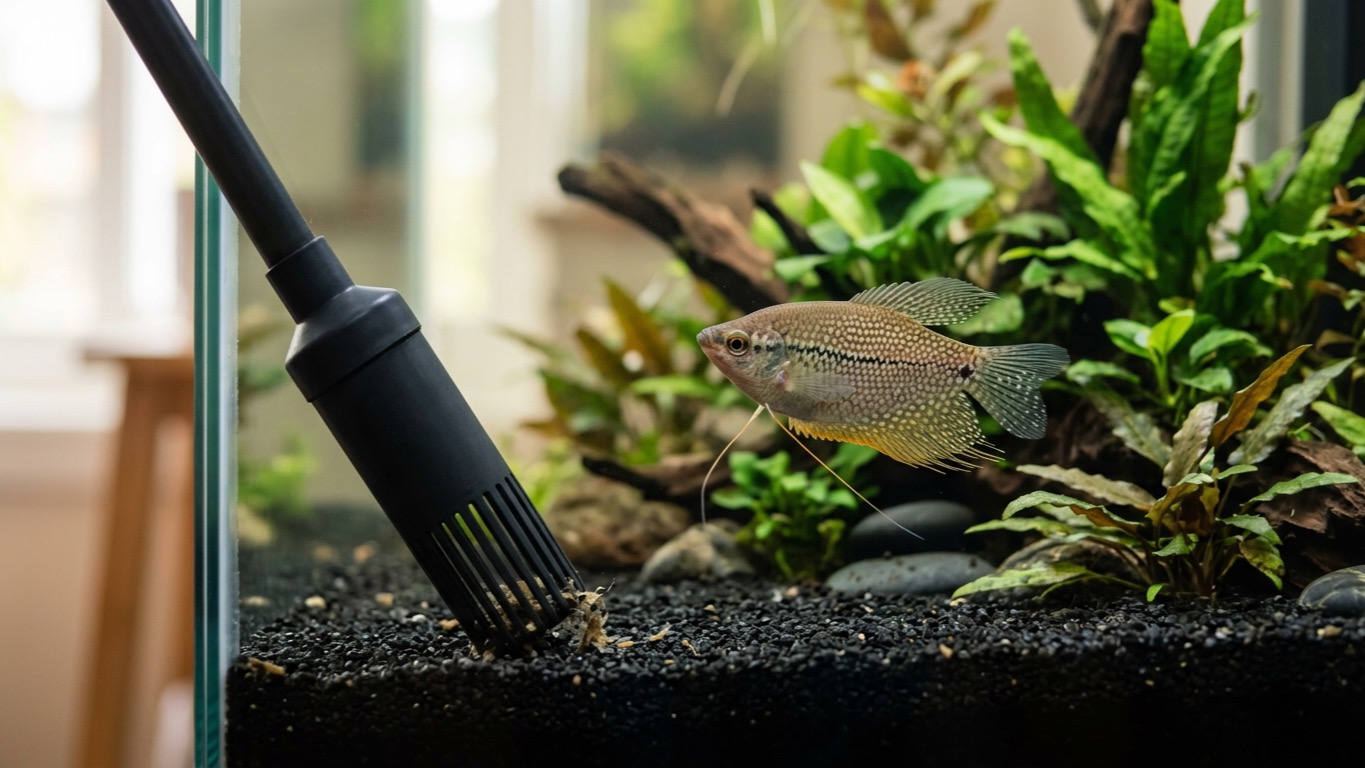
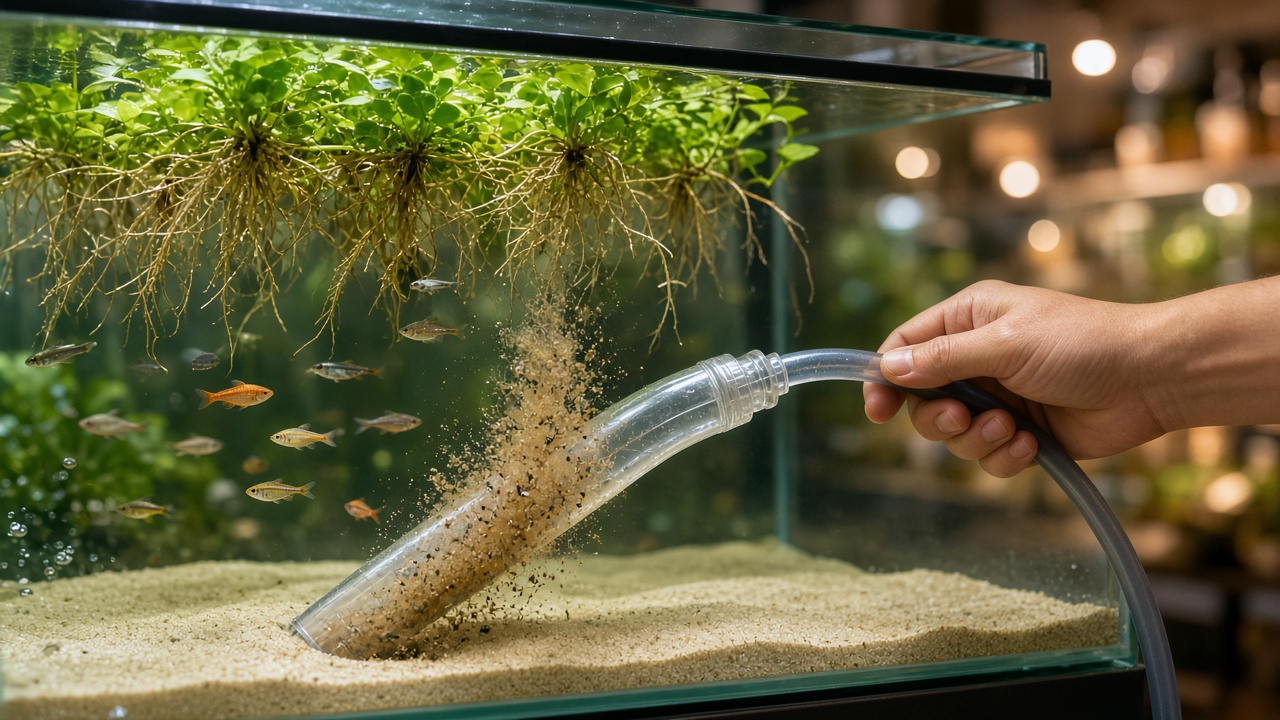
- Siphon about one-third of the substrate at each water change, once per week.
- Use a waste-absorbing media if you want organics pulled out before they rot.
That one-third figure matters. The same Seachem page warns that cleaning too much gravel at once can spike ammonia and nitrite.
Mechanical filter pads trap sludge, and sludge that sits in a cartridge still decays into nitrate.
Swap or rinse cartridges on a schedule, and see best fish tank filter cartridges for how cartridge media is built.
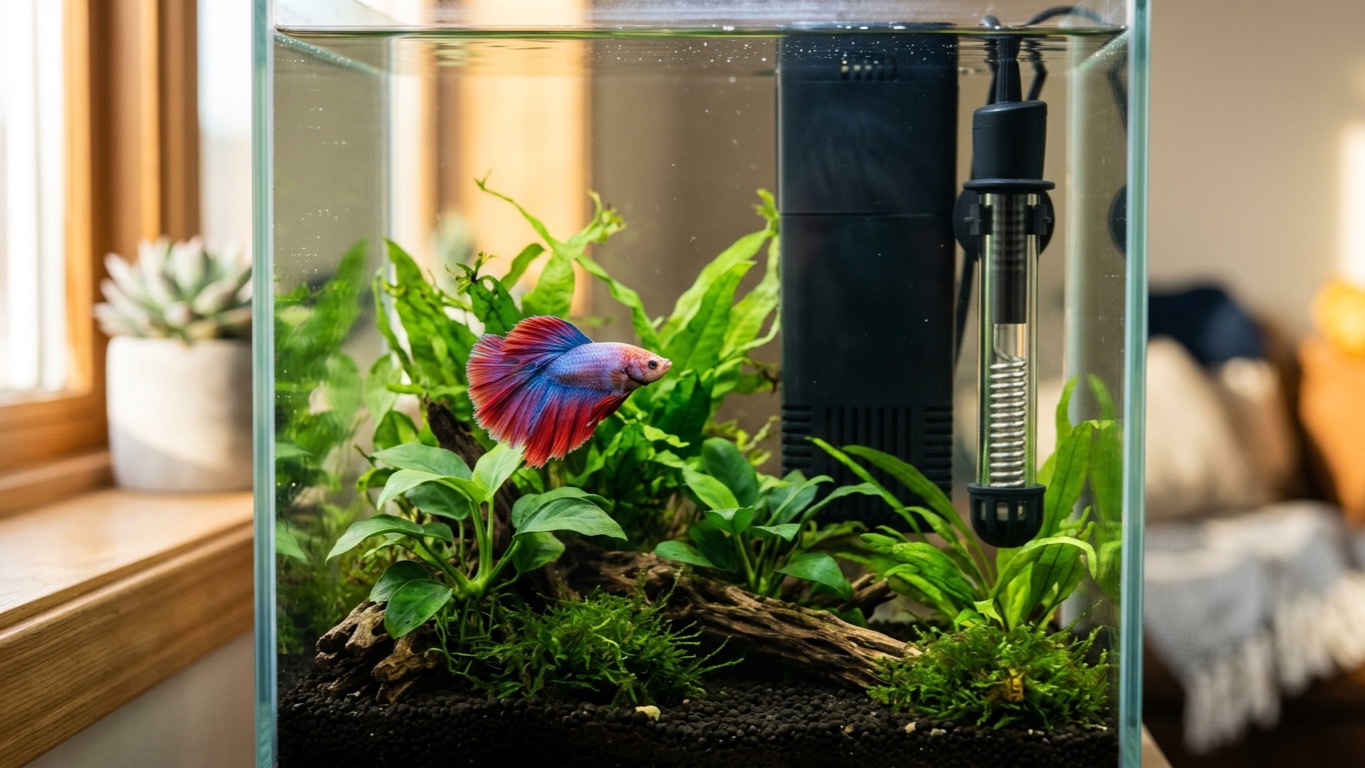
A filter and heater in one still does not delete nitrate. It heats water and moves it through media. You still need the Dilute-then-Cut steps.
Live plants use nitrate as a nutrient. Seachem’s nitrate guide says most planted-tank keepers hold about 10 to 20 mg/L.
That is a published range, not a plant shopping list, and
When published filter media can help
Media helps after the water number is already near the maker’s printed gate.
It is not a first-day rescue for a very high reading.
Seachem’s de*nitrate page says very high nitrate should be brought below 20 mg/L with water changes first. After several days of use, that page says nitrate should fall and level off near 4 to 5 mg/L as nitrate.
The same page sets a hard flow cap:
- Flow should not exceed 200 L, or 50 U.S. gallons, per hour.
- At greater than 100 U.S. gallons per hour, the media works only as an aerobic filter.
- At less than 50 U.S. gallons per hour, it can run aerobic and anaerobic work.
Each 500 mL of de*nitrate treats about 25 to 50 U.S. gallons on that page, so dose by the printed volume rather than a guess.
API’s Nitra-Zorb page is a different product type. It is a pouch media for freshwater tanks. That page says to use it when nitrate measures above 20 ppm.
API’s recharge steps on that page are specific:
- Rinse the pouch under tap water.
- Place it in the path of filter flow.
- When nitrate is detected, recharge every 5 days until nitrate is 20 ppm or less.
- On an established tank with no nitrate alarm, recharge every 2 weeks.
- Replace the pouch after 2 months.
- To recharge, dissolve 80 g of aquarium salt, listed as 4 tablespoons, in 240 ml of warm tap water, listed as 8 oz.
- Soak the pouch for 2 hours, then rinse lightly.
Comparing those two maker pages, both print a 20 ppm or 20 mg/L gate, but they do not print the same end point.
Seachem’s media page aims at 4 to 5 mg/L after it is working. API’s pouch page aims at 20 ppm or less after recharge cycles.
Why a normal filter does not finish the job
A normal biological filter makes nitrate as it cleans ammonia, and it does not delete that nitrate.
API’s nitrate kit page states the path in one line. Beneficial bacteria in the biological filter convert toxic ammonia and nitrite into nitrate.
A high nitrate reading, on that page, means fish waste and organics have built up. That is why a clean, running filter can still show a climbing nitrate number.
The filter did its aerobic job, so the leftover ion in the water is nitrate.
Seachem’s nitrate guide says anaerobic bacteria can turn nitrate into nitrogen gas. Those bacteria need low-oxygen space with some flow.
Most tanks do not grow enough of that bacteria on their own, so the everyday plan stays simple:
- Dilute with a measured change when the tap tests lower.
- Cut feed, sludge, and stocking so less nitrate forms.
- Add maker-specified media only after you meet that maker’s water-change gate.
If ammonia or nitrite is still present, fix the cycle first, because nitrate work comes after those two read zero on your kit.
FAQ
Can I lower nitrate without a water change?
You can cut new nitrate by feeding less and vacuuming sludge, and plants can use some nitrate.
Seachem’s guide still treats water changes as the simple, common method. Media pages we read also tell you to lower a very high reading with water changes first.
Why did my nitrate stay the same after a water change?
The replacement water likely held as much nitrate as the tank. Test the tap on the same kit. The EPA table allows public water to carry nitrate as nitrogen up to 10 mg/L and still meet that federal limit.
How often should I test nitrate?
API’s Nitrate NO3 Test Kit page says to test aquarium water for nitrate once a week. API’s Nitra-Zorb page also says to test water weekly. Use the same brand of kit each week so the color chart stays consistent.
Do live plants remove nitrate?
They use nitrate as a nutrient. Seachem’s nitrate guide says planted tanks tend to do poorly if nitrate falls to zero.
That page also says most planted-tank keepers hold about 10 to 20 mg/L. Plants are a helper, not a skip-the-siphon plan.
Will a new filter cartridge drop nitrate overnight?
A cartridge traps solids, and it does not replace a water change. API’s kit page says the biological filter produces nitrate. Swap dirty pads so trapped waste does not keep rotting, then retest after the next measured change.
Is the EPA 10 mg/L number a safe tank target?
No, that figure is the EPA maximum contaminant level for nitrate measured as nitrogen in public drinking water. It is not an aquarium care target. For tank ceilings, use your kit’s unit and a printed range such as Seachem’s about 40 mg/L rule.
How low should I try to go?
Seachem’s de*nitrate page describes a level-off near 4 to 5 mg/L after the media is working. Its nitrate guide uses about 40 mg/L as a general “do not climb far above” line.
API’s Nitra-Zorb page treats 20 ppm as the recharge goal. Pick one printed gate and test weekly until you hold it.