Quick answer: Tiger lotus thrives when you plant only one-third of the bulb, give medium to high light, and trim floating pads at the base. Feed roots and leave the crown exposed so the bulb never rots.
Plant one-third of the bulb, light for color, and trim pads at the base.
We compared published care data on Nymphaea lotus, often sold as Nymphaea zenkeri or tiger lotus. Our research team analyzed bulb planting depth, light demand, height ranges, and pruning notes from maker plant pages. Owners consistently report stronger red color under brighter light with iron support, and bushier submerged leaves when surface pads are clipped early.
Comparing published specs, maker plant pages list the species as a bulb or onion type from Africa. Those pages note medium growth, medium light, and low to medium CO₂ needs. Average height after about two months sits near twenty to thirty-plus centimeters, while mature plants can stretch about twenty to eighty centimeters tall. Red and green spotted forms both appear in the trade. This page covers bulb planting, light and fertilizer, trimming, placement, dormancy, and troubleshooting.
Include a solitary midground or background bulb in a nutrient-rich bed, timed medium to high light, and regular pad cuts. Leave out full burial of the bulb and tiny nano tanks that cannot spare surface shade. Skip disease dosing plans that belong with manufacturer plant labels or a veterinarian for livestock.
Scope board:
| Include | Leave | Skip |
|---|---|---|
| One-third bulb burial | Fully buried bulbs | Full-tank carpet claims |
| Medium–high timed light | Dim all-day stretch only | Unlabeled mystery fert dumps |
| Root tabs plus column feed | Starvation “set and forget” | Flowering as a care requirement |
| Base-of-stem pad cuts | Snipping mid-stem only | Ignoring shade on other plants |
Plant only one-third of the bulb with the crown free
Burial depth decides whether the bulb roots or rots.
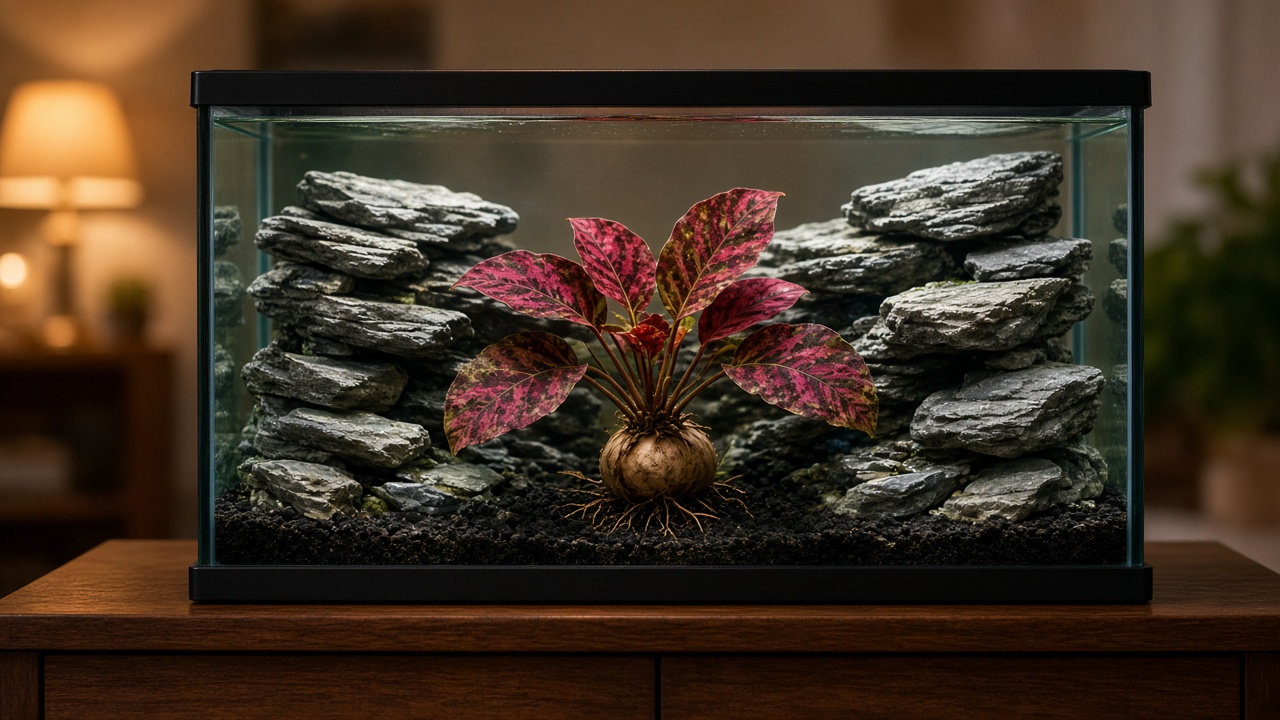
Gently press about one-third of the bulb into substrate so shoots and the crown stay above the soil line. Do not bury the whole bulb. If it floats at first, wait until it waterlogs and sinks, then seat it. Rinse rock wool and pot debris before planting. Place the plant in midground or background because mature leaves get large fast.
Planting board:
| Step | Published cue |
|---|---|
| Burial | About one-third of the bulb |
| Crown | Shoots fully above substrate |
| Floaters | Wait to sink; then plant |
| Zone | Midground or background |
| Role | Solitary centerpiece in many layouts |
Our research team analyzed maker notes that treat a healthy bulb as the priority even when transit leaves melt. Comparing published specs favors a nutritious bottom for this heavy root feeder. Owners consistently report rot after deep burial. Leave open space around the rosette so heart-shaped submerged leaves can spread. Edge case: a bulb that stays soft and foul needs removal before it fouls the tank.
Match medium to high light and steady photoperiods for color
Light intensity shapes height, pad count, and red pigment.
Maker plant info rates light demand as medium, with an average plant cue near about 0.5 W/L on older wattage notes. Hobby care pages push medium to high light when you want compact growth and stronger red on red forms. Extra iron support often appears beside color goals. Carbon dioxide need is listed as low, so injection helps form but is not mandatory for basic success. Keep photoperiods consistent rather than random all-nighters.
Light board:
| Cue | Published direction |
|---|---|
| Demand class | Medium (maker plant page) |
| Color push | Medium to high hobby lighting |
| CO₂ class | Low need on maker tables |
| Height at ~2 months | About 20–30+ cm average |
| Mature stretch | About 20–80 cm possible |
Owners consistently report greener, stretched leaves under weak light. Our research team analyzed red-form notes that brown out when light stays low. Comparing published specs treats iron and root nutrition as partners with light, not substitutes. Aim about eight to ten hours once growth is active, and shorten if algae paints pads. Place the bulb under a bright zone of the fixture when redness is the goal.
Feed roots and the water column for a hungry bulb plant
Tiger lotus is a root feeder that still answers to column dosing.
A nutritious substrate encourages growth on maker plant pages. Comprehensive liquid fertilizers such as Easy Green and root tabs such as Easy Root Tabs appear in popular care write-ups for established bulbs. Dose on a schedule that matches fish load and plant mass. Yellowing leaves often signal hunger or weak light, not a need to bury the bulb deeper. Remove decaying outer leaves so waste does not spike ammonia near the crown.
Fertility checklist:
- Nutrient-rich bed or inert gravel plus root tabs
- Steady liquid micronutrients including iron for red forms
- Remove yellow, melting outer leaves at the base
- Avoid dumping excess organics that fuel algae on pads
- Retest nitrate after big fertilizer changes
Our research team analyzed growth notes that link fast leaf production to both roots and column food. Comparing published specs favors solitary placement in large aquariums so one plant does not starve neighbors of light. Owners consistently report boom-then-shade problems when pads cover the surface. Feed enough for thick leaves, then trim so the rest of the scape still sees photons.
Trim floating pads at the base to keep a bushy submerged form
Pruning controls shade and encourages compact underwater leaves.
Before floating leaves dominate, the plant forms many underwater leaves. If you do not want lily pads, prune leaves and manage roots as maker text suggests. Clip each floating pad’s stem at the base closest to the bulb, not halfway up the stalk. Continuous removal of a few pads steers energy into bushier submerged growth instead of a tall pad forest. Cut damaged outer leaves the same way.
Trim board:
| Goal | Cut method |
|---|---|
| Less surface shade | Clip pad stems at the bulb |
| Bushier submerged form | Keep removing early pads |
| Tidier rosette | Remove yellow outer leaves at base |
| Flower control | Cut stalks if you want submerged look |
| Neighbor light | Thin pads before other plants stretch |
Owners consistently report other plants starving when pads blanket the top. Our research team analyzed pruning notes that treat base cuts as the standard fix. Comparing published specs still allows open-top tanks to enjoy aromatic flowers if you want that display. Edge case: aggressive weekly thinning beats one rare massacre that shocks the bulb. Net trimmed tissue so it does not rot in the filter intake.
Place one plant as a midground or background solitary piece
Size and shade make tiger lotus a focal plant, not a carpet filler.
Maker layout notes recommend it as a solitary plant for large aquariums. In smaller tanks it can work only with ruthless trimming and honest expectations. Keep neighboring low plants outside the densest shade cone. Pair with epiphytes on wood that tolerate dimmer side light if pads occasionally rise. Do not pack three bulbs into a twenty gallon and hope for a meadow.
Placement map:
| Tank class | Practical cue |
|---|---|
| Large display | Ideal solitary mid or back accent |
| Medium community | One bulb plus strict pad cuts |
| Small nano | High maintenance; often a poor fit |
| Hardscape | Leave clear radius around the crown |
| Livestock | Peaceful fish; avoid uprooting diggers |
Our research team analyzed height notes that span about twenty to eighty centimeters once pads form. Comparing published specs treats green and red varieties as the same care class with different color goals. Owners consistently report happier scapes when the lotus owns one zone and stem plants own another. Measure adult leaf span before you buy a second bulb.
Watch for dormancy, daughter bulbs, and simple recovery steps
Bulbs can rest, then restart; offsets give free plants.
Care pages note dormancy where leaves die back and only the bulb remains. You can leave it in place for several months until new leaves return, or store it damp and replant later. Healthy parents may form daughter bulbs you can detach and replant elsewhere. Flowers may appear when many pads reach the surface, with colors from white to yellow, and seeds may follow a wilted bloom. Patience beats tossing a firm, healthy bulb after a quiet month.
Lifecycle checklist:
- Firm bulbs can rest weeks to months before sprouting
- Soft, foul bulbs are lost; remove them
- Daughter bulbs need the same one-third planting rule
- Seeds are optional; offsets are easier for most keepers
- Resume feeding once new submerged leaves appear
Owners consistently report panic during the leafless pause. Our research team analyzed dormancy notes that treat waiting as normal husbandry. Comparing published specs still expects stable temperature and clean water around a resting bulb. Do not bury a dormant bulb deeper “to wake it.” Give light and time, then trim the first pads if they race for the surface.
FAQ
How deep should I plant a tiger lotus bulb?
Seat about one-third of the bulb in the substrate and leave the crown and shoots fully exposed. Full burial is a common rot trigger. If the bulb floats, wait until it sinks, then plant it. Rinse shipping media first. Midground or background placement fits the adult size better than a front carpet zone.
What light does tiger lotus need?
Maker pages rate light demand as medium, while hobby color goals often use medium to high intensity. Stronger light and iron support help red forms look vivid. Weak light yields greener, stretched leaves and more surface pads. Keep a steady daily photoperiod on a timer. Watch algae if you extend hours without enough plant mass.
How do I trim floating lily pads?
Cut each pad’s stem at the base nearest the bulb. Mid-stem snips leave rotting stubs in the water. Regular early cuts encourage bushier underwater leaves and protect other plants from shade. Remove yellow outer leaves the same way at the crown. Net debris so it does not foul the filter or decay on the sand.
Does tiger lotus need carbon dioxide injection?
Maker tables list carbon dioxide need as low. Many keepers grow healthy bulbs without injection when light and fertilizer are steady. Added carbon dioxide can improve compactness and color but is optional for basic care. Fix burial depth and feeding before chasing gas gear. Stability beats weekend CO₂ experiments.
Why is my bulb not sprouting?
Transit melt is common; a firm bulb still matters most. Dormancy can last several months with no leaves. Raise light gently, keep water clean, and avoid deep burial. Soft, smelly bulbs will not recover. Wait four to six weeks before judging a firm, quiet bulb as dead.
Can tiger lotus live in a small tank?
It can survive in smaller aquariums only with constant pad trimming and one-bulb stocking. Maker notes still recommend it as a solitary plant for large tanks. Surface shade and height near twenty to eighty centimeters overwhelm many nanos. Choose a true dwarf lily if you need a small footprint. Measure adult leaf span before you buy.
How do I propagate tiger lotus?
Detach daughter bulbs from a healthy parent and plant each with one-third burial. Seeds may follow spent flowers in open-top tanks, but offsets are simpler for most hobbyists. Give new bulbs the same light and root feeding as the parent. Do not crowd several bulbs in one small bed. Patience through early melt protects the new crown.
This guide is informational only and does not replace manufacturer instructions for lights, fertilizers, substrates, or plant products.