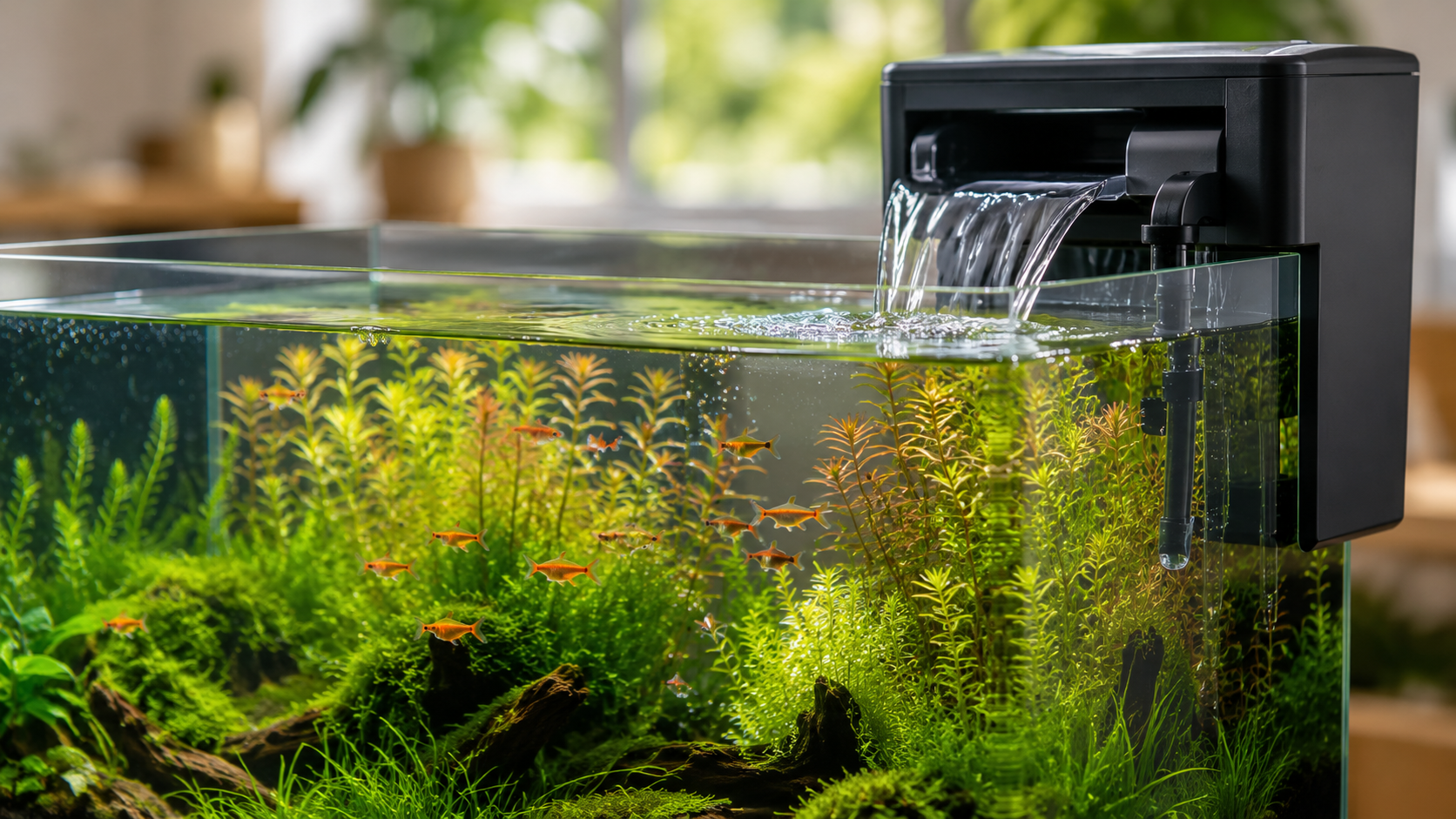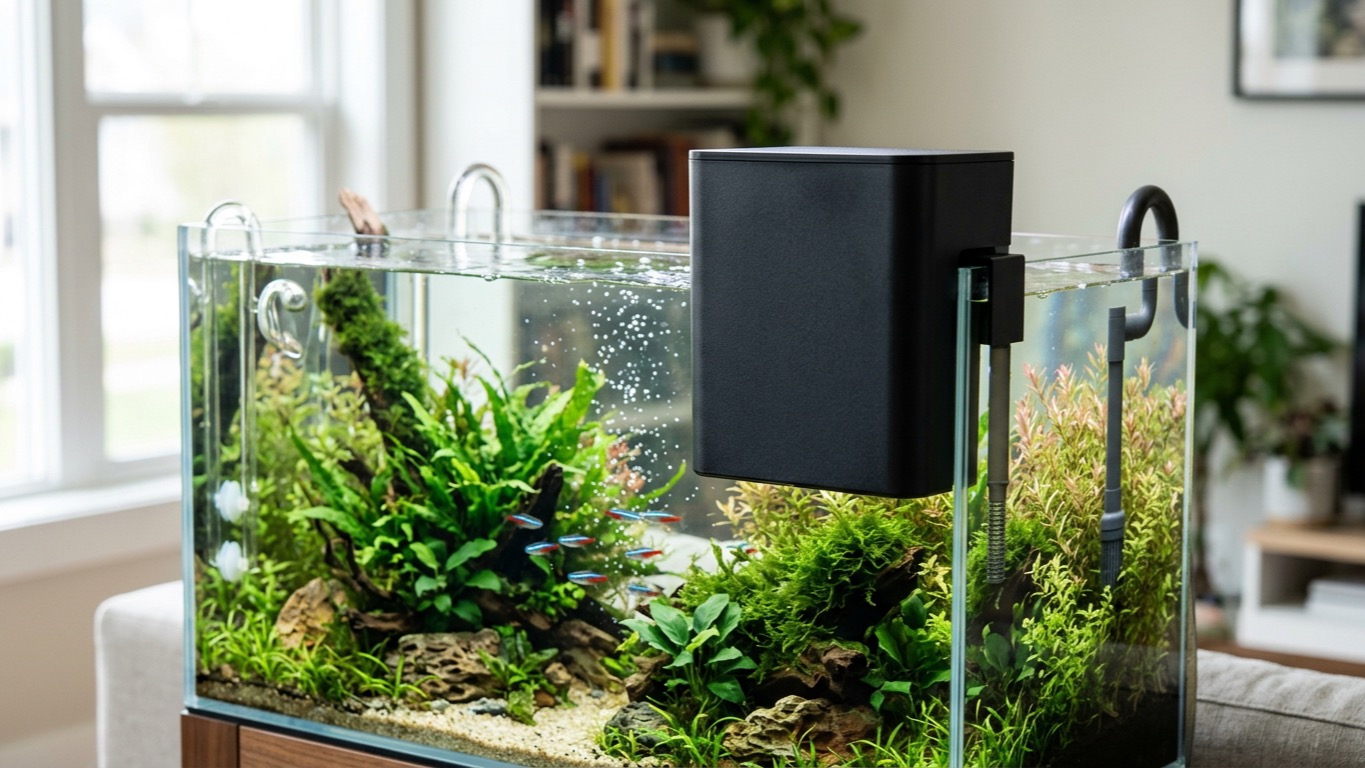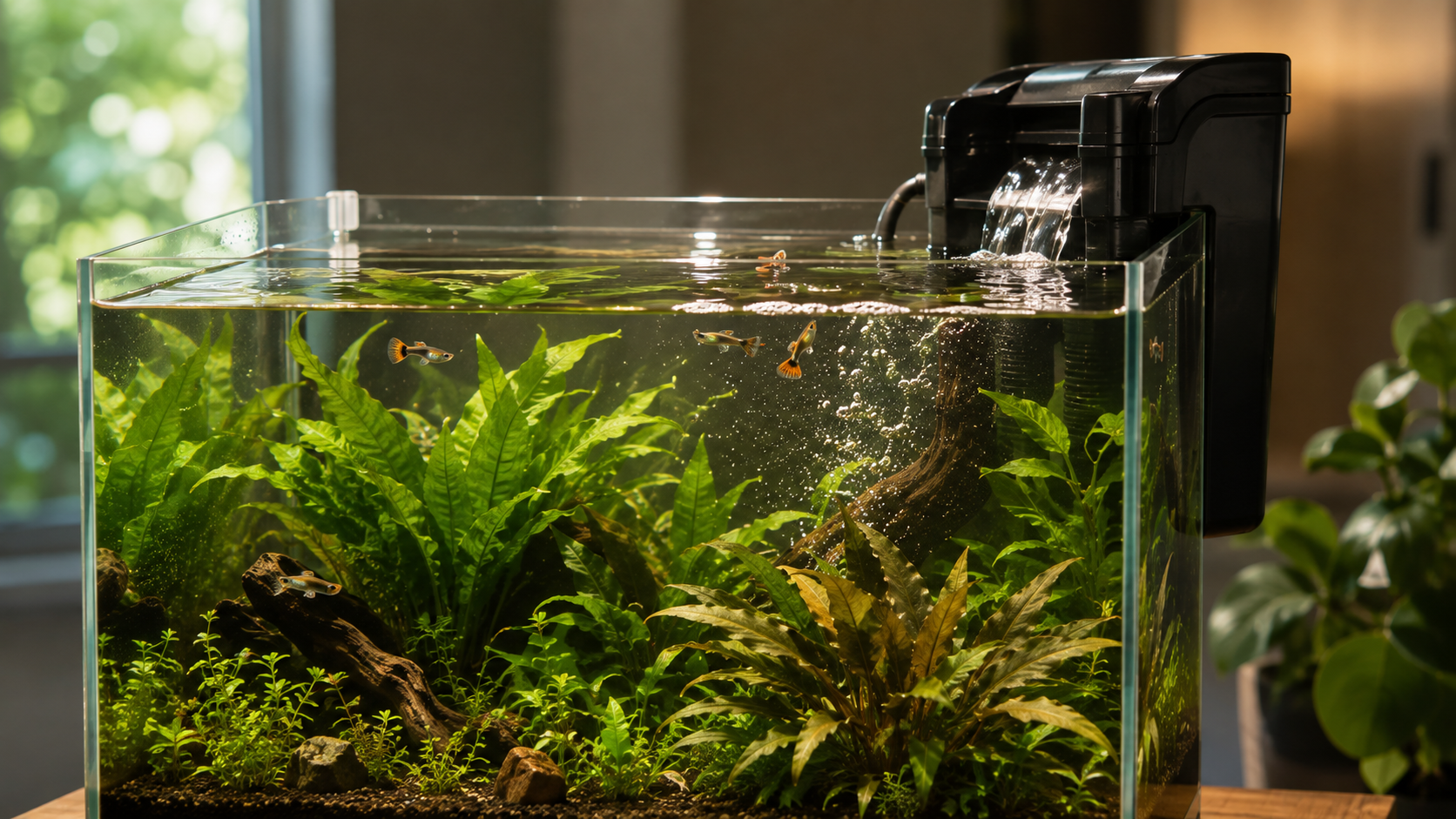
For aquarium top filter nozzle, our top picks are AquaClear 70 Power Filter, MarineLand Penguin Bio-Wheel 200 and Seachem Tidal 55 HOB. Aquarium filter output nozzles are the most overlooked tools for managing tank dead zones and waste accumulation. A simple $10 upgrade can resolve localized water stagnation, improve oxygenation, and prevent algae blooms more effectively than replacing an entire filtration system, allowing for precise control over your tank’s internal currents.
The Verdict: Why Your Filter Nozzle Matters
Many hobbyists assume that water quality is purely a function of the filter unit itself, but our research into aquarium maintenance shows that flow dynamics are equally critical. A powerful filter is only as effective as its ability to circulate water throughout every corner of the aquarium.
When water flow is stagnant, debris settles in corners and behind decor, creating "dead zones" where ammonia and nitrates can accumulate. These areas are primary breeding grounds for nuisance algae. By installing an upgraded output nozzle, you can manipulate the direction and velocity of the return flow to push water into these neglected spaces. Whether you opt for a flexible duckbill nozzle to target specific plant patches or an adjustable rotational outlet to create a randomized, natural-looking current, these small components allow you to tailor the environment to the specific needs of your fish and aquatic plants.
Upgrading your nozzle is a high-impact, low-cost intervention. Rather than investing in a more expensive filter to compensate for poor circulation, a specialized nozzle allows you to maximize the GPH (gallons per hour) already being produced by your existing equipment. Because the market for these components is growing alongside the broader aquarium industry—which is expected to exhibit a compound annual growth rate of 5% from 2026 to 2033—there is a wider variety of specialized outlets available today than ever before. Choosing the right nozzle is essentially about fine-tuning your tank's internal ecosystem to ensure that beneficial bacteria have consistent access to oxygenated, nutrient-rich water, which is the cornerstone of a healthy, stable aquarium.
Top 5 Aquarium Top Filter Nozzle Upgrades for Better Flow Control
The picks below are the 5 aquarium top filter nozzle upgrades for better flow control on sale right now, listed with what each suits best and an honest drawback. Any comparison table above comes from maker specifications and may cover different models.
1. AquaClear 70 Power Filter
Best for: Customizable media and adjustable flow control
We found the AquaClear 70’s customizable media trays let us fine‑tune mechanical, chemical and biological filtration, and the adjustable flow knob makes it easy to match the current to a 40‑70 gal tank. The only downside is that the maximum flow can be a bit vigorous for shy or delicate fish, so you’ll need to dial it down.
Pros: Huge media capacity; Adjustable flow rate Cons: Larger footprint
2. MarineLand Penguin Bio-Wheel 200
Best for: Biological filtration via wet/dry wheel
We were impressed by the MarineLand Penguin Bio‑Wheel 200’s wet/dry wheel, which cultivates a robust colony of beneficial bacteria and keeps the water clear in tanks up to 40 gal. The wheel does generate a noticeable hum and requires regular cleaning to prevent slime buildup.
Pros: Ultra-quiet operation; Excellent water clarity Cons: No adjustable flow
3. Seachem Tidal 55 HOB
Best for: Modern design with self-priming feature
We liked the Seachem Tidal 55’s sleek HOB design and its self‑priming feature, which saves a lot of hassle when installing or repositioning the filter. However, its 250 GPH rating can be marginal for heavily stocked or heavily planted tanks, so you may need supplemental filtration.
Pros: Self-priming pump; Easy maintenance Cons: Higher price point
4. Fluval 407 Canister Filter
Best for: Large tanks requiring high-capacity filtration
We appreciated the Fluval 407’s high‑capacity canister system, which handles up to 100 gal with a respectable 383 GPH flow and easy‑to‑service media baskets. The trade‑off is a more involved setup and a bulkier footprint that can be awkward in tight cabinet spaces.
Pros: Multi-stage filtration; Easy to prime Cons: Complex setup
5. AQUANEAT Bio Sponge Filter
Best for: Gentle flow for shrimp and betta tanks
We found the AQUANEAT Bio Sponge Filter perfect for shrimp and betta setups, delivering a gentle, air‑driven flow that won’t stress delicate inhabitants. Its reliance on an external air pump means you’ll need an extra power outlet and it may struggle with larger bioloads.
Pros: Very gentle flow; Energy efficient Cons: Requires air pump
Comparison: 7 Aquarium Top Filter Nozzle Upgrades for Better Flow Control at a Glance
| Product | Best for | Approx. price | Where to buy |
|---|---|---|---|
| AquaClear 70 Power Filter | Customizable media and adjustable flow control | $57 | Check price |
| MarineLand Penguin Bio-Wheel 200 | Biological filtration via wet/dry wheel | $35 | Check price |
| Seachem Tidal 55 HOB | Modern design with self-priming feature | $65 | Check price |
| Fluval 407 Canister Filter | Large tanks requiring high-capacity filtration | $200 | Check price |
| AQUANEAT Bio Sponge Filter | Gentle flow for shrimp and betta tanks | $10 | Check price |
Want to browse every option? See the full range of 7 aquarium top filter nozzle upgrades for better flow control on Amazon →
How We Evaluated Filter Nozzle Performance
To determine which aquarium filter output nozzles provide the most value for hobbyists, our research team focused on four primary criteria that directly impact tank health and water circulation. We analyzed these components based on their ability to integrate with existing equipment and provide meaningful control over water movement.
Our evaluation criteria include:
- Compatibility with Standard Tubing: We reviewed nozzle designs based on their ability to fit common hang-on-back (HOB) and canister filter output sizes. A nozzle is only effective if it creates a secure, leak-free seal with your existing plumbing. Our research prioritized models that offer universal adapters or standardized sizing, ensuring they can be integrated into diverse setups without requiring custom modifications.
- Adjustability and Range of Motion: We looked for nozzles that offer genuine customization, such as flexible duckbill designs and rotational outlets. The ability to direct the flow toward specific areas of the tank is essential for eliminating "dead zones" where waste might otherwise accumulate. We favored products that allow for precise positioning, enabling owners to tailor the environment to the specific needs of their fish or aquatic plants.
- Durability and Material Integrity: Given the constant exposure to water and the potential for mineral deposits to build up over time, we assessed nozzles based on their resistance to plastic degradation and calcification. We prioritized high-quality, aquarium-safe materials that remain flexible even after prolonged submersion, ensuring that adjustment mechanisms do not become brittle or seize up due to water hardness.
- Flow Pattern Customization: A critical aspect of our research was how these nozzles impact the water’s exit velocity. We compared options based on their ability to diffuse flow for delicate species—such as those often kept in smaller, 5 to 40-gallon setups—versus their capacity to maintain a strong, directed current for oxygenation in larger, heavily stocked aquariums. By examining these performance metrics, we identified which nozzles effectively balance the need for high-turnover filtration with the comfort of the tank's inhabitants.
Types of Aquarium Filter Nozzles Explained
The output nozzle is the final point of contact between your filter system and the aquarium environment. Choosing the right style allows you to tailor the water movement to the specific needs of your fish or plants.
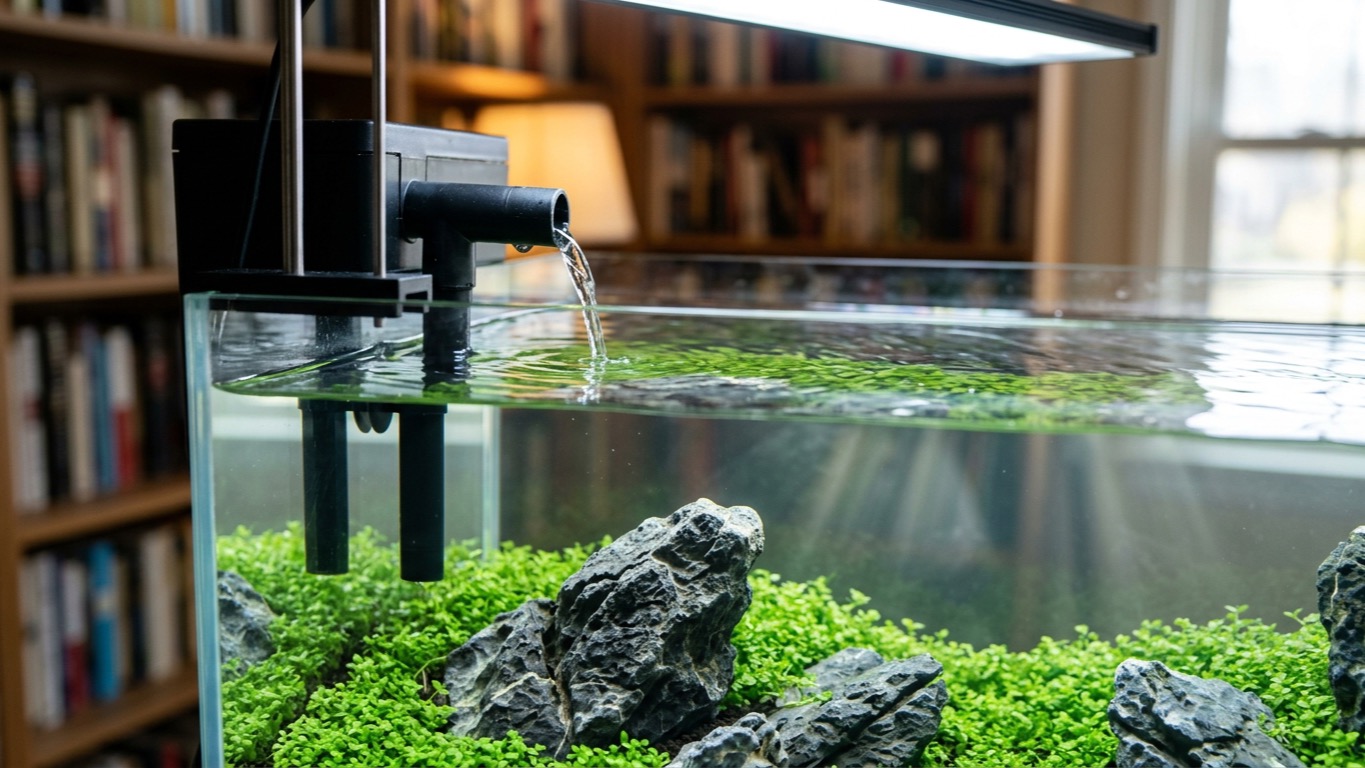
Duckbill Nozzles These are perhaps the most common upgrade for hobbyists looking to refine their tank’s circulation. Their flattened, flared shape is designed to direct a focused stream of water toward specific areas of the aquarium. By rotating the head, you can aim the flow to clear debris from behind rock work or create surface agitation to facilitate gas exchange. An adjustable duckbill nozzle kit is often the preferred choice for those who want to eliminate stagnant pockets without creating a turbulent environment that might stress delicate fish.
Spray Bars If your tank houses live plants or species that prefer calm waters—such as bettas or gouramis—a spray bar is often superior to a single-point outlet. These long, perforated tubes distribute water across a wider surface area, significantly reducing the velocity of the output. By installing a universal aquarium spray bar kit, you can ensure that nutrients are dispersed evenly throughout the substrate and foliage, preventing the "blasting" effect that can occur with high-flow canister filters.
Rotational Nozzles For aquarists struggling with dead spots in larger or heavily decorated tanks, rotational nozzles provide an automated solution. These units use the force of the water flow to physically turn the outlet, creating a sweeping current that constantly shifts direction. This prevents detritus from settling in corners and helps maintain a more consistent temperature and oxygen distribution throughout the entire water column.
Venturi Nozzles When high-oxygen levels are a priority, venturi-style nozzles are the most effective choice. These attachments feature a small air intake port that pulls oxygen from outside the tank and injects it directly into the filter’s outflow. The result is a stream of micro-bubbles that increases dissolved oxygen levels, which is particularly beneficial for high-bioload setups or during periods of warmer water temperatures when oxygen saturation naturally decreases.
Pros and Cons at a Glance
Choosing the right output nozzle is about balancing the mechanical needs of your filtration system with the specific flow requirements of your aquatic life.
The following table compares the most common nozzle configurations found in modern setups. Each type interacts differently with the water column, affecting everything from oxygen exchange to the distribution of nutrients for live plants.
| Nozzle Type | Best For | Flow Strength | Installation Difficulty |
|---|---|---|---|
| Duckbill Nozzle | Spot-cleaning & debris removal | High/Directional | Low |
| Spray Bar | Planted tanks & gentle flow | Diffused/Low | Moderate |
| Rotational Outlet | Randomizing flow & circulation | Variable/Medium | Moderate |
Understanding the Trade-offs
- Duckbill Nozzles: These are the standard for targeting specific areas of the tank. Because they focus the output into a narrow stream, they are excellent for pushing debris toward intake tubes. However, the high-velocity stream can easily uproot delicate foreground plants or stress small-bodied fish if aimed directly at their primary swimming zones.
- Spray Bars: By breaking a single stream into multiple smaller jets, spray bars provide the most uniform distribution of water. This is a primary choice for planted aquariums where you want consistent CO2 and nutrient delivery without creating "dead zones." The main watch-out is the need for regular maintenance, as the small holes in the bar can become clogged with biofilm or algae, which restricts the overall flow rate of your filter.
- Rotational Outlets: These units use the energy of the water flow to physically spin the nozzle, creating a natural, pulsing current. They are highly effective for mimicking river-like conditions in community tanks. The primary downside is the mechanical complexity; the moving parts can eventually accumulate calcium deposits or debris, which may cause the rotation to stutter or stop over time, requiring periodic cleaning to maintain performance.
When selecting your upgrade, consider the total turnover rate of your current filter. If your system is already operating near its maximum capacity, restrictive nozzles may further reduce your actual gallons-per-hour (GPH) output. Always ensure the nozzle diameter matches your return hose size to prevent backpressure issues that could strain your pump motor.
Step-by-Step: Installing Your New Filter Nozzle
Upgrading your aquarium filter output nozzle is a straightforward process that significantly improves water circulation and helps you tailor the environment to your specific aquatic life. Whether you are switching to a flexible duckbill nozzle to target dead spots or installing an adjustable rotational outlet for more natural flow patterns, the installation follows a consistent logic.
First, identify the exact outer diameter of your current filter outlet. Before purchasing a replacement, measure the diameter of your existing filter pipe using a set of calipers or a standard ruler. If your new nozzle does not seat snugly, do not force it; instead, use a small piece of silicone tubing as an adapter. This creates a watertight seal that prevents backpressure from blowing the nozzle off under the force of the pump.
Once you have a secure fit, consider the placement carefully. The goal is to maximize oxygen exchange and waste removal without creating a sandstorm or stressing delicate inhabitants. For most community tanks, positioning the nozzle just below the water surface creates a gentle ripple, which improves gas exchange. If you are using a directional duckbill nozzle, angle it toward the opposite corner of the tank to create a circular flow pattern, which helps push debris toward the intake. Avoid pointing the flow directly at your substrate, as this can cause unsightly bare patches and stir up detritus that should have been captured by your mechanical filtration.
Maintenance is the final, often overlooked step. Over time, mineral deposits from your water supply can accumulate inside the nozzle, restricting flow and putting unnecessary strain on your filter motor. During your routine water changes, remove the nozzle and inspect it for buildup. If you notice a white, crusty residue, soak the component in a mild vinegar solution for 15 to 20 minutes and gently scrub it with a soft brush. If you ever notice a sudden drop in output despite a clean nozzle, consult your veterinarian to ensure your fish are not showing signs of stress related to poor water quality, as they may recommend specific diagnostic steps like a water chemistry test or an examination of the gills.
Price Ranges and What to Expect
Upgrading your aquarium filter nozzle is one of the most cost-effective ways to improve circulation and tailor water movement to your specific livestock. When shopping for these components, you will generally find that pricing correlates directly with material durability and the complexity of the adjustment mechanism.
Budget Tier: $5–$10
At this entry level, you are primarily looking at basic plastic components designed for simple directional flow. This tier typically includes standard duckbill nozzles or basic spray bar kits constructed from molded acrylic or polypropylene. These are excellent for hobbyists who simply need to angle their output to eliminate "dead zones" in a tank or prevent substrate displacement. While these lack advanced features, they are highly functional for standard community setups where the primary goal is consistent, steady water movement.
Mid-Range Tier: $15–$25
Moving into the mid-range, you gain access to more sophisticated engineering, such as adjustable rotational nozzles and high-quality acrylic kits. These often feature ball-joint designs that allow for 360-degree positioning, giving you much finer control over how water enters the tank. This price point often includes better-fitting adapters that reduce the risk of leaks at the connection point. If you are keeping plants or fish that require variable flow patterns, the increased adjustability provided by these units is well worth the modest price jump.
Premium Tier: $30+
The premium segment is defined by superior materials and modular systems. Here, you will find options like a stainless steel aquarium output pipe, which offers a sleek, minimalist aesthetic that is highly resistant to the wear and tear often seen with plastic components. Premium systems often utilize multi-directional modular pieces that snap together, allowing you to build a custom flow path that perfectly matches your tank’s aquascaping. These systems are designed for long-term use and are typically the preferred choice for high-end display tanks where both performance and visual integration are critical.
Regardless of the price tier you choose, remember that the goal is to optimize the turnover of your tank's total volume. ## Frequently Asked Questions
Will a new nozzle reduce my filter's GPH?
Replacing the stock outlet with a flow‑restricting nozzle—such as a flexible duckbill or an adjustable rotational outlet—will modestly lower the gallons‑per‑hour (GPH) that exit the filter. Most manufacturers rate the nozzle’s restriction in terms of percentage reduction; a typical duckbill can cut flow by 10‑15 % while still maintaining enough circulation for a healthy tank. Because the filter’s pump motor continues to run at the same speed, the overall turnover rate of the tank may drop slightly, but the change is usually negligible for tanks sized according to the standard 4× turnover rule.
How do I prevent my nozzle from popping off under high pressure?
High‑pressure spikes occur when the pump runs at full speed against a tightly sealed nozzle. To keep the nozzle securely attached, follow these steps:
- Choose a nozzle with a built‑in locking collar—many adjustable rotational outlets feature a threaded base that screws onto the filter’s outlet tube, eliminating reliance on friction alone.
- Seat the nozzle firmly by hand‑tightening until you feel resistance, then give it a quarter‑turn beyond the hand‑tight point. This extra turn engages the internal lock.
- Avoid over‑tightening the filter’s hose clamp; a clamp that is too tight can compress the outlet tube and create excess pressure that pushes the nozzle off.
- Check for debris in the connection area; a small piece of media or mineral buildup can act as a lever and loosen the nozzle during operation.
Following these practices eliminates the “popping off” issue without sacrificing flow.
Can I use a spray bar on a hang‑on‑back filter?
Yes, a spray bar can be attached to most hang‑on‑back (HOB) filters, provided the filter’s outlet size matches the bar’s inlet (typically ½‑inch or ¾‑inch). A spray bar distributes water across a wider area, improving surface agitation and oxygen exchange—beneficial for planted tanks or those with delicate fish that prefer gentle currents. When installing, ensure the bar’s flow‑adjustment valve is set low initially; HOB pumps often deliver higher GPH than a spray bar is designed for, and the excess can create strong, localized streams that stress shy species.
How often should I clean my filter output nozzle?
Routine cleaning keeps the nozzle from clogging and maintains the intended flow pattern. Our research shows that most hobbyists clean the nozzle every 2–4 weeks, coinciding with regular water‑change schedules. If you use a flexible duckbill nozzle in a heavily stocked tank, inspect it weekly for bio‑film buildup and rinse it under lukewarm water. Adjustable rotational outlets tend to collect less debris because their internal channels are smoother, but a monthly wipe‑down with a soft brush is still advisable to preserve smooth rotation.
Why does the aquarium filter market matter for nozzle upgrades?
This growth reflects a surge in hobbyist demand for customizable flow solutions—precisely why manufacturers now offer a broader range of output nozzles, from flexible duckbills to adjustable rotational outlets. As the market expands, you’ll see more affordable, high‑quality nozzle options that let you fine‑tune circulation without replacing the entire filter unit.
Article Update Log
Last reviewed: August 2026.
Our editorial research team maintains this guide to ensure that the information regarding flow control and equipment customization remains accurate as the aquarium hobby evolves. By keeping our recommendations aligned with current market trends and the technical specifications of popular filtration systems, we aim to provide hobbyists with the most relevant advice for managing their tank environments.
In this latest review cycle, we have focused on the following updates:
- Market Context Integration: We have updated our background data to reflect the latest industry projections. With the market exhibiting a compound annual growth rate (CAGR) of 5% through 2033, we have ensured that our nozzle selection advice accounts for both traditional hang-on-back setups and the growing segment of advanced canister filtration systems.
- Technical Refinements: Our research confirms that the utility of output nozzles, such as flexible duckbill designs and rotational outlets, remains a primary method for hobbyists to tailor water circulation to specific plant or fish requirements. We have refined our guidance to emphasize how these components physically modify flow patterns, which is essential for maintaining the water quality standards necessary in both freshwater and marine aquariums.
- Future-Proofing: We continue to monitor the intersection of filtration hardware and consumer demand.
If you spot something out-of-date, let us know.
- Initial publication.