Quick answer: Build a coral tank around one reef LED listed for a 24-inch square, plus random flow. Mix saltwater to the 35 ppt natural-seawater mark Red Sea uses on its Coral Pro page. Hold temperature below the local bleaching threshold.
A coral tank is a saltwater system that keeps corals alive with a 24-inch reef LED, random flow, and salinity near 35 ppt. This page is Waterpuppy’s published-spec comparison of currently sold reef lights and one flow pump. It is not a livestock trial, a PAR-map survey, or a tank-cycling log.
What this brief includes, and what it leaves out
The Waterpuppy 24-Inch Coverage Rule is the filter for every product and scenario on this page.
We include a first coral tank only when the plan uses soft corals or LPS, not an SPS-heavy layout. We include a fixture only when the maker page lists both a wattage number and a coverage rectangle or tank-width band.
Our research team analyzed four currently sold reef LEDs that meet that rule. Three of the four list a 24-inch coverage figure, and listed full-power draw runs from 59 W to 95 W.
We left these items out on purpose:
- Lumen-only lights with no coverage band
- Discontinued generations that the maker no longer lists as current
- Wide bars listed only for tanks past 30 inches
- Livestock, test kits, and salt mixes in the product table
- Outdoor ponds and freshwater layouts
Red Sea Coral Pro Salt appears in the parameter section, not the table, because its maker page lists 12 dKH and a 35 ppt mark.
Light: match the fixture to a 24-inch footprint
A first coral tank should sit under one reef LED whose maker lists a 24-inch coverage band.
AquaIllumination’s page for the Prime 16HD Reef lists 59 W at full power. It also lists a 24-by-24-inch spread, a peak PAR of 100 µMol at 24 inches, and a 4.88-by-4.88-by-1.34-inch body.
Kessil’s A360X Tuna Blue page lists 90 W max AC. Coverage is 24 by 24 inches for a mixed reef and 20 by 20 inches for SPS. The same page lists penetration of 24 to 30 inches beyond the water’s surface.
EcoTech Marine’s Radion page lists the XR15 G6 Blue at 95 W. The fixture is listed for aquariums 24 to 30 inches wide and deep. The HEI2 optic is listed at 126.3 degrees, up from 110.5 degrees on the G5.
The Radion XR15 G6 Pro shares that 95 W draw and the same 7-by-7-by-1.5-inch body. EcoTech lists it for the same 24- to 30-inch tank band. The diode mix is the listed difference, not the footprint.
Comparing published specs, the 24-inch band is the shared beginner signal. The Kessil SPS square shrinks to 20 inches, so this brief treats mixed-reef coverage as the first-tank match.
Use the table as an attribute sheet, not a ranking.
| Product | Role | Listed power | Coverage or tank band | Key listed spec |
|---|---|---|---|---|
| AquaIllumination Prime 16HD Reef | Light | 59 W at full power | 24 in. by 24 in. | Peak PAR 100 µMol at 24 in. depth |
| Kessil A360X Tuna Blue | Light | 90 W max AC | 24 in. by 24 in. mixed reef; 20 in. by 20 in. SPS | Penetration 24–30 in. |
| EcoTech Radion XR15 G6 Blue | Light | 95 W | 24–30 in. wide and deep | HEI2 optic 126.3° |
| EcoTech Radion XR15 G6 Pro | Light | 95 W | 24–30 in. wide and deep | Same 7 in. square body |
| AquaIllumination Nero 5 | Flow | 30 W max | 40–100+ gallons | 3,000 gph |
Mount the light so the listed coverage can actually hit the rock. EcoTech’s Radion page lists a narrow-angle lens kit for up to 65 percent more peak intensity. That kit is a later upgrade, not a first-week need.
Keep intensity conservative at first, and place new corals lower in the rock until they stay open.
Flow: random current, not one hard stream
Corals need moving water that changes direction, not a single jet aimed at their tissue.
AquaIllumination’s Nero page lists the Nero 5 at 3,000 gph. Recommended tank size is 40 to 100-plus gallons, with a 30 W max draw and a 0.63-inch glass limit.
The same page lists Random as a built-in mode, and that is the mode that matches a reef’s changing current. Pulse and Constant are listed too, but they are not the first setting to use.
Do not run the listed 3,000 gph as a hard blast on the low end of that 40-gallon band. Aim the pump across the tank or at glass so the current wraps and tissue sways instead of folding shut.
If the tank is smaller than 40 gallons, the Nero 5 listing does not match. Pick a smaller listed pump, or skip a powerhead until the tank width matches the light.
Check these flow signs after you aim the pump:
- Detritus does not pile in one dead corner
- Soft-coral leather or polyps move, then recover
- No coral sits in a straight, unmoving stream
- The magnet sits on glass at or under the listed 0.63-inch limit
Parameters: salinity, heat, and alkalinity
Stable saltwater matters more than a rare additive, so mix to a published mark and stop chasing extra numbers.
Red Sea’s Coral Pro Salt page compares the mix with natural seawater at 35 ppt. The same page lists alkalinity of 12 dKH and guaranteed parameters for a 10-liter, or 2.5-gallon, mix.
The 7 kg Coral Pro bucket is listed for 210 liters, or 55 gallons. The 22 kg bucket is listed for 660 liters, or 175 gallons, and the page says the mix is ready in about 20 minutes.
Red Sea’s Coral Pro page states that natural seawater includes over 70 elements. You do not dose 70 extras on day one; you mix the salt and keep the result steady.
Heat is a hard limit, and NOAA Coral Reef Watch sets the bleaching threshold at 1 °C above the local Maximum Monthly Mean.
For the Main Hawaiian Islands station, NOAA lists that monthly mean at 27 °C and the bleaching threshold at 28 °C.
Your home tank is not Hawaii, but the rule still holds. Stay below 1 °C above the hottest monthly mean that applies to the corals you buy.
If the seller lists a home range, keep the heater under that ceiling and under the NOAA-style 1 °C buffer.
Hold these three checks on a schedule you can repeat:
- Salinity at the 35 ppt mark Red Sea uses for the Coral Pro comparison
- Alkalinity near the 12 dKH figure on that same page
- Temperature under the local 1 °C bleaching buffer from NOAA Coral Reef Watch
Do not raise calcium, alkalinity, or heat in one large jump. If a reading is off, change one thing, then recheck.
Tank size is a footprint problem, not a gallon slogan
Buy the tank that fits the light’s listed rectangle, not a slogan gallon count.
The Prime 16HD Reef is listed for a 24-by-24-inch spread. The two XR15 G6 models are listed for 24 to 30 inches of width and depth.
A tank wider than that band needs a second fixture, and this brief does not cover that second-light plan.
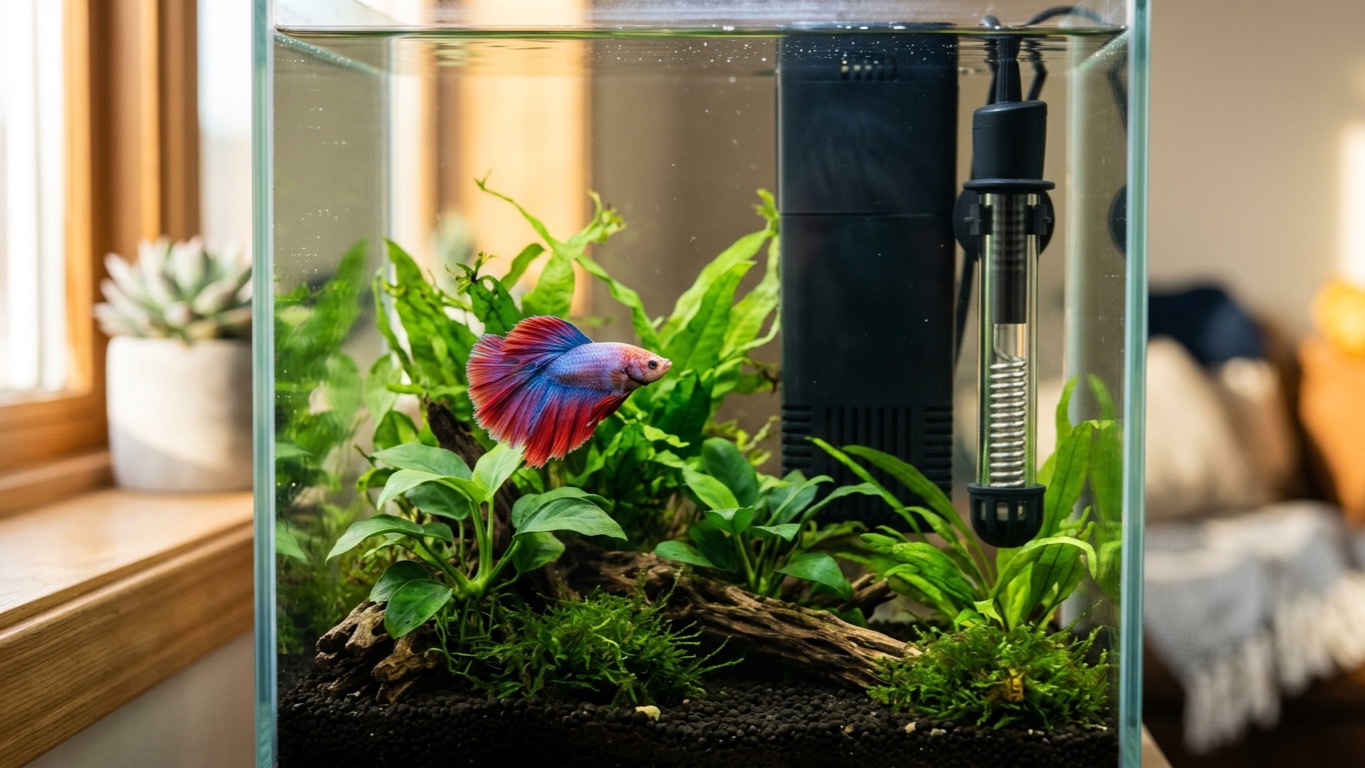
That is a different size question than a freshwater betta article, which starts from a minimum water volume. A coral tank starts from the light footprint and from how fast 35 ppt water can drift.
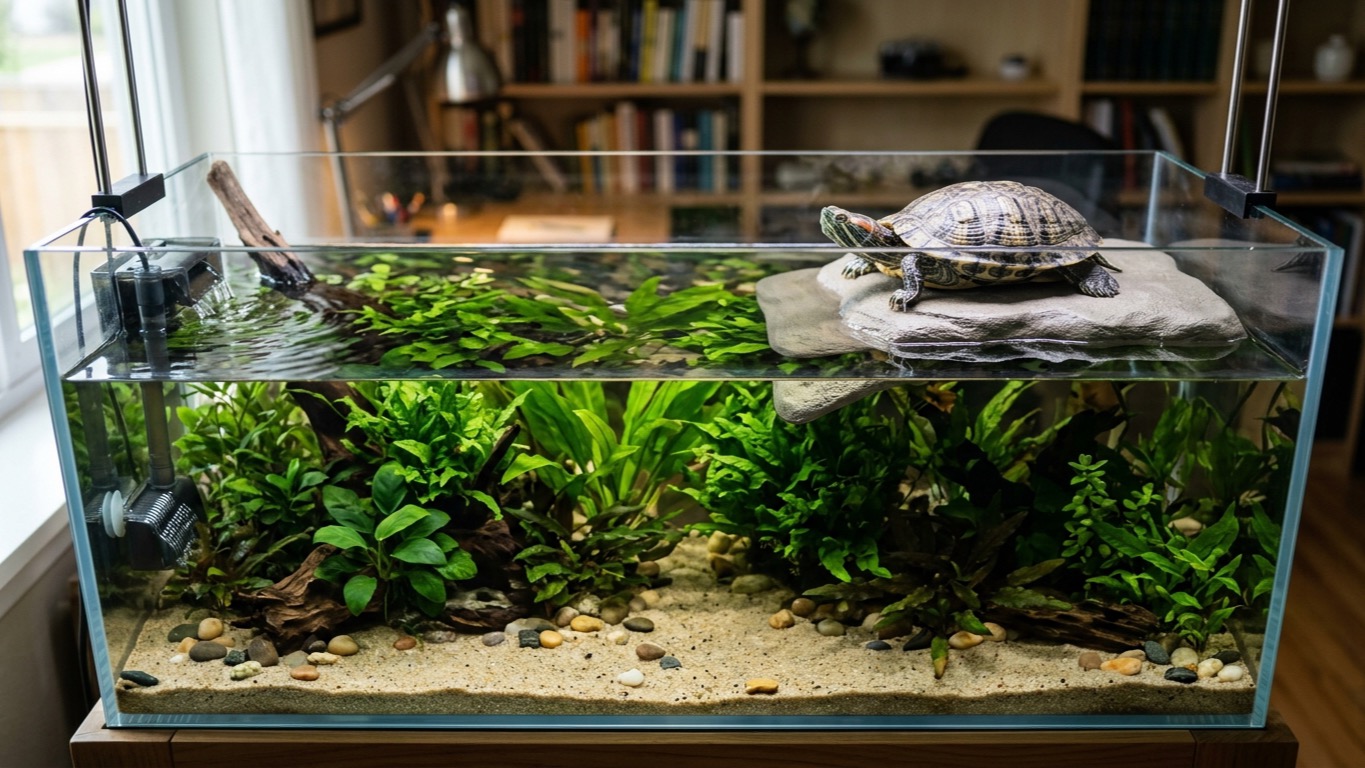
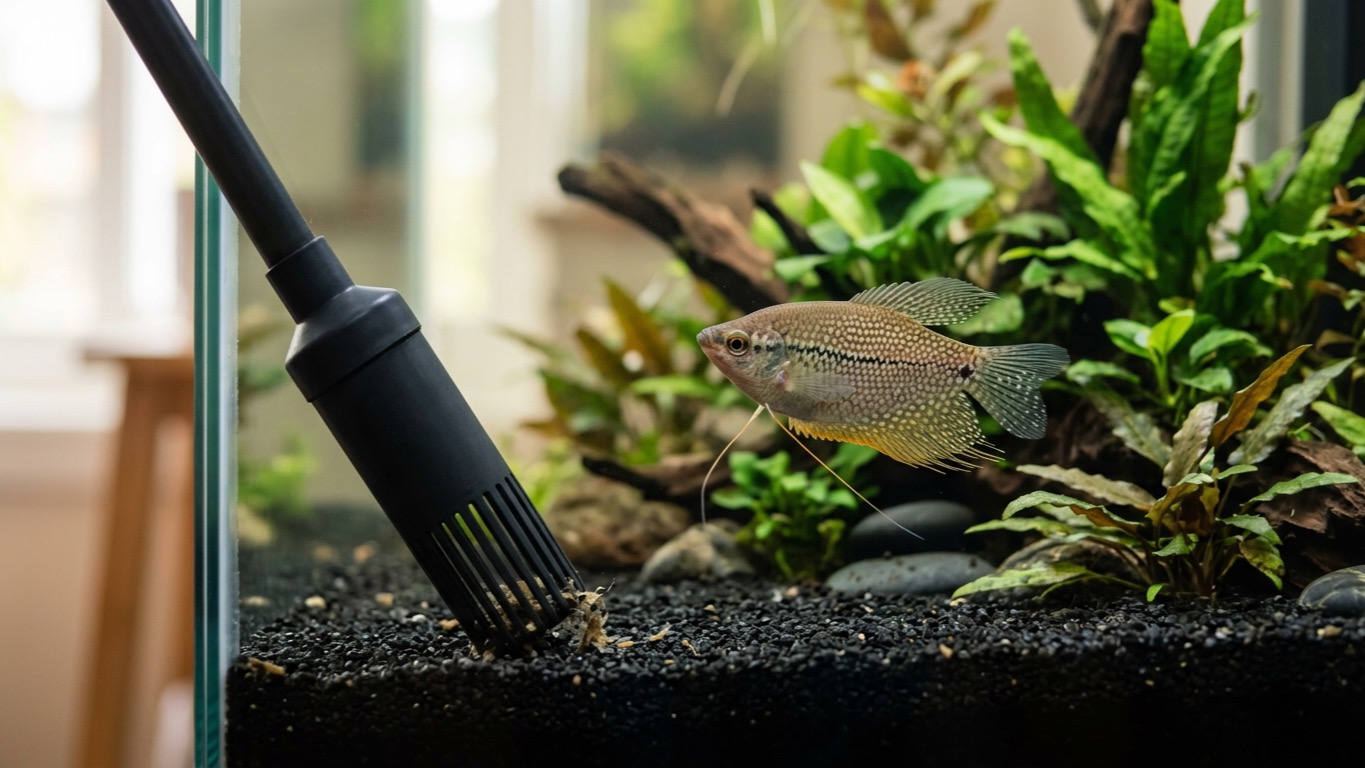
A turtle tank setup is a haul-out and basking problem. A coral tank is a light, flow, and chemistry problem. Do not reuse a dry dock, a gravel vacuum habit, or a freshwater heater plan.
We used the same attribute columns as our turtle tank picks page. Listed specs stay in the table, and there is no rank column.
Rock should leave open lanes for flow. Stack so the 24-inch light can reach mid-level shelves, and leave sand in the open, not in a deep, trapped pit.
A start sequence from empty glass to first coral
Follow the gear, then the water, then the animals, and do not reverse that order.
- Set the tank on a stand that holds the filled weight.
- Place rock with open channels, then add sand in a thin layer.
- Mix Red Sea Coral Pro Salt to the 35 ppt mark on the maker page.
- Install one listed 24-inch-band LED. Start the app schedule at a low intensity.
- Mount the Nero 5 only if the tank is in the listed 40- to 100-plus-gallon band.
- Set Random flow. Aim across the tank, not at one coral seat.
- Hold heat under the NOAA 1 °C bleaching buffer for your livestock’s origin.
- Add soft or LPS corals only after salinity and heat stay on those marks.
Skip SPS, clams, and anemones on this first pass, because those layouts need tighter light and flow than the 24-inch mixed-reef band.
If you cannot keep 35 ppt and a steady temperature, do not add coral; fix the mix and the heater first.
Mistakes that show up in first-year tanks
Most early losses come from too much light, one hard stream, or a salt mix that never hits 35 ppt.
A 95 W Radion should stay over a tank inside the listed 24- to 30-inch band, which the maker published for a reason.
Do not treat the Kessil 20-by-20-inch SPS square as your first footprint; use the 24-by-24-inch mixed-reef square instead.
Do not park a new coral under the Prime’s listed 100 µMol spot on day one; start lower, then move it later.
Do not store a big Coral Pro batch for later if you cannot keep salinity at 35 ppt. Mix what you will use, and treat the 10-liter guaranteed mix as the small, repeatable unit on the maker page.
FAQ
How big should a first coral tank be?
Match the tank to a listed 24-inch light band. The Prime 16HD Reef lists a 24-by-24-inch spread, and the Radion XR15 G6 Blue and Pro list 24 to 30 inches of width and depth.
If you want the Nero 5, AquaIllumination lists 40 to 100-plus gallons. A tank that misses both the light band and that pump band is the wrong first box.
Can I use a freshwater LED on a coral tank?
No, the fixtures in this brief are reef models with listed marine coverage and spectrum notes.
A freshwater bar does not publish the 24-inch reef bands we used. Comparing published specs, none of the four reef LEDs here are freshwater fixtures.
What flow do corals need?
They need changing, indirect current, and AquaIllumination lists a Random mode on the Nero 5 with a 3,000 gph maximum.
Use Random and aim so water wraps, and do not pin one coral in a straight 3,000 gph stream.
What salinity should I mix?
Use the 35 ppt natural-seawater mark on Red Sea’s Coral Pro Salt page, which also lists 12 dKH. Mix in a marked container, then recheck the tank after you add the new water.
How hot is too hot for a coral tank?
NOAA Coral Reef Watch flags heat stress at 1 °C above the local Maximum Monthly Mean. For the Main Hawaiian Islands example, NOAA lists that threshold at 28 °C.
Keep your heater under the seller’s listed range and under that 1 °C buffer.
Do I need an SPS light as a beginner?
No, Kessil lists a smaller 20-by-20-inch square for SPS, and this brief uses the wider mixed-reef square.
Soft corals and LPS fit the 24-inch band, and SPS-dominant tanks are outside the Waterpuppy 24-Inch Coverage Rule.
Can I convert a turtle tank into a coral tank?
Only if the glass, stand, and width match a reef LED’s listed band. A turtle tank is built for haul-out and dry heat.
A coral tank is built for 35 ppt water, random flow, and a 24-inch reef light. Strip the dock, recheck the seal, and treat it as a new saltwater box.