Quick answer: Detritus worms are tiny substrate scavengers found in almost every aquarium. They are usually harmless. A sudden swarm often means overfeeding or trapped waste, fixed with vacuuming and lighter feeding—not panic poison.
Worms signal waste load; clean the bed before you medicate.
We compared published care data and hobby maintenance notes to write this page. Our research team analyzed what detritus worms are, when swarms appear, and how vacuuming plus feeding cuts reduce numbers. Owners consistently report calmer tanks when they treat the waste source instead of dosing worm killers.
Comparing published specs and field notes shows these animals recycle feces and uneaten food. They are not fish parasites crawling out of vents. This page explains identification cues, spike causes, harmless baseline populations, vacuum routines, and when other worms need different action.
Include what detritus worms are, overfeeding and organic-waste triggers, harmless baseline cues, gravel-vacuum and water-change steps, feeding rules, and lookalike warnings. Leave out shrimp-only flatworm eradication recipes and prescription drug protocols. Skip panic chemical dumps that kill cleanup fauna and crash water quality.
What detritus worms actually are
They are small scavenger worms living in mulm, not parasites on healthy fish.
“Detritus worm” is a hobby label, not one scientific species. Most aquarium finds are thin annelids that move like tiny earthworms through gravel or sand. Bodies are round in cross-section and can stretch and contract. Colors range from white to brown, pink, gray, or red. Lengths in tanks often span about 0.25 inch to about 2 inches depending on type.
Identity cues:
- Thin, round, earthworm-like bodies
- Wiggle through substrate or swim briefly in open water
- Hitchhike on plants and décor into new tanks
- Eat feces, leftover food, and soft organic waste
- Present in nearly every established aquarium
Owners consistently report shock the first night worms appear in the water column. Our research team analyzed descriptions that treat them as beneficial recyclers when numbers stay modest. Comparing published specs for pathogens shows true internal parasites do not roam the gravel as free swimming threads. If worms move freely in the bed, think cleanup crew first.
When a population spike means too much waste
Visible swarms are a dashboard light for organic overload.
Overfeeding is the most common fuel. Food that fish cannot finish within a couple of minutes sinks and feeds worms. Infrequent gravel cleaning lets mulm build under décor. Coarse substrate larger than about 5 mm, or about 0.2 inch, can trap crumbs fish never reach. A dead fish or snail rotting in a corner also throws a banquet. Low oxygen in the bed can push worms into open water where you finally notice them.
Spike triggers:
- Feeding more than fish clear in about 2–3 minutes
- Skipped substrate vacuums for weeks
- Coarse gravel trapping uneaten food
- Overstocked tanks producing heavy waste
- Decomposing livestock or plant piles
Owners consistently report fewer free-swimming worms after cutting food and vacuuming. Our research team analyzed maintenance notes that treat the swarm as a symptom. Comparing published specs does not blame the worms for creating ammonia spikes by themselves. Fix the buffet, and numbers usually fall.
When detritus worms are harmless neighbors
A few worms in the gravel are normal aquarium life.
Hidden populations work quietly under sand and never make headlines. Fish often eat worms that wander into open water. Modest numbers help break down waste and can lower organic load. Panic dosing after spotting three white threads usually causes more harm than the worms did. Leave a healthy cleanup crew alone when water tests are clean and fish behave normally.
Harmless baseline:
- Occasional worms after you disturb the substrate
- Fish hunting worms as live snacks
- Clear water with 0 ppm ammonia and nitrite
- No worms protruding from living fish vents
- Stable feeding and regular water changes
Owners consistently report that “sterile” tanks still hide worms after plant imports. Our research team analyzed ecology notes that call eradication unnecessary for true detritus worms. Comparing published specs favors leaving beneficial fauna intact. Enjoy the miniature ecosystem instead of chasing zero invertebrates.
Manage with vacuuming and water changes, not poison
Remove food and mulm; do not carpet-bomb the tank.
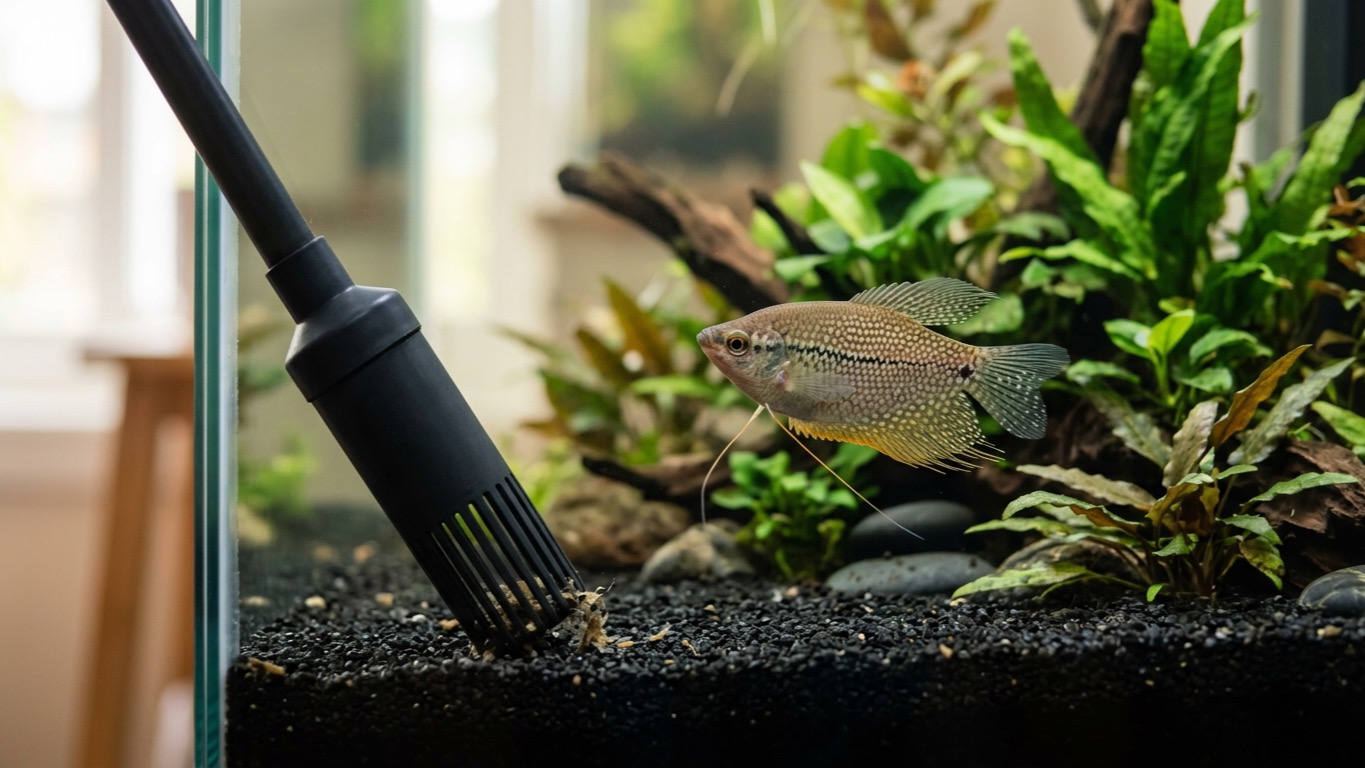
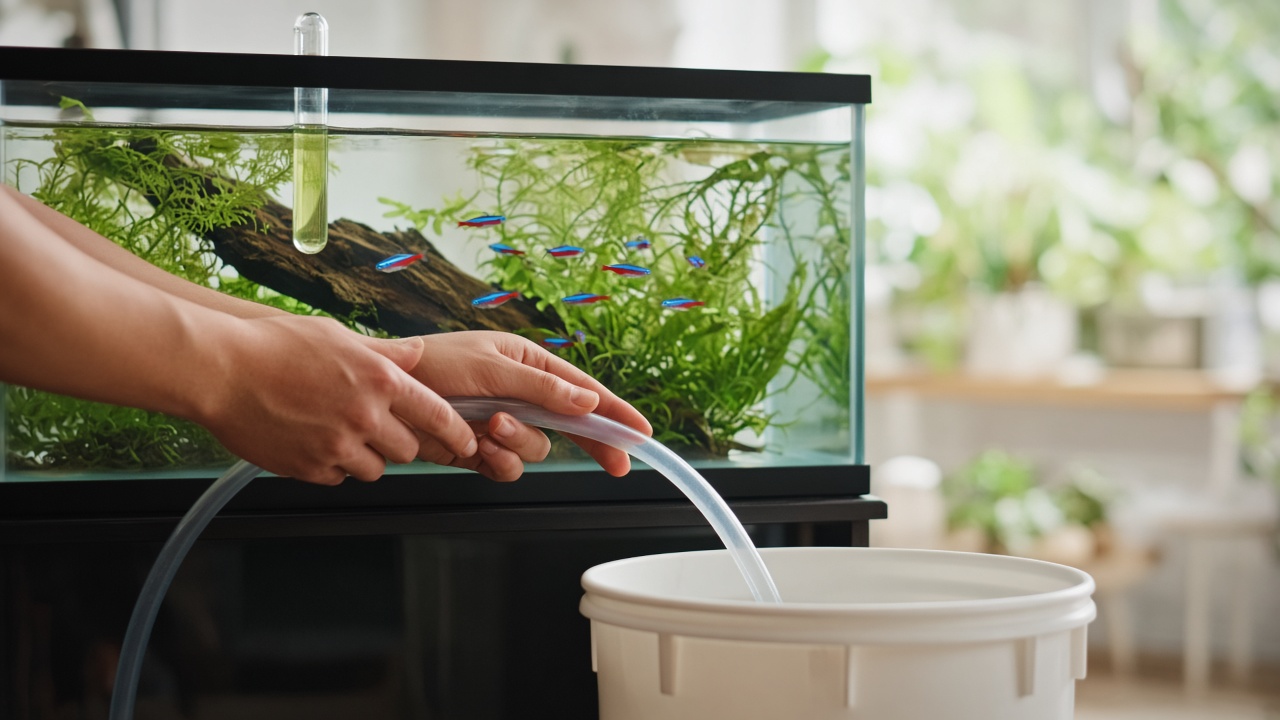
Use a gravel vacuum during water changes to lift waste from the bed. Target corners, under feeders, and behind hardscape where food collects. Change about 10% weekly or about 25% every two weeks as a common community rhythm when livestock allow it. Match temperature and treat tap water before refill. Skip broad dewormers aimed at detritus worms; mass die-offs can foul water and stress fish, shrimp, and snails.
Management steps:
- Vacuum substrate on a fixed schedule
- Siphon visible worm clouds during changes
- Reduce leftover food the same week
- Rinse mechanical filter media in tank water
- Increase surface agitation if oxygen is low
Owners consistently report dramatic drops after two or three thorough cleanings. Our research team analyzed care guidance that rejects routine chemical war on scavenger worms. Comparing published specs for community upkeep keeps filtration and water changes ahead of medications. If you must treat a different pest, confirm identity first.
Tighten feeding so the buffet shrinks
Less leftover food starves the swarm without harming fish.
Feed only what your fish finish in under about two minutes, once or twice daily for many community tanks. Rotate flakes, micro pellets, and frozen foods. Avoid dumping extra “just in case.” Lift décor and check for piles of pellets after lights-out. Fast fish in midwater may need a measured sinking course so bottom feeders do not leave crumbs. Skip multi-day vacation blocks of food unless you use a proven auto feeder with tiny doses.
Feeding rules:
- Two-minute clear rule for surface foods
- Watch the glass for uneaten flakes
- Fast one day weekly if waste is heavy
- Pre-portion cubes instead of shaking jars freely
- Remove large plant melt before it becomes mulm
Owners consistently report worm clouds fading when portions shrink. Our research team analyzed overfeeding notes that link crumbs to substrate fauna blooms. Comparing published specs for tetra-style community feeding still centers short meals, not constant grazing. Hungry-looking fish after a cut often adjust within days if portions were oversized.
Separate lookalikes that need different action
Not every white worm is a harmless detritus scavenger.
Planaria are flat with a distinct arrow-shaped head and glide rather than thrash like earthworms. They matter more in shrimp breeding tanks. Red worms hanging from a living fish’s vent can signal internal parasites and need veterinary guidance. Motile red or brown threads in gravel are still usually scavenger annelids, not camallanus crawling free. Bloodworm midge larvae have segmented bodies and head capsules; escaped live foods can live in the bed briefly.
Lookalike filter:
- Flat arrow head: think planaria, not detritus worm
- Worms from a live fish vent: seek fish-health advice
- Free swimming round threads: usually scavengers
- Stationary silt tubes on glass: tubifex-style builders
- Segmented red larvae with heads: midge bloodworms
Owners consistently report mislabeling every white speck as a deadly parasite. Our research team analyzed identification notes that separate free gravel worms from true fish pathogens. Comparing published specs keeps treatment off the table until identity is clear. Photograph the worm’s shape before you buy any medication.
Build a maintenance rhythm that prevents the next bloom
Steady habits beat emergency weekend scrubs.
Pick a weekly vacuum day and stick to it. Test ammonia, nitrite, and nitrate so you catch waste trends early. Keep stocking honest for the filter’s capacity. Rinse sponges before they choke flow. Cover heavy root zones gently so you do not destroy every pocket of microfauna in one pass. A clean tank still has a few worms; that is success, not failure.
Prevention rhythm:
- Weekly or biweekly substrate cleaning
- Measured feeding with leftover checks
- Filter maintenance on a calendar
- Prompt removal of dead livestock
- Reasonable stocking for tank length
Owners consistently report that prevention feels boring and works anyway. Our research team analyzed swarm cases that started after vacation overfeeding or skipped chores. Comparing published specs for community care keeps water changes and vacuuming as the first tools. Write the schedule on the stand so every helper follows the same plan.
What to do tonight if the glass is full of worms
Act on waste, then sleep; the worms are not eating your fish.
Stop extra feeding for a day or two. Perform a thorough gravel vacuum and water change. Confirm no carcass is hidden under wood. Check that the filter is flowing. Watch fish for normal appetite and breathing. Plan a lighter feeding schedule for the next week. Reassess after two cleanings before you consider any chemical option for a confirmed different pest.
Tonight checklist:
- Vacuum and change water now
- Pause extras and overfeeding
- Search for dead animals
- Verify filter flow and aeration
- Retest ammonia and nitrite
Owners consistently report calm after that first emergency clean. Our research team analyzed panic threads that improved without medications. Comparing published specs still treats true detritus worms as beneficial when waste is controlled. Keep the siphon handy and the poison cabinet closed.
FAQ
Are detritus worms harmful to fish?
Usually no; they scavenge waste in the substrate and do not infect healthy fish as external parasites. Fish often eat them when worms enter open water as a live snack. A huge bloom signals excess food or mulm, so fix maintenance before you reach for chemicals.
Why are there suddenly hundreds in the water?
Worms leave low-oxygen or food-rich beds and become visible in the water column when overfeeding, coarse gravel, or skipped vacuums pile up waste. A decomposing animal can also fuel a spike. Reduce food, vacuum thoroughly, and change water so numbers fall as the buffet shrinks.
Should I treat the tank with dewormer?
Not for ordinary detritus worms, because chemical kills can harm snails, shrimp, and biofiltration and may foul water as worms die. Vacuuming, lighter feeding, and regular water changes address the real problem. Reserve medications for confirmed different pests, and contact a veterinarian if livestock look sick.
How do I tell detritus worms from planaria?
Detritus worms are round and thrash like tiny earthworms, while planaria are flat with a triangular or arrow-shaped head and glide smoothly. Planaria matter more if you breed shrimp. Photograph the head shape before you act, because wrong treatment wastes money and stresses the tank.
Will gravel vacuuming remove them permanently?
Vacuuming removes many worms and, more important, their food, yet a few usually remain in the bed, which is normal. Repeat cleaning plus smaller meals keeps populations modest over weeks. Aim for invisible balance, not a sterile zero-worm tank that is neither realistic nor necessary.
How much should I feed to prevent blooms?
Offer only what fish finish in about two to three minutes, once or twice daily for many community setups, and remove leftovers you can see. Fasting one day each week helps heavy tanks. Match portions to adult appetites so less waste means fewer worms and cleaner water.
Can detritus worms live in the filter?
Yes; scavenger worms often colonize sponge and floss media where mulm collects over time. Rinse media in removed tank water during maintenance. A sudden release of worms while cleaning the filter is startling but usually harmless, so improve mechanical cleaning if media is packed with sludge.
This guide is informational only and does not replace advice from a qualified veterinarian.