Quick answer: A Dutch style aquascape uses plant streets, color contrast, and height layers instead of rock or wood drama. Sketch diagonal groups, plant dense single-species rows, then trim weekly so edges stay sharp under strong light and CO₂.
Plant streets, contrast, and relentless trimming define Dutch aquascapes.
We compared published care data and maker planting notes to write this page. Our research team analyzed street spacing, focal-point rules, fertilizer dosing, and CO₂ targets used in classic Dutch layouts. Owners consistently report the style rewards planning sketches more than impulse plant shopping.
Comparing published specs shows Dutch tanks skip hardscape so plants alone create depth. Streets run as single-species bands that widen in front and narrow toward the rear. Gaps near about 2–3 cm keep groups readable. This page covers layout rules, plant picks, substrate, light, CO₂, ferts, and trimming rhythm.
Include street sketching, leaf and color contrast, planting gaps, soil depth cues, CO₂ and fertilizer bands, and weekly trim habits. Leave out Iwagumi stone geometry and wood-focused nature aquarium tutorials. Skip disease dosing charts that belong with a veterinarian.
Sketch streets and focal thirds before you plant
Paper plans prevent muddy color collisions later.
Map foreground, midground, and background bands on a top-down sketch. Place a red or warm focal group near a rule-of-thirds point, not dead center. Draw three to seven diagonal streets that lead the eye rearward. Keep each street one species so texture stays clean. Note mature heights so tall stems never hide shorter show plants.
Planning cues:
- Top-down sketch with tank length marked
- One red focal group off-center
- Three to seven streets, not a random mix
- Foreground short, background tall, midground bridging
- No repeated species beside itself across the glass
Owners consistently report better depth when streets taper toward the back. Our research team analyzed layout notes that ban matching leaf shapes as neighbors. Comparing published specs favors contrast over collecting every red stem. Draw first; buy second.
Contrast leaf shape, color, and height in every neighbor pair
Readable streets need difference, not sameness.
Place fine leaves beside broad leaves. Seat bright green beside deep red or brown. Change height between adjacent groups so one never clones the next. Avoid two similar greens side by side even if species differ. Simplicity still matters: too many tiny accents read as clutter once stems fill in.
Contrast cues:
- Alternate fine and broad foliage
- Separate similar reds with a green street
- Vary mature height left to right
- Use one strong focal color, not five competing reds
- Recheck the sketch after plants arrive labeled
Owners consistently report leaf-shape rules easier to keep than perfect color charts. Our research team analyzed Dutch rule lists that also ban repeating the same plant twice. Comparing published specs keeps neighboring textures distinct. Walk the front glass and squint; blurry bands need more contrast.
Plant dense single-species streets with clear gaps
Tight stems inside; breathing room between groups.
Use fine tweezers and plant from back to front so you do not crush finished rows. Seat stems at a slight angle for rooting. Leave about 2–3 cm between streets so gravel lines stay visible as paths. Wider fronts and narrower rears deepen perspective. Dense packing inside a street stops open mud patches that invite algae.
Planting cues:
- One species per street
- About 2–3 cm gaps between streets
- Back-to-front planting order
- Trim long roots before seating stems
- Keep crowns of rosettes above the soil line
Owners consistently report messy merges when gaps disappear after two growth spurts. Our research team analyzed intermediate street guides that stress parallel or gently curved rows. Comparing published specs ties gaps to readable depth. Re-gap during trims, not only at setup day.
Skip hardscape so plants carry the entire layout
Dutch gardens are underwater beds, not mountain scenes.
Classic Dutch displays use little or no wood and stone. Soil and plants set structure. If you already own hardscape, keep it minimal or omit it for a true Dutch read. Choose a nutrient-rich bed such as Tropica Aquarium Soil with powder grades for fine foreground work. Cover plant substrate per maker depth notes, often several centimeters of bed for roots.
Substrate cues:
- Plant-focused layout without rock mountains
- Aqua soil suited to stem roots
- Even slope rising slightly toward the rear
- Powder soil for tight foreground streets
- Follow maker rinse and water-change notes for new soil
Owners consistently report hardscape stealing focus from street color. Our research team analyzed display notes that list decorations as none in pure Dutch examples. Comparing published specs keeps the garden metaphor honest. Let foliage be the architecture.
Match light, CO₂, and fertilizer to fast stem growth
High energy keeps streets filled; imbalance feeds algae.
Strong LED coverage and pressurized CO₂ suit demanding stem lists. One published Dutch example targeted about 25 mg/L CO₂ in a large display. Maker guidance for medium plants often cites about 10–15 mg/L CO₂, with advanced plants nearer about 15–30 mg/L. Tropica Specialised Nutrition suggests about 6 mL per 50 L weekly via its pump bottle, adjusted to uptake. Cut dose about 50% and raise water-change frequency if algae surge.
Energy cues:
- Full-coverage light on a stable photoperiod
- Pressurized CO₂ with a drop checker habit
- Macro-inclusive liquid fert for heavy stem loads
- Weekly water changes timed with fertilizer
- Root capsules near heavy root feeders when labels allow
Owners consistently report algae after fertilizer without matching CO₂ and light. Our research team analyzed maker dosing lines that include nitrogen and phosphorus for demanding tanks. Comparing published specs ties dose cuts to algae response. Balance the trio before adding more bottles.
Trim on a schedule so street edges stay architectural
Growth without scissors turns Dutch into jungle chaos.
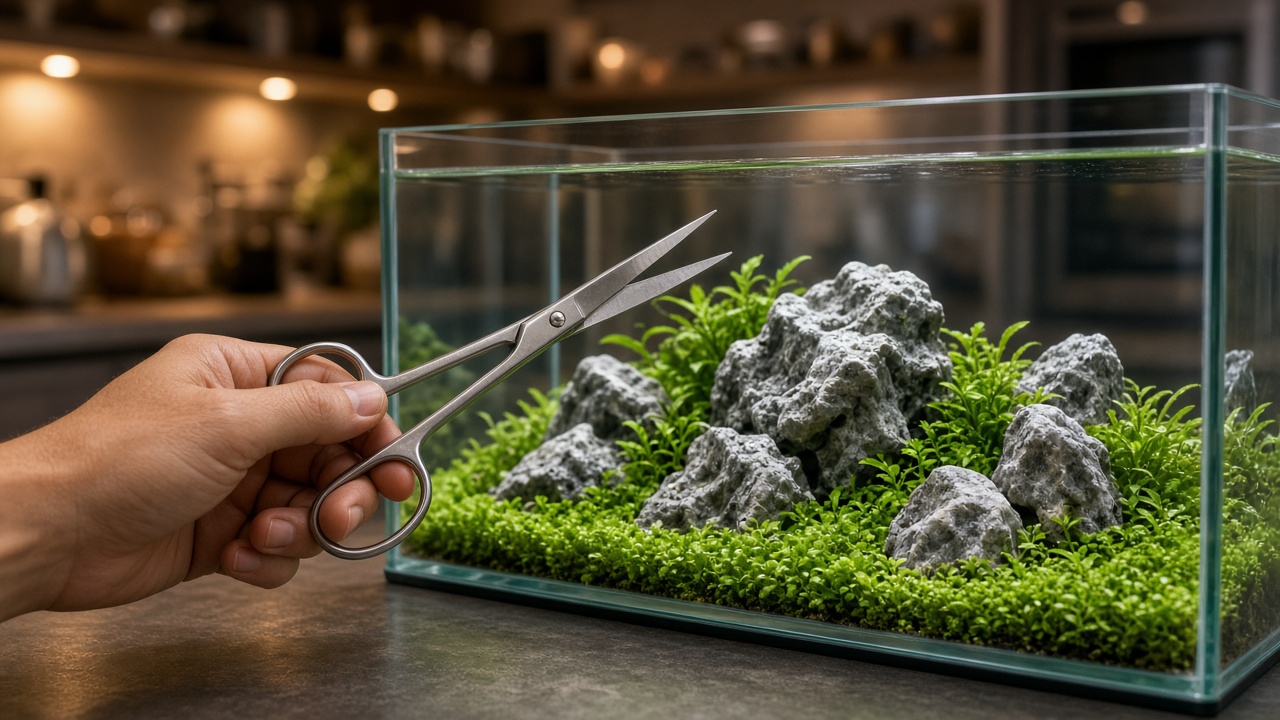
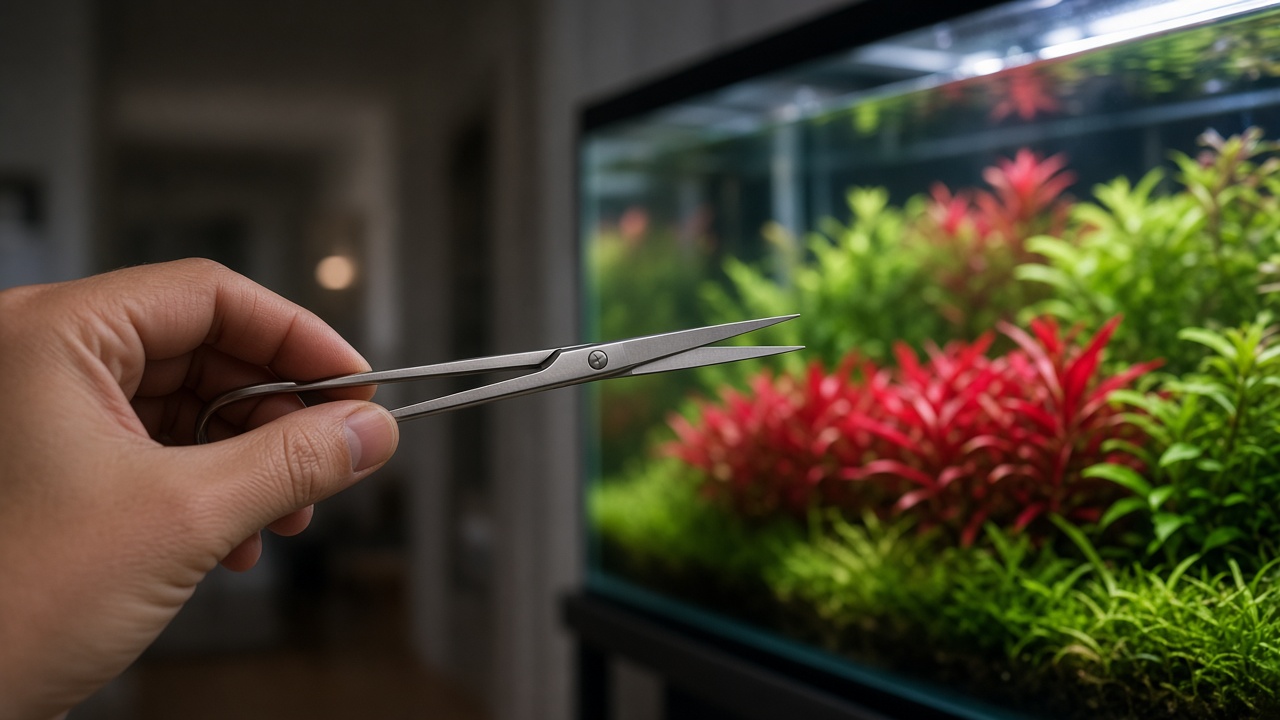
Budget about 1–2 hours weekly for large stem tanks, matching maintenance notes from ambitious layouts. Cut stems straight to keep tops even inside a street. Replant healthy tops into thinning gaps when a method suits the species. Remove shaded lower leaves that brown under dense canopies. Vacuum mulm from street gaps so paths stay visible.
Trim cues:
- Weekly shaping before streets merge
- Even tops within each single-species band
- Selective replant of cuttings where growth stalls
- Clear the 2–3 cm paths during every session
- Log which streets outpace neighbors
Owners consistently report midweek touch-ups saving weekend marathon cuts. Our research team analyzed maintenance hour notes on large Dutch displays. Comparing published specs treats trimming as design, not optional gardening. Sharp edges are the style’s signature.
Choose classic plant groups by height and role
Foreground carpets, midground color, and background curtains.
Foreground streets often use compact growers such as Staurogyne repens, Lobelia cardinalis mini forms, or Pogostemon helferi. Midground color may include Ludwigia, Cryptocoryne wendtii browns, or Pogostemon erectus. Background texture can use Bacopa, Hygrophila difformis, Myriophyllum, or fine Rotala and Limnophila for contrast. Aim for roughly seven or more distinct species in fuller Dutch tanks when space allows. Match growth rates so one street does not bury its neighbor in a week.
Plant-role cues:
- Short, dense foreground species
- Midground reds and textured greens
- Tall, fine, or broad background curtains
- About seven-plus species in larger displays
- Avoid two identical growth-speed reds side by side
Owners consistently report midground reds carrying the first glance. Our research team analyzed plant lists from Dutch setup features and maker layout write-ups. Comparing published specs keeps height roles honest at purchase. Buy for mature size, not tray height alone.
Run a weekly rhythm that protects contrast and water
Dutch beauty is maintenance performed on purpose.
Change water when you fertilize so nutrients reset cleanly. Clean glass before photos so street colors read true. Check CO₂ at lights-on and after peak photosynthesis. Replace tired stems rather than waiting for bare bottoms. Keep livestock light so fish do not uproot soft streets; shrimp and small schooling fish suit many planted Dutch tanks when bioload stays modest.
Rhythm cues:
- Same-day water change and liquid fertilizer
- Photoperiod timed to your CO₂ schedule
- Filter maintenance that preserves bacteria
- Livestock that will not dig streets apart
- Photo logs monthly to catch blurry merges early
Owners consistently report the scape looking “done” only between trims. Our research team analyzed notes that Dutch tanks are about plant growth management. Comparing published specs still starts with the sketch and the gaps. Consistency beats rare heroic rescues.
FAQ
What is a plant street in a Dutch aquascape?
A plant street is a single-species row planted as a band that often runs diagonally toward the rear glass. Wider fronts and narrower backs create depth without rocks. Leave about 2–3 cm between streets so each group stays readable. Contrast leaf shape and color against neighboring streets for a classic Dutch look.
Do Dutch aquascapes use driftwood or stone?
Traditional Dutch layouts rely on plants alone and usually omit hardscape focal pieces. Soft soil contours and street perspective replace mountain scenery. Minimal décor can appear in modern hybrids, yet pure Dutch reads as an underwater garden. Plan color and height carefully because plants must carry every line.
How much CO₂ do Dutch stem tanks need?
Demanding stem streets usually want pressurized CO₂. Maker bands often cite about 10–15 mg/L for medium plants and about 15–30 mg/L for advanced plants. One published large Dutch display listed about 25 mg/L. Match CO₂ to light and fertilizer, and reduce ferts if algae appear.
How should I dose Tropica Specialised Nutrition?
Maker guidance recommends about 6 mL per 50 L weekly with the pump bottle, adjusted to plant uptake. The product includes nitrogen and phosphorus for heavy planting. If algae rise, cut the dose about 50% and increase water-change frequency about 50%. Always follow the label for your bottle size.
How often should I trim a Dutch aquascape?
Plan weekly trimming for fast stem streets, with larger tanks sometimes needing about 1–2 hours. Cut even tops inside each street and reopen gaps before groups merge. Replant healthy cuttings where beds thin. Skipping weeks erases the architectural look faster than any lighting upgrade can fix.
How many plant species belong in a Dutch tank?
Intermediate guides often aim for at least seven distinct species so streets show varied texture. Smaller tanks may use fewer groups without looking sparse. Never repeat the same species in adjacent streets. Choose roles by height first, then pick colors that contrast rather than clone neighbors.
What substrate works for Dutch plant streets?
Nutrient-rich aqua soil supports dense stem planting; powder grades help fine foreground streets stay tight. Follow maker depth and early water-change notes when soil is new. A gentle rear slope supports background height. Inert gravel alone struggles unless you add labeled root nutrition for heavy feeders.
This guide is informational only and does not replace the manufacturer’s instructions for fertilizers, substrates, or lighting products.