Quick answer: Beginners succeed with a mid-size low-tech tank, one hardscape type, and hardy plants. Slope substrate, plant tall in back, and skip high-tech carpets until basics feel easy.
Start with one hardscape focal point and easy low-tech plants.
We compared published care data on beginner planted tanks, substrate depth, and easy layout shapes. Our research team analyzed maker plant guides beside hardscape composition notes for triangle, concave, and convex scapes. Owners consistently report calmer algae when light stays moderate and plant mass fills open sand early.
Comparing published specs, many first scapes land near a fifteen to twenty-five gallon class, with a twenty gallon long footprint often called a sweet spot. Maker plant pages favor full-spectrum light near about sixty-five hundred to eight thousand Kelvin and photoperiods near ten to twelve hours. Easy plants such as Anubias, Java fern, and Cryptocoryne tolerate low tech without injected carbon dioxide. This page covers tank choice, substrate, three easy layouts, plant zoning, light and gear, and first-month care.
Include one rock or wood theme, a timed LED, and dense easy plants. Leave out mixed hardscape clutter and demanding carpet species on day one. Skip pressurized carbon dioxide until your trim routine is steady.
Scope board:
| Keep | Drop |
|---|---|
| One hardscape material | Mixed clutter wood plus stone |
| Easy epiphytes and crypts | Demanding carpet species first |
| Timed moderate LED | All-day light guessing |
| Early dense planting | Empty sand for weeks |
| Cycle before fish | Instant livestock rewards |
Pick a stable tank before you chase a contest scape
Footprint and water volume beat a tiny desk cube for first layouts.
A longer tank near twenty gallons gives more scaping length and slower chemistry swings than a five gallon nano. Published beginner notes often cluster near sixty to one hundred liters as manageable. Tall columns waste light at the substrate and crowd plant height. Place the aquarium on a level, load-rated stand away from direct sun and drafty vents. Leak-test before you pour soil.
Tank shortlist:
| Cue | Beginner direction |
|---|---|
| Volume class | About 15–25 gal / ~60–100 L |
| Shape | Long footprint over tall cube |
| Stand | Level and load-rated |
| Sun | Avoid direct window blast |
| Access | Power and water nearby |
Owners consistently report algae when a nano sits in full sun. Our research team analyzed kit notes that treat lids and splash guards as optional but useful. Comparing published specs favors cycling patience before livestock. Measure length first so hardscape has room to sit off-center. Skip “instant aquascape” marketing that skips the nitrogen cycle.
Slope substrate and choose soil or inert beds wisely
Depth creates perspective and gives roots a home.
Maker pages for Tropica Aquarium Soil describe a complete bottom layer. Grain notes sit near about two to three millimeters. Thicken soil toward the rear wall. Hobby hardscape guides often slope about three to four centimeters in front and six to eight centimeters in back. Maker plant basics often install about a two to three inch base, also sloping higher toward the rear. Active soil can lower pH slightly, so makers recommend large early water changes. Inert gravel plus root tabs works if you prefer simpler chemistry.
Substrate board:
| Option | Published cue |
|---|---|
| Tropica Aquarium Soil | Complete layer; thicker at rear |
| Grain size notes | About 2–3 mm on soil bags |
| Front depth theme | About 3–4 cm or ~2 in class |
| Rear depth theme | About 6–8 cm or higher slope |
| Early water changes | About 25–50% twice weekly for first 4 weeks on active soil notes |
Pour water onto a plate or bag so soil does not explode into mud. Leave open sand paths only if you will plant them soon. Push root tabs beside swords and crypts in inert beds. Do not bury Anubias or Java fern rhizomes. Edge case: ultra-fine powder sand can compact; prefer porous grains that breathe.
Use triangle, concave, or convex layouts with one hardscape type
Simple geometry reads clean before plants fill in.
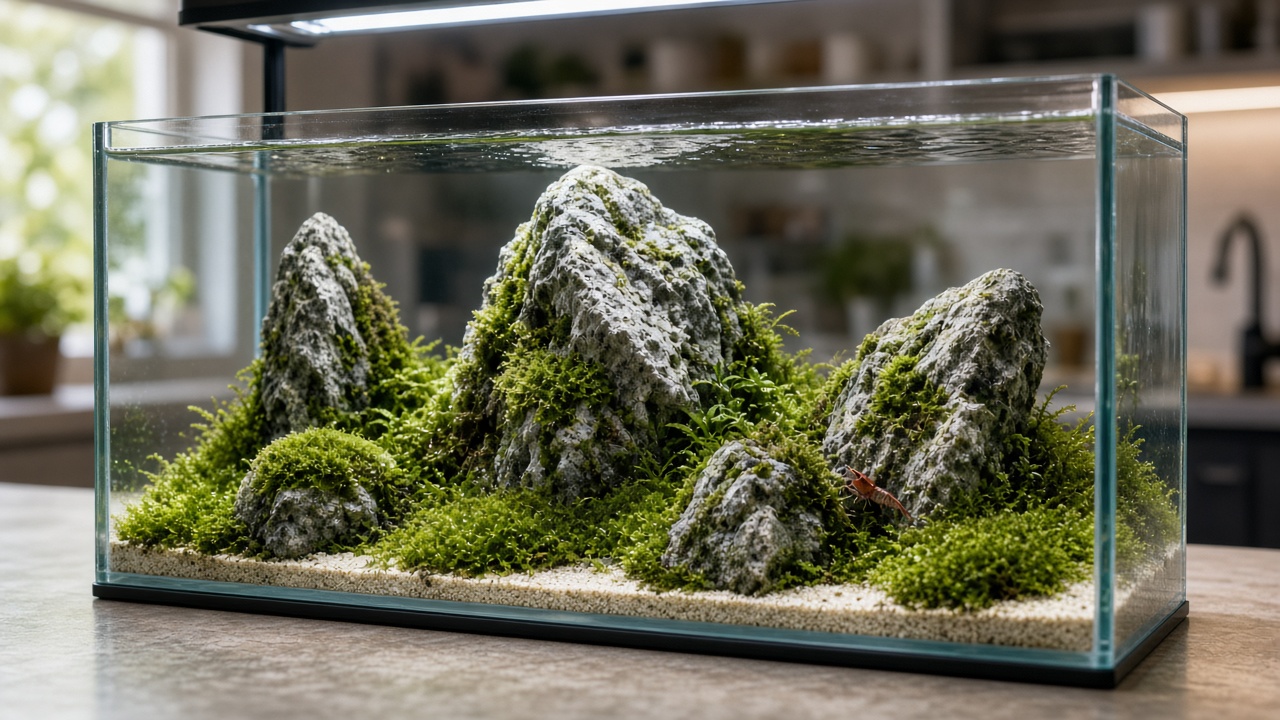
Triangle layouts raise hardscape and tall plants on one side and step down toward open space. Concave layouts keep sides higher and leave a low open center path. Convex layouts build a central hill or island with lower edges. Place the main stone or wood near a rule-of-thirds line, not dead center. Work in odd numbers such as three rocks so clusters look natural.
Layout map:
| Style | Hardscape cue | Plant cue |
|---|---|---|
| Triangle | High left or right apex | Tall stems on the high side |
| Concave | Tall sides, open center | Path of low plants or sand |
| Convex | Central mound or island | Soften the peak with mid plants |
| Focal rule | Off-center thirds point | Leave negative space |
| Material rule | One rock or one wood type | Match tones; skip clutter |
Owners consistently report messy tanks when wood and stone fight for attention. Our research team analyzed composition notes that favor one dominant piece first. Comparing published specs treats negative space as design, not empty failure. Angle stones slightly and bury bases so they look rooted. Test stability with a gentle push before you fill.
Zone hardy plants from front to back without burying rhizomes
Correct planting beats buying rare stems.
Background picks include Vallisneria and hardy stem plants that add height. Midground Cryptocoryne and mid-size Anubias soften hardscape. Foreground stays low with small crypts, moss, or open slope. Maker planting notes say rhizome plants such as Anubias and Microsorum must not have the rhizome buried or they rot. Tie or wedge them on wood and stone. Rooted rosettes go into substrate with crowns above the soil line.
Planting checklist:
- Tall plants against the rear glass
- Mid plants around the focal hardscape
- Low plants or moss toward the front
- Anubias and Java fern attached, rhizome exposed
- Crypts and swords rooted with crowns free
Our research team analyzed beginner failures tied to buried rhizomes. Comparing published specs favors easy low-light plants before carpet species. Owners consistently report crypt melt after big moves, then new leaves if roots stay. Plant wet leaves under a mister during dry scaping. Space stems so light reaches lower leaves.
Match moderate light, gentle filtration, and simple fertilizer
Gear should support plants without cooking algae.
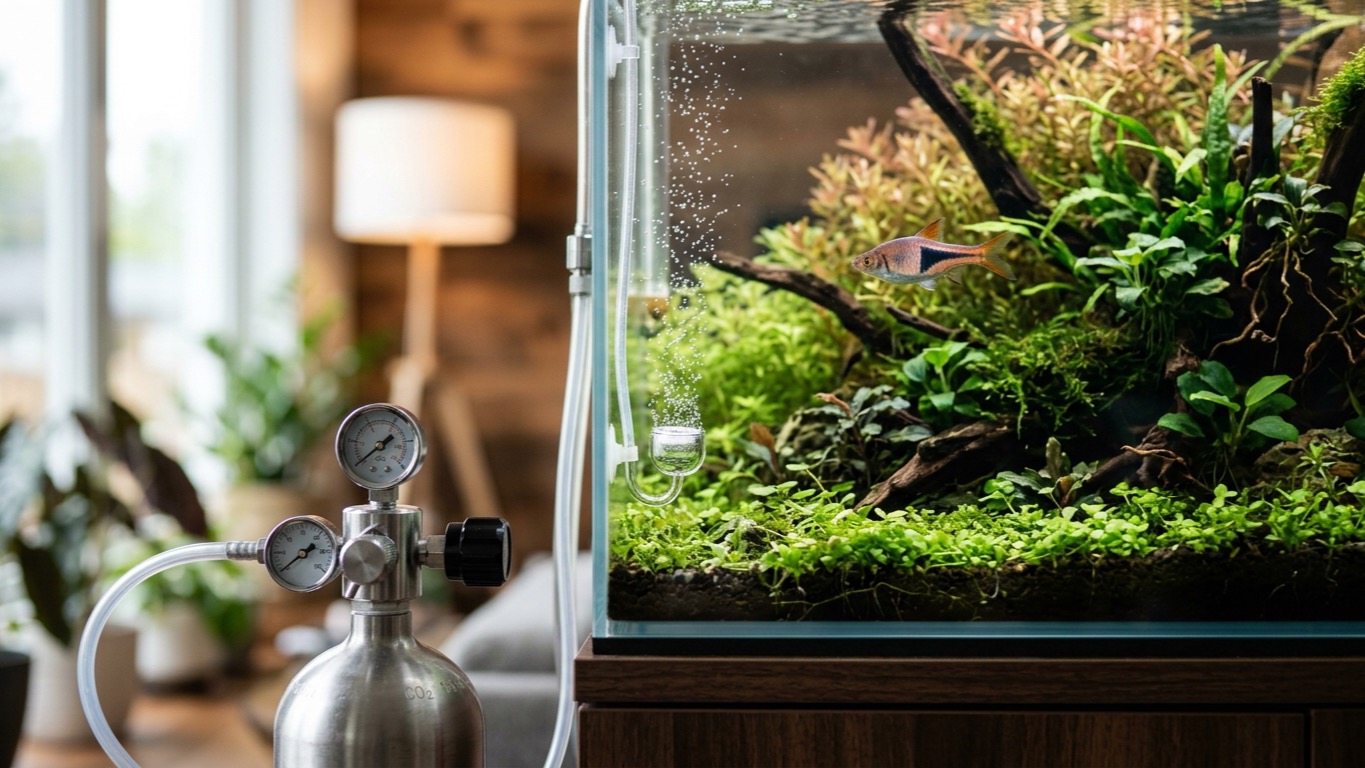
Maker plant guides describe full-spectrum fixtures near sixty-five hundred to eight thousand Kelvin and about ten to twelve hours of light daily on a timer. Low-tech beginners often succeed without injected carbon dioxide when plant choices stay easy. A hang-on-back or sponge filter clears debris if flow is not a firehose. Liquid plant food such as Aqueon Aquarium Plant Food appears in maker dosing notes for weekly nutrition. Watch nitrate and phosphate so algae does not paint leaves.
Gear board:
| Item | Beginner cue |
|---|---|
| Light spectrum | About 6500–8000 K class |
| Photoperiod | About 10–12 hours on a timer |
| Filter | Gentle HOB or sponge |
| Fertilizer | Follow maker liquid labels |
| CO2 | Optional; skip for first low-tech scape |
Owners consistently report hair algae when lights run all evening. Our research team analyzed maintenance notes that pair shorter early photoperiods with dense planting. Comparing published specs favors timers over guesswork switches. Aim returns across or deep so surface agitation stays mild in low-tech tanks. Clean filter media in tank water only.
Run the first month with water changes and patient stocking
Setup week is not livestock week.
Active soil maker notes recommend changing about twenty-five to fifty percent of the water at least twice weekly during the first four weeks. Maker planted maintenance notes often change about ten percent weekly or about twenty-five percent every two weeks once stable. Hold ammonia and nitrite at zero before fish. Plant mass should cover most of the bed early so algae loses the nutrient race. Add small peaceful fish only after plants root and tests stay calm.
First-month list:
- Large early water changes on active soil
- Daily visual check for melt and cloudiness
- Timer locked before fish day
- Test ammonia, nitrite, nitrate, and pH
- Stock lightly after plants settle
Our research team analyzed algae notes that blame empty sand first. Comparing published specs treats stocking as the last step. Owners consistently report clearer water when trimmings leave the tank. Net leftover food after two minutes. Keep dechlorinator beside the siphon.
Month-one scorecard:
| Check | Target theme |
|---|---|
| Ammonia / nitrite | 0 ppm before fish |
| Early soil changes | Large, frequent per maker notes |
| Photoperiod | Locked timer near 10–12 hours |
| Plant cover | Most of the bed filled |
| Stocking | Light, after plants settle |
FAQ
What tank size works for a first aquascape?
Many beginner notes favor about fifteen to twenty-five gallons, with a twenty gallon long footprint often praised. Larger water volumes swing slower than tiny nanos. Tall cubes waste light and planting depth. Measure stand length before you buy glass. Stability beats desk drama every time you shop.
Do beginners need carbon dioxide injection?
No. Easy plants such as Anubias, Java fern, and crypts grow in low-tech tanks without injected gas. Pressurized systems help advanced carpets and high light later. Master trim, light timers, and fertilizer first. Skip CO2 until those habits stick. Low tech still looks lush when plant mass is dense.
How deep should substrate be?
Slope substrate deeper toward the back. Maker and hobby notes often cite about two to three inches overall. Front depths near three to four centimeters are common. Rear slopes often reach six to eight centimeters. Active soils may need large early water changes. Leave rhizomes of Anubias and Java fern exposed. Roots need depth; crowns need air.
Which layout is easiest to start with?
A triangle with one wood or stone cluster off-center is forgiving. Concave paths and convex islands also work when you keep one hardscape material. Place the focal point on a thirds line. Leave open swimming space. Odd-number rock groups look more natural than perfect symmetry.
What plants should beginners buy first?
Anubias, Java fern, Cryptocoryne, Vallisneria, and moss appear across easy lists. Attach epiphytes to hardscape so rhizomes stay exposed. Root crypts and swords in nutrient soil or beside tabs. Fill most of the bed early to fight algae. Soft leaves protect future fish better than plastic spikes.
How long should aquarium lights run?
Maker plant pages often suggest about ten to twelve hours with a consistent timer. Longer hours do not fix a weak fixture. Start slightly shorter if algae blooms, then add time as plants thicken. Clean glass covers so light reaches leaves. Consistency beats random all-nighters.
When can I add fish to a new aquascape?
Add fish only after the tank cycles and plants root in place. Confirm ammonia and nitrite stay at zero on repeated tests. Active soil weeks may need frequent large water changes first. Add small peaceful fish in light numbers only. Stocking last protects both animals and your hard-won layout.
This guide is informational only and does not replace manufacturer instructions for heaters, filters, soils, lights, or fertilizers.