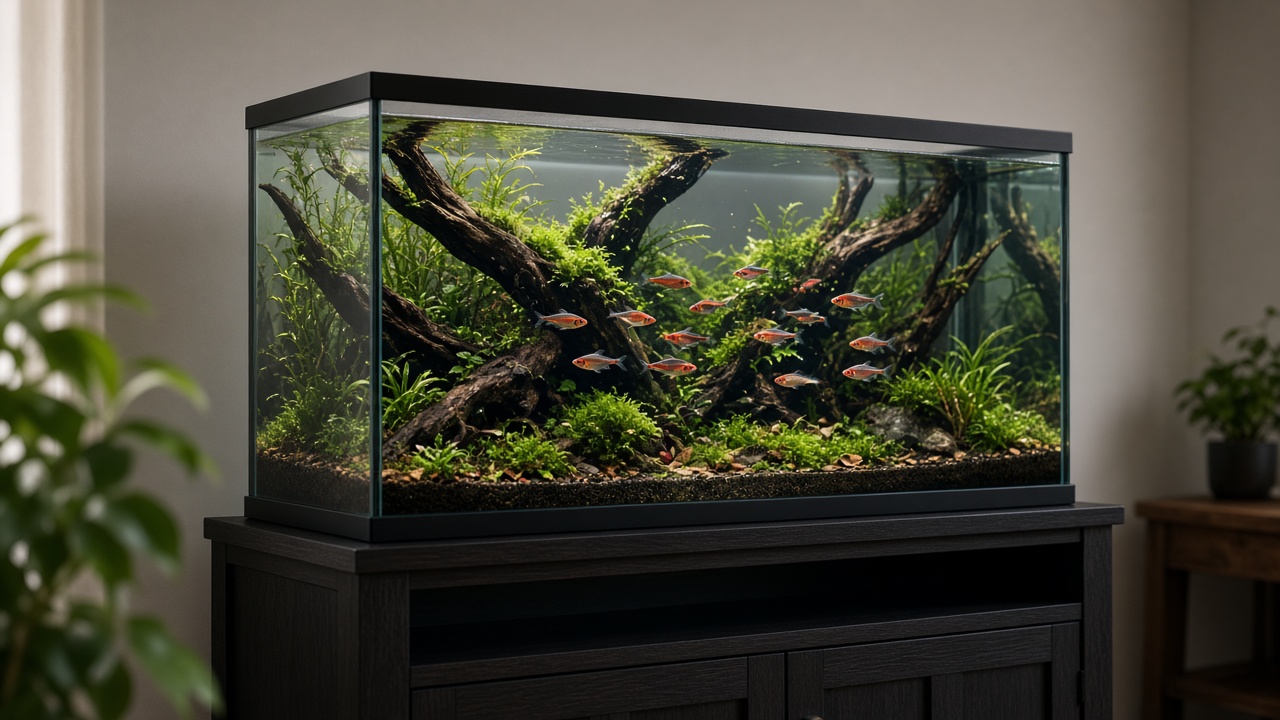
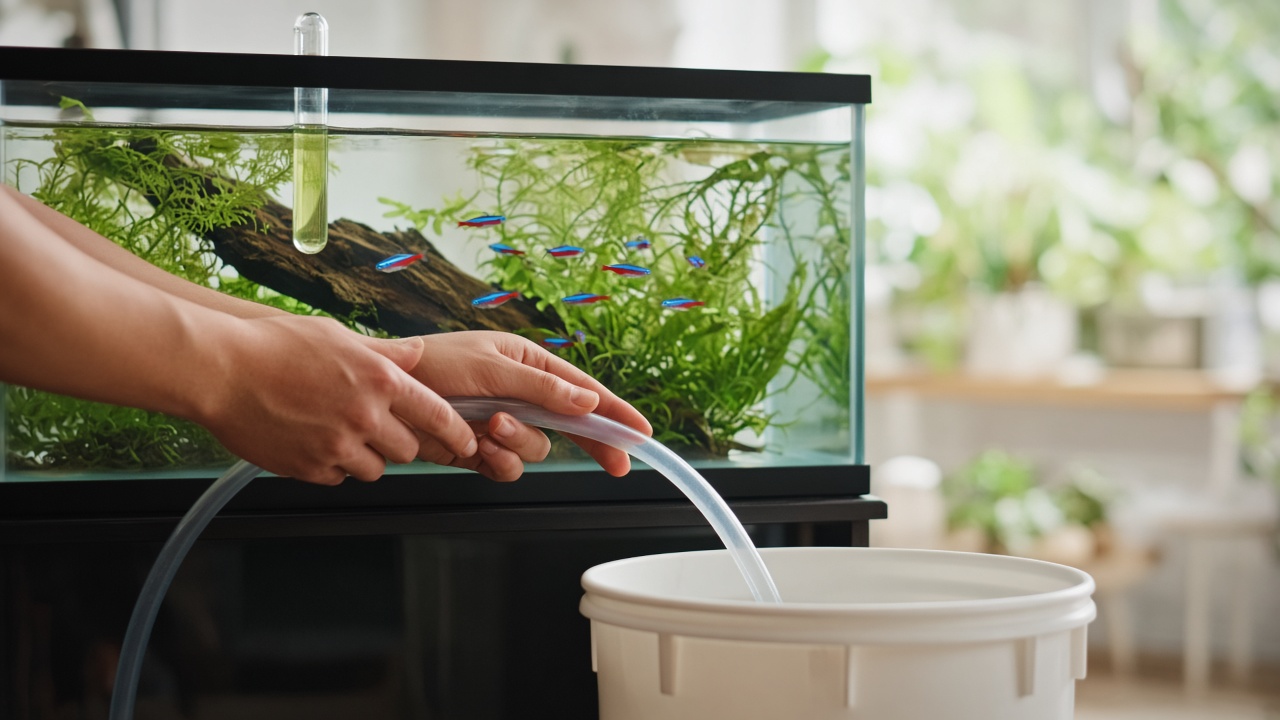
Quick answer: Buy aquarium-labeled resin or ceramic ornaments with a listed size. Skip painted toys, unknown metals, and garden décor. Rinse with water only, then match hide openings to the fish.
Buy only aquarium-labeled resin or ceramic décor whose maker page lists a size.
This page is a materials-first shopping guide from a home-aquarium research desk. We did not soak ornaments, we did not measure leaching, and we did not build a ranked list.
Our research team analyzed five current maker pages and compared published specs only, not tank photos.
The Labeled-Material Rule we used
A decoration is in this article only if the maker names the material and lists a size.
That Labeled-Material Rule is a buying filter, not a beauty score. A product had to pass both checks on the maker’s own page:
- The page names the material in words, such as resin, ceramic, or aragonite.
- The page lists at least one length, height, or box weight.
We covered currently sold aquarium ornaments and one marine hardscape rock. We skipped garden statues, children’s toys, live plants, and lights.
We also skipped listings that hid the material behind store copy, and we left out any item whose maker page stayed silent. The rule fails if we name a product that misses either check.
Our research team compared listed lengths on those five pages. The shortest listed length was 4.25 inches on Zoo Med’s Betta Ceramic Log page. The longest listed span was 9.5 inches on Penn-Plax’s Action-Air Split Shipwreck Medium page.
Top 7 Fish tank decorations
The picks below are the 7 fish tank decorations on sale right now, listed with what each suits best and an honest drawback. Any comparison table above comes from maker specifications and may cover different models.
1. Ameliade Aquarium Artificial Plants & Rock Cave Betta Fish Tank Decor
Best for: betta tanks wanting live‑plant look
We compared this set with other low‑cost betta décor and found it offers a complete hide‑and‑play area for under $8. Owners report that the plastic leaves hold up well, though some note the texture feels cheap after weeks of use.
Pros: affordable combo of plants and cave; non‑toxic plastic safe for bettas Cons: plastic plants can look less realistic over time
2. Mechpia 13 Pieces Aquarium Decorations Kit
Best for: starter kits for community aquariums
We compared the Mechpia kit to other entry‑level decoration bundles and appreciated the mix of rocks, plants, and driftwood silhouettes. Owners say it helps them quickly dress a new community tank, though a few mention that the tiniest ornaments can be swallowed by curious fish.
Pros: varied pieces for versatile layouts; budget‑friendly for starter tanks Cons: some items are small and may be lost by larger fish
3. Xereooe 8Pcs Fish Tank Decorations Set Sunken Ship Decoration
Best for: themed shipwreck aquascapes
We compared this ship set with higher‑end wreck models and found it delivers a recognizable nautical vibe at a low price. Aquarium hobbyists report the pieces slot together nicely, creating a fun focal point, but some wish the detailing was sharper.
Pros: cohesive shipwreck theme; easy to arrange on substrate Cons: limited realism compared to detailed resin ships
4. Ameliade Betta Fish Tank Rock Cave Decor Aquarium Accessories
5. Fluval 12694 Plant and Shrimp Stratum for Freshwater Fish Tanks
6. JIH Aquarium Decorations Resin Hollow Tree Trunk Ornament
7. GloFish Aquarium Gravel
Comparison: Fish tank decorations at a Glance
| Product | Best for | Approx. price | Where to buy |
|---|---|---|---|
| Ameliade Aquarium Artificial Plants & Rock Cave Betta Fish Tank Decor | betta tanks wanting live‑plant look | $7.88 | Check price |
| Mechpia 13 Pieces Aquarium Decorations Kit | starter kits for community aquariums | $12.99 | Check price |
| Xereooe 8Pcs Fish Tank Decorations Set Sunken Ship Decoration | themed shipwreck aquascapes | $9.98 | Check price |
| Ameliade Betta Fish Tank Rock Cave Decor Aquarium Accessories | $6.99 | Check price | |
| Fluval 12694 Plant and Shrimp Stratum for Freshwater Fish Tanks | $16.99 | Check price | |
| JIH Aquarium Decorations Resin Hollow Tree Trunk Ornament | $7.59 | Check price | |
| GloFish Aquarium Gravel | $8.97 | Check price |
Want to browse every option? See the full range of fish tank decorations on Amazon →
What belongs in the water
Resin and ceramic ornaments labeled for aquariums are the usual pass, while metals and toy paint are the usual fail.
Fish live in the water that touches every object, so a decoration is part of that water. Start with items sold as aquarium ornaments, and use a maker page that says resin, ceramic, or a named rock.
Penn-Plax’s page for the SpongeBob SquarePants Pineapple Home Medium calls the piece durable aquarium-safe resin and lists freshwater and saltwater use. Hygger’s page for the 5-hole Resin Hollow Tree Trunk names the same man-made material and also lists both water types.
Zoo Med’s Betta Ceramic Log page names ceramic and says the log sinks, so it does not need a glued-on base to stay down.
CaribSea’s marine substrates page describes LifeRock Original as aragonite-bearing rock. The same page states the base rock is 97% calcium carbonate and has a 50% void space.
That void space is for bacteria, not for soft-water chemistry. Calcium carbonate can raise hardness and pH, so treat marine rock as marine rock.
Skip these items, even if they look cute:
- Painted toys and figurines not sold as aquarium ornaments
- Garden ceramics with unknown glaze
- Metals that can rust or shed ions
- Foraged wood and sidewalk rocks with no maker page
- Anything you would wash with household soap
The CPSC’s Lead in Paint page states a hard number. Paints or similar coatings with 0.009% or more lead by weight are banned hazardous products under 16 CFR part 1303.
That rule protects children who touch painted goods, and it is not a fish-safety stamp.
Five current pieces, compared by attributes
These five products show how maker pages differ on material, size, and water type.
Our research team put them in one table because each page lists material plus a measurement. The table is an attribute grid, not a ranking.
| Product | Material on maker page | Listed size | Water type on page | Hide or motion note |
|---|---|---|---|---|
| Penn-Plax SpongeBob Pineapple Home Medium | Aquarium-safe resin | 3 in diameter × 5.25 in high | Freshwater and saltwater | Swim-through holes |
| Penn-Plax Action-Air Split Shipwreck Medium | Resin, hand painted | 9.5 in across × 4.7 in high × 2.5 in deep | Not stated | Air-driven masts; two separable pieces |
| Zoo Med Betta Ceramic Log | Ceramic | 4.25 in | Not stated | Sinking hide |
| Hygger 5-hole Resin Hollow Tree Trunk (HG-912) | Resin | 5.3 × 4 × 2.7 in | Freshwater and saltwater | 5 holes; listed for 5–50 gallon tanks |
| CaribSea LifeRock Original | Aragonite rock, 97% calcium carbonate | 10 lb, 20 lb, and 40 lb boxes | Marine | 50% void space; no curing stated |
Penn-Plax’s Pineapple Home Medium page lists a 0.30 lb weight with a 3-inch diameter and a 5.25-inch height. The swim-through holes are the useful part for small fish.
Penn-Plax’s Action-Air Split Shipwreck Medium page lists a 0.40 lb weight. The copy gives 9.5 inches across, 4.7 inches high, and 2.5 inches deep, and an air pump is not included.
Zoo Med’s Betta Ceramic Log page lists item FA-50 and a 4.25-inch length. The page says the log sinks but does not list a hole diameter.
Hygger’s HG-912 page lists a 0.42 lb weight and a 5.3 × 4 × 2.7 inch size for 5–50 gallon tanks. The same page says the trunk is only for small fish under 5 inches.
CaribSea’s page lists LifeRock Original in 10 lb, 20 lb, and 40 lb boxes. Dreamscapes copy on that page says the kit has no paint or plastic.
Two resin ornaments list both freshwater and saltwater: the Pineapple Home Medium and the Hygger trunk. The shipwreck page and the ceramic log page do not name a water type.
Size, hides, and crowding
Match the hide to the fish, and leave a clear path to the filter.
A decoration that fills the tank is clutter. Use the maker’s listed size as a hard limit:
- A 4.25-inch ceramic log is a betta-scale hide, not a pleco cave.
- A 5.3-inch Hygger trunk is listed for fish under 5 inches.
- A 9.5-inch shipwreck needs a long front glass.
- A 3-inch-wide pineapple house is a small swim-through, not a reef.
- A 40 lb LifeRock box is a scape, not a single ornament.
Hygger’s page also says there are 5 holes in the trunk, and three side holes are for viewing rather than for giant fish.
If your fish is longer than the hide, skip that hide, because a stuck fish is a failure you can prevent with a ruler.
Leave space around heaters and filter intakes, since decor that blocks flow makes waste sit still.
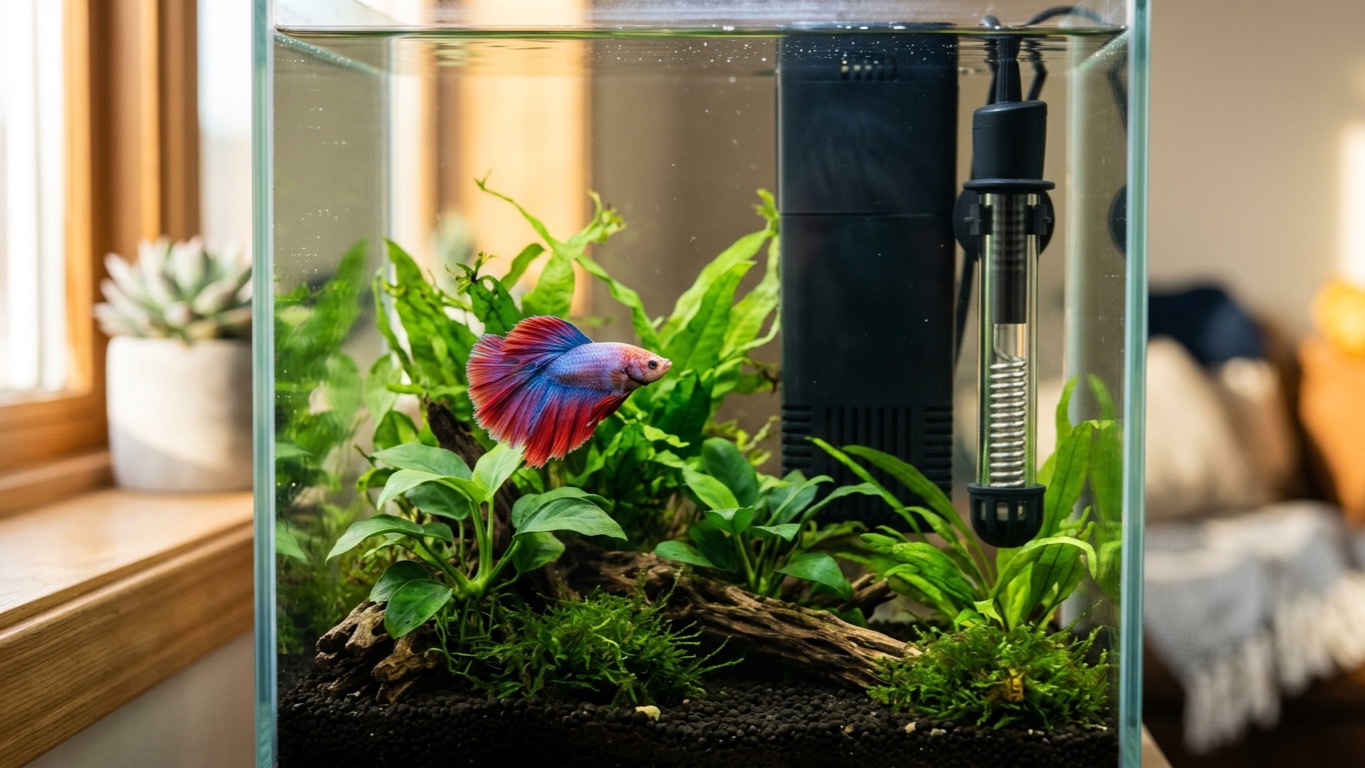
In a small tank, a filter and heater in one needs a clear intake. Do not press a wreck against that intake.
Hygger’s trunk page says the piece has a flat base and is hollow. Penn-Plax’s pineapple page says a sturdy base keeps the ornament from floating.
Do not glue unknown household adhesives to glass. If a maker does not name an aquarium-safe cement, skip the glue.
Rinse, place, then cycle
Wash décor with water only, then add it to a tank that is already cycling.
New ornaments carry dust and mold-release film, and that film is not fish food.
Penn-Plax’s pineapple page says to wipe and rinse with warm water. It also says to avoid soap, because soap residue can harm fish.
Hygger’s trunk page gives a timed rinse and says to soak the piece for 10–15 minutes to wipe off dust and paint smell.
Do this before the ornament enters the display tank:
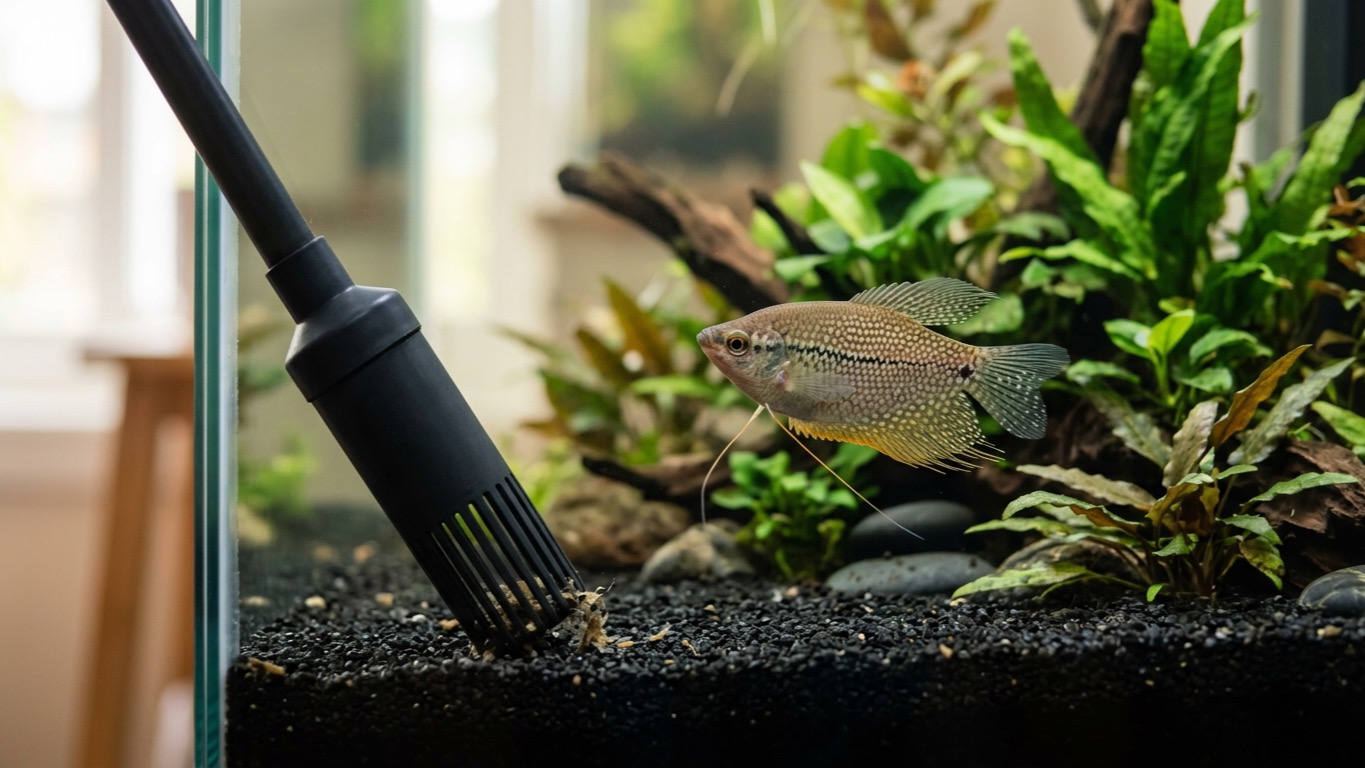
- Rinse under warm running water. Use a clean tank brush, not a kitchen sponge.
- Soak resin pieces for 10–15 minutes if the maker page says to soak.
- Feel every edge and hole with a finger. File only if a ridge can cut skin.
- Set the wet piece on a towel and look for loose paint or grit.
- Place it after the tank has a working cycle, not on day one with new fish.
Porous rock adds surface for bacteria and for waste.
CaribSea’s LifeRock copy says the rock is infused with bacteria and needs no curing. That marine claim is not a reason to skip cycling a freshwater tank.
A new community tank still needs time for ammonia control. Follow the steps in how long to cycle a fish tank before you add livestock.
Décor does not replace filter media. Ornaments trap mulm in holes and on fake leaves, so keep filter cartridges on their stated swap interval.
Rinse décor in old tank water during a water change, not in the sink with soap. If a resin piece still smells like paint after the listed soak, do not add it.
When décor changes the water
Some rocks change hardness, and maker pages that admit this are useful.
Most aquarium-labeled resin pages claim the piece will not fight the water. CaribSea’s rock page does the opposite and names calcium carbonate at 97%.
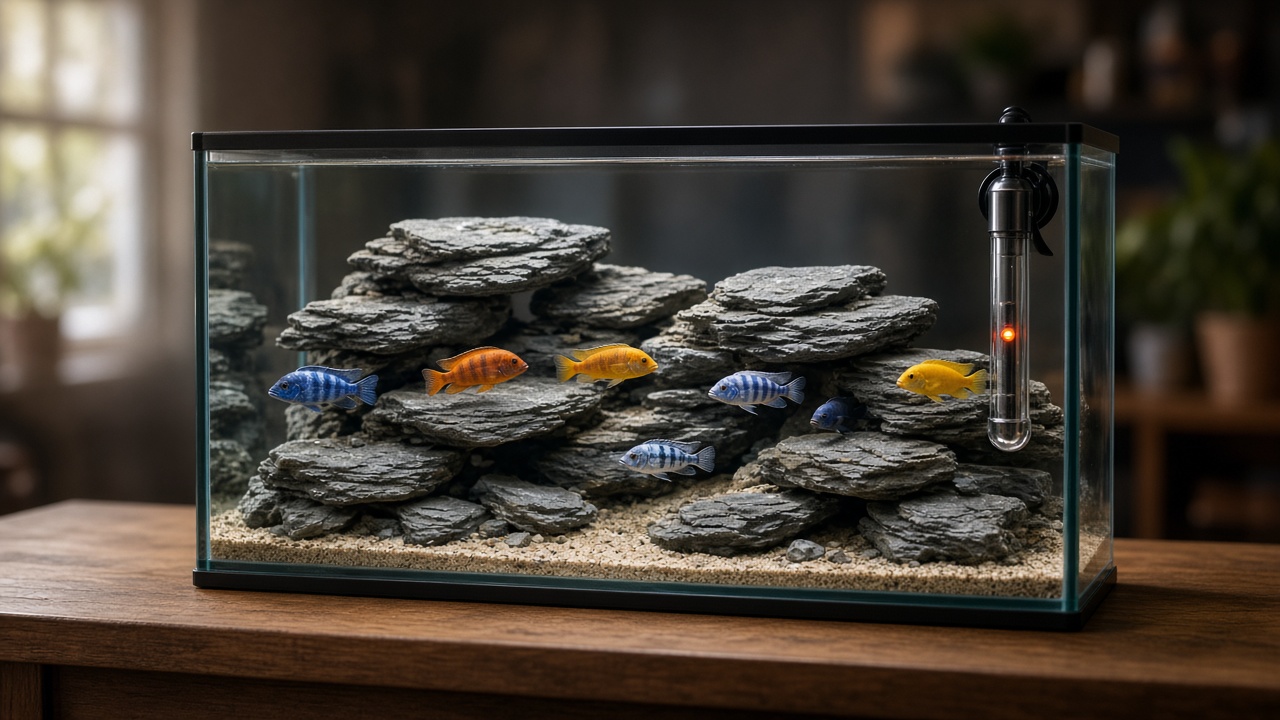
Calcium carbonate can dissolve in acidic water and raise hardness and pH. Use that rock in marine systems, or in hard-water cichlid tanks that want alkaline water.
Skip it in a soft-water tetra tank. Do not add shells, coral skeletons, or limestone either, because those items are calcium carbonate in another shape.
Our research team did not measure those hardness shifts and only reports what maker pages already state about material.
If you need stable pH, pick resin or ceramic with a named size. CaribSea’s LifeRock Dreamscapes notes say to use one box per 40 to 60 gallons. That load rule is for a rock kit, not a house ornament.
FAQ
These answers use the same Labeled-Material Rule as the buying sections above.
Are plastic plants safer than resin castles?
Plastic plants can be fine if the maker page names an aquarium plant and a height. They still need a rinse and a check for sharp stems.
Resin castles fail when paint flakes or metal pins hide in the base. Skip either item if the page lists no material and no size.
Can I put a children’s toy in a fish tank?
No, a children’s toy is not an aquarium ornament and should stay dry.
The CPSC’s 0.009% lead-in-paint ban is about children’s products, not fish gills. Buy a piece whose maker page says aquarium-safe resin or ceramic.
How many decorations should I add?
Add the fewest pieces that give one hide and one visual break. Crowding raises waste and blocks flow.
Hygger’s trunk is listed for 5–50 gallon tanks as one object. A 40 lb LifeRock box is a full scape.
Do air-driven ornaments replace a filter?
No, bubbles move water, but they do not remove waste the way filter media does.
Penn-Plax’s Action-Air Split Shipwreck Medium page says the air pump is not included. Keep a real filter and keep cartridge changes on schedule.
Should I boil new ornaments?
Only if the maker page says to boil that material. Many resin pieces can warp in a pot.
Penn-Plax tells you to use warm water and no soap. Hygger tells you to soak 10–15 minutes, so follow the maker’s listed method.
Is ceramic safer than resin?
Ceramic that sinks, like Zoo Med’s 4.25-inch Betta Ceramic Log, has no paint film on a hollow cave. Resin can be safe when the maker page names aquarium-safe resin and a size.
The risk is paint, metal pins, and sharp holes, not the word resin. Pick the piece whose page is clearer, then rinse it.
When should I add décor to a new tank?
Add hardscape while the tank is cycling, not on the day you add fish. Bacteria need surface, and you need time to watch the water.
Follow how long to cycle a fish tank before stocking. Keep intakes clear if you use a filter and heater in one.