Quick answer: Adult Mbu puffers need huge footprint tanks, mostly shelled foods, and years of clean water. Plan for 22–30 inch fish and a decade-plus commitment.
Buy an Mbu only if you can fund a giant footprint tank for life.
We compared published care data on Tetraodon mbu tank footprints, diet, adult size, and longevity. Our research team analyzed length records, water ranges, and molluscivore feeding notes used in species profiles. Owners consistently report undersized tanks, soft-only diets, and early losses when waste outruns filtration.
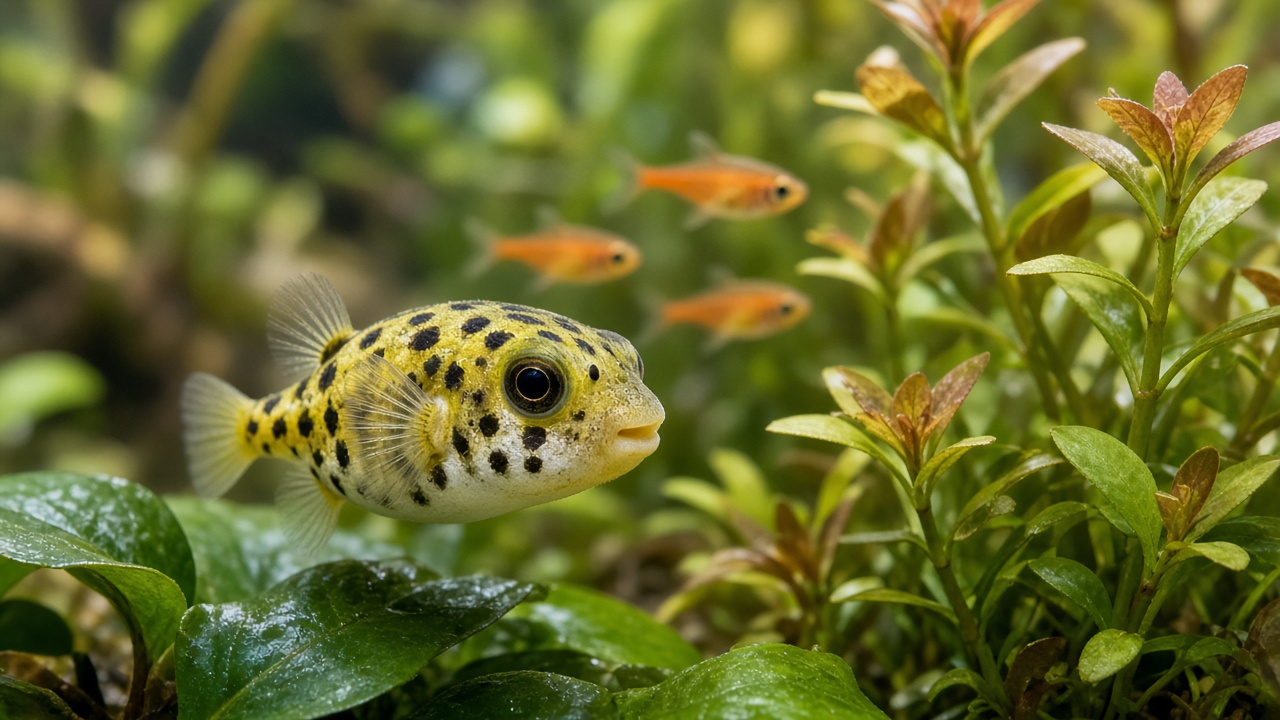
Comparing published specs frames Mbu care as advanced giant-fish keeping, not a novelty purchase. Adults commonly reach the low-to-mid twenties of inches, with larger records near about 26–30 inches. Footprint length and width matter more than tall, narrow volume. Shelled prey wears the continuously growing beak. Lifespans of about 10–20 years appear in long-term care notes when space and water stay excellent. This page covers tank size, diet, growth, lifespan, water, and housing risks.
Include adult footprint targets, shelled-diet schedules, growth expectations, and lifespan ranges. Leave out cheap starter-tank shortcuts for a growing giant. Skip drug plans that belong with a veterinarian.
Plan the footprint before the gallon label
Floor space for turning and cruising beats a tall, skinny box.
Species profiles describe adults near about 22 inches in home tanks, with potential toward about 30 inches under long care. One widely cited maximum record sits near 67 cm total length, about 26 inches. Recommended adult bases often start near 96 inches long by 36 inches wide, with deep water for a heavy body. Volume near about 500 gallons is a common adult floor, and larger systems are preferred. Juveniles grow fast, so temporary grow-out tanks are not forever homes. Measure length and width first, then confirm usable gallons.
Footprint board:
| Spec | Published guidance |
|---|---|
| Common adult size | About 22+ in in aquaria |
| Upper size notes | About 26–30 in potential |
| Example adult base | About 96 × 36 in |
| Volume context | Often 500+ US gal discussed |
| Juvenile warning | Grows quickly out of small tanks |
Owners consistently report cramped fish when keepers chase height instead of floor area. Our research team analyzed aquarium-size notes across giant-puffer profiles. Comparing published specs puts footprint ahead of marketing gallon stickers.
Feed hard shells most days to wear the beak
Mbu puffers are molluscivores that need crunch, not only soft meat.
Care notes stress clams, mussels, snails, crabs, and crayfish with shells intact. Soft foods alone let the fused beak overgrow until eating becomes difficult. One detailed keeper schedule uses shelled foods about five days weekly and softer items about two days. Soft add-ons may include shrimp or worms soaked in vitamin support when advised by a fish vet plan. Remove dangerous claws from live crayfish or crabs before feeding. Rotate prey types so one food never dominates for months.
Diet checklist:
- Prioritize shelled mollusks and crustaceans
- Keep soft foods as a minority share
- Rotate clams, mussels, snails, and crabs
- De-claw risky live prey before offering
- Watch beak length during every feeding
Owners consistently report beak crises after months of soft-only meals. Our research team analyzed molluscivore diet notes in species care sheets. Comparing published specs treats shell wear as a daily health tool.
Expect rapid juvenile growth toward adult bulk
Store-sized Mbu are babies that outgrow ordinary aquariums fast.
Imported juveniles often appear near about 4–6 inches and look manageable in mid-size tanks. Keepers describe quick length gains when space, food, and water quality stay strong. One long-form care account housed a fish near 13 inches in a 72×48×24 inch, about 360-gallon system. The same notes describe a prior fish reaching about 22 inches. Growth stalls in cramped water and can mask later organ stress rather than create a healthy mini adult. Upgrade plans should exist before purchase day.
Growth cues:
- Shop size often near 4–6 in
- Mid-teens inches appear while still “young”
- Adult targets commonly 22+ in
- Stunting is not a size solution
- Footprint upgrades must stay ahead of length
Owners consistently report shock when a hand-length puffer doubles within seasons. Our research team analyzed growth warnings in giant-puffer profiles. Comparing published specs refuses “it will stay small in a small tank” myths.
Budget for a decade-plus lifespan
Healthy Mbu care is a long pet commitment, not a short experiment.
Long-term notes commonly cite about 10–20 years when space, diet, and water quality hold. Early deaths appear when tanks stay undersized, nitrates climb, or wild-caught disease burdens go untreated. One detailed account lost a 22-inch fish near five years to a severe internal disease found on necropsy. Longevity rises when daily waste removal matches a heavy feeding load. Plan filtration, water-change automation, and food supply for the adult years, not only the cute juvenile phase. Ask who will keep the fish if you move.
Lifespan board:
| Factor | Effect on years |
|---|---|
| Huge clean system | Supports longer lives |
| Undersized tank | Shortens outlook |
| Soft-only diet | Beak and nutrition risk |
| Chronic high nitrates | Stress and organ strain |
| Early disease load | Can cut years short |
Owners consistently report decade-scale bonds when systems stay oversized and clean. Our research team analyzed lifespan ranges in advanced care sheets. Comparing published specs frames lifespan as earned by husbandry, not guaranteed at sale.
Hold alkaline, warm, freshwater parameters
Stable chemistry matters as much as raw volume.
Published ranges often place temperature near 75–79°F, or the mid-70s in some keeper notes. pH guidance commonly sits at about 7.0–8.0, with hardness near 10–25 dGH in species profiles. This is a freshwater puffer; salt is not required for basic maintenance. Shell leftovers can buffer alkalinity when left in sand, then need periodic removal if piles grow thick. Heavy daily feeding demands oversized filtration and frequent water exchange. Automate changes when human schedules cannot keep up.
Water targets:
- Temperature near 75–79°F in many profiles
- pH about 7.0–8.0
- Hardness about 10–25 dGH
- Freshwater focus, not marine salinity
- Near-zero ammonia and nitrite always
Owners consistently report calmer fish when heat and pH stay steady after huge water changes. Our research team analyzed water-condition tables in species summaries. Comparing published specs favors matching tap plus shell buffering over constant chemical chasing.
House alone unless you accept bite risk
Most profiles call adult Mbu aggressive and best kept solo.
The beak can remove chunks from tank mates that share food or space. Some keepers report mixed success with very fast, peaceful fishes in enormous tanks, yet mistakes still happen. Food competition raises injury risk when other species rush the same clam. Smooth décor without sharp points reduces puncture wounds if a startled fish bolts. Plants along back walls can offer visual barriers while sand stays open for foraging. Never house two Mbu together in ordinary home systems.
Housing decision list:
- Default plan: one Mbu, one giant tank
- Tank mates: advanced risk only in huge systems
- Décor: smooth rocks, no spears
- Sand open for hunting snails
- Move fish underwater to avoid trapped air
Owners consistently report fewer emergencies in true species-only giants. Our research team analyzed compatibility notes across puffer care profiles. Comparing published specs puts solo housing first for welfare.
Match waste control to a dog-sized appetite
Filtration and water changes must scale with adult food intake.
Large specimens may take many ounces of food daily, producing dog-like waste piles. Keepers running hundreds of gallons still describe very large daily water exchanges to hold nitrates down. Live plants help some systems yet never replace mechanical and biological capacity. Overfeeding soft foods dirties water faster without helping the beak. Build a maintenance routine you can keep during travel weeks. If you cannot move hundreds of gallons safely, postpone the purchase.
Waste control board:
| Task | Why it matters |
|---|---|
| Oversized filtration | Handles heavy bioload |
| Frequent big water changes | Controls nitrates |
| Shelled diet majority | Beak wear plus enrichment |
| Smooth open floor | Safer bolting and hunting |
| Automation where possible | Prevents missed change days |
Owners consistently report clearer water after they treat maintenance like livestock chore time. Our research team analyzed waste-management notes in long-form Mbu care writing. Comparing published specs ties lifespan to boring, repeated water work.
Mbu care succeeds when footprint, shells, and years of clean water arrive together. Size and growth demand honesty before checkout. Diet protects the beak. Lifespan rewards keepers who build systems for adults, not impulse juveniles.
FAQ
What tank size does an adult Mbu need?
Published adult guidance commonly discusses systems near 500 gallons or larger with a long, wide footprint. Bases near about 96 by 36 inches appear in detailed species profiles for adults. Tall narrow tanks waste volume the fish cannot use for turning. Juveniles need upgrade paths long before they hit about 22 inches.
What should Mbu puffers eat?
Most meals should be shelled mollusks and crustaceans such as clams, mussels, snails, crabs, and crayfish. Soft foods can fill a minority of days for variety when nutrition stays balanced. Shells grind the continuously growing beak that soft diets leave overlong. Rotate prey and avoid a single staple for months on end.
How fast do Mbu puffers grow?
Juveniles sold near about 4–6 inches can add length quickly in strong systems. Keeper accounts describe mid-teens inches while fish are still far from full adult bulk. Adult aquarium sizes commonly reach the low twenties of inches, with larger potential noted. Cramped tanks may slow length without creating a healthy small adult.
How long do Mbu puffers live?
Care sheets often cite about 10–20 years when space, diet, and water quality remain excellent. Early losses appear with chronic crowding, soft-only feeding, or untreated disease. Treat the fish as a decade-scale companion before you buy a cute juvenile. Longevity tracks husbandry far more than store labels.
Do Mbu puffers need salt?
No. Species profiles describe Tetraodon mbu as a freshwater puffer that does not require marine salt for routine care. Focus on alkaline pH near 7.0–8.0, suitable hardness, and warm stable temperatures. Shell debris may gently buffer alkalinity in sand beds. Match large water changes to your tap chemistry carefully.
Can Mbu puffers live with other fish?
Solo housing is the safest default because the beak can injure or kill tank mates. Some keepers try very fast peaceful species only in enormous aquariums and still report accidents. Food rushes raise bite risk even with “peaceful” lists. If you cannot accept losses, keep the puffer alone.
What temperature range fits Mbu puffers?
Many profiles list about 75–79°F, while some keepers run the mid-70s without relying on a single heater in a heated room. Stability matters more than chasing one exact degree every hour. Pair heat with huge filtration and frequent water changes. Avoid sharp swings during massive exchanges.
This guide is informational only and does not replace advice from a qualified veterinarian.