Quick answer: Keep pea puffers in a planted, species-only tank. Do not add shrimp, snails, or long-finned fish as companions. Mixed groups belong only in a 20-gallon or larger tank with short-finned, fast fish.
Pea puffers have no safe fish tank mates in any tank under 20 gallons. This page is a spec desk review, and we did not run tank-mate trials or keep a colony.
FishBase’s species page for Carinotetraodon travancoricus lists a max length of 3.5 cm TL. The same page says most fish stay under 2.5 cm TL, which is why nipping looks small until fins tear.
Our research team compared listed footprints on the kits below. Zero of the two Fluval Flex kits list a length over 16 inches, so both fail our mixed-group rule.
How we chose which tank mates to include
A species is in this article only if it is short-finned, not sold as puffer food, and lives in open water or on glass.
That is the Waterpuppy Short-Fin Rule. We left out long-finned show fish, shrimp sold as livestock, and snails sold as pets. We also left out mixed groups in any tank shorter than a 20-gallon High kit.
We used published adult size and layer, not store labels. A “community” sticker does not override a puffer’s bite.
We did not rank the eight picks, and order follows how each animal uses space, not a score.
Eight safer picks for a pea puffer tank
These eight can share space only after the tank is cycled and heavily planted. They are still not risk-free, and any fish can fail the rule.
Species-only pea puffers
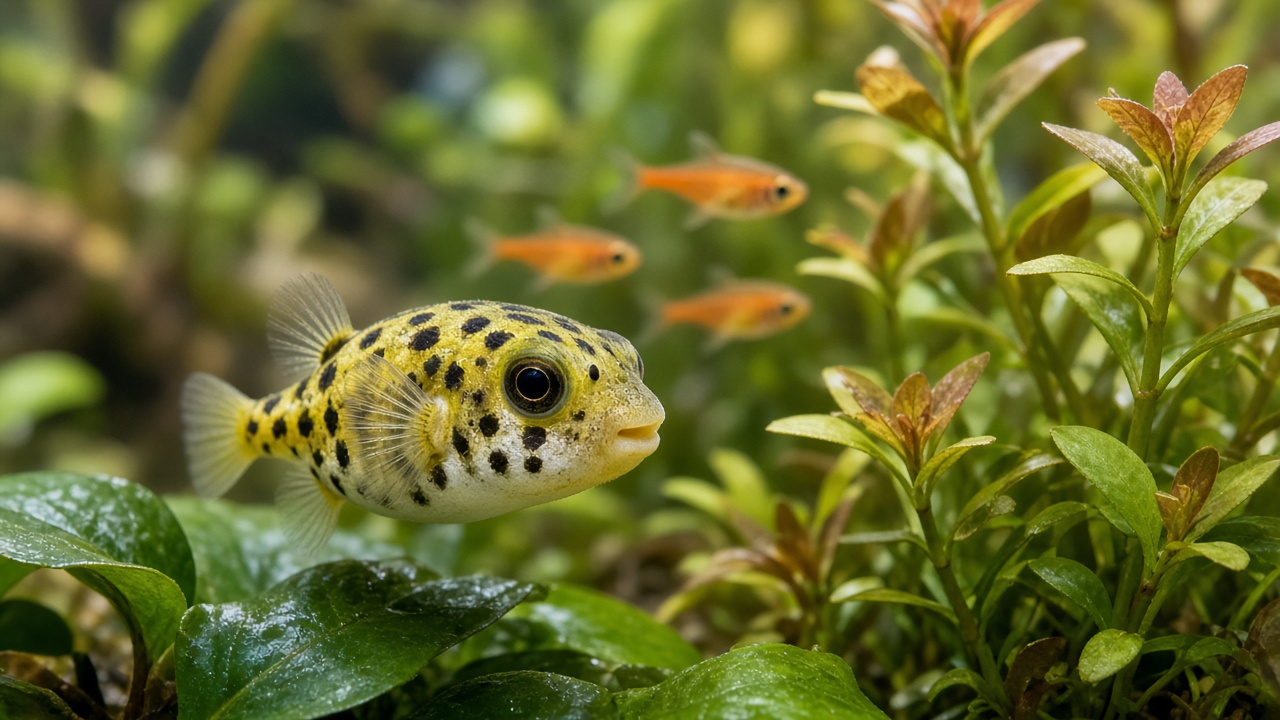
Other pea puffers are the first pick because they avoid mixed-species nipping. FishBase lists the species as a freshwater, demersal fish from India.
Keep extra males out of small tanks so chasing does not stack. Dense plants break sightlines and give each fish a wall to hide behind.
Otocinclus catfish
Otocinclus stay on glass and leaves, and they do not flash long fins. They are the most common “maybe” companion in published hobby notes.
They still need algae and extra food on the glass. A hungry oto is not a working algae crew.
Kuhli loaches
Kuhli loaches stay on the sand at night, while pea puffers hunt in the open by day. That split in time and layer is the whole point of this pick.
Give them a soft bottom and cover they can enter. Bare glass tanks make them hide all day and waste the layer split.
Chili rasboras
Chili rasboras are tiny, short-finned schoolers that turn and leave before a puffer finishes a lunge. Keep them as a school, not as a pair that looks like a target.
Ember tetras
Ember tetras are also small and short-finned, and they use the mid-water gap that puffers patrol. They need the same warm, planted water, and they do not need a long veil of fin.
Celestial pearl danios
Celestial pearl danios stay busy and close to plants, and fast turns beat a puffer’s short sprint. Do not mix them in a 10-gallon cube, because they need length rather than height.
Pygmy corydoras
Pygmy corydoras work the sand in a small school, and they have short fins that stay low. They still lose if a puffer claims the whole floor, so add wood and leaf litter first.
Green neon tetras
Green neon tetras are slim, short-finned, and quick, and they fill the same niche as embers. Skip them if your tank is a 14-inch Flex, because they need a longer swim path.
Six tank mates to skip
Skip any animal that is food, slow, or dressed in long fins. These six fail that filter every time.
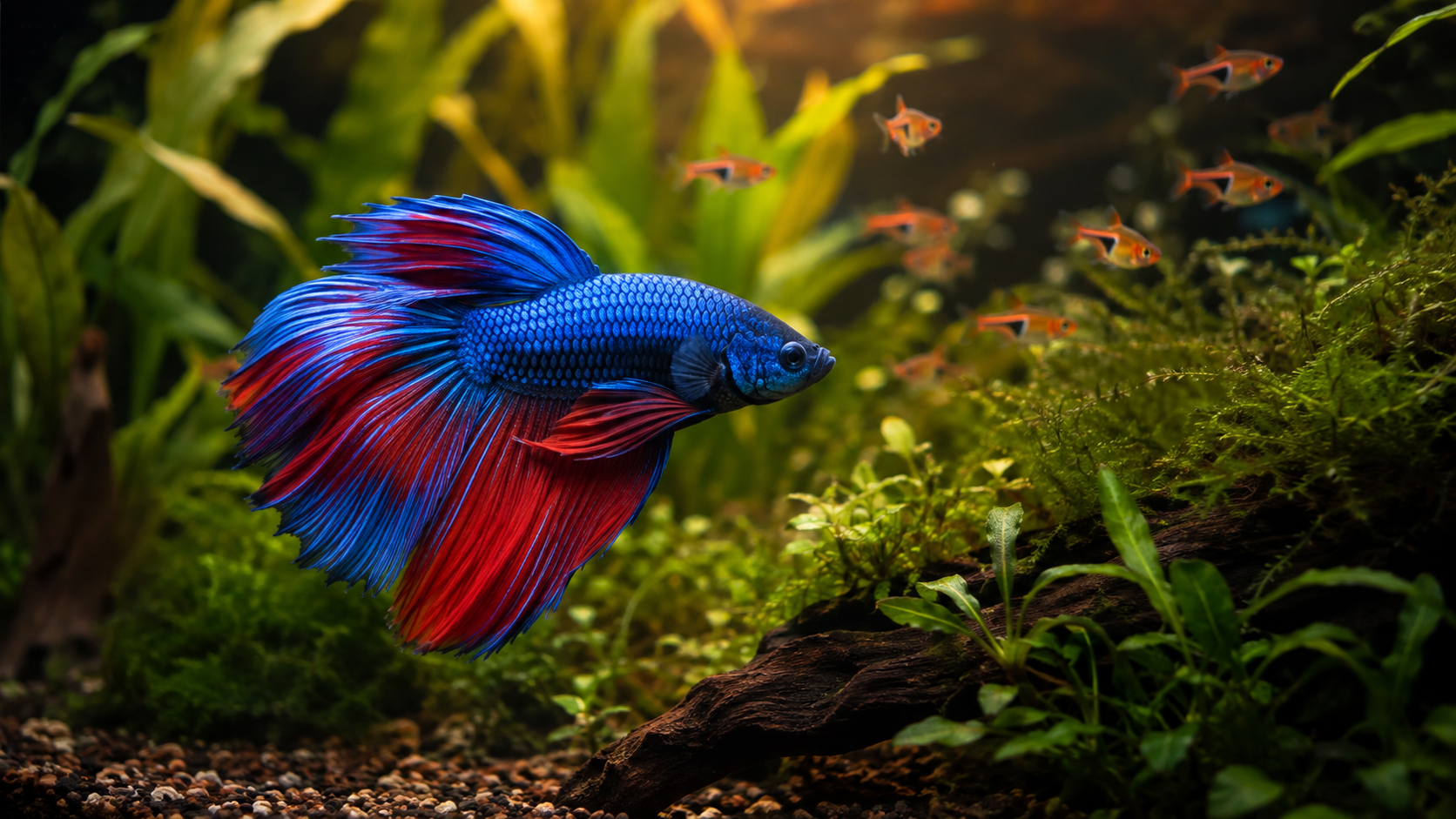
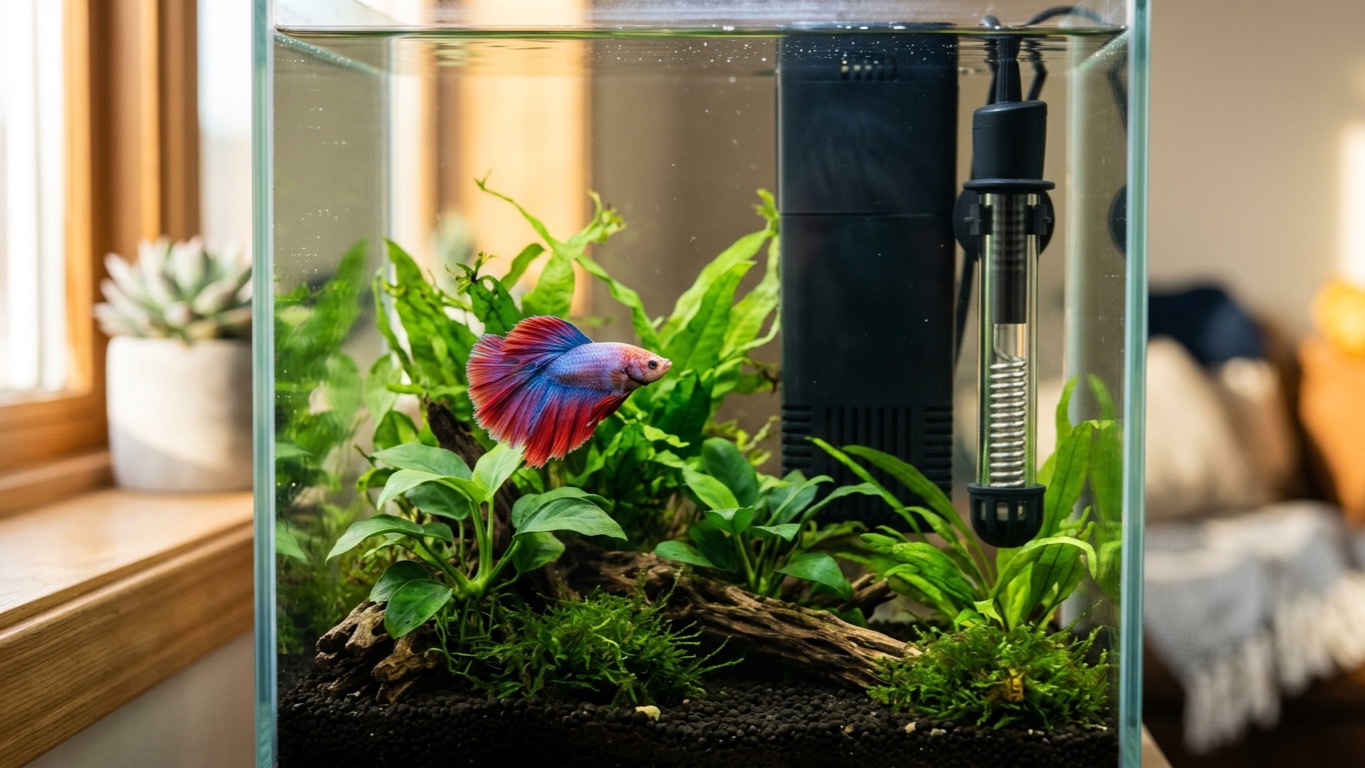
Bettas
Bettas carry long fins and slow turns, so a pea puffer will treat those fins as toys. If you want a betta community, use a different plan and see our best betta fish tank mates guide. Do not put a betta in a puffer tank.
Fancy guppies
Fancy guppies have trailing tails, and that tail is a nipping handle. Short-fin feeder guppies are not a fix, because they still look like moving food.
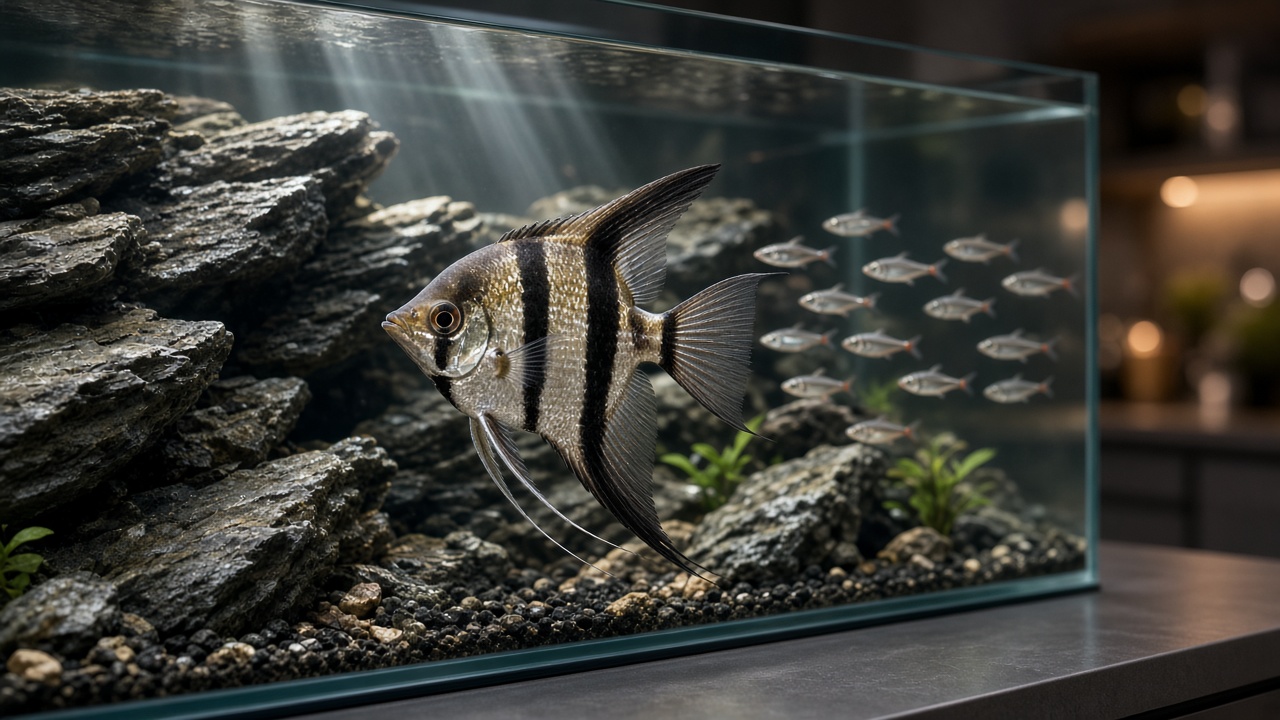
Angelfish
Angelfish are tall, slow, and long-finned, so they fail both size and temper checks. A 20-gallon High still is not an angel tank, and you should keep them out.
Cherry shrimp
Cherry shrimp and other Neocaridina are prey, and pea puffers hunt them on sight. Do not buy a shrimp colony as “cleanup,” because you are buying feeders.
Mystery snails and nerites
Snails wear hard shells that wear a puffer’s beak, which makes them food rather than roommates. Breed snails in a separate tub if you want that diet, and do not stock them as pets in the display.
Goldfish
Goldfish are cold, bulky, and messy, and they do not match this tropical range. FishBase lists pea puffers as tropical fish at 22°C to 28°C.
Aqueon’s Rectangle LED Kits page lists a preset heater at a constant 78°F. That point sits inside the FishBase range, and it is still a tropical kit rather than a goldfish pond.
Tank size and current kits
A mixed pea-puffer group needs length more than height. Our research team compared listed specs on six products now sold for planted freshwater tanks.
Comparing those listed lengths, both Fluval Flex kits stay at 16 inches or less. The Aqueon Rectangle LED Kits page lists 10, 20 High, 29, and 55 gallon sizes. Use the 20 High or 29 for any mixed group.
| Product | Maker-listed size | Maker-listed flow, dose, or count | Other listed spec |
|---|---|---|---|
| Fluval Flex Aquarium Kit, 9 US Gal | 9 US gal / 34 L | Pump 61 US GPH / 230 LPH | 14 × 13 × 13 in |
| Fluval Flex Aquarium Kit, 15 US Gal | 15 US gal / 57 L | Pump 132 US GPH / 500 LPH | 16 × 15 × 15 in |
| Aqueon Rectangle LED Kit | 10, 20 High, 29, 55 gal | Five-stage QuietFlow LED PRO filter | Preset heater 78°F |
| API Freshwater Master Test Kit | 4 test tubes | Weekly tests of 6 parameters | pH 7.0 listed as neutral |
| Seachem Prime | 50 mL to 4 L bottles | 5 mL per 50 US gal | Cap thread about 1 mL |
| Hikari Bio-Pure Frozen Blood Worms | 1.58 oz (40 g) to 16 oz (454 g) | 32-count cube pack at 3.5 oz (100 g) | 3-step sterilized |
Fluval’s Flex 9/15 Aquarium Kits page lists the 9 US gallon (34 L) model as a 14 by 13 by 13 inch box. The same Fluval page lists the 15 US gallon (57 L) model as a 16 by 15 by 15 inch box. Fluval lists that 15-gallon pump output as 132 US GPH (500 LPH).
Those two kits work for a species-only set, and they do not give tank mates a retreat lane.
Aqueon’s Rectangle LED Kits page lists a five-stage QuietFlow LED PRO filter and a preset heater at 78°F. Pick the 20 High or 29 size if you still want short-finned schoolers.
A 75-gallon planted tank is far past this nano range. If you later scale up, our best canister filter for a 75 gallon tank guide covers high-volume filters. Do not use that scale to excuse a crowded 10-gallon mix.
Water, cycling, and food
Stable water matters more than a second species. Add tank mates only after the cycle is done.
FishBase lists a pH range of 7.5 to 8.3 for this species. API’s Freshwater Master Test Kit page says a pH of 7.0 is neutral. Use that kit to see if you sit in the FishBase band.
API’s product page says the kit measures ammonia, pH, high range pH, nitrite, and nitrate. It ships with four test tubes, a holding tray, and a laminated color card, and API tells you to test weekly.
Seachem’s Prime page lists 1 capful (5 mL) for each 50 US gallons of new water. Each cap thread is about 1 mL, so a Fluval Flex 15 scales to about 1.5 mL on a full change.
Seachem also says Prime can be used at up to five times the normal dose in a nitrite emergency. The same page says to use a half dose if the water is above 30°C (86°F), so do not guess the dose.
Cycle the tank before any puffer or companion goes in. Follow the timeline in our guide on how long to cycle a fish tank, because a cloudy new tank is not ready for nipping fish.
Hikari’s Bio-Pure Frozen Blood Worms page lists packs from 1.58 oz (40 g) to 16 oz (454 g). The 3.5 oz (100 g) pack is a 32-count cube pack, and Hikari lists a 3-step sterilization step on that page.
Use cubes as a treat rather than the only food. Keep a snail farm in a separate tub for beak wear, and do not drop live snails into a mixed display.
FishBase lists the IUCN Red List status as Vulnerable, assessed on 20 September 2010. The same FishBase page scores fishing vulnerability at 10 of 100, so buy captive-bred fish when you can.
If you still add other fish
Add puffers last so the school or raspers can claim space first. Use this order and stop if fins tear.
- Cycle the tank and get ammonia and nitrite to zero on the API kit.
- Plant until you cannot see one end from the other.
- Add the short-finned school or raspers and let them settle.
- Add one pea puffer, then watch fins every day.
- Stop and pull the puffer if any fin shows a bite.
Give each male his own visual block, and treat java moss, wood, and tall stems as walls.
Do not add a second male in a Flex 9. Fluval lists that kit at 9 US gallons, which is for a single puffer or a small same-species set.
Watch for torn tails after you add the puffer, and move one side out if the Short-Fin Rule fails for that fish.
FAQ
Can pea puffers live with other fish?
Yes, but only in a 20-gallon or larger planted tank with short-finned, fast fish. A species-only tank is the setup that cannot produce mixed-species nipping. Shrimp and snails do not count as fish tank mates.
How many pea puffers can share one tank?
A single fish can live in a cycled 9-gallon Flex if plants are dense. A mixed group needs a 20-gallon High or larger. Add extra volume before you add extra males.
What temperature do pea puffers need with tank mates?
FishBase lists 22°C to 28°C for the species. Aqueon’s Rectangle LED Kits page lists a 78°F preset heater. That 78°F point sits inside the FishBase band for tropical fish.
Will pea puffers eat cherry shrimp?
Yes. Cherry shrimp are prey, not partners. Do not stock Neocaridina as a cleanup crew in a puffer tank.
Do I need a test kit before I add tank mates?
Yes. API’s Freshwater Master Test Kit page tells you to test weekly. The kit uses four tubes to read ammonia, pH, high range pH, nitrite, and nitrate. Add fish only after ammonia and nitrite read zero.
Can I keep pea puffers with a betta?
No. Bettas have long fins that attract nips. Use a betta-only plan or a non-puffer community instead.
What should I feed if I keep a mixed tank?
Feed meaty foods the puffers will eat so they hunt cubes, not fins. Hikari lists Bio-Pure Frozen Blood Worms in mini cubes and a 32-count 3.5 oz pack. Keep snail feeders in a separate tub, not in the display.