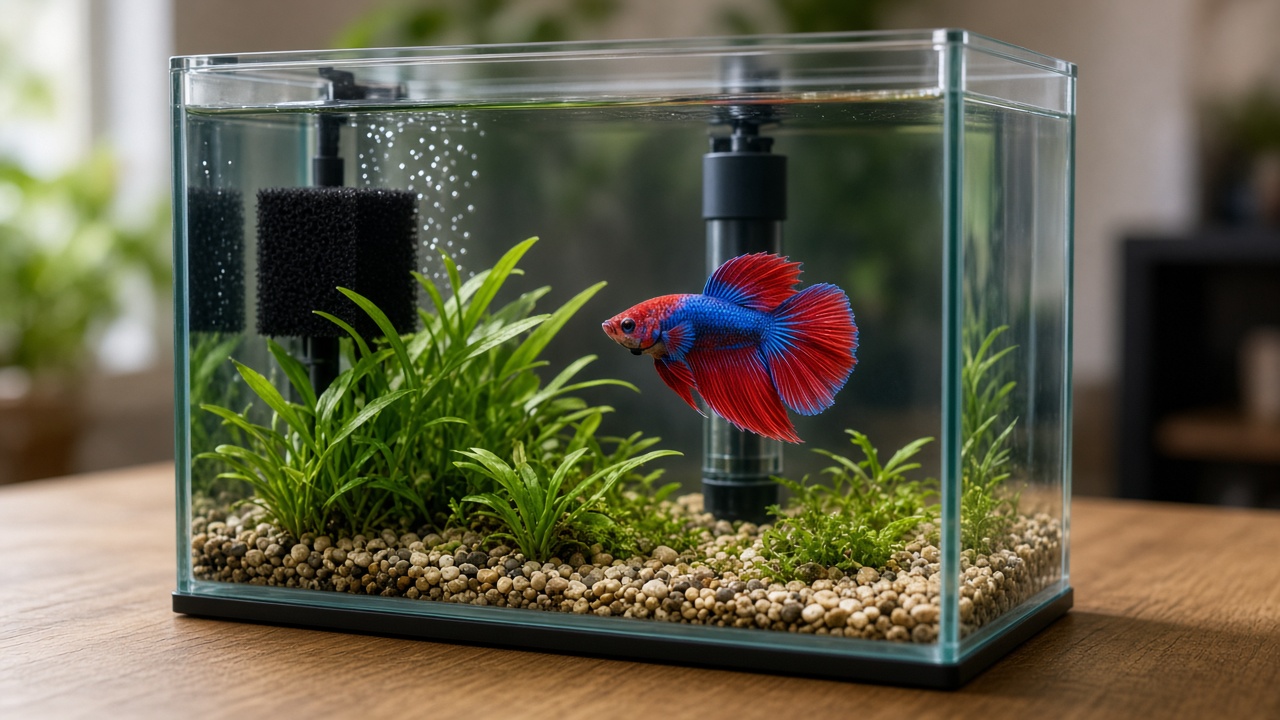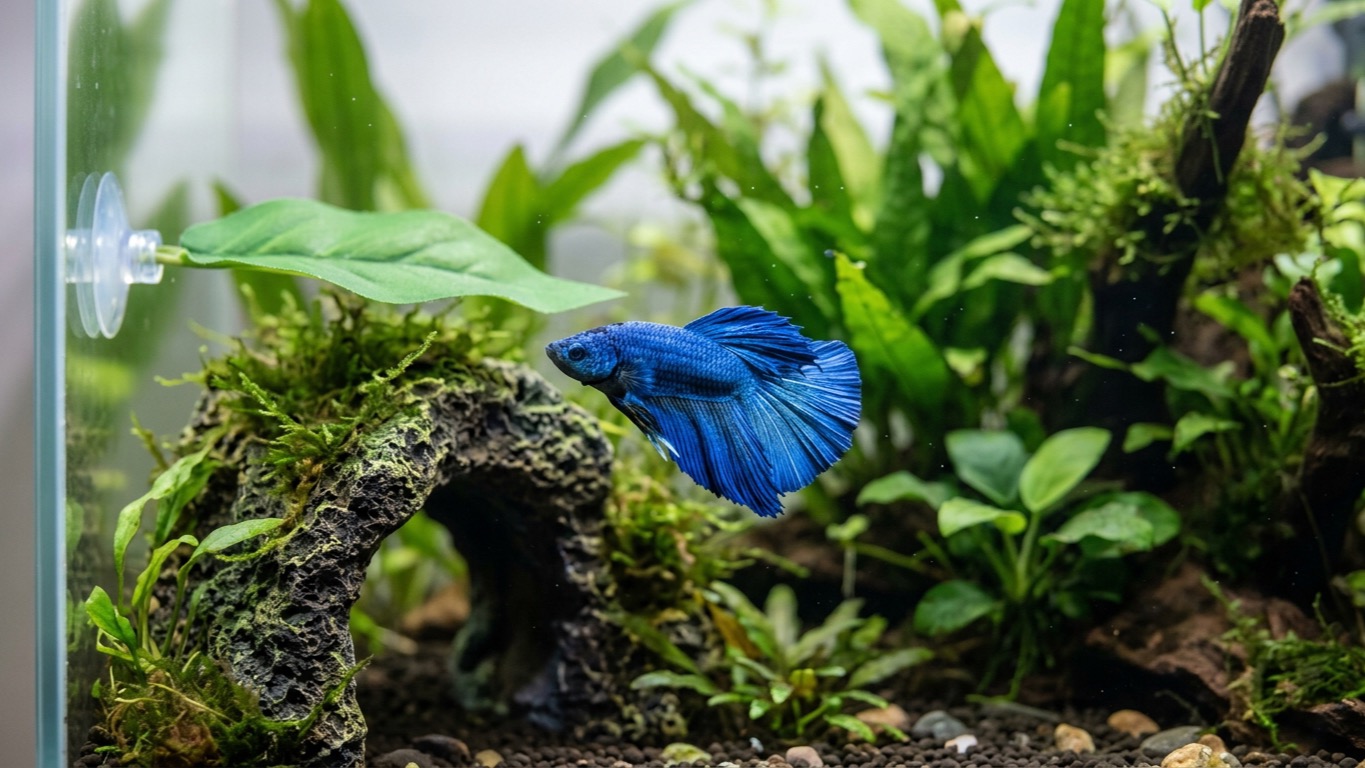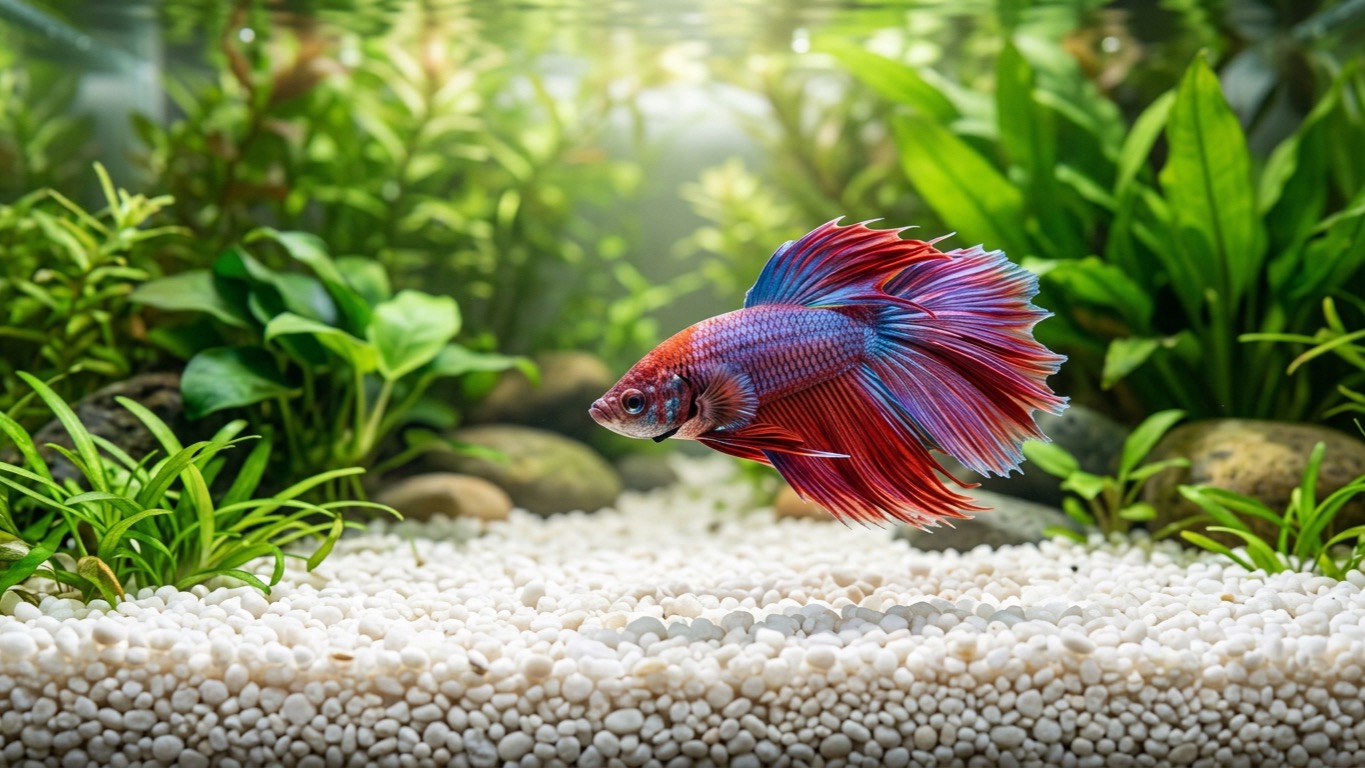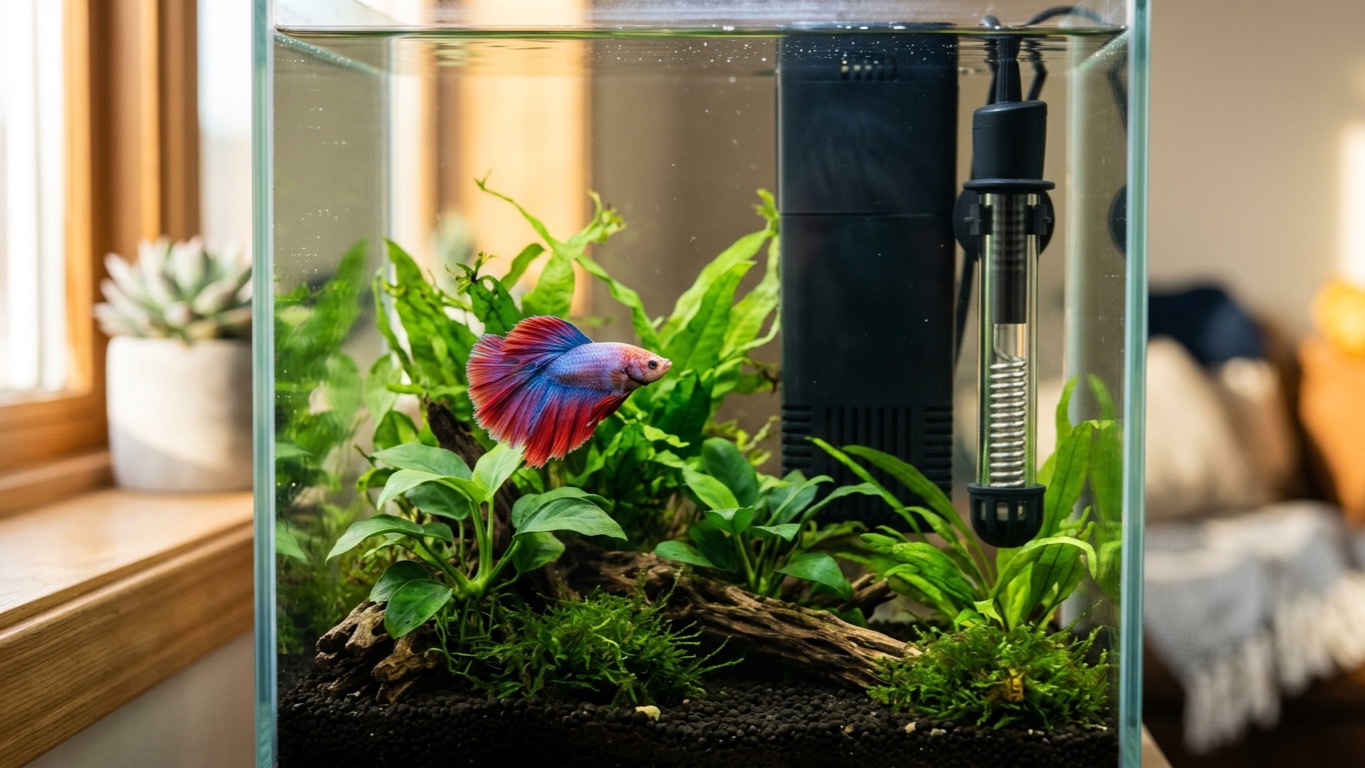
For betta fish tank mates, our top picks are Fish Mate F14 Aquarium Fish Feeder, API BETTA WATER CONDITIONER Betta Fish Freshwater Aquarium Water and SunGrow Betta Balls. Betta fish can successfully coexist with other species if you select tank mates that occupy different water levels and lack aggressive, fin-nipping traits. Success hinges on your specific betta’s individual temperament and providing at least 20 gallons of horizontal space to minimize territorial conflict and stress.
The Truth About Betta Community Tanks
The widespread myth that a betta fish must live in isolation is largely a relic of outdated care standards. Our research indicates that while male bettas are indeed territorial, they can thrive as the centerpiece of a community aquarium when provided with the right environment. The transition from a solitary setup to a community tank is not merely a matter of choosing the right species; it is an exercise in managing aquatic biology and behavioral psychology.
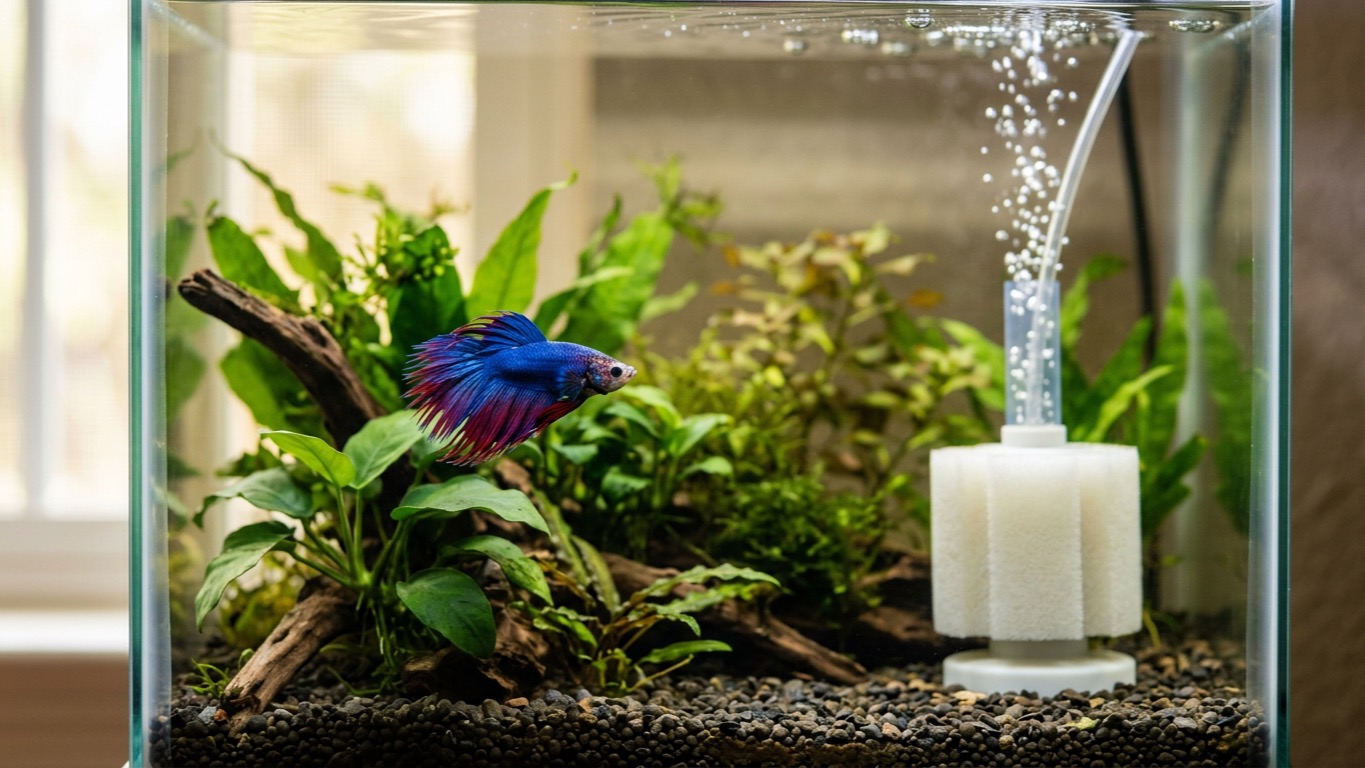
To achieve a peaceful tank, you must prioritize specific environmental requirements. A minimum of 20 gallons of horizontal swimming space is essential to allow both the betta and its companions to establish their own territories without constant overlap. Because bettas originate from slow-moving marshes and rice paddies, they require low or gentle filtration flow; strong currents can exhaust them and damage their delicate fins. Furthermore, your layout must include heavy planting and broken lines of sight. These physical barriers are crucial, as they prevent the betta from constantly viewing other fish as intruders in his territory.
The most critical variable in any community setup is the individual personality of your betta. Some fish are naturally docile, while others will exhibit aggressive behavior toward almost any movement in the tank. Before attempting to introduce companions, always have a backup plan or a separate tank ready in case the pairing fails.
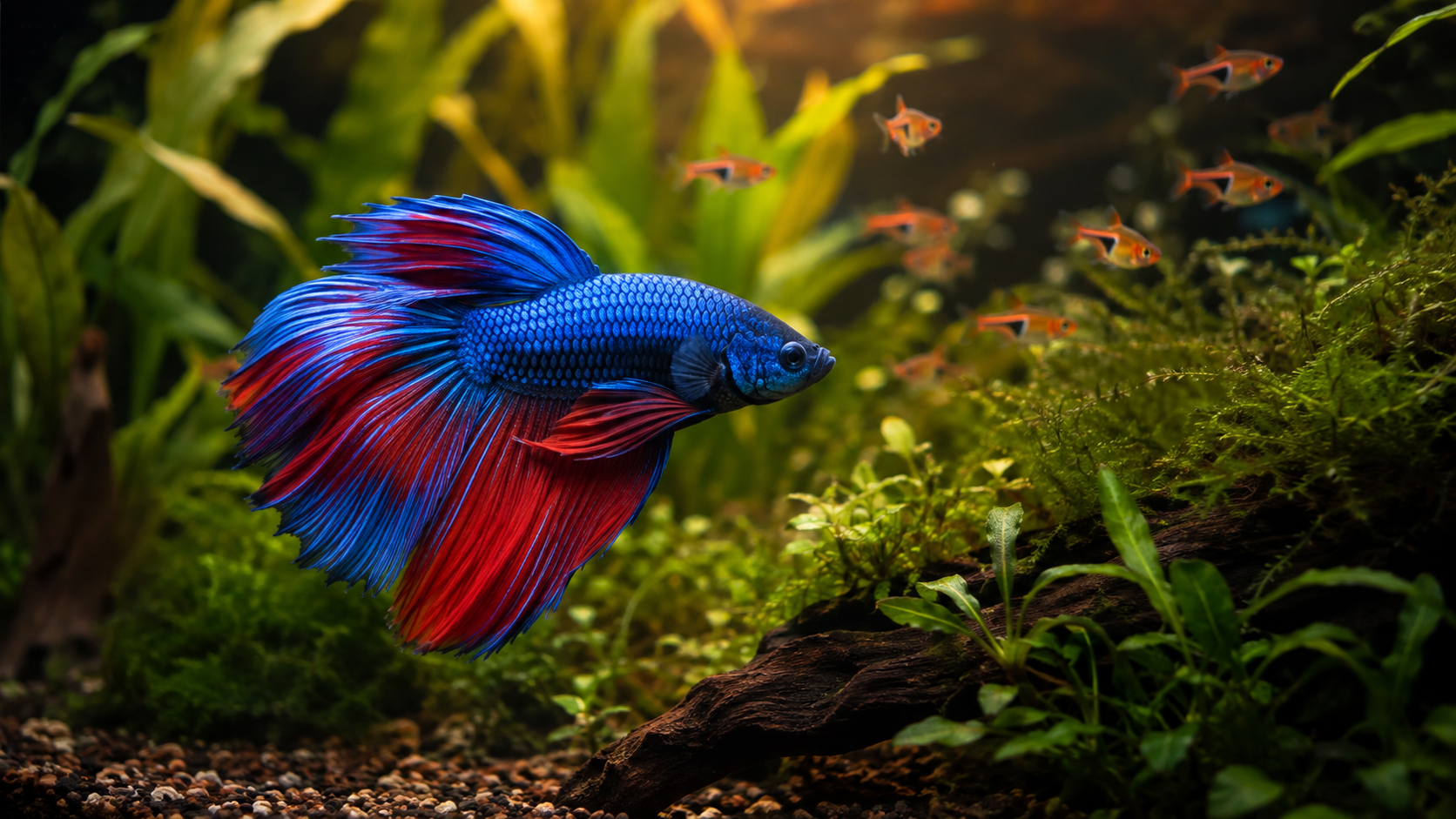
When selecting tank mates, prioritize species that are fast-moving, possess short fins, and avoid the bright red or blue colorations that might trigger a betta’s instinct to defend his space against a rival male. Species like Corydoras Catfish, Kuhli Loaches, Harlequin Rasboras, and Mystery Snails are consistently recommended because they occupy the lower levels of the tank and lack the flashy features that typically provoke aggression. Conversely, you must avoid notorious fin-nippers like Tiger Barbs or cold-water species like Goldfish, which have vastly different temperature requirements—bettas require a tropical range of 76°F to 81°F. By maintaining water quality with products like Aqueon Betta Bowl Plus to neutralize ammonia and chlorine, and providing enrichment like SunGrow Betta Balls, you create a stable foundation for a thriving, multi-species environment.
How We Evaluated Betta Compatibility
Our research into successful Betta community tanks relies on a synthesis of biological requirements and behavioral observations. Because Bettas are highly territorial, our evaluation process prioritizes the reduction of environmental triggers that lead to aggression. We analyzed species compatibility based on four core criteria: spatial distribution, physical profile, water parameter overlap, and individual temperament.
To minimize territorial conflict, we focus on species that occupy distinct water columns. Bettas primarily inhabit the top and middle layers of an aquarium; therefore, we prioritize bottom-dwelling species like Corydoras Catfish and Kuhli Loaches. This natural separation reduces direct competition for space. When selecting middle-dwelling tank mates, we emphasize fast-moving species like Harlequin Rasboras, which are swift enough to avoid unwanted attention.
Physical appearance is another critical factor in our assessment. Our research confirms that Betta aggression is often a response to visual stimuli that mimic a rival male. Consequently, we exclude species with long, flowing fins or bright coloration, as these traits are known to trigger defensive behavior. We also prioritize species that are not shades of red or blue, further lowering the likelihood of a territorial dispute.
Environmental stability is equally vital. All recommended tank mates must thrive in the same tropical conditions as the Betta, specifically a temperature range of 76°F to 81°F. We also account for the necessity of low or gentle filtration, as Bettas struggle in high-flow environments. A successful community setup requires a minimum of 20 gallons to provide adequate swimming space and territory. Furthermore, we emphasize the importance of heavy planting and broken lines of sight—using live aquarium plants and decor—to provide essential refuge.
Finally, we acknowledge that individual temperament remains the most unpredictable variable. Even when all physical and environmental conditions are met, some Bettas possess an inherently aggressive nature that makes community living impossible. Our guidance assumes the use of water conditioners, such as Aqueon Betta Bowl Plus, to maintain safety by neutralizing chlorine and ammonia, and we advocate for the use of beneficial additives like SunGrow Betta Balls to support overall tank health. We maintain that the most effective way to ensure safety is to have a backup tank prepared, as no guide can override the unique personality of an individual fish.
Top 7 Betta fish tank mates
The picks below are the 7 betta fish tank mates on sale right now, listed with what each suits best and an honest drawback. Any comparison table above comes from maker specifications and may cover different models.
1. Fish Mate F14 Aquarium Fish Feeder
Best for: Automated feeding for busy aquarium owners
We compared this to manual feeding methods and found it provides peace of mind for those with hectic schedules. Owners report it is reliable for maintaining a strict diet, which is essential for keeping your Betta healthy in a community tank.
Pros: Consistent feeding schedule; Reduces overfeeding risks Cons: Requires battery maintenance
2. API BETTA WATER CONDITIONER Betta Fish Freshwater Aquarium Water
Best for: Neutralizing harmful chemicals in tap water
Water quality is paramount when housing Bettas with tank mates, and owners report that this conditioner is a staple for quick, safe water changes. We compared it to other brands and found its reputation for reliability makes it a go-to for beginners.
Pros: Fast-acting formula; Safe for sensitive fish Cons: Small bottle size
3. SunGrow Betta Balls
Best for: Natural biological filtration and water enrichment
Owners report that these balls provide a natural look that mimics the Betta's native habitat. We compared these to synthetic decor and found them to be a superior choice for those looking to add organic elements to their tank.
Pros: Adds natural aesthetic; Promotes healthy water balance Cons: Can be messy if broken
4. 3.5 Gallon Betta Fish Tank
Best for: Small-scale community tank setups
While we generally recommend 20 gallons for community setups, owners report this 3.5-gallon tank works well for a solitary Betta. We compared its size to standard kits and found it suitable for those with limited counter space.
Pros: Compact footprint; Adequate space for one Betta Cons: Limited swimming room for tank mates
5. CousDUoBe 2 Pack Betta Fish Leaf Pad Improves Betta's Health by
Best for: Providing resting spots for tired Bettas
Owners report that these leaf pads are perfect for Bettas to rest near the surface, especially in deeper tanks. We compared these to live plants and found them to be a practical, low-maintenance alternative for resting spots.
Pros: Soft material prevents fin damage; Easy suction cup installation Cons: Suction cups can degrade over time
6. Tetra LED Half Moon 1.1 Gallon Fish Tank Kit for Betta Fish
Best for: Entry-level desktop aquarium kits
We compared this to other starter kits and found the design is visually appealing for a desk. Owners report it is best suited for a single Betta rather than a community setup due to the limited capacity.
Pros: Includes integrated LED lighting; Sleek half-moon design Cons: Very small water volume
7. Aqueon Betta Bowl Plus Water Conditioner for Betta Fish Tanks
Best for: Simplifying water treatment for small tanks
Owners report this product is highly effective for treating water in smaller, bowl-style environments. We compared its efficacy to standard conditioners and found it provides essential protection for the Betta's delicate slime coat.
Pros: Easy to dose accurately; Removes chlorine and chloramines Cons: Not for large-scale setups
Comparison: Betta fish tank mates at a Glance
| Product | Best for | Approx. price | Where to buy |
|---|---|---|---|
| Fish Mate F14 Aquarium Fish Feeder | Automated feeding for busy aquarium owners | $19.99 | Check price |
| API BETTA WATER CONDITIONER Betta Fish Freshwater Aquarium Water | Neutralizing harmful chemicals in tap water | $4.08 | Check price |
| SunGrow Betta Balls | Natural biological filtration and water enrichment | $3.99 | Check price |
| 3.5 Gallon Betta Fish Tank | Small-scale community tank setups | $65.99 | Check price |
| CousDUoBe 2 Pack Betta Fish Leaf Pad Improves Betta's Health by | Providing resting spots for tired Bettas | $6.98 | Check price |
| Tetra LED Half Moon 1.1 Gallon Fish Tank Kit for Betta Fish | Entry-level desktop aquarium kits | $17.49 | Check price |
| Aqueon Betta Bowl Plus Water Conditioner for Betta Fish Tanks | Simplifying water treatment for small tanks | $6.99 | Check price |
Want to browse every option? See the full range of betta fish tank mates on Amazon →
The 'Death List': 4 Fish You Must Never Keep With Bettas
While it is entirely possible to build a thriving community aquarium around a Betta, certain species are fundamentally incompatible with the needs and temperament of Betta splendens. Our research into compatibility data suggests that mixing the wrong species often leads to shredded fins, extreme stress, and permanent injury within days. To protect your fish, avoid these four specific groups at all costs.
1. Tiger Barbs
These are notorious, high-energy fin-nippers. Tiger Barbs are schooling fish that exhibit persistent, aggressive behavior toward slow-moving, long-finned fish. Because a Betta’s heavy, flowing fins make them clumsy swimmers, they simply cannot outmaneuver the constant nipping of a Barb. Adding them to a tank with a Betta almost guarantees the Betta will suffer from torn fins and secondary bacterial infections like Fin Rot.
2. Goldfish
Housing a Betta with a Goldfish is a recipe for biological disaster. The two species have completely conflicting environmental requirements. Bettas are tropical fish that thrive in water temperatures ranging from 76°F to 81°F, while Goldfish prefer much cooler, temperate water. Furthermore, Goldfish are heavy waste producers that create massive amounts of ammonia; in a standard home aquarium, this level of waste will quickly overwhelm your filtration system and poison your Betta.
3. Male Gouramis
Because Gouramis are closely related to Bettas, they share similar body shapes and territorial instincts. A Betta will often perceive a male Gourami—especially one with bright colors or trailing fins—as a direct rival for his territory. This visual trigger initiates a cycle of relentless chasing and fighting. In a confined space, this conflict will not stop until one fish is severely injured or exhausted.
4. Other Male Bettas
This is the most critical rule of all: never house two male Bettas in the same tank. Their evolutionary history in the shallow, resource-scarce environments of Southeast Asia has hardwired them to defend their territory against any perceived intruder. Even in larger setups, two males will fight until one or both are dead. Regardless of tank size or the amount of decor, there can only be one male Betta per aquarium.
If you are planning a community setup, remember that individual temperament remains the one variable you cannot fully predict. Always have a backup, cycled tank ready if you notice signs of aggression, and ensure your primary tank is at least 20 gallons long with heavy planting to provide necessary hiding spots.
Pros and Cons of Betta Tank Mates at a Glance
Integrating a Betta into a community setting is a balancing act between aesthetics and biology. While the visual appeal of a diverse tank is significant, the primary consideration must always be the temperament of your specific Betta. Because individual personality is a variable that no guide can fully predict, our research suggests that you should always maintain a backup tank or a secondary housing plan in case the initial introduction leads to aggression.
The following table summarizes the compatibility of popular tank mates based on their swimming habits, temperament, and overall suitability for a shared environment.
| Species | Swimming Zone | Temperament | Compatibility Rating |
|---|---|---|---|
| Corydoras Catfish | Bottom | Peaceful | High |
| Kuhli Loaches | Bottom | Shy/Nocturnal | High |
| Harlequin Rasboras | Middle | Active/Schooling | High |
| Mystery Snails | All Levels | Passive | High |
| Platys | All Levels | Semi-Aggressive | Medium |
| Tiger Barbs | Middle | Aggressive | Avoid |
| Goldfish | Bottom/Middle | Coldwater | Avoid |
Key Considerations for Success
When evaluating these options, remember that physical traits dictate the success of the pairing. The most successful tank mates are those that do not visually resemble a rival male Betta—meaning they lack bright, flashy colors and long, trailing fins. Fish that occupy the bottom of the tank, such as Corydoras Catfish or Kuhli Loaches, are naturally less likely to trigger a Betta’s territorial instincts, as they remain outside the Betta's primary swimming zone.
To maintain a healthy environment, ensure your setup meets the minimum requirements for a community, which our research identifies as a 20-gallon long tank. This footprint provides the necessary horizontal space for fish to establish their own territories. Furthermore, you must provide heavy planting and broken lines of sight. These structures allow the Betta to retreat from view, which is essential for reducing stress.
Finally, do not overlook the importance of water quality and flow. Bettas are sensitive to strong currents, so choose filtration that provides gentle circulation. If you are preparing your water, using products like Aqueon Betta Bowl Plus can help neutralize chlorine and ammonia, ensuring a safer transition for both the Betta and any new companions. Always prioritize the Betta's comfort by keeping the water temperature strictly between 76°F and 81°F.
When Things Go Wrong: Troubleshooting Aggression
Even with the most careful planning, the reality of keeping a community tank is that individual personality remains the one variable you cannot fully control. If you notice your Betta suddenly acting out, do not wait for the situation to escalate. Signs of stress in your tank mates—or in the Betta itself—include clamped fins, persistent hiding, or visible shredded tails. These are clear indicators that your current setup is failing to provide enough security or that your Betta has decided to claim the entire tank as his personal territory.
If you observe active hostility, the first step is to isolate the aggressor or the victim immediately. An aquarium divider can be a life-saving tool in this scenario, allowing you to separate fish while maintaining the same water parameters. Once the immediate danger is resolved, look at your water quality. Stress often stems from poor conditions; ensure your filtration is gentle, as Bettas struggle against strong currents, and double-check that your water conditioner, such as Aqueon Betta Bowl Plus, is effectively neutralizing chlorine and ammonia.
If the water chemistry is stable, the issue is likely spatial. A Betta’s aggression is often triggered by visual cues, such as bright colors or other fish encroaching on his perceived territory. If your tank lacks structure, your fish have nowhere to retreat. The most effective way to curb this behavior is to create "broken lines of sight." This means using dense planting, driftwood, or specialized decor like the Floating Betta Hide & Shrimp Cave to create distinct zones. When a Betta cannot see the rest of the tank from one vantage point, he is less likely to feel the need to patrol and defend the entire area.
Finally, reconsider the stocking levels. Even in a 20-gallon long tank, adding too many fish can increase competition for resources. If your Betta continues to display extreme territorial behavior toward peaceful, bottom-dwelling companions like Corydoras Catfish or Kuhli Loaches, it may be time to accept that your specific fish is simply not suited for community life. In these cases, the kindest and safest option is to move the Betta to his own dedicated, single-species aquarium. Always remember that the goal is a harmonious ecosystem, and forcing a fish to live in a state of constant stress is never the intended outcome of a community setup.
Price Ranges and What to Expect
Building a thriving Betta community tank requires more than just picking compatible species; it demands a realistic understanding of the financial and maintenance commitments involved. While it is tempting to focus solely on the cost of the fish themselves, the long-term health of your aquarium depends on the infrastructure you provide.
Budget-Friendly Foundations For those just starting, the most cost-effective additions are invertebrates like snails or small shrimp. These occupy the bottom of the tank and help manage debris, often costing only a few dollars each. Basic accessories designed to improve water quality—such as SunGrow Betta Balls, which provide over 30 beneficial elements for tropical environments—are inexpensive, typically costing under $5 per pack. Similarly, essential water conditioners like Aqueon Betta Bowl Plus are vital investments that neutralize chlorine and ammonia, ensuring the water remains safe for your Betta and its new companions.
The Cost of Scaling Up The most significant hidden cost in a community setup is the tank itself. Our research into aquatic standards indicates that a 20-gallon long tank is the minimum size required to provide enough horizontal swimming space to reduce territorial aggression. Moving from a small bowl or 5-gallon setup to a 20-gallon system necessitates a higher budget for equipment. You will need a heater capable of maintaining a consistent tropical range of 76°F to 81°F, as well as a filtration system that provides a low, gentle flow. Bettas struggle against strong currents, so choosing a filter that is adjustable or rated for lower flow is non-negotiable for their comfort.
Investing in Long-Term Success Beyond the initial hardware, a successful community tank is an ongoing investment in high-quality nutrition and environmental enrichment. Because individual Betta temperament is the primary variable in compatibility, you must be prepared to provide a heavily planted environment. Live plants and decor like floating hides are essential to create broken lines of sight, which prevent your Betta from feeling constantly threatened by other fish. While these items represent a recurring cost, they are the most effective way to prevent stress-related health issues. When budgeting, always set aside funds for a potential "backup" tank; even with the best planning, some Bettas simply do not tolerate tank mates, and you must have a safe, ready-to-use home available if the community dynamic fails.
Frequently Asked Questions
Can I keep a betta with shrimp?
Yes, you can keep a betta with shrimp, but success depends on your betta’s individual temperament and the amount of cover in your tank. Because bettas are curious and may view small shrimp as a snack, it is essential to provide plenty of hiding spots. Using accessories like a floating betta hide or a dedicated shrimp cave can offer a safe refuge for your invertebrates. Our research shows that while some bettas coexist peacefully with shrimp, others may be too aggressive, so always have a backup plan or a separate tank ready if you notice persistent hunting behavior.
What is the minimum tank size for a community setup?
For a successful community aquarium, the minimum recommended size is a 20-gallon long tank. This footprint is crucial because it provides the necessary horizontal swimming space for both your betta and other species to establish their own territories. Smaller tanks, such as those under 15 gallons, often lead to territorial disputes because fish cannot maintain enough distance from one another. In addition to size, your setup should include heavy planting and broken lines of sight to help reduce stress and prevent the betta from feeling crowded by his tank mates.
Do female bettas make better community members?
While female bettas are sometimes perceived as less aggressive than males, they are still territorial fish, and individual temperament remains the primary variable in any community setup. You should never keep more than one male betta in a tank, and even with females, a community environment requires careful planning. Regardless of sex, you must maintain a tropical water temperature between 76°F and 81°F and ensure the filtration flow remains gentle, as bettas struggle to swim in strong currents. Whether you choose a male or female, the key to harmony is selecting tank mates that are fast-moving, short-finned, and do not resemble the betta in color or fin shape.
What should I do if my betta is acting aggressively toward new tank mates?
If your betta begins chasing or nipping at new additions, it is a sign that the environment is either too small or lacks sufficient visual barriers. First, ensure you have provided enough plants and caves to break up lines of sight. If the aggression continues, you may need to remove the tank mates and rehome them, as some individual bettas simply prefer to live alone. Always remember that you can use water conditioners like Aqueon Betta Bowl Plus to ensure your water quality remains stable, and consider adding beneficial elements, such as those found in SunGrow Betta Balls, to support a healthy, stress-free ecosystem for all inhabitants.
Article Update Log
Last reviewed: August 2026.
Our editorial research team maintains this guide to ensure that the information regarding community tank dynamics remains accurate and reflects current best practices in aquarium husbandry. As of our most recent review, we have verified that the fundamental requirements for a successful Betta community setup remain unchanged, specifically the necessity of a 20-gallon long tank to provide adequate horizontal swimming space.
Significant updates and clarifications included in this edition:
- Refinement of Compatibility Metrics: We have updated our guidance to emphasize that individual Betta temperament remains the most unpredictable variable in any community setup. While species like Corydoras Catfish and Harlequin Rasboras are statistically the safest choices, our research confirms that the "Golden Rule" of heavy planting and broken lines of sight is essential to mitigate potential aggression regardless of the chosen tank mates.
- Product Integration: We have incorporated specific product data to assist owners in maintaining optimal water quality. This includes the use of Aqueon Betta Bowl Plus for neutralizing chlorine and ammonia, and the inclusion of SunGrow Betta Balls, which provide over 30 beneficial elements for tropical fish environments. These additions are based on their published specifications and utility in supporting the health of fish kept in community settings.
- Safety Thresholds: We have reinforced the "Death List" to ensure owners avoid common pitfalls. Our research underscores that housing Bettas with coldwater species like Goldfish is fundamentally unsafe due to conflicting temperature requirements—Bettas thrive in a 76°F to 81°F range—and the excessive ammonia production associated with Goldfish waste.
- Clarification on Filtration: We have updated our technical notes to reflect that Bettas struggle against high-output equipment. A community tank must utilize gentle or low-flow filtration to prevent the Betta from becoming exhausted, which can lead to secondary health issues.
We continue to monitor owner reports and manufacturer documentation to ensure that our recommendations for tank mates—such as Kuhli Loaches and Mystery Snails—remain grounded in reliable aquatic biology. If you spot something out-of-date, please let us know.
- Initial publication.