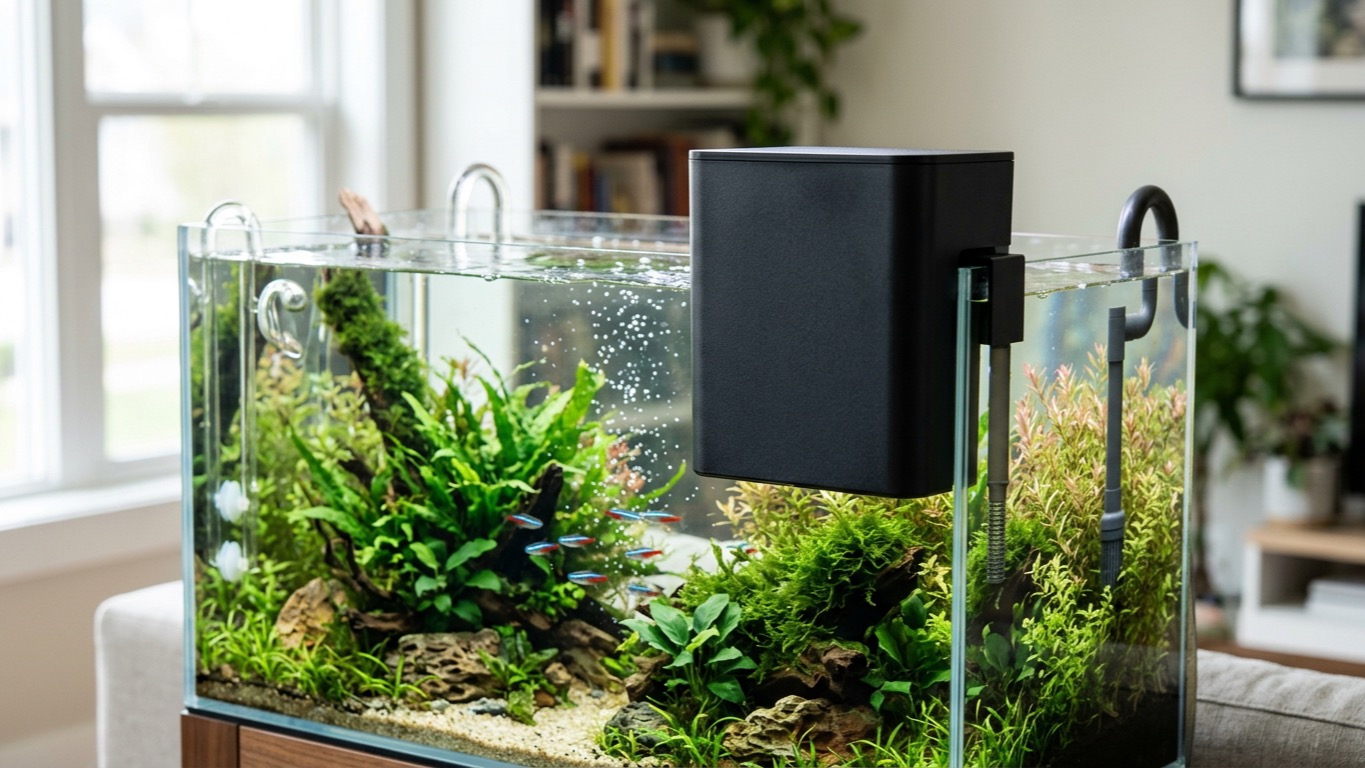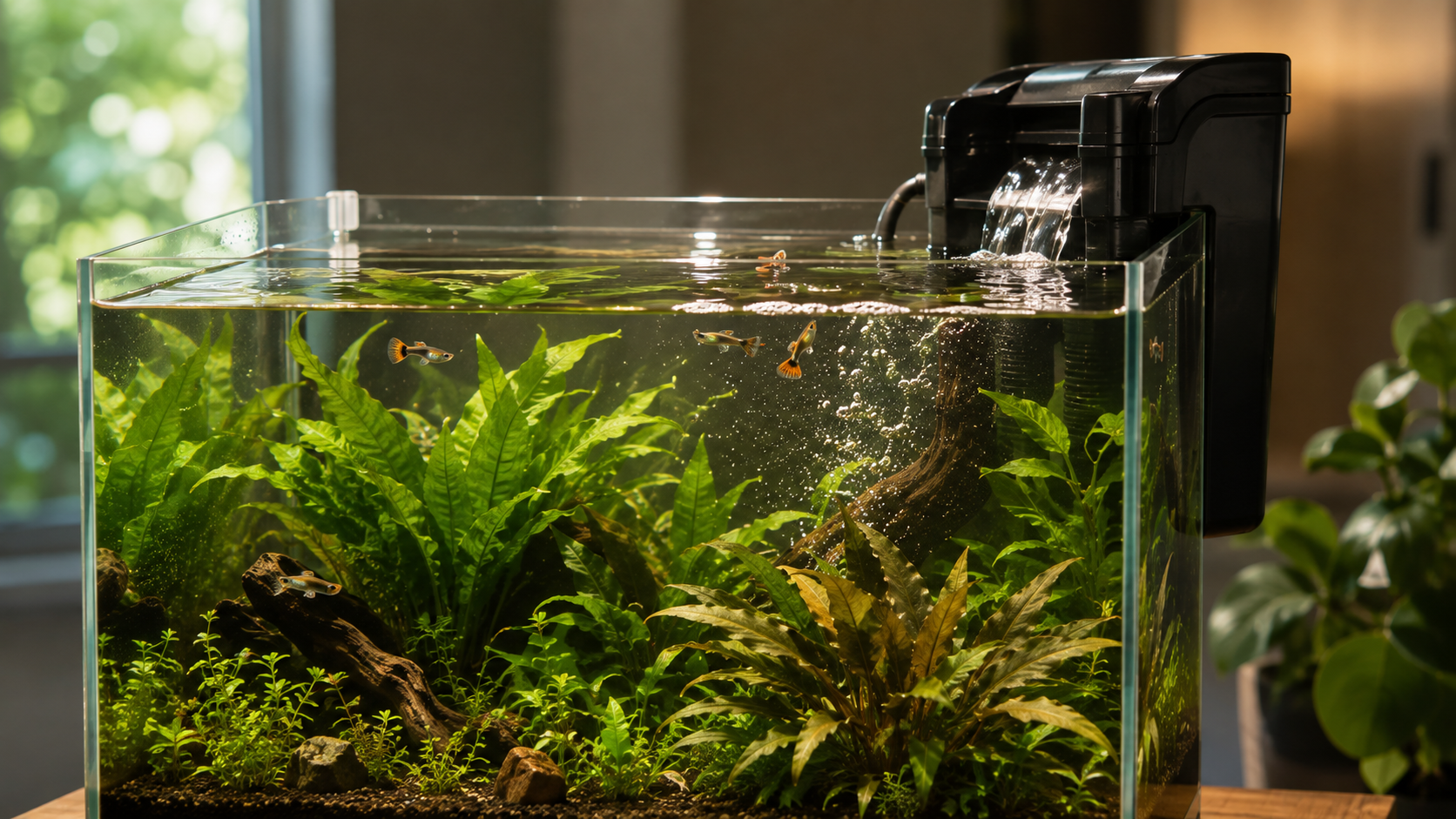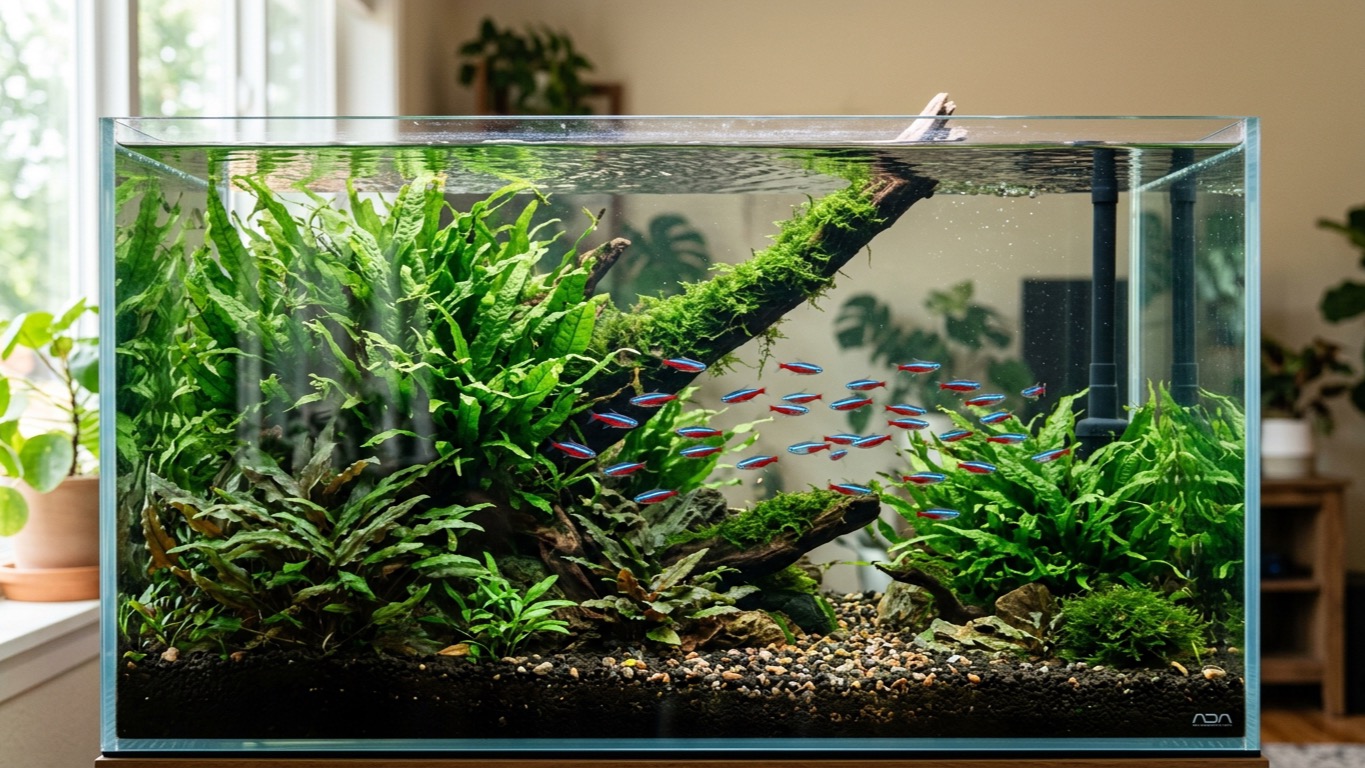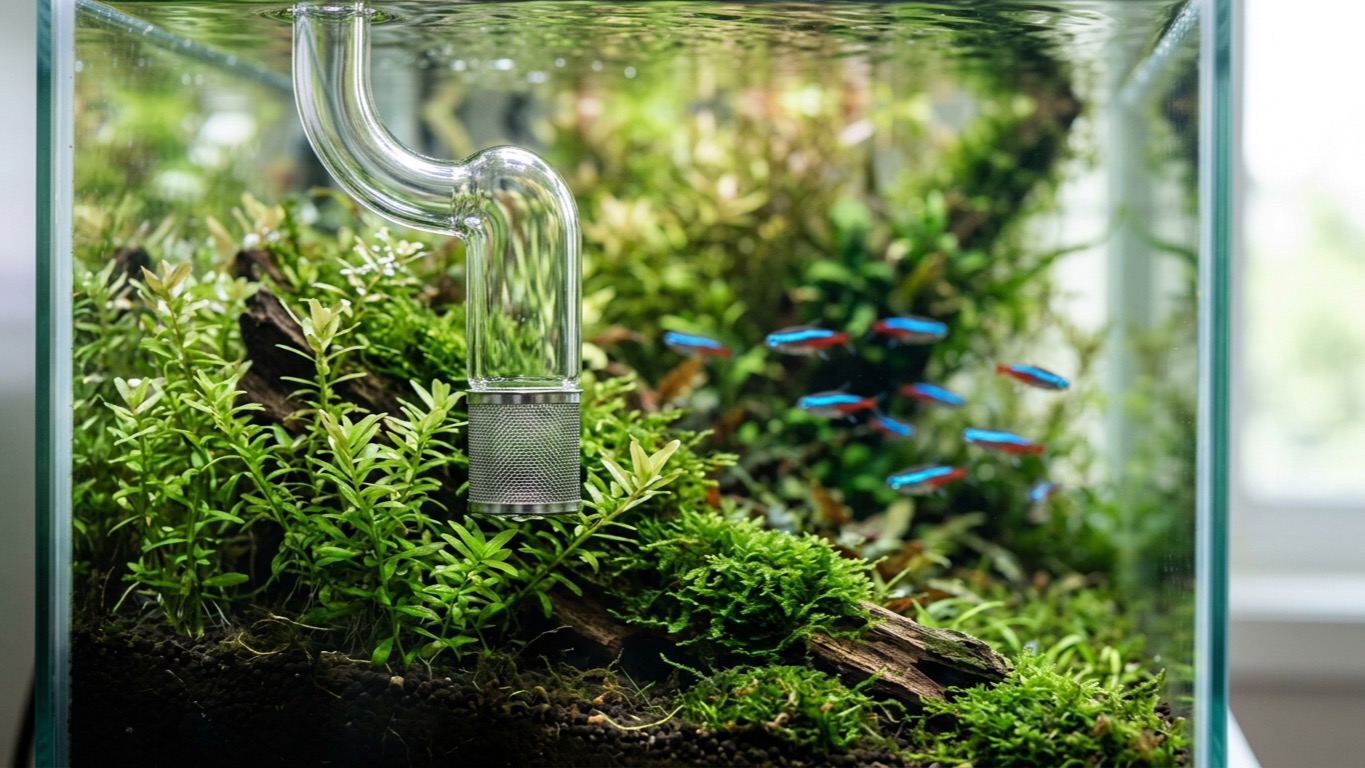
Quick answer: Give Brazilian pennywort low-to-medium light, float or plant the stems, and trim often so it never blankets the surface. Dose liquid fertilizer when floating; CO₂ stays optional.
Fast pennywort thrives with medium light, regular trims, and flexible planting.
We compared published care data on Hydrocotyle leucocephala light bands, planting styles, and trim rhythms. Our research team analyzed profiles listing about 68–82°F, pH near 6.0–8.0, heights near 10–50 cm, and photoperiods near 6–8 hours. Owners consistently report leggy stems under dim light and surface blankets when trims slip.
Comparing published specs favors medium light for compact leaves, any substrate or free floating stems, and cuttings from every node. Related Hydrocotyle care sheets list medium or high light and low-to-medium CO₂ needs. Liquid macros and micros support floating mats that feed from the water column. Height notes often span about 10–50 cm with leaf blades near 2–5 cm on winding stems. This page covers light, planting, nutrients, trimming, propagation, leaf cues, and tank placement.
Include dual planting methods, trim cadence, and fertilizer habits. Leave out forced high-tech CO₂ as a requirement. Skip pesticide dips that belong on manufacturer labels.
Match light to compact leaves, not stretch
Medium light packs nodes; dim light stretches stems.
Published Brazilian pennywort notes accept low to high light, yet medium setups grow denser foliage. Low light yields longer internodes, smaller leaves, and thinner walls of green. Medium intensity near about 35–50+ µmol PAR supports bushier growth in many care tables. Photoperiods near 6–8 hours curb algae when nutrients stay balanced. Related Hydrocotyle sheets may list medium or high demand with optional CO₂. Raise intensity gradually if stems look sparse before you extend the clock.
Light board:
| Setup | Published tendency |
|---|---|
| Low light | Longer stems, smaller leaves |
| Medium light | Denser, brighter foliage |
| High light | Fast growth, more trimming |
| Photoperiod | Often about 6–8 hours |
| CO₂ | None to optional |
Owners consistently report greener canopies after they shortened stretchy days and raised intensity a notch. Our research team analyzed light tables across stem-plant profiles. Comparing published specs pairs medium light with a fixed daily schedule.
Plant stems or float the same cuttings
One stem works rooted or free-floating.
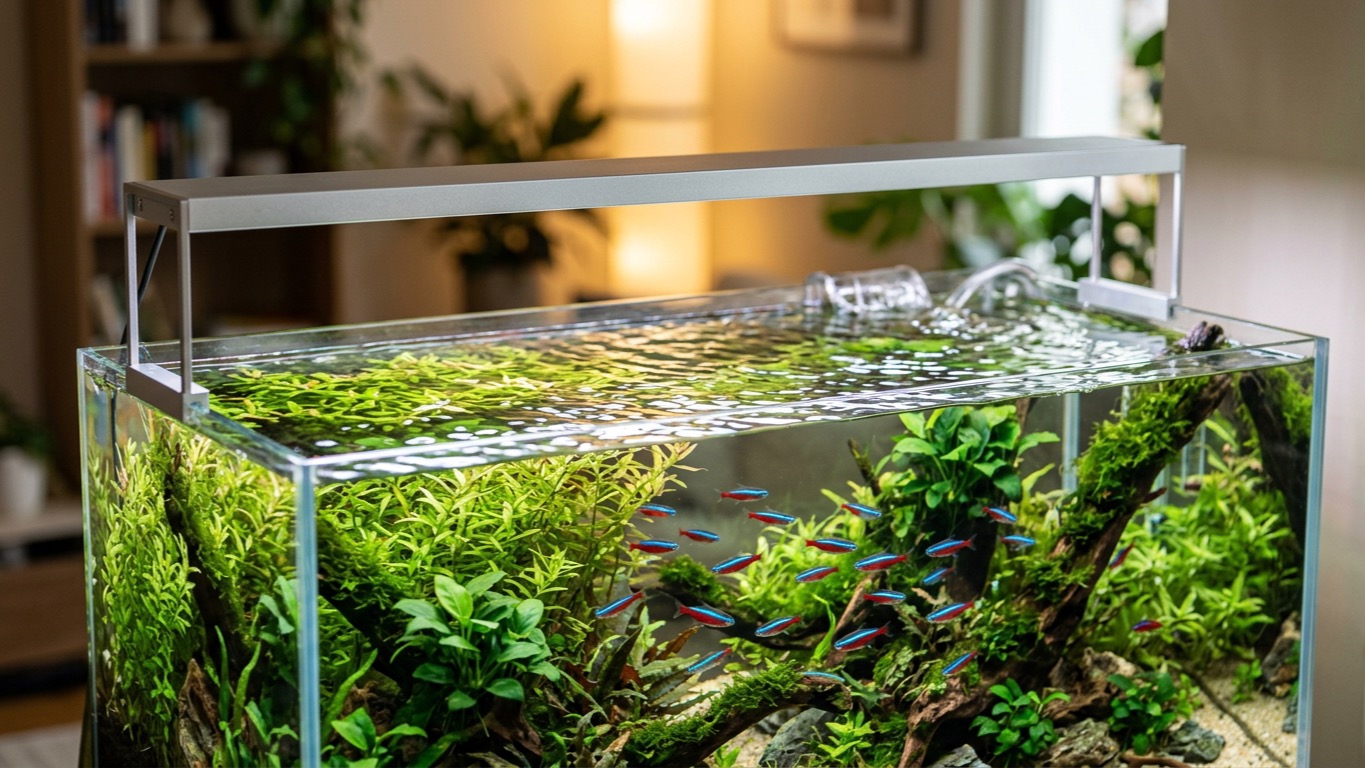
Push about 1–2 inches of stem into gravel or soil for midground or background walls. Leave the crown above the substrate so buried leaves do not rot. Floating bunches spread across the surface and trail roots into the water column. Pins hold runners when you want a low mat instead of a tall stem. Any inert substrate works because the plant also feeds from the water. Many keepers run both styles in one tank for shade plus height.
Planting checklist:
- Rinse new stems before they enter display water
- Plant 1–2 inches of stem, crown clear
- Or float healthy cuttings for cover
- Pin runners for low mats when desired
- Leave gaps so light reaches lower plants
Owners consistently report faster fill-in when they reuse every trimmed piece. Our research team analyzed planting notes for creeping Hydrocotyle. Comparing published specs treats floating and rooted culture as equal options.
Dose the water column when mats float
Fast growth drinks nutrients quickly.
Floating pennywort relies on liquid fertilizer because roots hang in open water. Planted stems still benefit from water-column macros and micros, plus optional root tabs nearby. Iron and nitrogen gaps often show as pale or yellow leaves on fast growers. CO₂ injection is not required; optional gas speeds leaf size under stronger light. Follow each fertilizer manufacturer’s label for dose and shrimp-safe formulas. Steady weekly dosing beats random heavy dumps that feed algae.
Nutrient board:
| Habit | Why it matters |
|---|---|
| Weekly liquid macros | Fuels fast stem growth |
| Trace elements and iron | Supports green leaf color |
| Root tabs near planted stems | Helps pinned runners |
| Optional CO₂ | Speeds density under strong light |
| Copper-aware shrimp tanks | Protect sensitive invertebrates |
Owners consistently report fewer yellow leaves after they dosed floating mats on schedule. Our research team analyzed nutrient notes for water-column feeders. Comparing published specs keeps CO₂ optional and fertilizer regular.
Trim on a weekly rhythm in fast tanks
Unchecked mats steal light and flow.
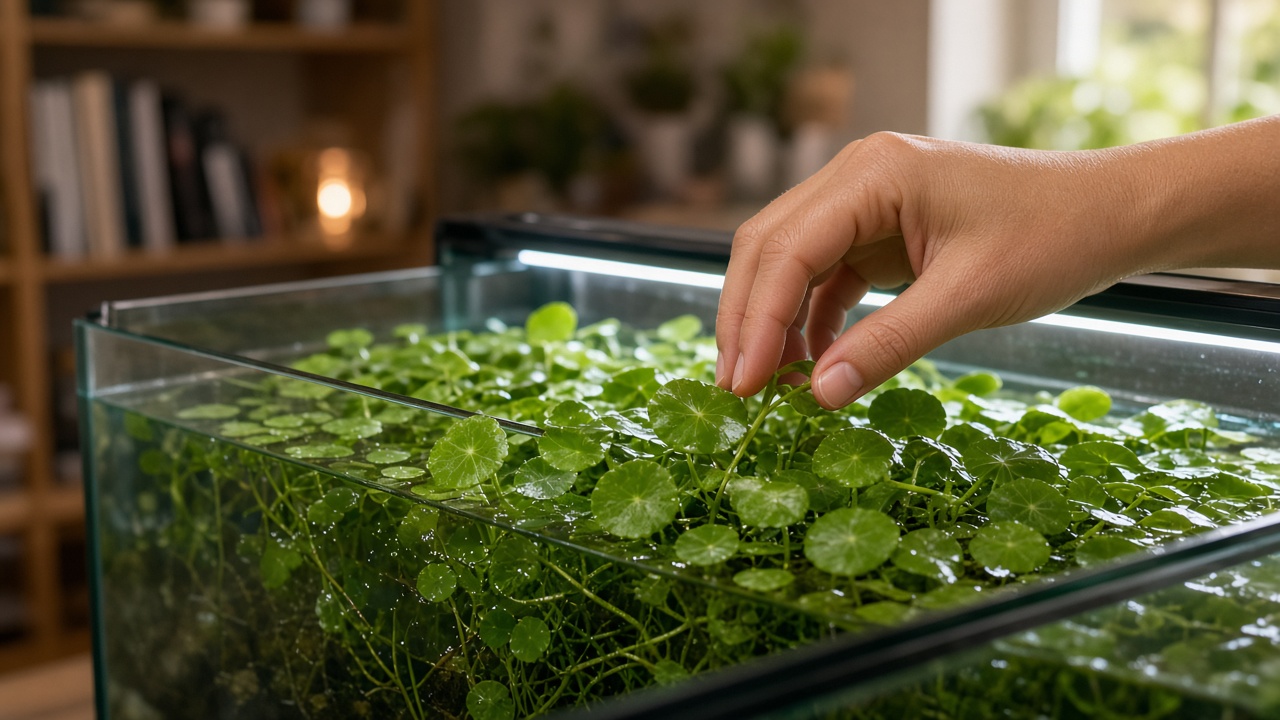
Moderate tanks often need pinching every 1–2 weeks; high-light tanks may need weekly cuts. Snip at nodes to shorten runners and keep lower plants lit. Remove floating debris after each session so rotting stems do not foul the water. Trim long trailing roots with clean scissors; new roots return quickly from nodes. Never leave a full surface blanket that blocks gas exchange. Replant healthy tips instead of discarding every cutting.
Trim cadence:
| Growth pace | Typical trim habit |
|---|---|
| Moderate light | About every 1–2 weeks |
| High light | Often weekly |
| Surface mat | Thin before light drops |
| Trailing roots | Cut when appearance bothers |
| Melting leaves | Remove promptly |
Owners consistently report clearer lower plants after disciplined thinning. Our research team analyzed maintenance intervals in pennywort guides. Comparing published specs treats trimming as core care, not optional styling.
Propagate from every rooted node
Cuttings root fast and fill gaps.
Snip a stem with at least 3–4 leaves and one or two nodes. Plant the cut end or float it; roots often appear within days. Separate runners to start new mats without buying more packs. Emersed nursery leaves may melt for about 1–2 weeks as submersed growth replaces them. Share extras only after they look clean and pest-free. Propagation turns routine pruning into free plant stock.
Propagation steps:
- Cut below a healthy node
- Keep several leaves on the piece
- Plant or float immediately
- Wait for white roots at nodes
- Thin overcrowded clumps later
Owners consistently report full midgrounds from a handful of starter stems. Our research team analyzed cutting methods for Hydrocotyle leucocephala. Comparing published specs shows every node can found a new plant.
Watch leaf color for nutrient and algae cues
Leaves report light, food, and biofilm early.
Bright green, scalloped rounds signal good balance. Pale or yellow leaves often point to nitrogen or iron gaps on fast growers. Tiny holes can hint at potassium shortfalls in care notes. Green spot or fuzz algae on older leaves often means excess light versus nutrients. Thin biofilm films on new leaves usually fade within about 1–3 weeks and stay cosmetic. Wipe gently or let shrimp and snails graze; trim ruined leaves instead of waiting forever.
Leaf cue list:
- Pale new growth: check macros and iron
- Holes in older leaves: review potassium supply
- Green spots: shorten photoperiod or raise dosing balance
- White film: usually biofilm, often temporary
- Melt after shipping: expect 1–2 weeks of transition
Owners consistently report healthier walls after they matched dosing to leaf color. Our research team analyzed deficiency notes in stem-plant care sheets. Comparing published specs reads leaves before buying new gadgets.
Place pennywort where shade and cover help
Use the canopy; do not smother the scape.
Floating mats shade shy fish, fry, and shrimp while cooling bright tanks. Midground stems soften hardscape and hide filter gear. Keep pathways open so surface agitation still ripples. Avoid burying short foreground plants under a permanent green lid. Digging fish may uproot shallow stems; pin or replant after gravel storms. Related Hydrocotyle profiles list other heights, such as about 3–10+ cm for verticillata and about 5–10 cm carpets for tripartita. Match the species on your label before you copy height targets. Keep plant scissors separate from livestock tools.
Placement board:
| Goal | Placement tip |
|---|---|
| Fry cover | Thin floating mat |
| Midground wall | Planted stems |
| Low carpet look | Pinned runners |
| Betta calm zones | Partial surface shade |
| Open gas exchange | Leave clear water paths |
Owners consistently report calmer fish under partial, not total, cover. Our research team analyzed placement notes for floating stem plants. Comparing published specs balances shelter with light to the substrate.
Brazilian pennywort rewards simple habits. Stable photoperiods and prompt debris removal prevent algae hitching a ride on neglected mats. Hold medium light with a 6–8 hour clock, plant or float clean stems, and dose when mats feed from the water. Trim every week or two, propagate every node, and thin before the surface seals shut. Follow light and fertilizer manufacturer sheets whenever you change hardware or dosing brands.
FAQ
Does Brazilian pennywort need CO₂?
No. Published care notes list CO₂ as none to optional for Hydrocotyle leucocephala. The plant grows fast in low-tech tanks with liquid fertilizer and steady light. Optional injection can enlarge leaves under stronger lighting. Follow gas and fertilizer manufacturer instructions if you add either system to the tank.
How much light does pennywort need?
It tolerates low to high light, yet medium intensity grows denser foliage with shorter gaps. Many guides favor about 6–8 hours daily to limit algae while stems stay compact. Dim tanks stretch internodes; brighter tanks need more frequent trims. Raise intensity slowly and watch leaf spacing before you lengthen the photoperiod further.
Can I float pennywort forever?
Yes. Floating culture is a standard long-term method, not a temporary trick for new tanks. Trailing roots absorb water-column nutrients, so liquid fertilizer matters more than rich soil alone. Thin the mat so lower plants and surface ripple still receive light and air. Replant cuttings anytime you want vertical height instead of surface cover.
How often should I trim pennywort?
Moderate setups often need cuts every 1–2 weeks; high-light tanks may need weekly work. Trim at nodes, remove debris promptly, and replant healthy tips into open gaps. Skip long gaps that let mats block light and flow across the glass. Root trims stay safe when scissors remain clean and sharp between sessions.
What temperature suits Brazilian pennywort?
Care tables commonly list about 68–82°F, or 20–28°C, with pH near 6.0–8.0 for home tanks. Hardness bands near 2–20 dGH appear in several species summaries for this plant. Stable community tropical ranges usually fit without special heaters beyond fish needs. Avoid sudden heat spikes that also stress fish sharing the same water.
Why are my pennywort leaves turning yellow?
Fast growth often depletes nitrogen or iron when dosing lags behind stem speed. Dose a complete liquid fertilizer on schedule and compare older leaves versus bright new tips. Normal reallocation can yellow lower leaves while growing tips stay green and firm. Confirm the photoperiod is not extreme before you change several variables at once.
Will pennywort take over my aquarium?
It spreads quickly if you never thin it, especially under strong light and rich dosing. Regular trimming and removal of excess floaters keep it useful instead of smothering neighbors. Replant only the stems you want and compost or share the rest cleanly. Quarantine new plants so pests hitchhiking on stems do not arrive with free cuttings.
This guide is informational only and does not replace the manufacturer’s instructions for lights, fertilizers, CO₂ gear, or plant products.