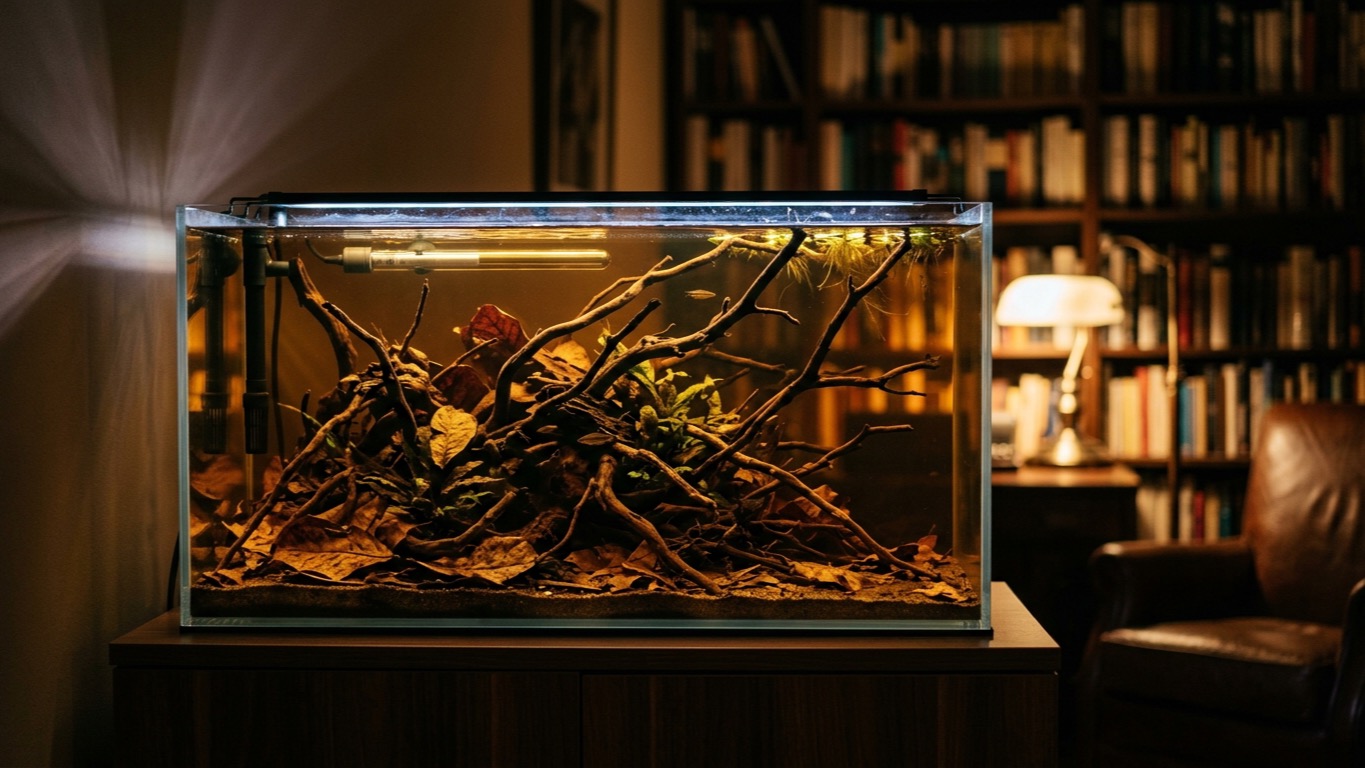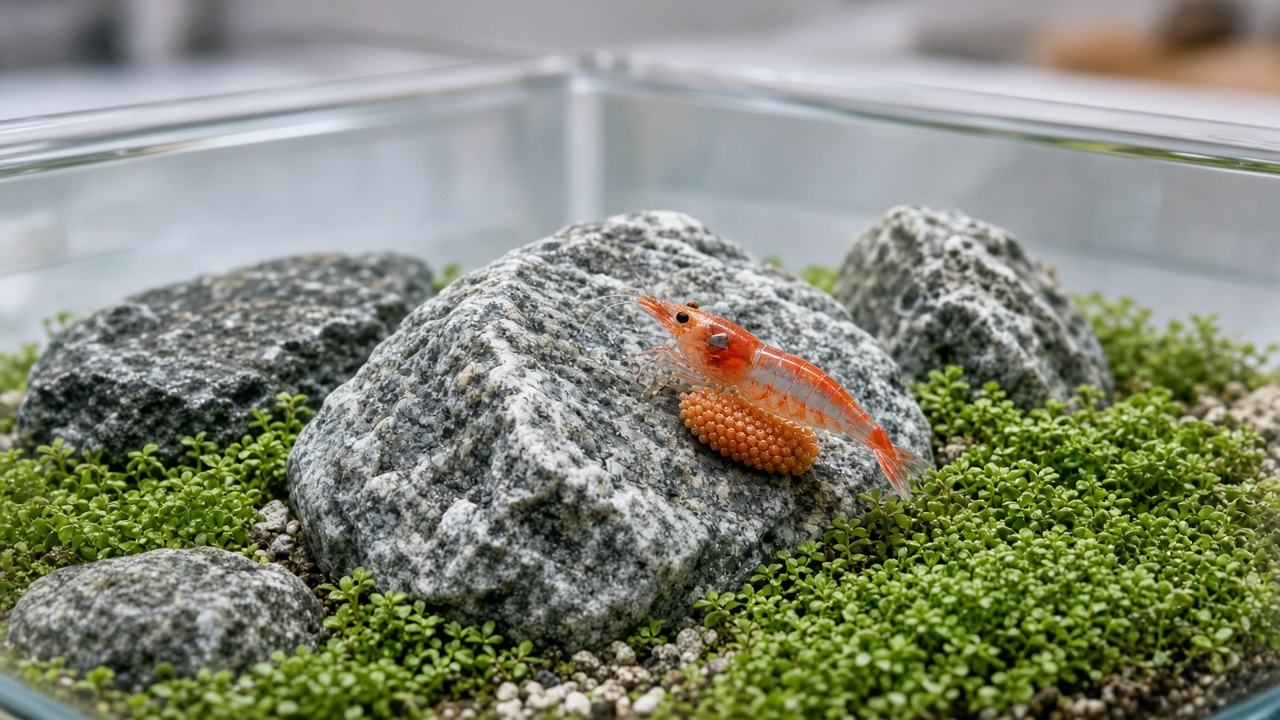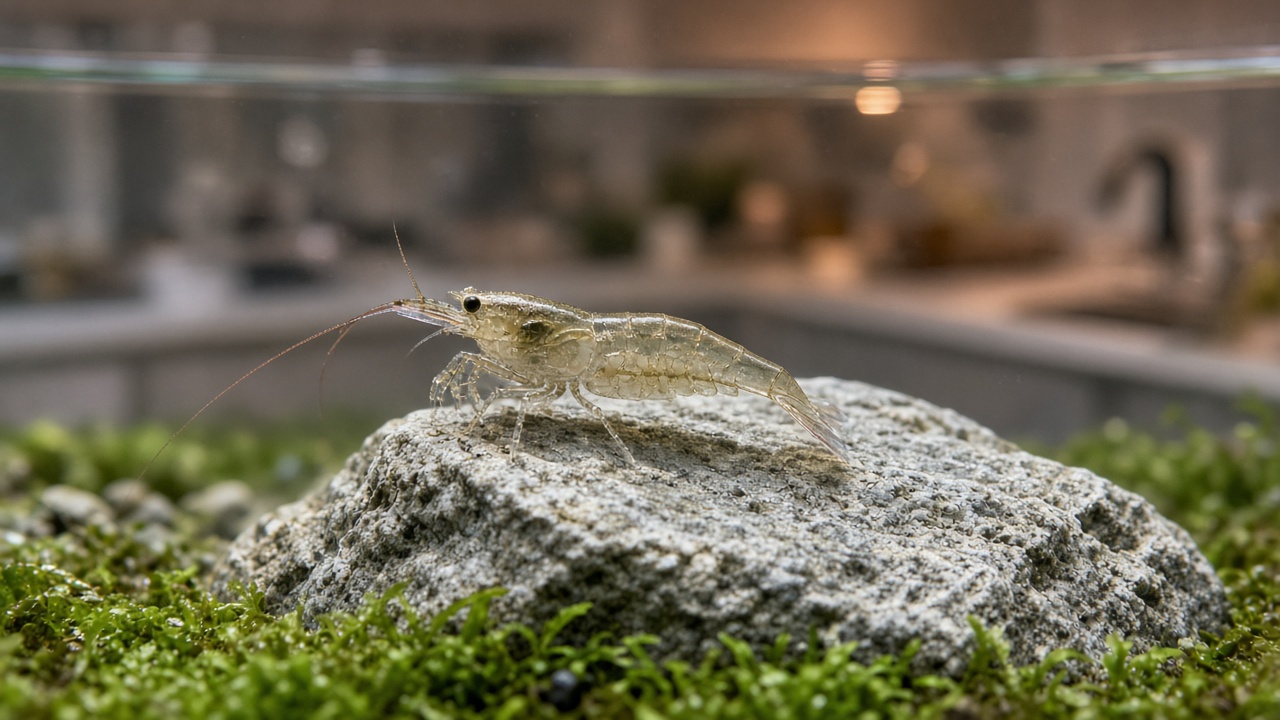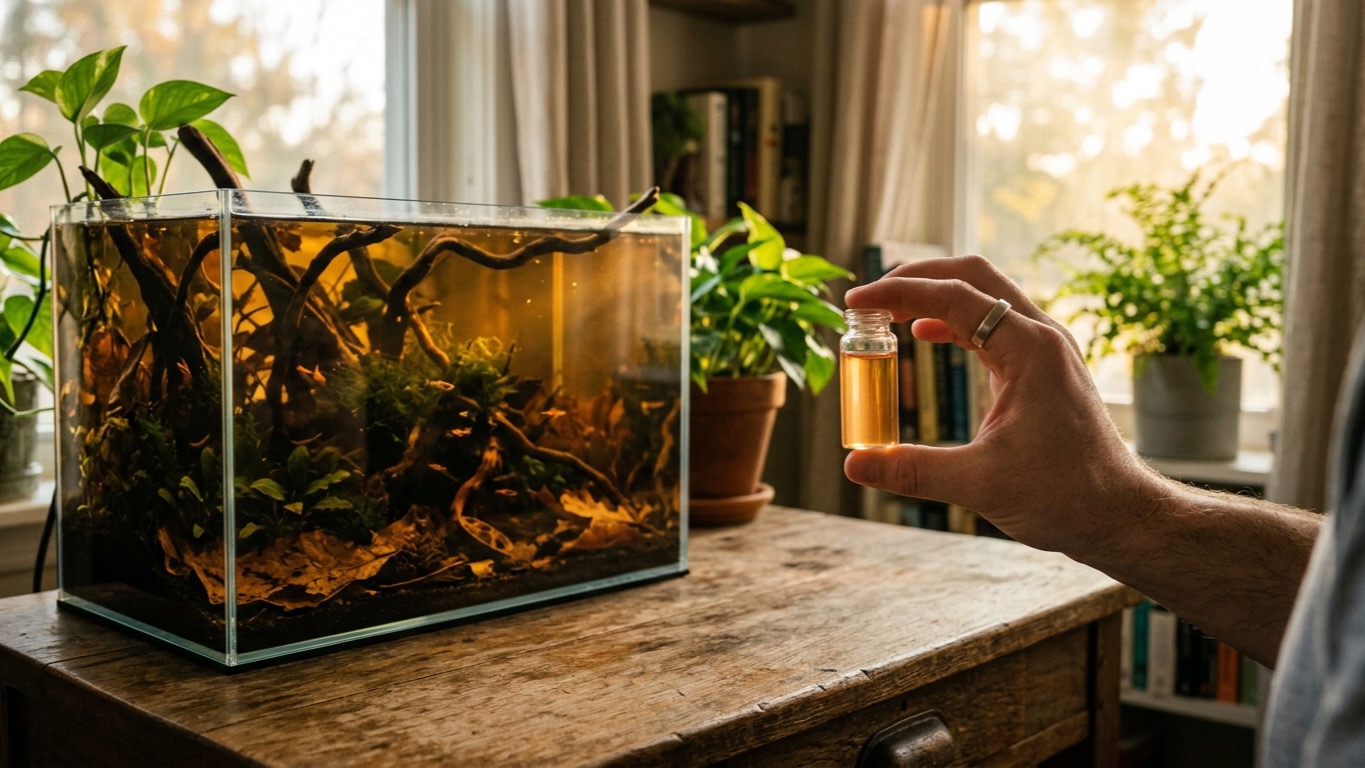
Quick answer: Mix the water first and lock hardness near 6 dGH. Cycle 4 to 6 weeks, then add plants only after those readings hold. Do not plant first and hope soil will fix the water.
Mix new water to about 6 dGH and cycle 4 to 6 weeks before you add shrimp.
This page is a setup-order brief, and
What this page covers, and what it leaves out
We only write beginner freshwater shrimp tanks that lock GH and KH before any plant or soil goes in.
That selection rule is the whole filter for this page. A setup that plants first and “fixes water later” does not belong here. Bee shrimp, Sulawesi shrimp, marine shrimp, and soil-first aquascapes stay off this page.
The path we keep is narrow:
- Remineralized RO water, or tap water you already measured
- A cycle you can see on a liquid kit
- Plants added after the numbers hold
- Then shrimp
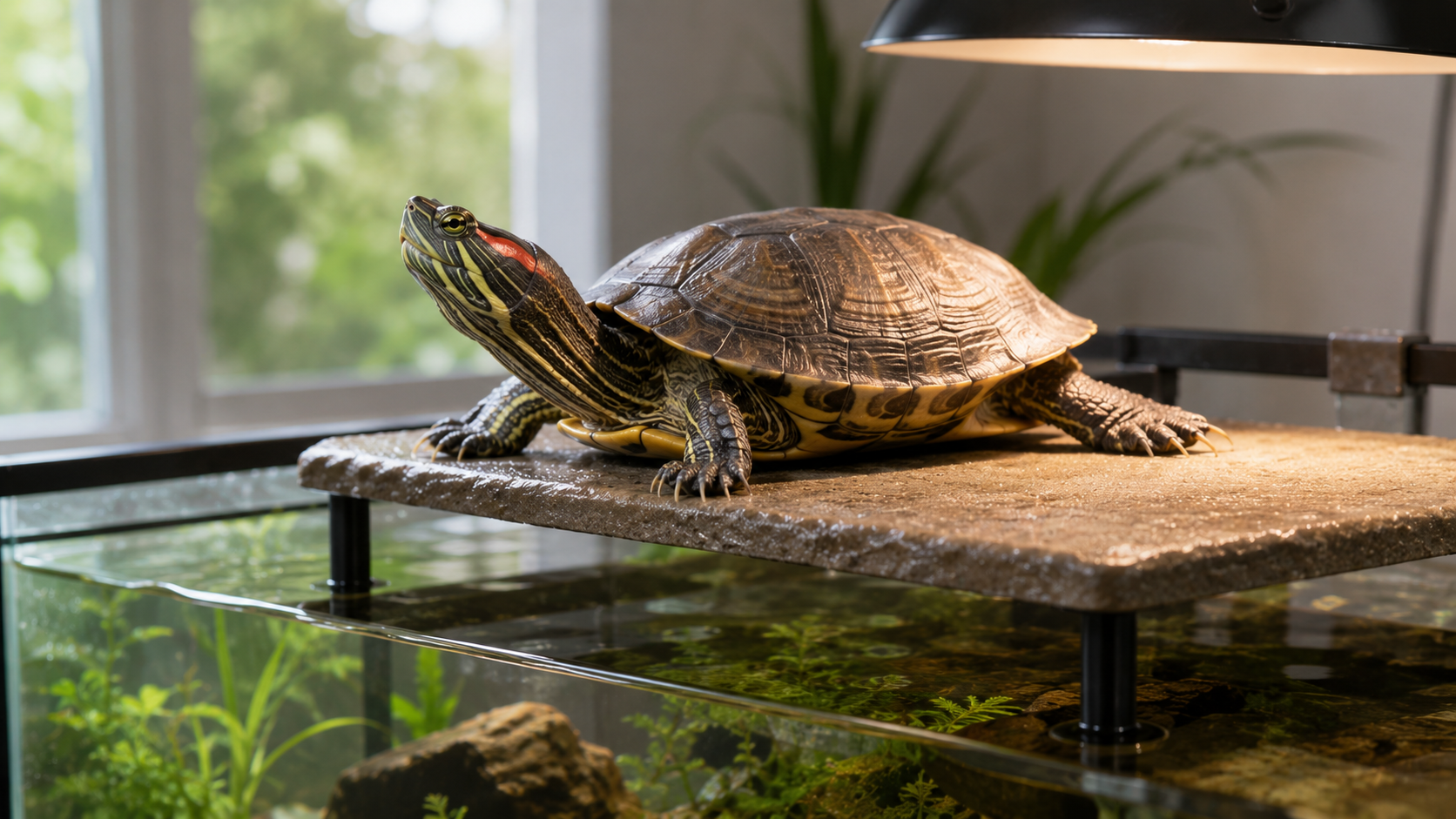
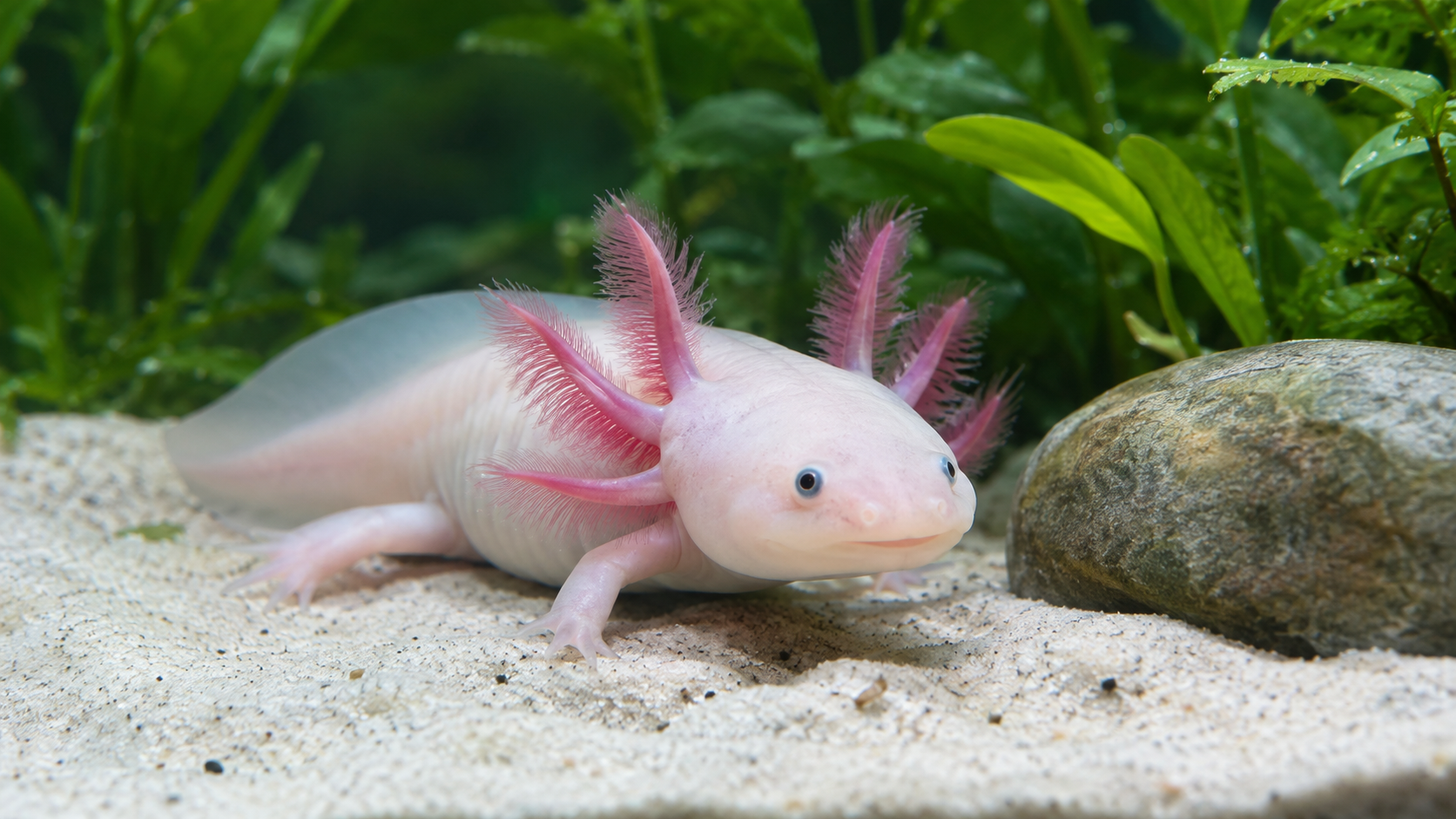
A shrimp tank is a mineral-lock problem, not a dock-and-lamp problem. A turtle tank setup needs swim volume, a dry haul-out, and UVB. An axolotl tank setup also waits on a cycle, but the water targets are not the same.
Mix the water in a bucket first
New water should be mixed and tested outside the display tank before it ever touches the glass.
Do not fill the tank from the tap and “adjust later,” because hardness then drifts while plants and soil fight you. Our research team compared mineral pages, and those makers tell you to mix salts outside the aquarium.
SaltyShrimp’s page for Shrimp Mineral GH/KH+ is the worked example on this path. That salt is made for shrimp from habitats with a neutral pH.
The maker’s dose is plain:
- About 2 g (one level spoon) per 10 L of RO, rain, or desalinated water
- Target about 6 °dGH
- Or a conductance of about 300 µS, plus or minus 50
- Mix outside the tank
- Pour undissolved grains in too
- Close the jar at once, because the salt takes up moisture
The same page states a GH to KH raise ratio of 1.0 to 0.5. A 100 g jar is listed as enough for about 500 L. A 200 g jar is listed as enough for about 1,000 L.
If your tap already sits near that GH, you may not need the salt. Test first, and do not dose a mineral you have not measured against.
Treat new tap water before it touches the tank. Seachem’s page for Prime states a dose of 1 capful (5 mL) per 200 L (50 US gallons) of new water.
Each cap thread is about 1 mL, and the same page allows a double dose for high chloramine. It allows up to 5 times the normal dose if ammonia or nitrite is above 2 ppm. It also says the bind lasts up to 48 hours.
A fill much smaller than 50 gallons still uses that printed math. Use the cap-thread note, and do not pour a full cap into a small tank.
The hardness lock
GH and KH are the lock, and pH follows those two readings.
API’s Freshwater Master Test Kit page says a pH of 7.0 is neutral. A reading above 7.0 is alkaline, and a reading below 7.0 is acidic.
That kit reads ammonia, pH, high-range pH, nitrite, and nitrate. The maker says to test weekly, and you should follow the color card if it calls for action.
The Master Test Kit does not read GH or KH, so you still need a liquid GH and KH kit for the lock. API’s General and Carbonate Hardness Test Kit page says low KH can lead to rapid and wide pH shifts.
Hold this set before you add soil or rooted plants:
- GH near the mineral maker’s 6 °dGH target, if you used that salt
- KH in the 1.0 to 0.5 GH-to-KH ratio SaltyShrimp printed
- pH that is not swinging from day to day
- Weekly tests, as both API pages state
If GH moves after you add decor, the lock failed. Remove the thing that changed the water, and do not add shrimp to chase a moving number.
Cycle the glass before you plant
A cycle is a wait you can measure, not a shopping list of plants.
Seachem’s Stability page says most tanks are cycled within 4 to 6 weeks, and that is the wait we use.
The same page prints a dose plan:
- Day 1: 1 capful (5 mL) per 40 L (10 US gallons)
- Then 1 capful per 80 L (20 US gallons) daily for 7 days
- Turn UV or ozone off for those 7 days
- Later, 1 capful per 80 L once a month or at each water change
The maker also states a 6-year shelf life from the date of manufacture. The FAQ on that page says the bacteria should find a home within 24 hours.
Stability’s page says fish and other aquatic species may go in during the 7-day dose. Our selection rule is stricter, so we wait the 4 to 6 weeks Seachem names for a finished cycle.
Plants go in after that wait, not on day one. Prime’s page says it can be used during cycling. It binds ammonia, nitrite, and nitrate for up to 48 hours, but it does not replace the wait.
API’s Master Test Kit page tells you to test weekly. During the cycle, test more often if ammonia and nitrite are still moving. We do not invent a ppm line the maker did not print on that page.
Do not use the shrimp as the ammonia source, because that is not a cycle and it is a loss.
Hardware that leaves the water alone
Pick filters and heaters that do not rewrite GH, KH, or pH.
The tank can be small, and this page is not a gallon ranking. A shrimp colony does not follow the same volume rule as a betta.
Read what size tank a betta needs for that fish, because here stable water beats a bigger box you cannot test.
Use this gear while the lock is forming:
- Inert sand or bare glass for the cycle
- A sponge or other gentle filter you can keep wet
- A heater only if the room will not hold a steady temperature
- A lid, because shrimp climb
Skip these during the lock phase:
- Buffering plant soil
- Bags of “pH down” rock you have not measured
- Copper treatments
- Medications the label does not clear for invertebrates
Fluval’s India page for Plant and Shrimp Stratum is the soil example we compared. The maker says it supports a neutral to slightly acidic pH. It lists a recommended depth of 1.18 to 1.57 in (3 to 4 cm).
The 17.6 lb (8 kg) bag is listed at ₹3,499. The same page maps bag count to tank length:
- 45 cm tank: one 2 kg bag, or one 4 kg bag
- 60 cm tank: one 8 kg bag
- 90 cm tank: one 8 kg bag plus one 4 kg bag
That soil is made to change water, which is why it waits. If you put it in on day one, you are letting the bag set the parameters.
A filter should move water without grinding shrimp, and a heater should not cook a small tank. Neither job is a hardness job.
Add plants only after the lock holds
Plants go in after GH, KH, and pH hold for at least one full week of matching tests.
That rule uses one matching pair of weekly tests as the floor API’s “test weekly” line gives you. If the numbers moved, you wait again.
Start with plants that do not need a buffering soil:
- Floating plants
- Moss on hardscape
- Epiphytes tied to wood or rock
If you later want Fluval Stratum, add it as a choice, not a default. The maker’s depth band is 3 to 4 cm, which is a lot of soil in a small tank.
It will pull KH, and API’s hardness page already warns that low KH lets pH swing. Test KH the day you add the soil, then the next day, then at one week.
If KH falls and pH slides, you broke the lock. Do not add shrimp until you have a new steady pair of readings.
Do not inject CO2 on this path, because CO2 drops pH on a daily clock and this page does not cover high-tech planted tanks.
Wood can stain water, and Fluval’s Stratum page says the soil helps control organic discoloration when driftwood is present. Stain is not a parameter, but you should still test after you add wood.
Add shrimp only after the 4 to 6 week cycle window Seachem names. Also wait for a week of matching GH, KH, and pH, plus plants that did not move those numbers.
Then keep the same water you locked and mix change water in a bucket. Use the same SaltyShrimp spoon math if you are on RO.
Use Prime at 5 mL per 50 gallons of new water, or the 1 mL cap-thread step for small volumes. If GH or KH moves between kit colors, find the cause before you add more shrimp.
Do not chase a “perfect” pH with acid bottles. API’s page already ties pH to the species’ habitat, and SaltyShrimp’s salt is built for a neutral mix.
We are a research desk, so sick shrimp, failed molts, and sudden die-off are beyond this page. This is a setup order, not a diagnosis.
FAQ
Can I fill a shrimp tank with untreated tap water?
No, test the tap first, then condition new water. Seachem’s Prime page sets 5 mL per 50 US gallons and allows a double dose for high chloramine. If the tap is far from about 6 °dGH, mix RO with SaltyShrimp’s 2 g per 10 L dose instead of guessing.
How long do I wait before I add shrimp?
Seachem’s Stability page says most tanks cycle in 4 to 6 weeks, and that is the wait this page uses. The 7-day Stability dose is not the same as a finished cycle. Keep testing with the API Master Test Kit on a weekly rhythm, or more often while ammonia and nitrite are still moving.
Should I add plants on day one?
No, plants and plant soils change KH and pH. Fluval’s Stratum page says the soil supports a slightly acidic pH and lists a 3 to 4 cm depth. Add plants after the lock holds for a week of matching tests.
What tank size should I buy?
Buy a tank you can test and cover, because this page does not rank gallon sizes. A shrimp tank is not sized like a betta tank, so use the betta tank size page if you are buying for that fish.
Do I need plant soil to keep shrimp?
No, soil is optional and it waits, and inert sand or bare glass will not rewrite GH. If you later want Fluval Stratum, the India page lists an 8 kg bag for a 60 cm tank.
Can I keep shrimp with a turtle or an axolotl?
Do not use this page for those animals, because a turtle tank needs swim volume, a dry dock, and UVB. An axolotl tank needs cool water and a different cycle plan.
Why did my KH drop after I added soil or wood?
Buffering soils and some woods change carbonate hardness, and API’s hardness page says low KH lets pH shift fast. Fluval’s Stratum page says the soil supports a slightly acidic pH, so re-lock the water before you add shrimp.