Quick answer: Water sprite thrives floating or planted when light stays low to medium, the crown stays open, and nutrients keep pace with fast growth. Thin mats so fry cover helps without sealing the surface.
Float for fry cover; plant for tall lace columns.
We compared published care data on Ceratopteris thalictroides, also called water sprite or Indian water fern. Our research team analyzed lighting bands, CO₂ notes, height ranges, and floating versus substrate methods. Owners consistently report faster surface mats when clumps float, and taller bushy columns when crowns stay unburied.
Comparing published specs, many sheets list low to medium light near about 10–35 PAR, with CO₂ listed as low to none. Maker plant notes often place height near about 15–30 cm, or about 6–12 inches, with width near about 10–20 cm. Hobby temperature bands commonly span about 68–82°F, or about 20–28°C. pH notes often sit near about 6.0–7.5. This page covers floating setup, planted technique, light and nutrients, melt recovery, propagation, and thinning.
Include dual growth modes, crown-safe planting, liquid fertilizer, and regular thinning. Leave out deep crown burial and sealed surface mats that block gas exchange. Skip pesticide dips that belong on manufacturer labels alone.
Scope board:
| Include | Leave | Skip |
|---|---|---|
| Floating fry and shrimp cover | Deep crown burial | Forced high-tech CO₂ only |
| Planted mid or background stems | Sealed unthinned mats | Mystery bleach dips |
| Low–medium light ~10–35 PAR | Bare nutrient-starved water | Pest protocols off labels |
| Liquid fertilizer; root tabs if planted | Ignoring melt after emersed stock | Price shopping guides |
Float clumps when you want speed, shade, and fry shelter
Surface placement is the simplest start for beginners and breeders.
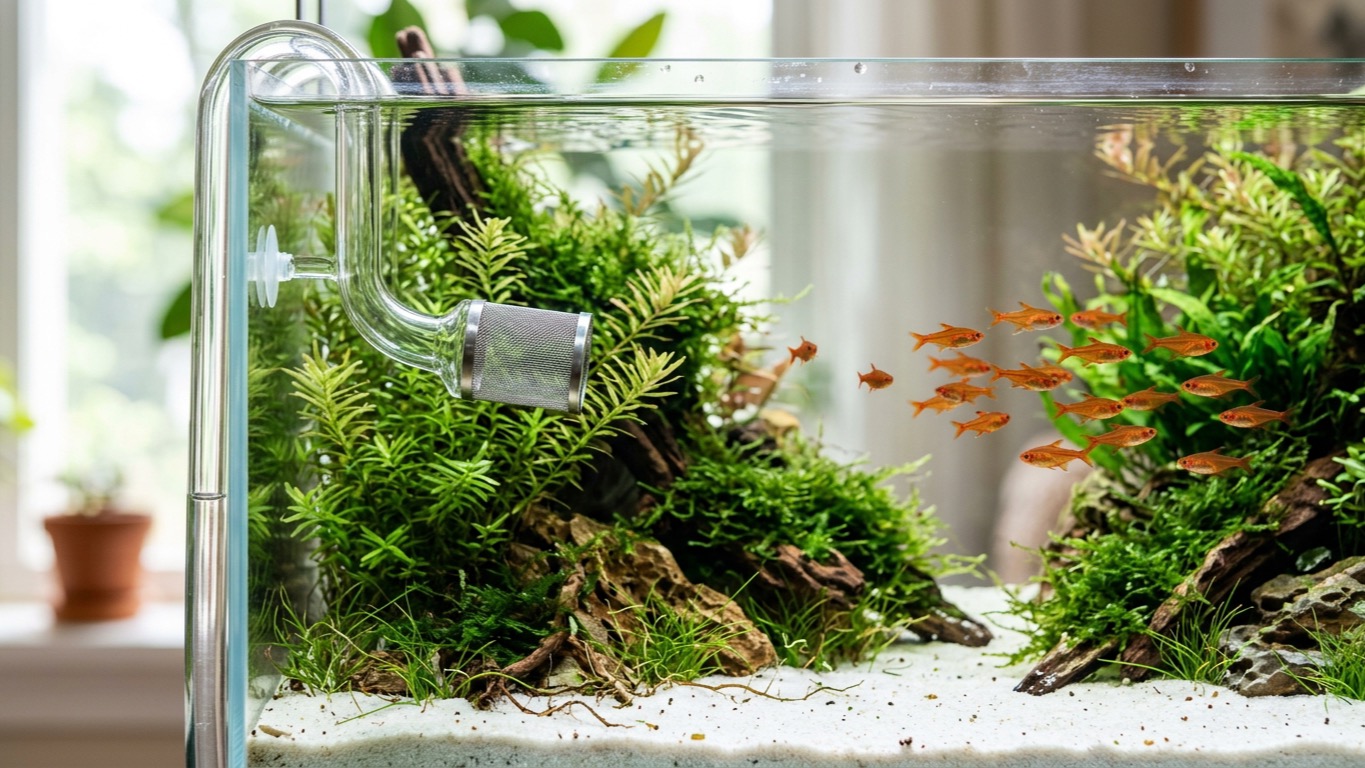
Lay washed stems on open water and let trailing roots hang. Floating growth sits closer to light and pulls nutrients from the water column. Dense lace fronds shade algae-prone floors and give fry and shrimp instant cover. Strong surface agitation can tear fronds and pile plants in corners, so calm the top flow. Thin before the mat seals shut and starves gas exchange.
Floating board:
| Cue | Published direction |
|---|---|
| Light | Low–medium; about 10–35 PAR in shop notes |
| CO₂ | Low to none in most care sheets |
| Growth | Fast at the surface |
| Cover | Excellent for fry and shrimp |
| Risk | Heavy shade if never thinned |
Our research team analyzed care notes that treat floating as the low-fuss default. Comparing published specs favors nutrient uptake from the water when roots hang free. Owners consistently report better fry survival under lace roots. Leave gaps of open surface so fish still gulp air. Edge case: very tall tanks still benefit from floaters that never touch substrate.
Plant stems for intentional midground or background columns
Rooted water sprite grows into a soft leafy tower when the crown stays free.
Tuck only roots into fine gravel or aquasoil and keep the crown exposed. Burying the growing point invites rot and early melt. Buoyant stems may pop out until roots catch, so plant at a slight angle or use a plant weight near the base. Once anchored, growth is a bit slower than floating yet looks more deliberate. Space stems individually so light reaches lower leaflets.
Planting checklist:
- Rinse rock wool and remove fertilizer beads from potted stock
- Separate stems instead of burying one tight clump
- Cover roots only; leave the crown open
- Anchor lightly if stems float upward
- Float rootless cuttings until new roots form
Owners consistently report melt after deep burial of the crown. Our research team analyzed transition notes from emersed farm growth to submerged leaves. Comparing published specs still allows planting after floating roots appear. Skip packing stems into one hole like a bouquet. Measure substrate depth so tweezers can seat roots about two to three inches without smothering the crown.
Hold low to medium light and treat CO₂ as optional
Water sprite is rated easy partly because high-tech gear isn’t required.
Shop lighting notes commonly cite about 10–35 PAR for low to medium fixtures. Stronger light can thicken fronds yet also speeds surface mats that need more trimming. Maker plant cards list medium light demand and low CO₂ need for this fern. Optional CO₂ may speed growth under brighter lamps, yet many low-tech tanks thrive without injection. Aim for a stable photoperiod near about six to eight hours rather than random all-day blasts.
Light board:
| Factor | Common published cue |
|---|---|
| PAR band | About 10–35 for easy growth |
| CO₂ | Low to none; optional boost |
| Photoperiod | Steady daily clock |
| Height target | About 15–30+ cm in maker notes |
| Width theme | About 10–20 cm |
Our research team analyzed starter-plant notes that praise nutrient pull under good light. Comparing published specs rejects “must inject CO₂” as a beginner rule. Owners consistently report leggy stems when light is weak and nutrients lag. Raise intensity slowly if lower leaves yellow from shade alone. Follow each light manufacturer’s mounting height chart for your fixture model.
Dose the water column and feed roots when planted
Fast ferns drink nutrients; pale fronds often signal empty water, not mystery disease.
Floating clumps rely on liquid fertilizer because roots never touch soil. Planted stems still drink from the water and may use root tabs nearby. Shop dosing notes for Easy Green style liquids often target about 20–50 ppm nitrate while green growth continues. Iron and macronutrient gaps show as yellow or brown tips on otherwise bright new lace. Steady weekly dosing beats random dumps that feed algae instead.
Nutrient checklist:
- Test nitrate before you double any dose
- Dose complete liquid fertilizer on a calendar
- Add root tabs only beside planted crowns
- Siphon debris after heavy melt weeks
- Follow each fertilizer manufacturer’s label for shrimp tanks
Owners consistently report recovery once nitrate sits in a moderate band and light is steady. Our research team analyzed yellowing notes tied to starved water after plants take off. Comparing published specs favors water-column feeding for floaters every week. Skip copper-heavy algaecides near sensitive invertebrates. Read the bottle before every dose change.
Expect transition melt, then trim and propagate plantlets
Emersed farm leaves often fade as underwater lace appears.
Many store plants arrive mid-conversion from air-grown to submerged form. Old rounded lobes brown while new finely divided fronds push out. Float stressed stems until roots thicken, then plant if you want columns. Trim dead tissue so it doesn’t foul the water. Adventitious plantlets form on leaf edges and detach as free starters.
Propagation board:
| Method | Why keepers use it |
|---|---|
| Top cuttings replanted | Instant new stems |
| Leaf-edge plantlets | Free colony growth |
| Floating rootless scraps | Roots form before planting |
| Crown-safe division | Avoids rot at the base |
| Debris removal | Protects water quality |
Our research team analyzed melt notes that call early brown leaves normal during conversion. Comparing published specs treats plantlets as reliable free stock. Owners consistently report faster rebound when they float first and plant later. Cut cleanly with rinsed scissors between tanks. Share extras instead of letting mats smother neighbors.
Thin mats and tall stems before shade and flow suffer
Fast growth is the feature and the maintenance chore.
Unthinned floaters block light to carpet plants and can slow surface gas exchange. Tall planted stems lose lower leaves when tops shade the base; cut tops and replant them. Weekly or biweekly thinning keeps fry cover useful without a closed green lid. Remove yellow scraps during water changes so ammonia does not spike. Quarantine new plants when possible so pests don’t hitchhike on lace.
Maintenance rules:
- Leave open surface windows for fish breathing
- Replant healthy tops; compost weak mush
- Watch shrimp and fry still using root curtains
- Match flow so fronds do not shred
- Log growth so trim days stay predictable
Owners consistently report clearer tanks once nutrient-hungry mats stay managed, not abandoned. Our research team analyzed algae notes that improve when fast plants outcompete leftover waste. Comparing published specs still warns that sealed surfaces hurt oxygen exchange. Thin before the tank looks dark at noon. Keep a spare cup for plantlets you want to move.
FAQ
Can water sprite grow floating and planted in one tank?
Yes. Many keepers float spare cuttings for fry cover while rooted stems fill the midground. Both modes share the same light and fertilizer habits. Thin floaters so rooted plants still receive light. Keep crowns open on every planted stem. Match flow so surface clumps are not blasted into the glass.
Why is my water sprite melting after planting?
Emersed farm leaves often die back as submerged lace forms, and deep crown burial worsens rot. Float damaged stems until new roots appear, then plant shallowly. Provide steady light and liquid nutrients so replacement fronds can grow. Remove mushy tissue during water changes. Patience through one to two weeks beats replanting daily.
Does water sprite need CO₂ injection?
Published care cards usually list CO₂ as low to none for this fern. Optional injection can speed growth under stronger light, yet low-tech tanks succeed widely. Focus on photoperiod, fertilizer, and thinning before adding gas gear. Follow CO₂ manufacturer instructions if you inject later. Skip blaming CO₂ alone when crowns were buried.
How much light does water sprite need?
Shop notes commonly cite low to medium light near about 10–35 PAR. Medium maker ratings appear on several plant cards for Ceratopteris thalictroides. Weak light yields sparse stems; extreme light without nutrients invites algae on dying tissue. Hold a stable daily clock near six to eight hours. Raise intensity only after dosing and thinning are consistent.
How do I stop floating mats from shading everything?
Thin weekly or whenever open surface shrinks to small gaps. Move excess clumps to another tank or share them cleanly. Plant only the stems you want as columns and keep floaters as a controlled curtain. Check lower plants for pale leaves after mats thicken. Surface windows protect both gas exchange and aquascape intent.
What temperature and pH suit water sprite?
Hobby sheets commonly list about 68–82°F, or about 20–28°C, with pH near about 6.0–7.5. Tropical community ranges usually fit without special plant-only heaters. Stability matters more than chasing edge values each week. Match fish and shrimp needs in the same water. Test after large water changes before you blame the plant.
How tall will planted water sprite get?
Maker notes often place height near about 15–30 cm or more, with width near about 10–20 cm. Tall tanks showcase background columns; short tanks may need frequent top cuts. Replant tops to refresh bushy growth after lower leaves drop. Measure before you buy if height limits matter. Thin neighboring floaters so vertical stems keep light.
This guide is informational only and does not replace the manufacturer’s instructions for lights, fertilizers, substrates, or plant products.