Quick answer: Buy a mix of floating plants, shelf marginals, and submerged oxygenators. Floating leaves cut the light that feeds algae. Marginals and oxygenators take dissolved nutrients before algae can use them.
A working pond plant mix uses floaters, shelf marginals, and one oxygenator bunch per 6 square feet. This research-desk guide compares maker specs; we did not grow ponds, run labs, or inspect stock.
Our research team analyzed listing pages from Pond Plants Online and William Tricker. The Three-Layer Pond Plant Rule is the frame: floaters shade, marginals hold the shelf, and oxygenators work underwater.
How we chose what went on this page
We used one selection rule before any plant name went into the table.
A plant is in this article only if a 2026 maker page lists a hardiness zone and a depth or float rule. We left out silk décor, empty baskets, fertilizer tablets, and any SKU a seller marks illegal in 20 or more states.
Indoor keepers who want an easier first plant list can start with our low-maintenance planted aquarium plants for beginners.
Top 7 Pond plants
The picks below are the 7 pond plants on sale right now, listed with what each suits best and an honest drawback. Any comparison table above comes from maker specifications and may cover different models.
1. Floating Flowering Plant
Best for: Budget tubs needing one floater
This $5.95 listing is one live floating flowering plant, commonly sold as water hyacinth. Maker pages for that class describe a free-floating surface plant that needs no pot. Owners report bloom and size on arrival vary with the season, and many states block hyacinth, so check the ship-to list.
Pros: Low single-plant price; No pot required Cons: One plant, thin cover
2. Bundle of 4 Water Lettuce + 1 Water Hyacinth Floating Aquatic Plants
Best for: Warm ponds needing mixed floaters
This pack is four water lettuce plus one water hyacinth, sold as live floating plants. Both types sit on the surface and shade water without pots. Owners report they spread fast in heat, and many states restrict water hyacinth, so check the ship-to list before you order.
Pros: Five live floating plants; Lettuce plus hyacinth mix Cons: Hyacinth shipping often restricted
3. Chalily Live Aquatic Pond Plant Mosaic Plant:Outdoor Garden Water
Best for: Ponds wanting mosaic surface pads
Chalily sells this as a live outdoor mosaic plant with lily-like floating pads. The maker page describes diamond-shaped leaves that sit on the water. Owners report it is a looker in warm months and a tender plant when nights turn cold.
Pros: Named live mosaic plant; Lily-like floating pads Cons: Tender in cold climates
4. 30 Mixed Miniature Water Lily & Lotus Seeds Vibrant Blooms Bowls &
Best for: Bowl gardeners starting from seed
This pack is thirty mixed miniature water lily and lotus seeds, not a live plant. The listing is aimed at bowls as well as ponds. Owners report sprouting is uneven, so treat it as a low-cost experiment, not instant cover.
Pros: Thirty mixed seeds; Low seed-pack price Cons: Not a live plant
5. Chalily Water Lily Aquatic Plants Live Lilies Real Small or Big Pond
Best for: Ponds that want a live lily
Chalily sells this as a live water lily for a small or big pond. The listing is a real plant, not a seed pack. Owners report arrival size and first bloom vary, and a lily still needs a pot and sun after it lands.
Pros: Live lily, not seeds; Fits small or big ponds Cons: Needs a pot and sun
6. Summit Clear-Water Barley Straw Pond Treatment
Best for: Ponds needing barley, not plants
Summit’s Clear-Water barley straw is a pond treatment, not a floating, marginal, or oxygenating plant. The maker page says the bale decays slowly and works for up to six months. Owners report it is a slow helper for new green water, not a wipe-out for a bloom that is already thick.
Pros: Named barley straw treatment; Drop-in straw bale Cons: Not a pond plant
7. Umbrella Palm
Best for: Shelves needing a tall marginal
This listing is a live umbrella palm, a marginal for a bog, plant shelf, or shallow water. Maker pages describe upright stems with umbrella tops. Owners report it needs wet feet and indoor wintering where frost hits.
Pros: Live tall marginal plant; Fits shelf or bog Cons: Needs indoor wintering
Comparison: Pond plants at a Glance
Want to browse every option? See the full range of pond plants on Amazon →
Floating plants: shade, roots, and nutrient pull
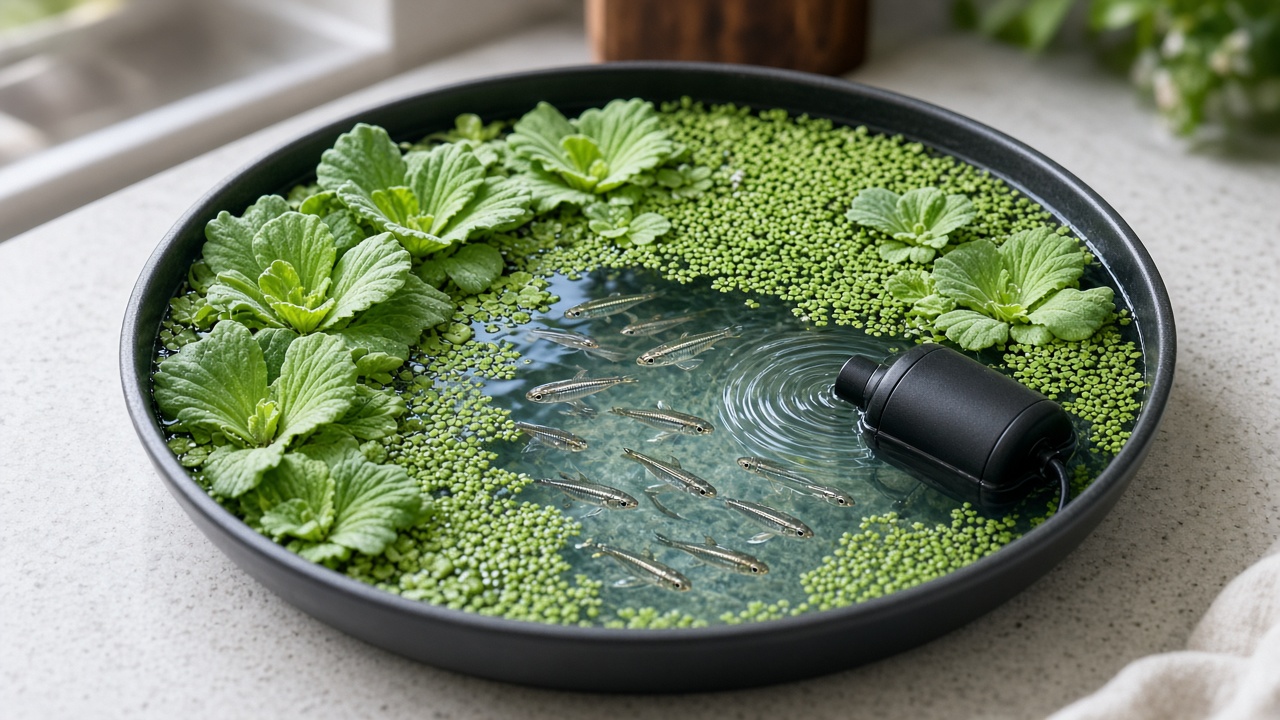
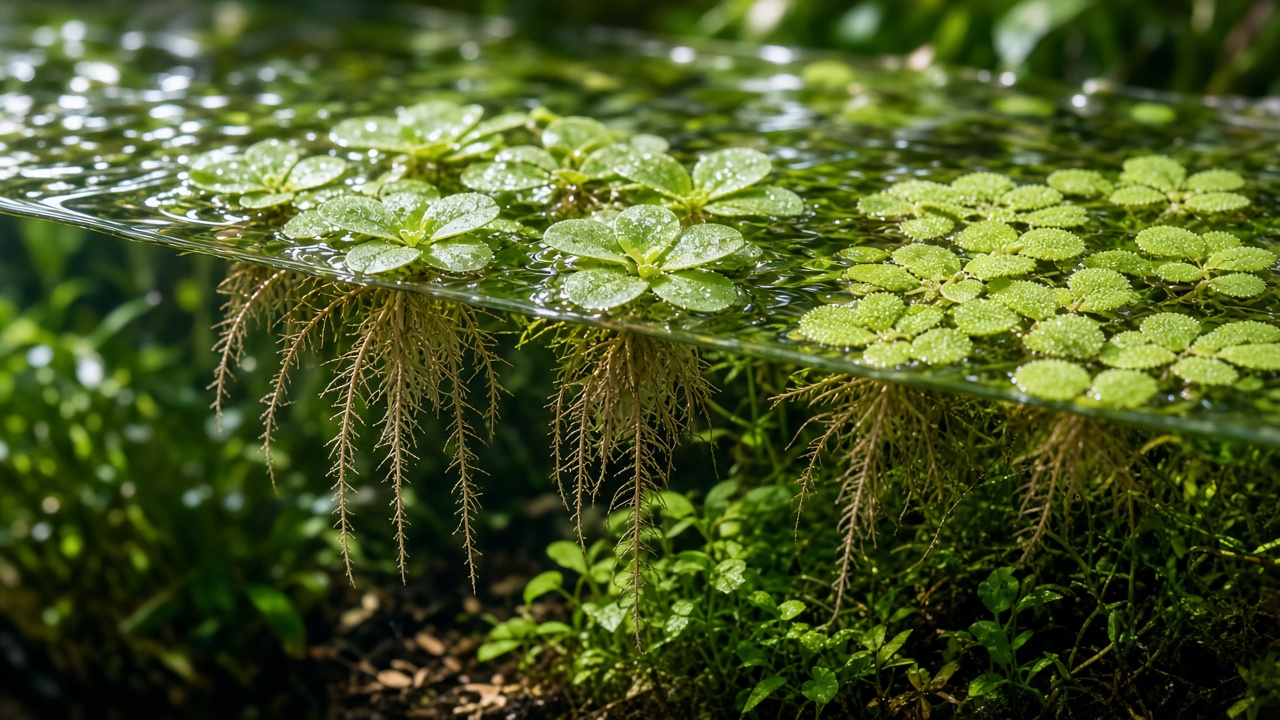
Floating plants sit on the surface and pull food out of the water with hanging roots.
They help water quality in two direct ways: leaves block sunlight that algae need, and roots take dissolved nutrients before algae can bloom.
They also change the pond as a habitat. Shade cools the top water, and long roots give fry and frogs a place to hide.
Pond Plants Online’s Water Hyacinth page is the floating flowering plant we compared in detail. The listing names Eichhornia crassipes and calls it a surface plant.
The same page lists a height of 3 to 6 inches and USDA hardiness zones 10 to 12. It says to add the plants only after water reaches 65 degrees in spring.
Those numbers mark a short tropical plant, and Pond Plants Online says it will not survive winter and should be replaced each year.
The maker page says the trailing roots absorb nutrients and help prevent algae. That is the water-quality job: the plant uses the same dissolved food algae would use.
Shade is the second job. Pond Plants Online says the spread gives cover for fish and frogs, which also cuts the light that turns a pond green.
Pond Plants Online lists 11 states, Puerto Rico, and the City of Chicago as no-ship destinations for Water Hyacinth. The same listing says never to release these plants into public lakes or waterways.
Pond Plants Online’s care page adds a handling rule we used. Float new hyacinths in shade for 2 to 3 days before full sun.
If your state blocks hyacinth, use a hardy lily for surface shade instead. The lily is rooted, not free-floating, but the pads still cut light.
Marginal plants: the shelf that balances the edge
Marginal plants grow in wet soil or a few inches of water at the rim.
They help water quality by taking nutrients at the shoreline, where runoff first hits. They also give frogs, insects, and birds a wet-to-dry edge that open water cannot.
They help ecosystem balance in a third way: flower spikes feed pollinators, and stems break wind and hide the liner.
Pond Plants Online’s Pickerel Rush page lists Pontederia cordata as a summer bloomer with bluish purple flowers. The page lists a height of 36 to 48 inches and a spread of 24 inches.
Place it where the crown stays near the water line. The same page allows moist soil or water up to 8 inches deep for mature plants.
Hardiness is wider than hyacinth: zones 4 to 10, and full sun to part shade. Pond Plants Online also says not to let the roots freeze, and it will not ship Pickerel Rush to California or Arizona.
Pond Plants Online’s care page gives a pot rule for short bog plants. Plants that stay under 12 inches tall can sit in 8-inch-wide containers.
Pickerel Rush grows 3 to 4 feet, so it needs a wider, deeper pot. Keep foliage out of deep water. The care page says most bog plants want wet feet and dry ankles until they are established.
Oxygenators: the plants that work underwater
Oxygenators grow below the surface and do the quiet water-quality work.
They take dissolved nutrients in the water column, not just at the mud line. Pond Plants Online says Hornwort competes with algae for those nutrients and helps keep water clear.
They also add daytime oxygen and shelter, and the same listing says baby fish hide in that dense cover.
Pond Plants Online sells Hornwort (Ceratophyllum demersum) as a bunch. The page says to use one bunch for every 6 square feet of surface.
The same page lists zones 5 to 11, sun to part shade, and a depth of 1 to 6 feet. It also says Hornwort needs some circulation and will not do well in still water.
Our research team found one published mismatch on the same seller. The Hornwort product page allows 1 to 6 feet, but the care page says 1 to 3 feet.
Use the shallower care-page band when you first sink a bunch, and lower it later if the water stays clear.
Pond Plants Online’s 2026 Hornwort note is specific. The seller says wild-harvested Florida stock grew slowly that spring because drought left flows almost still and nutrients very low.
Do not treat oxygenators as a pump. They help in light, but they do not replace a waterfall or aerator on a hot, still night.
How to place a first mix by pond size
Match each layer to a measured surface, then buy only what that math needs.
Our research team compared the published stocking numbers, not pond trials. Pond Plants Online gives Hornwort as one bunch per 6 square feet. William Tricker’s Virginalis page says to allow a 3-foot square of surface per lily.
Use this starter math:
- Measure length and width, then multiply for surface square feet.
- Buy one Hornwort bunch for every 6 square feet.
- Buy one small lily, such as Hermine, when you can spare a 1- to 2-foot pad spread.
- Buy one larger lily, such as Virginalis, only if you can spare a 3-foot square.
- Place Pickerel Rush in moist soil or up to 8 inches of water.
- Add Water Hyacinth only where it is legal and water is at least 65 degrees.
A 6-by-8-foot pond is 48 square feet. That math is 8 Hornwort bunches and room for one Virginalis or two Hermines.
Leave open water so a full green lid does not block gas exchange.
If you already keep shrimp indoors, the same plant-first habit shows up in our shrimp tank setup guide. A pond just adds depth shelves and a winter plan.
Those layer jobs are the reason for the table below. We lined up five currently sold plants, one or two per job, using only attributes their maker pages publish.
Five currently sold plants compared by published specs
This table is an attribute sheet, not a ranking. We compared zones, placement, light, and maker-listed size.
| Plant | Type | Zones | Placement | Light | Maker-listed size |
|---|---|---|---|---|---|
| Water Hyacinth | Floating | 10–12 | Surface float | Full sun to part shade | 3–6 in tall |
| Hermine Hardy Water Lily | Floating-leaved | 3–11 | 6–14 in deep | Full sun to part shade | Pads 3–4 in; spread 1–2 ft |
| Virginalis Hardy Water Lily | Floating-leaved | 3–11 | 8–24 in deep | 6+ hours sun | Flowers about 6 in; spread 3–5 ft |
| Pickerel Rush | Marginal | 4–10 | Moist soil to 8 in | Full sun to part shade | 36–48 in tall; 24 in spread |
| Hornwort | Oxygenator | 5–11 | 1–6 ft deep | Sun to part shade | 1 bunch per 6 sq ft |
Pond Plants Online’s Hermine page is the small-pond lily, with 3- to 4-inch pads and a 1- to 2-foot spread. Mature depth is 6 to 14 inches in zones 3 to 11.
William Tricker’s Virginalis page is the larger white lily. Flowers are about 6 inches, pads are 6 to 8 inches, and spread is 3 to 5 feet at 8 to 24 inches of depth.
The Tricker page says to plant one lily per 4- to 5-gallon container and give it 6 or more hours of sun.
In the Waterpuppy 2026 Pond Plant Spec Count, 4 of these 5 SKUs publish a numeric depth range. Only Water Hyacinth is listed as a surface float with no inch band.
Zone span is the other split. Hermine and Virginalis both list zones 3 to 11, while Water Hyacinth lists only zones 10 to 12. That is an 8-zone gap on the cold end.
Do not pick from the table by looks alone; pick the row that matches your legal state, shelf depth, and winter low.
First-season care without guesswork
Follow the seller’s published steps, then put the repeat jobs on a calendar.
Pond Plants Online’s care page says new plants can look dry after shipping, so remove them from the bag at once. Hold them in shade and water for 2 to 3 days before full sun.
Use this potting mix from the same care page:
- 30 percent calcined clay
- 40 percent topsoil
- 30 percent sand
Skip bagged potting soil, because Pond Plants Online says it is too light and will float out.
For hardy lilies, the care page says to set the tuber at a 45-degree angle and leave the growing crown uncovered. Fill the pot to about 2 inches from the rim. Start the pot 6 to 20 inches under the surface.
William Tricker’s Virginalis page fits that band. It lists 8 to 24 inches of water over the plant.
Pond Plants Online says to feed hardy lilies with 4 fertilizer tablets. Repeat every 2 to 3 weeks from the first growing month until September 1.
Sink Hornwort as soon as it arrives, and weight the bunch or set it in 1/8-inch pea gravel as the care page says.
Put thinning, dead-pad pickup, and hyacinth harvest on a pond maintenance schedule. Floaters can seal a small pond in warm weeks.
Never release extras into a creek, lake, or storm drain. If a seller will not ship a plant to your state, treat that as a hard no.
FAQ
How many pond plants does a backyard pond need?
Start with the published density rules, not a guess. Pond Plants Online lists one Hornwort bunch per 6 square feet. William Tricker lists a 3-foot square of surface for one Virginalis lily.
Can I use only floating plants?
You can, but you lose two jobs: underwater nutrient take-up from oxygenators, and the wet-edge habitat that marginals give insects and frogs. The Three-Layer Pond Plant Rule still needs all three jobs.
Will Water Hyacinth come back after frost?
Pond Plants Online says Water Hyacinth will not survive winter. The listing says to replace it each year. The same page lists zones 10 to 12 only.
Are these plants safe around goldfish and koi?
We are a research desk, not a clinic. Maker pages for Water Hyacinth and Hornwort say the plants give shade or hiding spots. Pond Plants Online’s care page also says lilies do not grow with koi in nature. Establish young lilies away from large fish first.
When should I add plants in spring?
Pond Plants Online says to add Water Hyacinth only after the water is 65 degrees. William Tricker’s Virginalis shipping table starts at the end of April for Florida, Louisiana, and Texas. Wait for that water temperature, not a calendar date alone.
What if my state bans a plant I wanted?
Skip that SKU. Pond Plants Online lists 11 states, Puerto Rico, and the City of Chicago as Water Hyacinth no-ship zones. The same seller will not ship Pickerel Rush to California or Arizona.
Do floating plants need soil?
No. Pond Plants Online lists Water Hyacinth as a floating surface plant. The care page says to float it in shade for 2 to 3 days, then set it on open water. Rooted lilies and pickerel still need heavy soil in a basket.