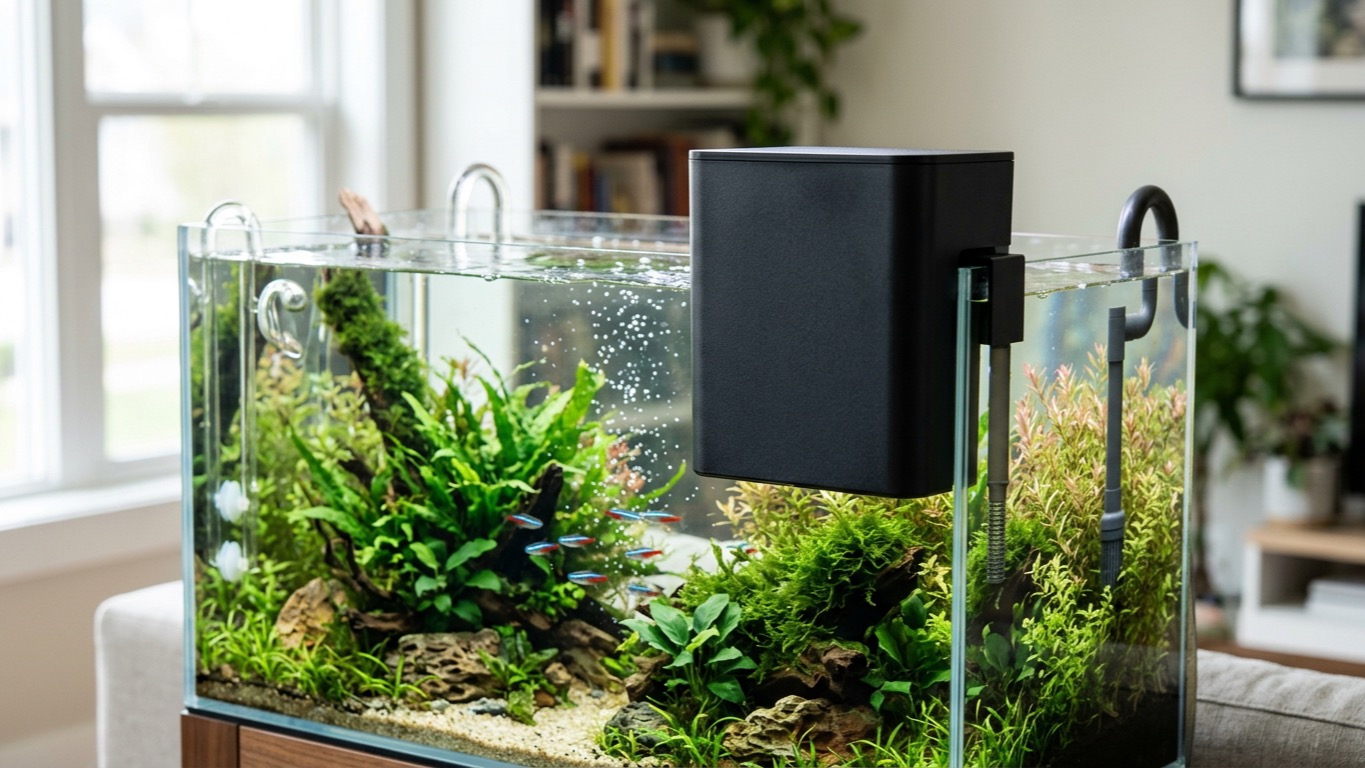
We do not run a water lab. WaterPuppy is a hobby research desk, not a veterinary practice and not an analytical chemistry lab. This page is a printable target sheet for a freshwater tank. The numbers come from what liquid-kit makers print as “safe” and from the jobs those tests are sold for. They are not a species prescription. A discus, a cherry shrimp, and a rift-lake mbuna do not want the same pH.
The useful question is not “what is the perfect pH.” It is: ammonia and nitrite at 0 in a stocked tank, nitrate low enough that you change water on purpose, pH and hardness stable for the animals you actually keep.
If you do not own a kit that can read ammonia, buy that first. The tool page is freshwater test kits. If the tank is new, the timeline is how long to cycle a fish tank — 4–8 weeks is the hobby window we already published, not a 2-week myth.
Print this block
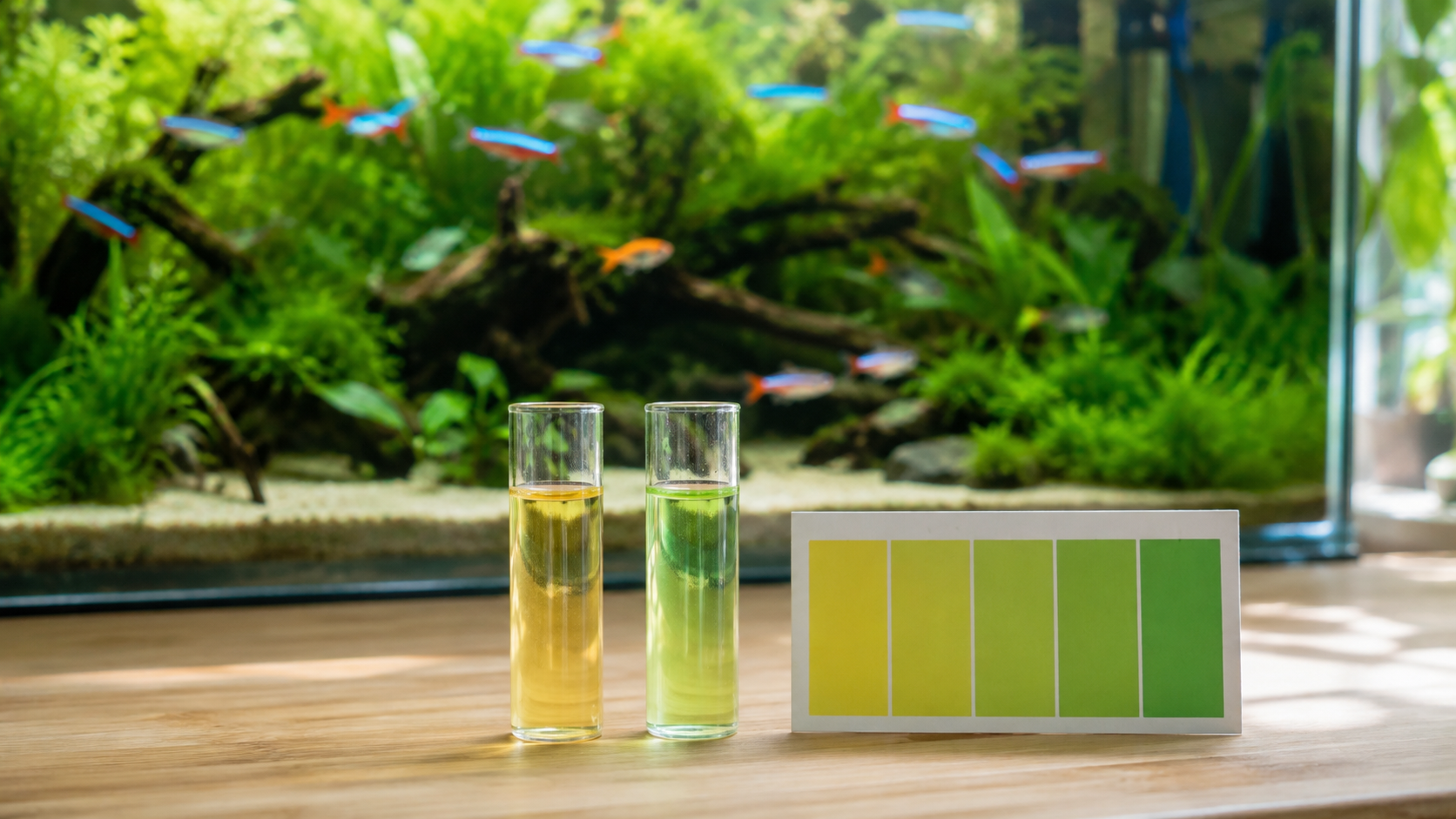
Write today’s numbers in ink. Test in daylight. If a color sits between two boxes, treat it as the worse one.
Date: ______ Tank: ______ gallons / liters. Stocked? Y / N
| Parameter | Stocked, cycled freshwater — treat as | During a fishless cycle | If it is not that |
|---|---|---|---|
| Ammonia (NH₃/NH₄⁺) | 0 ppm | You are dosing ammonia on purpose so bacteria have food. That is not a stocked-tank number. | Any color above 0 in a tank with fish: partial water change now. Find the source (dead animal, overfeed, crashed filter). Do not add livestock. |
| Nitrite (NO₂⁻) | 0 ppm | Rises after ammonia, then should fall to 0. | Same as ammonia: change water, stop adding animals, keep testing. Nitrite still binds oxygen in blood. |
| Nitrate (NO₃⁻) | Keep it modest. Kit cards commonly treat under ~40 ppm as the “do a water change” line; many keepers aim under 20 ppm, and sensitive shrimp/discus often want lower. Plants can pull it toward 0 — that can be fine. | Should appear and rise as the cycle finishes. 0/0 ammonia and nitrite with no nitrate yet is not proof you are done. | Above the line you chose: larger or more frequent partial changes. Less food. Do not “reset” the tank with a 100% dump. |
| pH | Stable for your tap + your species. Community cards often sit around 6.5–7.5. Rift-lake cichlids run higher. Soft-water South American fish run lower. | Match the water you will keep, not a forum number. | A crash or a daily swing is usually a KH problem, not a pH-down bottle problem. Test KH before you chase pH. |
| GH (general hardness) | Species band. Livebearers and many rift cichlids want harder water. Soft-water tetras and many Caridina shrimp want softer. | Set it with your source water (tap vs RO vs mix) before you add animals. | Wrong GH is a long-term mismatch, not a 10-minute emergency the way ammonia is. |
| KH (carbonate hardness) | Enough buffer that pH does not yo-yo. Many community tanks sit in the mid single-digit dKH range. Shrimp and planted RO tanks can run lower on purpose. | If KH is near 0, pH can fall hard as the cycle produces acid. | pH that will not stay put: test KH. Heavy RO, rainwater, or a forgotten water-change schedule are the usual causes. |
Chlorine / chloramine are tap problems, not tank-cycle numbers. Treat new tap water with a conditioner before it hits livestock. A strip that reads chlorine is a tap check, not a cycle check.
What the six numbers actually are
Ammonia is the first waste toxin — fish gills, uneaten food, a dead body. In a stocked tank the only honest target on a hobby liquid kit is 0. API’s own freshwater master kit is sold to read ammonia, nitrite, nitrate, and pH for that reason. A strip bottle that skips ammonia is the wrong tool for a new tank. We already said that on the test-kit page.
Nitrite is the middle step. Still toxic. Stocked target is 0.
Nitrate is the end of that chain. Less acutely toxic, still a reason to change water. Plants use it. Algae use it. A kit that cannot see nitrate will not tell you whether the last bacteria are actually working.
pH is how acidic or alkaline the water is. Stability beats a trophy number. Do not chase 7.0 with daily acid if your tap is 7.6 and your fish are fine.
GH is dissolved calcium and magnesium (plus some other divalent ions). It is why a “soft water” tetra and a molly are different purchases.
KH is the carbonate/bicarbonate buffer. It is why pH holds still — or does not.
We are not naming a single “perfect” GH/KH pair. That is how people kill shrimp with a rift-lake buffer.
How to read a liquid kit without inventing a lab
- Daylight, not an RGB phone flash on the card.
- Hold the tube at eye level against the card.
- Shake the bottles the instructions name. Nitrate bottle #2 on API’s kit is the one people under-shake.
- Write the open date on the box. Expired reagent is a fake 0.
- Test the tank, not the tap, when you are asking about the cycle. Test the tap when you are asking why KH is 0.
Strips are a later weekly glance on a tank that already reads 0/0 on liquid ammonia and nitrite. They are not how you cycle. Details stay on the kit page.
When the number is the emergency
Now (stocked tank): any ammonia above 0, any nitrite above 0, gasping, red gills, a filter that was unplugged, a dead fish you just found. Partial change with conditioned water that matches temperature. Do not dose a “miracle bacteria” bottle and walk away. Do not add more fish.
This week: nitrate climbing through 40, pH that moved more than you expected between two tests, KH that fell to a smear of color. Change more water, feed less, check whether you have been topping off with RO and never adding hardness back.
Not a number problem: a fish that will not eat, sits in a corner, or has clamped fins after the water tests 0/0/low nitrate. Test anyway — then look at stocking, temperature, and a real fish veterinarian or an experienced livestock shop. We are not that clinic.
Cycle vs stocked — do not mix the columns
A fishless cycle creates ammonia on purpose so bacteria grow. That column is not permission to leave ammonia in a tank that already has fish. The cycling article is the 4–8 week timeline. This sheet is the readout.
You are done cycling when ammonia is 0, nitrite is 0, and nitrate is present after you have stopped dosing, and those zeros hold. One lucky test is not a cycle.
Modern papers describe more than the two Latin names hobby copy still uses (ammonia-oxidizing and nitrite-oxidizing bacteria, not only “Nitrosomonas then Nitrobacter”). You do not need the Latin to read a test tube. You need 0/0 and a nitrate that exists.
Species bands (starting points, not a shopping list)
| If you keep | Do not treat “community 7.0” as the law |
|---|---|
| Community tetras, rasboras, corys | Neutral-ish pH, modest GH, 0/0, nitrate kept down |
| Livebearers (guppy, molly, platy) | Harder, more alkaline tap is often closer to what they want |
| Rift-lake mbuna / haps | Higher pH and hardness; a KH crash is still a crash |
| Soft-water Amazon / discus | Lower pH and GH on purpose; mix RO with a plan, not by accident |
| Neocaridina shrimp | GH/KH in the maker’s band; nitrate lower than a dirty goldfish tank |
| Caridina shrimp | Softer, tighter band; this sheet is not a bee-shrimp recipe |
| Goldfish / heavy waste | Same 0/0 rule, more nitrate pressure — water changes, not a bigger bottle of pH-up |
Match the fish to the water you can actually keep. Do not fight your tap every Sunday.
What this sheet will not do
- It will not pick a brand of kit. That is the test-kit page.
- It will not tell you the tank is cycled because the water looks clear.
- It will not replace a water change with a bottle of “complete water care.”
- It will not diagnose a sick fish from a pH number.
Print the table. Test in daylight. If the tape (the kit) and a forum chart disagree, keep the kit.
Frequently Asked Questions
What should my aquarium water parameters be?
In a stocked, cycled freshwater tank: ammonia 0, nitrite 0, nitrate low enough that you are changing water on purpose, pH and hardness stable for the species. There is no one pH that is “correct” for every fish.
Is 0.25 ppm ammonia “basically zero”?
No. On a hobby card, 0.25 is the first color that is not 0. Treat it as ammonia. Change water. Do not add fish.
How often should I test?
Daily (ammonia and nitrite) while cycling or after a death, a medication, or a filter crash. Weekly on a stable stocked tank is the usual habit. pH/GH/KH can be less often once you know the tap — until something swings.
Can I skip GH and KH?
You can skip them on a plain community tank that never moves pH — until the pH moves. Shrimp, livebearers, African cichlids, and RO users should own the GH/KH drops. That kit is an add-on, not a replacement for ammonia.
Does this apply to saltwater?
No. This sheet is freshwater. Reef and FOWLR have their own tests (salinity, alk, calcium, magnesium). Do not use these numbers on a reef.
Sources
- API Freshwater Master Test Kit — manufacturer parameter list (ammonia, nitrite, nitrate, pH / high-range pH) and the 0 ppm ammonia / 0 ppm nitrite use those kits are sold for
- API GH & KH Test Kit — manufacturer description of general and carbonate hardness as add-on tests, not as an ammonia replacement
- WaterPuppy, freshwater test kits (liquid vs strips; ammonia is the cycling job): https://www.waterpuppy.net/articles/best-freshwater-aquarium-test-kit/
- WaterPuppy, cycling timeline (4–8 weeks; 0/0 plus nitrate): https://www.waterpuppy.net/articles/how-long-to-cycle-a-fish-tank/
- Aquarium Care hub: https://www.waterpuppy.net/category/aquarium-care/
Last reviewed: August 2026. Initial publication. We will revise if kit makers change the cards they print as safe, or if the cycling or test-kit pages on this site change their jobs.