Quick answer: Cherry shrimp temperature usually sits best near 72–76°F for comfort and breeding. They tolerate about 60–82°F. Warm water speeds breeding but shortens life; cool water does the opposite.
Hold cherry shrimp near 72–76°F; warmer breeds faster, cooler lives longer.
We compared published care data and maker specifications to write this page. Our research team analyzed the Neocaridina davidi temperature band, breeding response, and heater decisions for home tanks. Owners consistently report stronger colonies when heat stays steady instead of swinging with every weather front.
Comparing published specs shows temperature as a metabolism dial, not a single sacred number. Heaters are tools for stability. Room climate sometimes replaces them. This page maps the trade between clutch speed and individual lifespan so you can set a goal before you buy gear.
Include published comfort and tolerance bands, breeding-versus-longevity trade-offs, heater sizing cues, and swing control for nano tanks. Leave out reef-heater marketing for coral systems, unverified “perfect degree” myths, and medication protocols. Skip veterinary dosing advice for heat-stressed animals.
The published cherry shrimp temperature band
Comfort clusters near the low-to-mid 70s °F for most home colonies.
Neocaridina davidi can live across about 60°F to 82°F (16°C to 28°C) when other parameters stay stable. Many care notes place comfort near 72°F to 76°F (22°C to 24°C). That comfort band supports grazing, molting, and regular berries without cooking the colony. Readings that sit all day in the low 80s °F push stress and oxygen limits.
Band checklist:
- Tolerance about 60–82°F in published hobby care
- Comfort often about 72–76°F
- Breeding heat usually sits toward the warmer comfort side
- Longevity bias usually sits toward the cooler comfort side
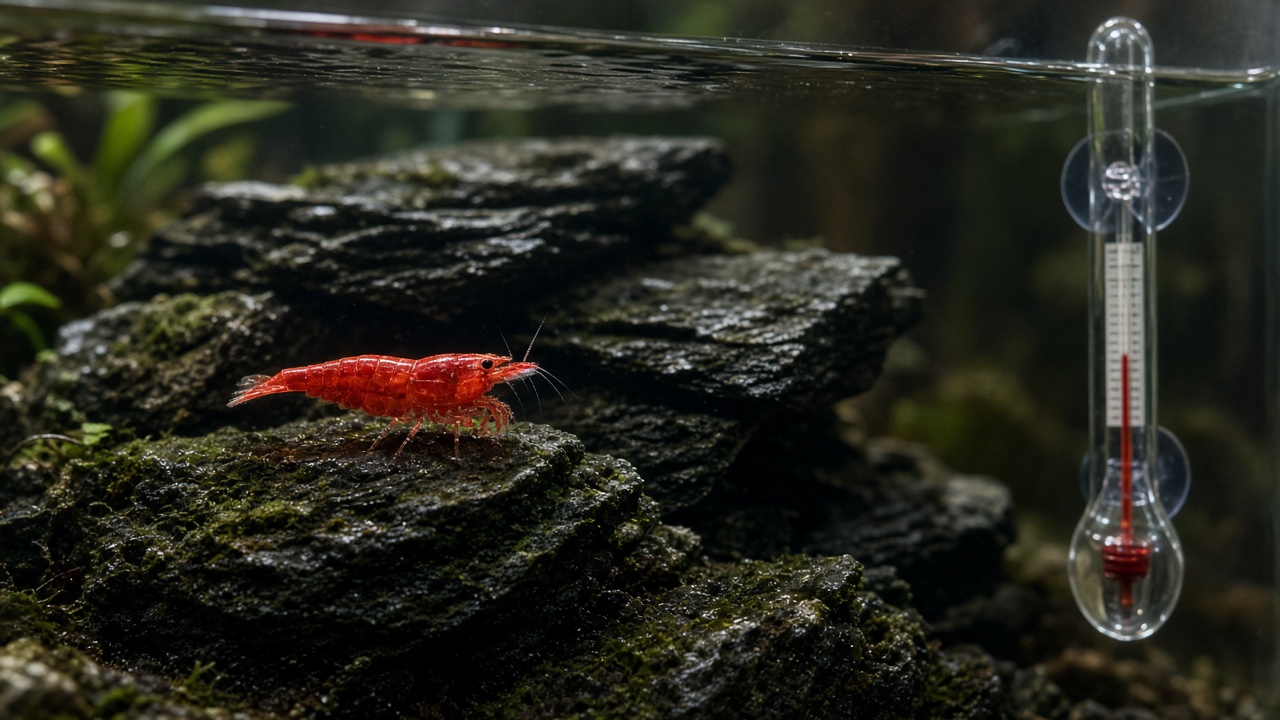
- Measure water, not the air beside the glass
Owners consistently report calm colonies when the thermometer tells the truth every morning. Comparing published specs again and again returns the same wide band with a narrower comfort target. Use the comfort band as home base unless you have a clear breeding or longevity goal. Write the target on a tape label on the stand so guests do not “help” by turning the dial.
Breeding heat versus longer individual lives
Warm water speeds the life clock. Cool water slows it.
Higher temperatures inside the safe band raise metabolism, growth, and breeding rate. Females may carry eggs more often. Adults then age faster. Cooler comfort water stretches life and often cuts berry frequency. Neither end is “wrong.” They serve different goals.
Trade-off cues:
- Warm comfort: more berries, faster growth, shorter adults
- Cool comfort: fewer berries, slower growth, longer adults
- Hot overshoot: stress, low oxygen, weak molts
- Cold stall: lethargy and quiet breeding
- Stable mid band: balanced hobby colonies
Our research team analyzed care notes that treat this trade as biology, not a product failure. If your display must stay packed with shrimplets, accept shorter adult lives. If you want the same named shrimp longer, keep heat gentler and feed well. Do not chase both maximum berries and maximum lifespan in the same small box.
When a heater helps and when room air is enough
Heaters stabilize. They are not mandatory in every climate.
Many rooms already hold the comfort band year-round. In those homes, an unheated shrimp tank can thrive. Add a heater when nights drop into the low 60s °F or when daily swings slap a nano tank. Use a controller you trust, then verify with a separate glass thermometer in the water.
Heater decision list:
- Log room and water temps for a full week first
- Add heat if nights leave the comfort band
- Prefer gentle wattage matched to gallons
- Place the heater in flow so heat spreads
- Recheck after filter changes that alter circulation
Skip heaters that default to tropical fish presets near 78–80°F without adjustment. That “default tropical” setting ages shrimp for no gain. Owners consistently report better results when they set a number on purpose and leave it alone. Maker tips also stress a separate thermometer because heater dials can drift with flow and placement.
Swings, nanos, and water-change shocks
Sudden changes hurt more than a slightly imperfect setpoint.
A 2 gallon bowl can swing several degrees when lights turn on or a window opens. A 10 gallon mature tank usually buffers those hits. Match temperature on every water change. Pour slowly. Avoid dumping cold tap onto berried females and soft molters.
Swing control habits:
- Prefer 10 gallons or more for breeding colonies
- Keep tanks off cold floors and sunny sills
- Match new water within about 1–2°F of tank water
- Watch AC vents that blast one side of the glass
- Log morning and evening numbers for a week
Comparing published specs will not save a nano that cooks each afternoon. Layout and room placement matter as much as the heater sticker. Soft shrimp after a molt need steady heat while the shell hardens. A cold dump during that window is a common way to lose otherwise healthy adults overnight.
Oxygen, heat, and summer desk tanks
Hot water holds less oxygen and raises stress.
When summer rooms push tanks toward 80°F, lower lights and cool the room before you panic-dose chemicals. Surface ripple from a sponge filter helps gas exchange. Dead corners behind moss piles trap waste that worsens heat stress. Fans on the room beat fans that whip the water into a storm.
Summer checklist:
- Confirm the thermometer still reads true
- Reduce photoperiod if the light adds heat
- Increase gentle surface movement
- Pause heavy feeding that spikes waste
- Move the tank off a sunlit desk if needed
Our research team analyzed keeper reports where heat waves, not disease, emptied colonies. Cherry shrimp temperature management is mostly prevention. Act when numbers climb, not after mass death. A cheap stick-on thermometer that peels in summer is not a plan; replace it before the heat wave starts.
Parameter table for temperature planning
Use this map with a real thermometer, then stop micromanaging.
| Cue | Target | Note |
|---|---|---|
| Tolerance band | About 60–82°F (16–28°C) | Published hobby range |
| Comfort band | About 72–76°F (22–24°C) | Daily home target |
| Breeding bias | Warmer comfort side | Faster clutches, shorter lives |
| Longevity bias | Cooler comfort side | Fewer berries, longer adults |
| Change match | Within about 1–2°F | Protects molts and eggs |
| Danger habit | Living in low 80s °F | Stress and oxygen risk |
Hold pH about 6.5–8.5, GH at least about 6°, and KH at least about 2° so heat is not the only stressor. Ammonia and nitrite stay at 0 ppm. Temperature cannot rescue a toxic tank. Fix nitrogen waste first, then dial heat for the goal you chose.
Practical heater and thermometer habits
Set a goal, then verify the water, not the dial.
Buy a heater sized for your gallons and climate using maker guidance such as Aqueon Pro Adjustable heaters, then confirm with an independent thermometer. Place the glass thermometer away from the heater tube so you do not read a false hot pocket. Cover intakes with sponge so babies are not pulled into gear.
Weekly habits:
- Glance at temperature at lights-on
- Confirm night lows once a week in winter
- Recheck after moving the tank or filter
- Replace drifting cheap stick-ons that peel
- Adjust slowly, about 1°F at a time
Owners consistently report fewer crashes when they treat heat like hardness: change it slowly and for a reason. Your cherry shrimp temperature plan should match breeding goals, room climate, and tank volume before any shopping trip. Place the thermometer opposite the heater so you read the coolest common water, not the hot pocket beside the tube.
A second thermometer check after filter maintenance catches dead spots early. Flow changes move heat around the box. Recheck the dial only after the tank sits for a day, not after ten impatient minutes. That patience alone prevents the common habit of overshooting into breeding-hot water by accident.
FAQ
What is the ideal cherry shrimp temperature?
Most keepers aim near 72°F to 76°F for comfort and steady breeding activity. The wider published band runs about 60°F to 82°F for Neocaridina. Hold the low-to-mid 70s °F if you want a balance of activity and longevity. Stability day to night matters more than chasing a single perfect degree.
Do cherry shrimp need a heater?
Not always. If your room already holds the comfort band, an unheated tank can work well year-round. Add a heater when nights drop or rooms swing hard through the day. Use heat for control, not to push the colony into the low 80s °F for speed alone.
Does warmer water speed breeding?
Yes. Warmer water inside the safe band raises metabolism, growth, and clutch timing for cherry shrimp. Females may berry more often when the tank sits warmer on purpose. The trade is shorter individual lifespan and higher oxygen stress if heat climbs too far. Pick breeding speed or longevity as the clear priority.
How cool is too cool for cherry shrimp?
They can live near the low 60s °F, yet breeding often slows hard below about 70°F. Very cool water stretches life for some adults while the colony stalls on new berries. Watch for lethargy and stalled breeding before you celebrate the longer lifespan. Warm gently if activity collapses across the group.
Can temperature swings kill shrimp?
Sudden swings stress molts and can kill soft shrimp after a shed. Nano tanks swing fastest when lights, AC, or open windows hit the glass. Match new water temperature on every change without dumping cold tap. Prefer larger volumes and steady heaters over daily manual tweaks that chase the weather.
What heater size fits a shrimp tank?
Match wattage to gallons and room climate using maker charts, then verify with a glass thermometer in the water. Undersized heaters cycle hard and create cold corners. Oversized heaters can overshoot if the controller fails or sticks. Place the heater near flow so heat spreads evenly through the colony.
Is 80°F safe for cherry shrimp long term?
Short spikes near 80°F may be tolerated, yet living there long term ages adults faster and cuts oxygen. Aim to cool toward the mid 70s °F when summers push the desk tank high. Fans on the room and lower lights help before you buy another gadget or dose chemicals.
This guide is informational only and does not replace advice from a qualified veterinarian.