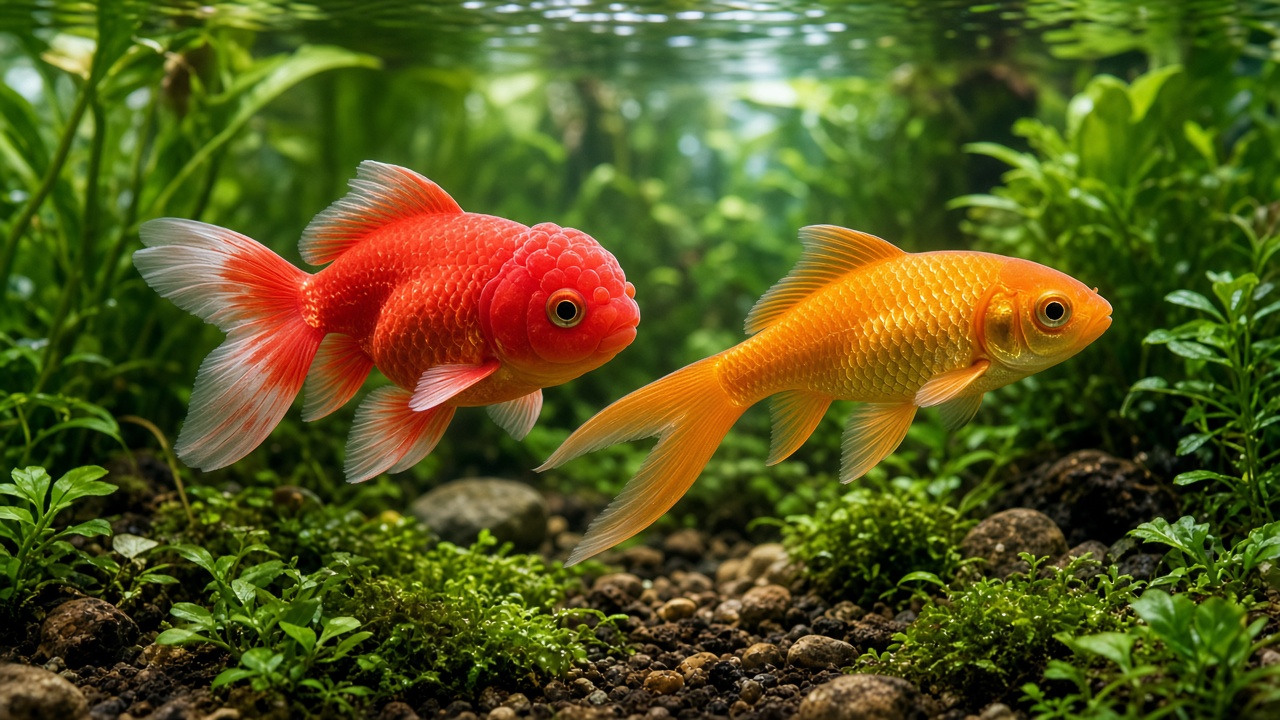
Quick answer: Pick one Malawi group and build the tank around it. Mbuna need rock cover and plant-heavy food, while peacocks and haps need open water and higher-protein food. Mixing mbuna with those two groups is a common stocking error.
Home shops sell African cichlids as three Malawi types: mbuna, peacocks, and haps. This page is a desk comparison of published UNESCO lake facts and current maker labels.
Selection rule: Our research team analyzed only Lake Malawi trade groups that US shops sell as African cichlids. We left out Lake Tanganyika species, Victorian haplochromines, Central American cichlids, and unnamed hybrid mixes.
We call that cut the One-Group Rule: pick one lane, then match rock, sand, food, and minerals to it.
How shops group African cichlids
Trade names mark habitat and diet, not one scientific family.
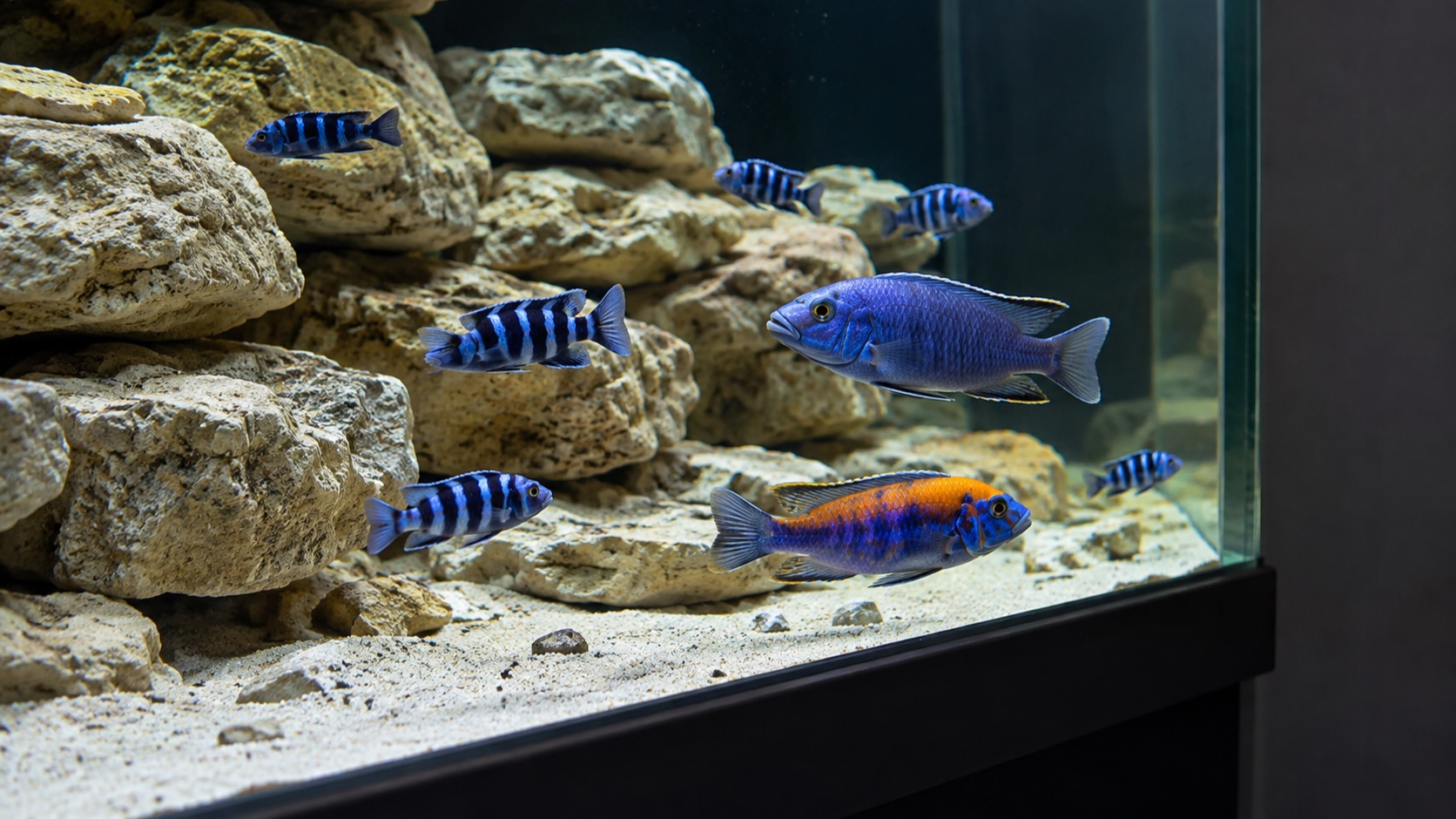
Shops use three buckets because these fish do not share one way of life. Mbuna hold rock, peacocks work the sand line, and haps cruise open water.
UNESCO’s World Heritage listing for Lake Malawi National Park names the rock fish as mbuna. That listing says all but five of over 350 mbuna species are endemic.
The same listing says the lake holds 30% of all known cichlid species and estimates up to about 1,000 fish species. The park covers 94.1 km2, and 7 km2 of that area is water.
Use the groups this way:
- Mbuna: rock-dwelling, plant-grazing, high-territory fish
- Peacocks: sand-zone hunters sold for male color
- Haps: open-water swimmers that often grow larger
Do not treat the three labels as one community mix, because that mix is the error this page is built to stop.
Mbuna: the rock-dwelling type
Mbuna are the compact rock fish that UNESCO flags as a core Malawi story.
The word points to rock habitat, not one genus, and shops file yellow labs, zebra types, and other short Malawi fish here.
UNESCO’s listing ties mbuna to rocky shores and to a large endemic set. All but five of those 350-plus species live only in that lake.
In a tank, that history shows up as constant turf fights, as fish claim caves and then chase neighbors off a rock face.
Diet follows the same rock story, because wild mbuna scrape algae and tiny life off stone, and a high-protein daily staple fights that gut plan.
Hikari’s page for Cichlid Excel lists a plant-heavy daily diet, and the guaranteed analysis shows a minimum of 35% crude protein.
That is a lower protein floor than Hikari lists for Cichlid Gold’s mini, medium, and large pellets. Those three sizes list a minimum of 40% crude protein.
Hikari’s Excel page also says to feed two to three times daily. Offer only what fish finish in a few minutes, then remove leftovers.
Mbuna setup cues:
- Stack rock with many caves and sight breaks
- Leave some open paths so fish can flee
- Use a buffering sand, not a soft planted soil
- Keep one mbuna community, not a mixed Malawi mash
Skip live plants that need soft, acidic water, because those soils fight the hard, alkaline targets printed on Malawi labels.
If you want a planted tank instead, read our guide to planted-aquarium substrate.
Peacocks: the sand-zone type
Peacocks are the Aulonocara group sold for color over open sand.
Males carry the bright blues, yellows, and oranges that shops put on the glass. Females stay plainer, and that split is normal for this type.
Peacocks do not hold rock the way mbuna do. They hunt along sand and at the rock-sand edge, so they need open floor and hard, alkaline water.
They do not need a wall of caves that blocks every swim lane. Food is the other split, because peacocks take more animal prey than mbuna, and a plant-only pellet leaves them short.
The baby size of the same line lists a minimum of 32% crude protein. Match pellet size to mouth size.
Peacock setup cues:
- Keep a wide sand field in front of low rock
- Stock more females than males if you keep a harem
- Do not add mbuna “for color” in the same box
- Use a higher-protein pellet than the mbuna plant diet
CaribSea’s freshwater substrate page lists African Cichlid Mix Sahara Sand at 0.5–1.5 mm. The same page lists an average density of 92 pounds per cubic foot.
That bag size is 20 lb, and fine sand fits peacock sifting better than chunk rock gravel.
Haps: the open-water type
Haps are the larger open-water Malawi fish sold under many genus names.
The shop word “hap” is a leftover from older Haplochromis labels. Many of those fish now sit in other genera, but the tank need did not change.
Haps want swim room and do not live in a rock pile the way mbuna do. A cave wall that fills the tank is the wrong map for this group.
Many haps also grow past peacock size, so a small peacock can become food or a target later. That size gap is a stocking problem, not a color problem, and diet sits closer to peacocks than to mbuna.
Do not feed haps the same plant-heavy plan you use for mbuna and hope it balances. Two feeding plans in one tank usually means one group loses.
Hap setup cues:
- Give a long, open midwater lane
- Use rock as a back wall, not a maze
- Keep hap-with-hap or hap-with-peacock, not hap-with-mbuna
- Plan for a bigger adult body than a typical mbuna
If waste climbs, raise flow and cleaning, not stocking, and our hang-on-back filter guide covers that hardware class.
Water chemistry from maker labels
Malawi water on current labels is alkaline, hard, and dosed by the gallon.
Seachem’s Malawi/Victoria Buffer page says the blend holds pH from 7.8 to 8.4. It raises KH, and the same page says it does not raise GH.
The same page doses 6 g, or one level teaspoon, for each 10 to 20 US gallons. Repeat each day until pH holds, then use the mix about once every two to three weeks.
Seachem’s Cichlid Lake Salt page sets GH, not pH, and the Malawi dose is 5.5 g, or 3/4 teaspoon, per 10 US gallons.
That Malawi dose raises dGH by 4.4 units, and Seachem lists a Malawi GH target of 4–8 dGH on the same page.
The same salt page lists a Tanganyika dose of 11 g per 10 US gallons, which is double the Malawi gram dose.
Label doses from those two pages:
- Buffer: 6 g per 10–20 US gallons
- Malawi salt: 5.5 g per 10 US gallons
- Victoria salt: 3.6 g per 10 US gallons
- Tanganyika salt: 11 g per 10 US gallons
Seachem’s salt analysis lists magnesium at a 11.83% minimum, potassium at a 10.08% minimum, and calcium between 3.24% and 3.50%.
Add salt on setup and on water changes, and Seachem says not to dose salt when you only replace evaporated water.
CaribSea’s African Cichlid Mix line is sold as a long-term buffer, and Sahara Sand is one of seven mixes on that page. The same page lists White Sand at 73 pounds per cubic foot, while Sahara Sand lists 92, a 19-pound density gap.
Food and gear that match each type
Food, sand, and filters should follow the group you picked, not a mixed list.
Our research team compared five current labels, and the split on those pages is protein, mineral dose, and grain size.
Hikari Cichlid Excel is the plant-leaning pellet in that set, while Hikari Cichlid Gold is the higher-protein pellet for peacocks and haps.
The protein gap on those two Hikari pages is 5 points, because Excel lists 35% minimum and Gold’s mini through large sizes list 40% minimum.
A high-protein betta diet is built for a different fish, so do not use it as the daily staple for plant-grazing mbuna.
Hikari’s Gold and Excel pages both say to feed two to three times daily. Remove leftovers after the feeding window so waste does not sit.
Gear match by group:
- Mbuna: Excel-style plant pellet, rock caves, buffering sand
- Peacocks: Gold-style higher-protein pellet, open sand, low rock
- Haps: Gold-style higher-protein pellet, long swim lane, back-wall rock
Filters are a waste tool, not a type badge, and overstocked mbuna tanks dump more debris, so you clean more or step up flow.
The planted substrate guide is for tanks that want soft, plant-first water, not a Malawi box.
What our spec comparison showed
The five products below split by protein, mineral dose, and grain size.
We compared published specs only.
| Product | Maker | Form | Listed spec | Stated use |
|---|---|---|---|---|
| Hikari Cichlid Gold (mini, medium, large) | Hikari | Floating pellet | min. 40% crude protein | Daily diet for cichlids that need higher protein |
| Hikari Cichlid Excel | Hikari | Pellet | min. 35% crude protein | Daily diet for herbivorous cichlids |
| Seachem Malawi/Victoria Buffer | Seachem | Carbonate salt blend | pH 7.8–8.4; 6 g per 10–20 US gal | Raise KH and hold pH |
| Seachem Cichlid Lake Salt | Seachem | Mineral salt | 5.5 g per 10 US gal; +4.4 dGH | Set Malawi GH |
| CaribSea African Cichlid Mix Sahara Sand | CaribSea | Sand, 20 lb bag | 0.5–1.5 mm; 92 lb per cu ft | Buffering rift-lake sand |
Hikari’s Gold baby pellet is a separate spec, and that size lists a minimum of 32% crude protein, not 40%.
CaribSea’s Ivory Coast Sand on the same page lists 1.0–2.5 mm grains. That mix is coarser than Sahara Sand.
Use the table as a match sheet, and pair Excel with mbuna. Pair Gold with peacocks and haps, and pair the Seachem doses with water changes.
FAQ
These answers rest on the same UNESCO listing and maker labels used above.
What are the three types of African cichlids sold for home tanks?
US shops sell Lake Malawi fish as mbuna, peacocks, and haps. Those labels track habitat and diet, and they are not three formal family names.
UNESCO’s listing still treats mbuna as the rock-shore set. Peacocks and haps are shop groups for sand-zone and open-water Malawi fish.
Can you mix mbuna with peacocks or haps?
Our One-Group Rule says no for a normal home tank. Mbuna hold rock and eat more plant matter, while peacocks and haps need open water and more protein.
Two feeding plans in one box usually starve one group or bloat the other. Mix inside one group, not across groups.
What pH do Malawi cichlids need?
Seachem’s Malawi/Victoria Buffer page targets pH 7.8 to 8.4. That is the number we use from a current maker label.
Dose 6 g per 10 to 20 US gallons until pH holds. Later doses are usually every two to three weeks.
What should mbuna eat?
Use a plant-leaning cichlid pellet, not a meat-heavy staple. Hikari’s Cichlid Excel page lists a minimum of 35% crude protein and a vegetable-matter diet.
Feed two to three times daily, and only what fish finish in a few minutes. Leave betta pellets for bettas.
Are peacocks and haps the same type?
No. Peacocks are Aulonocara sold for male color over sand, and haps are a wider open-water set that often grows larger.
They can share alkaline water and a higher-protein pellet. They still need a check on adult size before you mix them.
Do African cichlids need special substrate?
They need a sand or mix that supports hard, alkaline water. CaribSea’s Sahara Sand lists 0.5–1.5 mm grains and 92 pounds per cubic foot.
Planted soils aim at a different chemistry. Use those soils only if you are building a planted tank, not a Malawi rock or sand tank.
How do you set Malawi hardness on a label?
Seachem’s Cichlid Lake Salt page uses 5.5 g per 10 US gallons for Malawi water. That dose raises dGH by 4.4 units.
The listed Malawi GH range is 4–8 dGH. Measure GH first if your tap water already carries minerals.