Quick answer: Relaxed axolotls rest, explore slowly, and eat on a steady schedule. Stress often shows as curled gills, odd buoyancy, or appetite loss when water is warm, dirty, or too fast. Fix the tank before you invent a personality problem.
Curled gills, odd floating, and appetite loss often flag stress from heat, waste, or strong flow.
This page is a home-aquarium guide to normal versus stressed behavior in Ambystoma mexicanum. Our research team compared published care sheets.
Selection rule: We include temperature, flow, and stress-linked signs from named care sheets. We exclude wild-collection tips, meme “mood charts,” and drug protocols that need a clinician. We also skip ranked personality quizzes.
What normal axolotl days look like
Healthy animals mix rest with short bursts of motion.
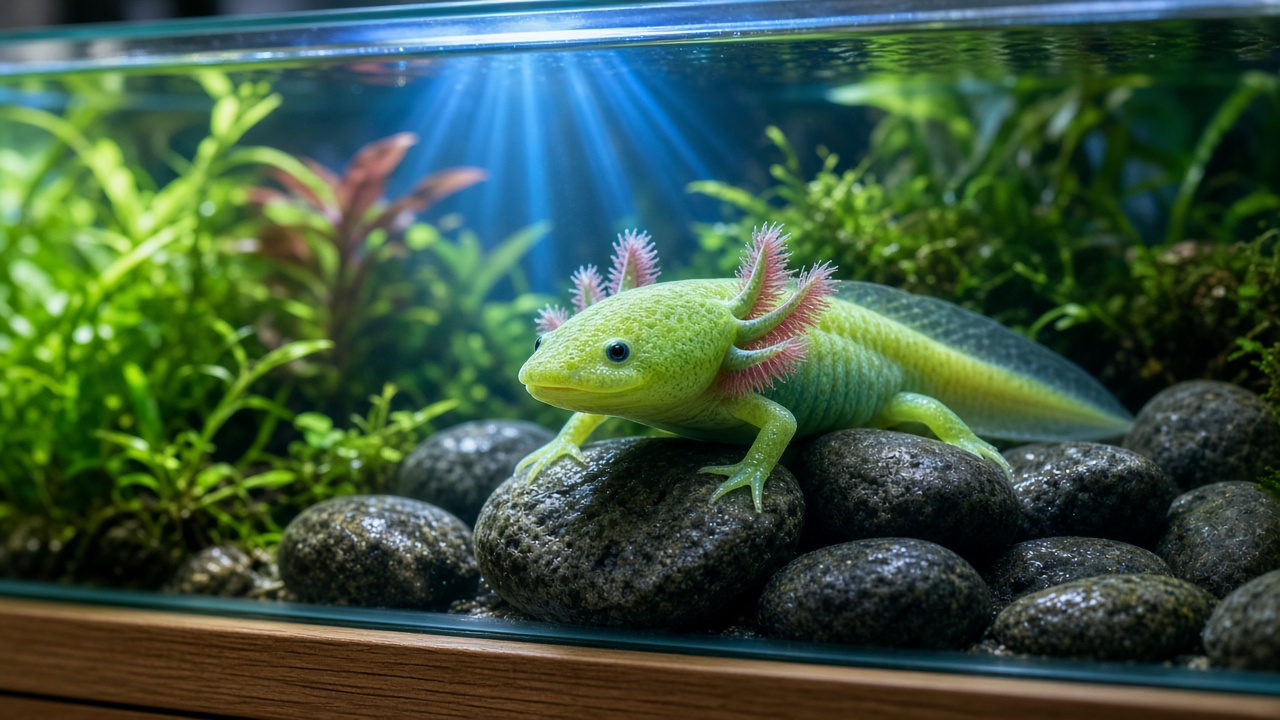
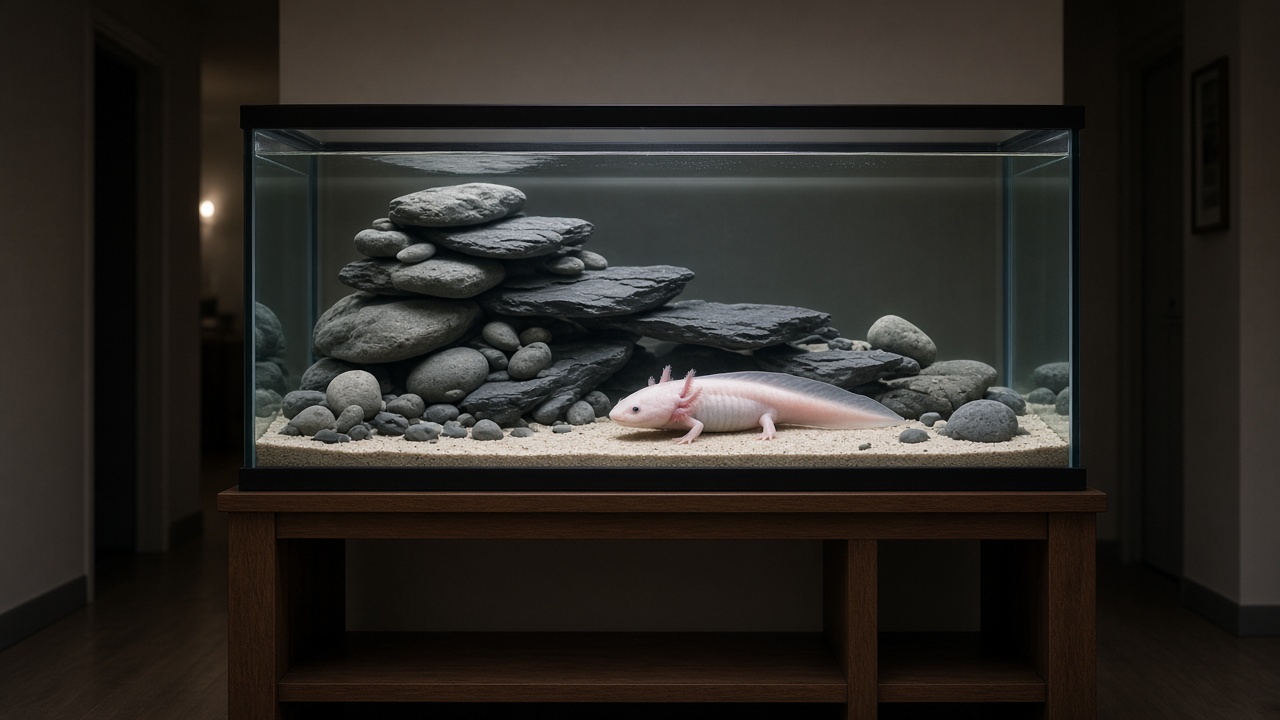
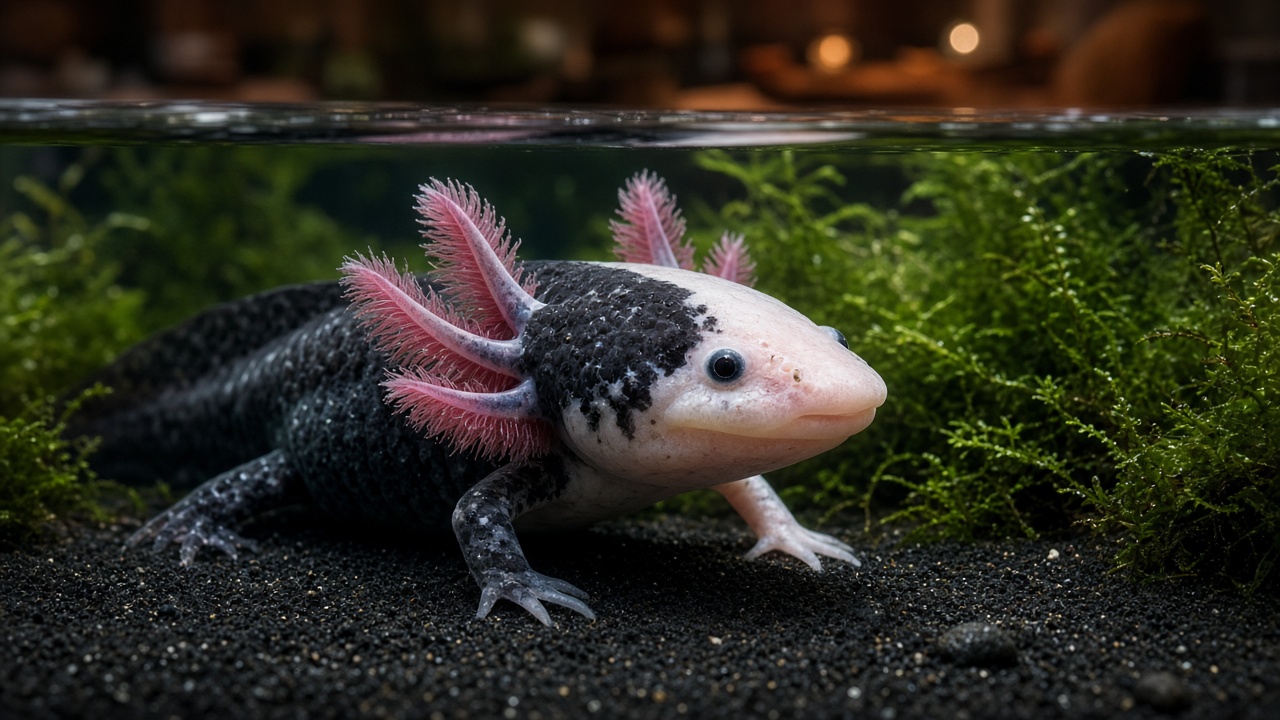
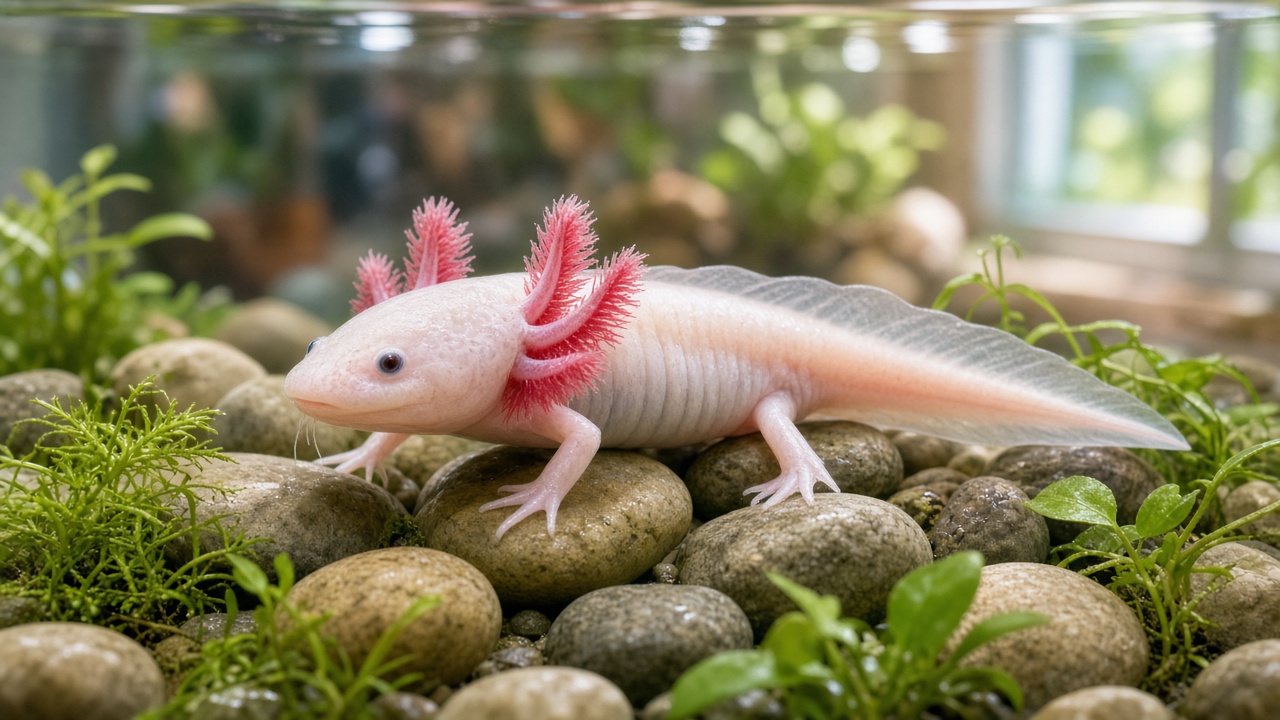
Many axolotls sit still for long stretches, then walk the sand or snap at food. Night activity often rises. External gills usually fan loosely from the head when the animal is calm. A full belly after a good feed and a settled resting spot are ordinary comfort cues. Some animals dig shallow pits; others prefer a cave mouth with a view of the open sand.
Normal behavior checklist:
- Steady interest in food on your usual schedule
- Gills that look soft and feathery at rest
- Short explorations without frantic glass racing all day
- Resting on sand or in a smooth hide
- Quick recovery after a brief water change scare
Stillness alone is not illness. Axolotls conserve energy. The common misconception is that a quiet animal is always dying. Pair stillness with appetite, gill look, and water tests before you panic.
Stress signs you can actually use
Stress usually arrives as a cluster, not one quirky moment.
Forward-curled gills that stay pressed toward the face for hours are a classic worry sign in keeper guides. A tail tip hooked like a question mark often shows up with that posture. Persistent floating that the animal cannot correct is different from a brief post-meal bob. Frantic glass surfing paired with curled gills deserves a water check.
Stress cue list:
- Gills locked forward for long periods
- Hooked or tightly curled tail tip
- Refusal to eat across multiple feeds
- Uncontrolled floating after heat or waste spikes
- Hiding only when lights blast glare
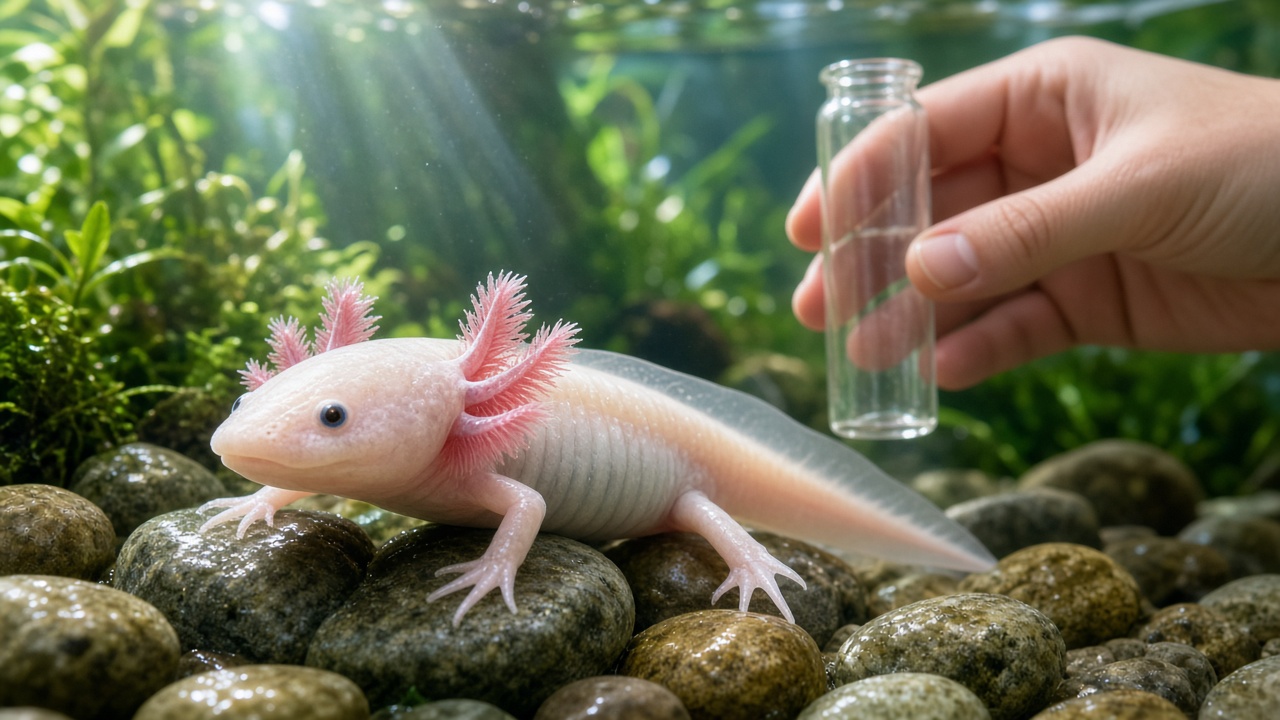
One brief gill flick while watching food is not the same as hours of curled posture. Photograph a baseline when the animal looks good so later changes are clearer. Side shots of gill spread help more than overhead phone blur.
Heat, flow, and water quality as behavior drivers
Most “attitude” problems start in the water column.
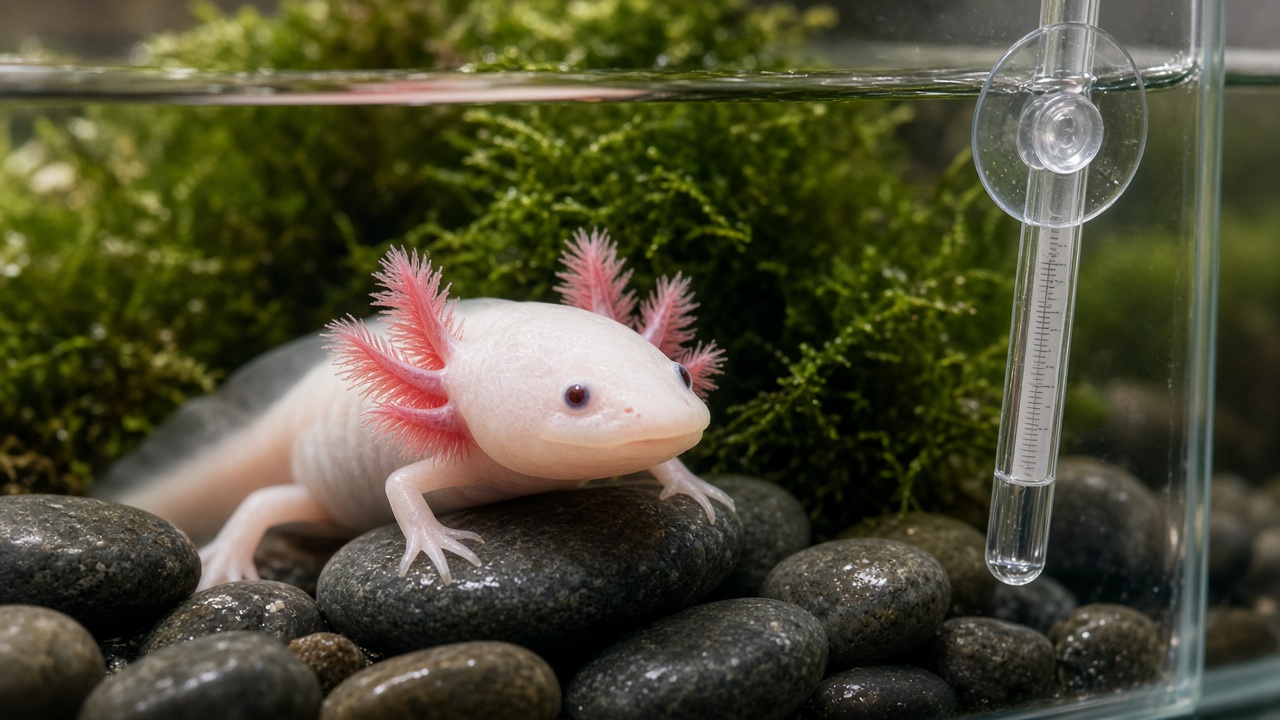
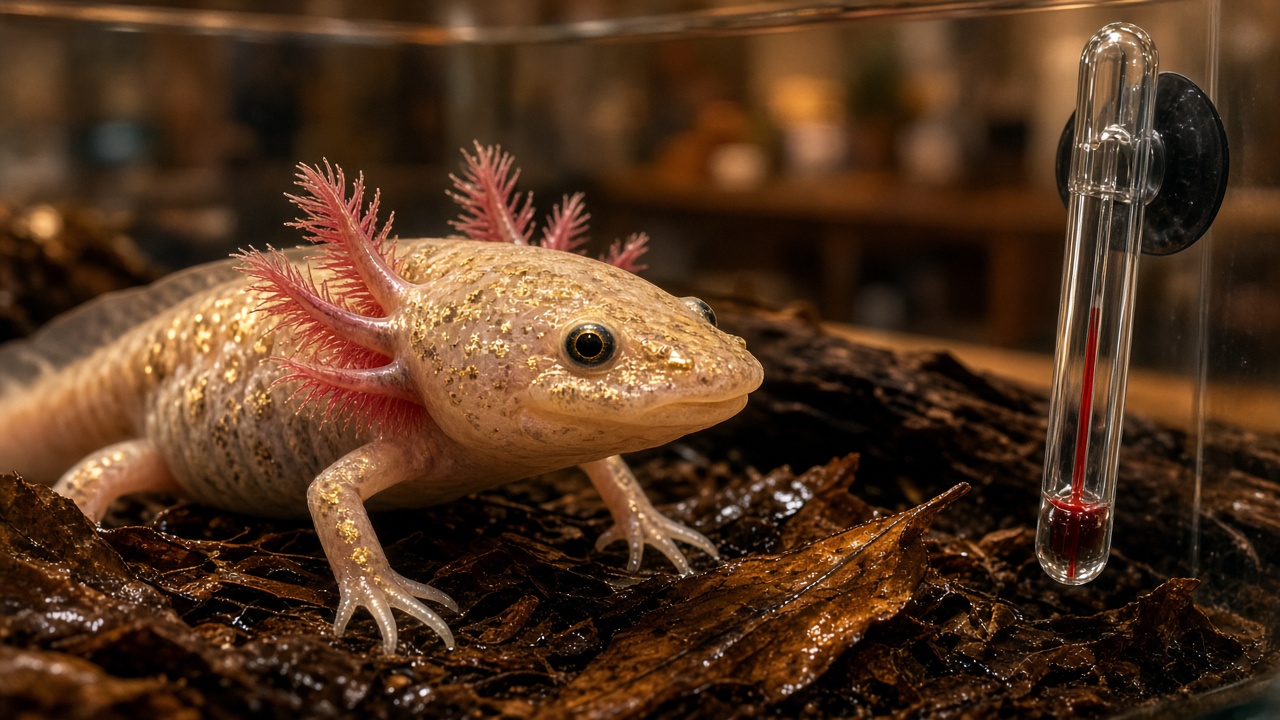
LafeberVet prefers about 60–64°F (15.6–17.8°C) and warns that water above 75°F (24°C) brings a high probability of illness. The same care notes link warmer water to loss of appetite and floating. Strong filter current is another stressor; axolotls prefer stagnant to slow water, and a spray bar helps break flow.
Home checks when behavior changes:
- Test ammonia and nitrite first
- Read temperature morning and evening
- Feel the current with your hand at resting spots
- Remove leftovers that spike waste overnight
- Dim harsh lights that keep the animal pinned in a cave
RVC planning sheets also favor soft flow and adult space. A river current across the gills can look like “exercise” on camera while the animal is actually fighting to stay put. Move ornaments to break flow before you assume the animal wants a stronger filter.
Floating, glass surfing, and other lookalikes
Not every odd move means the same fix.
Brief floating after a big worm meal can be gas and settle with time. Persistent floating with heat or dirty water needs cooling and clean parameters. Glass surfing after a rearrange or water change can be exploration. Glass surfing plus curled gills and no appetite is a different story.
Lookalike guide:
- Post-feed bob: watch, then reassess in a few hours
- Heat float: cool the room and confirm the thermometer
- New-tank pacing: give cover and stable water, then recheck
- One-sided gill lean while hunting: often attention, not crisis
- Sudden thrashing at the surface: check oxygen, temp, and ammonia now
Swallowed gravel or other gut issues can also change buoyancy. That edge case needs a different path than a simple flow baffle. If floating lasts and appetite is gone, seek exotic-aware veterinary help instead of endless internet tricks. Note the last meal, temperature, and test strip numbers before the visit.
Social behavior and tank-mate stress
Many axolotls do best without fish roommates.
Lafeber’s care handout recommends keeping them without other aquatic species when possible. Small fish may be eaten. Larger or aggressive fish can damage exposed gills. Same-species housing can work only with matching sizes, space, and hides. Nipped gill tips and missing toes are behavior records written on the body.
Social stress cues:
- Persistent chasing or limb nips
- One animal blocking the only cave
- Sudden appetite drop in the smaller animal
- Torn gill filaments after lights-out activity
- Constant hovering at the surface away from a bully
Quarantine new animals and watch for normal eating and moving before any mix. A peaceful photo on day one does not prove overnight safety. Recheck limbs and gill tips after several evenings, when activity often rises.
Feeding-time behavior versus true distress
Feeding time can look dramatic without meaning panic.
Lunges, gulps, and brief gill flares while tracking food are ordinary hunting moves. Trouble starts when the animal refuses food for several scheduled feeds, or when hunting postures never settle back to rest. Keep a simple feed log so “he never eats” is a fact, not a feeling after one skipped night.
Separate hunting energy from stress clusters. A hungry snap at tongs is not the same as hours of curled gills in an empty bright tank. Match portion size to leftovers so waste does not create the next day’s stress signs.
How to respond before you assume disease
Fix the environment, then decide if you need a clinician.
Cool clean water, soft flow, and low light fix many stress clusters. Keep a log of temperature, test results, and appetite for a few days. Do not stack random salt dips and antibiotics because a gill looked curly for an hour.
Response order:
- Test and correct nitrogen waste
- Confirm the cool temperature band
- Baffle current and add smooth hides
- Reduce glare and foot traffic shocks
- Call an amphibian-aware vet if signs persist or worsen
Skin lesions, long anorexia, bloody stool, or neurological spinning are not DIY personality quirks. Behavior guides help you notice change early. They do not replace hands-on medical care. Bring clear photos and a short timeline when you ask for help.
Keep expectations honest: axolotls are not puppy-social, and they will not narrate feelings in human ways. Read posture and appetite against water numbers, and you will catch real problems sooner.
Attribute table for behavior reading
| Cue | Lean normal | Lean stressed |
|---|---|---|
| Gills | Soft, fanned at rest | Locked forward for hours |
| Appetite | Steady on schedule | Multi-feed refusal |
| Floating | Brief after a meal | Persistent, can’t settle |
| Motion | Short walks, rest | Panic surfing with other stress signs |
| Temperature link | Near 60–64°F comfort | Heat toward 75°F+ risk |
| Flow | Soft corners to rest | Constant fighting a current |
FAQ
What does a stressed axolotl look like?
Look for curled gills, a hooked tail tip, appetite loss, or odd floating that will not settle. Clusters matter more than one quirky minute. Check temperature, waste, and flow first. The common misconception is that one still pose always equals extreme stress.
Is floating always an emergency?
No. Short floating after eating can be ordinary gas. Persistent floating with heat or dirty water needs fast tank fixes. If the animal cannot submerge and will not eat, escalate care. Waiting days on a hard float while parameters stay bad is the risky edge case.
Why are my axolotl’s gills curled forward?
Forward curl that lasts often tracks stress from waste, flow, or temperature. Momentary flicks while hunting are different. Test water and soften current before you buy random treatments. Photograph the gills when healthy so you have a personal baseline.
Is glass surfing normal?
It can be exploration after a change. It becomes concerning when paired with curled gills, hiding from glare, or skipped meals. Give cover and stable water, then reassess. Constant surfing in a bare bright box is a setup problem, not a cute sport.
Do axolotls need friends?
Many care sheets favor solitary housing for welfare and gill safety. Companions add nipping and feeding competition risks. If you co-house, match size and offer extra space and hides. Loneliness myths are weaker than bite-and-bully evidence in small tanks.
How long before stress signs mean a vet visit?
Correct heat, waste, and flow first, then watch closely. Seek help sooner if lesions, long anorexia, bloody waste, or severe buoyancy appear. A curly gill for ten minutes after a water change is not the same as days of decline. When in doubt, an amphibian-aware clinician beats forum guesswork.
Can bright lights change behavior?
Yes. Harsh glare can push animals into caves and look like “laziness.” Dim viewing light often restores natural resting in the open. Albino and pale morphs show this sooner. Fix lighting before you assume the animal is depressed in a human sense.
This guide is for general information and does not replace advice from a qualified veterinarian.