Quick answer: Albino axolotls need cool, clean water, soft flow, and very low light. Give adults a long tank of about 20 gallons or more. Shield pink eyes from harsh glare and keep summer heat down.
Albino axolotls need cool water near 60–64°F, low light, soft flow, and about 20+ gallons as adults.
This page is a home-aquarium care guide for albino Ambystoma mexicanum morphs. Our research team compared published care sheets and species pages. We did not keep a colony for this article. We did not measure lux at the sand. We did not breed morphs for color trials.
Selection rule: We include tank, temperature, and lighting numbers from named care sheets for Ambystoma mexicanum. We exclude wild-collection tips, bright reef-lighting plans, and dye or paint myths that are not genetics. We also skip tropical community recipes written for warm fish only.
What “albino” means on an axolotl
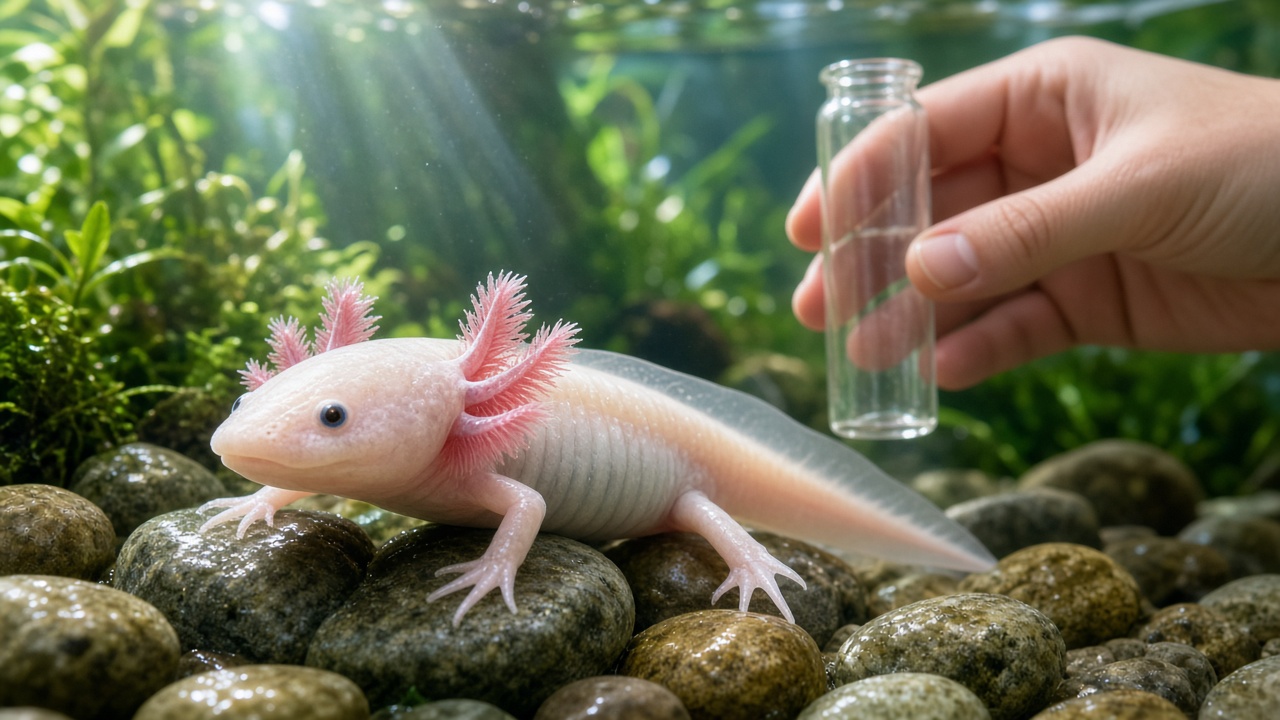
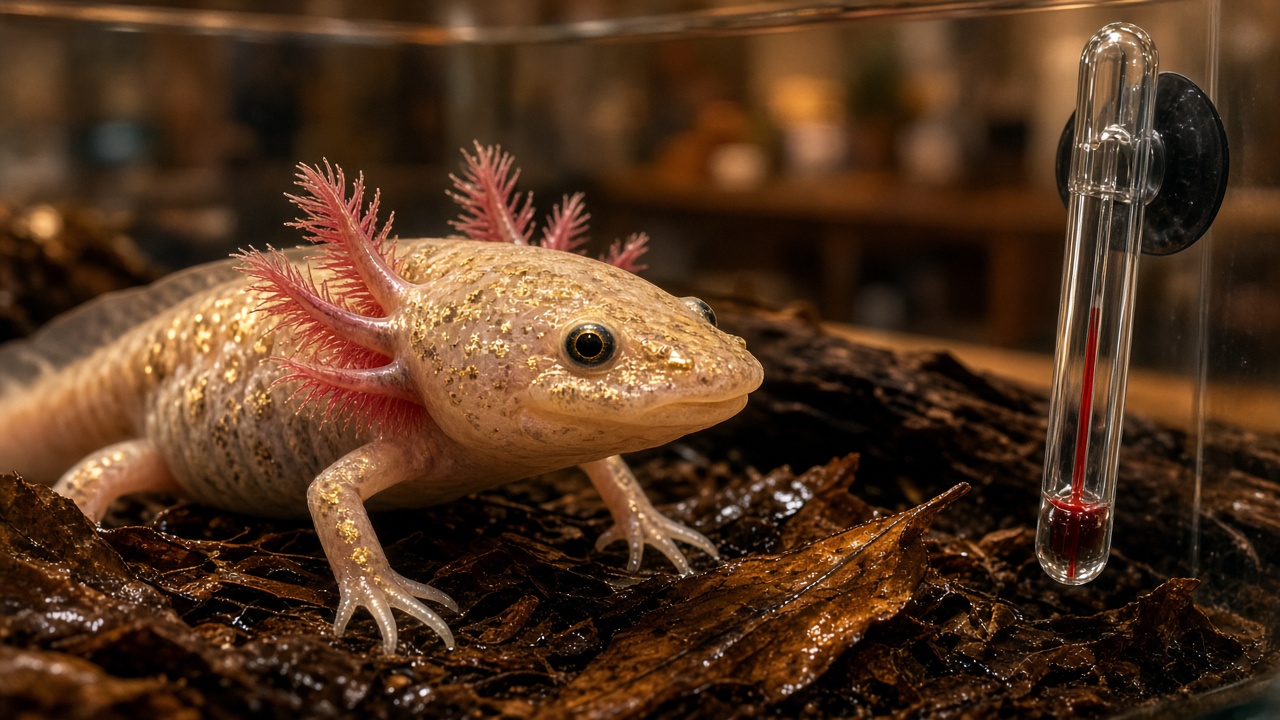
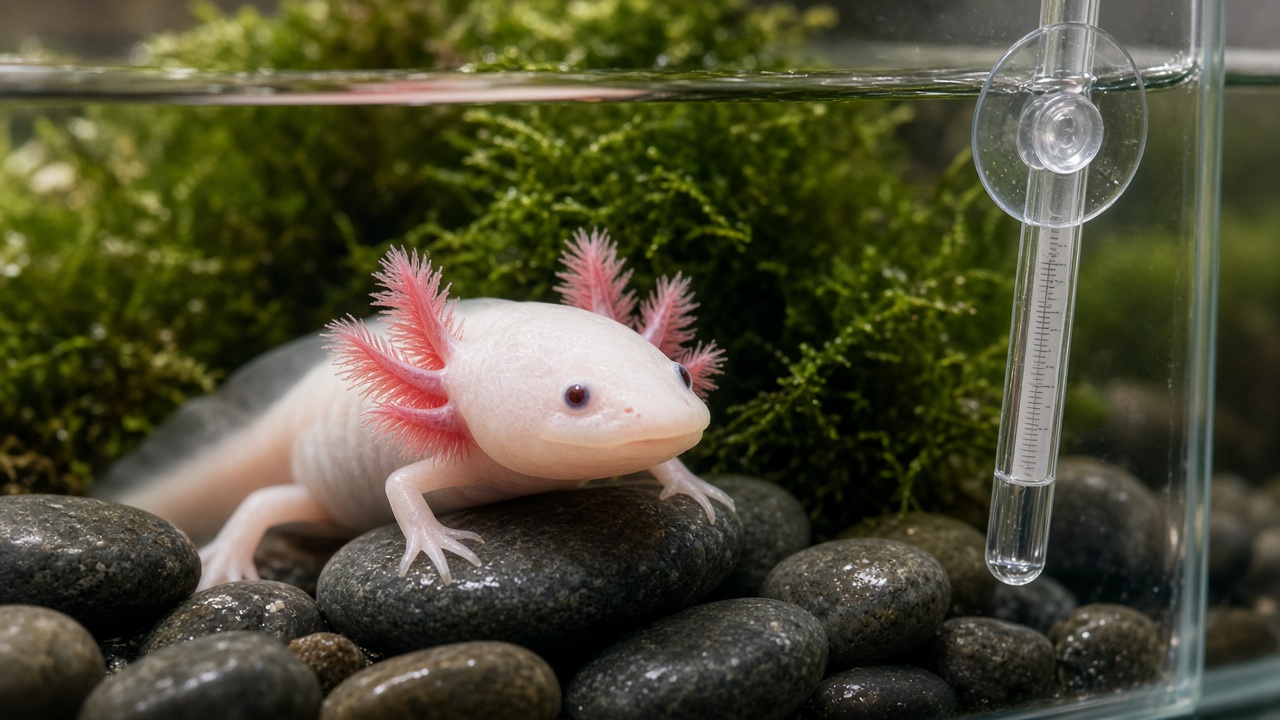
Albino axolotls lack dark pigment in skin and eyes.
Eyes often look pink or red because blood shows through clear tissue. The body may look white, peach, or pale gold depending on other color genes. Shop labels are not always precise. Watch the eyes and overall pigment, not only the sales tag.
Axolotls are neotenic salamanders. They keep external gills and an aquatic lifestyle into adult life. AmphibiaWeb’s Ambystoma mexicanum account notes the species is widely kept in aquaria and labs. Wild populations face serious conservation pressure, so pet animals should be captive-bred lines.
Care still follows cool water and soft flow for every morph. Color is secondary to water quality.
Albino skin can make minor scrapes easier to see. That visibility is useful. It is not a reason to scrub the animal or add harsh salt dips without a clear plan from a published protocol.
Morph types you will actually see
Color names pile up in stores. A few patterns cover most tanks.
Common groups include:
- White or classic albino with pale skin and pink eyes
- Golden or peach-toned albinos with pink eyes
- Leucistic animals that look pale but usually keep dark eyes
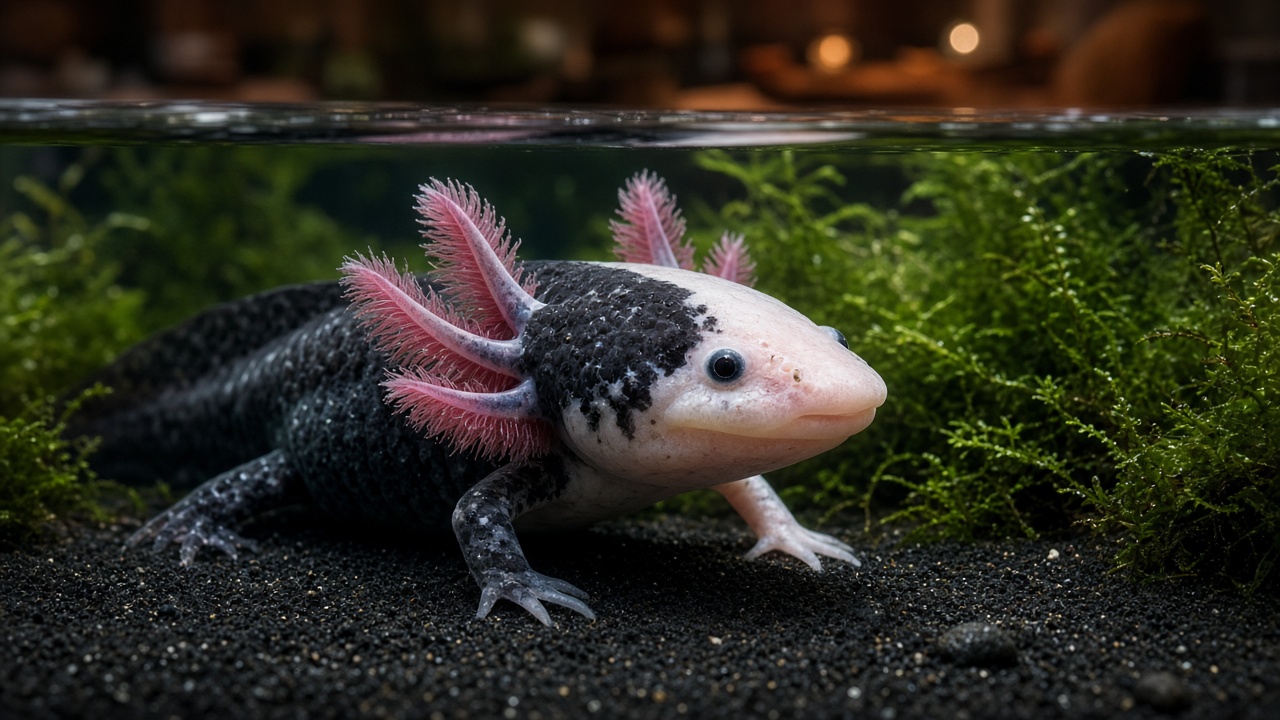
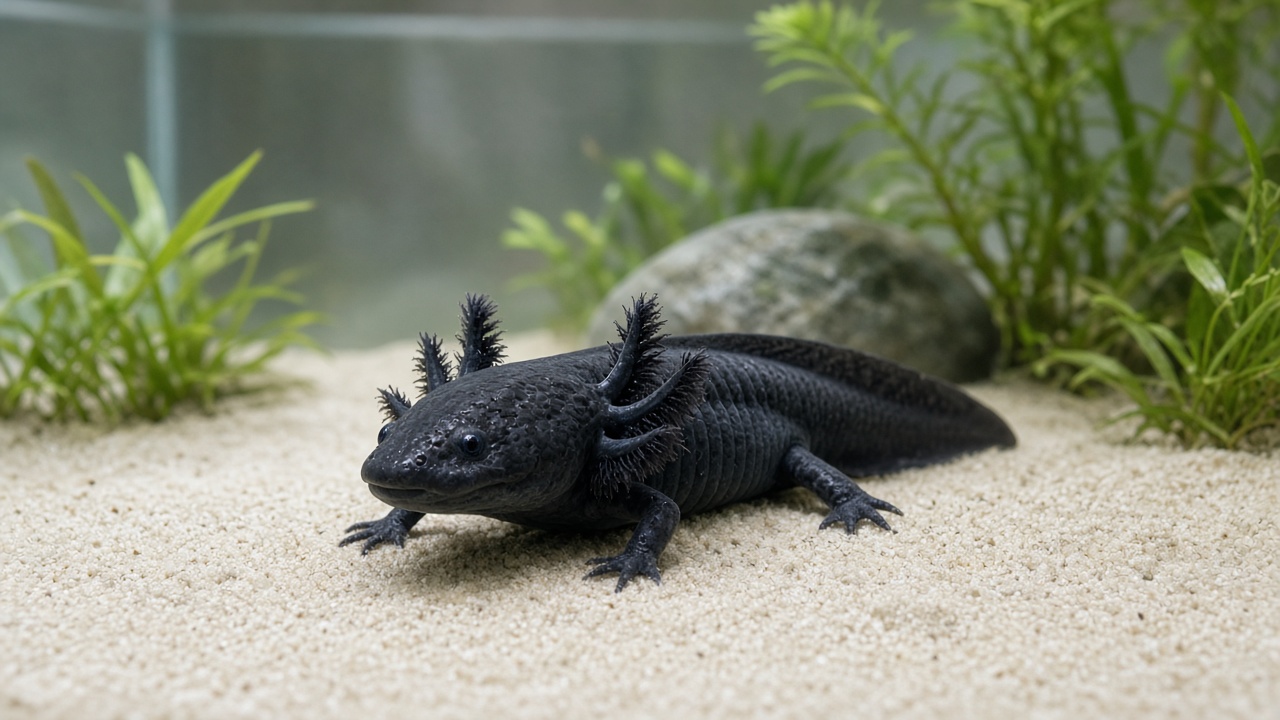
- Wild-type dark animals sold beside them for contrast
Leucistic and albino are not the same. Dark eyes usually signal leucistic or other light morphs. Pink eyes point toward albino. Mixed tags happen at retail. Ask for eye color if the label is vague.
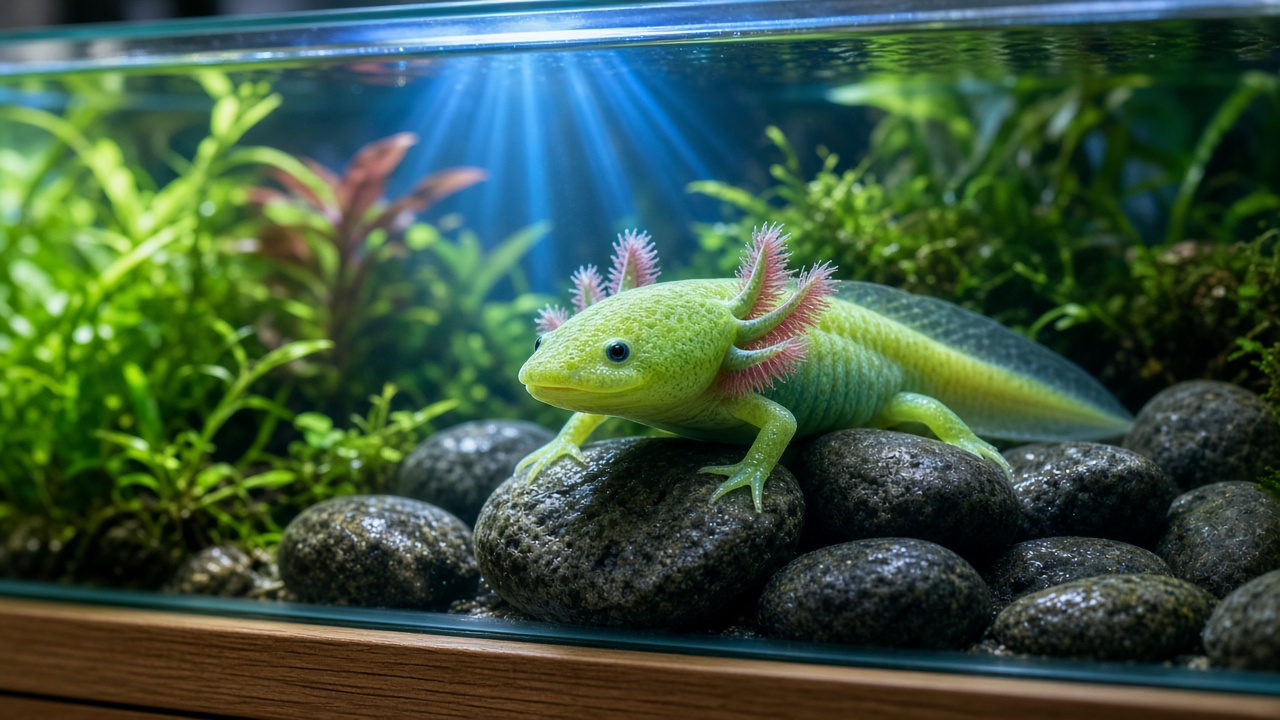
GFP or “green” lines are a separate genetic story. They need their own lighting notes. Do not assume a blacklight is required for daily albino housing.
When two pale animals share a tank, size-match them. The Royal Veterinary College factsheet warns that different sizes should not be left together and that adults are often best housed alone.
Eyes and lighting without glare
Pink eyes need softer viewing light than many fish tanks use.
LafeberVet’s axolotl information sheet lists minimal lighting. It warns that excessive light can stress this species. The related Lafeber “Care of the Axolotl” handout says axolotls prefer very low light. Ambient room light is often enough for viewing.
The Royal Veterinary College axolotl factsheet states tanks are often left unlit. It also states axolotls are highly sensitive to excessive UV-B, so those bulbs are not advised.
Practical lighting rules:
- Skip intense LED “daylight” ramps aimed at the animal
- Use room light for viewing when you can
- If plants need a lamp, add caves and shaded ledges first
- Avoid sudden on/off blasts in a dark room
- Never add UV-B as a default kit extra
Albino animals show eye shine and washout faster under glare. If the axolotl hides only when the light is on, dim the fixture before you rebuild the aquascape.
Place the tank away from direct sun. Window heat also fights the cool-water target. A north-facing interior wall is usually calmer than a bright window ledge.
Tank size and layout for adults
Adults need floor space more than tall water columns.
LafeberVet lists a juvenile aquarium at 38 liters (10 gallons). It lists a mature adult at 78 liters or more (20 gallons or more). The same sheet notes larger aquariums hold water quality longer.
The RVC factsheet says to plan for adult size up to 35 centimeters when choosing housing. Filters are strongly advised. Strong flow is called a severe stressor. Over-filtration is also flagged as stressful.
Layout basics:
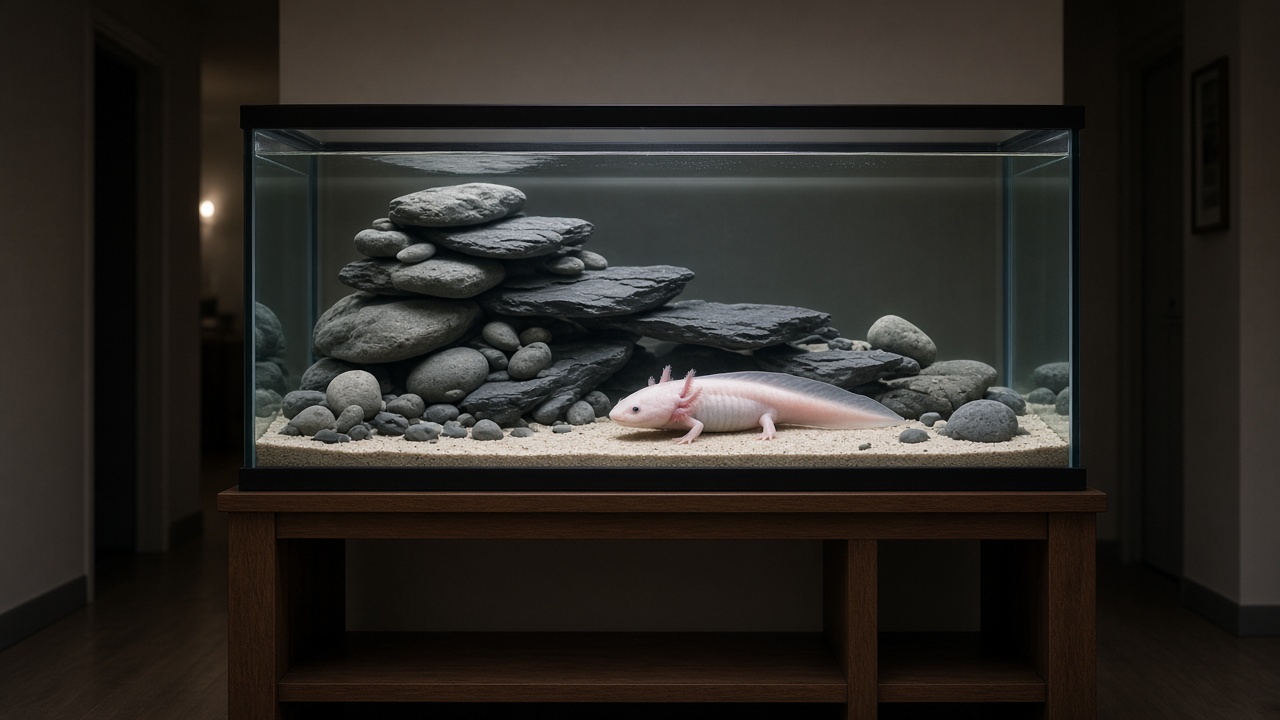
- Choose a long tank, not a tall column
- Use a tight lid; Lafeber notes a glass top helps prevent jumping
- Keep flow soft with a spray bar or sponge baffle
- Offer smooth hides on both ends
- Leave an open feeding lane on the sand
LafeberVet prefers fine aquarium sand. If rock is used, choose large river stones, not pebbles, because small stones can be swallowed. Skip medium gravel that fits the mouth. Bare-bottom tanks are easier to clean but offer less traction; many keepers still prefer fine sand for resting comfort.
Place the tank in a low-traffic spot. Lafeber’s care handout notes stress from constant flashes of movement nearby.
Water temperature and quality targets
Cool water is not optional for long-term health.
LafeberVet lists a preferred temperature of 15.6–17.8°C (60–64°F). It states water above 24°C (75°F) brings a high probability of illness. The RVC sheet lists an optimum of 16–18°C and says temperature should never exceed 24°C.
LafeberVet water targets include:
- pH ideally 7.4–7.6 (6.5–8.0 acceptable on the sheet)
- Chlorine and chloramine at 0 ppm
- Ammonia at 0 ppm
- Nitrite at 0 ppm
- Nitrate under 10 ppm preferred
LafeberVet also lists weekly water changes of about 30 percent of tank volume. The RVC sheet suggests about 10–20 percent weekly, adjusted for filtration.
Home checklist:
- Condition tap water for chlorine and chloramine
- Cycle fully before the animal arrives
- Keep a thermometer you trust
- Cool the room before summer peaks
- Never “warm them up” like tropical fish
If nights are cool and days are hot, log both ends of the day. Axolotls feel the highs.
Filter, food, and handling limits
Soft filtration removes waste without a river current.
LafeberVet recommends good mechanical filtration and a spray bar to dissipate current. The RVC sheet warns that strong flow and over-filtration both cause stress.
Feed a meaty captive diet sized to the mouth. Remove leftovers so ammonia stays near zero. Young animals may nip each other. Match sizes or house alone when risk is high.
Offer food on tongs or in a shallow dish if gravel vacuuming is hard. Uneaten worms raise ammonia fast in a 20-gallon box. LafeberVet’s push for nitrate under 10 ppm only works if leftovers leave the tank. Always adjust daily food portions before you blame the filter alone each time.
Do not handle for fun. Soft bodies and slime coats tear easily. Use a soft net or container only when you must move the animal.
Keep the lid secure after every feed. Curious axolotls can jump. Lafeber’s care handout recommends a glass top for that reason.
Summer heat plans before the crisis
Plan cooling before a heat wave starts.
Raise the tank off hot carpet. Reduce room lights. Use fans on the room, not blasting the water into a whirlpool. Aquarium chillers help in hot climates when rooms cannot stay near 60–64°F.
Short emergency bridges, such as sealed frozen bottles floated briefly, are stopgaps. They are not a substitute for a room that can hold the Lafeber and RVC bands.
Watch for lost appetite and odd buoyancy when water stays too warm. Cool first, then reassess.
Keep a simple week-long temperature log in summer. Morning and evening numbers show whether the tank spikes while you are at work. Fix the room before you buy another gadget you do not need.
Also check heater controllers meant for tropical fish. Many default near 78°F. That setting is wrong for axolotls and must be disabled or removed.
Attribute table for albino setup planning
| Cue | Published number or rule | Publisher |
|---|---|---|
| Adult tank volume | 78+ L (20+ gallons) | LafeberVet basic sheet |
| Juvenile tank volume | 38 L (10 gallons) | LafeberVet basic sheet |
| Preferred temperature | 15.6–17.8°C (60–64°F) | LafeberVet |
| Upper heat caution | Do not exceed 24°C (75°F) | LafeberVet; RVC |
| RVC optimum band | 16–18°C | RVC factsheet |
| Weekly water change | ~30% (LafeberVet) / 10–20% (RVC) | Named sheets |
| Adult length planning | Up to 35 cm | RVC factsheet |
| Ideal pH | 7.4–7.6 | LafeberVet; RVC |
| Preferred nitrate | Under 10 ppm | LafeberVet |
FAQ
Are albino axolotls harder to keep than wild-type?
Core needs match other morphs: cool water, soft flow, and clean parameters. Albino eyes and pale skin make bright lighting less forgiving, so dim viewing light matters more day to day.
What tank size does an adult albino axolotl need?
LafeberVet lists 78 liters or more (20 gallons or more) for mature adults. Bigger volumes hold temperature and nitrogen waste steadier. Plan length for an animal that may approach 35 centimeters per the RVC sheet.
What temperature should I run?
LafeberVet prefers 15.6–17.8°C (60–64°F). RVC lists 16–18°C and says never exceed 24°C. Treat 75°F as a danger line, not a goal.
Do albino axolotls need a bright light to show color?
No. Lafeber and RVC both describe low or ambient light as normal. Harsh light stresses pink-eyed animals and does not improve welfare.
Can I keep live plants with an albino axolotl?
Only if you can light plants without blasting the animal. RVC notes plants are often destroyed and that plant lighting conflicts with low-light preferences. Use tough plants and shaded hides, or skip planted goals.
Is a bubbler required?
Not by itself. Soft filtration and surface exchange matter more than violent bubbles. Strong currents stress axolotls on both the Lafeber and RVC sheets.
Should two albino axolotls share a tank?
RVC advises caution. Adults are often best alone. Different sizes raise nipping risk. If you ever co-house, need far more space and matching sizes, plus extra hides. Watch gill tips and limb nips after lights-out, when activity can rise.