Quick answer: Name a pet axolotl by pigment type, not by shop slang. The five types on the University of Kentucky stock-center pages are wild-type, white, albino, melanoid, and axanthic. Treat copper as a shop label, not a sixth lab gene on that list.
Pet-trade axolotl colors are five University of Kentucky pigment types plus copper shop labels.
This page is a desk read of published pigment names. We did not breed clutches, photograph live animals, or run lighting trials.
Selection rule: we kept every adult color mutant on the University of Kentucky Ambystoma Genetic Stock Center Mutant Genes page. We also kept wild-type as the dark default, and copper because shops sell that word. We dropped GFP, mosaic, firefly, piebald, and lethal mutants that never become a living adult color.
The IUCN Red List published its Ambystoma mexicanum assessment in 2020 after a 23 October 2019 review. That page lists 50 to 1,000 mature individuals in the wild, living at three sites inside a 467 km² range.
Those wild animals are the dark starting color. Almost every pet morph is a lab or shop change of that animal.
Cool water and a finished cycle still matter more than the morph. Use our axolotl tank setup guide first.
How this page picked which colors to name
We used one lab list, not a pile of shop nicknames.
Our research team analyzed the University of Kentucky Ambystoma Genetic Stock Center Mutant Genes page. If a color gene is named there and the animal can reach adulthood, it belongs here.
The color mutants on that page are albino, axanthic, melanoid, and white. Wild-type is the dark starting point those mutants change. Copper sits in the title because shops use the word, but it is not on that mutant list.
GFP, mosaic, firefly, piebald, and lethal mutants such as cardiac and short toes stay out. This is a research desk comparing published pages. We did not grade breeders or score rarity.
The three pigment cells behind every morph
Every named color is a change in three cell types, not a paint job.
The stock-center Mutant Genes page treats black, yellow, and shine as separate systems. Albino removes the ability to make melanin, and axanthic removes xanthophores and iridophores. Melanoid raises black cells and deletes shine, while white leaves the cells able to form, then blocks their travel.
Read a shop animal with those four levers:
- Black pigment present or absent
- Yellow pigment present or absent
- Shine and gold eye-ring present or absent
- Pigment cells spread over the body, or stuck near the eyes and gills
A gold ring in the eye means iridophores reached the iris. A melanoid adult has no iridophores, and the stock-center page says that outright.
Hold a dim light near the eye. No ring is the melanoid tell.
White animals still make black and yellow cells, but those cells fail to migrate off the neural crest. That is why a white adult can later speckle on the tail and legs.
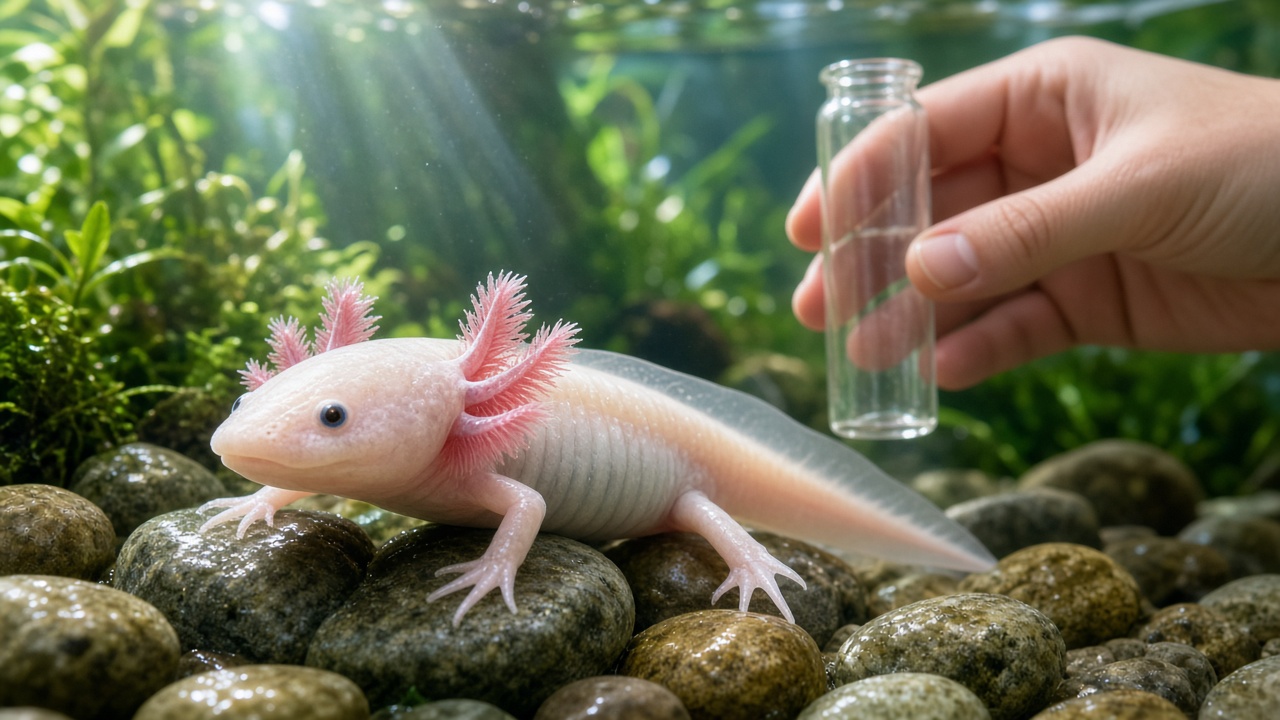
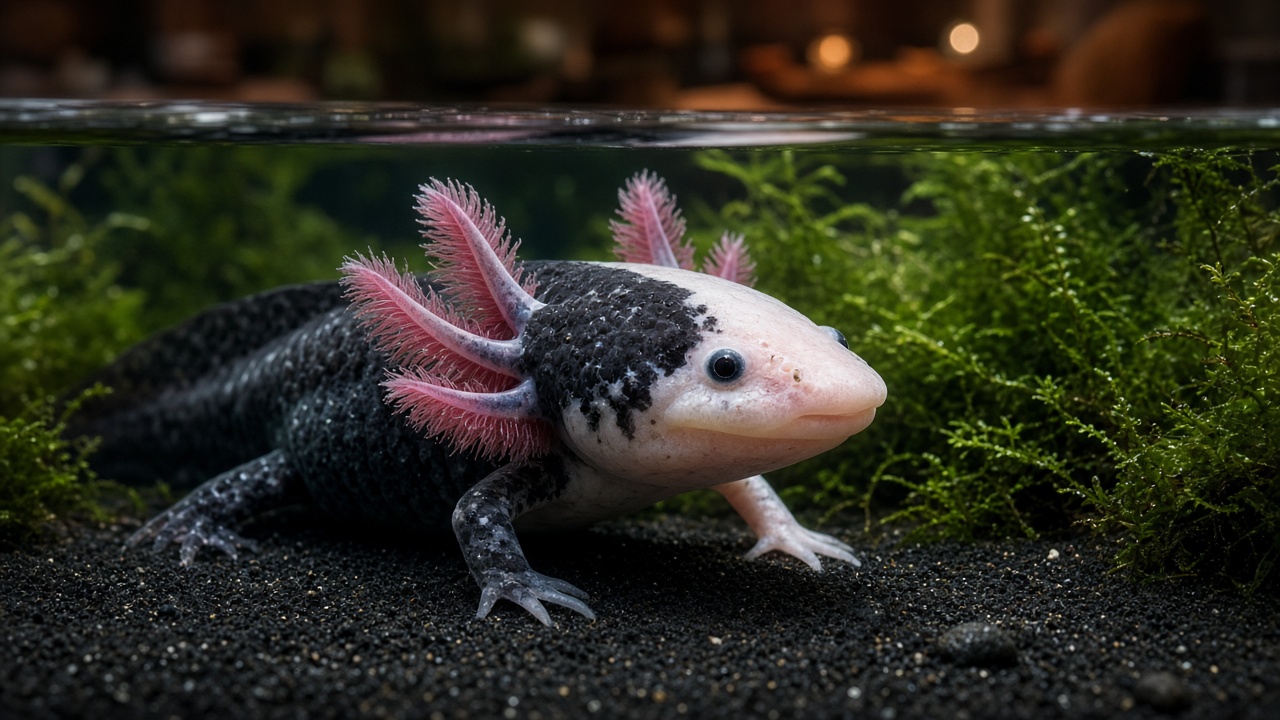
Do not call every pale animal an albino. Eye color splits the two pale types: white animals have black eyes, and albino animals have reddish eyes.
Wild type, white, and albino
Wild-type is the dark default, and white and albino are the two pale shop favorites.
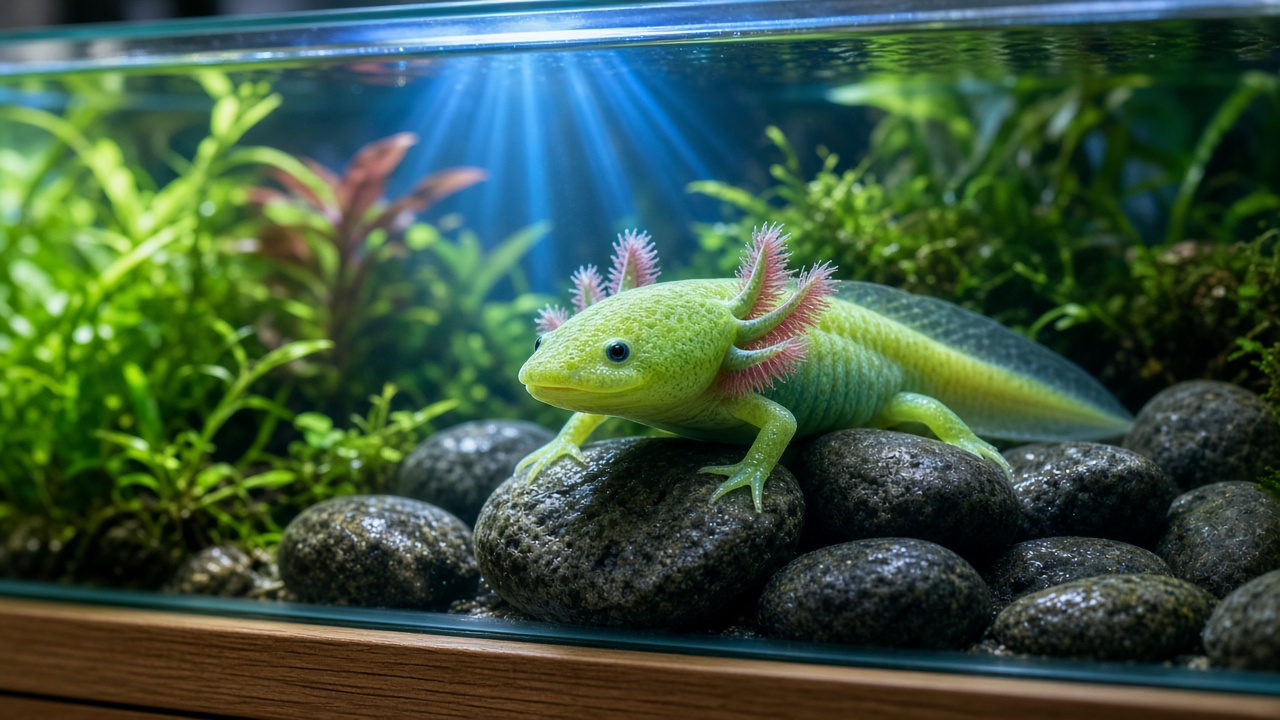
Wild-type keeps black cells, yellow cells, and some shine. The animal reads olive, brown, or greenish, with dark spots on a mottled back. The IUCN page places that wild stock in the Xochimilco canals, Chalco, and Chapultepec Lake.
The IUCN assessment lists a decline of more than 80% over 16.5 years, a span it calls three generations. Pet colors did not replace the wild animal; they came from lab colonies after export.
White is the stock-center name, and shops often say leucistic. The Mutant Genes page traces the line to one white male imported to Paris in 1868. Homozygous white animals are white or pinkish, with black eyes.
Dark pigment often sits on the gills, and older white animals speckle on the legs and tail.
Albino is a different gene. The stock-center page says the mutation came from an albino tiger salamander female found in Minnesota, and Humphrey published that transfer in 1967.
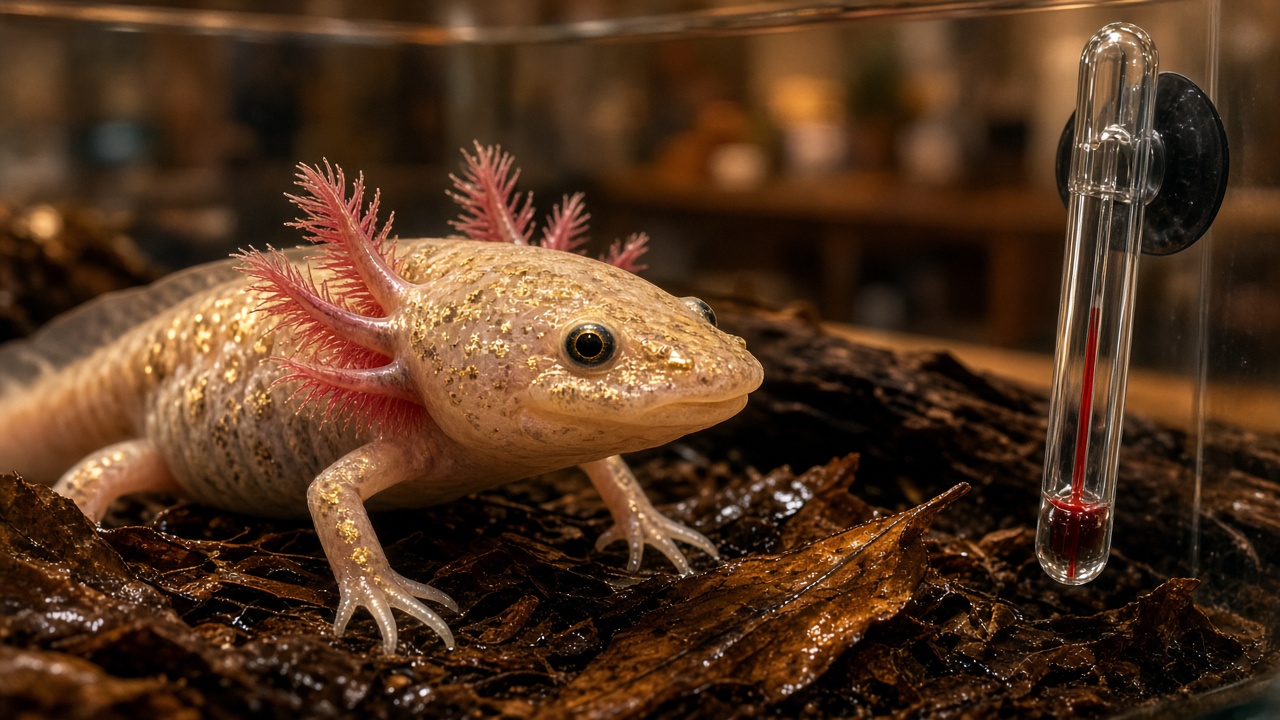
Homozygotes cannot make melanin, but other pigments remain. A dark-background albino is yellow with reddish eyes and gills, and shops call that a golden albino.
A white albino is pale like a white animal, but the eyes are pinkish. You do not need a DNA test on the shop floor.
Albino combinations the page also names:
- White-albino
- Melanoid-albino
- Axanthic-albino
Those are stacked recessives, not new base colors. They are the same four levers pulled twice.
Melanoid and axanthic
Melanoid is matte dark and axanthic is cool gray, so neither one is just a dark wild-type.
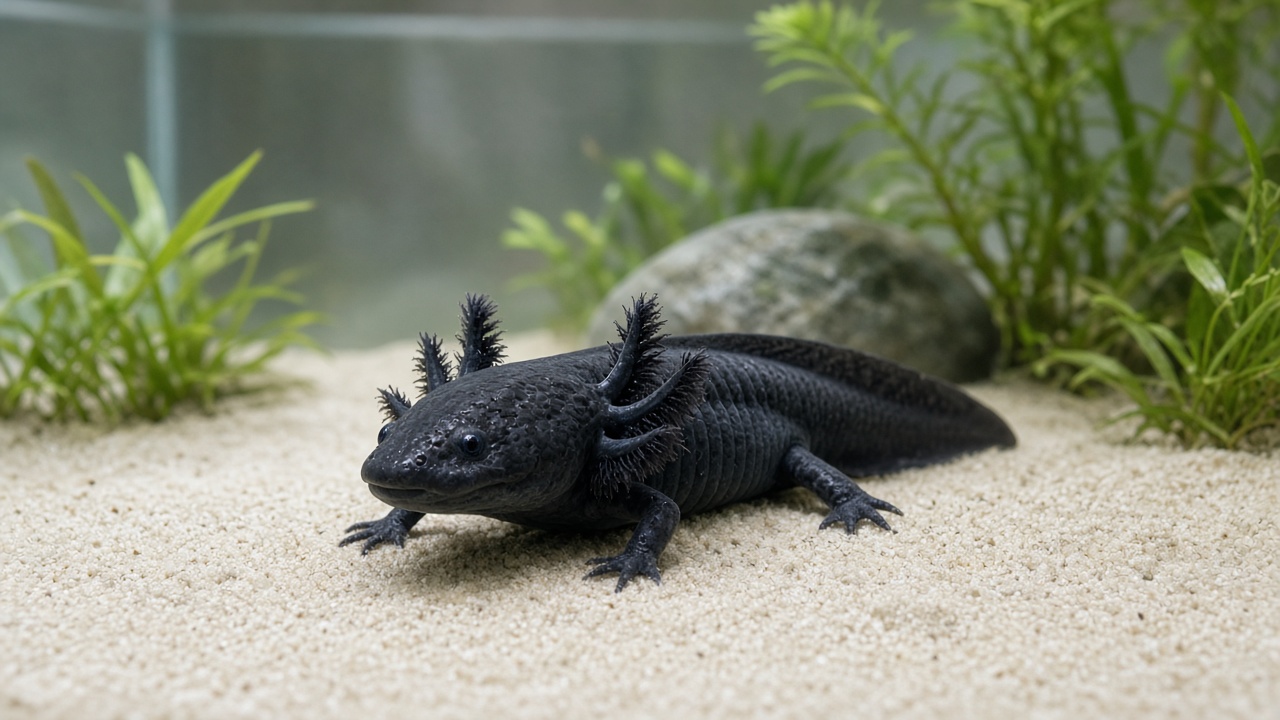
The stock-center page describes melanoid as more melanophores, fewer xanthophores, and no iridophores. Adults are uniformly dark gray or black. The gene was found in descendants of wild stock imported from Mexico in 1961.
The missing gold eye-ring is the field check. A dark wild-type can still flash gold, but a melanoid should not. White-melanoid animals look like other whites, except the iris has no bright ring.
Axanthic animals lack xanthophores and iridophores, while melanophores stay. An otherwise dark axanthic is uniformly dark gray. The page notes that dark axanthic animals are not vigorous, and Frost reported a susceptibility to viral infections.
Axanthic plus albino is a common lab combo, and young animals of that pair can look almost colorless. The same page says older axanthic albinos turn pale yellow from riboflavins in the diet.
That yellow is diet stain, not a new morph gene. If a seller offers “lavender” or “silver,” ask which of these cells are gone. If the seller cannot say, buy a named type or walk away.
Copper and the names we skipped
Copper is a shop word, and it is not a mutant on the stock-center list we used.
Shops sell tan, peach, or brown animals under the copper label. Our research team analyzed the Mutant Genes page for a copper entry, and there is none. We will not invent a gene name we did not read on that HTML page.
Treat copper as a phenotype label until a seller shows both parents and a written genotype. A pale brown animal can be a dilute dark type, a dirty albino, or a shop mix, so the word copper does not settle it.
Names we skipped on purpose:
- GFP and “GFP lucy,” because fluorescence is a transgene label, not a pigment-cell mutant on that page
- Mosaic and chimera, because those are developmental accidents, not a breedable color class
- Firefly and piebald, because they are shop composites
- Lethal mutants, because cardiac, short toes, and gill lethal are not colors you keep
The title stops at copper because that is the last common shop word past the lab list. Captive-bred animals are the only ethical source, and the IUCN page lists 50 to 1,000 wild adults.
Lights and pellets that change what you see
Lights change how a morph looks in the tank, but they do not change the genotype.
Axolotls prefer dim tanks, and a bright planted-tank bar can wash a melanoid to brown or push an albino to neon pink. Comparing published specs is the job here. We did not hang these fixtures over live animals.
Use the table to match a fixture to a 20-inch-class tank, then dim it. The Fluval product page says the Plant 3.0 housing can reach 105°F to 135°F at the surface.
| Product | Type | Listed spec from the maker page | Color-related claim on that page |
|---|---|---|---|
| Fluval Plant 3.0 Bluetooth LED 32W | LED bar, 24–34 in | 32 W; 168 LEDs; 2,350 lm; 6,500 K | Six band waves and independent color control |
| Nicrew ClassicLED Plus | LED bar | 22 W; 1,150 lm; 6,500 K; 117 LEDs | Full-spectrum mix of white, blue, purple, red, and green |
| Aqueon Deluxe LED Full Hood, 20-inch | Full hood | 20 in × 2.5 in × 8.5 in; 1-year warranty | Day White lamp; optional Colormax or Beauty Max lamps |
| Hikari Tropical Sinking Carnivore Pellets | Sinking pellet | min. 47% crude protein; 74 g (2.61 oz) pack | Color-enhancing ingredients for UV-deficient tanks |
Fluval also lists a 50,000-hour lifetime and an IP67 rating on the 32W page. That bar sits at 6,500 K, which is daylight white, not moonlight blue.
The Nicrew page lists 22 W, 1,150 lumens, and 6,500 K. It claims the Plus is 25% brighter than the firm’s ClassicLED.
The Aqueon 20-inch hood is a lid with a Day White lamp, a moon-glow accent, and optional Colormax or Beauty Max tubes. Swap the tube if you want a warmer photo. Do not treat a warmer photo as a new morph.
Hikari’s page is written for bottom-feeding carnivorous fishes, not as an axolotl-branded diet. We include it because keepers buy sinking carnivore pellets, and that page lists a 74 g (2.61 oz) pack with a 47% protein minimum.
Color pellets written for small tetras are a different job. See our ember tetra care page for fish-only color foods.
Do not add tetras to an axolotl tank.
What diet can and cannot do to color
Diet can stain a pale animal yellow, but it cannot rewrite a recessive gene.
The stock-center page already gives the one hard diet-color fact: older axanthic albinos pick up riboflavins from food and turn pale yellow. That is a published lab note, not a reason to buy a color-booster tub.
Hikari’s sinking pellet page claims color-enhancing ingredients for tanks that lack UV. That claim is for the carnivorous fishes on that page.
It does not say the pellet will turn a white axolotl into a wild-type. Genes set the cell types. Food can only tint what those cells already do.
Practical feeding notes, from published spec sheets, not from a feeding trial:
- Hikari lists feeding two to three times daily for the fishes on its page
- That cadence is not an axolotl schedule
- The same page tells you to feed only what is eaten in a few minutes
- Leftover pellets foul cool water faster than they change a morph
If a pale adult yellows over months, check the diet and the light first. Then re-read the albino and axanthic notes. A yellow wash on a pink-eyed animal is often food plus time.
FAQ
How many axolotl colors are there?
Five named pigment types sit on the University of Kentucky Mutant Genes page, plus wild-type as the dark default. Copper is an extra shop label. GFP and mosaic are not extra base colors on that list.
What is the difference between a white axolotl and an albino?
White animals have black eyes, and albino animals have reddish eyes. The stock-center page says white cells fail to migrate, while albino animals cannot make melanin at all.
How do I tell melanoid from dark wild-type?
Look at the eye, not just the back. Melanoid adults lack iridophores, so the gold ring is missing, while wild-type animals can still show shine.
Is copper a real morph?
It is a real shop label, not a mutant named on the University of Kentucky page we used. Ask for parents and a written genotype before you treat the word as a lab strain.
Does food change an axolotl’s color?
It can stain. The stock-center page says older axanthic albinos turn pale yellow from dietary riboflavins. Hikari’s pellet page claims color-enhancing ingredients for fishes in low-UV tanks.
Which light should I use to see the morph?
Use a dim, high, daylight-white bar or a simple hood. Fluval and Nicrew both list 6,500 K, Nicrew lists 1,150 lumens, and Aqueon uses a Day White lamp in a 20-inch hood.
Are wild axolotls the same colors as pets?
Wild animals are the dark wild-type. The IUCN page lists 50 to 1,000 mature individuals at three sites, and pet morphs come from lab and shop colonies.