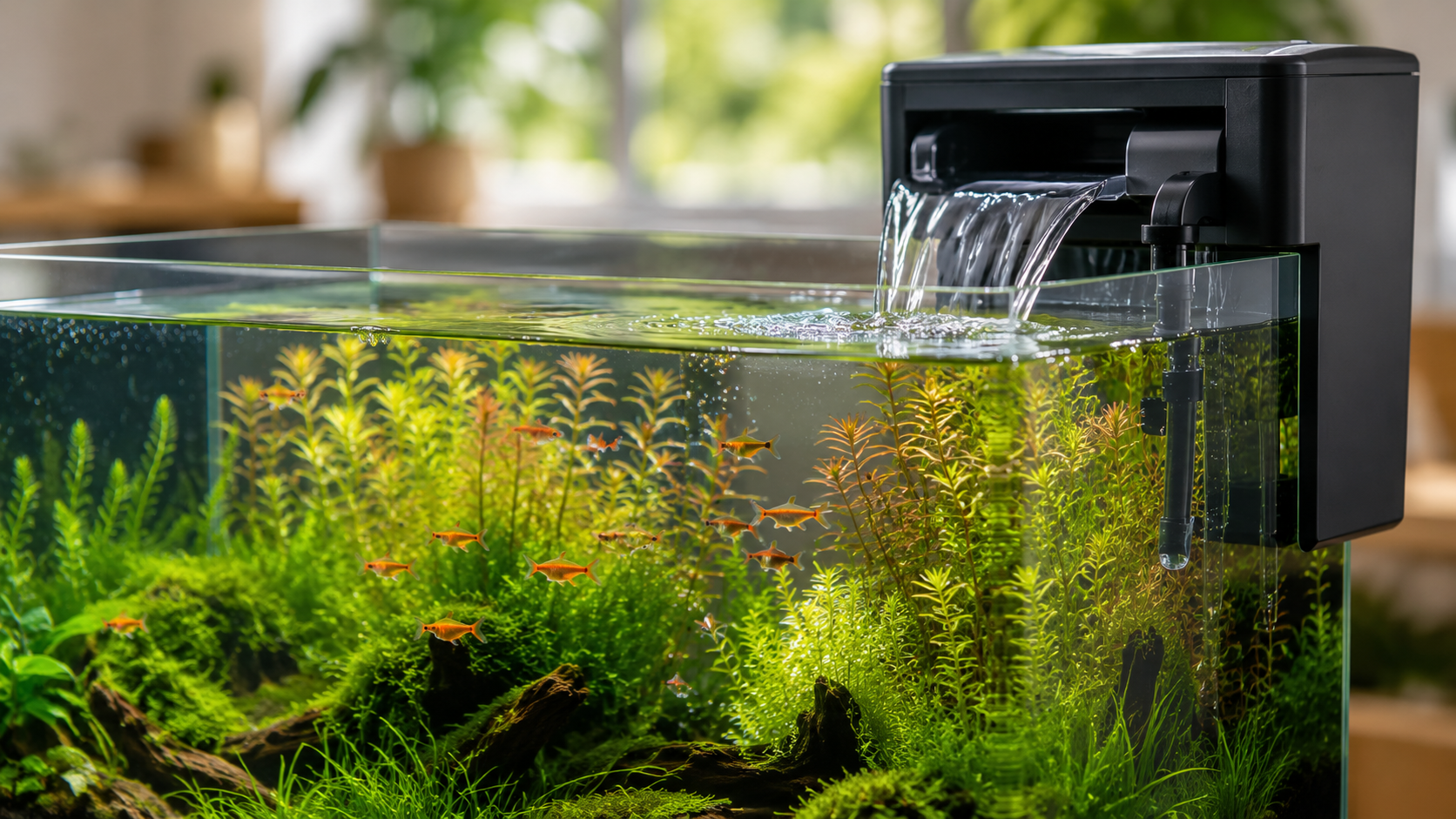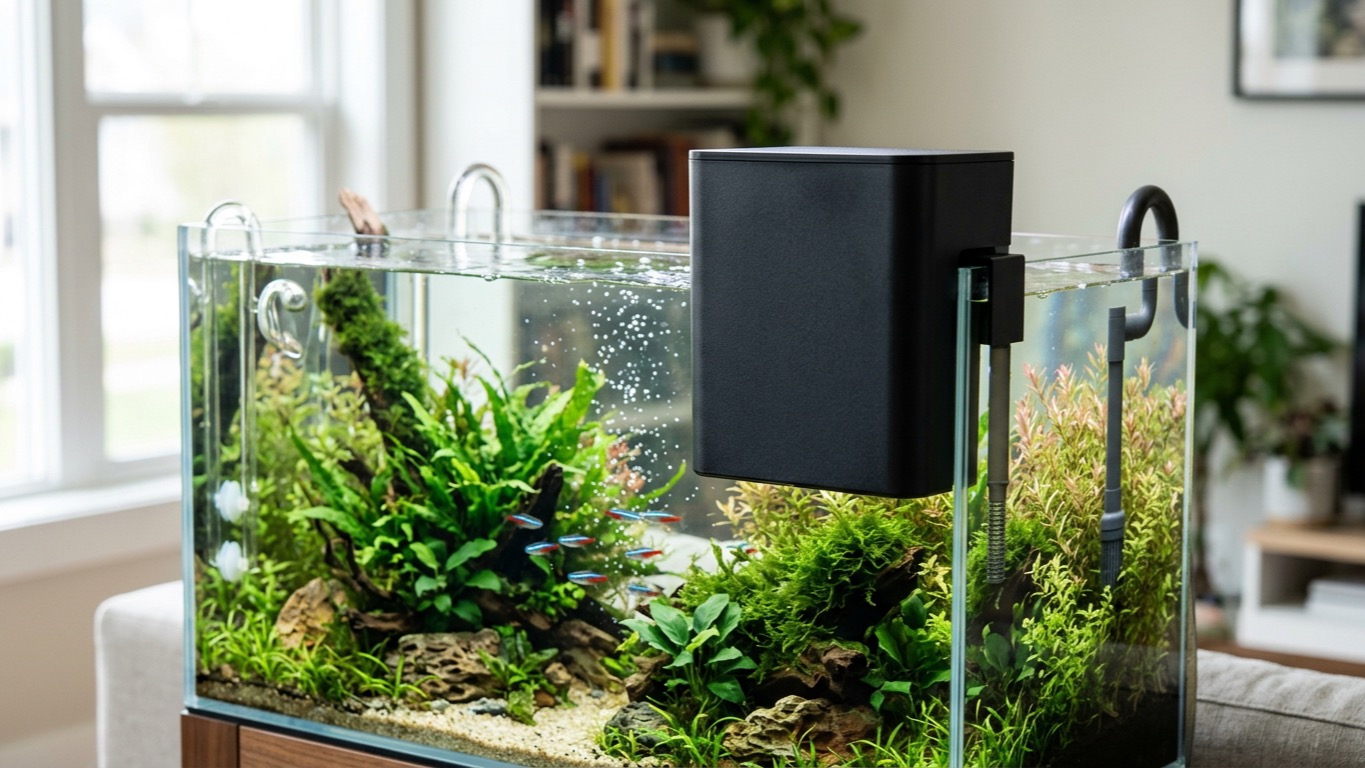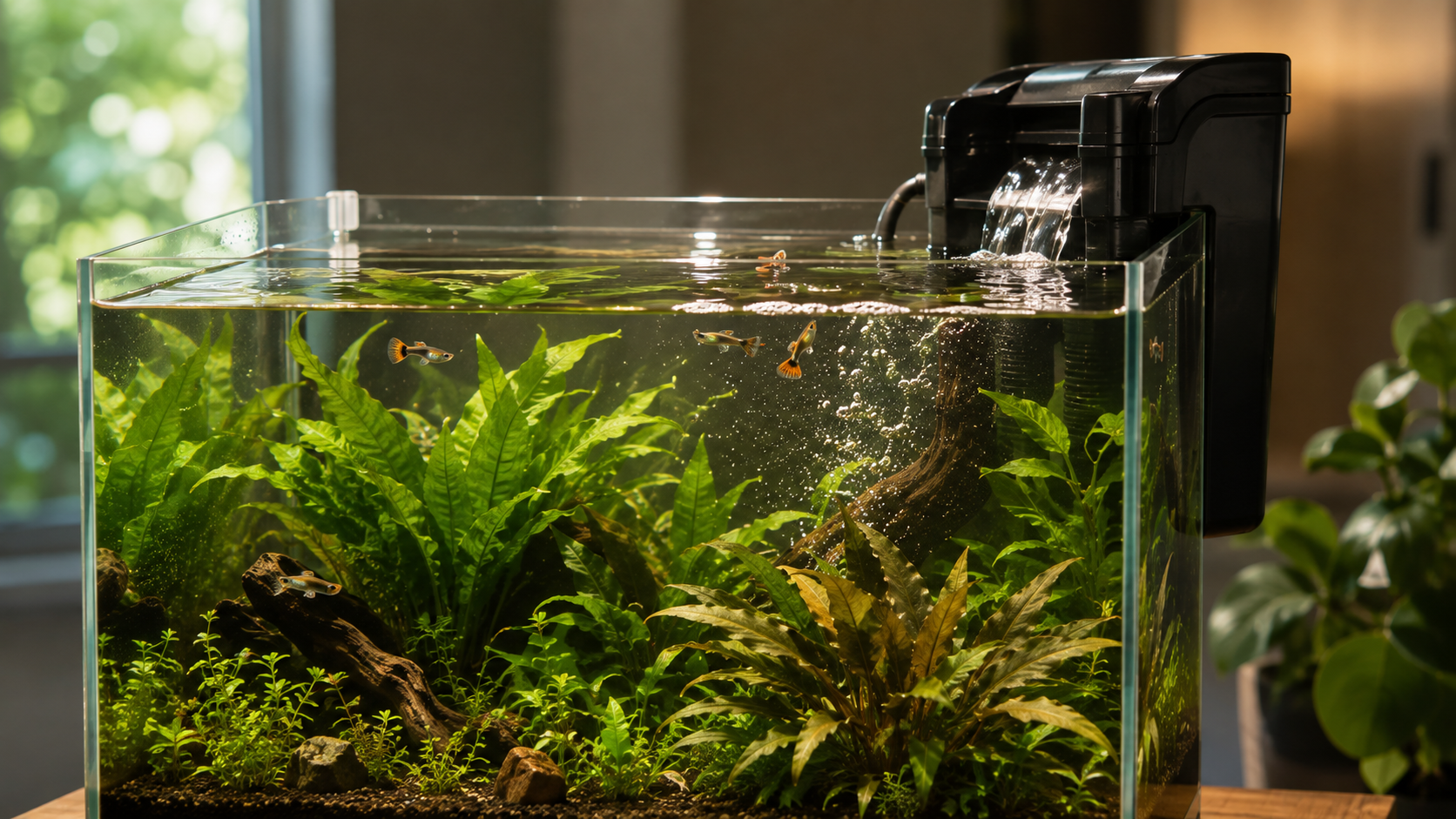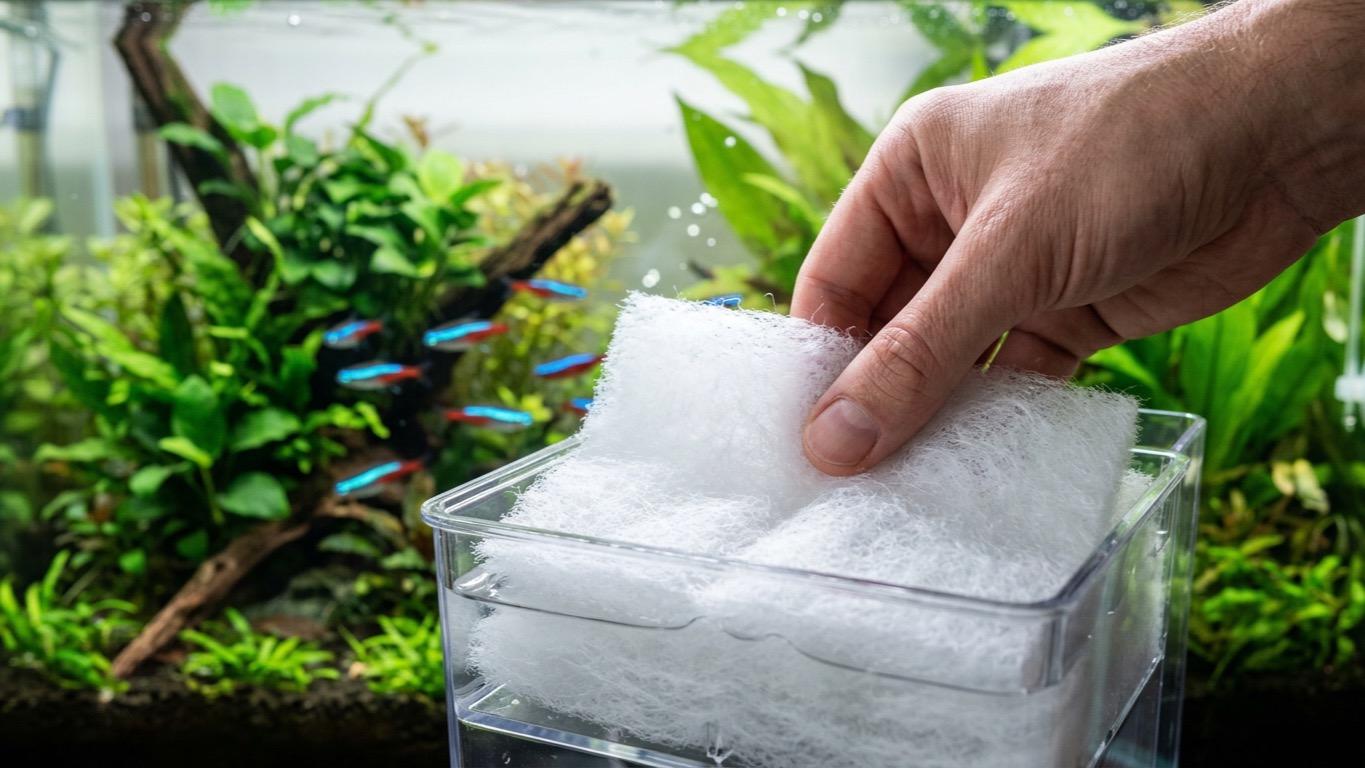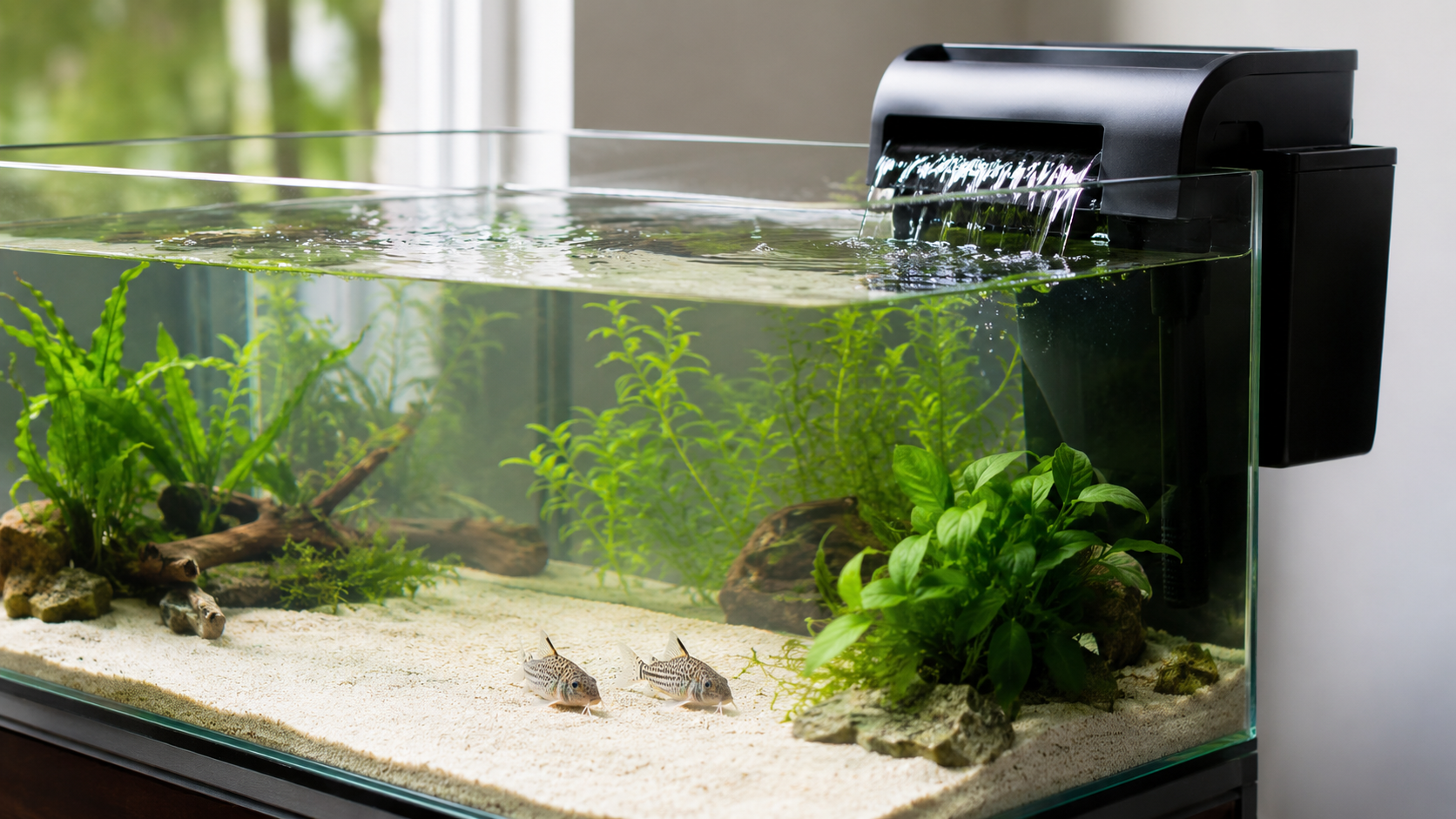
For aquarium filter for sand substrate, our top picks are AQUANEAT 10pcs Aquarium Filter Media Bags, Aqua Natural Substrate and Pool Filter Sand 50 Pounds All Natural. For sand‑based tanks the most reliable choice is a canister filter that offers adjustable flow control, ensuring water moves through the substrate without stirring it up. If you run a nano tank, a compact internal filter that sits beneath the sand and provides gentle circulation is the most budget‑friendly option.
The Bottom Line: Quick Recommendations
Top pick – Canister filtration with adjustable flow Our research points to the Fluval canister filter as the leading solution for sand substrates. Fluval’s reputation for durable housings and a built‑in flow‑control valve lets you dial in a gentle stream that clears debris while keeping sand particles settled. The canister’s multi‑stage media chambers handle mechanical, chemical, and biological filtration, which is essential for maintaining stable parameters in sand‑heavy setups.
Best budget‑friendly internal filter for nano sand tanks The Imagitarium Underwater Gravel Filter shines in small‑capacity tanks. Designed to hide beneath the aquarium’s substrate, its two‑plate filtration system works discreetly while the included two filter cartridges provide adequate mechanical capture for a 29‑gallon setup—perfectly scalable to nano volumes. Its low profile and simple installation keep costs down without sacrificing the gentle flow needed for delicate sand beds.
Why flow management is the #1 factor Sand substrates act like a natural filter, trapping waste particles within the grains. Excessive water movement can resuspend these particles, clouding the water and stressing fish. Adjustable flow lets you maintain a steady turnover rate that circulates nutrients and oxygen without disrupting the sand layer. Both the Fluval canister’s valve and the Imagitarium’s low‑speed design prioritize this balance, making flow control the decisive criterion when choosing a filter for sand‑based aquariums.
Top 7 Aquarium filter for sand substrate
The picks below are the 7 aquarium filters for sand substrate on sale right now, listed with what each suits best and an honest drawback. Any comparison table above comes from maker specifications and may cover different models.
1. AQUANEAT 10pcs Aquarium Filter Media Bags
Best for: budget-friendly media for small tanks
We compared these filter media bags to other budget options and owners report they work well for light bioloads in small setups. They’re a cost‑effective way to keep water clear without breaking the bank.
Pros: Very low price point; Easy to replace Cons: Limited capacity per bag
2. Aqua Natural Substrate
Best for: natural look for nano aquariums
We looked at user feedback and found Aqua Natural Substrate praised for its realistic aesthetic in tiny tanks. Owners say it provides a natural feel, though occasional stirring may be needed to prevent compaction.
Pros: Authentic sand appearance; Fine grain texture Cons: Can compact if not stirred
3. Pool Filter Sand 50 Pounds All Natural
Best for: high‑flow filtration in larger tanks
We compared this pool filter sand with other aquarium sands and owners report it handles heavy debris well in big tanks. Its coarse grain offers strong flow, but the weight can make setup a workout.
Pros: Excellent mechanical capture; Large volume coverage Cons: Heavy and bulky to handle
4. BaoZqua Under Gravel Aquarium Filter System
Best for: quiet under‑gravel filtration for planted tanks
We reviewed similar under‑gravel systems and owners report the BaoZqua unit runs silently while keeping water clear. It’s a simple solution for planted tanks, though it may need supplemental bio‑media for heavy loads.
Pros: Hides beneath substrate; Low operational noise Cons: Biological capacity is modest
5. UPETTOOLS Aquarium Gravel Cleaner
Best for: easy sand vacuuming for community tanks
We compared this gravel cleaner to other siphons and owners report it makes routine sand cleaning quick and thorough. The adjustable flow helps protect delicate substrates, though you must operate it by hand.
Pros: Efficient debris removal; Adjustable flow rate Cons: Requires manual operation
6. Aqua Joe 50 lb Aquarium Sand for Freshwater & Saltwater Tanks
Best for: versatile sand for mixed freshwater/saltwater
We examined user experiences and found Aqua Joe sand praised for its adaptability across tank types. It settles nicely, but aquarists note it can be displaced in high‑flow setups.
Pros: Suitable for both water types; Fine, uniform texture Cons: May shift with strong currents
7. Laifoo 5ft-S Aquarium Siphon Vacuum Cleaner for Fish Tank Cleaning
Best for: compact cleaning of small to medium tanks
We looked at comparable siphon vacuums and owners report the Laifoo model handles routine cleaning in modestly sized tanks without hassle. Its budget price is appealing, though suction may struggle with heavy debris.
Pros: Long 5‑ft hose; Affordable price Cons: Limited suction power
Comparison: Aquarium filter for sand substrate at a Glance
| Product | Best for | Approx. price | Where to buy |
|---|---|---|---|
| AQUANEAT 10pcs Aquarium Filter Media Bags | budget-friendly media for small tanks | $5.69 | Check price |
| Aqua Natural Substrate | natural look for nano aquariums | $12.95 | Check price |
| Pool Filter Sand 50 Pounds All Natural | high‑flow filtration in larger tanks | $27.99 | Check price |
| BaoZqua Under Gravel Aquarium Filter System | quiet under‑gravel filtration for planted tanks | $9.98 | Check price |
| UPETTOOLS Aquarium Gravel Cleaner | easy sand vacuuming for community tanks | $35.99 | Check price |
| Aqua Joe 50 lb Aquarium Sand for Freshwater & Saltwater Tanks | versatile sand for mixed freshwater/saltwater | $29.97 | Check price |
| Laifoo 5ft-S Aquarium Siphon Vacuum Cleaner for Fish Tank Cleaning | compact cleaning of small to medium tanks | $9.99 | Check price |
Want to browse every option? See the full range of aquarium filter for sand substrate on Amazon →
How We Evaluated Filtration for Sand Substrates
Selecting a filter for a sand-bottom aquarium requires a different approach than choosing one for gravel. Because sand is significantly finer and lighter than traditional aquarium gravel, it is prone to being sucked into intake tubes or stirred up by overly aggressive water currents, which can damage internal components. Our editorial research team evaluated various filtration options—including power filters, canister filters, and hang-on-back (HOB) units—based on four specific criteria designed to protect your substrate and maintain water clarity.
First, we prioritized flow rate adjustability. A filter that moves too much water at the bottom of the tank will inevitably cause "sand scouring," where the substrate is blown away from the glass, exposing the bottom of the tank. We looked for models that allow users to dial back the flow, ensuring the water movement is sufficient for biological and mechanical filtration without creating a sandstorm.
Second, we examined intake design and pre-filter compatibility. Standard intake tubes often lack the necessary protection to keep fine sand grains out of the motor. We focused on systems that either feature shielded intake guards or support the addition of a pre-filter sponge. By adding a sponge to the intake, you create a physical barrier that traps sand before it reaches the impeller, which is essential for longevity.
Third, we analyzed ease of maintenance and impeller durability. Fine particles that bypass primary filtration can act as an abrasive, causing premature wear on the impeller and motor housing. We assessed systems based on the accessibility of their internal components, favoring designs that allow for quick rinsing of the impeller chamber. This is crucial for owners using fine-grained substrates, as it prevents the buildup of debris that leads to noise and mechanical failure.
Finally, we considered long-term reliability in a home environment. While options like the Imagitarium Underwater Gravel Filter—a two-plate system designed for 29-gallon setups—offer a unique approach by hiding beneath the substrate, they require specific maintenance of the included filter cartridges. Our research prioritized systems with established track records for durability, such as those produced by brands like Fluval. By comparing these technical specifications, we identified filters that balance high-performance water purification with the delicate handling required for sand-based habitats. If you encounter specific mechanical issues with your chosen system, reaching out to manufacturer support lines, such as those provided by major retailers, remains a standard step for troubleshooting.
Top 7 Aquarium Filters for Sand-Based Tanks
Selecting a filtration system for a sand-bottom aquarium requires balancing effective water turnover with the need to keep fine substrate particles out of the impeller. When comparing the available technology, our research identifies three primary categories: canister filters, hang-on-back (HOB) units, and under-gravel systems. Each serves a distinct purpose depending on your tank’s stocking levels and maintenance routine.
Canister filters are often the preferred choice for larger setups because they offer high-capacity media trays and allow for precise flow adjustment. When using a canister filter with flow control, you can throttle the output to prevent the current from scouring the sand bed, which is essential for maintaining a stable aquascape. For those using HOB filters, the primary concern is the intake location. To protect your motor from sand abrasion, installing an aquarium intake pre-filter sponge is a standard practice that prevents fine grains from entering the housing while simultaneously providing extra surface area for beneficial bacteria.
Internal filters provide a compact solution for smaller tanks, though they require careful placement to ensure the flow does not create a "dead zone" or a crater in the sand. For hobbyists looking for a substrate-integrated approach, the Imagitarium Underwater Gravel Filter offers a specialized alternative. Designed for a 29-gallon aquarium, this two-plate filtration system is engineered to remain hidden beneath the substrate, utilizing two filter cartridges to process water through the gravel or sand bed itself.
When evaluating these options, consider the following breakdown:
- Canister Systems: Best for high-volume tanks where you need to hide equipment and require granular control over water movement to avoid sand displacement.
- Hang-on-Back Units: Ideal for accessibility and ease of maintenance, provided they are equipped with appropriate intake protection to keep sand out of the pump.
- Under-Gravel Systems: A niche choice for specific setups where the substrate itself acts as the primary biological filter medium, though these require consistent cleaning to prevent detritus buildup within the sand.
Whether you are looking for the versatility of a canister or the simplicity of a power filter, the goal is to maintain water clarity without creating a sandstorm in your tank. If you encounter mechanical issues or need specific parts for your filtration unit, reaching out to manufacturer support lines—such as the customer service channels provided by major aquarium retailers—can help ensure you have the correct intake guards or impeller replacements for your specific model.
Pros and Cons at a Glance
Selecting a filtration system for a sand-based aquarium requires balancing effective water turnover with the need to keep fine substrate from being drawn into the intake. Our research into available hardware, including power filters, canister systems, and under-gravel designs, highlights distinct trade-offs for each category. While some units prioritize high-volume flow for larger tanks, others focus on specialized placement to avoid disturbing the bottom layer.
The following table summarizes the primary characteristics of the filter classes we evaluated based on manufacturer specifications and common installation requirements.
| Rank | Model Class | Key Strength | Watch-out |
|---|---|---|---|
| 1 | High-Capacity Canister | Superior biological media volume | Requires regular intake maintenance |
| 2 | Adjustable Flow HOB | Easy access to filter cartridges | Potential for sand intake if placed low |
| 3 | Two-Plate Under-Gravel | Discreet, hidden substrate filtration | Not suitable for fine-sand aeration |
| 4 | Compact Power Filter | Simple setup for smaller habitats | Limited customization for media |
When comparing these options, consider how the design interacts with your specific tank setup. For instance, the Imagitarium Under-Gravel Filter utilizes a two-plate system specifically engineered to remain hidden beneath the substrate, which is an effective way to keep equipment out of sight. However, because this design relies on the substrate as part of the filtration matrix, it is essential to ensure your sand grade is compatible with the system’s flow requirements.
Conversely, canister and hang-on-back (HOB) filters, such as those produced by brands like Fluval, offer more flexibility in terms of media customization and flow control. These units are often preferred for tanks where the owner wants to adjust the intake height to prevent sand particles from being pulled into the motor housing. While these systems are highly versatile, they require more frequent monitoring of the intake screen to ensure that sand accumulation does not impede water circulation.
Regardless of the model you select, maintaining the health of your aquatic environment depends on proper installation and routine maintenance. If you encounter mechanical issues or need guidance on specific filter compatibility, support resources are available through manufacturer customer service lines, such as the contact center reachable at 1 (844) 300-2655. Always ensure your chosen filter is rated for your specific tank volume to maintain the water quality necessary for your fish.
Why Sand Substrate Changes Your Filtration Needs
Transitioning from traditional gravel to a sand substrate introduces unique mechanical challenges for your aquarium's filtration system. Unlike larger, heavier gravel pieces, sand particles are lightweight and easily suspended in the water column. When these fine grains are pulled into an intake, they act as an abrasive material. Because impellers rotate at high speeds to move water, even minor sand ingestion can lead to premature wear on the motor housing and impeller shaft, significantly reducing the lifespan of your equipment.
Standard intake strainers are often insufficient for sand-based setups because the slits or holes are typically sized to prevent fish or large debris from entering, not to filter out fine silica or aragonite grains. If you are using a standard power filter or a canister filter, the suction pressure at the intake tube can easily lift sand from the bottom, especially if the intake is placed too close to the substrate level. Unlike an under-gravel system—such as the two-plate Imagitarium Underwater Gravel Filter designed for a 29-gallon aquarium—which is specifically engineered to operate beneath the substrate, external filters are not built to process sand as part of their intake flow.
To mitigate these risks, our research suggests that strategic positioning of your intake tube is the most effective preventative measure. Keeping the intake at least 3 to 4 inches above the sand bed prevents the "vacuum effect" that pulls fine particles into the filtration housing. If your tank layout requires a lower intake, consider using a pre-filter sponge. While this requires more frequent manual maintenance, it acts as a physical barrier that stops sand from reaching the internal pump components.
When shopping for filtration systems at major retailers, you will find that categories are generally divided into power filters, canister filters, and under-gravel filters. Each serves a different purpose, but when sand is involved, the mechanical design of the intake is the primary factor in long-term reliability. If you encounter persistent issues with sand ingestion or motor noise, manufacturers often provide support resources, such as the customer service line at 1 (844) 300-2655, to help troubleshoot specific flow or mechanical concerns. Ultimately, the goal is to maintain the clarity and health of your underwater world by ensuring that your filtration system processes water volume without becoming a vacuum for your substrate.
Price Ranges and What to Expect
Understanding the market for aquarium filtration helps you balance your initial setup costs against the long-term maintenance requirements of a sand-based tank. Our research into current market offerings indicates that pricing generally correlates with the complexity of the filtration method, the build quality of the housing, and the level of flow control provided.
Budget Tier
At the entry level, you will primarily find hang-on-back (HOB) power filters and basic internal systems. These are typically priced for accessibility and are well-suited for smaller setups where high-volume circulation is not the primary concern. While these units are effective for general water clarity, they often lack the customizable flow settings needed to prevent sand displacement. You may also find simple under-gravel options, such as the two-plate Imagitarium filter designed for 29-gallon aquariums, which offer a hidden, space-saving footprint. These systems are straightforward to install but generally require more frequent manual maintenance to ensure the intake remains clear of fine sand particles.
Mid-Range
Moving into the mid-range category, you encounter more robust canister filters. These units represent a significant step up in terms of media capacity and flow management. Manufacturers in this tier, such as Fluval, often integrate more durable motor components and diverse filter media options that allow for better biological and mechanical filtration. The primary advantage here is the ability to adjust the output nozzle or flow rate, which is critical when you have a sand substrate that is easily disturbed by high-velocity water jets. These filters are built for longevity and are designed to handle the demands of medium-to-large community tanks more reliably than basic power filters.
Premium
Premium filtration systems are characterized by advanced engineering, such as integrated electronic flow control, silent-operation dampening, and high-efficiency pump designs. These models are engineered for aquarists who require precise control over their tank's environment. You can expect superior build materials that resist wear over years of continuous operation, as well as features that simplify routine maintenance, such as quick-disconnect valves and self-priming mechanisms. While the initial investment is higher, these systems often provide the most consistent water quality, making them a practical choice for delicate setups where stable flow and pristine water chemistry are essential to the health of your aquatic life.
Frequently Asked Questions
How do I prevent my filter from sucking up sand?
Position the intake tube a few inches above the substrate and lower the flow rate to a gentle setting. Filters that sit beneath the sand, such as the Imagitarium Underwater Gravel Filter, are built to hide under the substrate and use a two‑plate filtration system that reduces direct suction on the grains. Adding a pre‑filter sponge or a fine mesh screen over the intake also catches stray particles before they reach the pump.
Can I use a sponge filter with sand substrate?
Yes. A sponge filter works well with sand as long as the sponge’s opening is placed above the sand layer. Secure the sponge on a stand or hang it from the tank lid so that water is drawn from the water column rather than directly from the bottom. This setup prevents the sponge from pulling sand while still providing biological filtration. Many hobbyists pair a sponge filter with a power or canister unit for extra mechanical cleanup.
How often should I clean the impeller in a sand‑based tank?
Regular maintenance is key to keeping sand from building up inside the impeller. Most aquarium keepers find that cleaning the impeller every 4–6 weeks maintains optimal flow and prevents clogs. If you notice a drop in circulation or hear unusual noises, inspect the impeller sooner. Refer to the manufacturer’s guidelines for your specific model—Fluval filters, for example, include a maintenance schedule in their user manuals.
Is it normal for some sand to get into the filter?
A small amount of sand entering the filter is common, especially with high‑flow units or when the intake is positioned too close to the substrate. Over time, sand can accumulate in the filter media, reducing efficiency. Using a filter designed to sit beneath the substrate—like the Imagitarium Underwater Gravel Filter, which comes with two filter cartridges for a 29‑gallon tank—helps limit this issue. If sand buildup becomes noticeable, reduce the flow rate or add a finer mesh pre‑filter.
If you need additional assistance, Petco’s customer service line (1 (844) 300‑2655) can help troubleshoot filter‑related concerns.
Article Update Log
Last reviewed: August 2026.
Our editorial team is committed to ensuring the information provided remains a reliable resource for hobbyists managing sand-substrate environments. Because the aquarium equipment market is dynamic, we continuously monitor industry trends and product releases to keep our recommendations current. Whether it is the introduction of new canister filtration technologies or updates to established product lines like those offered by Fluval, we strive to reflect the most accurate specifications available.
Our research process involves cross-referencing manufacturer technical documentation and evaluating the evolving landscape of filtration systems, including power filters, hang-on-back (HOB) units, and under-gravel systems. We recognize that maintaining an aquarium with fine substrate requires specific considerations—such as preventing sand intake—and we adjust our guidance as new hardware designs emerge that better address these challenges.
In this update, we have ensured that our technical overview remains consistent with current market offerings. For instance, we continue to highlight the role of specialized equipment like the Imagitarium two-plate under-gravel system, which is specifically engineered to function beneath substrate layers in tanks such as the 29-gallon model. As the industry shifts toward more efficient water quality management, we remain focused on providing clear, actionable advice that helps you balance effective filtration with the unique physical properties of sand.
If you discover that a specific filter model mentioned has been discontinued, or if you encounter updated manufacturer specifications that differ from our research, please let us know. We value feedback from the community, as it helps us maintain the integrity of our guides. We will continue to track advancements in the aquarium sector—from new filter media developments to changes in equipment availability—to ensure this guide serves as a foundational tool for your ongoing aquatic maintenance.
- Initial publication.