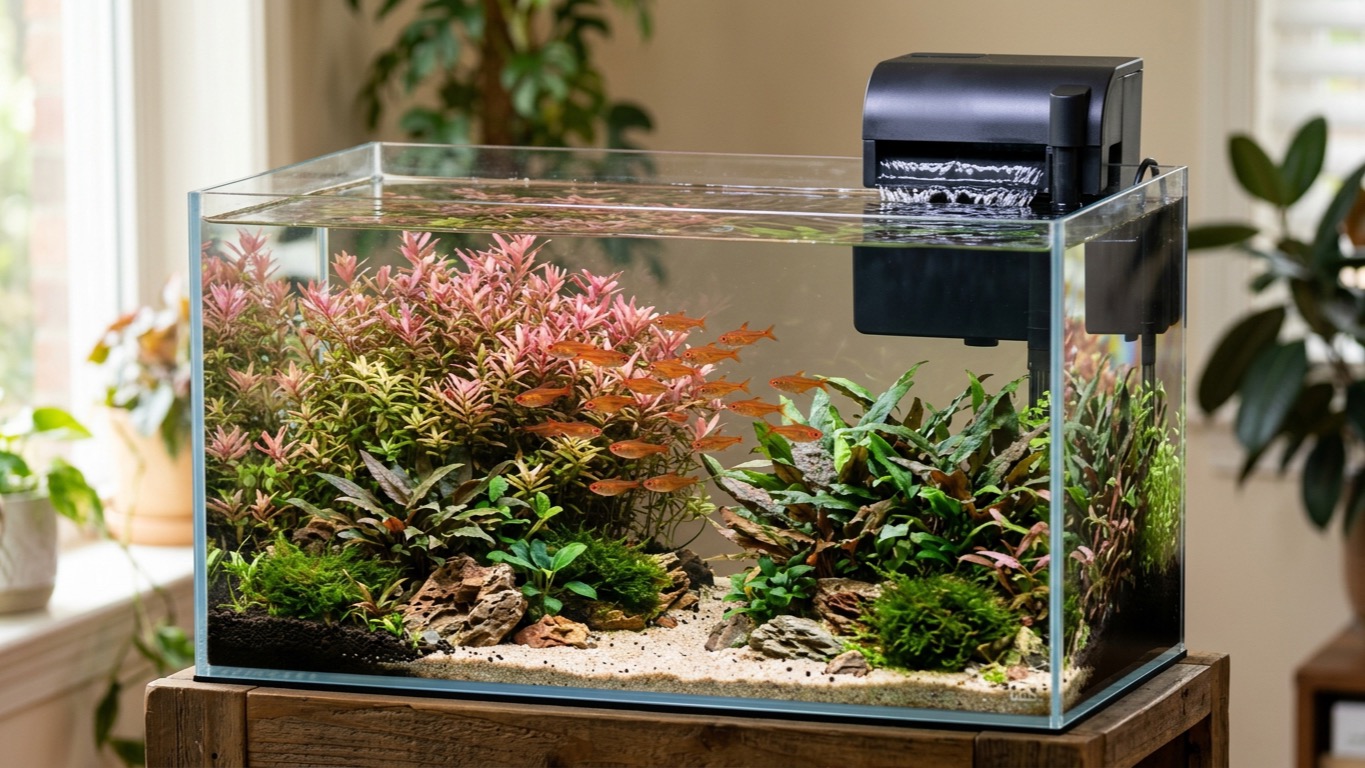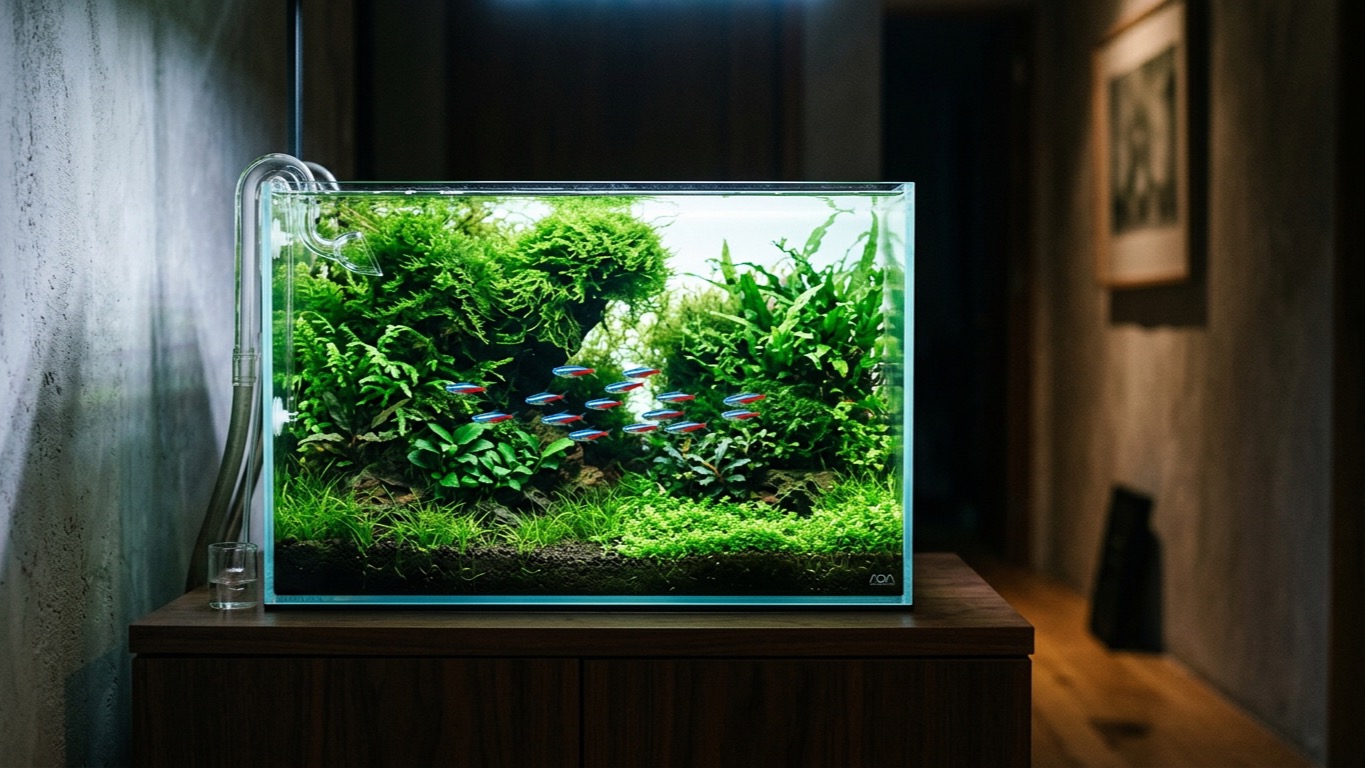
Quick answer: Start with a heated, filtered 10-gallon tank and one school of six small tetras or zebra danios. A single male betta works only if he is the only fish. Skip goldfish, common plecos, and bowls.
A 10-gallon tank should hold one school of six small tetras or one male betta, not a mix. This page is a research-desk guide comparing published care-sheet numbers;
The Spec-Sheet Gate: what this guide covers
We only cover species whose maker sheet lists a peaceful 20-gallon-or-smaller setup.
That rule is the Spec-Sheet Gate, and our research team compared five Aqueon care sheets: bettas, tetras, corydoras, livebearers, and danios. We used those pages for temperature, school size, and tank volume.
We left out every species those same sheets flag as nippy, large, or territorial, and
The Gate keeps these fish in:
- Neon, glowlight, lemon, and black neon tetras in schools of six
- Zebra danios and white cloud mountain minnows in schools of six
- One male betta as the only fish in a 10-gallon tank
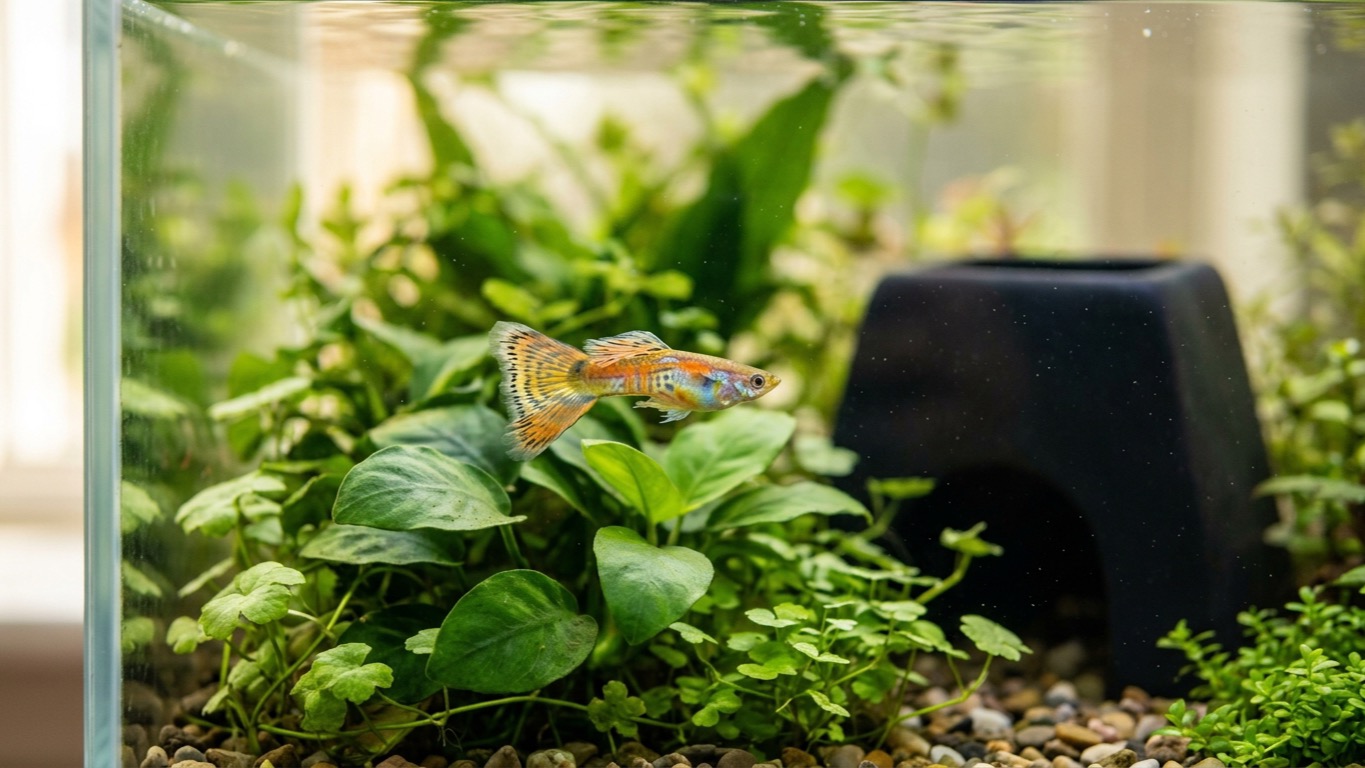
- Guppies or platies in a 10- to 20-gallon tank
- Pygmy corydoras only, not standard cory cats
The Gate keeps these fish out:
- Goldfish, common plecos, and two male bettas in one tank
- Cardinal tetras, which Aqueon’s tetra page calls more challenging
- Serpae tetras, which that page says can be nippy
- Buenos Aires tetras, which that page says get quite large
- Giant danios, which Aqueon’s danio page says can reach 5 inches
- Standard corydoras that Aqueon houses in a 30-gallon tank
Why a 10-gallon tank is the starting line
A 10-gallon heated, filtered tank is the smallest size that matches the published beginner numbers.
Aqueon’s tetra care guide says most tetras can live in 10- to 20-gallon aquariums, and they do best in schools of 6 or more.
Aqueon’s livebearer care guide says most varieties can live in 5- to 20-gallon aquariums, and larger tanks are easier to care for.
Aqueon’s betta page says males can live with other fish only in a peaceful community of 15 gallons or larger. That is why a 10-gallon betta tank stays a one-fish tank.
Aqueon’s corydoras page says a 30-gallon aquarium is best for most species. Only pygmy corys such as hastatus, habrosus, and pygmaeus can go in smaller tanks.
Our research team lined those five volumes up, and the first tank that fits a full school is 10 gallons.
Skip bowls and tiny kits sold next to bettas, because Aqueon’s betta page says larger habitats are more stable and easier to maintain.
Set the tank up before you buy fish. Aqueon’s betta page says to set the container up at least 48 hours before purchase. A longer wait is wiser because filter bacteria still need time to grow.
Small schooling fish that stay peaceful
The safest first stock is one mid-water school of six small, calm fish.
Aqueon’s tetra page lists neons, black neons, glowlights, and lemon tetras as good choices. It also names red eye and bloodfin tetras among popular beginner fish.
Use the Gate here and skip serpae tetras, because that same page says they can be nippy in low numbers.
Skip cardinals, emperors, and penguin tetras as well, since Aqueon says those need softer, more acidic water in an established tank.
Aqueon’s published tetra water numbers are:
- pH 6.8 to 7.8
- Alkalinity 3° to 8° dKH, or 50 ppm to 140 ppm
- Temperature 75°F to 80°F
- A heater if the room stays below 75°F
Aqueon’s danio page says most species grow to less than 2 inches, and it calls danios excellent fish for beginners.
That page also folds white cloud mountain minnows into the same group, and they share the same aquarium needs on that sheet.
Aqueon’s published danio water numbers are:
- pH 7.0 to 7.8
- Alkalinity 3° to 8° dKH, or 50 ppm to 140 ppm
- Temperature 70°F to 78°F
- A heater if the room stays below 70°F
- Schools of at least 6
Danios stay near the surface and stay in motion, and Aqueon says they are boisterous but rarely injure other fish.
They still need a long tank and a tight lid because they jump, so pick one school, not two.
Six small tetras or six zebra danios fill a first 10-gallon tank, and you should not add a second school on top of that group.
A single male betta as a one-fish tank
A male betta is a beginner fish only when he is the only fish in a heated, filtered 10-gallon tank.
Aqueon’s betta page lists a lifespan of 3 to 4 years and more than 70 recognized Betta species. The pet-store fish is usually Betta splendens.
Aqueon’s published betta water numbers are:
- pH 6.8 to 7.5
- Temperature 76°F to 85°F
- Calm water, not a strong filter blast
Aqueon says male bettas are highly territorial toward each other, so keep males apart and do not house two males in one tank.
That page allows tankmates only in a peaceful community of 15 gallons or larger. Suitable mates it names include tetras, rasboras, livebearers, and Corydoras.
A 10-gallon tank does not meet that 15-gallon community line, so keep the male alone there.
Aqueon also says bettas are jumpers, so use a secure lid. In a filtered tank, feed once or twice a day, and remove food still left after two minutes.
Do not treat a cup or vase as a home. Aqueon notes that bettas can gulp air in small water, but that is a survival trait, not a goal.
Livebearers and pygmy corydoras
Guppies and platies can be first fish in a 10- to 20-gallon tank, but standard corydoras cannot.
Aqueon’s livebearer page covers guppies, mollies, platies, and swordtails. It says they make great beginner fish because they tend to be peaceful, colorful, and hardy.
Aqueon’s published livebearer numbers are:
- Temperature 74°F to 78°F
- pH 7.0 to 8.4
- Tank size 5 to 20 gallons for most varieties
- Lifespan 5 to 7 years
- 2 to 3 females per male
- Birth about once a month
Keep more females than males, because Aqueon says males chase females and a 2-to-3 female ratio lowers that stress.
Plan for babies, because Aqueon says livebearers reproduce without help. Females can give birth about once a month, and plants give fry a place to hide.
Mollies need extra thought, and Aqueon says they benefit from 1 teaspoon of sea salt or non-iodized aquarium salt per gallon.
Add salt only if every other fish can handle it. For a first tank, platies or guppies are the simpler livebearer pick.
Aqueon’s corydoras page says there are over 170 recognized species, and they should be purchased in groups of 5 or more.
It also says a 30-gallon aquarium is best for most species, and that fails the Spec-Sheet Gate for a 10-gallon start.
The exception is pygmy corys, and Aqueon names hastatus, habrosus, and pygmaeus for smaller tanks.
Add a group of five only after the tank is established. Aqueon says these catfish should never be added to new aquariums or neglected ones.
Aqueon’s published numbers for most captive-bred corys are:
- pH 7.0 to 8.0
- Alkalinity 3° to 10° dKH, or 54 ppm to 180 ppm
- Temperature 74°F to 80°F
- Sand or fine, rounded gravel, not sharp rock
Filter, plants, and feeding from the published sheets
Match the filter to tank volume, plant the tank with easy stems, and feed only what fish finish in two minutes.
A hang-on-back or sponge filter should turn the water over without blasting bettas or tetras. See our hang-on-back filter guide for one common model.
For a wider look at what keepers run, read our filter picks from Reddit threads. Use those pages to size the filter, not to pick fish.
Live plants hide fry and calm schooling fish. Aqueon’s tetra page says they show better color in a well-decorated tank.
Aqueon’s danio page asks for tall or floating plants near the surface, and our low-maintenance planted aquarium plants guide covers hardy beginner stems.
Our research team compared the five Aqueon care sheets for shared chores, and four groups use the same water-change pair:
- Change 10% of the water each week, or
- Change 25% every 2 weeks
Bettas in a filtered tank are close, and Aqueon’s betta page says to change 10% each week or 25% every 2 weeks.
In small unfiltered containers it says to change 1/3 of the water every 3 to 4 days. That last schedule is a warning, not a plan.
Use a filter, then stay on the 10% or 25% pair, and never replace all the water at once.
The overlapping temperature band across those five sheets is 76°F to 78°F.
- Bettas: 76°F to 85°F
- Tetras: 75°F to 80°F
- Corydoras: 74°F to 80°F
- Livebearers: 74°F to 78°F
- Danios: 70°F to 78°F
Set the heater to 77°F if you later mix groups in a 20-gallon tank. That number sits inside every published range above.
Aqueon repeats the same feeding clock on the tetra, danio, livebearer, and betta pages. Feed once or twice a day, and offer only what fish consume in under 2 minutes.
Corydoras get a slightly longer window, and Aqueon says 2 to 3 minutes, once or twice a day, with food that reaches the bottom.
The manufacturer’s page for TetraMin Flakes states these label numbers:
- Crude protein 46%
- Crude fat 11%
- Crude fiber 2%
- Moisture 7%
- Vitamin D3 1848 IU/kg
That flake is made for mixed freshwater tanks, but leftover food still fouls the water.
Species and setups this guide leaves out
If a care sheet lists a 30-gallon home, a 5-inch adult, or a nippy warning, that fish is not a first fish.
Goldfish fail the Gate on waste and adult size, so they are not a 10-gallon community fish. Common plecos fail on adult size and outgrow starter tanks.
Marine fish fail on equipment and saltwater care, and this page is freshwater only. Two male bettas fail Aqueon’s territorial rule.
A mixed 10-gallon grab bag fails the published volumes, because tetras want a school of six and bettas want 15 gallons before tankmates.
A 20-gallon long tank is the first size that can hold a school plus a bottom group.
- Six small tetras or six zebra danios
- Five pygmy corydoras after the tank is established
- No male betta on top of that school
FAQ
Can I keep a betta with neon tetras in a 10-gallon tank?
No. Aqueon’s betta page allows tankmates only in a peaceful community of 15 gallons or larger. A 10-gallon tank does not meet that line, so keep a male betta alone or keep a tetra school with no betta.
How many fish belong in a first 10-gallon tank?
One school of six small tetras or six zebra danios, or one male betta and no other fish. Aqueon’s tetra and danio pages both set the school floor at 6.
Do these beginner fish need a heater?
Yes, unless your room stays inside the published range all year, and most homes need the heater. Aqueon calls for a heater below 75°F for tetras, below 74°F for livebearers and corys, below 76°F for bettas, and below 70°F for danios.
When can I add pygmy corydoras?
After the tank is established, not on setup day. Aqueon’s corydoras page says these catfish should never be added to new aquariums. Buy a group of 5 or more, and use sand or smooth gravel.
Are guppies good first fish?
Yes, if you plan for babies and keep extra females. Aqueon lists livebearers as beginner fish with a 5- to 20-gallon tank range and a 5- to 7-year lifespan. Use 2 to 3 females per male, and expect births about once a month.
What should beginners skip at the store?
Skip goldfish, common plecos, giant danios, serpae tetras, Buenos Aires tetras, and cardinal tetras. Aqueon’s tetra page calls cardinals more challenging, and its danio page lists giant danios at 5 inches.
How often should I change the water?
In a filtered tank, follow the pair Aqueon repeats on four of the five sheets: 10% each week or 25% every 2 weeks. Treat tap water before it goes in, and never replace all the water at once, as Aqueon’s betta page states.