Quick answer: Pond turtles are opportunistic omnivores. Juveniles need more animal protein daily, while adults shift toward leafy plants plus measured pellets every few days.
Balance protein, plants, and pellets by age.
We compared published care data on freshwater pond turtles, painted turtles, and red-eared sliders kept as pets. Our research team analyzed wild foraging notes, commercial pellet protein ranges, and captive feeding schedules. Owners consistently report cleaner water and steadier shells when keepers match age-based ratios and remove leftovers after short meals.
Comparing published specs, many commercial turtle pellets list about 30–50% protein on the label. Juvenile carnivorous portions often fill up to about two thirds of intake, while adult animal foods commonly sit near about half or less. Many adult plans push plant matter toward about 75% of the plate. Juveniles usually eat daily; adults often eat every two or three days. This page covers wild menus, age shifts, pellets, produce, calcium support, and feeding hygiene.
Include varied protein, dark leafy greens, quality aquatic turtle pellets, and cuttlebone or calcium blocks. Leave out grocery raw meats and constant oily fish dumps. Skip wild-caught prey and processed human leftovers such as lunch meat.
Scope board:
| Include | Leave | Skip |
|---|---|---|
| Age-matched protein and greens | All-pellet forever menus | Wild-caught fish or frogs |
| Floating leafy vegetables | Iceberg lettuce fillers | Grocery raw chicken or meat |
| Measured turtle pellets | Daily adult feasts | Hot dogs and lunch meat |
| Cuttlebone calcium access | Oily fish as the staple | Untested “mystery mix” gels |
Match wild foraging with insects, snails, plants, and carrion themes
Wild pond turtles eat what the water offers that day.
In ponds and wetlands they take aquatic insects, larvae, worms, snails, crayfish, tadpoles, and soft plant matter. Algae, duckweed, and water-lily tissues appear in many natural notes. Carrion and weak fish show up when chance allows. Juveniles hunt animal prey harder because growth demands protein. Adults still take animals, yet plant grazing rises as metabolism and habitat shift. Captive menus should echo that mix without copying unsafe wild-caught prey.
Wild menu board:
| Item type | Captive echo |
|---|---|
| Aquatic insects | Gut-loaded crickets, worms |
| Snails and crustaceans | Farmed snails, shrimp treats |
| Soft fish or tadpoles | Occasional feeder fish only |
| Duckweed and greens | Floating leafy vegetables |
| Carrion opportunism | Not a grocery-meat green light |
Our research team analyzed omnivore notes that reject “strict carnivore” labels for most pond species. Comparing published specs favors variety over one prey type. Owners consistently report brighter appetite when textures rotate through the week. Never harvest wild amphibians or fish for the tank. Edge case: true softshell hunters still need more animal protein than plant-heavy sliders.
Shift juveniles toward protein, then raise adult plant share
Age changes the plate more than brand loyalty does.
Hatchlings and young turtles lean carnivorous and eat heartily each day when healthy. Many care notes aim near a 50% protein and 50% vegetable split under about one year. After that first year, plant matter often rises toward about 75%, with animal foods a few times weekly. Adult animal portions commonly stay near half or less of total intake. Protein sessions often last about five to ten minutes of active eating. Vegetable piles often match roughly the shell’s footprint; pellet portions often match roughly the head’s size.
Age board:
| Stage | Common diet theme |
|---|---|
| Under ~6–12 months | Daily protein plus daily greens |
| About 50/50 young split | Protein and plants both offered |
| Over ~1 year | Plants rise; protein 1–3× weekly |
| Adult pellet days | Often 2–3 times weekly |
| Adult meal spacing | Often every 2–3 days |
Owners consistently report obesity when adult turtles still eat hatchling portions daily. Our research team analyzed growth notes that warn against forcing shells to race. Comparing published specs favors slower, steadier growth over heavy protein dumping. Watch for refusal after large meals and cut volume. Ask a veterinarian before crash-dieting a heavy turtle.
Use commercial aquatic turtle pellets as a measured backbone
Pellets carry vitamins many kitchen menus miss.
Extruded and pelleted aquatic turtle foods often list about 30–50% protein and suit many carnivorous and omnivorous freshwater turtles. Brands named in care notes include Mazuri, Zoo Med, and Fluker’s lines made for aquatic turtles. Pellets should not be the entire diet for plant-leaning adults. Choose sizes that float for large turtles or sink for small jaws. Read every manufacturer label for life-stage claims and storage rules.
Pellet checklist:
- Pick aquatic-turtle formulas, not random fish flakes alone
- Offer a head-sized portion as a common starting cue
- Use pellets on scheduled days, not endless free-choice dumps
- Rotate textures if your turtle fixates on one shape
- Store bags dry and follow the maker’s freshness window
Our research team analyzed commercial diet notes that still recommend vegetables beside pellets. Comparing published specs rejects “pellets only forever” for many adult pond turtles. Owners consistently report less picky eating when pellets join greens and occasional prey. Skip mystery bulk mixes without clear labels. If appetite crashes for days, call a veterinarian familiar with reptiles.
Offer dark leafy greens and floating plants every day adults can graze
Plant matter is not a garnish for adult pond turtles.
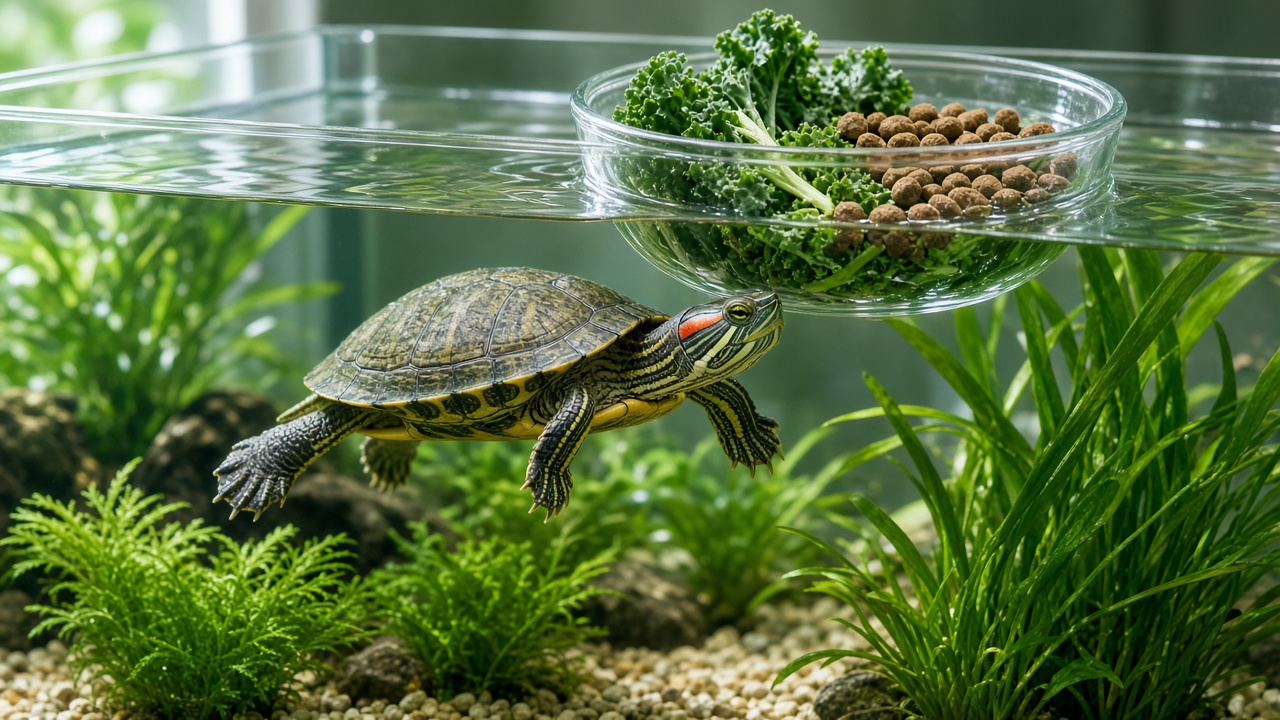
Safe floating greens include romaine, collard, mustard, turnip greens, dandelion, endive, and kale in common care lists. Green beans, shredded carrot, and squash add texture in many menus. Red bell pepper shreds supply vitamin A themes keepers prize. Duckweed and other non-toxic aquatic plants can stay for all-day nibbling. Avoid iceberg lettuce because it is mostly water with little nutrition. Remove wilted leftovers daily so ammonia does not climb.
Greens board:
| Produce | Keeper tip |
|---|---|
| Dark leafy greens | Daily adult graze staple |
| Shredded carrot or squash | Small variety add-ons |
| Red bell pepper | Color and vitamin A theme |
| Duckweed or safe aquatics | Leave to nibble |
| Iceberg lettuce | Skip as empty filler |
Owners consistently report better adult stools when greens outrank fatty treats. Our research team analyzed produce notes that favor floating leaves turtles can hunt. Comparing published specs still keeps fruit rare because sugar adds little unique value. Check every plant for toxicity before offering. Wash produce; skip dressings, salt, and oils.
Feed insects, worms, and rare fish for enrichment, not the whole diet
Live and frozen prey trains hunting without replacing balance.
Earthworms, crickets, and other gut-loaded insects mirror wild invertebrate meals. Occasional farmed feeder fish can add chase enrichment, yet parasite risk means infrequent use only. Oily fish such as mackerel themes should stay rare because fat load and vitamin balance suffer. Grocery raw meat, chicken, or fish lacks proper calcium-to-phosphorus balance for turtles. Processed human foods never belong in the menu.
Prey rules:
- Prefer farmed insects and worms over wild-caught prey
- Limit feeder fish; never rely on them as the staple
- Skip grocery raw meats as everyday protein
- Cap juvenile animal foods near about two thirds of intake
- Cap adult animal foods near about half or less
Our research team analyzed enrichment notes that praise short hunts more than endless fish tubs. Comparing published specs favors whole prey over boneless grocery scraps. Owners consistently report clearer water when prey meals stay brief and leftovers leave the tank. Quarantine new feeders when your setup allows. Seek veterinary guidance if parasites or soft shells appear.
Support calcium, UVB, and clean water while you feed
Diet fails without light, minerals, and hygiene.
Many veterinarians suggest a balanced multivitamin about once weekly plus calcium support such as cuttlebone or a calcium block about twice weekly. Turtles often chew cuttlebone when they need minerals and to wear the beak. Pellets help fill gaps, yet UVB basking support still matters for vitamin D pathways in captive reptiles. Feed in a separate warm tub when possible so the display stays cleaner. Scoop leftovers the same day; wash hands after every turtle chore because Salmonella risk is real.
Calcium and hygiene board:
| Support | Common care theme |
|---|---|
| Cuttlebone or calcium block | Free-choice access in habitat |
| Multivitamin | About once weekly in many plans |
| UVB basking setup | Follow lamp maker guidance |
| Separate feeding tub | Cuts display fouling |
| Handwashing | After every handling session |
Owners consistently report shell problems when diet is rich but UVB and calcium are weak. Our research team analyzed metabolic bone disease themes tied to poor mineral balance. Comparing published specs favors steady minerals over megadose panic supplements. Never guess drug doses from social media. Call a veterinarian for soft shells, swollen eyes, or sudden refusal to eat.
FAQ
What do pond turtles eat in the wild?
They take insects, worms, snails, crustaceans, soft plants, algae, and occasional fish or carrion. Juveniles hunt animal prey more; adults add more vegetation. Season and habitat shift the mix. Captive diets should echo that variety with safe farmed foods. Skip wild-caught prey that can bring parasites.
How often should I feed a pond turtle at home?
Healthy juveniles usually eat daily with both protein and greens. Adults often do well on a solid meal every two or three days, with greens available more often. Watch body condition and leftover piles. Cut volume if the turtle grows round and lazy. Ask a veterinarian before sudden fasting plans.
Are turtle pellets enough by themselves?
Pellets with about 30–50% protein make a strong backbone, yet most adult pond turtles still need leafy plants. Young animals also benefit from varied prey textures. Read manufacturer labels for aquatic turtle formulas. Rotate greens and measured protein beside pellets. Seek vet advice if growth looks uneven.
Which vegetables are safest for pond turtles?
Dark leafy greens such as romaine, collards, mustard greens, dandelion, and turnip greens lead many lists. Green beans, shredded carrot, squash, and red bell pepper add useful variety. Floating safe aquatic plants help all-day grazing between scheduled meals. Avoid iceberg lettuce because it is mostly water. Remove spoiled produce daily so water quality stays stable.
Do pond turtles need calcium supplements?
Many care plans keep cuttlebone or a calcium block available and add a multivitamin about weekly. Calcium support about twice weekly appears in common veterinary feeding notes. UVB lighting supports related vitamin D pathways. Do not invent megadoses from forums. Confirm products with a reptile-savvy veterinarian.
Can I feed feeder fish every day?
No. Feeder fish can enrich hunting yet may carry parasites and bacteria. Keep them infrequent if you use them at all. Prefer insects, worms, and quality pellets for steady protein. Skip oily fish as a staple. Quarantine concerns belong in a veterinary conversation when illness follows fish meals.
Why did my adult turtle stop eating pellets?
Boredom, water quality, temperature, illness, or an all-pellet rut can suppress appetite. Offer greens, change pellet size, and check heat and filtration carefully. Remove spoiled food that fouls the water and masks true hunger cues. Sudden long refusal needs a veterinary exam. Never force-feed without professional guidance from a reptile veterinarian.
This guide is informational only and does not replace advice from a qualified veterinarian familiar with aquatic turtles.