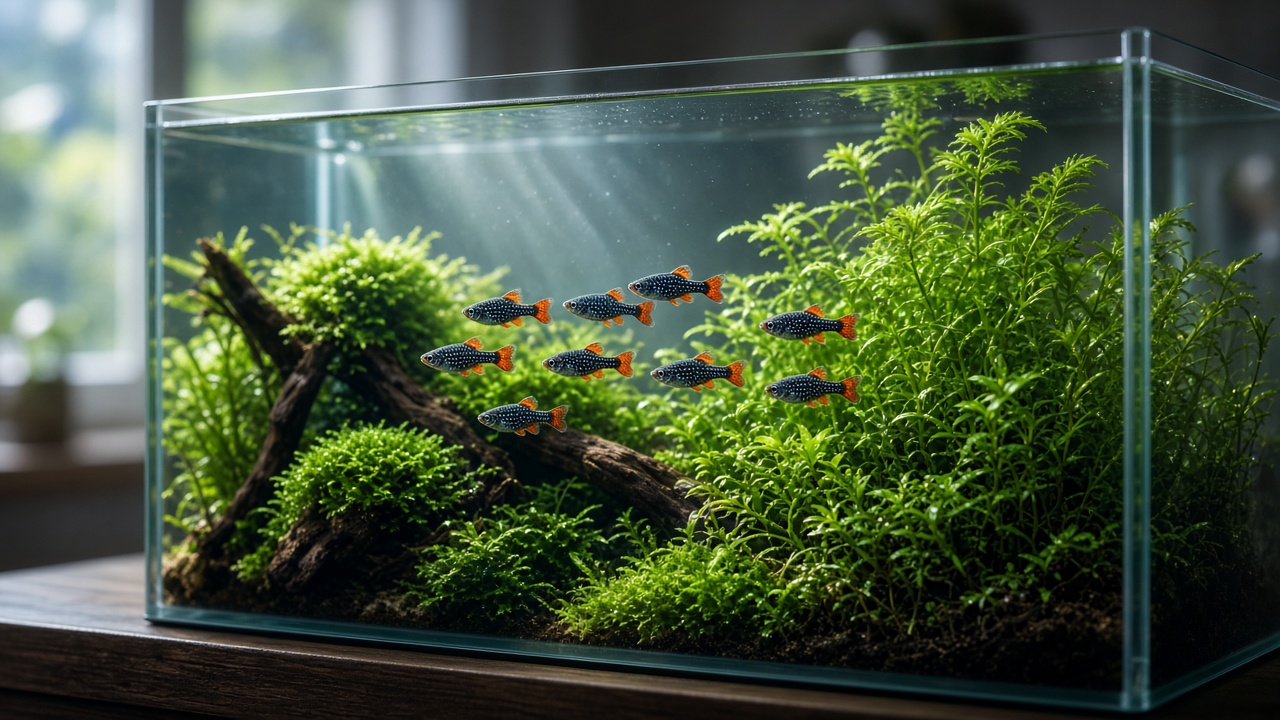
Quick answer: Keep galaxy rasboras as a school in a planted freshwater tank of at least 10 gallons. Feed tiny flakes and skip large, fast tankmates.
FishBase lists adult galaxy rasboras at 2.1 cm standard length. This page is a home-aquarium research brief on care, tank setup, diet, and breeding. Our research team analyzed published species records and maker spec sheets.
Selection rule: We included only freshwater products still sold on a maker page for small tropical fish or for tanks of 10 gallons and up. We left out marine kits, wild-collection steps, and foods sold only as large pellets.
What galaxy rasboras are
Galaxy rasboras are tiny Myanmar pond fish, not large river rasboras.
FishBase lists the species as Danio margaritatus (Roberts, 2007) and uses the common name galaxy rasbora. That record is the baseline this desk uses for size, range, and habitat.
FishBase lists maximum standard length at 2.1 cm for males and for females. Plan every tankmate and every food around that short body and small mouth.
FishBase places the species in Myanmar and lists a freshwater, pelagic habitat with a depth range of 0 to 1 m. The biology note says they inhabit small, shallow ponds maintained by springs or seepage.
Those ponds are at most 30 cm deep and stay clear unless the bottom is stirred. FishBase records water temperatures of 22–24°C in January 2007, which is about 72–75°F.
That January reading is a cool-season field note, not a year-round home-tank law. FishBase says the ponds hold thick plants like Elodea or Anacharis.
It also lists three other fishes from those ponds, including a snakehead that would eat a 2.1 cm fish. A home tank should not copy that predator mix.
FishBase reports the IUCN Red List status as Data Deficient, with an assessment date of 22 January 2010. Data Deficient means the assessors lacked enough population facts, not that the fish is safe to harvest.
FishBase also lists 30–32 vertebrae and 3 anal spines. Those counts help a careful buyer tell this species from a look-alike danio.
FishBase lists a trophic level of 3.0, plus or minus 0.4. That score points to a small animal-eating fish, not a plant-only grazer.
FishBase lists high resilience, with a minimum population doubling time under 15 months. It also lists low fishing vulnerability at 10 of 100 and marks CITES as Not Evaluated.
This desk treats those records as wild-habitat notes. They are not a promise that every home tap will match Myanmar spring water.
Tank setup for a school
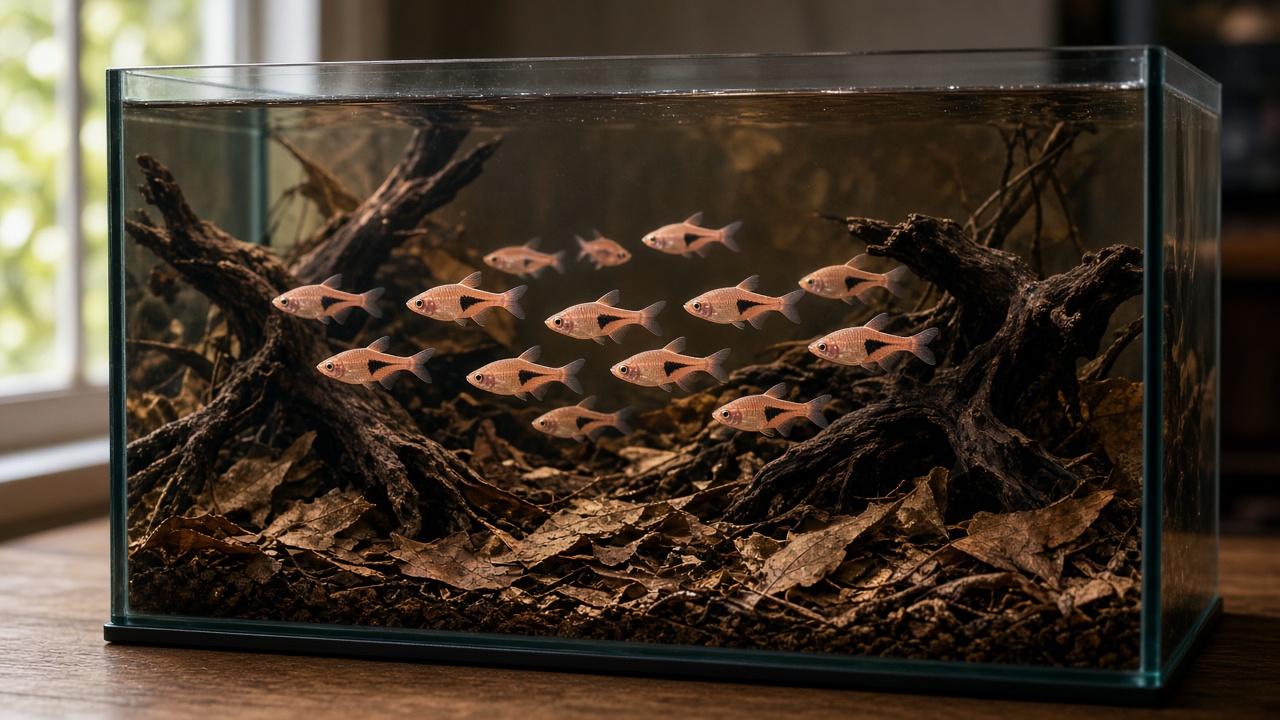
A planted 10-gallon freshwater kit can house a school of these 2.1 cm fish.
Aqueon’s Rectangle LED Kits page lists boxed sizes of 10, 20 High, 29, and 55 gallons. The 10-gallon option is the smallest kit this desk compared for a home school.
The dimensions shown on that Aqueon page are 22.88 by 12.75 by 13.88 inches. That footprint is long enough for short, darting swims and still small enough for dense plants.
Aqueon’s kit page says the preset heater holds 78°F. That preset sits a few degrees above FishBase’s January range of 22–24°C.
If your room already sits near 72–75°F, you may not need that full preset heat. Watch the stick-on thermometer that Aqueon lists in the kit.
Aqueon’s kit page lists a glass tank, LED hood, QuietFlow filter, heater, food sample, water conditioner sample, net, and thermometer. Gravel, plants, and fish are sold separately.
Add plants that break the open water, because galaxy rasboras hover, dart, and slide into cover when a hand appears. Thick stems also give them a place to scatter eggs later.
Setup steps:
- Place the empty 10-gallon tank on a stand built for water weight.
- Rinse hardscape with water only. Do not use soap.
- Add a thin sand or fine-gravel bed.
- Plant stems and moss before you fill the tank.
- Fill with tap water treated with Seachem Prime.
- Cycle the filter until the API kit reads zero ammonia and zero nitrite.
- Add the school only after those two tests stay at zero.
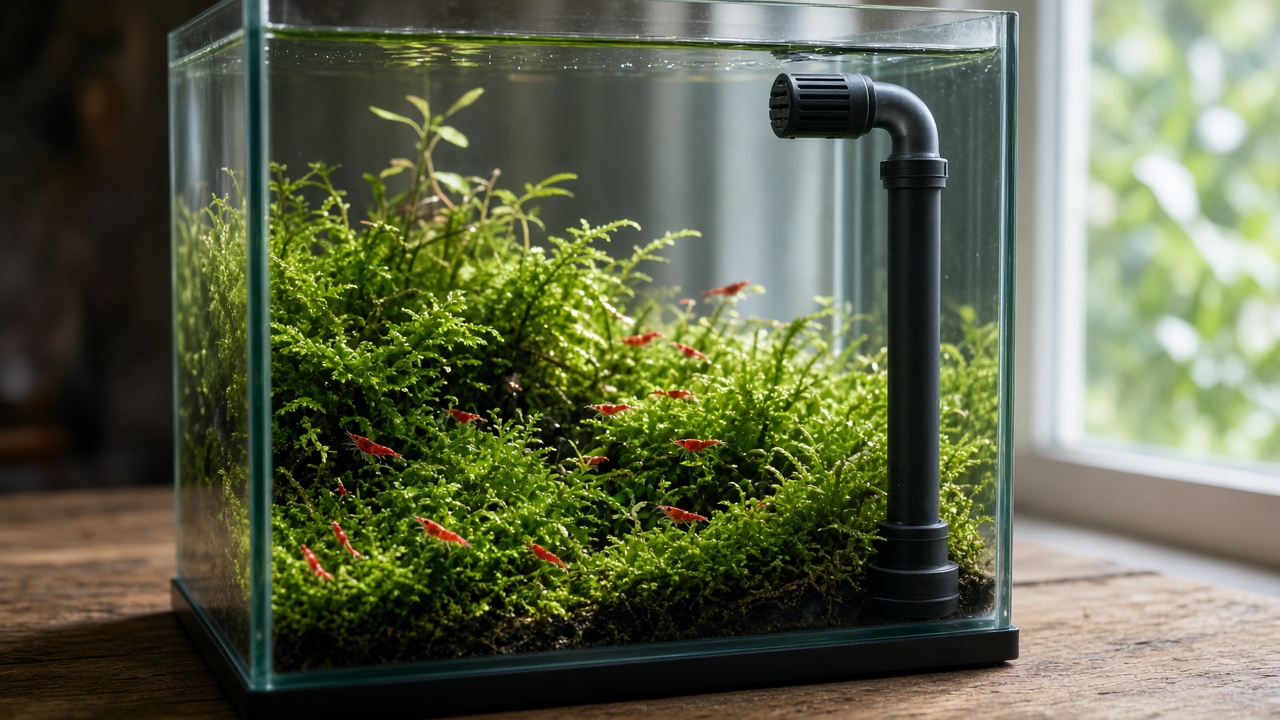
Aqueon’s PRO QuietFlow page lists a Size 10 filter at 6.3 by 3.8 by 6.4 inches. It lists a 5-stage system, Medium cartridges, and a self-priming pump.
That Size 10 filter matches the smallest Aqueon kit we compared. Point the outflow along the glass so the current stays gentle for a 2.1 cm fish.
Aqueon’s filter page also lists sizes 20, 30, 50, and 75. Those larger bodies push more flow than a galaxy rasbora school needs in a 10-gallon tank.
Gear attributes we compared
Our research team compared listed specs from maker pages. This table is an attribute list, not a ranking.
| Product | Maker-listed role | Listed size, dose, or count | Listed format |
|---|---|---|---|
| Aqueon Rectangle LED Kit (10) | Boxed freshwater starter kit | 22.88 in × 12.75 in × 13.88 in; 78°F preset heater | Glass tank with hood, filter, and heater |
| Aqueon PRO QuietFlow Power Filter (Size 10) | 5-stage power filter | 6.3 in × 3.8 in × 6.4 in | Hang-on filter; Medium cartridges |
| Fluval Bug Bites Tropical Flakes | Daily tropical diet | 18 g (0.63 oz); min. 46% crude protein | Flakes |
| API Freshwater Master Test Kit | Freshwater water tests | 4 test tubes; weekly checks | Liquid tests for pH, ammonia, nitrite, and nitrate |
| Seachem Prime | Tap-water conditioner | 5 mL per 50 US gal | Liquid bottles from 50 mL to 4 L |
Water care and testing
Stable, cycled freshwater matters more than chasing a perfect extra number.
FishBase does not list a home-tank pH target on the species page we used. It only records cool, clear pond water in January 2007.
API’s Freshwater Master Test Kit page says to test weekly for best results. The kit includes four test tubes, a holding tray, and a laminated color card.
API’s page lists tests for pH, high range pH, ammonia, nitrite, and nitrate. It states that a pH of 7.0 is neutral, with higher readings alkaline and lower readings acidic.
Weekly checks:
- Ammonia should read zero before you add fish, and stay there.
- Nitrite should read zero.
- Nitrate should stay in check through water changes.
- pH should stay steady from week to week.
API’s page says to fill the tubes, add the drops, and compare the color card. Then follow the card if a reading calls for action.
Seachem’s Prime page lists a dose of 1 capful (5 mL) for each 50 US gallons of new water. Each cap thread is about 1 mL.
A 10-gallon fill therefore needs about 1 mL of Prime. For 2.5 gallons of new water, the same Seachem ratio is about 0.25 mL.
Seachem’s page says Prime binds ammonia, nitrite, and nitrate for up to 48 hours. It also says you may dose every 24–48 hours.
Seachem’s page says a 5-times dose is for emergencies when ammonia or nitrite is above 2 ppm. That is a crisis dose, not a weekly habit.
Seachem lists bottle sizes of 50 mL, 100 mL, 250 mL, 500 mL, 1 L, 2 L, and 4 L. A sulfur smell is normal on that maker page.
Treat new water first, match temperature, and pour it in slowly. Do not chase a wild-pond copy of Myanmar.
Diet for a tiny mouth
Use a flake or micro food that a 2.1 cm mouth can swallow.
Fluval’s Bug Bites Tropical Flakes page lists an 18 g (0.63 oz) pack. The same page lists a minimum of 46% crude protein from more than one protein source.
Fluval’s guaranteed analysis on that page also lists these values:
- Crude fat minimum 8%
- Crude fiber maximum 1.5%
- Moisture maximum 6%
- Ash maximum 7%
- Vitamin A minimum 25,000 IU/kg
- Vitamin D3 minimum 1,450 IU/kg
- Ascorbic acid minimum 440 mg/kg
Fluval’s feeding line says to feed as much as the fish can eat in two minutes. Do that two or three times daily.
Feeding routine:
- Offer a pinch of flakes that hangs in the midwater.
- Stop at two minutes, as Fluval’s page states.
- Remove uneaten flakes so waste does not pile up.
- Skip large pellets made for cichlids or goldfish.
Galaxy rasboras have a small, upturned mouth, so large pellets waste food and foul the water. Fluval lists black soldier fly larvae as the first ingredient on that flake page.
This desk compared listed protein and feed times, not flavor.
Tankmates this desk includes
Keep them with other tiny, calm freshwater fish, not hunters.
FishBase lists a snakehead from the same wild ponds. That is a predator note from the species record, not a tankmate tip.
In a 10-gallon Aqueon kit, skip anything that can swallow a 2.1 cm fish. Skip fast barbs that reach the flakes first and leave the school hungry.
Safer company, if you add any:
- Small shrimp, if you accept some loss of baby shrimp
- Other tiny, calm danios of similar size
- Snails that clean leftover flakes
Do not add:
- Angelfish, gouramis, or cichlids
- Large tetras or barbs
- Any fish sold as a hunter
Galaxy rasboras look bold in photos, but they hide if the current is strong or tankmates are pushy. A single fish looks dull and shy, while a school shows the blue body and pearl spots.
Aqueon’s 20 High kit from the same page gives more length if you want extra room. The 29- and 55-gallon kits on that page are larger than this species needs.
Breeding in a home tank
They scatter eggs in plants, and adults will eat those eggs.
FishBase leaves hatch time and egg count blank on the species page we used. This desk will not invent those numbers.
If you want fry, use a second planted tank so eggs are not a snack. Move the adults out after you see eggs, or lift the moss into the rearing tank.
Home breeding steps:
- Condition the group on Fluval Bug Bites Tropical Flakes.
- Keep temperature near FishBase’s January range of 22–24°C.
- Offer dense moss or fine plants.
- Remove adults once eggs appear.
- Feed fry foods small enough for a new hatch, not whole adult flakes.
Do not expect a 10-gallon display tank to raise many fry. Adults graze the same plants they spawn in, and a QuietFlow return can blow eggs off the moss.
This is a hobby project, not a farm plan.
FAQ
How big do galaxy rasboras get?
FishBase lists 2.1 cm standard length for males and females. Plan tankmates and food around that size. A 2.1 cm fish cannot compete with large community fish for flakes.
What tank size do they need?
Aqueon’s Rectangle LED Kits page lists a 10-gallon boxed kit as its smallest size. That is the smallest setup this desk compared. A 20 High kit from the same page gives more swimming room if your stand can hold it.
What temperature should I use?
FishBase records 22–24°C in the wild ponds in January 2007. Aqueon’s kit page lists a 78°F preset heater. If you use that kit, watch the thermometer and avoid extra heat on warm days.
What should I feed them?
Fluval’s Bug Bites Tropical Flakes page lists a two-minute feed, two or three times a day. The same page lists 46% minimum crude protein. Skip foods made for large mouths.
How do I treat tap water?
Seachem’s Prime page lists 5 mL per 50 US gallons of new water. For a 10-gallon fill, that is about 1 mL. Add it to the new water before it goes in the tank.
Can I keep one galaxy rasbora?
A single fish will hide and lose the school look. Buy a group that still fits a 10-gallon planted tank. Do not mix them with hunters.
Are wild stocks at risk?
FishBase reports an IUCN status of Data Deficient, assessed on 22 January 2010. That is a data gap, not a green light for wild-caught fish. Buy captive-bred fish when the seller can say so.