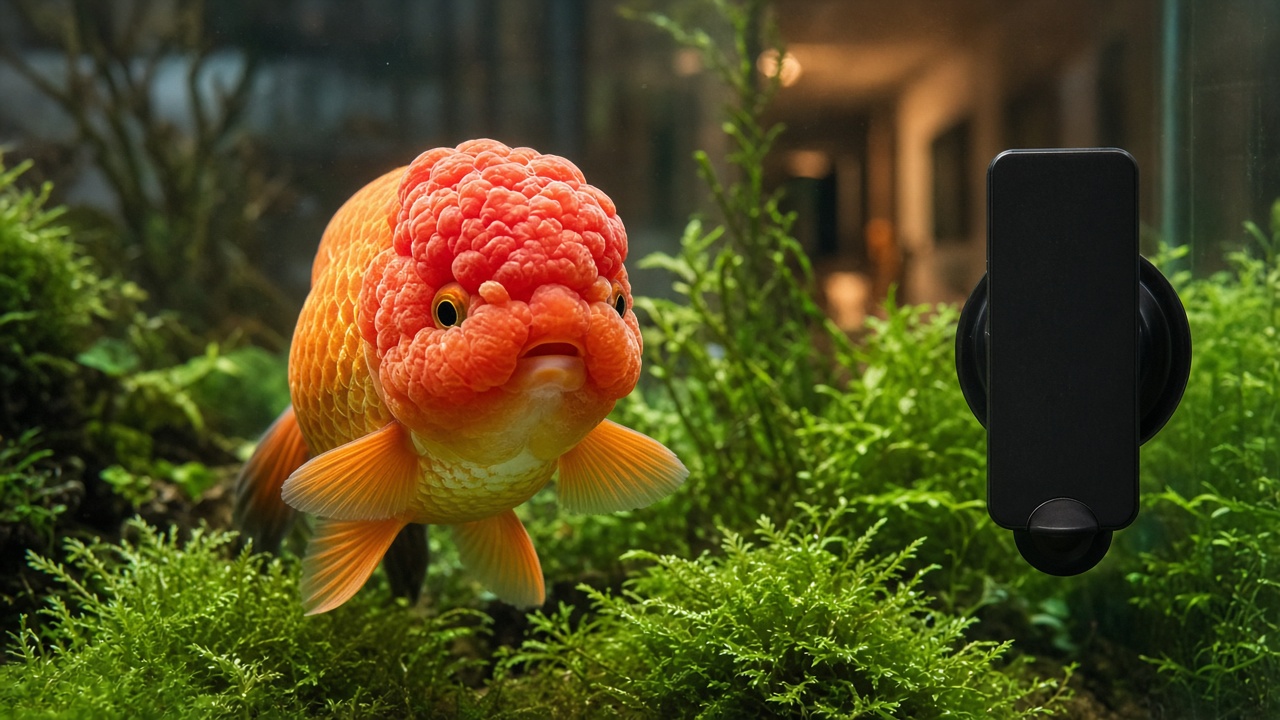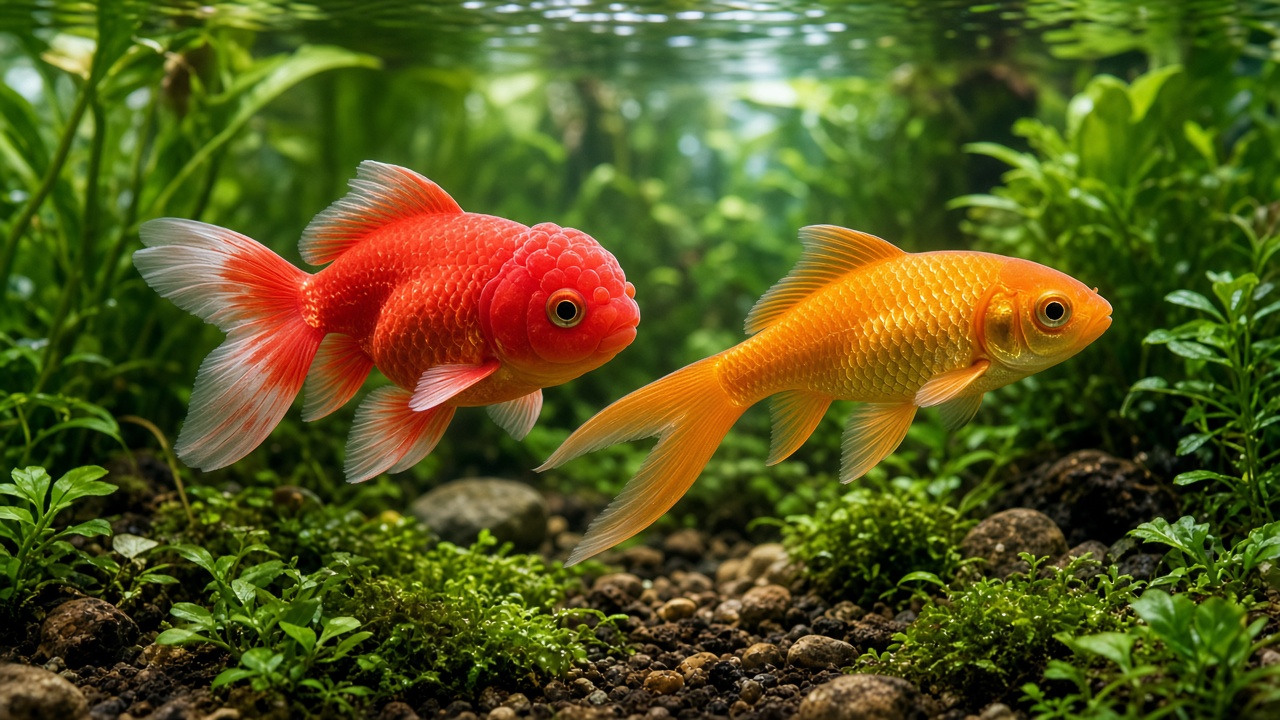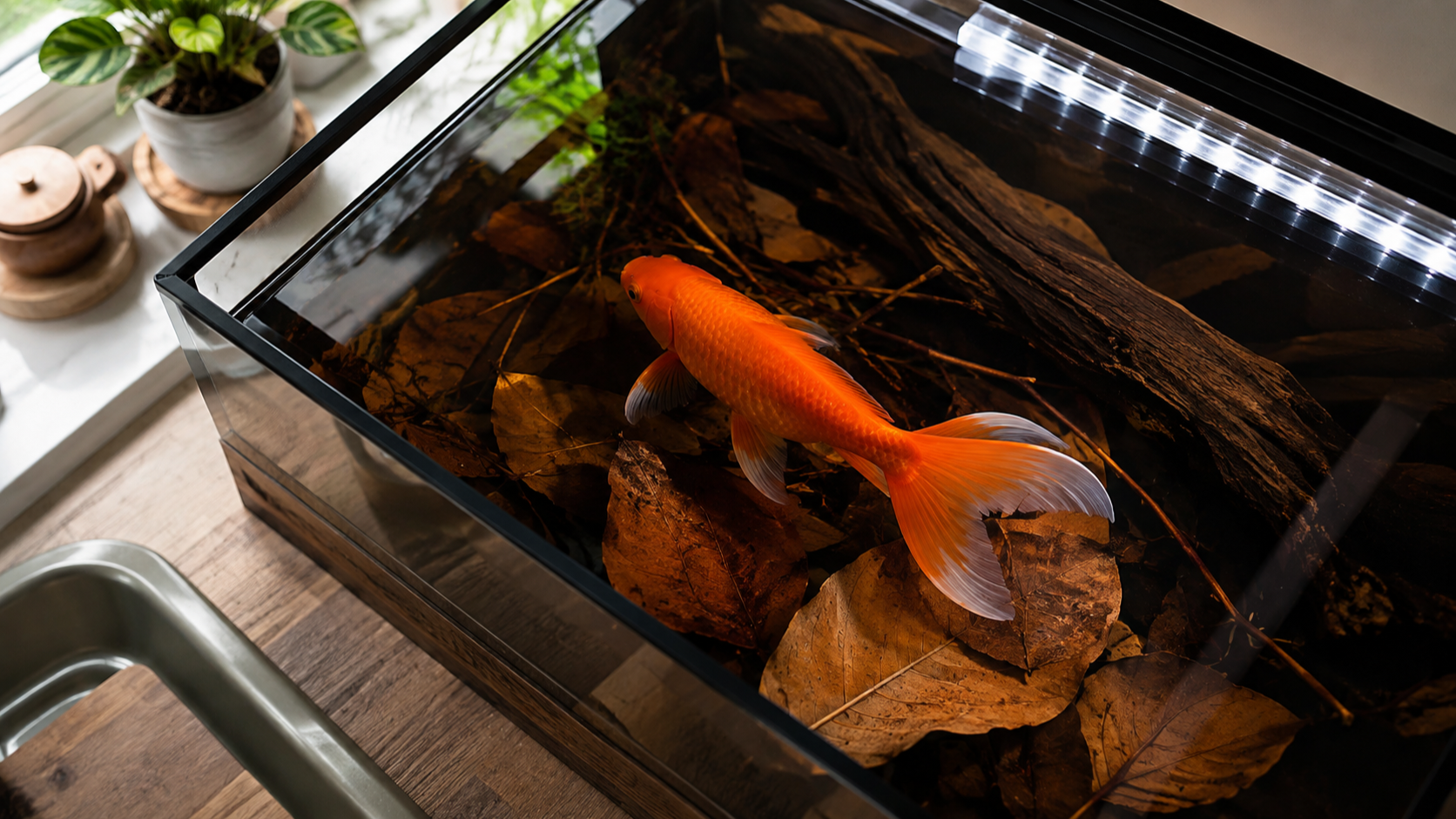
Quick answer: Plan for an adult goldfish between 4 and 8 inches in a home tank. Slim commons and comets often grow larger than that, and published maxima exceed 18 inches. Match the tank to the adult body, not the store size.
A goldfish can reach 48.0 centimeters in total length, the maximum listed on FishBase. This page is a published-spec desk review, not a live-fish growth study.
The selection rule we used
We kept a size or housing number only when FishBase, the U.S. Geological Survey, Aqueon, or Guinness World Records printed it. We left out koi, uncredited hobby charts, and feeder-bag marketing claims.
That cut is the Waterpuppy Two-Body Size Rule. Slim-bodied goldfish and fancy goldfish share one species name, but they do not share one adult plan. Our research team analyzed those four pages side by side and converted matching units.
What published records say about maximum size
Published ceilings disagree, and the gap is large enough to plan around.
FishBase lists a maximum total length of 48.0 cm for Carassius auratus, which equals 18.9 inches from snout to tail tip. FishBase also lists a common length of 10.0 cm, or 3.9 inches.
The USGS NAS profile uses a different stick and lists 120 to 220 mm standard length (4.7 to 8.7 inches without the tail).
The same USGS profile lists a maximum of 410 mm standard length, or 16.1 inches. It then cites a higher total-length ceiling: goldfish may reach 59 cm and 3.0 kg, or 23.2 inches and 6.6 pounds.
The Waterpuppy Size Desk Review lined up those three ceilings:
- FishBase maximum total length: 48.0 cm (18.9 inches)
- USGS maximum standard length: 410 mm (16.1 inches)
- USGS “may reach” total length: 59 cm (23.2 inches)
The 59 cm figure sits 11 cm above FishBase’s 48.0 cm ceiling, a 23 percent gap on the same species. The pages also measure different things: total length includes the tail, and standard length stops at the tail base.
FishBase lists a maximum published weight of 1.6 kg, or 3.5 pounds. The USGS profile says fish generally weigh 100 to 300 g, or 3.5 to 10.6 ounces.
One figure is a record and the other is a typical range, so most goldfish stay near the USGS typical band.
Typical size in tanks versus open water
Most pet goldfish stay far below the record line.
FishBase’s common length of 10.0 cm is a field average, not a tank promise. The USGS profile says fish generally reach only 15 to 20 cm in total length, which is 5.9 to 7.9 inches.
Those two “usual” figures already differ by several centimeters. FishBase’s common length is shorter, and the USGS general total-length band is longer. Our desk treated both as typical, not as one average.
Wild-type fish in the USGS account have an elongated, stocky body. That shape matches commons, comets, and shubunkins more than round fancy forms. The USGS profile also says goldfish do not reach the large size attained by carp.
Aqueon’s goldfish care page does not print adult inches, but it does say goldfish grow quite large and should never live in bowls. Aqueon groups commons, comets, and shubunkins as outdoor pond fish that handle cold winters.
Fancy forms on that page include orandas, ryukins, and moors. Those fish can live in ponds too, but they are more vulnerable to predators and must come inside in harsh winters.
Put the published bands in one list:
- FishBase common length: 10.0 cm total length (3.9 inches)
- USGS typical standard length: 120 to 220 mm (4.7 to 8.7 inches)
- USGS general total length: 15 to 20 cm (5.9 to 7.9 inches)
- FishBase maximum total length: 48.0 cm (18.9 inches)
- USGS maximum standard length: 410 mm (16.1 inches)
A two-inch store fish is a juvenile, not a finished adult. Plan the tank for the USGS typical band at least, and plan more length if you keep a slim-bodied fish.
The two-body rule for commons versus fancy fish
Body shape, not the pet-store label, decides how large a plan you need.
Aqueon’s goldfish care page splits housing by type, not by color. Adult common goldfish, comets, and shubunkins need at least 20 gallons of water per fish. Adult fancy goldfish need at least 10 gallons per adult fish.
That is a 2-to-1 volume split on the same species. Our desk used that split as the Two-Body Size Rule:
- Slim body (common, comet, shubunkin): start at Aqueon’s 20 gallons per adult
- Fancy body (oranda, ryukin, moor, and like forms): start at Aqueon’s 10 gallons per adult
- Mixed sizes: Aqueon warns that commons can become too boisterous for smaller fancies
FishBase does not print those gallon figures, but it does print a minimum aquarium size of 100 cm, or 39.4 inches of tank length. It also says aquarium keeping works in groups of 5 or more individuals.
A 100 cm tank is a long box, not a bowl. Aqueon’s per-fish gallons and FishBase’s 100 cm length are different rules. Our research team analyzed both and did not collapse them into one number.
Aqueon also lists a temperature split by body type:
- Fancy goldfish: 68° to 74°F
- Comets and shubunkins: 60° to 70°F
Those ranges overlap, but they are not the same, so a mixed tank has to sit in the overlap. Rapid temperature swings, Aqueon says, can be harmful.
The USGS profile adds a wider wild tolerance of 0°C to 41°C, or 32°F to 106°F. FishBase prints the same 0°C to 41°C band, but survival in that band is not a care target.
Color does not set adult length. A red common and a white common follow the slim-body rule, and a calico oranda still follows the fancy-body rule. If pigment later fades, size rules do not change; we cover that fade in why goldfish turn white.
Tank volume that matches those adult lengths
A bowl does not hold a goldfish to a cute size; it holds waste in a small volume.
Aqueon’s goldfish care page states that goldfish should never be kept in bowls, small aquariums, or any unfiltered container. The page cites high oxygen demand and a large waste load.
Use Aqueon’s printed volumes as the starting list:
- One adult fancy: at least 10 gallons
- One adult common, comet, or shubunkin: at least 20 gallons
- Each extra adult: add the same per-fish gallons again
- Filter: Aqueon says it should be slightly oversized for the waste load
FishBase’s 100 cm minimum length still applies as a second check. A short, tall tank can hit a gallon label and still fail that length, so prefer a long footprint over a cube.
Aqueon also prints a water-change schedule:
- Change 10% of the water weekly, or
- Change 25% every 2 weeks
It also allows one tablespoon of aquarium or sea salt per 5 gallons.
Large goldfish need more flow than a bowl sponge can give, so size the pump for the adult gallons, not the starter kit. For oversized pumps on big tanks, see our guide to large aquarium filter pumps.
Aqueon says pH is not critical but ideally sits between 7.0 and 8.4. FishBase lists a pH range of 6.0 to 8.0. The USGS profile cites laboratory tolerance from 4.5 to 10.5 and a preference of 5.5 to 7.0.
Those three pH windows overlap near the mid-6s to low-8s. They are not identical, and our desk did not pick a single “best pH.”
The USGS profile also records salinity as high as 17 ppt and notes poor tolerance above 15 ppt for long stretches. Adults thrive at 0 to 6 ppt. Home tanks stay at freshwater.
How long a goldfish keeps growing
Growth is slow, and the published ages do not match.
Guinness World Records states that the average goldfish lifespan is 10 to 15 years, and some varieties live into their thirties with proper care.
The U.S. Geological Survey profile says lifespan is typically 6 to 7 years, with a reported maximum of 30 years. FishBase lists a maximum reported age of 41 years.
Guinness certified a male goldfish named Tish at 43 years; he lived from 1956 to 1999 and died on 6 August 1999.
The Waterpuppy age spread from those pages is:
- USGS typical life: 6 to 7 years
- Guinness average life: 10 to 15 years
- USGS reported maximum: 30 years
- Guinness “some varieties”: into the thirties
- FishBase maximum reported age: 41 years
- Guinness Tish: 43 years (1956–1999)
Aqueon’s goldfish care page says goldfish can live over 20 years in captivity. That line sits inside the Guinness average-to-thirties band. It does not match the USGS 6 to 7 year typical figure.
The USGS numbers describe many wild and feral fish. The Guinness and Aqueon figures describe kept fish that reach old age. Our research team analyzed the pages as different samples, not as one error.
FishBase also lists a generation time of 6.7 years from its growth models. That is a population figure, not the age when one pet stops adding length.
If a fish stays tiny for years in a small tank, do not call that done growing. The catalogs still list the same adult ceilings, and stunting is a husbandry outcome, not a new breed size.
Guinness reports that Tish’s scales turned from bright orange to silver as he aged. That color shift did not rewrite his species’ length records, and age can fade orange without resetting FishBase’s 48.0 cm ceiling.
FAQ
These answers use the same published figures already cited above.
How big do goldfish get in a home aquarium?
Plan for the USGS typical bands: 4.7 to 8.7 inches in standard length, or 5.9 to 7.9 inches in total length. Slim-bodied fish can pass that if the tank and years allow. FishBase’s 48.0 cm maximum is a species ceiling, not a weekly target.
Do goldfish grow to the size of their tank?
No: Aqueon says they grow quite large and should not live in bowls or unfiltered containers. Small water volume concentrates waste, and it does not rewrite FishBase’s 48.0 cm maximum or the USGS 410 mm standard-length maximum.
How big do fancy goldfish get compared with commons?
Aqueon does not print separate adult inches for each variety. It does print a housing split: 10 gallons per adult fancy, and 20 gallons per adult common, comet, or shubunkin. Treat fancies as the shorter plan and commons as the longer plan.
What is the biggest goldfish on record?
FishBase’s listed maximum is 48.0 cm total length and 1.6 kg. The USGS profile says goldfish may reach 59 cm and 3.0 kg. Those are catalog figures, not a contest score, and Guinness’s public page we read records age, not length.
How fast do goldfish grow?
None of the four source pages prints a month-by-month inch rate. FishBase’s generation time is 6.7 years, and Guinness’s average life is 10 to 15 years, so growth is measured in years, not weekends.
How large should the tank be for two goldfish?
Start with Aqueon’s per-fish gallons, then double them. Two adult fancies start at 20 gallons, two adult commons start at 40 gallons, and FishBase still wants 100 cm of tank length.
Can a goldfish live 20 years and still keep growing?
Aqueon says goldfish can live over 20 years in captivity, and Guinness says some varieties live into their thirties. FishBase’s maximum reported age is 41 years, and length gain slows with age, but the published ceilings stay in force.
Goldfish size is a catalog range, not a bowl myth. Use the Two-Body Size Rule, the USGS typical inches, and FishBase’s 48.0 cm ceiling. Then buy the tank for the adult, not the bag.