Quick answer: Keep one adult lionhead in a filtered tank of about 26 gallons or more. Feed a sinking goldfish diet in short meals. House it only with other slow fancy goldfish.
A single adult lionhead needs at least 26 gallons; PetMD lists 20 gallons only for a juvenile. This page is a published-spec brief; we did not keep lionheads, run feeding trials, or open medical cases.
Selection rule: we cover indoor, filtered tanks for fancy, dorsal-fin-less lionheads sold as Carassius auratus. We leave out pond ranchu contests, single-tail commons, and treatment recipes.
What a lionhead is, and what the wen does
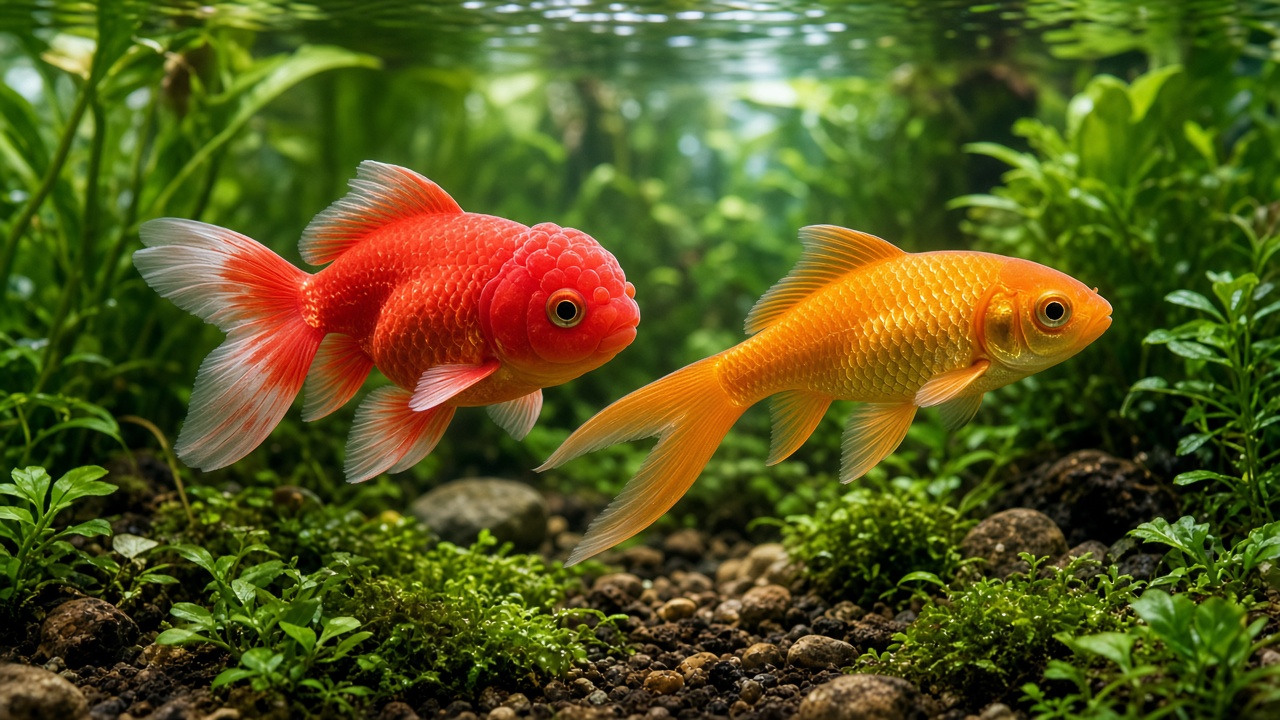
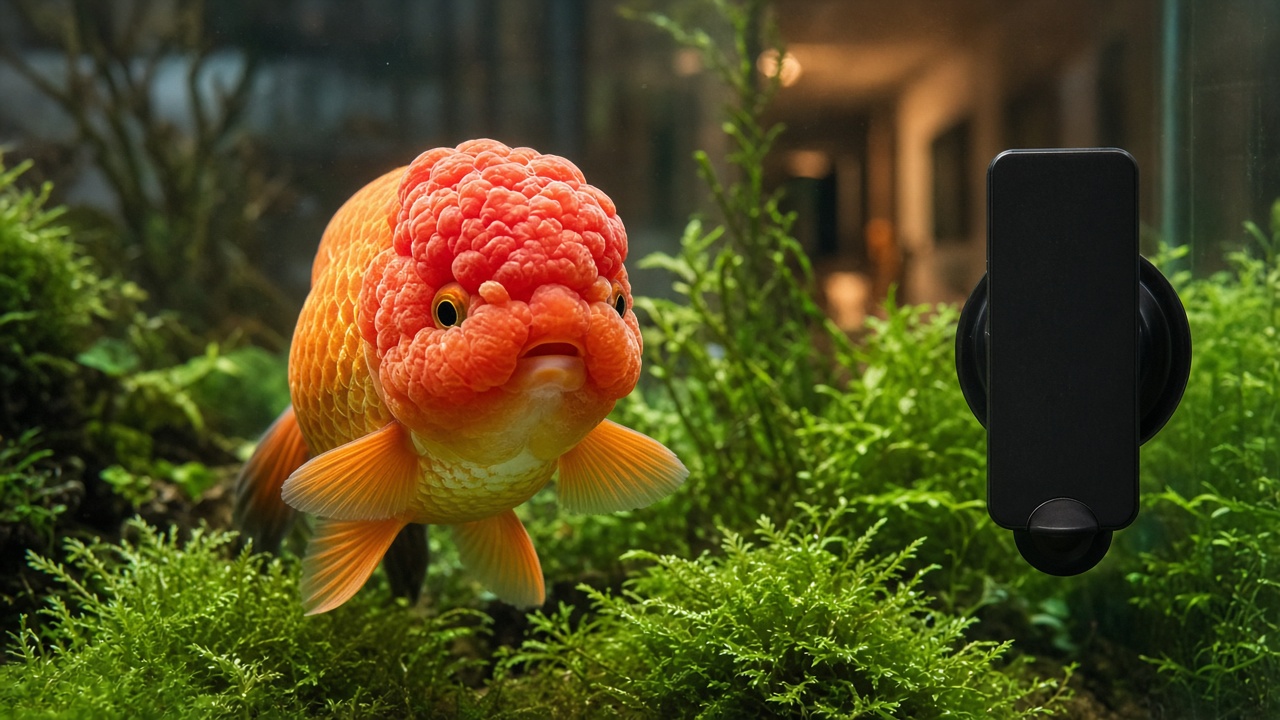
A lionhead is a fancy goldfish with a fleshy head hood, called a wen, and no dorsal fin.
OATA’s goldfish sheet names the species Carassius auratus in the carp family Cyprinidae. It notes goldfish were kept in bowls in China in the third century and reached Europe in the 1700s. The same sheet says an aquarium goldfish more often tops out near 25 cm, about 10 inches, though some reports list 40 cm or more.
The wen is extra soft tissue on the head. It can grow thick enough to limit vision. A lionhead also lacks a dorsal fin, so it turns slowly and tires in a strong current.
That body shape is why tank flow, food form, and tank mates matter more here than they do for a slim comet.
Watch the wen for tears, fungus-like fuzz, or trapped debris. Those signs often track water quality first, not a food brand.
Tank size and filter flow
Plan the tank for an adult lionhead, not the two-inch fish in the bag.
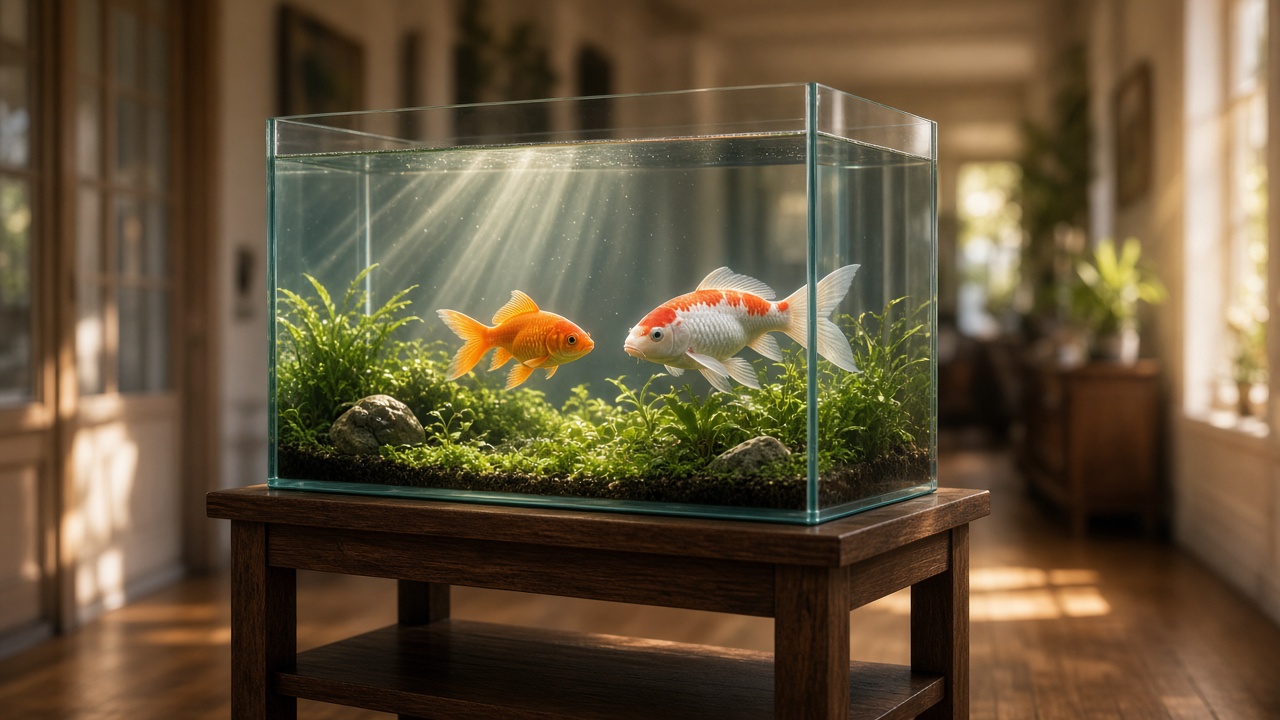
OATA’s goldfish sheet sets one adult at 100 liters, about 26 gallons. It adds 50 liters, about 13 gallons, for each extra adult.
PetMD’s goldfish care sheet sets a floor of 20 gallons or more for one juvenile. It then asks for at least 5 gallons of tank space for every inch of body length.
Use the stricter adult number from the start.
- One adult lionhead: 26 gallons or larger
- Two adult lionheads: about 39 gallons or larger
- Add volume before you add fish, not after the tank is full
A bowl fails both rules, because small water volumes swing hard after one meal.
PetMD’s goldfish care sheet says a filter should turn the tank volume at least four times an hour. On a 20-gallon tank, that is at least 80 gallons per hour. Size up if your only choices sit below that mark.
Lionheads prefer slow to moderate flow. Aim the outlet along the glass, not at the fish. Use a spray bar, baffle, or plant wall if the outflow pushes the fish sideways.
PetMD also calls for a tight lid, because goldfish can jump.
Skip sharp decor. A lionhead’s wen and split tail catch on lava rock and plastic plants with stiff points.
Water, temperature, and weekly work
Stable, tested water matters more than decor for a lionhead.
PetMD’s goldfish care sheet keeps temperature at 65–75°F and pH at 6.5–7.5. It also says temperature should not move more than 2°F either way in 24 hours. OATA’s goldfish sheet lists a wider band of 4–25°C, about 39–77°F, and pH of 6.0–8.0.
For a home tank, stay inside PetMD’s tighter 65–75°F band. Use OATA’s wider numbers only as the outer published range, not a target.
OATA’s goldfish sheet sets these waste limits:
- Ammonia: 0 mg per liter
- Nitrite: 0 mg per liter
- Nitrate: no more than 20 mg per liter above your tap water
- Hardness: 5–19°dH
PetMD’s goldfish care sheet says a heater needs 2.5–5 watts per gallon. A 26-gallon tank then needs about 65–130 watts, split if you want even heat.
The two sheets disagree on water-change timing. Compare both, then follow the tighter habit.
- OATA: change 25% of the water at least once every week
- PetMD: change no more than 10–25% every two to four weeks
Our research team compared those two published schedules. Weekly 25% changes match a dirty, high-waste fish better than a monthly pass.
OATA also says to test at least once a week. our research notes test weekly for two months after you add a fish or a new piece of gear.
If readings stay steady, PetMD allows a monthly check. PetMD also says test kits expire and should be replaced each year.
When you change water:
- Match the new water temperature to the tank.
- Treat tap water to remove chlorine or chloramine.
- Siphon waste from the gravel.
- Rinse filter media in old tank water, never under the tap.
OATA warns that tap chlorine can kill the filter bacteria you need.
Diet: sinking food and the label numbers
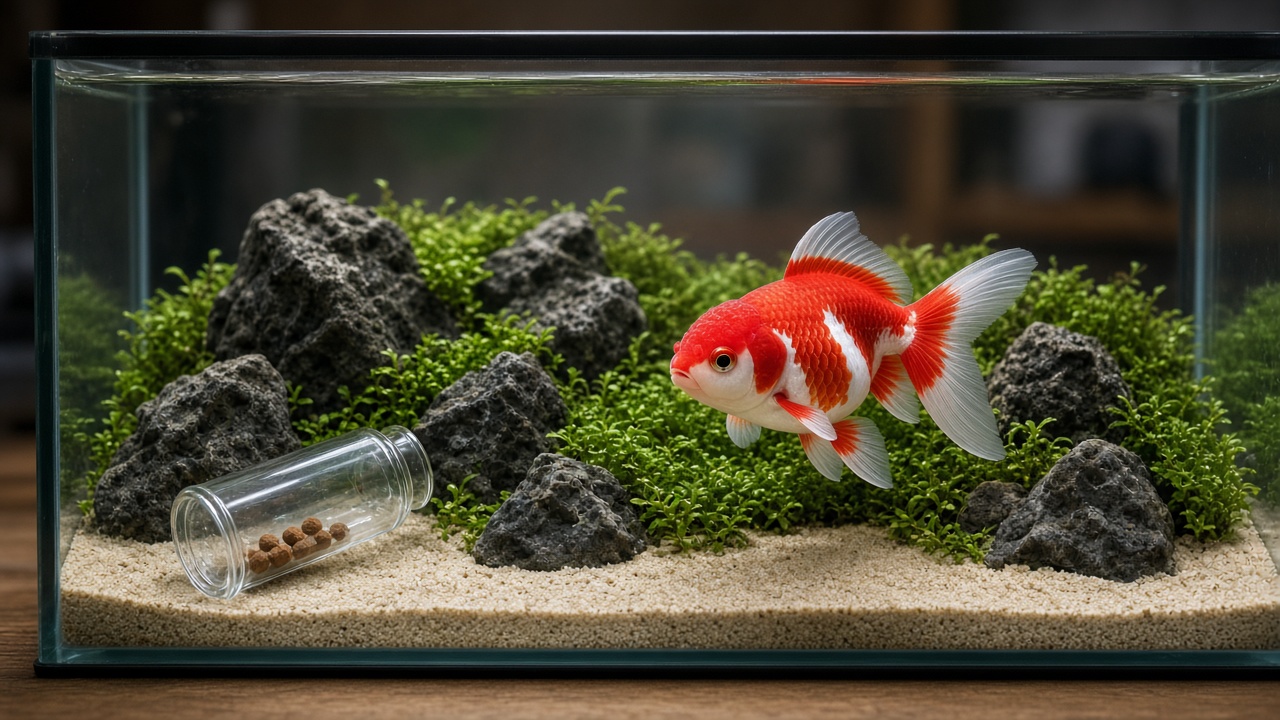
Feed a sinking goldfish diet in short meals so the fish does not gulp air at the surface.
PetMD’s goldfish care sheet says goldfish need more carbohydrates than many other aquarium fish. It also says sinking diets help limit extra air, bloating, and buoyancy trouble.
OATA’s goldfish sheet says feed only what they eat in a few minutes, once a day. our research notes once a day, and no more than they finish in one to two minutes.
Maker pages set their own windows, so use the label on the can you bought.
Our research team compared four foods still sold for goldfish. Crude protein on those maker pages ran from 32% to 46%. That spread is a label fact, not a ranking.
| Product | Form | Size on the maker page | Crude protein (min) | Crude fat (min) | Moisture (max) |
|---|---|---|---|---|---|
| Hikari Lionhead | Sinking mini pellet | 3.5 oz (100 g) and 12.3 oz (350 g) | 46% | 6% | 10% |
| Hikari Goldfish Gold | Floating baby pellet | 3.5 oz (100 g) and 10.5 oz (300 g) | 32% | 4% | 10% |
| Tetra Goldfish Flakes | Slow-sinking flake | 20 g, 52 g, and 200 g packs | 42% | 11% | 6.5% |
| Fluval Bug Bites Goldfish Pellets | Slow-sinking 5–7 mm pellet | 3.5 oz (100 g) | 40% | 12.5% | 10% |
Hikari’s Lionhead page also lists max 5% crude fiber, max 15% ash, and min 1.2% phosphorus. It names lionheads, orandas, Azumanishiki, and ranchu as the target fish.
Hikari’s Goldfish Gold page lists max 3% fiber, max 12% ash, and min 0.7% phosphorus. It is a floating baby pellet for smaller goldfish and koi fry.
Tetra’s Goldfish Flakes page lists 2% crude fiber and vitamin D3 at 2114 IU/kg. Those flakes float for a long time, then sink slowly.
Fluval’s Bug Bites Goldfish Pellets page lists black soldier fly larvae as the first ingredient, “up to 40%.” The same page lists min 0.80% phosphorus and min 2,500 IU/kg vitamin A.
Feeding windows on those same pages:
- Hikari Lionhead: the amount the fish finish in a few minutes
- Hikari Goldfish Gold: 2–4 times daily, then remove leftovers; cut the ration if water stays below 50°F or above 86°F
- Fluval Bug Bites Goldfish Pellets: as much as they eat in two minutes, two or three times daily
For a lionhead, prefer the sinking options in that table. If you use flakes, soak them first so they drop faster.
Skip live food as a staple; Hikari’s Lionhead page states the pellet was made so live food is not required.
Tank mates and handling the wen
Keep lionheads with other slow fancy goldfish, not with fast single-tails.
OATA’s goldfish sheet advises against housing comet goldfish with fancy goldfish. Comets swim faster and often take the food first. OATA also notes reports of boisterous goldfish nipping slower fancy fins.
PetMD’s goldfish care sheet lists white cloud minnows, zebrafish, and other goldfish as cold-water options. That list is for goldfish in general. A lionhead still loses contests with slim, fast fish.
For more pairing detail, see what fish can live with goldfish.
A practical roommate list for this variety:
- Other lionheads
- Ranchu
- Oranda
- Other short-bodied fancy goldfish of similar size
Leave out:
- Comets, shubunkins, and other single-tails
- Tropical community fish that need water above 75°F
- Fin nippers and anything small enough to eat
Add fish slowly. our research notes that ammonia, pH, and nitrate shift when a new fish arrives. Test after each addition.
Do not pick at a healthy wen. If debris sits in the folds, improve flow and do a water change. Color shifts on the body are a separate issue.
Lifespan and color changes
A lionhead can outlive a cheap starter tank if water and diet stay steady.
PetMD’s goldfish care sheet lists a typical life of about 10–15 years, with some reports of 30 years or more. OATA’s goldfish sheet cites many reports of 6–8 years and some of 20 years or more.
Those ranges describe goldfish as a group, not a promise for one fish. Poor water shortens that span faster than a food brand does.
Color is not a breed guarantee. A red-and-white lionhead can throw dark patches as it grows. Black pigment can also fade.
For the common causes of dark patches, read why is my goldfish turning black. For pale or white patches, read why do goldfish turn white.
OATA’s watch list is a useful weekly scan:
- Hanging at the surface or sitting on the bottom
- Color that turns darker or paler than usual
- Gill covers moving faster or slower than usual
- White spots, fluffy growths, or lost scales
- A sudden change in appetite
Test the water before you buy a bottle of medication. OATA says even small amounts of ammonia or nitrite can stress goldfish and open the door to disease.
FAQ
How big of a tank does one lionhead goldfish need?
OATA’s goldfish sheet sets one adult at 100 liters, about 26 gallons. PetMD’s goldfish care sheet allows 20 gallons or more for a single juvenile, then 5 gallons per inch of body as the fish grows. Start at the adult volume if you can. A larger tank holds waste and heat more steadily.
Do lionhead goldfish need a heater?
PetMD’s goldfish care sheet keeps goldfish at 65–75°F and says they are not tropical fish. It still calls for a thermostat heater if your room runs cold. OATA says a heater is not required unless the room is very cold. Use a thermometer every day either way.
What should I feed a lionhead goldfish?
Use a sinking goldfish pellet as the daily food. Hikari’s Lionhead page lists 46% minimum crude protein and is made for lionheads and other fancy goldfish. Fluval’s Bug Bites Goldfish Pellets page lists 40% minimum crude protein in a 5–7 mm slow-sinking pellet. Feed only what they finish in a few minutes, then net leftovers.
How often should I change the water?
OATA’s goldfish sheet strongly recommends a 25% change at least once a week. PetMD’s goldfish care sheet allows a 10–25% change every two to four weeks. For a lionhead, the weekly OATA schedule is the safer published habit. Always treat new tap water first.
Can lionhead goldfish live with other fish?
Yes, with other slow fancy goldfish of similar size. OATA’s goldfish sheet says not to keep comet goldfish with fancy goldfish. Fast fish eat first and may nip fins. See what fish can live with goldfish before you add a second species.
Why does my lionhead float or sit on the bottom?
Buoyancy trouble is common in short-bodied fancy goldfish. PetMD’s goldfish care sheet links extra air at the surface to bloating and buoyancy issues, and it points to sinking diets. Cut floating flakes, then test ammonia and nitrite the same day.
How long do lionhead goldfish live?
PetMD’s goldfish care sheet says most goldfish live about 10–15 years, with some reports of 30 years or more. OATA’s goldfish sheet cites reports of 6–8 years and some of 20 years or more. Tank size, weekly water work, and a short feeding window do more for that span than a bowl or a treat.