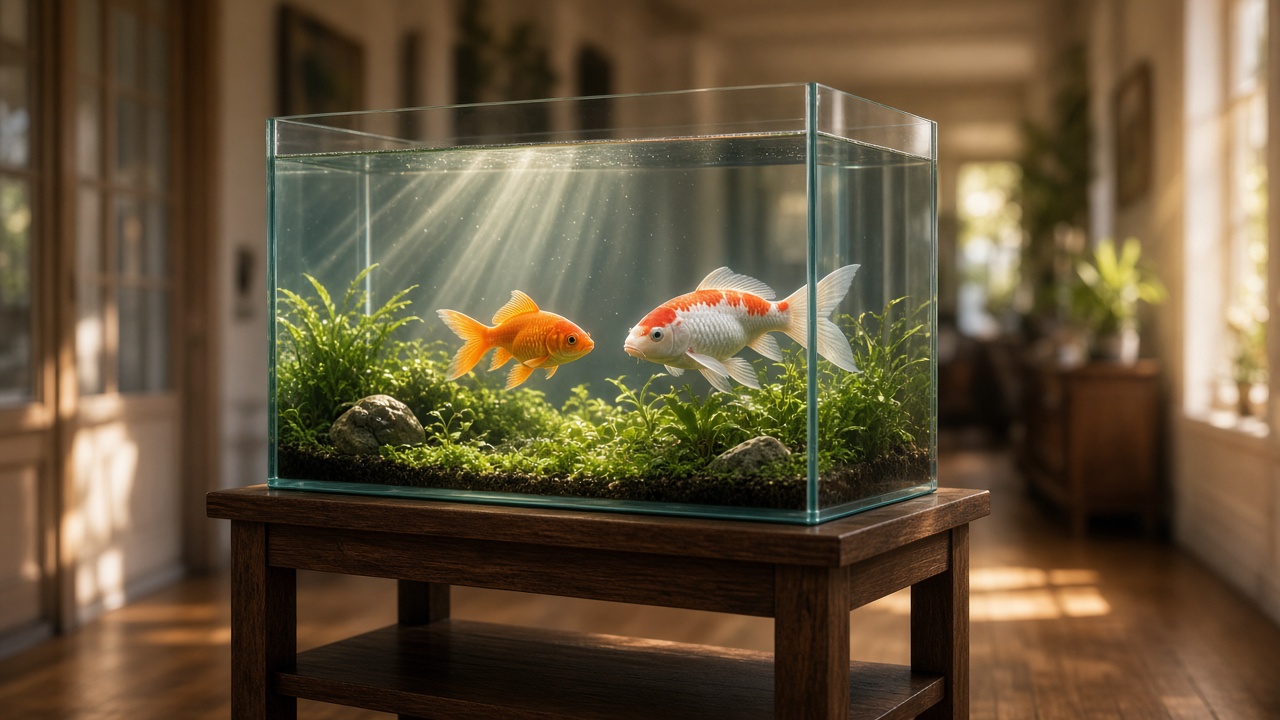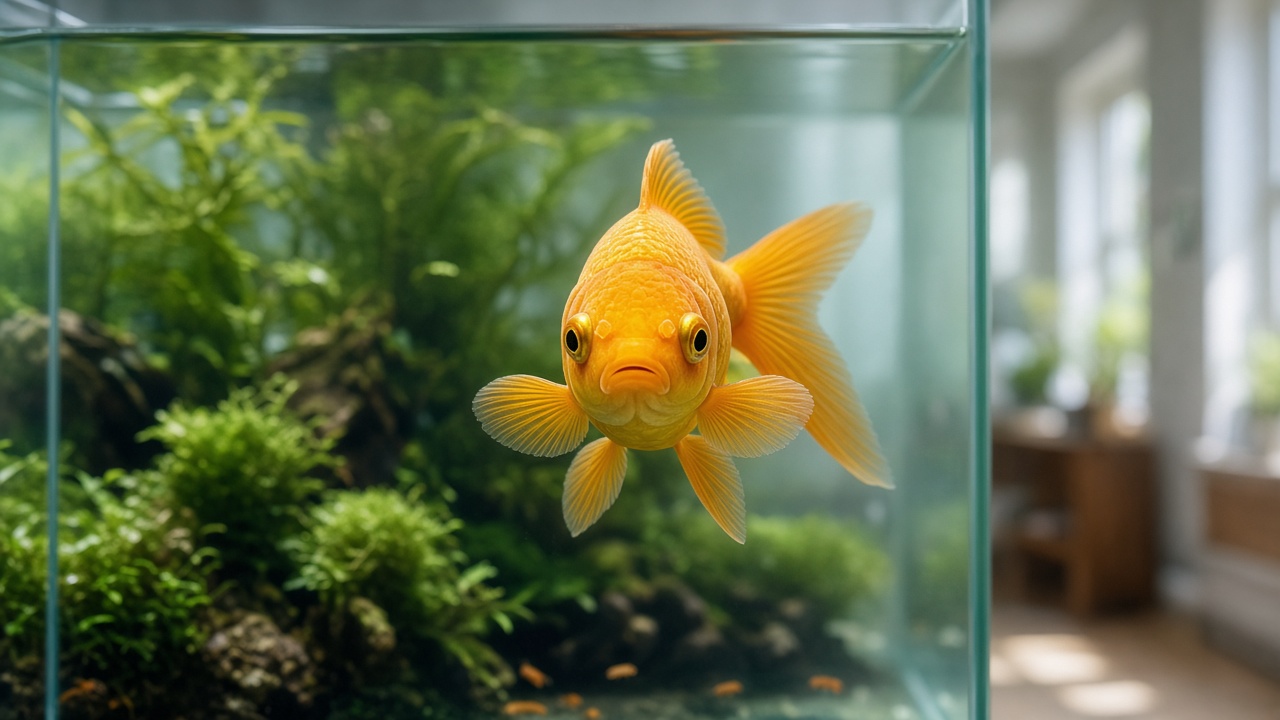
Quick answer: Keep common goldfish in a filtered tank or pond, not a bowl. Give each adult 20 gallons of water and a goldfish staple diet. They are long-bodied single-tail fish, not short fancy goldfish.
A common goldfish is Carassius auratus; Aqueon sets 20 gallons per adult, and USGS lists a usual life of 6 to 7 years. This page is a WaterPuppy desk brief that compares USGS species figures, Aqueon’s goldfish care sheet, and maker labels. We did not stock a pond, run feeding trials, or measure growth in our own tanks.
Selection rule: We cover single-tail common goldfish, comets, and shubunkins kept as pets. We include only currently sold staple diets whose maker pages name goldfish and list form or guaranteed analysis. We leave out fancy goldfish housing, feeder use, wild release, breeding recipes, and any food whose maker page we did not read.
Our research team analyzed those published sheets and called the set the WaterPuppy Common Goldfish Spec Spread. The spread is a label comparison, not a tank log.
What a common goldfish is, and what we left out
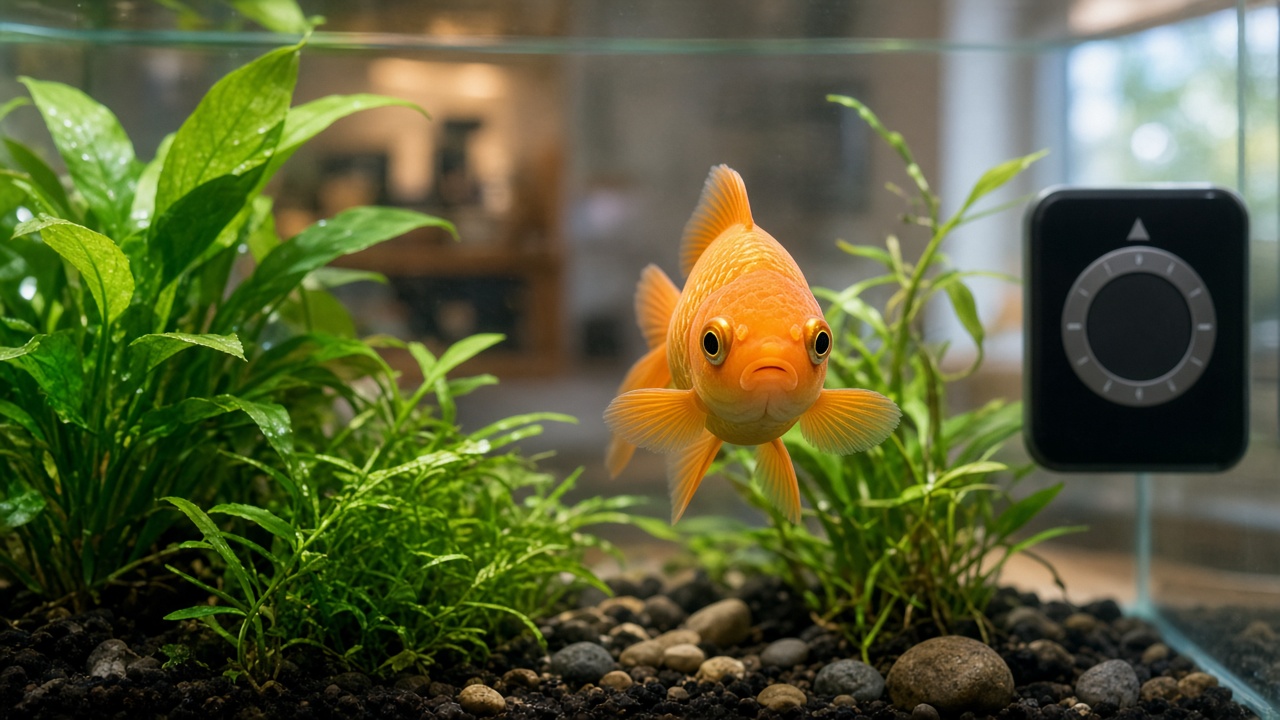
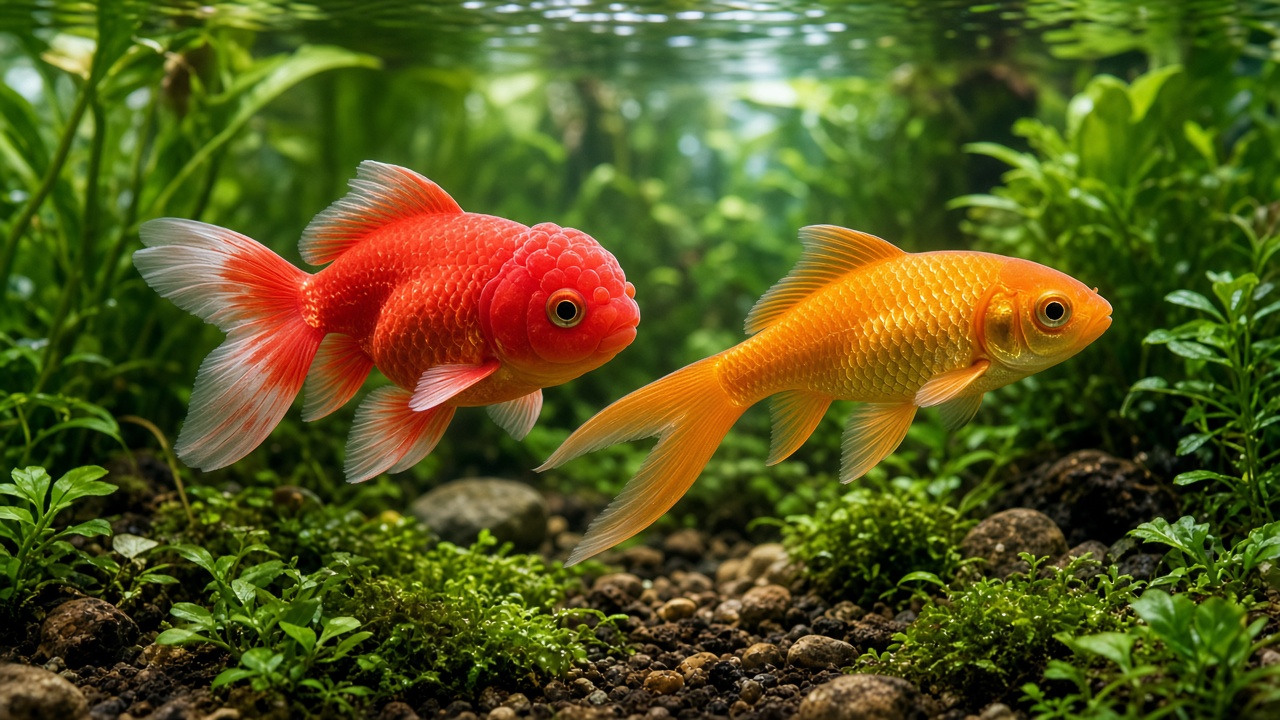
A common goldfish is a single-tail carp relative sold as a pet, not a short fancy strain.
The USGS Nonindigenous Aquatic Species profile names the fish Carassius auratus. Aqueon’s goldfish care guide says all goldfish varieties are that same species.
USGS lists field marks you can check on a live fish:
- A long dorsal fin with 15 to 21 rays
- A complete lateral line with 25 to 31 scales
- A hard serrate spine at the start of the dorsal and anal fins
Aqueon’s guide says goldfish lack barbels, the whiskers seen on koi and common carp. That mouth check separates goldfish from carp in the shop.
USGS says wild fish may be gold, olive green, or creamy white. Bright orange is a farm color, not the only wild color.
This brief stays with long-bodied single tails and does not cover orandas, ranchus, or bubble-eyes.
Tank size that matches the adult
Aqueon’s goldfish care guide sets 20 gallons of water per adult common goldfish, comet, or shubunkin.
That number is a per-fish floor, not a bowl upgrade. Two adults need 40 gallons on that same sheet.
Aqueon’s guide says goldfish should never be kept in bowls, small tanks, or any unfiltered container. It also notes high oxygen demand and a large waste load.
USGS size figures show why a cup of water fails:
- Typical total length is 15 to 20 cm, about 6 to 8 inches
- Typical weight is 100 to 300 g
- Usual standard length is 120 to 220 mm
- Maximum standard length is 410 mm
- Record total length is 59 cm, with weight up to 3.0 kg
Do not size the tank to the small fish in the bag. Size it to the adult USGS lists as typical.
Aqueon also wants a slightly oversized filter and extra aeration in warmer water. The care guide does not publish a gallon-per-hour rating, so we do not invent one.
Pond housing versus indoor tanks
Aqueon’s guide says common goldfish, comets, and shubunkins make excellent outdoor pond fish and can survive fairly cold winters.
USGS describes the wild habitat as quiet backwaters and pools with submerged plants. A still, planted pond matches that description better than a tall, narrow tank.
USGS also reports that goldfish can survive water from 0 to 41°C. That span is a published survival range, not a daily indoor target.
For indoor comets and shubunkins, Aqueon lists 60 to 70°F. Fancy strains on that same sheet use 68 to 74°F, which we do not apply here.
Hikari’s page for Goldfish Gold tells keepers to cut the ration when water stays below 50°F or above 86°F. Use that as a pond feeding brake, not a license to skip filtration.
Do not dump a pet goldfish into a lake or creek. USGS reports the species in every state except Alaska, and it lists harm to native fish, plants, and water clarity.
A retired pet belongs with a new keeper or a pond you control, not in a public waterway.
Diet labels we compared
Feed a goldfish staple whose maker page names goldfish, then rotate form so the fish is not locked to one flake.
Aqueon’s care guide says goldfish are omnivores that eat crustaceans, insects, and plants in the wild. USGS lists a similar mix: plankton, insect larvae, eggs, fry, plants, and detritus.
Aqueon tells keepers to soak flakes and skip floating pellets. Feed only what fish finish in 2 to 3 minutes, once or twice a day. That sheet also says surface gulping can make a fish lose balance.
Maker feeding times are not identical. Comparing published specs, the WaterPuppy Common Goldfish Spec Spread keeps these label rules:
- Aqueon care guide: 2 to 3 minutes, one or two meals a day
- Fluval Bug Bites Goldfish Pellets: as much as fish eat in two minutes, two or three times daily
- Hikari Goldfish Gold: two or four meals a day, and no more than fish eat in about one minute
Omega One’s page for Goldfish Pellets Large Sinking does not list a meal clock, so we do not add one.
| Product | Form | Crude protein (min) | Crude fat (min) | Maker-listed size or pack |
|---|---|---|---|---|
| Hikari Goldfish Gold | Floating pellet | 32.0% | 4.0% | Baby packs 3.5 oz (100 g) and 10.5 oz (300 g) |
| Omega One Goldfish Pellets Large Sinking | Sinking pellet | 35% | 10% | Packs 3.8 oz and 7.5 oz |
| Fluval Bug Bites Goldfish Pellets | Slow-sinking pellet | 40.0% | 12.5% | 5–7 mm; 3.5 oz / 100 g |
| Aqueon Goldfish Granules | Sinking granule | Not listed on the maker page | Not listed on the maker page | About 1.5 mm; 3 oz and 5.8 oz |
Fluval’s page lists up to 40% black soldier fly larvae as the first ingredient. It also lists lysine at 2.2% min and methionine at 1.0% min.
Hikari’s page lists a one-minute meal cap and the 50°F / 86°F cutback. Aqueon’s guide says to avoid floating pellets, yet Hikari Goldfish Gold is sold as a floating pellet.
We still include Hikari Goldfish Gold because its maker page names goldfish and prints a meal clock. Aqueon’s granule page lists sink behavior and the 1.5 mm size, but it does not print protein or fat.
Protein on the three labeled foods runs 32.0% to 40.0%. Fat runs 4.0% to 12.5%. That spread is why we print the table instead of naming one staple.
Lifespan and growth numbers
USGS and Aqueon do not publish the same life span, and that gap is the useful part of the Spec Spread.
USGS, citing Robison and Buchanan, lists a usual life of 6 to 7 years and a recorded maximum of 30 years. The same profile, citing Carlander, repeats 6 to 7 years typical and 30 years as the long mark.
Aqueon’s goldfish care guide says goldfish can live over 20 years in captivity when cared for properly.
Those sheets can both be true. USGS is describing a usual field life. Aqueon is describing a long captive life.
Plan for a long captive life if water and space hold. Do not treat a bowl fish as the species limit.
USGS says goldfish grow fast enough that they make poor forage fish. A feeder goldfish is a juvenile, not a finished adult.
If growth stalls while the body stays small, look at tank volume and waste first. USGS lists typical adults at 15 to 20 cm, not at two inches.
Water, waste, and tankmates
Aqueon’s care guide wants a 10% water change each week, or 25% every two weeks, after you treat new tap water.
Put the change math in one place:
- Weekly option: replace 10% of the tank
- Biweekly option: replace 25% of the tank
- Salt note on Aqueon’s sheet: 1 tablespoon of aquarium or sea salt per 5 gallons
Aqueon lists an ideal pH of 7.0 to 8.4. USGS laboratory work prefers 5.5 to 7.0.
USGS also reports pH tolerance from 4.5 to 10.5. The overlap of the two target bands is 7.0.
The WaterPuppy Common Goldfish Spec Spread treats 7.0 as the shared number, not a lab result of our own.
USGS also says the species tolerates turbidity, temperature swings, and low dissolved oxygen better than many native fishes. Tolerance is not a reason to skip a filter.
Aqueon says goldfish get along with most peaceful fish of similar size and should share unheated tanks only with other cool-water species. For a longer mate list, see what fish can live with goldfish.
Commons, comets, and shubunkins can out-hustle small fancy fish as they grow. Aqueon says those single tails may need to be split from shorter strains later.
Skip warm-water tropical tankmates. Aqueon’s comet band is 60 to 70°F.
Color changes you may see
Color shift is common in this species, and it is not always a food failure.
USGS says wild fish already range from gold to olive green or creamy white. Aqueon notes many farm strains with extra color and fin shapes.
A fish that gains dark patches may be showing new pigment, not a new species. For that pattern, read why is my goldfish turning black.
A fish that fades toward pale or white patches needs its own check. Start with why do goldfish turn white.
Diet can support color, but labels are not a dye guarantee. Fluval’s pellet page names marigold extract for yellow, orange, and red. Hikari’s Goldfish Gold page names carotene, and Omega One’s page names salmon skins.
None of those maker pages publish a day count for a color change. We do not invent one.
FAQ
How big do common goldfish get?
USGS says they generally reach 15 to 20 cm total length and 100 to 300 g. The same profile lists a maximum of 59 cm and 3.0 kg. Plan housing for the typical adult, and treat the record fish as the upper published extreme.
What tank size does one common goldfish need?
Aqueon’s goldfish care guide sets at least 20 gallons of water per adult common goldfish, comet, or shubunkin. Two adults need 40 gallons on that rule. The same guide bans bowls and unfiltered containers.
How long do common goldfish live?
USGS lists a usual life of 6 to 7 years and a recorded maximum of 30 years. Aqueon’s care guide says goldfish can live over 20 years in captivity. Use the USGS usual figure as the floor and Aqueon’s captive figure as the long plan.
What should I feed a common goldfish?
Use a goldfish staple from the table, then follow the maker’s meal clock. Aqueon wants 2 to 3 minutes, once or twice a day, with soaked flakes and no floating pellets. Fluval’s Bug Bites Goldfish Pellets page says two minutes, two or three times daily. Hikari Goldfish Gold says about one minute, two or four times daily.
Can common goldfish live in a pond?
Yes. Aqueon’s guide calls common goldfish, comets, and shubunkins excellent outdoor pond fish and says they can survive fairly cold winters. Hikari’s Goldfish Gold page says to reduce feed when water stays below 50°F or above 86°F. USGS warns that released pets show up in wild waters in every state except Alaska.
What fish can live with common goldfish?
Aqueon says they do well with peaceful, similar-sized fish and with other cool-water species if the tank is unheated. Single tails may later bully smaller fancy goldfish. For species-level pairing notes, use our what fish can live with goldfish brief.
Why is my goldfish changing color?
USGS already lists gold, olive green, and creamy white as wild colors, so a shift can be normal pigment. Check water volume and waste before you change food. Then read the black-patch and white-patch notes linked above.