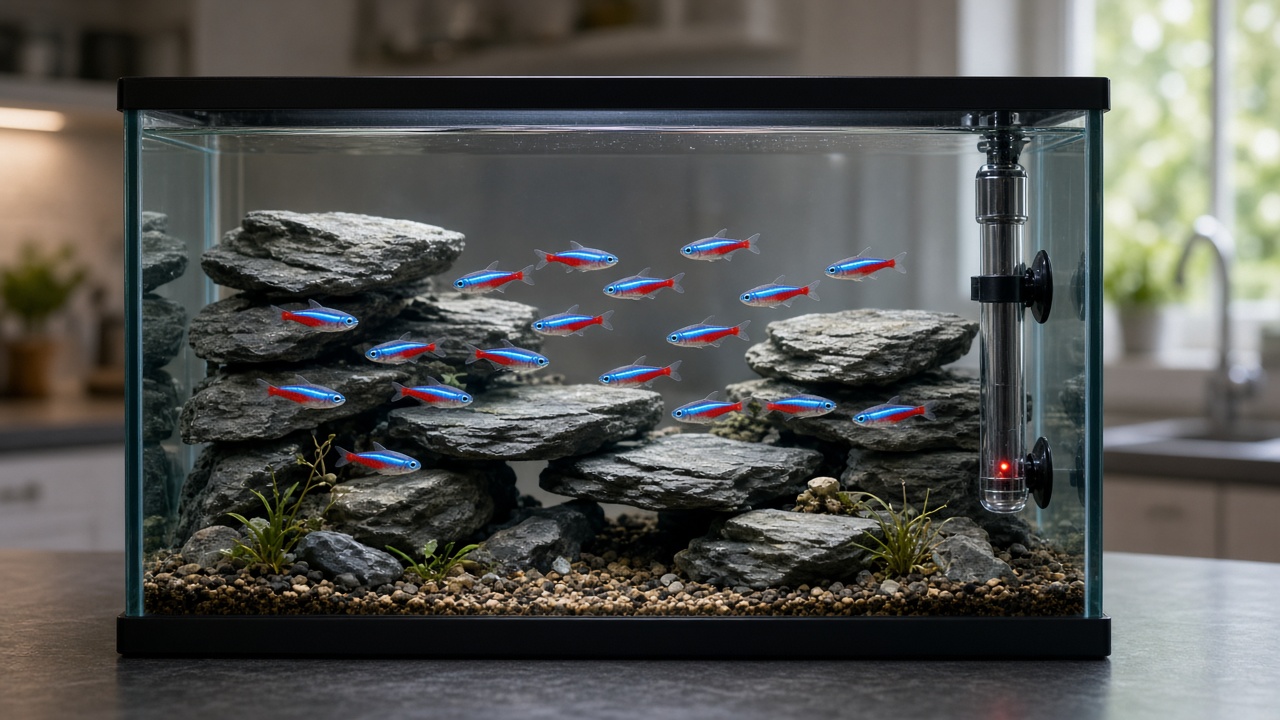
Quick answer: Keep neon tetras near the mid-70s °F with a stable heater and a second thermometer. Skip cold nights, hot spikes, and unheated rooms that swing daily.
Stable mid-70s heat beats chasing one perfect degree.
We compared published care data on Paracheirodon innesi temperature bands, heater sizing, and tropical community ranges. Our research team analyzed species profiles listing about 70–77°F, broader tropical bands near 20–26°C, and tetra care notes near 75–80°F. Owners consistently report stress, faded color, and disease after nights without heat or heaters that drift.
Comparing published specs favors a steady mid-70s target inside overlapping published ranges. Species profiles often list about 70–77°F for neon tetras. Broader tropical summaries place many tetras near 75–80°F. FishBase-linked tropical notes commonly cite about 20–26°C. A lid, correctly sized heater, and opposite thermometer keep swings small. This page covers ideal ranges, heater watts, placement, breeding heat, cold risks, and monitoring.
Include overlapping published ranges, watt rules, dual-heater tips, and thermometer checks. Leave out unheated “room is warm enough” claims for most homes. Skip drug plans that belong with a veterinarian.
Aim for the mid-70s inside published bands
Overlap matters more than memorizing one isolated number.
Detailed neon profiles commonly list about 70–77°F, or 21–25°C. Broader tropical tetra care notes often sit near 75–80°F for community groups. Other tropical summaries cite about 20–26°C for the species. A practical community target near 74–76°F sits inside several of those bands at once. Stability day and night matters more than bouncing between edges. Match tank mates to the same narrow comfort zone before you stock.
Range board:
| Source type | Typical published band |
|---|---|
| Neon species profile | About 70–77°F |
| Tetra community notes | About 75–80°F |
| Tropical summary | About 20–26°C |
| Practical community aim | Mid-70s °F |
| Breeding setups | Often warmer than display |
Owners consistently report brighter schools when heat stays mid-range without nightly dips. Our research team analyzed overlapping temperature tables across care profiles. Comparing published specs chooses the shared middle over fringe extremes.
Yes, neon tetras need a heater in most homes
Tropical fish rely on tank water because they cannot self-heat.
Most homes fall below steady mid-70s water once nights, storms, or air conditioning arrive. Cool-tolerant fish like white clouds can skip heaters; neons are not that group. A thermostat heater holds the band while the room changes around the glass. Preset tropical heaters near common community temps can work when verified with a thermometer. Adjustable heaters help when you share the tank with species that prefer the same mid-70s. Leave the heater powered so its thermostat can cycle on and off.
Heater need list:
- Unheated rooms often drop at night
- Air conditioning can chill shallow tanks
- Basements run cooler than living rooms
- Lids reduce evaporative heat loss
- Thermometers catch silent heater failure
Owners consistently report calmer neons after adding heat to “warm climate” rooms that still swing. Our research team analyzed heater-need guidance for tropical community fish. Comparing published specs treats heaters as default gear, not optional décor.
Size watts to gallons and room gap
Watt math prevents weak heaters that run forever and still lose.
A common rule uses about 5 watts per gallon when you must lift water about 10°F above room temperature with a lid on. A 20-gallon example under that rule points near a 100-watt heater. Colder rooms that need about a 15°F lift often need extra capacity or a second unit. Nano tanks of about 6 gallons or less may use about 25 watts or less depending on room heat. Oversized single heaters can overshoot hard if the thermostat sticks. Match rating to real room lows, not summer afternoons.
Watt board:
| Situation | Published sizing idea |
|---|---|
| ~10°F above room, with lid | About 5 W per gallon |
| 20-gallon example | Near 100 W under that rule |
| Colder room, ~15°F lift | Add capacity or a second heater |
| Nano ~6 gal or less | Often ≤25 W class |
| Large high-watt need | Prefer two smaller heaters |
Owners consistently report stable charts after they size for winter room lows. Our research team analyzed heater-sizing rules in tropical equipment guides. Comparing published specs ties watts to temperature gap, not guesswork.
Place the heater in flow and verify the far corner
Current spreads heat; a second thermometer proves it arrived.
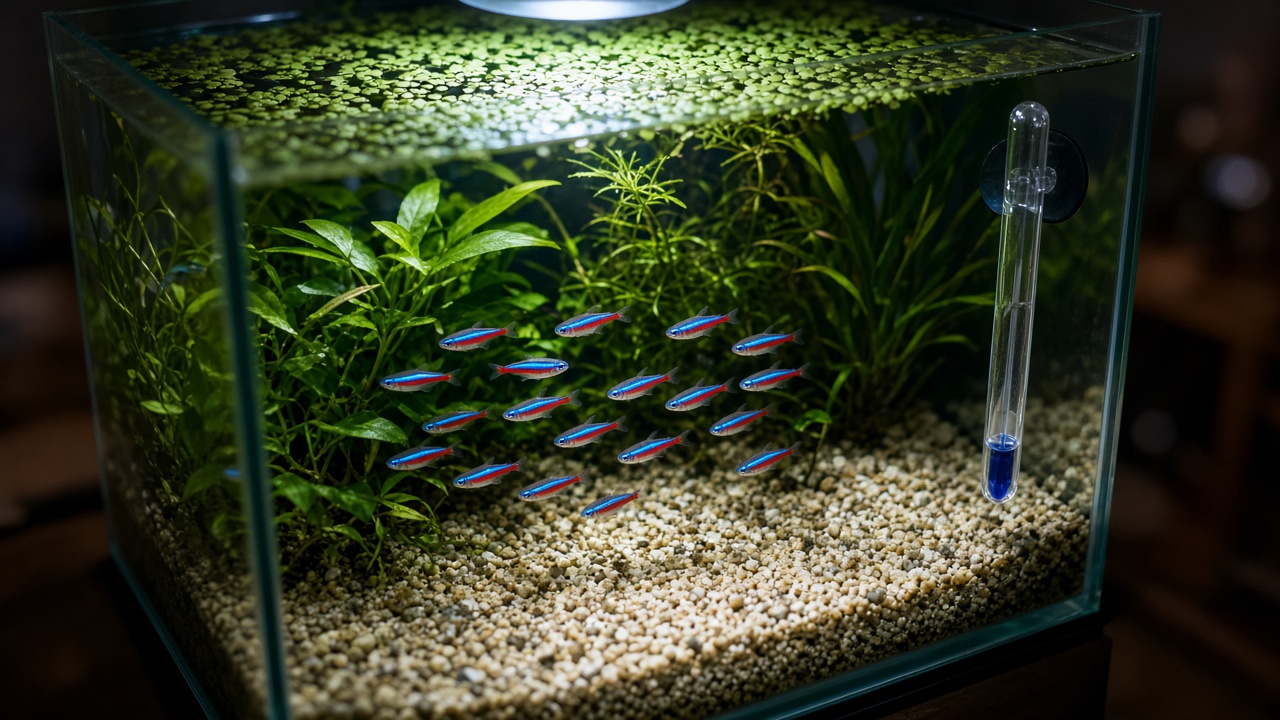
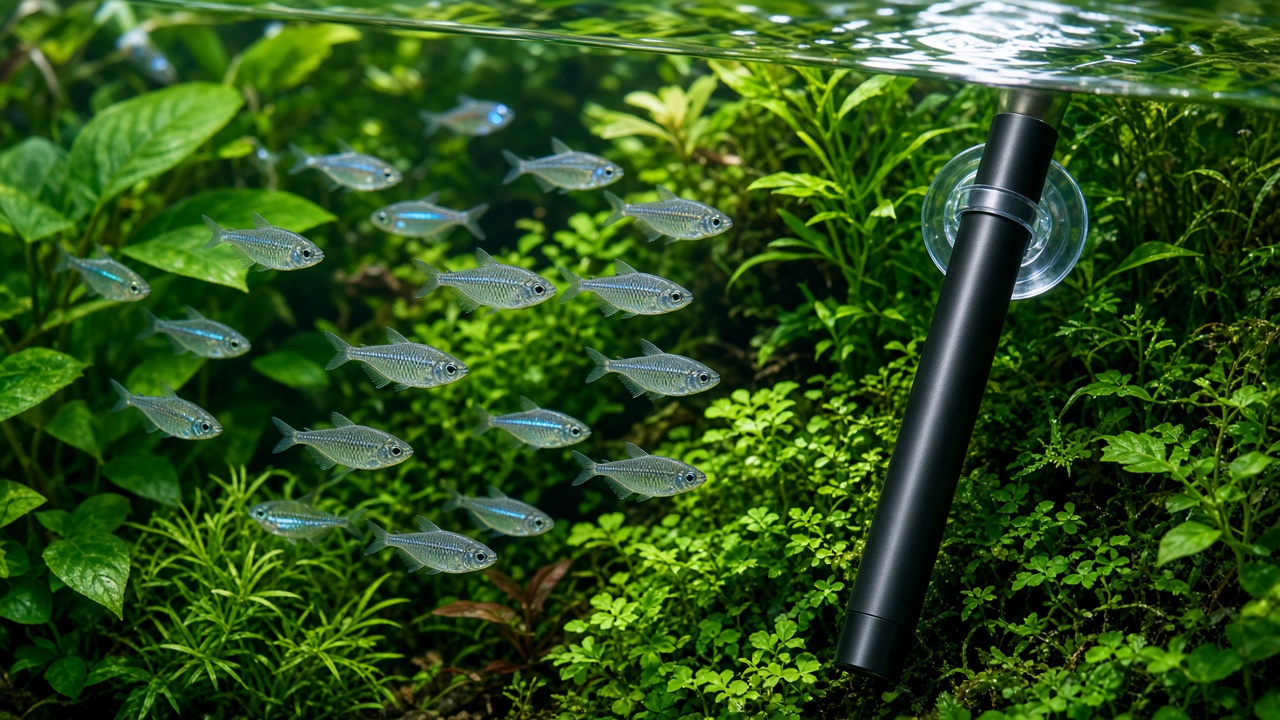
Mount a submersible heater near filter output or another strong flow path. Long tube heaters often sit best near a 45-degree angle for broader distribution. Put a thermometer in the opposite corner so you catch cold spots early. Acclimate a new heater in the tank about 20–30 minutes before plugging it in. Unplug before water changes so the element never runs dry. Gentle scrubbing removes algae without scratching sensors.
Placement checklist:
- Set heater in strong water flow
- Angle long tubes near 45 degrees when advised
- Thermometer opposite the heater
- Soak new heaters before power
- Unplug during water changes
Owners consistently report even temperatures after moving heaters into the filter stream. Our research team analyzed placement notes in heater setup guides. Comparing published specs pairs hardware location with daily thermometer habit.
Dual heaters protect larger neon schools
Two medium units beat one giant failure point.
When a tank needs about 200 watts of heat, two 100-watt heaters reduce catastrophe risk. If one sticks on, it is less likely to cook the whole volume alone. If one dies cold, the second still slows the crash. Larger community tanks with long neon schools benefit from that redundancy. Keep both heaters on separate reliable outlets when possible. Still verify with a thermometer because two bad settings can drift together.
Redundancy cues:
- Split large watt needs across two heaters
- Watch for stuck-on overheating
- Watch for silent cold failures
- Confirm both setpoints match
- Recheck after power outages
Owners consistently report fewer emergencies after dual-heater upgrades on long tanks. Our research team analyzed multi-heater advice in equipment care notes. Comparing published specs favors redundancy once watt demand climbs.
Breeding heat is a separate, planned bump
Spawning setups may run warmer than everyday display tanks.
Some breeding notes warm soft, acidic water into the upper seventies or higher for conditioned pairs. Display schools usually stay safer in the overlapping mid-70s comfort band. Raise temperature slowly and only in a dedicated breeding plan with soft water ready. Sudden heat jumps stress adults and can trigger egg eating or disease. Return display tanks to their stable community setpoint after breeding work ends. Never chase spawn temps in a mixed community that includes cooler-leaning mates.
Breeding heat board:
| Goal | Temperature approach |
|---|---|
| Everyday school | Stable mid-70s °F |
| Conditioning | Warm only with a plan |
| Dedicated spawn tank | Follow breeding protocol heat |
| Community display | Avoid hot spikes |
| Aftercare | Return to stable setpoint |
Owners consistently report better fry plans when heat changes stay isolated to breeding tanks. Our research team analyzed reproduction temperature notes beside display ranges. Comparing published specs keeps spawn heat optional and deliberate.
Watch cold nights and hot summer spikes
Swings hurt neon tetras more than a fixed mid-range target.
Night drops below the published band slow immune function and invite parasites after stress. Summer rooms, bright windows, and canopy lights can push water above the upper seventies without warning. Open lids and gentle surface fans can cool hot tanks through evaporation when safe for jumpers. Choose tank mates that share the same mid-70s preference instead of forcing a compromise. Log morning and evening thermometer readings for a week after any heater change. Replace drifting heaters instead of compensating with constant dial twitches.
Risk list:
- Night unheated crashes
- AC drafts across small tanks
- Sunlit glass walls
- Stuck heaters overheating
- Tank-mate mismatch on heat
Owners consistently report clearer colors when daily swing stays within a couple of degrees. Our research team analyzed temperature-stress notes in tropical fish health guides. Comparing published specs elevates monitoring above set-and-forget myths.
Neon tetra temperature care is mostly boring stability. Pick a mid-70s target inside published bands, size the heater for your coldest room, and prove heat with a far-corner thermometer. Add a second heater on larger tanks. Keep breeding warmth in its own plan.
FAQ
What is the ideal neon tetra temperature?
Aim for a stable mid-70s °F point inside overlapping published bands near about 70–77°F and related tropical ranges. Community tetra notes near 75–80°F often meet neons in that shared middle. Avoid nightly dips and daytime spikes around the setpoint. Consistency protects appetite, color, and immunity better than chasing one exact degree.
Do neon tetras need a heater?
Yes in nearly every indoor home, because rooms rarely hold mid-70s water through nights and seasons. Cool-water species can skip heaters; neon tetras are tropical schoolers. Use a thermostat heater plus a separate thermometer for proof. Warm climates still see air-conditioning and weather swings that chill tanks.
How many watts should my neon tank heater be?
A common rule is about 5 watts per gallon when lifting water about 10°F above room temperature with a lid. A 20-gallon tank under that rule often needs near 100 watts. Colder rooms needing larger lifts may require more watts or a second heater. Size for winter lows, then verify with a thermometer.
Where should I place the heater?
Put the submersible heater in strong flow near the filter return so heat spreads. Mount a thermometer in the opposite corner to catch cold spots. Let new heaters soak about 20–30 minutes before power. Unplug during water changes so the element never runs dry in air.
Should I use two heaters?
For larger tanks that need high total watts, two smaller heaters are safer than one big unit. If one fails cold or sticks hot, the second limits damage. Match setpoints and still check a thermometer daily at first. Dual heaters are smart insurance for long neon community tanks.
What temperature do neon tetras need for breeding?
Breeding protocols often use warmer water than everyday display setpoints, sometimes into higher bands in soft acidic tanks. Keep that bump inside a dedicated breeding plan, not a mixed community guess. Raise heat gradually and return the display tank to stable mid-70s afterward. Unplanned hot spikes stress adults and fry plans alike.
Is 72°F too cold for neon tetras?
About 72°F can sit near the lower edge of some published neon bands when it stays stable. Problems rise when 72°F is a daytime high that crashes colder at night. If your room forces frequent dips, raise the heater target into the mid-70s. Pair any change with a week of morning and evening thermometer logs.
This guide is informational only and does not replace advice from a qualified veterinarian.