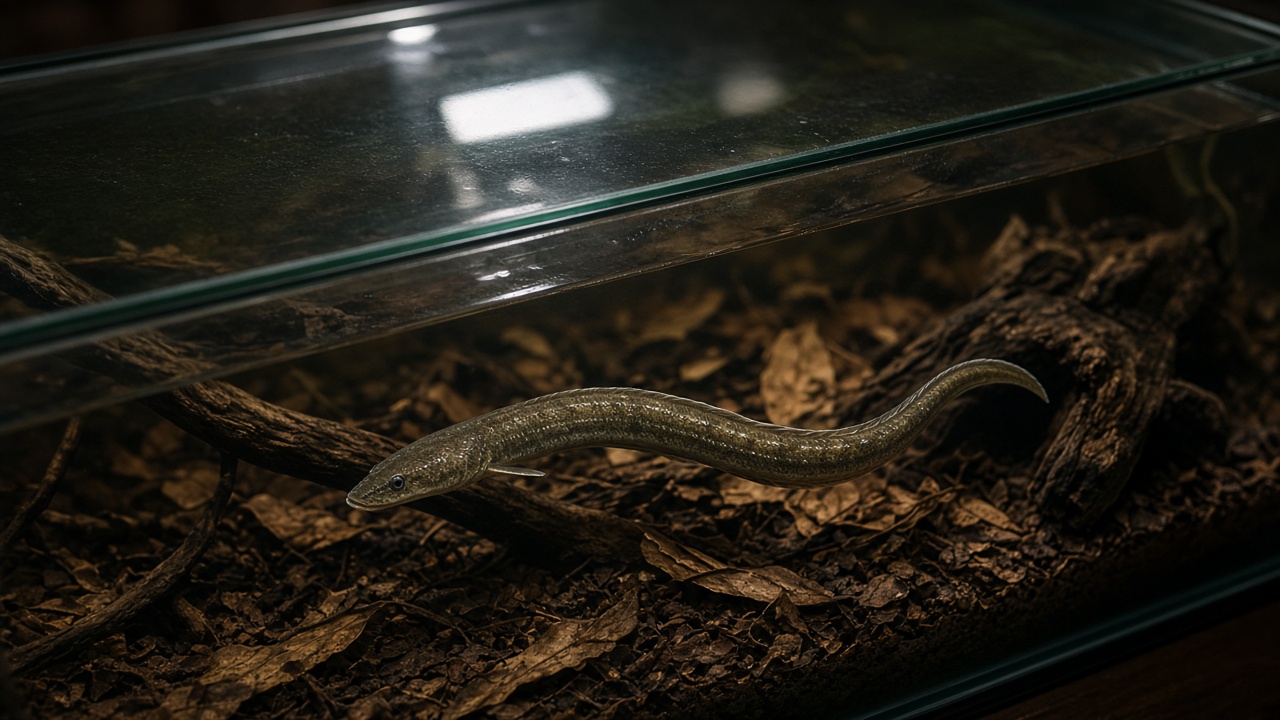
Quick answer: Rope fish need a long fifty-five-gallon-class tank, a gap-free weighted lid, meaty nocturnal meals, and mates too large to swallow. They breathe air, explore sand, and escape through tiny openings overnight.
Seal the lid first, then size a long footprint for adults.
We compared published care data on Erpetoichthys calabaricus tank size, lids, diet, and mates. Our research team analyzed species profiles for tropical temperatures near seventy-two to eighty-two degrees Fahrenheit. Notes also list pH near six to eight and hardness bands near five to nineteen degrees. Owners consistently report escapes through filter cutouts and lost nano fish after midnight hunts.
Comparing published specs treats floor length as more important than tall water columns. Confirmed maximum standard length notes sit near about thirty-seven centimeters, roughly fifteen inches, while older hobby claims of three-foot giants are treated as erroneous. Facultative air breathing means the fish must reach the surface. Lifespan notes in care guides often cite about ten to fifteen years or longer with steady husbandry. This page covers tank size, lids, water, diet, mates, décor, and health watches.
Include a secured lid, long footprint, and evening meaty feeds. Leave out open-top displays and tiny tetras. Skip disease drug plans without a veterinarian.
Size a long tank, not a tall cube
Floor space beats vertical show glass.
Hobby care notes commonly treat about a fifty-five-gallon long aquarium as a practical minimum for one adult rope fish. Some older profiles accept about fifty gallons when the footprint stays long and wide. Length near four feet helps the body stretch and patrol. Tall nano tanks of equal gallons waste space these bottom explorers never use. Groups need still more floor and more caves so animals can rest without constant collisions. Upsize early if you want community mates that share the lower third.
Tank board:
| Stocking theme | Published direction |
|---|---|
| One adult | Often about 55 gal long class |
| Older minimum notes | About 50+ gal with long footprint |
| Extra length | Prefer long over tall cubes |
| Groups | Much larger floor and hides |
| Priority | Horizontal swimming room |
Owners consistently report calmer fish after they left short twenty-gallon starters behind. Our research team analyzed footprint guidance across reedfish profiles. Comparing published specs favors long tanks for adult body length.
Seal the lid like escape is certain
Gaps the width of a head become exits.
Rope fish are famous escape artists that can lift light lids and squeeze through tiny openings. Care notes warn that gaps near a quarter inch around filter returns can be enough. Use a heavy glass top with clips on every corner. Pack filter cutouts with aquarium-safe foam or fine mesh sealed so water returns but bodies cannot leave. Keep water about an inch below the rim so the fish can gulp air without pressing into the lid continuously. Never leave the tank uncovered during maintenance without constant watch.
Lid checklist:
- Heavy glass lid with corner clips
- Seal every cord and return cutout
- Block open filter intakes that could trap a body
- Keep a surface air gap for breathing
- Watch overnight after any lid change
Owners consistently report floor finds when lids stay loose for one night. Our research team analyzed escape reports from keeper threads and care articles. Comparing published specs treats lid security as non-negotiable hardware.
Hold tropical swamp water targets
Stable chemistry beats constant tinkering.
Species summaries list tropical temperatures near twenty-two to twenty-eight degrees Celsius, about seventy-two to eighty-two degrees Fahrenheit. Aquarium pH notes often sit near six point zero to eight point zero. Hardness bands commonly include about five to nineteen degrees. Keep ammonia and nitrite at zero with strong biological filtration. Prefer gentle to moderate flow that mimics slow rivers and reedy shallows. Leave open surface access because these fish must gulp atmospheric air even in oxygenated water.
Water board:
| Parameter | Published theme |
|---|---|
| Temperature | About 72–82°F (22–28°C) |
| pH | About 6.0–8.0 |
| Hardness | Often about 5–19 |
| Ammonia / nitrite | 0 |
| Flow | Slow to moderate |
| Surface | Open air access required |
Owners consistently report richer color when temperatures stay warm and stable. Our research team analyzed chemistry ranges from species database notes. Comparing published specs keeps targets simple and steady.
Feed meaty nocturnal meals on a calm schedule
Protein at lights-out matches wild hunting.
Wild notes describe night feeding on worms, crustaceans, and insects. In aquariums, earthworms, bloodworms, and meaty frozen foods are staple offerings. Many adults eat about two to four times weekly rather than constant grazing. Some animals learn sinking pellets if trained young, yet many refuse dry foods. Feed after lights dim so shy fish leave caves. Remove leftovers that foul sand. Avoid relying on live feeder fish that may bring disease.
Diet cues:
- Earthworms as a frequent meaty staple
- Frozen bloodworms and shrimp as variety
- Evening feedings when fish are active
- Modest portions matched to body condition
- Quarantine any live feeders, or skip them
Owners consistently report better weight when they target dusk meals instead of daytime pellets alone. Our research team analyzed feeding patterns in reedfish care guides. Comparing published specs keeps meat first and schedule calm.
Pick tank mates bigger than a mouthful
Anything that fits the jaws becomes midnight food.
Rope fish are mostly peaceful toward large neighbors yet predatory toward small fish and shrimp. Compatibility notes favor sizable barbs, angelfish, large gouramis, rainbowfish, and fellow polypterids such as bichirs in roomy tanks. Synodontis-type catfish appear in community discussions when adult sizes match. Skip neon tetras, guppies, dwarf shrimp, and other nano species. Reassess mates as the rope fish grows; yesterday’s safe neighbor can become today’s snack. Provide separate caves so shy animals can break line of sight.
Mate board:
| Better themes | Risk themes |
|---|---|
| Large barbs | Nano tetras |
| Angelfish / large gouramis | Guppies and rasboras |
| Bichirs in big tanks | Dwarf shrimp |
| Adult rainbowfish | Tiny bottom dwarfs |
| Sized Synodontis | Anything head-width thin |
Owners consistently report empty schools after they mixed ropes with small community fish. Our research team analyzed compatibility notes from magazine and forum care summaries. Comparing published specs puts mouth width ahead of peaceful labels.
Decorate with soft sand, caves, and dim light
Burrows and cover reduce daytime stress.
Use fine sand or smooth rounded gravel so the belly and snout can probe without scrapes. Add PVC tubes, driftwood hollows, and rock caves large enough for the full body length. Attach Java fern and Anubias to wood so roots are not uprooted. Keep lighting low to moderate because the species is nocturnal. Dense plant edges with open sand lanes mirror reedy shallows and hunting lanes. Avoid sharp décor that can catch soft tissue during frantic escapes.
Décor checklist:
- Fine sand bed a few inches deep
- Multiple caves longer than the fish
- Soft-leaved plants on wood or rock
- Dim photoperiod near eight to ten hours
- Clear lanes for night patrols
Owners consistently report more daytime sightings when caves feel secure. Our research team analyzed habitat notes for West African reed habitats. Comparing published specs pairs soft substrate with heavy cover.
Watch air gulps, appetite, and escape stress
Daily checks catch problems before crises.
Healthy rope fish make periodic trips to gulp air; frantic surface racing can signal poor water or stress. Refusal to eat for several evening feeds deserves a water test and a closer look. Scrapes after décor changes need clean water and monitoring. A missing fish often means a lid gap, not a mystery disease. Keep a veterinary contact who understands fish when wounds, parasites, or chronic appetite loss appear.
Health watch list:
- Count fish after every lid service
- Test water when gulping looks frantic
- Track evening appetite weekly
- Inspect for scrapes after rearranging rock
- Quarantine new arrivals before display mixing
Owners consistently report that lid drills prevent more losses than medicine cabinets. Our research team analyzed keeper priorities after the first month. Comparing published specs puts escape prevention and water quality above novelty décor.
FAQ
How big of a tank does a rope fish need?
Plan about a fifty-five-gallon long aquarium as a common minimum for one adult. Some older notes accept about fifty gallons when the footprint stays long. Horizontal space matters more than tall columns. Groups and mixed communities need substantially more floor and caves. Upgrade before the fish outgrows a starter box. Measure length of the tank, not only printed gallons.
Why is the lid so important?
Rope fish escape through tiny gaps and can lift light lids at night. Care notes warn that openings near a quarter inch around equipment can be enough. Use a weighted glass top, clips, and sealed cutouts. Leave a surface air gap so the fish can breathe. Check the floor and filter compartment whenever a fish vanishes from view.
What do rope fish eat?
They are carnivores that favor worms, crustaceans, and insects in nature. Offer earthworms, bloodworms, and other meaty frozen foods in the evening. Some individuals accept sinking pellets after training, yet many refuse dry diets. Feed adults a few times weekly rather than constant snacking. Remove leftovers so sand stays clean.
What tank mates work with rope fish?
Choose fish too large to swallow, such as large barbs, angelfish, sizable gouramis, rainbowfish, and bichirs in big tanks. Avoid nano tetras, livebearers, and shrimp that match head width. Reassess as your rope fish grows. Provide caves so neighbors can avoid night patrols. Peaceful labels do not protect tiny fish after dark.
How long do rope fish live?
Care guides often cite about ten to fifteen years with solid husbandry, and some notes mention longer outcomes. Lifespan depends on water quality, escape prevention, and diet. Stable warm tanks with secure lids support the best odds. Track appetite and swimming as early health signals. Ask a veterinarian when problems persist beyond water fixes.
Do rope fish need to breathe air?
Yes. They are facultative air breathers and must reach the surface to gulp atmosphere even when dissolved oxygen looks fine. Keep water slightly below the lid so access stays open. Never run a sealed canopy that blocks breathing room. Frantic gulping can still warn of poor water or stress. Surface access is a life requirement, not enrichment.
Can I keep several rope fish together?
Yes in large aquaria with multiple caves and long footprints. Crowded short tanks raise stress and collision risk. Feed so every animal finds food at night. Watch for bullying around limited hides. Start with a proven secure lid before you add more escape artists to one system.
This guide is informational only and does not replace advice from a qualified veterinarian.