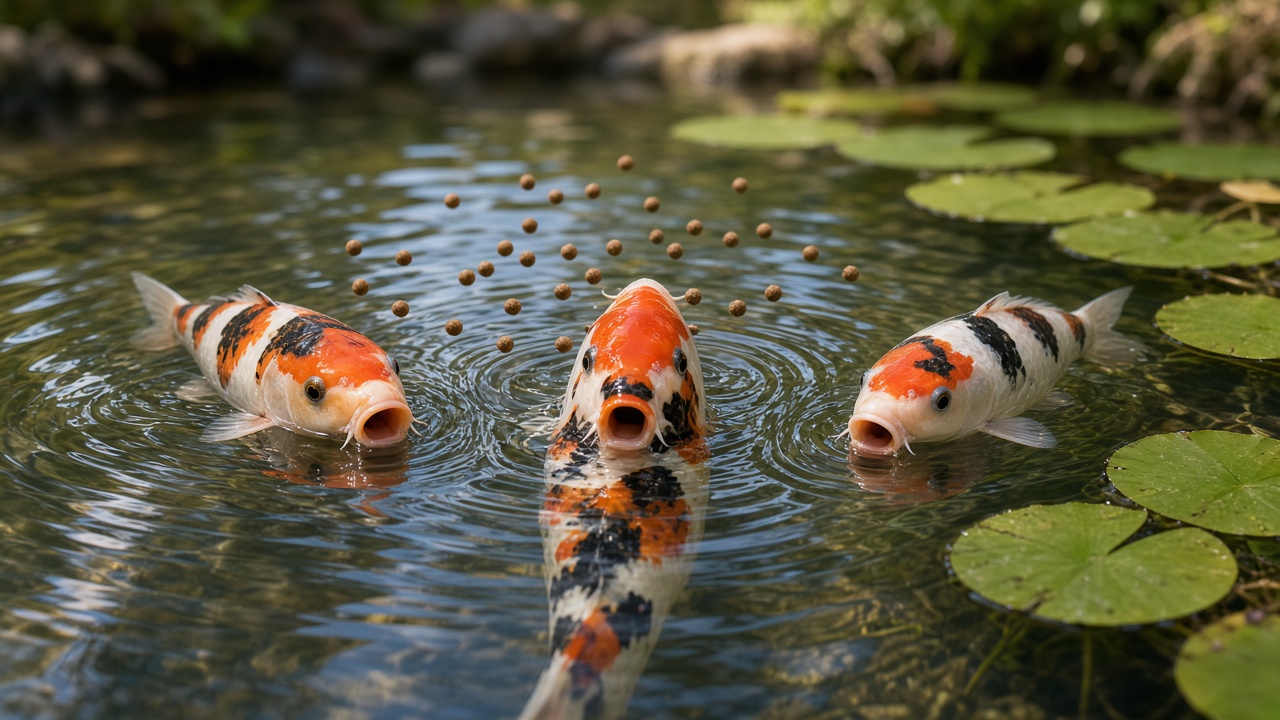
Quick answer: Keep koi in an outdoor pond, not a glass tank. Plan space for a 30-to-60-centimeter adult. Feed only when the water matches the food’s listed temperature.
The USGS lists koi as 30 to 60 centimeters long with a typical life span of about 40 years. This page is a backyard-pond care brief.
Our research team analyzed published specs from maker pages and the USGS koi profile, and we used one rule for what got in. That rule is the Adult-Length Filter for ponds and products.
We cover outdoor ponds meant to hold a USGS-size adult for decades, plus foods and one test kit whose maker pages publish a number. We leave out indoor tanks, show-grade imports, breeding plans, and products with no maker-published number.
What a koi is, in plain numbers
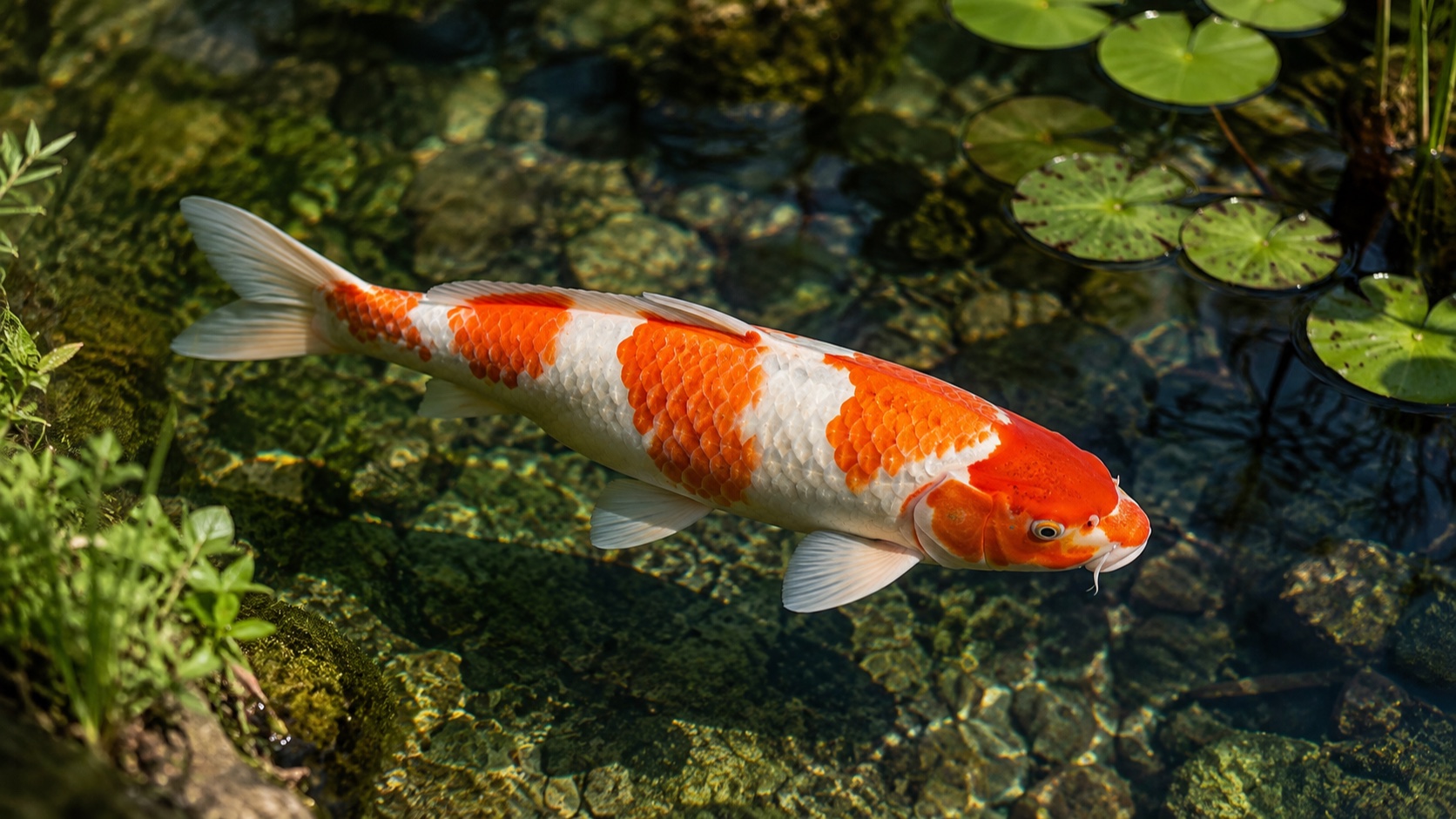
Koi are ornamental carp, and the USGS species profile treats them as Cyprinus rubrofuscus.
The same USGS page gives a typical life span of about 40 years and records the oldest-known koi at 230 years. That long life is why pond size is a first decision, not a later upgrade.
The USGS size range is 30 to 60 centimeters, or about 12 to 24 inches. A fish in that range cannot live well in a standard indoor aquarium.
The USGS profile also lists two identification counts:
- 29 to 33 plus 2 to 3 lateral-line scales
- 18 to 22.5 branched dorsal rays
Those counts help tell koi from look-alike carp and show you bought a large, long-lived fish.
The USGS page says koi reach sexual maturity around age 4 and can breed each year after that. This brief covers keeping adults in a backyard pond, not spawning.
The USGS profile notes that koi can carry koi herpesvirus. It also cites a 100% mortality figure for carp oedema virus in the paper it names. Those are disease facts from that profile, not a home treatment plan.
Pond size under the Adult-Length Filter
Size the pond for a 30-to-60-centimeter adult, not for the juvenile on the sales tank.
The USGS profile does not publish a gallon minimum, and many web guides invent one, so
We used body length instead, because a 60-centimeter adult needs room to turn, sink, and rest. A 20-gallon or 55-gallon tank fails that test on day one.
Use this length check before you buy fish:
- Can a 60-centimeter fish turn without hitting the liner?
- Is the deepest spot deeper than the fish is long?
- Will that still be true in year 10, not week 2?
If any answer is no, the pond is a grow-out tub and not a koi home.
Depth matters as much as surface area, because shallow bowls heat and cool too fast. A deeper pocket gives fish a stable place in heat and cold.
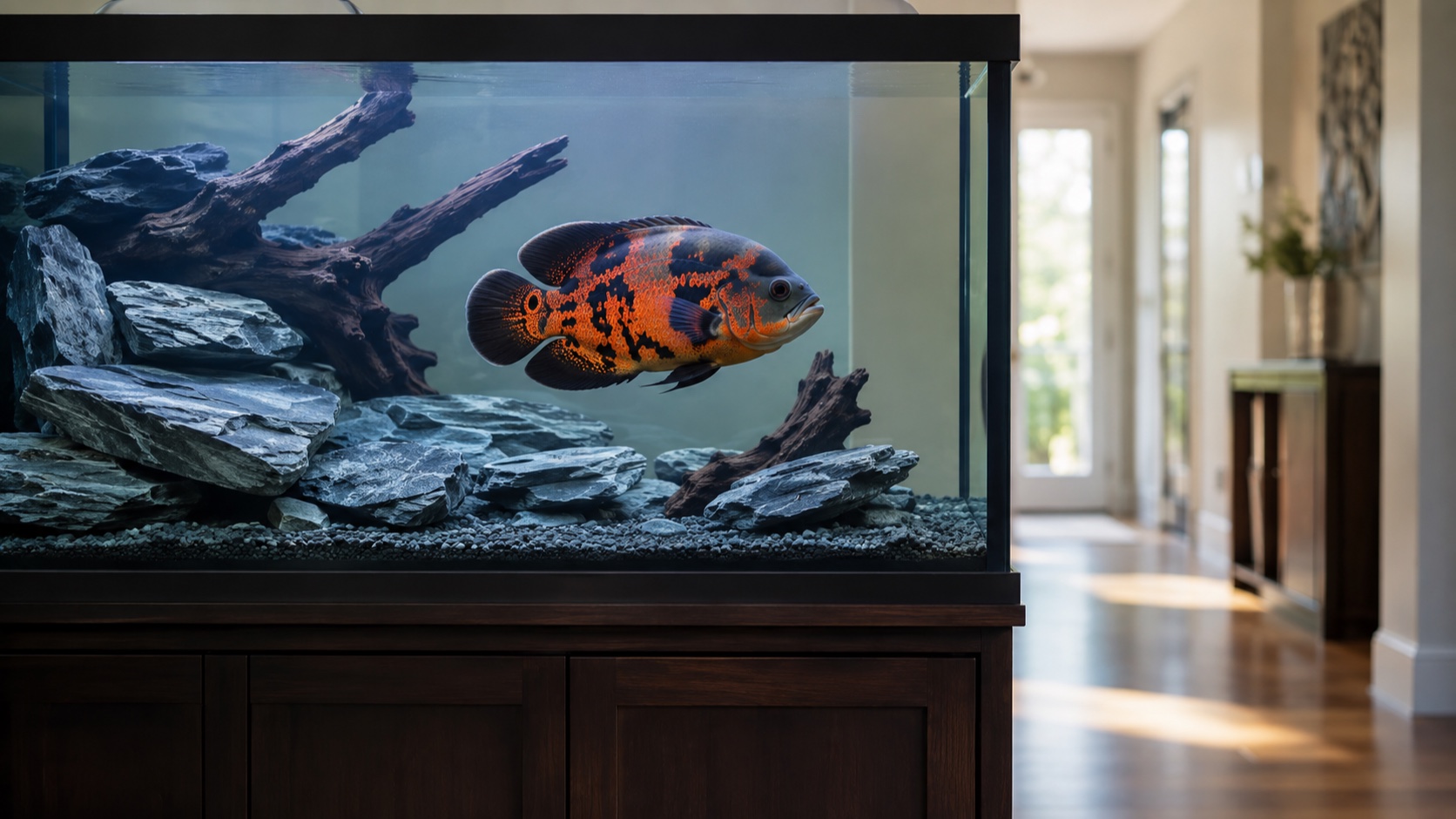
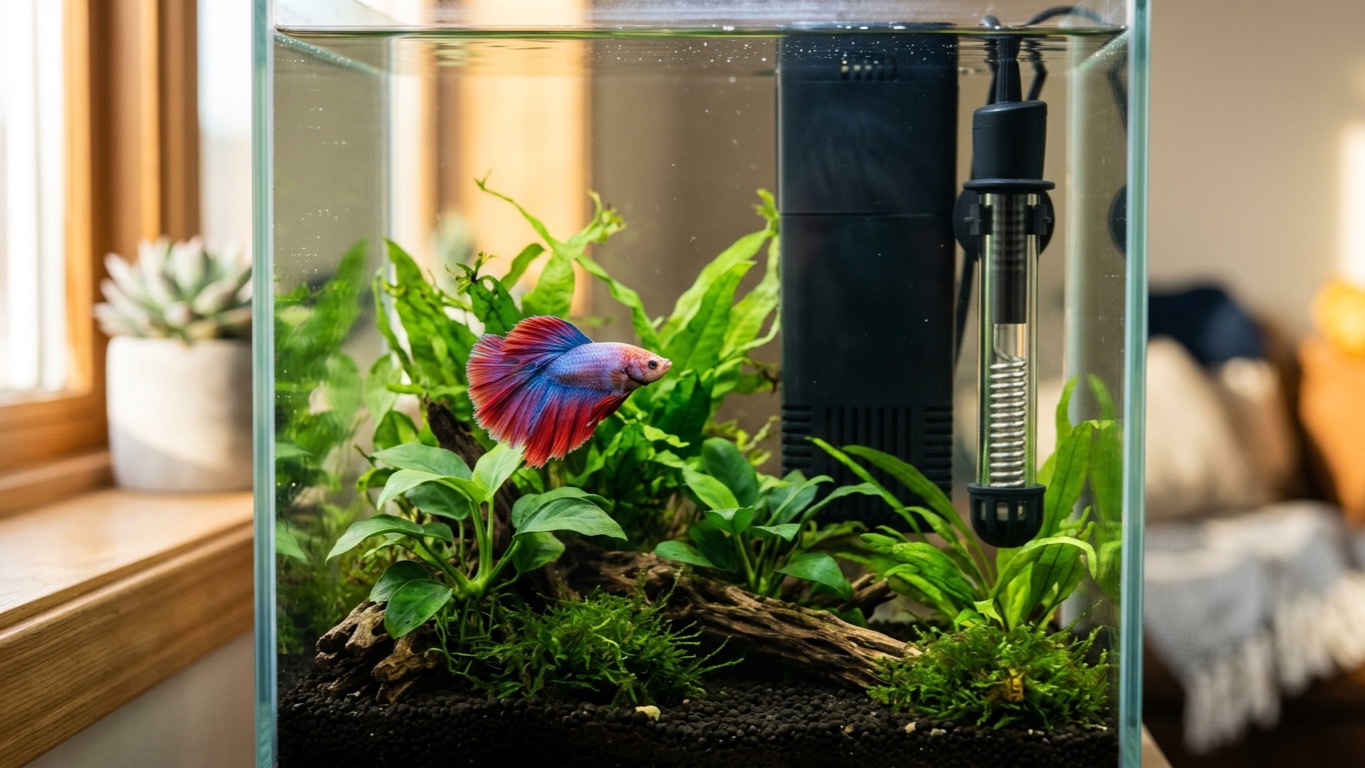
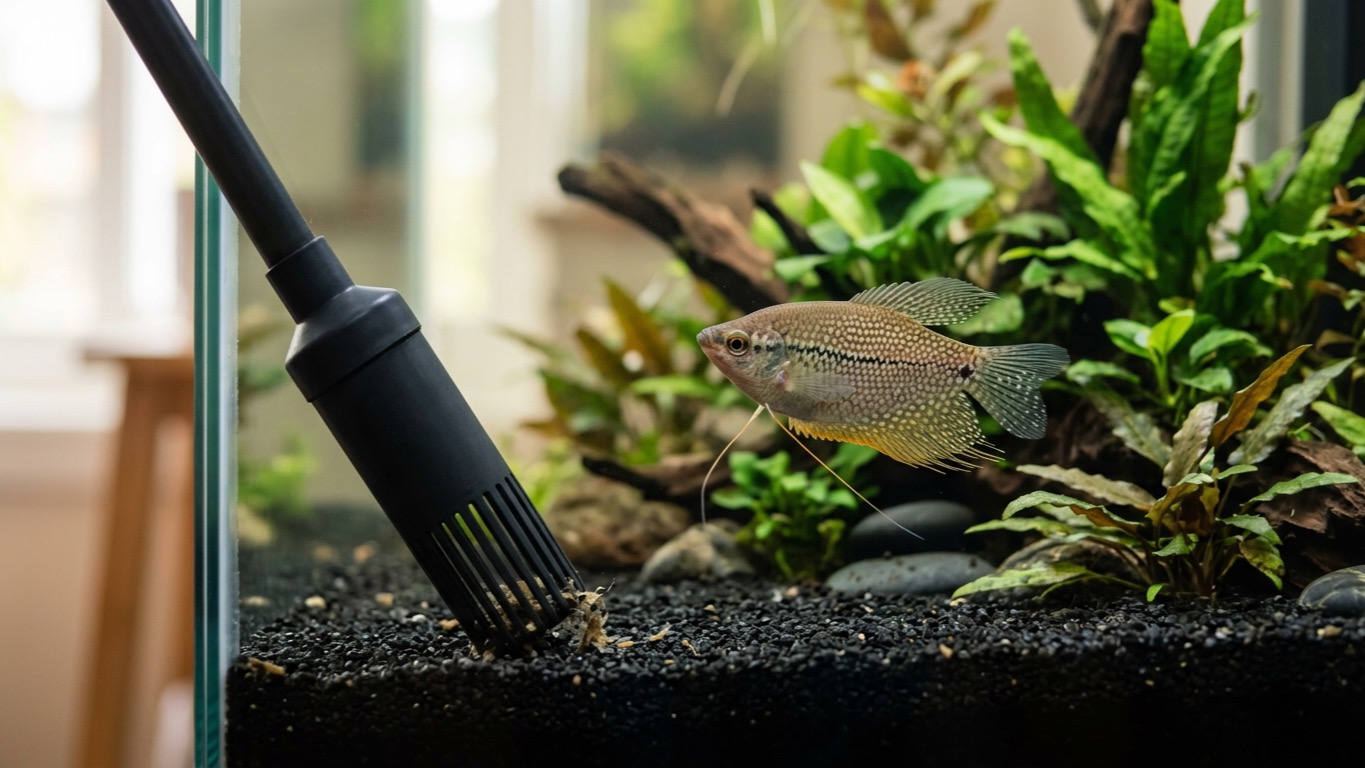
Do not start in a glass tank until they grow, because growth is the problem you are planning for. Indoor combo gear belongs in tanks, not ponds, so see our guide to a fish tank filter and heater in one for that indoor job.
Stock later, not sooner, and add fish only after the pond has cycled. Leave room for the adults you will have, not the babies you see now.
Cycle the pond before you add fish
A newly filled pond is not ready for koi on the day you add water.
Koi make a lot of waste, and that waste becomes ammonia. Bacteria must convert ammonia before the pond is safe, and that wait is the cycle.
The same logic used for indoor tanks applies here, though the timeline is not the same in every yard. Sun, volume, and filter media all change the wait. Read our page on how long to cycle a fish tank for the test-based sequence.
API Fishcare’s page for the API Pond Liquid Master Test Kit lists four checks:
- pH
- ammonia
- nitrite
- phosphate
That kit’s page says it includes six bottles of liquid reagent, four test tubes, and color charts. API’s page says the kit holds supplies for over 500 tests and asks you to test weekly.
Put those checks in a simple loop:
- Fill and dechlorinate the water.
- Start the filter and keep water moving.
- Test weekly with a pond kit that reads ammonia and nitrite.
- Add koi only after ammonia and nitrite stay at zero on repeat tests.
Do not add a full herd on day one, because one or two fish are easier to watch while bacteria catch up. The USGS long life span makes this wait cheap, since a 40-year fish is not in a rush to enter a raw pond.
Feed by water temperature, not by the calendar
Maker pages set feeding by water temperature in degrees, not by month names.
- Water consistently above 60°F and below 70°F: feed one to two times daily
- Water that stays above 70°F: feed two to four times daily
Aquascape’s page for Premium Staple Fish Food Pellets sets a harder floor. It says water should be a minimum of 60°F or 15°C before you use that formula. It says to feed only what fish finish in three minutes, up to three times a day.
Tetra’s Koi Vibrance page sets a lower seasonal floor and says to feed in spring, summer, and fall when water is 50°F and above.
Hikari Sales USA labels Hikari Wheat-Germ Formula as a colder-temperature daily diet. Its page says the formula is for cooler climates with a winter season. Use that class of food when warm-water diets no longer match the pond.
Compare those maker floors before you open a bag:
- Aquascape Premium Staple Fish Food Pellets: 60°F minimum
- Hikari Gold: listed feeding starts above 60°F
- Tetra Pond Koi Vibrance: 50°F and above
- Hikari Wheat-Germ Formula: colder-temperature diet
Do not guess from the month; use a pond thermometer, and if two foods disagree, follow the colder rule for the bag in your hand.
Koi food is not a tropical fish diet, because pellet size, protein, and temperature rules differ. Our betta food guide is for a small indoor fish, so do not swap those diets.
Foods and a test kit we compared
We compared only currently sold items whose maker pages publish a concrete number.
Our research team lined up four foods and one pond test kit.
The protein spread on those food pages is eight points. Aquascape’s staple page lists 32% minimum protein, and the same page lists a color-enhancing formula at 40% minimum protein. Hikari Sales USA lists Hikari Gold at 35.0% minimum protein and Hikari Wheat-Germ Formula at 32.0% minimum protein.
Vitamin A is a wider gap: Hikari Sales USA lists Hikari Gold at a minimum of 8,700 IU/kg. Aquascape lists Premium Staple Fish Food Pellets at 3,000 IU/kg minimum.
Tetra’s Koi Vibrance page does not print a guaranteed analysis. It does print seven bag sizes, from 4.94 oz to 16.5 lb, plus product number 16359. We report what that page shows and do not borrow protein numbers from store listings.
Aquascape also prints pellet-to-fish length rules:
- Small pellets: fish 3 inches (8 cm) and above
- Large pellets: fish 8 inches (20 cm) and above
- Mixed pellets: all pond fish
| Product | Maker | Form | Maker-listed number | Maker feeding or use rule |
|---|---|---|---|---|
| Hikari Gold | Hikari Sales USA | Floating daily color diet | Crude protein min. 35.0%; vitamin A min. 8,700 IU/kg | 1–2 times daily at 60–70°F; 2–4 times daily above 70°F |
| Hikari Wheat-Germ Formula | Hikari Sales USA | Floating cool-weather diet | Crude protein min. 32.0%; vitamin E min. 2,000 IU/kg | Labeled for colder temperature and winter climates |
| Aquascape Premium Staple Fish Food Pellets | Aquascape | Everyday floating pellet | Crude protein 32% min.; vitamin A 3,000 IU/kg min. | Finish in 3 minutes; water at least 60°F; up to 3 times daily |
| Tetra Pond Koi Vibrance | Tetra | Soft sticks | Seven sizes, 4.94 oz to 16.5 lb; product 16359 | Spring, summer, and fall at 50°F and above |
| API Pond Liquid Master Test Kit | API Fishcare | Liquid pond test kit | Over 500 tests; 6 reagent bottles; 4 tubes | Weekly tests for pH, ammonia, nitrite, and phosphate |
Hikari Gold is a color-enhancing daily pellet, and Hikari Wheat-Germ Formula is the cool-weather bag on that same maker’s site. Aquascape Premium Staple Fish Food Pellets is an everyday pond pellet with a 60°F floor.
Tetra Pond Koi Vibrance is a soft stick diet with a 50°F seasonal note. The API Pond Liquid Master Test Kit is the water check, not a food.
Pick one warm-water food and one cool-weather food, and keep the test kit next to the food bin. Temperature decides the bag, and test results decide whether you feed at all.
If ammonia or nitrite is not zero, skip the meal, because food becomes waste and waste becomes the reading you just failed.
What this guide leaves out
Show fish, indoor tanks, and medicine stay off this page.
A koi that matches the USGS length range is not a desktop pet, and indoor heaters and hang-on filters are the wrong tool class.
This desk compares published specs and does not treat sick fish.
We also skipped pond kits with no finished-size table on the page we used. The Adult-Length Filter needs a number.
If your pond fails the length check, rehome the plan and do not force a 40-year carp into a patio bowl.
FAQ
These answers use the same USGS and maker numbers as the rest of this page.
How long do koi fish live?
The USGS koi profile gives a typical life span of about 40 years and records the oldest-known koi at 230 years. Your pond, food, and water will decide where a fish lands inside that range. A short indoor tank life is not the USGS figure.
How big do koi get?
The USGS size range is 30 to 60 centimeters, or about 12 to 24 inches. That is an adult range, not a hatchery size, so buy pond volume for the top of that range.
Can koi live in a fish tank?
Not as adults under the Adult-Length Filter we used. A 60-centimeter carp cannot turn in a 20-gallon tank. Indoor combo filters and heaters are built for tanks, not ponds.
When should I start feeding koi in spring?
Follow the bag, not the calendar. Aquascape’s staple page waits until 60°F, and Tetra’s Koi Vibrance page allows 50°F and above. Hikari Gold’s page starts its listed daily schedule above 60°F. Use a thermometer and the colder rule on the bag you opened.
How often should I test pond water?
API Fishcare’s Pond Liquid Master Test Kit page says to test weekly and reads pH, ammonia, nitrite, and phosphate. Weekly tests matter more after you add fish or change food.
What should I feed koi in cold water?
Hikari Sales USA labels Hikari Wheat-Germ Formula for colder temperature and winter climates. Aquascape’s staple page tells you not to use that staple formula below 60°F, so match the bag to the degrees.
Are koi the same as goldfish?
No, the USGS profile treats koi as ornamental Cyprinus rubrofuscus, and goldfish are a different carp lineage. They may share a pond, but they do not share the adult length range on the USGS koi page.