Quick answer: Choose a peacock eel, half-banded spiny eel, or barred spiny eel, since FishBase puts all three at or under 30 cm. Skip fire eels, tire-track eels, and swamp eels, and use fine sand with a tight lid.
Yes: a small freshwater eel for an aquarium is any species with a FishBase maximum of 30 cm or less.
This page is a size-filter from the Waterpuppy research desk, and
Shop tags often say “dwarf eel” for fish that later exceed a short tank. Our research team compared published lengths, not store cards, and the cutoff below is the whole method.
The 30-Centimeter Desk Rule
We included a species only when FishBase publishes a maximum of 30 cm or less.
That length cutoff is the Waterpuppy Size Screen, and it is a published-length rule rather than a shop-label rule. We also required the fish to be sold for freshwater tanks.
FishBase’s genus list for Macrognathus names 24 species, and our count found 19 with a published maximum of 30 cm or less. We cover six of those 19, plus one eel-shaped loach.
We left out any Macrognathus over 30 cm, and we left out Asian swamp eels. The U.S. Fish and Wildlife Service rates Monopterus albus as High Risk.
We also left out fire eels, tire-track eels, electric eels, and freshwater morays. Those fish fail the length rule, the freshwater rule, or both.
If a seller cannot give a scientific name, treat the sale as unlabeled. The 30 cm rule cannot be checked on a blank tag.
Seven species that meet the cutoff
These seven species stay at or under the 30 cm FishBase mark.
Lengths below come from FishBase. Coolie loach numbers come from its species page, and the six spiny eels come from the Macrognathus genus list.
Coolie loach (Pangio kuhlii)
FishBase lists a maximum of 12.0 cm total length, which makes this the shortest fish in the article.
FishBase lists a tropical range of 24°C to 30°C (75°F to 86°F) and pH 5.5 to 6.5.
This fish is a cobitid loach, not a spiny eel, but shops still sell it as a “freshwater eel,” so we included it.
FishBase describes 6 to 10 body bars and lists 47 to 51 vertebrae. FishBase reports an IUCN Least Concern listing, assessed 4 December 2019.
Barred spiny eel (Macrognathus pancalus)
FishBase lists 18.9 cm total length, so this is the smallest true spiny eel we name. Ask for the scientific name before you buy, because shop tags vary.
Mekong spiny eel (Macrognathus meklongensis)
FishBase lists 17.8 cm, and the genus table does not mark that figure as SL or TL.
Treat 17.8 cm as the published maximum, not as a promised adult size, because a mislabeled fish can still be a larger species.
Tapir spiny eel (Macrognathus tapirus)
FishBase lists 17.9 cm standard length, so confirm the name on the bag or invoice.
Frecklefin eel (Macrognathus maculatus)
FishBase lists 28 cm total length, so plan the tank for that published maximum rather than the juvenile in the bag.
Half-banded spiny eel (Macrognathus circumcinctus)
FishBase lists 28.6 cm total length, and a blank or “assorted eel” tag is not a match.
Peacock eel (Macrognathus siamensis)
FishBase lists 30 cm standard length, so it is the longest species we cover and still fits the desk rule.
Compare the seven published maxima:
- Pangio kuhlii: 12.0 cm TL
- Macrognathus meklongensis: 17.8 cm
- Macrognathus tapirus: 17.9 cm SL
- Macrognathus pancalus: 18.9 cm TL
- Macrognathus maculatus: 28 cm TL
- Macrognathus circumcinctus: 28.6 cm TL
- Macrognathus siamensis: 30 cm SL
Sand, lids, and the tank footprint rule
Fine sand and a long footprint matter more than extra tank height.
Spiny eels slide through small gaps, and coolie loaches do the same. Our desk rule is a tight lid on every tank that holds a long-bodied fish.
We do not publish unsourced “minimum gallons,” because gallon stickers vary by brand and by height. Length is the figure we can check against FishBase.
Our footprint rule is simple: tank length should be at least four times the FishBase maximum.
- Coolie loach at 12.0 cm: tank at least 48 cm long
- Barred spiny eel at 18.9 cm: tank at least 76 cm long
- Peacock eel at 30 cm: tank at least 120 cm long
That is a desk rule from published lengths, and it is not a field trial.
Sand is the other hard filter, and our product rule is an upper grain size of 1.0 mm or less on the maker page.
CaribSea’s freshwater substrate page lists Super Naturals Crystal River at 0.5 to 1.0 mm. The same page lists Super Naturals Moonlight Sand at 0.25 to 0.75 mm. Both list an average density of 95 pounds per cubic foot.
CaribSea lists Super Naturals Peace River at 1.0 to 2.0 mm. That upper bound fails our 1.0 mm sand rule, so we left it out of the table.
A heater is not optional in a cool room. FishBase’s 24°C to 30°C band for the coolie loach is the only temperature range we cite. A heater sized for the tank is how most keepers hold that band.
Food and water care
Use a sinking carnivore food, and dose the conditioner from the maker label.
Hikari UK’s page for Sinking Carnivore Pellets lists a minimum protein of 47 percent. The same page lists a 74 g pack and names eels among the intended fish.
Hikari UK’s feeding line is two to three times daily, and you should feed only what the fish can finish in a few minutes.
Sinking pellets help because these fish feed on the sand, while floating flakes miss them.
New tap water still needs a conditioner. Seachem’s Prime page says to use 1 capful (5 mL) for each 200 L (50 U.S. gallons) of new water, and the same page says each cap thread is about 1 mL.
Seachem also states these dose limits:
- Double the dose for very high chloramine
- Up to 5 times the normal dose to bind nitrite in an emergency
- Half the dose if temperature is above 30°C (86°F) and chlorine or ammonia is low
Seachem says Prime can be dosed every 24 to 48 hours, and it says the bind lasts up to 48 hours. After that window, leftover ammonia is released unless you dose again.
Seachem says to use the 5-times dose if ammonia or nitrite is above 2 ppm. That is an emergency label, not a daily plan.
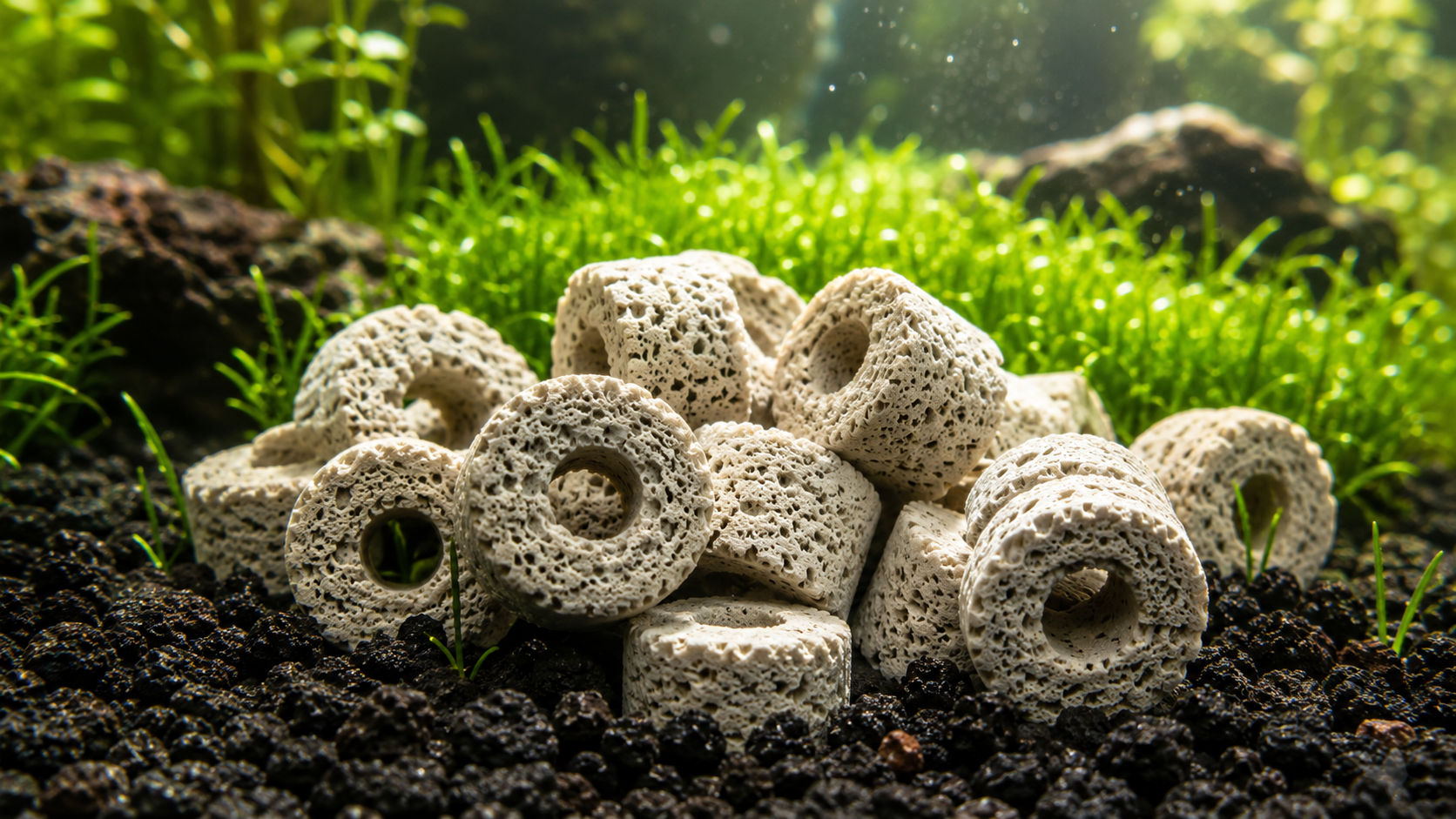
A cycled filter still has to finish the job. Pair water changes with bio filter media so bacteria can take the bound waste.
Use a freshwater water conditioner on every new bucket. Seachem Prime is the conditioner we compared from a maker page.
Seachem lists seven bottle sizes from 50 mL to 4 L, so pick a size you can measure.
Gear we compared from maker pages
We compared only products whose own maker pages list the attributes below.
The table is an attribute sheet, not a ranked list, and it has no price column.
We used three product rules:
- Food: the maker page must name eels or bottom carnivores
- Sand: typical grain size must top out at 1.0 mm or less
- Conditioner: the maker page must state a mL-per-gallon dose
| Product | Maker-listed form | Key spec from the maker page | Fits which desk rule |
|---|---|---|---|
| Hikari Sinking Carnivore Pellets | Sinking pellet; 74 g pack | Minimum 47% protein; feed 2–3 times daily | Food rule: page names eels |
| CaribSea Super Naturals Crystal River | Sand; 5, 10, 20, and 40 lb bags | Typical size 0.5–1.0 mm; 95 lb/ft³ | Sand rule: upper size 1.0 mm |
| CaribSea Super Naturals Moonlight Sand | Sand; 5, 10, 20, and 40 lb bags | Typical size 0.25–0.75 mm; 95 lb/ft³ | Sand rule: upper size 0.75 mm |
| CaribSea Super Naturals Sunset Gold | Sand; 5, 10, 20, and 40 lb bags | Typical size 0.25–1.0 mm; 94 lb/ft³ | Sand rule: upper size 1.0 mm |
| Seachem Prime | Liquid; 50 mL to 4 L | 5 mL per 50 U.S. gallons of new water | Conditioner rule: labeled dose |
Crystal River and Moonlight Sand share the 95 lb/ft³ density, while Sunset Gold lists 94 lb/ft³. Grain size, not color, is the filter.
Moonlight Sand is the finest of the three sands, and Crystal River sits in the middle. Sunset Gold reaches 1.0 mm at the top of its range.
Hikari’s page says carnivores may refuse a new pellet at first, so keep offering the same food. The maker says continued use leads to acceptance.
Fire eels, tire-track eels, and swamp eels fail the cutoff or the risk screen.
FishBase lists Macrognathus zebrinus, the zebra spiny eel, at 46 cm total length. That published maximum fails the 30 cm rule.
FishBase lists Macrognathus aral, the one-stripe spinyeel, at 63.5 cm total length. That figure fails the cutoff by more than double.
FishBase lists Macrognathus aculeatus, the lesser spiny eel, at 38 cm total length. Shops call it “lesser,” yet the published maximum is still over 30 cm.
FishBase lists Macrognathus fasciatus at 30.7 cm standard length, so it misses the cutoff by 0.7 cm and we left it out.
The U.S. Fish and Wildlife Service’s Asian swamp eel summary is dated 10 April 2025. It rates Monopterus albus as High Risk for the contiguous United States. It classifies history of invasiveness as High and certainty as Medium.
The Service notes established U.S. populations from aquarium or market release. It also notes a species complex of up to five possible species. We do not treat swamp eels as a home-tank fit.
If FishBase did not print a number, we left that number out.
FAQ
Are coolie loaches real eels?
No. FishBase places Pangio kuhlii in Cobitidae, the spined loaches, so it is eel-shaped rather than a mastacembelid. We still list it because shops sell it to people who search for a small freshwater eel.
How large does a peacock eel get?
FishBase lists 30 cm standard length for Macrognathus siamensis. That is the longest published maximum in this article, and a young fish in a cup can still reach that figure.
Can a fire eel live in a small tank?
Not under our rule. Fire eels are not on the Macrognathus list we used, and they are sold as large fish. If a seller cannot show a FishBase maximum of 30 cm or less, skip the sale.
What sand is safe for these fish?
Use a sand whose maker lists an upper grain of 1.0 mm or less. CaribSea lists Crystal River at 0.5 to 1.0 mm and Moonlight Sand at 0.25 to 0.75 mm. We rejected Peace River because CaribSea lists it at 1.0 to 2.0 mm.
How much Seachem Prime do I add?
Seachem’s page says 5 mL treats 50 U.S. gallons of new water, which is 1 mL per 10 gallons. Dose the new water, and do not guess from the size of the room.
Do these fish need a heater?
FishBase lists 24°C to 30°C for the coolie loach. We do not have a FishBase temperature band for the six spiny eels on the genus list. In a cool house, a heater is still the tool that holds a steady tropical range.
Is an Asian swamp eel a small aquarium eel?
No. The U.S. Fish and Wildlife Service rates Monopterus albus as High Risk, and the Service also flags established U.S. populations. It is not one of the seven species in this article.