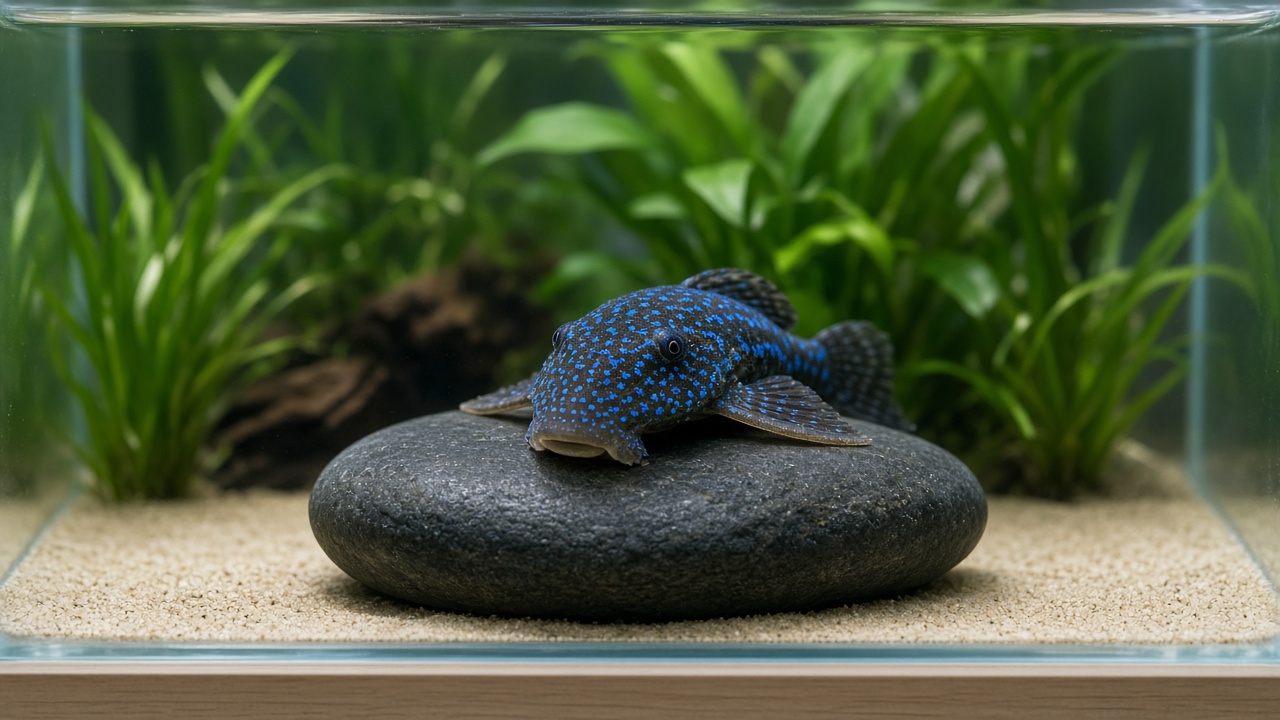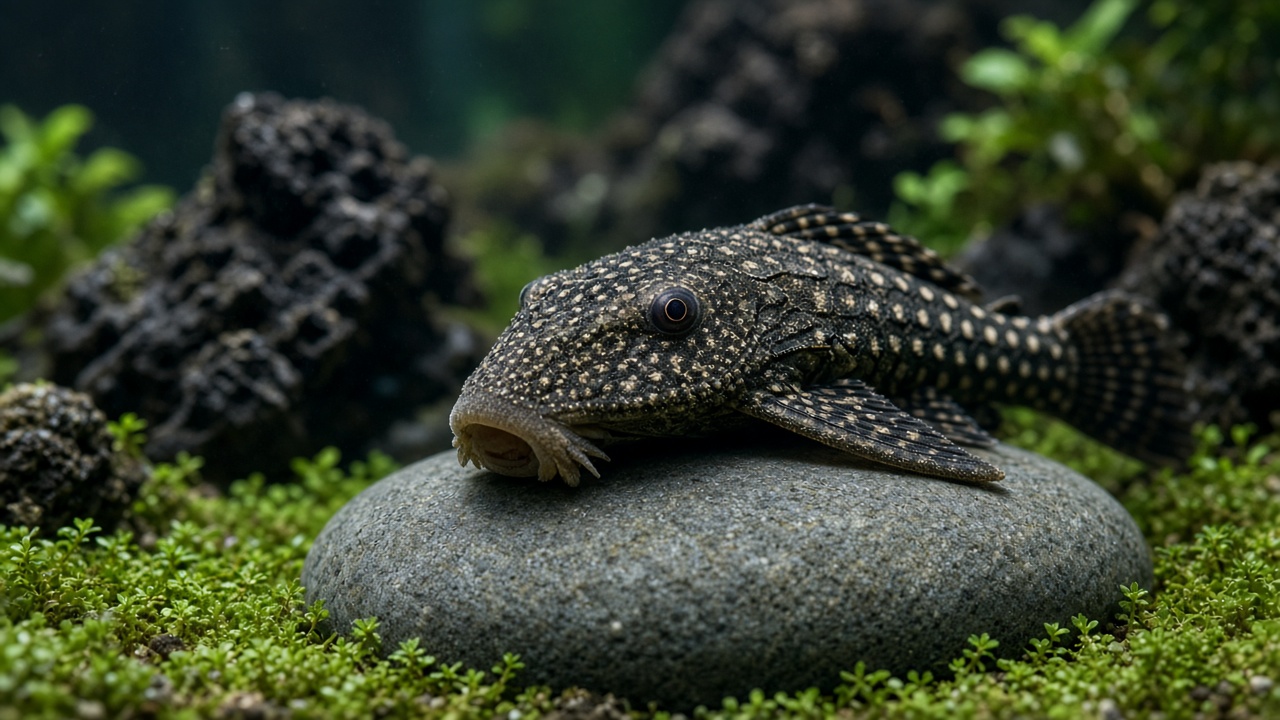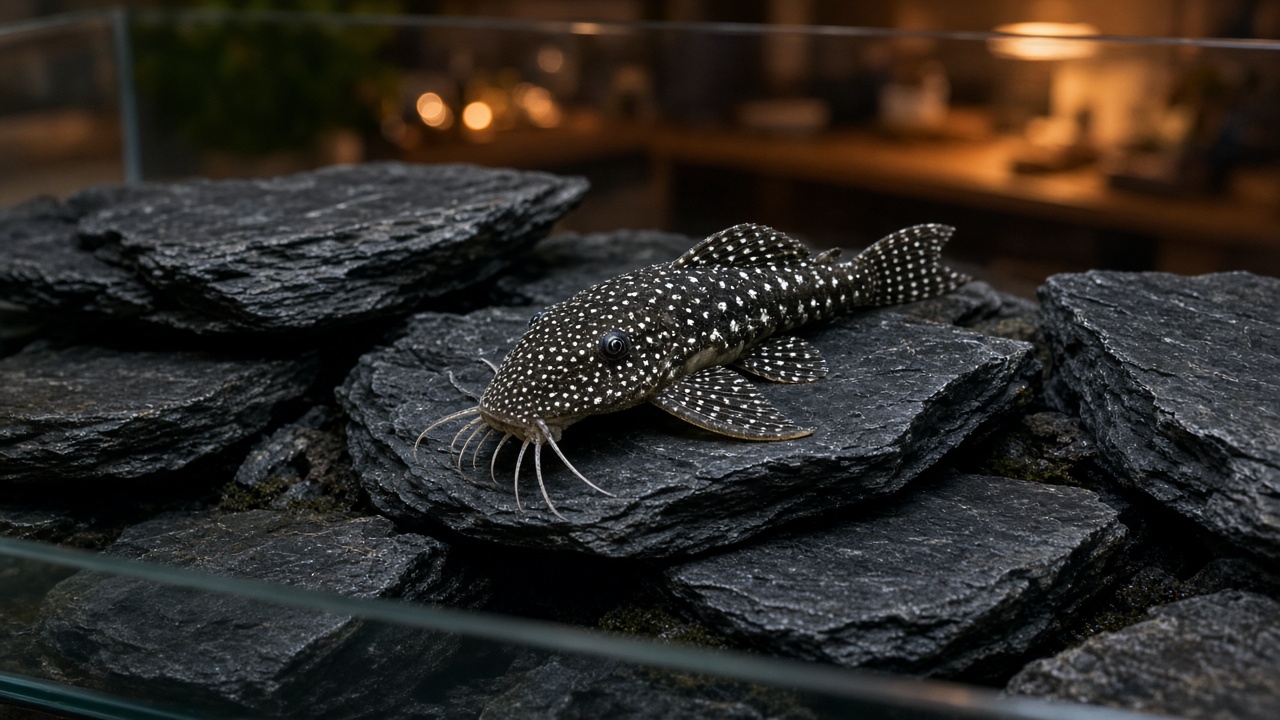
Quick answer: Keep one L102 snowball pleco in a long tank with a 48-by-18-inch floor, and feed meaty sinking pellets at night. Give each fish its own cave, and do not use it as an algae cleaner or mix it with other Hypancistrus.
The search result you need is a species ID and a size, not a shopping list.
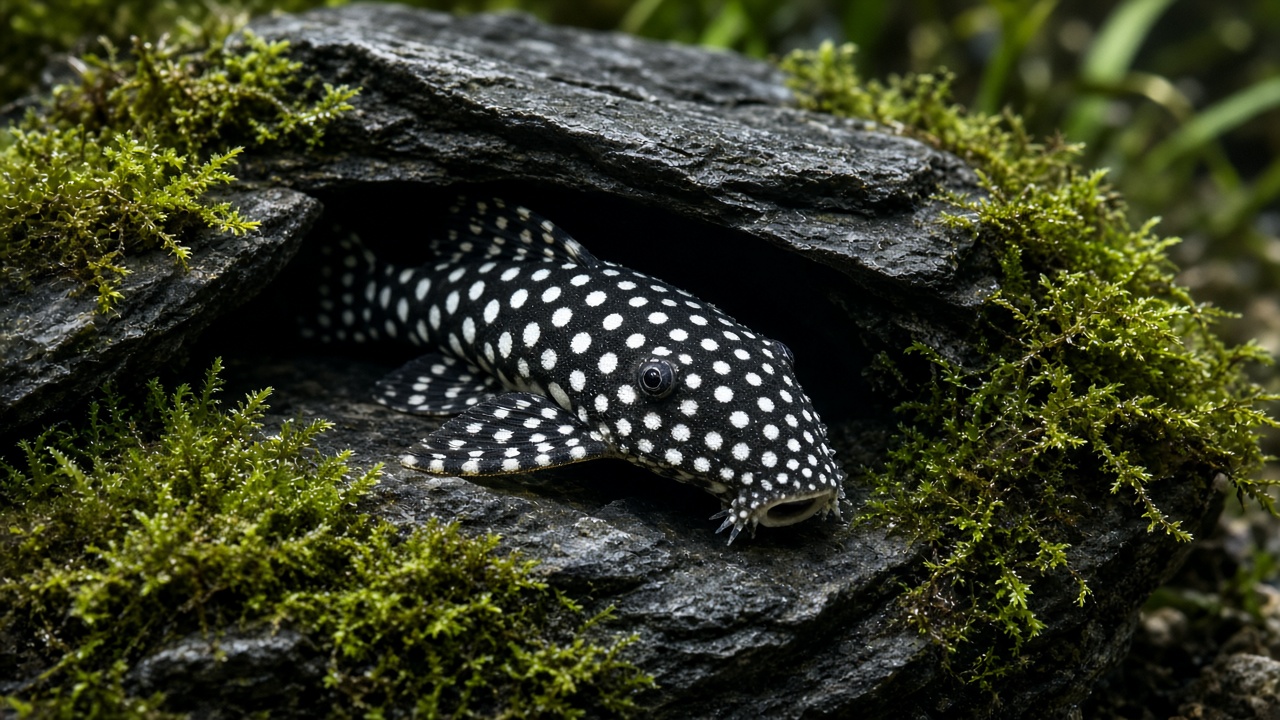
A snowball pleco is Hypancistrus inspector (L102) and reaches 12.6 cm standard length.
This page is a desk comparison of published species records and current maker labels. We did not keep L102 fish in-house, run feeding trials, or measure wild specimens.
Our inclusion rule is the L102-only, protein-label rule, so we cover Hypancistrus inspector sold as L102. We skip L201 “snowball” bags, common plecos, and bristlenose setups.
We include only sinking foods whose maker pages list a guaranteed analysis, and we skip floating flakes and any food without a published protein number.
What a snowball pleco is, and what it is not
A snowball pleco is a spotted suckermouth catfish from blackwater rapids, not a tank janitor.
FishBase lists the species as Hypancistrus inspector Armbruster, 2002, living in freshwater in the upper Negro, Casiquiare, and upper Orinoco basin.
Seriously Fish uses the same scientific name and the trade code L102. The page also notes that some Orinoco fish once lumped with this species were later named Hypancistrus contradens.
The body is brown to black with large white to yellow spots, and FishBase says the head and belly stay mostly naked in adults.
FishBase also lists these counts from the species record:
- 2 dorsal spines and 7 dorsal soft rays
- 1 anal spine and 3 to 4 anal soft rays
- 22 to 24 lateral-line plates
- 20 to 40 enlarged cheek odontodes in adults
Those plate and fin counts are how a desk can tell L102 from look-alike spotted plecos, and they are not a color guess.
FishBase reports the IUCN Red List status as Least Concern, with an assessment date of 8 October 2020.
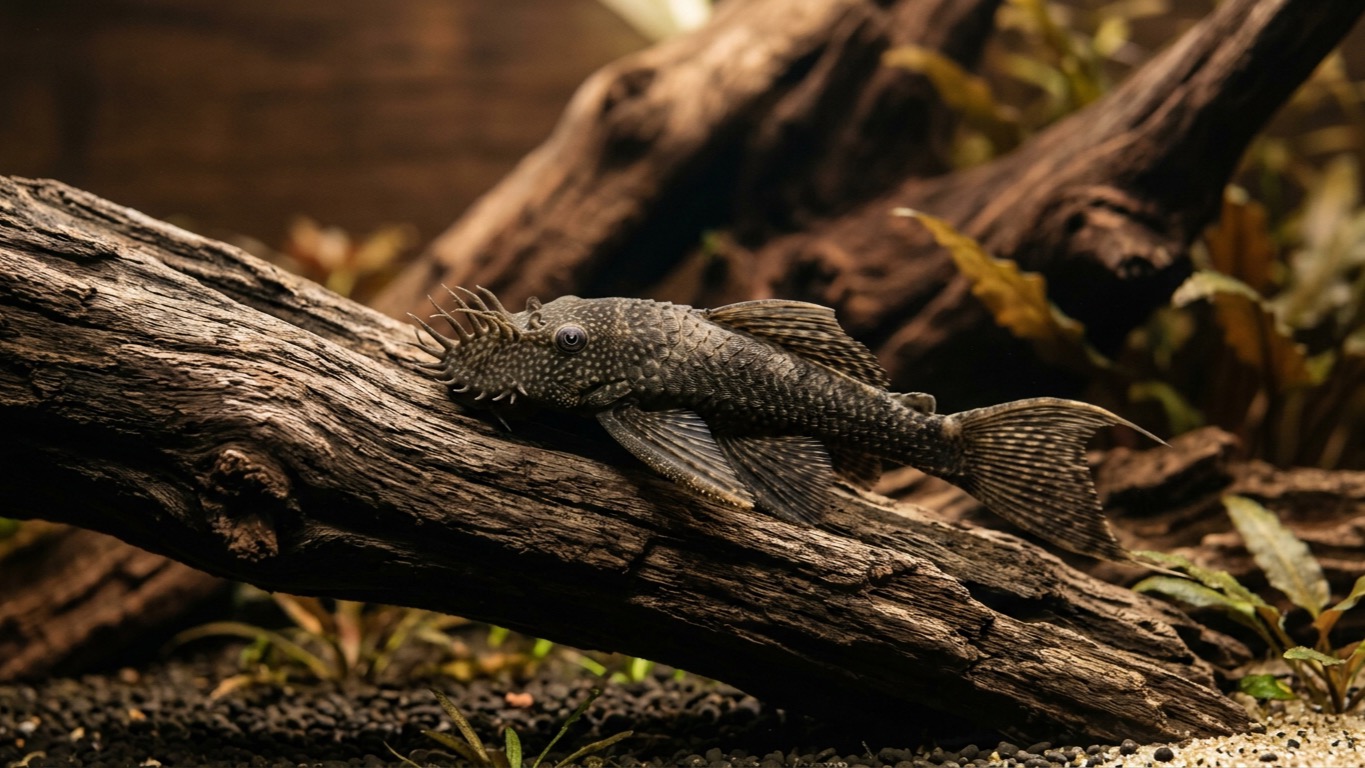
A snowball pleco is not a bristlenose pleco. A bristlenose rasps wood and lives on plant matter, while an L102 does not share that job.
How large an adult gets
Published length records do not agree on adult size, so we print both numbers.
FishBase lists a maximum of 12.6 cm standard length for a male or unsexed fish, and that figure cites Armbruster’s 2002 species description.
Standard length stops at the base of the tail and does not include the caudal fin. A 12.6 cm standard length is about 5.0 inches without the tail.
Seriously Fish lists 160 mm standard length, which is 16.0 cm, or about 6.3 inches without the tail.
Our research team analyzed those two published figures and did not resolve the gap with our own fish.
Use the FishBase 12.6 cm figure as the verified type-series maximum, and treat the 160 mm aquarium-profile figure as a larger trade claim. Plan the tank for a 6-inch-class bottom fish either way.
We found no primary lifespan number in the records we used, so we do not invent one.
Tank footprint, caves, and flow
Size the tank by floor length, not by a short 40-gallon box.
Seriously Fish says the smallest base to consider is 120 by 45 cm, which is 48 by 18 inches. The same profile lists a volume of about 243 liters, or about 64 U.S. gallons.
A tall 40-gallon tank can hold the water and still fail that floor rule. The fish lives on the bottom, so width and length matter more than height.
Build the tank like a rocky run, not a bare box. Seriously Fish describes this hardscape:
- Mixed rocks, sand, and fine gravel
- Some water-worn boulders
- Driftwood, terracotta pipes, or plant pots as caves
- Broken sight lines so fish cannot stare each other down
Give each adult its own cave, because males guard caves and extra caves cut fights.
Seriously Fish says to pick a filter that moves 4 to 5 times the tank volume each hour. On a 243-liter tank, that is about 972 to 1,215 liters per hour.
Add extra flow or an airstone if the surface looks still. This species comes from rocky rapids, so soft, stale water is the wrong match.
Water targets and weekly work
Match the published ranges, then keep waste low with large water changes.
Seriously Fish lists these water figures:
- Temperature 22–30°C, which is 72–86°F
- pH 5.0–7.5
- Hardness 1–15 dGH
Those ranges are wide, so stability inside the range matters more than chasing a single number.
Seriously Fish says the fish does not tolerate piled-up waste. The same page calls for weekly water changes of 30–50% of tank volume.
On a 64-gallon tank, that is about 19 to 32 gallons each week. Match temperature, and condition the new tap water first.
Municipal tap water is treated to kill germs, and that residual is not safe for fish gills. Use a conditioner whose label says it removes chlorine and chloramine.
Test ammonia, nitrite, nitrate, and pH every week, and raise the test pace if any reading moves.
Do this on change day:
- Siphon waste from the sand and cave mouths.
- Remove 30–50% of the water.
- Add conditioned, temperature-matched water.
- Confirm the heater and flow are still running.
Skip copper treatments unless a fish-health professional directs them, because armor plates do not make this fish safe from metals.
Diet: protein first, wafers second
Feed a meaty sinking staple at night, and use an algae wafer as a side dish.
Seriously Fish says wild fish likely eat small animals first. The same page tells keepers to offer sinking dried foods, frozen Daphnia, mosquito larvae, bloodworm, and shrimp, plus some fruit or parboiled potato.
FishBase reports stomach contents of algae, detritus, and seeds from collected fish. That is why we do not call this species a pure carnivore.
Our Protein-First Wafer-Second rule follows those two records. The daily staple is a high-protein sinking pellet, and the wafer is the plant side, not the whole diet.
Comparing four current maker labels, listed minimum crude protein ran from 32.0% to 47%. That 15-point spread is why we printed the table below.
Hikari’s page for Tropical Sinking Carnivore Pellets lists these guaranteed values:
- Crude protein min. 47%
- Crude fat min. 8.0%
- Crude fiber max. 3.0%
- Moisture max. 10%
- Ash max. 17%
- Phosphorus min. 1.0%
The same Hikari page says to feed two to three times daily, and to offer only what the fish will finish in a few minutes.
Omega Sea’s page for Omega One Color Pellets Slow Sinking lists:
- Crude protein min. 42%
- Crude fat min. 11%
- Crude fiber max. 2%
- Moisture max. 8.5%
- Ash max. 8%
Hikari’s page for Tropical Algae Wafers lists protein at a 33% minimum and fat at a 4.0% minimum. Fiber is a 3.0% maximum, and phosphorus is a 0.8% minimum.
That wafer page says to feed no more than the fish will finish in 2 hours. It also says to feed late in the day or at night.
Fluval’s page for Bug Bites Pleco Sticks lists protein at a 32.0% minimum and fat at a 12.0% minimum. Fiber is a 6.0% maximum. The sticks are 17–20 mm long, and the listed pack is 4.6 oz (130 g).
Fluval says the first ingredient can be up to 40% black soldier fly larvae. The same page says to feed what fish finish in two minutes, two or three times daily.
Night feeding is the practical rule, because midwater fish steal sinking food in the light.
A simple week looks like this:
- Five nights: a meaty sinking pellet (Hikari Tropical Sinking Carnivore Pellets or Omega One Color Pellets Slow Sinking)
- Two nights: Hikari Tropical Algae Wafers or Fluval Bug Bites Pleco Sticks as the plant-and-fiber side
- Frozen bloodworm or shrimp once or twice, in amounts finished in minutes
- Lift uneaten food before lights-on
Do not expect this fish to clear glass algae, because that job belongs to a true grazer.
Sinking foods we compared
We compared published labels side by side, not taste tests.
The table uses only attributes printed on the maker pages named above, and it has no rank column.
| Product | Format | Min. crude protein | Min. crude fat | Max. crude fiber | Maker-listed use |
|---|---|---|---|---|---|
| Hikari Tropical Sinking Carnivore Pellets | Sinking pellet | 47% | 8.0% | 3.0% | Bottom-feeding carnivores |
| Omega One Color Pellets Slow Sinking | Slow-sinking mini pellet | 42% | 11% | 2% | Small-mouthed fish |
| Hikari Tropical Algae Wafers | Sinking disc | 33% | 4.0% | 3.0% | Algae-eating bottom feeders |
| Fluval Bug Bites Pleco Sticks | Sinking stick, 17–20 mm | 32.0% | 12.0% | 6.0% | Plecos and ancistrus |
Hikari Tropical Sinking Carnivore Pellets list the highest protein of the four foods, and they match the meaty staple in our rule.
Omega One Color Pellets Slow Sinking sit 5 points lower in protein and 3 points higher in fat. They still beat both wafer-style foods on protein.
Hikari Tropical Algae Wafers and Fluval Bug Bites Pleco Sticks land at 33% and 32.0% protein. Use them as the plant-and-fiber side, not as the only food.
Tank mates that fit, and mixes to skip
Peaceful midwater fish can share the tank, but other Hypancistrus cannot.
Seriously Fish calls Hypancistrus inspector peaceful in a well-chosen community. The same page says not to keep it with other Hypancistrus species, because the fish can hybridize.
Skip these mixes:
- Zebra pleco (L046) or other Hypancistrus
- Large, aggressive cichlids that claim the floor
- Fast night-feeders that empty the sand before the pleco eats
- Tiny shrimp if you want the shrimp to survive
Safer roommate types, if water and flow already match:
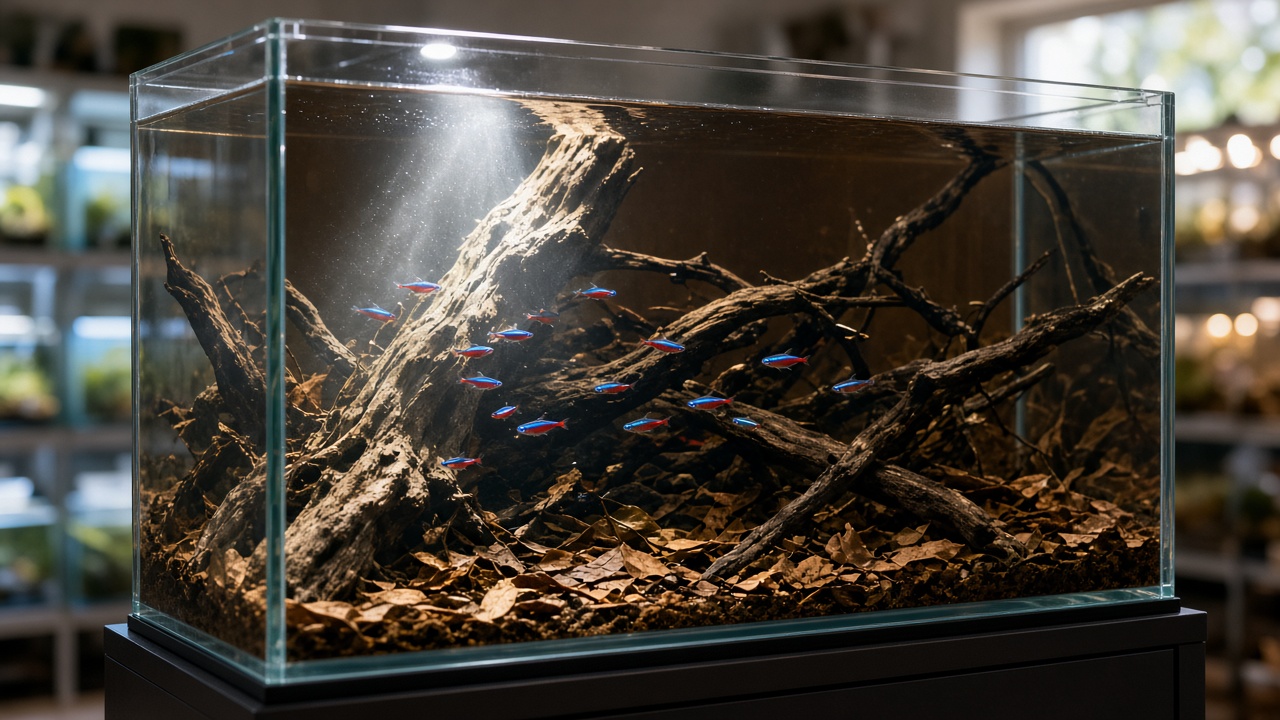
- Midwater tetras that stay off the caves
- Corydoras that use open sand, not the same rock pile
- A single dwarf cichlid pair only in a larger footprint than 48 by 18 inches
Keep one snowball pleco unless the floor is much longer than 48 inches, and add a second cave before you add a second fish.
Do not stock by the old “inch-per-gallon” slogan, because waste load and cave fights set the limit.
FAQ
Is a snowball pleco the same fish as L201?
No. This page treats snowball pleco as Hypancistrus inspector, sold as L102. L201 is a different spotted Hypancistrus in the trade, and bags often mix the names. Ask for the L-number and the scientific name before you buy.
How big does a snowball pleco get?
FishBase lists 12.6 cm standard length, and Seriously Fish lists 160 mm standard length. Standard length excludes the tail, so plan for a 5- to 6-inch-class adult either way.
What tank size does one snowball pleco need?
Seriously Fish sets the smallest base at 120 by 45 cm, about 48 by 18 inches. That footprint holds about 64 U.S. gallons in the profile’s volume note. A short 40-gallon tank fails the floor rule even if the gallon count looks close.
What do snowball plecos eat?
They are omnivores that lean toward meat in the aquarium. Seriously Fish lists sinking dried foods, frozen invertebrates, and some plant matter, while FishBase lists algae, detritus, and seeds in wild stomachs. Use a 42–47% protein sinking pellet as the staple.
Can I keep a snowball pleco with a bristlenose?
You can, but they do not share a diet or a job. The bristlenose still needs wood and plant food, while the snowball still needs meaty sinking food at night. Give each fish its own cave so they do not queue at one hole.
Do snowball plecos eat algae off the glass?
Not as a chore you can count on. FishBase found algae in some stomachs, and that is not the same as glass-cleaning. Feed them on purpose and keep a separate plan for algae.
Can two males live together?
Only if each male has a cave and the floor is long enough to break sight lines. Males guard caves, and a single cave in a short tank is a fight waiting to start. One fish is the simpler setup.