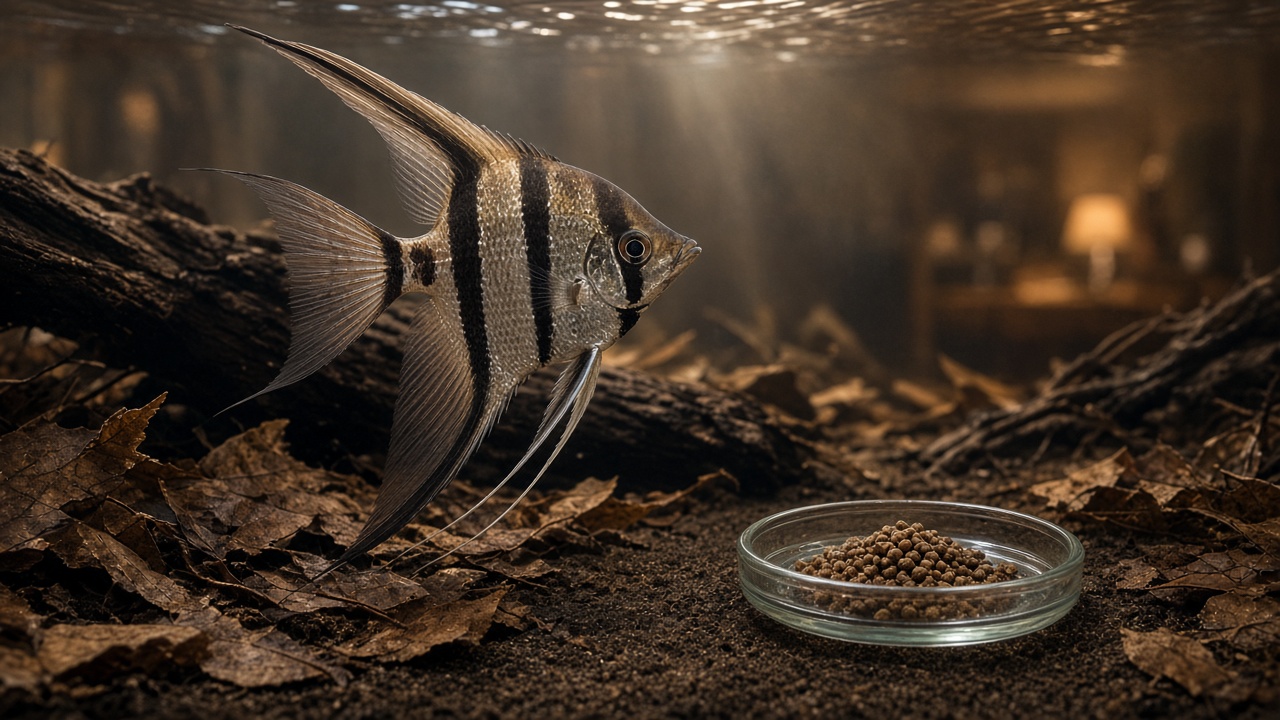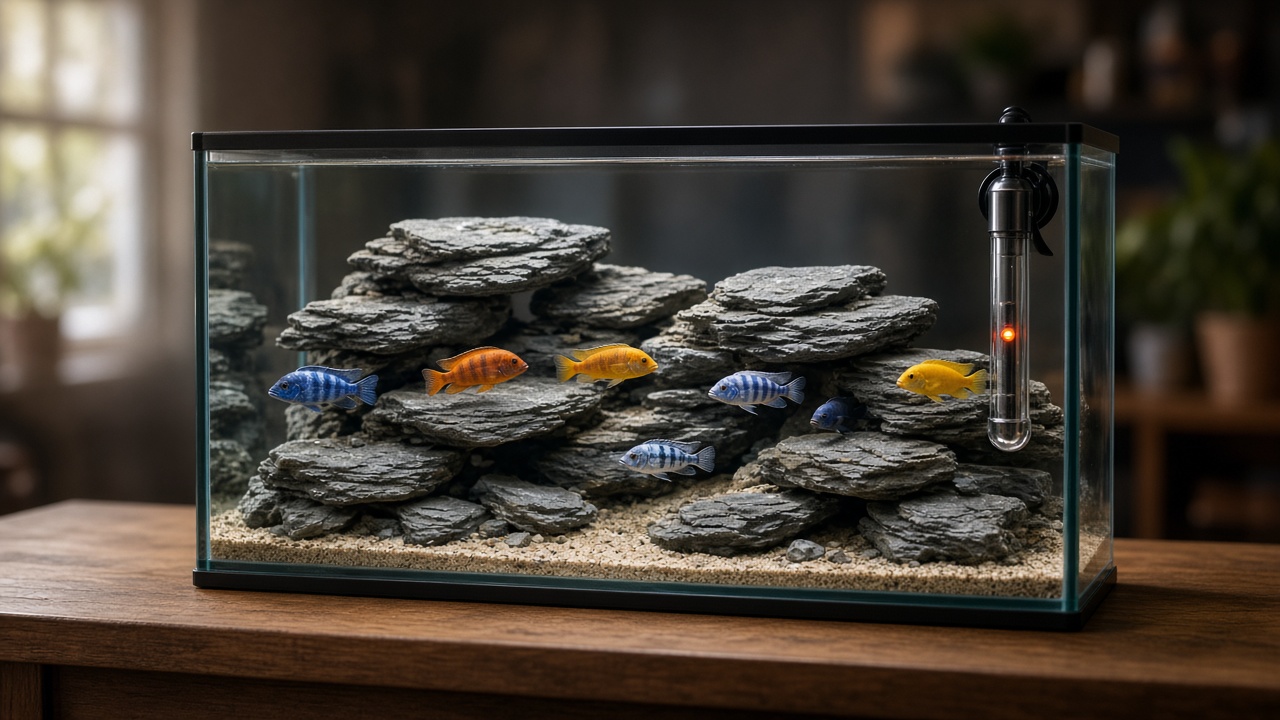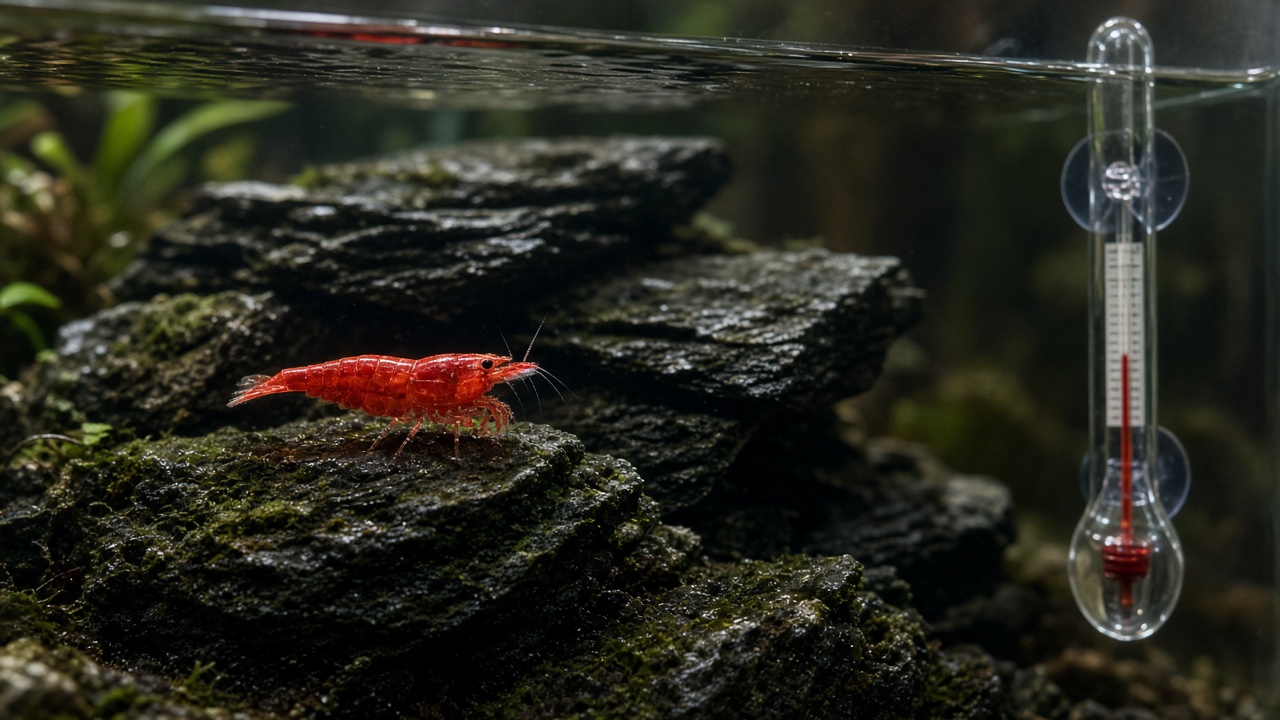
Quick answer: Keep angelfish in warm, stable water near the upper 70s to low 80s°F. Use a sized heater plus a separate thermometer. Breed a bit warmer than a calm community tank, and watch summer heat as closely as winter cold.
Angelfish do best in warm, stable water near about 78–84°F with a reliable heater and a separate thermometer.
This page is a home-aquarium guide to temperature bands and heater setup for Pterophyllum scalare. Our research team compared maker care sheets and extension notes.
Selection rule: We include temperature bands and heater sizing notes from named maker or extension pages. We exclude wild-collection tips, ranked heater scorecards, and “set and forget” claims that skip a thermometer. We also skip tropical community recipes that ignore tall angelfish tanks.
Ideal temperature for day-to-day care
Warm, steady water matters more than chasing one magic number.
Aqueon’s angelfish care guide keeps temperature best between 78° and 84°F. Aquarium Co-Op describes a preference for warmer temperatures between 78–86°F, with one long-time breeder keeping tanks around 82°F for breeding and raising fry. Those bands sit in the same warm neighborhood for most home rooms.
Stability beats tiny setpoint wars. A calm tank that holds 79°F all day usually beats a tank that swings from 76°F to 84°F between morning and night. Place the thermometer away from the heater tube so you read tank water, not the glass next to the element.
Community overlap tips:
- Match tank mates that share the upper 70s to low 80s°F
- Discus-style warmth near the low 80s°F can work in larger systems
- Cool-water fish that need the low 70s°F are a poor long-term mix
- Log room seasons, not only the heater dial
Breeding warmth versus community settings
Pairs often spawn more readily when water sits a little warmer and stable.
Extension notes for angelfish reproduction hold general care near 24–26°C and spawning near 26–28°C. That maps to roughly the mid 70s through low 80s°F depending on your conversion and room. Many home breeders sit near the low 80s°F when they want eggs.
Do not slam the heater up overnight by several degrees. Raise temperature slowly over a day or two if you are conditioning a pair. Sudden jumps stress adults and can spoil eggs already on the slate. Cool the room first in summer instead of fighting a heater that never turns off.
Breeding temperature checklist:
- Confirm adults eat well before you warm the tank
- Raise only a degree or two at a time
- Hold the new band steady through spawn and hatch
- Keep a spare thermometer reading away from the heater
- Return toward community temps after you pull fry if needed
Heater sizing for tall angelfish tanks
Pick wattage for volume, room climate, and lids, not for marketing alone.
Aquarium Co-Op’s heater page notes that sizing depends on room temperature, tank materials, setpoint, other gear, and lids. In their experience, a 100W unit can heat up to a 75-gallon tank with a proper lid at 78°F. Tougher rooms need a second heater or a smaller tank. Their 50W class is aimed at aquariums about 10 gallons and up.
Home sizing habits that help:
- Start from tank gallons, then add margin for cool rooms
- Prefer two smaller heaters on large tanks when one failure would crash heat
- Use a tight lid to cut heat loss
- Keep heaters fully submerged per the label
- Guard cords and glass from curious digging tank mates
Tall tanks lose heat through more glass area than a low cube of the same gallons. A basement fish room in winter needs more wattage than a warm upstairs bedroom. Size for your coldest normal week, not your mildest afternoon.
Placement, controllers, and thermometers
Where you put the heater changes how even the tank feels.
Place the heater near filter flow so warm water mixes. Avoid burying the tube behind thick wood with no current. A separate thermometer on the far end catches cold spots the heater display misses. Digital stick-ons help, but verify them against a trusted second reading once in a while.
Controller habits:
- Set the dial, then confirm with the thermometer for a full day
- After power outages, recheck both ends of the tank
- Replace cracked glass heaters immediately
- Unplug before water changes that drop the waterline below the heater
- Never run a heater dry
Preset heaters fixed near tropical defaults can work in steady rooms. Adjustable units help when you breed warmer, then settle cooler for a community. Either way, the thermometer is the boss, not the printed box claim.
Cold snaps, heat waves, and failure modes
Seasonal extremes break more tanks than a one-degree setpoint miss.
In winter, a failed heater can drop a tall tank overnight. Two heaters on large systems give you time to notice. In summer, heaters may stay off while room heat climbs past the comfort band. Fans on the room, reduced lighting, and smaller feedings help during heat waves. Chillers help when rooms cannot stay in the upper 70s to low 80s°F.
Warning signs to watch:
- Clamped fins and slow swimming in cool water
- Gasping at the surface when water is too warm and oxygen falls
- Appetite drop after a swing
- Foggy glass from big day-night room swings
- Heater stuck on with water climbing past your target
Ice packs and frozen bottles are short bridges only. They are not a summer plan. Write the high and low for three hot days before you buy another gadget. The edge case is a power outage in a cold garage fish room, where insulation and battery air can matter as much as wattage.
Matching temperature to tank mates and height
Angelfish need tall water, so temperature plans must fit the whole community.
Aqueon notes adults need about 55 gallons or larger when full grown, with tall aquariums preferred. Warmth that suits angels may still stress cool-preferring neighbors. Fin nippers and tiny nanos fail for other reasons, but temperature overlap is the first filter before personality.
Community planning list:
- Choose mates that share the same warm band
- Avoid stacking a cool loach biotope with breeding-warm angels
- Give angels height so they use the water column you heat
- Keep flow gentle so warm layers mix without a torrent
- Quarantine new fish at the same temperature you will use
If one fish needs 72°F and another needs 84°F, you do not have a community. You have a conflict. Pick the band for the angels you actually keep, then choose mates that fit it.
Attribute table for temperature and heater planning
| Cue | Number or rule | Notes |
|---|---|---|
| Day-to-day band | About 78–84°F | Hold steady |
| Wider warm preference | About 78–86°F | Maker care range |
| Breeding neighborhood | Low 80s°F common | Raise slowly |
| Extension spawn band | About 26–28°C | Soft water helps too |
| Heater check | Separate thermometer | Read far from the tube |
| Large-tank tip | Two heaters | Softens single failures |
FAQ
What temperature should angelfish live at?
Most home tanks do well in the upper 70s to low 80s°F with little daily swing. Maker care sheets cluster around that warm band for captive P. scalare. Hitting 80°F exactly matters less than avoiding morning-to-night roller coasters. The common misconception is that colder water “slows them down in a healthy way,” when it more often dulls immune resilience.
Do angelfish need a heater?
In most homes, yes, because rooms cool overnight below tropical bands. A heater sized for gallons and climate keeps nights safe. A separate thermometer confirms the true tank reading. The edge case is a permanently warm room that never drops, where you still monitor summer highs as carefully as winter lows.
What temperature helps breeding?
Many breeders sit a little warmer, often near the low 80s°F, once adults are conditioned. Extension notes place spawning near about 26–28°C. Raise temperature slowly, then hold it through hatch. Jumping several degrees overnight is a frequent way eggs fail after a perfect spawn show.
How do I size a heater for an angelfish tank?
Start from gallons, lid quality, and the coldest room week you expect. Maker guidance stresses that room climate and lids change wattage needs as much as the gallon label. Tall tanks and basements often need more margin. Two modest heaters on a large tank beat one oversized tube with no backup.
Where should I place the heater and thermometer?
Put the heater in good flow so heat mixes through the tall water column. Put the thermometer far from the heater so you do not read a local hot pocket. Recheck after rearranging wood or filters. A heater behind dead water is a classic cold-spot setup.
What if the tank gets too hot in summer?
Turn lights down, cool the room, and confirm the heater is not stuck on. Increase surface agitation for gas exchange when water warms. Short ice-bottle tricks are stopgaps only. If rooms routinely exceed the low 80s°F, plan a chiller or move the tank before a heat wave, not during one.
Can angelfish share a tank with fish that like cooler water?
Only if the cooler fish truly tolerate the warm band you need for angels. Forcing cool-preferring species into the low 80s°F for months is a welfare mismatch. Choose mates for temperature first, then temperament. A peaceful fish that is chronically cold-stressed is not a good tank mate on paper or in practice.
This guide is for general information and does not replace advice from a qualified veterinarian.