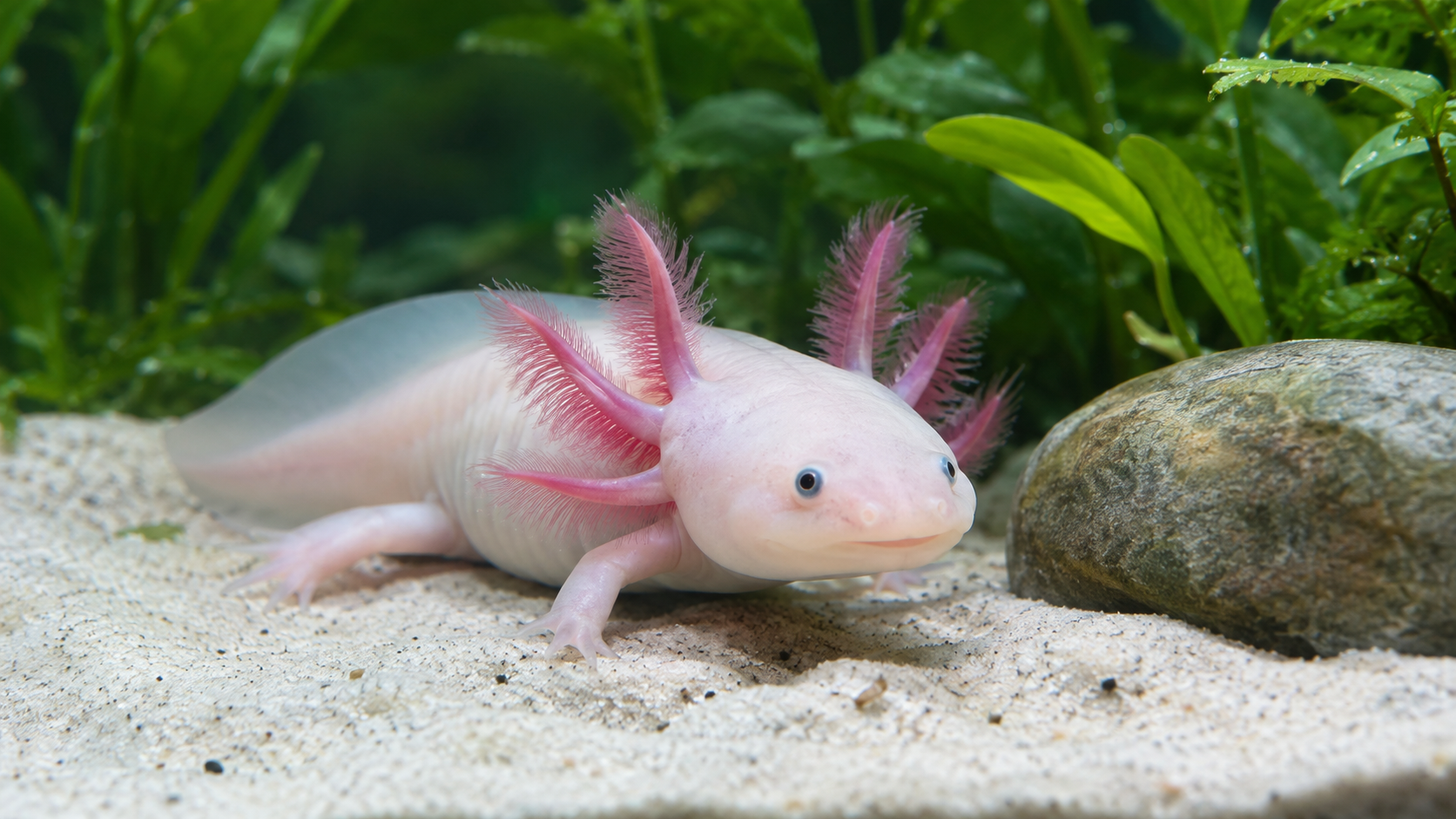
An axolotl (Ambystoma mexicanum) is a cool-water salamander that never leaves the water. It is not a tropical fish. The tank fails in the usual two ways: people heat it like a betta tank, or they put the animal in before the nitrogen cycle is finished.
This page is a husbandry desk, not a veterinary clinic and not a water lab. The numbers below are quoted from the three primary pages named under the table. Where those pages disagree, the range is left in place. We do not average them into a fake “our recommended” figure. If the animal looks ill — floating, not eating, gills collapsing, skin sores — that is an amphibian veterinarian, not a blog.
Before you buy one: axolotls are restricted or illegal in some U.S. jurisdictions. Check your state and city wildlife / exotic-pet rules first. Do not invent a workaround, and do not collect wild animals. The species is listed as Critically Endangered. It is native only to the remaining waters of Xochimilco (Lake Chalco is gone). Pet-trade animals are captive-bred; a wild animal is not a starter pet.
Published parameters
| Parameter | Published figure | Whose page |
|---|---|---|
| Young / juvenile tank | 38 L / 10 gal | Lafeber |
| Adult tank, home display | 78 L / 20 gal minimum; larger is more stable | Lafeber |
| Two adults, footprint | 60 × 30 × 37 cm (24 × 12 × 15 in) | Caudata Culture |
| Lab housing (not a display tank) | 1-gal bowls, or groups in small tubs, with very frequent water changes; “two adults in a ten-gallon” as a lab rule of thumb | UKY AGSC |
| Preferred temperature | 15.6–17.8°C (60–64°F) | Lafeber |
| Colony temperature | 15–18°C (60–65°F); never above about 22°C (72°F) | UKY AGSC |
| Adult temperature band | 14–22°C (57–72°F) | Caudata Culture |
| Heat that is no longer safe | Illness risk above 24°C (75°F); unsuitable for more than a few days above 25°C (77°F) | Lafeber; Caudata Culture |
| pH | 7.4–7.6 ideally; colony band about 6.5–8 | Lafeber; UKY AGSC |
| Ammonia and nitrite | 0 ppm before the animal goes in, and after | Lafeber |
| Nitrate | <10 ppm on that sheet | Lafeber |
| Water change | ~30% weekly; or ~20% every two weeks | Lafeber; Caudata Culture |
| Water type | Hard, dechlorinated tap. Not distilled or extremely soft. | UKY AGSC; Caudata Culture; Lafeber |
Source: Lafeber “Care of the Axolotl” (March 2021 PDF). Source: Caudata Culture species entry for Ambystoma mexicanum (John Clare, posted January 2001). Source: University of Kentucky Ambystoma Genetic Stock Center, Guide to Axolotl Husbandry (Susan T. Duhon). Cycle length of 4–8 weeks is the timeline on our own how long to cycle a fish tank page — not a two-week myth.
The water-change rows are the clearest split. Lafeber writes a weekly 30% change and uses that to keep nitrate under 10 ppm. Caudata Culture writes “20% or so every two weeks” as usually adequate unless the tank is crowded or overfed. Those are different cadences on different pages. Pick one and test; do not split the difference and call it science.
Tank size and footprint
Long beats tall. An axolotl lives on the floor of the tank. It does not need a water column for midwater swimming. Caudata Culture calls a 60 × 30 × 37 cm box adequate for two adults and recommends at least 15 cm (6 in) of water depth. Lafeber’s home-display line is a 10-gal tank for a young animal and a 20-gal minimum for an adult, with the note that water quality gets more stable as volume goes up.
The University of Kentucky colony is a different job. That guide houses adults in one-gallon bowls, or three to four animals in a shallow tub, and says a half-gallon (2 L) per animal is adequate if the water is changed frequently. It also offers “two adults in a ten-gallon aquarium” as a rule of thumb for filtered lab aquaria. That is a research-colony protocol with daily or every-other-day water changes. It is not a recommended home display tank. Do not keep an adult pet in a one-gallon bowl.
A 20-gal tank is Lafeber’s published adult floor for a house tank, not a trophy. Buy the long footprint, not a tall column. More floor area is the cheap way to buffer ammonia spikes and leftover food. Two adults need the Caudata footprint, or larger, and a plan to separate them if they start nipping.
Substrate: fine sand, big rock, or bare
Axolotls feed by suction. They evacuate the mouth, then snap it open. Whatever sits in front of the head goes in — earthworm, pellet, or gravel. Caudata Culture documents gravel in the gut and calls small gravel unsuitable. Lafeber lists gastrointestinal foreign body as a common condition and says the animal can die if the piece does not pass.
The published safe floors are:
- Fine sand
- Rocks much larger than the animal’s head
- A bare bottom
Caudata Culture calls a bare bottom the safest and the easiest to clean. Lafeber is more even-handed: sand can still be swallowed, large rocks trap waste, and a bare floor is slick. UKY, writing for a colony, says that if gravel is used it should be coarse, because pea-sized gravel is the size they ingest.
For a home tank, that disagreement is not a license to use aquarium gravel. Caudata and Lafeber both treat small gravel as an impaction risk. Fine sand or bare glass is the setup that matches those two pages. Rinse sand until the water runs clear before it goes in, or you will be vacuuming a dust storm for a week.
Filter and flow
They dislike current. Caudata Culture: flowing water stresses them; reduce or diffuse a power filter so the tank is not a river. UKY: rapidly circulating water is stressful; keep circulation as slow as possible. Lafeber: size the filter for the volume, use strong mechanical pickup for waste, and kill the outflow — a spray bar, or a rock or ornament parked in front of a hang-on-back return.
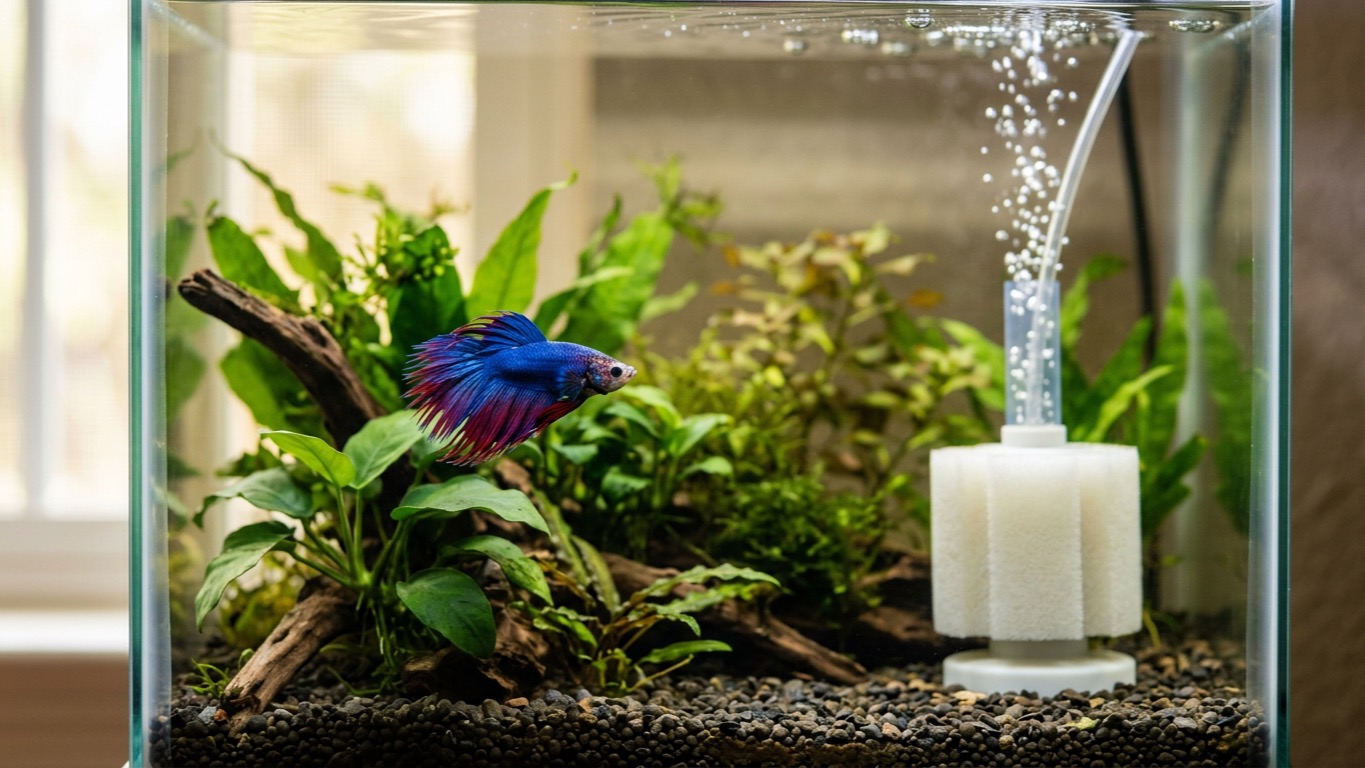
A sponge filter, or a hang-on-back with the flow baffled down, is the usual home answer. We have not run a filter shootout for this page. The job is gentle turnover plus somewhere for nitrifying bacteria to live, not a powerhead. Do not skip water changes because the filter box claims extra capacity. Lafeber is blunt: filtration helps; it does not replace the water change.
Air stones are optional. The animal already flicks its gills and will gulp air at the surface. UKY describes both. Extra bubbles are for the keeper’s nerves, not a published requirement.
Temperature is the thing that kills the setup
This is the parameter people get wrong because every pet-store kit arrives with a heater.
Three pages, three slightly different bands, same direction:
- Lafeber prefers 15.6–17.8°C (60–64°F) and says animals exposed to water above 24°C (75°F) have a high probability of becoming ill. The same sheet lists hyperthermia as a common condition: loss of appetite, uncontrollable floating, and secondary bacterial infection.
- UKY keeps the colony at 15–18°C (60–65°F) and says they should never be kept above about 22°C (72°F). Direct sun is called out as a way to overheat them.
- Caudata Culture calls 14–22°C (57–72°F) reasonable for adults. Anything over 25°C (77°F) is unsuitable for more than a few days. High temperature is tied to stress, anorexia, and fungal or bacterial infection. In the wild Xochimilco water, they write, the temperature rarely rises above 20°C (68°F).
We are not going to average 64°F and 72°F and print a fake target. Read the bands. The overlap is cool room-temperature water. The hard stop is the mid-70s °F.
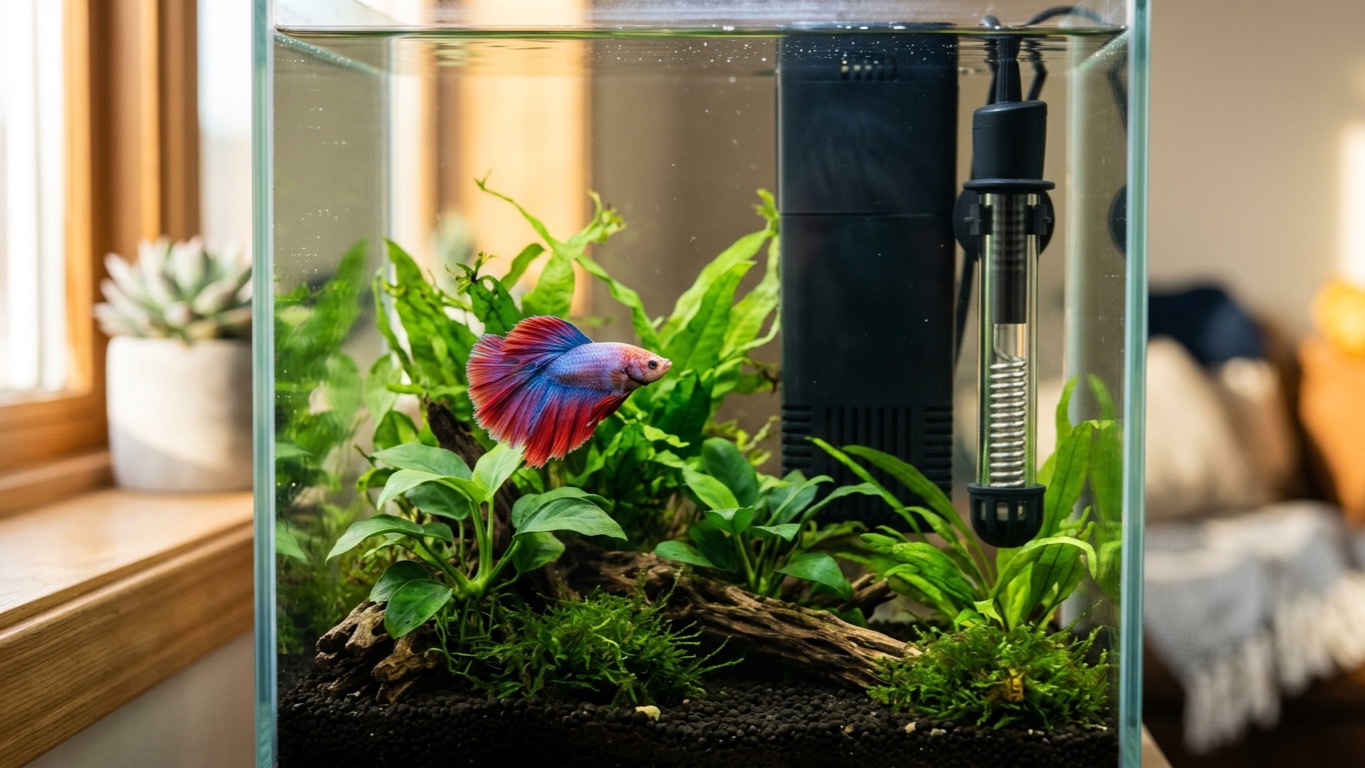
Do not plug in a heater unless the room itself sits below the published band in winter. Most heated apartments are already at the top of the range. A heater set to “tropical” is how this animal cooks.
How people keep a tank cool, without a product we tested:
- Put the tank in an interior room, off the floor vent, out of the sun. UKY is explicit about sun.
- Skip the aquarium heater if the room already lives inside the published numbers.
- If summer rooms regularly climb past 24–25°C, this is the wrong room. Keepers use room air-conditioning, a fan across the water surface, or a dedicated chiller. We have not tested fans or chillers for this article. A room that cannot hold the published heat limits is a reason not to buy the animal, not a reason to invent a gadget list.
A thermometer that actually hangs in the water is not optional. The sticker on the glass is theater.
Cycle the tank first
Ammonia and nitrite must read 0 ppm before the axolotl goes in. That is Lafeber’s line, and it is the same finish line as any other freshwater tank. The sheet also says not to add an animal until parameters have stabilized.
A new tank does not do that in a weekend. The nitrogen cycle on this site is 4–8 weeks, fishless. Nitrosomonas and the nitrite-oxidizers have to grow on the filter and the hardscape. There is no honest two-week version of that sentence.
You will need a liquid freshwater test kit that reads ammonia. Strips that skip ammonia are the wrong tool for a cycle. We do not run a water lab; that page is about what each box actually tests, not a durability trial.
Dose a fishless ammonia source, test, wait until ammonia and nitrite stay at 0 and nitrate is visible, then do a water change to bring nitrate down before the animal arrives. Lafeber’s nitrate line on that PDF is under 10 ppm. Other freshwater community pages are looser. For this species, quote the sheet that is about this species.
Do not cycle with the axolotl in the tank. Fish-in cycling is a bad idea for fish. It is a worse idea for an animal that cannot leave the water and is already stressed by warm rooms and current.
Decor, hides, and plants
None of this is required for survival. Caudata Culture: plants are not essential unless you plan to breed; hides are not essential but the animals like having the option; lighting is not required unless you want to see them. Lafeber: they prefer very low light, and a glass top is recommended because they will jump.
If you decorate anyway:
- Hides should be smooth. PVC elbows, terracotta, and driftwood with the splinters sanded off. No sharp plastic plants. An axolotl’s skin and gill filaments tear on cheap décor the way a goldfish’s body does, only the gills are hanging in the current.
- Live plants are optional. Caudata Culture says pick robust species or ones you can replace, because axolotls dredge and wreck delicate stems. Lafeber notes that a planted tank needs brighter light, so you then owe the animal a cave to sit in.
- Large rocks and wood have to sit where they cannot tip. Lafeber’s wording: positioned safely to prevent movement or falling.
Leave open floor. The animal walks more than it swims. A forest of ornaments steals the floor a 20-gal tank was bought for.
Tank mates: default none
Lafeber is direct: house them without other aquatic species, including fish. Small fish get eaten. Larger or nippy fish damage the gills.
That is the whole community list. There isn’t one.
Caudata Culture’s feeding section is the other half of the argument. Axolotls eat feeder fish when offered, and that page already tells you not to, because of parasites. A “cleanup crew” shrimp is food. A small cory is food. A fancy goldfish is a gill-nipping roommate that also wants cool water and will still lose.
Two axolotls are a stocking decision, not a community tank. Lafeber: juveniles are cannibalistic and should be housed separately; adults can often share a large volume, and you should still be ready to split a fight. UKY: mixed sizes mean the larger one tries to eat the smaller one; young animals housed together tend to lose toes. Same size, lots of floor, extra hides, and a spare tank. Not a tetra school and a “centerpiece axolotl.”
Feeding, at a high level
We are not writing a diet, and we are not vets. The three primary pages agree on the shape of the meal, not on a brand.
Common husbandry foods, named on those pages: earthworms (nightcrawlers), sinking salmon or trout pellets, blackworms, bloodworms. Caudata Culture calls sinking trout/salmon pellets an excellent staple and large earthworms a normal adult meal. UKY calls earthworms a favorite and uses soft-moist salmon pellets in the colony. Lafeber lists the same items and adds that young animals eat daily while adults are fed a few times a week.
The published adult cadences do not match, so they stay as a range:
- Lafeber: adults 2–3 times per week; only what is eaten in 2–3 minutes (the sheet’s example is about five salmon pellets per adult).
- UKY: once they are about a year old, three or four times per week, no more than five pellets at a time.
- Caudata Culture: at 22°C (72°F), every two to three days; as much as they will eat in 15 minutes; leftover food is a water-quality problem.
Warmer water means a faster metabolism and a dirtier tank. Caudata Culture says that outright. It is not a reason to keep them warm.
Skip live feeder fish. Caudata Culture and UKY both flag parasites. Frozen or pellet food does not solve a cycle you skipped, and it does not justify gravel.
FAQ
Do I need a heater?
Only if the room is colder than the published band in winter. Lafeber’s preferred range is 15.6–17.8°C (60–64°F). UKY keeps 15–18°C and says never above about 22°C. A tropical heater is how a cool-water salamander ends up above 24°C, which is the Lafeber illness line. Most indoor rooms need less heat, not more.
Can I use gravel?
Not the small gravel sold in bags for community tanks. Caudata Culture shows gravel in the abdomen and calls it unsuitable. Lafeber lists swallowed gravel as a foreign-body risk that can kill. Fine sand, rocks larger than the head, or a bare bottom are the floors those pages accept. UKY’s “coarse gravel if you use gravel” line is a colony note, not a reason to buy pea gravel.
Is a 10-gallon tank enough for an adult?
Not as a home display. Lafeber: 10 gal for a young animal, 20 gal minimum for an adult. Caudata Culture’s two-adult box is 60 × 30 × 37 cm — a long, low footprint, not a tall 10-gal. UKY’s ten-gallon-for-two line is a lab aquarium rule of thumb next to one-gallon bowls and frequent changes. That is not the pet setup.
Can two axolotls share a tank?
Yes, on the published pages, if the box is big enough and you can separate them. Caudata Culture treats 60 × 30 × 37 cm as adequate for two adults. Lafeber says adults often cohabit in a large volume and that you should still be prepared to split a feud. Juveniles are a no — both Lafeber and UKY describe cannibalism and missing toes. Same size only. Extra hides. A spare tank. Do not add fish to “fill the space.”
Can I use tap water?
Yes, if you dechlorinate it and it is not distilled or extremely soft. Caudata Culture: treat tap water for chlorine, chloramine, and metals. UKY: never house them in extremely soft or distilled water; they want hardness for the skin barrier; strip chlorine, chloramines, and any ammonia from municipal treatment. Lafeber: chlorine and chloramine should always be removed. UKY adds that extra salts (their modified Holtfreter’s mix) are a colony recipe and are not essential if the tap is already hard and clean. Do not build a chemistry bench because a lab PDF has a barrel recipe.
How long does the cycle take?
Four to eight weeks on a fishless cycle. That is the timeline we already publish. Ammonia 0, nitrite 0, nitrate present, then a water change, then the animal. A cloudy tank in week two is not a cycle. A bottled-bacteria label is not a cycle. Test. The kit page is the tool; the cycling page is the clock.
The UKY guide keeps adults in bowls. Can I do that at home?
That is a research-colony protocol, not a living-room display. The Indiana / Kentucky stock-center guide uses one-gallon bowls or small tubs because staff change the water constantly — daily for young animals, at least every other day for adults — and they are managing a breeding colony, not a pet. A half-gallon per animal is adequate on that page only with that change schedule. It is not permission to keep an adult pet in a bowl on a desk. Use the Lafeber 20-gal adult minimum, or the Caudata Culture footprint, and a filter you have baffled down.
A short legal note, again
Ambystoma mexicanum is listed as Critically Endangered on the Caudata Culture species entry (IUCN Red Book). Wild animals belong in Xochimilco, not in a suitcase. Captive-bred stock is the only ethical source, and only where your local rules allow the species at all. We are not publishing a state-by-state list. Call the agency that actually issues the permit.
Last reviewed: August 2026. Numbers above were checked against the fetched primary pages on that date. Illness signs mentioned here are copied from those sheets; they are not a diagnosis.
SOURCES:
- Caudata Culture, Ambystoma mexicanum species entry (John Clare, posted January 2001): https://www.caudata.org/cc/species/Ambystoma/A_mexicanum.shtml
- University of Kentucky Ambystoma Genetic Stock Center, Guide to Axolotl Husbandry (Susan T. Duhon): https://ambystoma.as.uky.edu/education1/guide-to-axolotl-husbandry
- LafeberVet, “Care of the Axolotl” (March 2021 PDF): https://www.lafeber.com/vet/wp-content/uploads/2021/03/Axolotl-Care-of-the-LV-0321.pdf
- WaterPuppy, How Long to Cycle a Fish Tank: 4-8 Week Reality Check (2026): https://www.waterpuppy.net/articles/how-long-to-cycle-a-fish-tank/
- WaterPuppy, Best Freshwater Aquarium Test Kits (2026): https://www.waterpuppy.net/articles/best-freshwater-aquarium-test-kit/