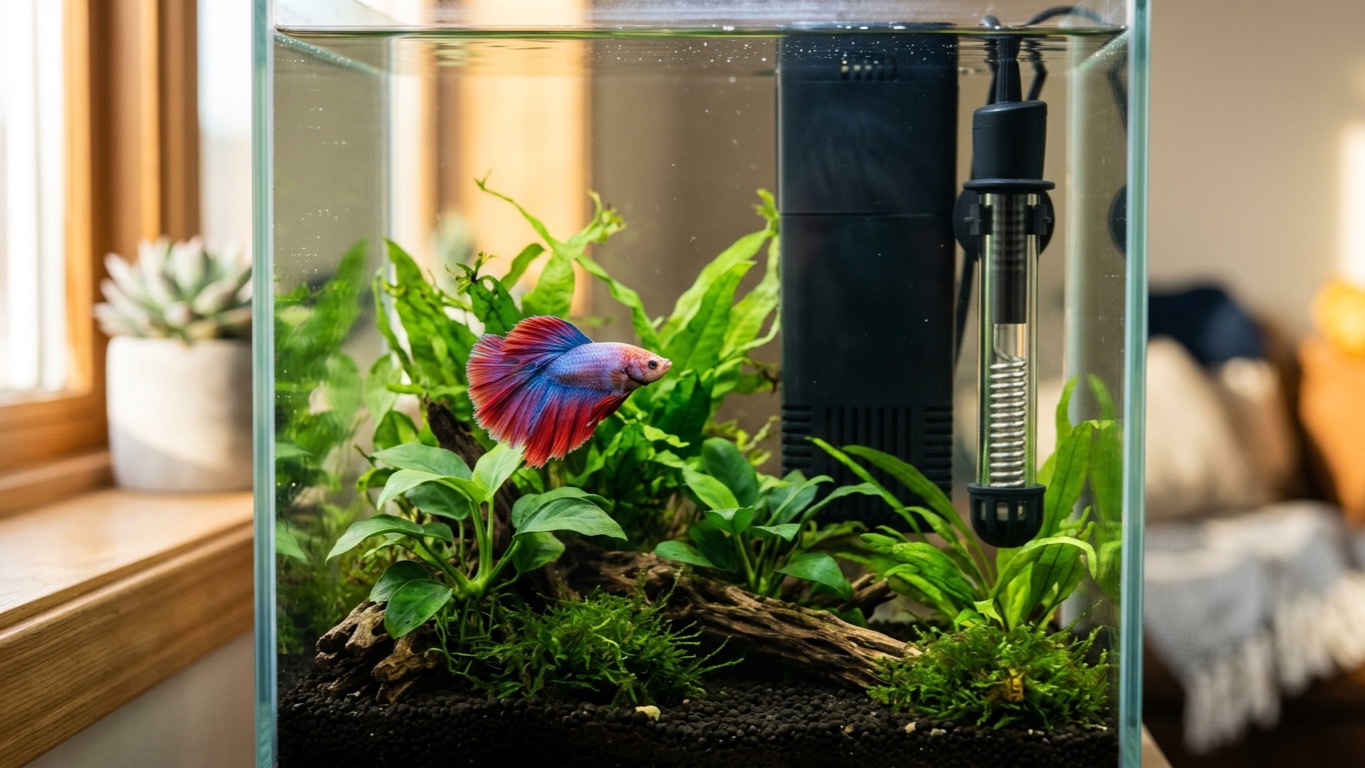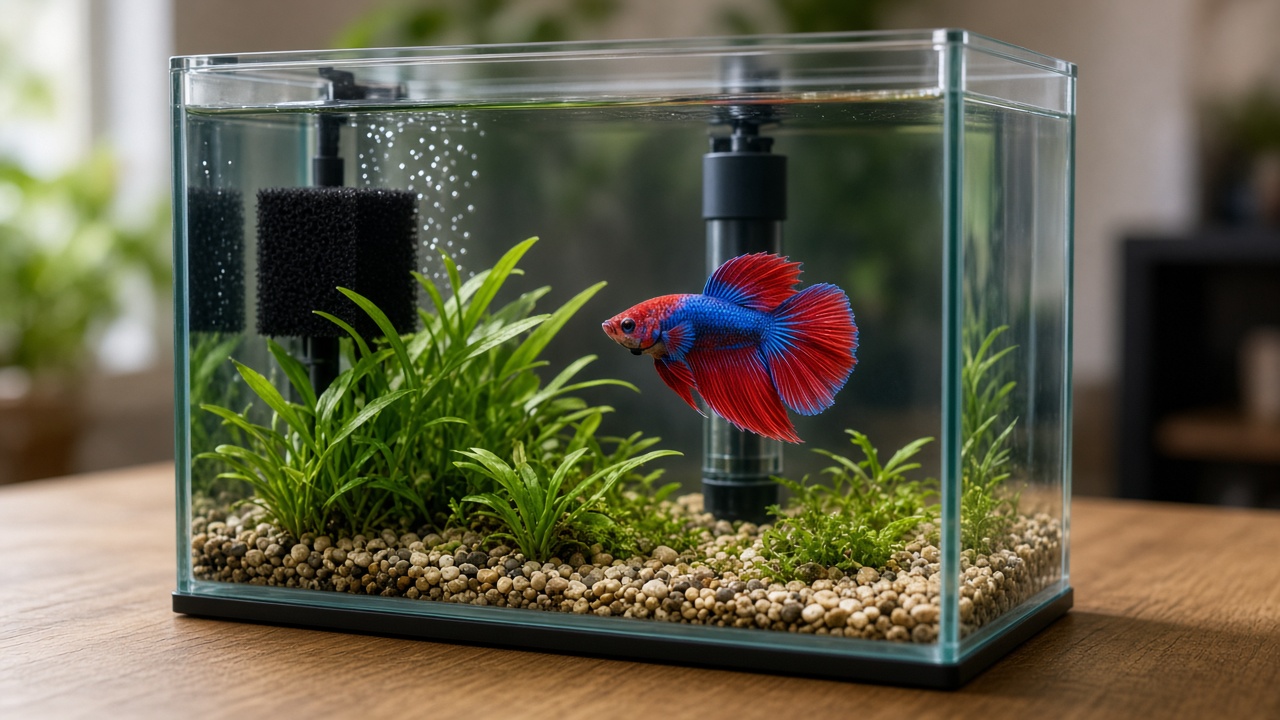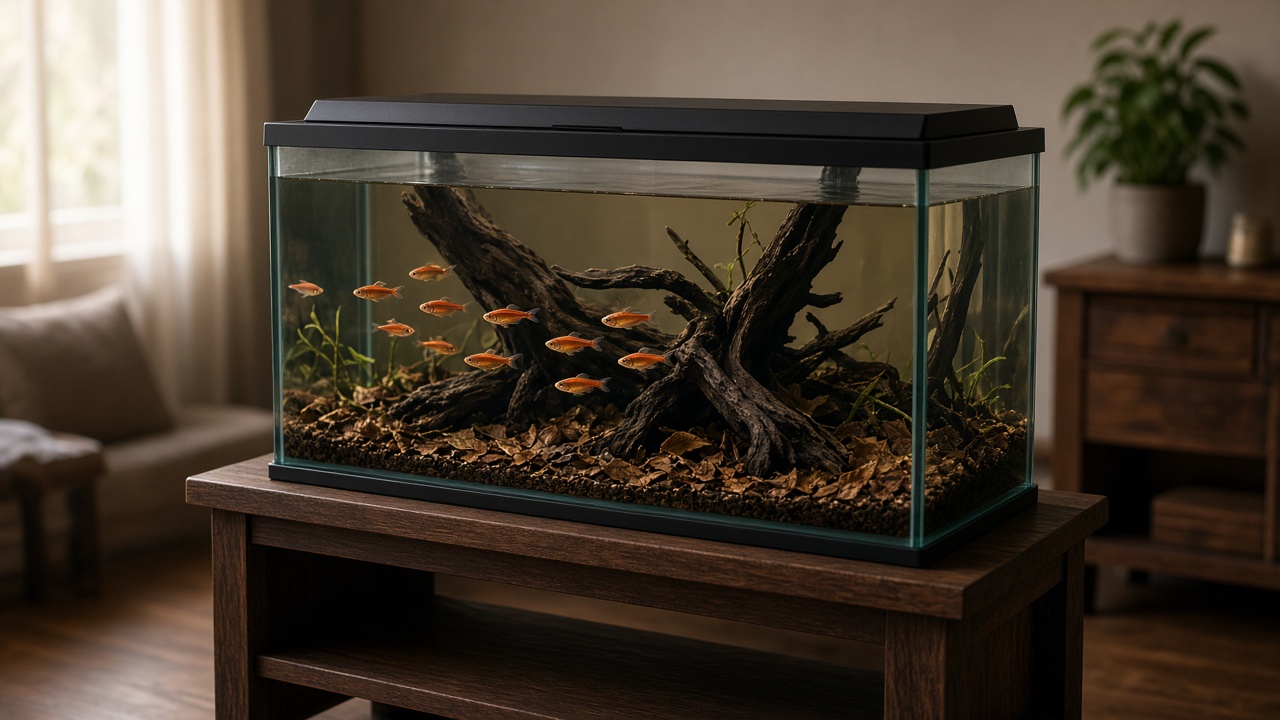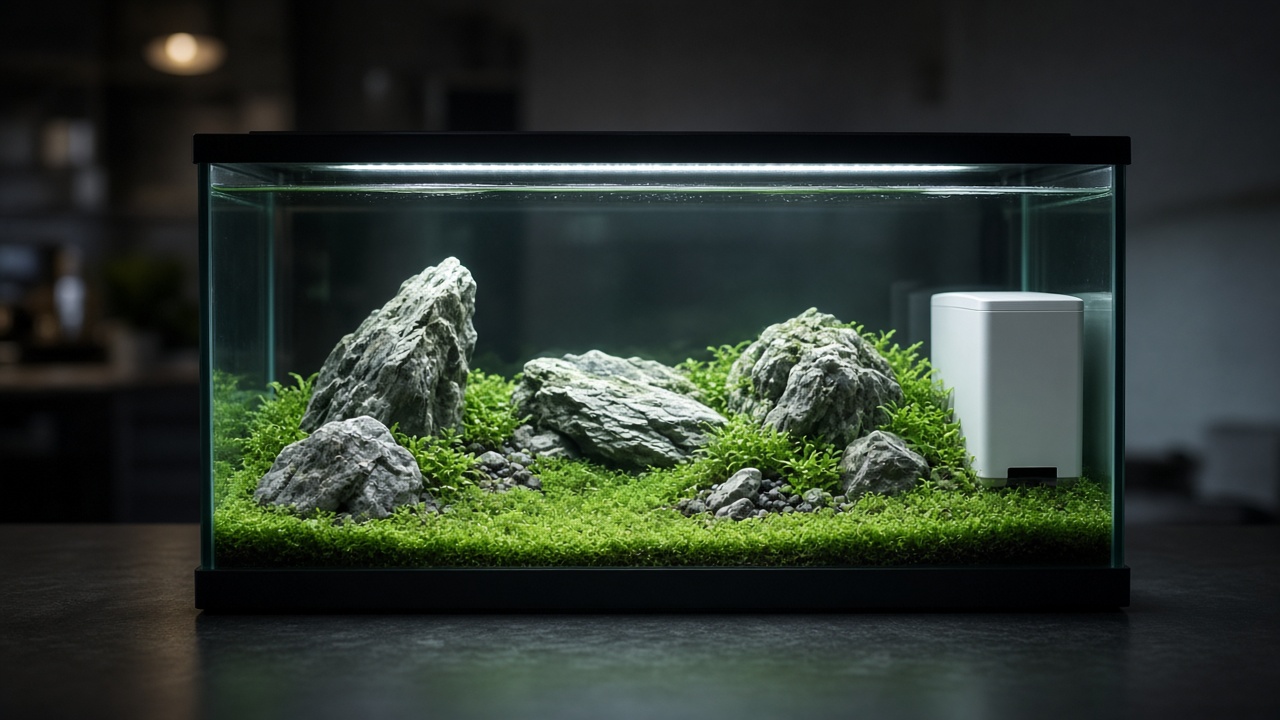
Quick answer: Pick a plant-bed kit if you will keep plants alive, or a SmartClean kit if you want faster weekly water work. No kit runs on its own. You still feed fish, top off water, and remove some water.
No sold home kit removes water changes; AquaSprouts still lists 10–20% changes each quarter. This page compares five sold kits by published specs and does not include tank cycling, fish stocking, or lab assays.
How we chose which kits belong here
We only kept kits that publish both a tank volume and a named path for fish waste.
That’s our Waste-Path Rule. A maker page had to list a gallon number and name where waste goes.
The named path had to be a plant grow-bed, a multi-stage filter core, or a timed drain. Our research team analyzed those pages and one water-quality table.
We left out bowls under 1 gallon, unbranded clones, and gravel vacuums sold without a tank. We also left out saltwater reef boxes and any ranked scoreboard.
Top 7 Self cleaning fish tank
The picks below are the 7 self cleaning fish tanks on sale right now, listed with what each suits best and an honest drawback. Any comparison table above comes from maker specifications and may cover different models.
1. Vehipa Fish Tank
Best for: Office workers wanting a desk showpiece
Vehipa’s mid-price kit treats a circulating pump as the self-cleaning part. Maker pages bundle lights and extras into one small desktop box. Owners report they still rinse the sponge and change water.
Pros: All-in-one desktop kit; Lights and extras bundled Cons: Small water for the price
2. AQUANEAT Fish Tank
Best for: Tight-budget first desktop kit
AQUANEAT’s tank is the bargain filter kit on this list. The price buys a small desktop box with a light and a hidden pump. Owners report it is easy to set up, and they also report the water fouls fast if they skip changes.
Pros: Lowest price on list; Light and pump included Cons: Tiny water volume
3. NICREW 2.5 Gallon Nano Nature Aquarium Kit Betta Fish Tank
Best for: Planted-nano keepers with one betta
NICREW’s 2.5-gallon Nature kit is a nano box with a light and a slim filter. The listing names small fish, shrimp, or a betta. Owners plant it as a desk scape, and they still change water in that small volume.
Pros: Named 2.5-gallon nano; Light and filter included Cons: Desktop nano, not community
4. Xyingshine 2.5 Gal Fish Tank Starter Kit
Best for: Bedroom nightstand gadget shoppers
Xyingshine’s 2.5-gallon starter kit adds a touchscreen and a mist feature to a circulating pump. The listing says a mini heater is a separate buy. Owners like the nightstand look, and they still drain water by hand.
Pros: 2.5-gallon starter kit; Touchscreen and mist extras Cons: Heater sold separately
5. Swimsync 3 Gallon Fish Tank Starter Kit
Best for: Beginners stepping to three gallons
Swimsync’s 3-gallon starter kit is the larger beginner cube on this list. The listing includes a circulating pump, lights, and plants. Owners say setup is simple, and the maker still warns to keep water above the pump outlet.
Pros: Three-gallon starter volume; Pump and lights included Cons: Still a desktop cube
6. Coospider 20 Gallon Glass Fish Tank
Best for: Community keepers needing twenty gallons
Coospider’s 20-gallon glass tank is the only kit here with community-size water. The maker page sells a circulating pump as self-cleaning, then tells you to change water and wipe algae each week. Owners get slower chemistry swings than a desk cube, and they still need a stand.
Pros: Twenty gallons of glass; Only community-size pick Cons: Highest price on list
7. Vehipa 3.7L (1 Gal) Betta Fish Aquarium
Best for: Hospital-tank keepers between cleanings
Vehipa’s 3.7-liter kit is a one-gallon betta box with a small pump and a light. The listing is for one small fish, shrimp, or plants. Owners use it as a hospital or fry tank, because one gallon still swings fast.
Pros: Named one-gallon kit; Smallest betta starter Cons: One gallon, fast swings
Comparison: Self cleaning fish tank at a Glance
| Product | Best for | Approx. price | Where to buy |
|---|---|---|---|
| Vehipa Fish Tank | $79.99 | Check price | |
| AQUANEAT Fish Tank | $23.88 | Check price | |
| NICREW 2.5 Gallon Nano Nature Aquarium Kit Betta Fish Tank | $56.99 | Check price | |
| Xyingshine 2.5 Gal Fish Tank Starter Kit | $47.59 | Check price | |
| Swimsync 3 Gallon Fish Tank Starter Kit | $55.99 | Check price | |
| Coospider 20 Gallon Glass Fish Tank | $189.99 | Check price | |
| Vehipa 3.7L (1 Gal) Betta Fish Aquarium | $28.99 | Check price |
Want to browse every option? See the full range of self cleaning fish tank on Amazon →
What self-cleaning actually means
The label names a waste path. It doesn’t mean the tank stays untouched.
Fish still release ammonia. The Merck Veterinary Manual’s freshwater table lists total ammonia nitrogen at 0 mg/L, nitrite at 0 mg/L, and nitrate under 20 mg/L.
A kit can move that waste into plants, foam, carbon, or a drain. The waste still has to leave the water.
Three paths show up on current maker pages:
- Plant grow-bed: roots and clay take up nitrates after bacteria convert ammonia.
- Multi-stage core: foam, ceramic, and a cartridge trap solids and host bacteria.
- Timed drain: a filter spout shortens the weekly water change.
You still feed fish and top off evaporated water. The difference is which chore you do most often.
Five kits compared by waste path
These five kits are still sold, and each maker names a different way waste leaves the water.
Comparing published specs, the AquaSprouts 160 GPH pump turns a 10-gallon tank about 16 times per hour. The same 160 GPH pump on the 29-gallon model turns that tank about 5.5 times per hour.
| Kit | Listed volume | Waste path | Maker-listed upkeep | Maker-named fish |
|---|---|---|---|---|
| Back to the Roots Water Garden | 3 gallons | 3 grow pods plus a lift pump | Clean every 6 to 8 weeks; rinse the pump each month | One betta, or 2–3 zebra danios or male fancy guppies |
| biOrb CLASSIC 15 | 4 gallons (15 L) | 5-stage core at the tank floor | Service every 4–6 weeks | Small fish; no species list on the U.S. page |
| Aqueon LED MiniBow SmartClean | 1, 2.5, or 5 gallons | Power filter plus SmartClean drain | Water change under 2 minutes; cartridge every 4 weeks | Small fish |
| AquaSprouts Garden (10 gal lid) | 10-gallon tank plus 4.5-gallon grow-bed | Flood-and-drain clay bed | 10–20% water change each quarter | Barbs, tetras, platies, mollies, guppies, danios, minnows, Corydoras |
| AquaSprouts Garden (29 gal lid) | 29-gallon tank plus 10-gallon grow-bed | Flood-and-drain clay bed | Same 160 GPH, 10-watt pump as the 10-gal lid | Adds goldfish and many invertebrates to the 10-gal list |
Both AquaSprouts lids ship without glass. The 10-gallon page fits a tank about 20" × 10" × 12". The grow unit is 28" long and 17" high, or 35" high with the light bar.
The 29-gallon page fits a tank about 30" × 12" × 18". That grow unit is 31.5" long and 25.6" high, or 43" high with the light bar.
The 10-gallon lid leaves a 2" gap at the back for feeding and a heater. A five-year warranty covers the grow-bed, and a two-year warranty covers the pump and timer.
The Back to the Roots page keeps water about 1" below the grow bed and feeds a betta 4–5 pellets a day. The tank is 3-gallon acrylic made in California.
The biOrb CLASSIC 15 page lists a 4-gallon bowl that is 11.75" by 12.5". Acrylic is listed as 10 times stronger, 50% lighter, and 23% clearer than ordinary glass, with a 2-year limited warranty.
The Aqueon MiniBow SmartClean page lists 1, 2.5, and 5 gallon sizes. The 1-gallon SKU on that page measures 9.2" high by 8.5" long by 6.2" wide.
When a plant-bed kit is the right match
A plant lid works when you will keep plants growing and you accept a slower weekly chore list.
Picture a kitchen counter with one betta in the 3-gallon Water Garden. You drop 4–5 pellets through the feed hole each day. Each week you add water back to that 1" gap, and you rinse the pump once a month.
That setup fails if the plants die. The Back to the Roots page says plants use nitrates as food, so empty pods leave those nitrates in the water.
If the 3-gallon tank stays cloudy after it cycles, that same page tells you to do a 1/2 water change. Cloudiness is a load problem, not a broken lid.
Picture a classroom cart with platies under a 10-gallon AquaSprouts lid. The 4.5-gallon clay bed is the filter, and roots will mat the drain if you never prune them.
Picture a school lobby with the 29-gallon birch lid. The AquaSprouts 29-gallon page publishes a lobby write-up with five cardinal tetras.
That bigger box has more water, so chemistry moves slower. The pump isn’t stronger; it’s the same 160 GPH unit.
Use a plant-bed kit when all of these are true:
- You will replant or prune on a set week.
- You can keep lights on the plants, not just on the fish.
- You will still test ammonia, nitrite, and nitrate.
Skip a plant lid if you travel and cannot rinse a pump. Skip it if you want a clear view from above, because the grow-bed covers the tank.
The Back to the Roots page sets aquaponic pH at 6.0–7.0. The Merck Veterinary Manual’s freshwater pH band is 6.5–9.0, so the overlap is 6.5–7.0.
The same Back to the Roots page sets betta water at 75–82°F. A cool kitchen at night can drop below that range, so a small heater is a separate buy.
When a SmartClean or cartridge kit is the right match
A drain-and-cartridge kit fits people who will change water on a clock, not grow a garden.
Picture a dorm desk with an Aqueon MiniBow SmartClean. You empty dirty water through the spout in less than 2 minutes and swap the small cartridge every 4 weeks.
That kit still needs a weekly water change. The maker’s page says so. The shortcut is speed, not a closed loop.
Picture a nightstand with a biOrb CLASSIC 15. Waste falls to the floor filter, and you change the cartridge on the 4–6 week mark with a service kit.
Use a cartridge or SmartClean kit when all of these are true:
- You will change water on a calendar, not when the glass looks dirty.
- You don’t want a garden on top of the glass.
- You want a full 360° view or a low hood.
- You can stock only small fish in 1 to 5 gallons.
Skip these kits for messy, large fish. A juvenile oscar will outgrow every tank in this table, so read oscar fish care before you buy a desktop box for a cichlid.
The Merck Veterinary Manual lists dissolved oxygen above 5 mg/L. Small acrylic cubes warm and lose gas faster than a 29-gallon box, so don’t pack them.
Stocking mistakes that undo the filter
Overstocking and a dirty start can push ammonia and nitrate past published safe marks.
The Back to the Roots page uses a 1" of fish per gallon rule for danios and guppies. That means 2–3 small fish in 3 gallons, and the same page says two bettas will fight.
The 10-gallon AquaSprouts list is longer: platies, guppies, tetras, and Corydoras. That list is not a license to fill the tank, because the Merck table still wants ammonia at 0 mg/L.
A new tank still needs a cycle. Bacteria must grow on clay, foam, or ceramic before they eat ammonia.
When you add fish later, float the bag and match temperature. The Back to the Roots page says 15–20 minutes in the 3-gallon kit. Use the fuller steps in how to introduce new fish to a tank.
Algae is leftover light plus leftover waste. The Back to the Roots page says a window without a backing can green the 3-gallon tank. It also caps feeding at 4–5 pellets a day.
If green film still spreads, follow how to get rid of algae in a fish tank. Then recheck the Merck marks below.
Watch these numbers after any stocking change:
- Total ammonia nitrogen: 0 mg/L on the Merck freshwater table
- Nitrite: 0 mg/L on the same table
- Nitrate: under 20 mg/L in freshwater on the same table
- Dissolved oxygen: above 5 mg/L on the same table
- Carbon dioxide: under 12 mg/L on the same table
If a test reads above those marks, remove water. A plant lid doesn’t override the table.
FAQ
Do self-cleaning fish tanks really work?
They work at one job: they move waste into plants, media, or a drain. They don’t cancel feeding, top-offs, or water tests. AquaSprouts still lists a 10–20% water change each quarter, and Aqueon still lists a weekly change that takes less than 2 minutes.
How often do you change water in a self-cleaning tank?
Follow the maker’s own interval, then test. Back to the Roots says a full spruce-up every 6 to 8 weeks, plus weekly top-offs. biOrb lists care every 4–6 weeks, AquaSprouts lists 10–20% each quarter, and Aqueon lists a short weekly drain. If nitrate climbs toward 20 mg/L, change water sooner.
Can I keep a betta in a self-cleaning tank?
The Back to the Roots Water Garden page names a betta as the first choice for its 3-gallon tank. Keep water at 75–82°F and feed 4–5 pellets a day. Don’t add a second betta. A 4-gallon biOrb can hold a betta if you don’t crowd it with tankmates.
Are aquaponic tanks better than filter kits?
They are better only if plants stay alive. A 4.5-gallon AquaSprouts bed on a 10-gallon tank is a large extra filter, and an empty bed is just a lid. A SmartClean spout is better if you will change water every week and will not tend greens.
Why is my self-cleaning tank still cloudy?
The Back to the Roots page says new tanks can stay cloudy for up to 2 weeks while bacteria bloom. Overfeeding is the next cause, and that page tells you to do a 1/2 water change and rinse gravel if the bloom persists.
Do I still need to cycle a self-cleaning tank?
Yes. Bacteria on clay, foam, or ceramic convert ammonia to nitrite, then nitrate. Plants eat nitrate later, and they don’t replace the first two steps. Add fish only after tests hold at the Merck marks: 0 mg/L ammonia and 0 mg/L nitrite.
Can I put an oscar or goldfish in one of these kits?
Not in the 3- and 4-gallon kits. Oscars need far more water than any desktop cube; start with oscar fish care before you shop. The AquaSprouts 29-gallon page does name goldfish. That’s a 29-gallon box with a 10-gallon bed, and goldfish waste is still high.