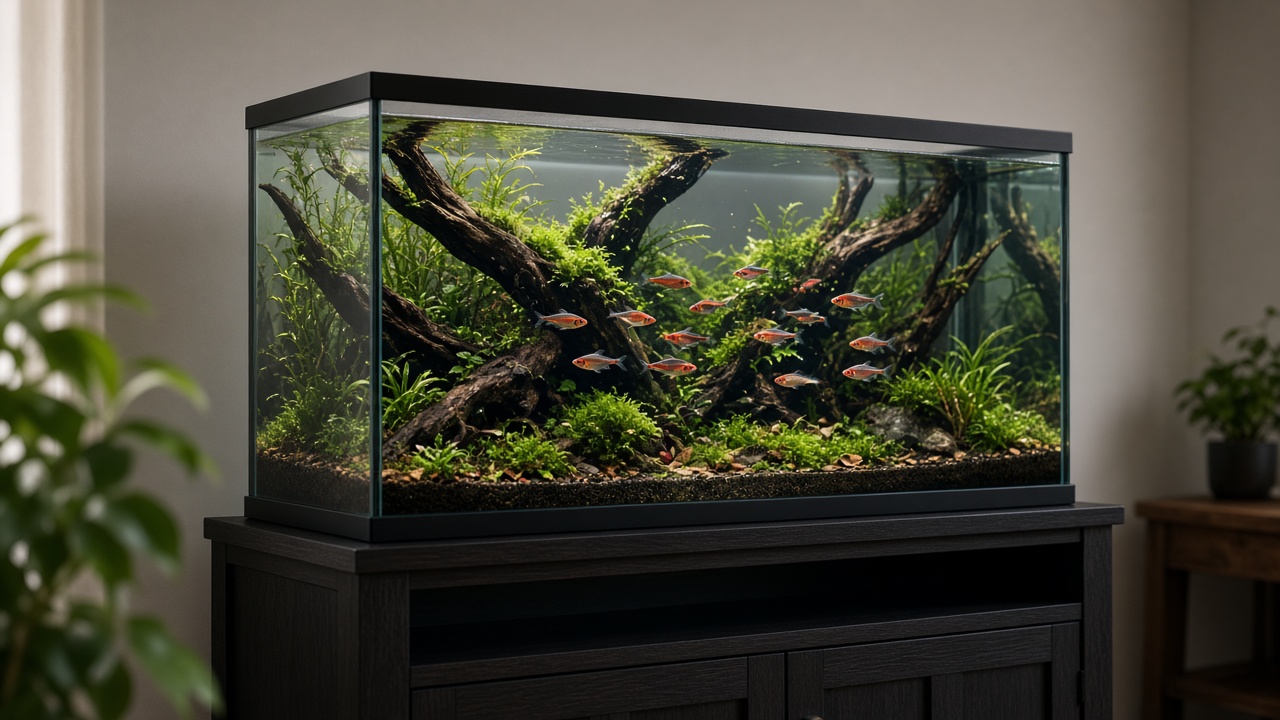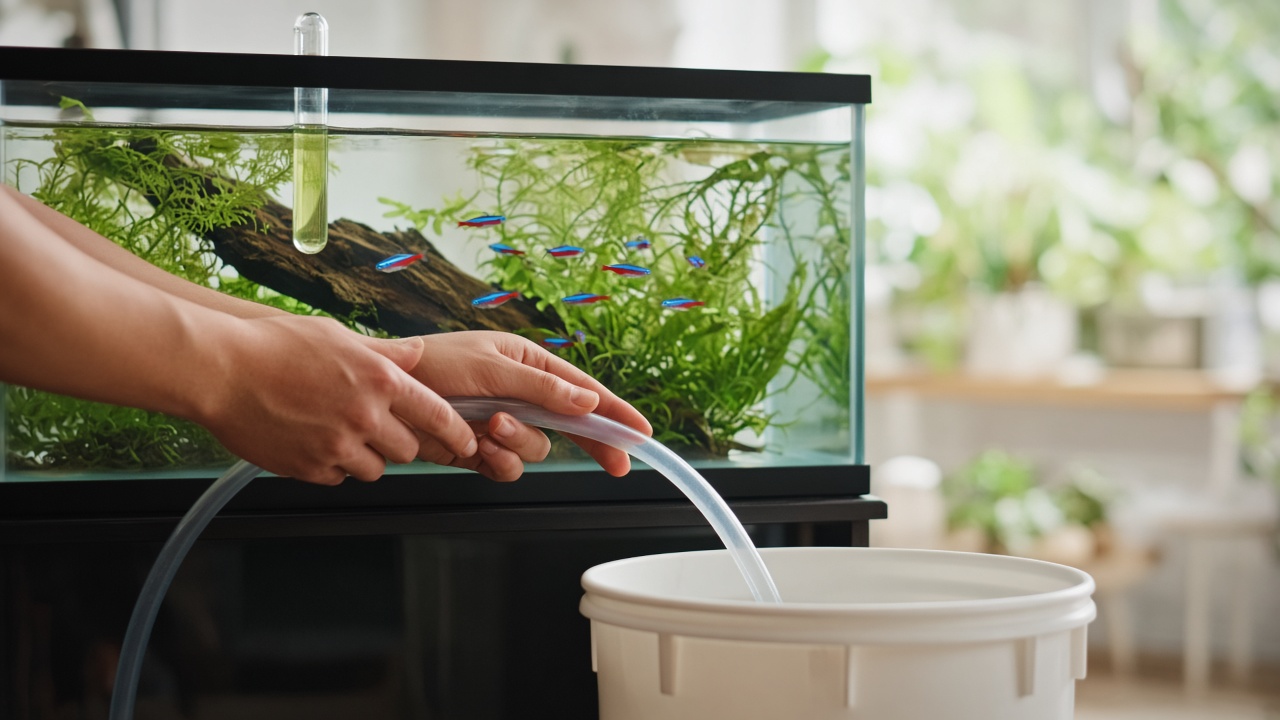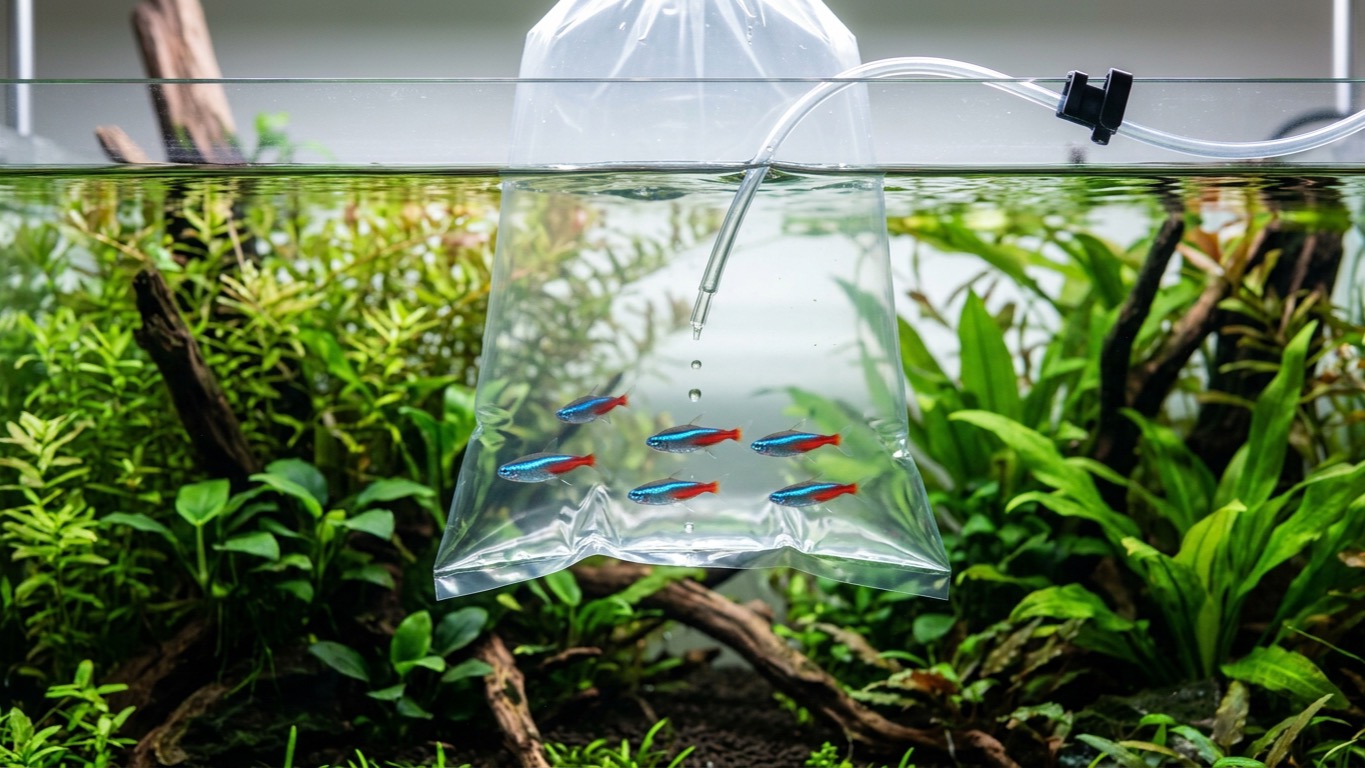
Quick answer: Start only in a cycled tank with ammonia and nitrite at a safe reading. Float the sealed bag, mix in tank water slowly, then net the fish and discard the bag water.
New fish go in only after a 15-minute bag float, slow water mixing, and a net transfer with bag water discarded.
This page is a published-spec briefing for home tanks, and
What this page covers
We cover home freshwater arrivals that use a float or drip clock, then a net-only transfer.
Our selection rule is narrow: a case is in if it is a home display tank or a 10-gallon quarantine tank. A case is out if it is a pond herd, a reef coral order, or a drug-dosing plan.
Our research team analyzed published clocks from LiveAquaria, the Merck Veterinary Manual, Seachem, API Fishcare, and the CDC. We compared those specs side by side and did not invent times.
We call that sequence the Waterpuppy Three-Gate Check and use it as the page rule.
- Cycle gate: no ammonia or nitrite on a liquid test.
- Chemistry gate: match temperature first, then mix water slowly.
- Net-only gate: move the fish with a net and leave bag water out.
Confirm the tank is ready before you buy
Do not buy fish until the tank can handle their waste without an ammonia jump.
The Merck Veterinary Manual’s Management of Aquarium Fish page describes new tank syndrome in the first 6 weeks. That same page says a tropical biofilter can take up to 8 weeks to establish.
Fishless cycling on that page starts with ammonia of at least 1–5 mg/L. Fish can be added once no ammonia or nitrite is present.
If those readings are still moving, stop and use our how long to cycle a fish tank briefing first.
API Fishcare’s page for the Freshwater Master Test Kit names pH, high range pH, ammonia, nitrite, and nitrate. That maker page asks you to test weekly after setup, and its FAQ states a pH of 7.0 is neutral.
API Fishcare’s freshwater water-problem-solving page states the kit performs over 800 tests, so use a liquid kit rather than a guess.
Check these items before you leave the house to buy fish.
- Ammonia and nitrite show none on the color card.
- Temperature matches the species you plan to buy.
- The filter has been running on the same media.
- You have a second tank or a spare box if you will quarantine.
The Merck Veterinary Manual’s home-aquarium biosecurity notes describe a modest 10-gallon quarantine tank with a sponge filter, a small air pump, and a heater.
A small box can use a filter and heater in one if you lack two devices.
Do not buy from a store tank full of dead fish. The CDC fish page dated April 15, 2024 tells shoppers to skip those tanks.
That CDC page also publishes a stocking line of 1 inch of fish per gallon of water. Treat that figure as a ceiling, not a target, and add fish in small groups.
The published float-and-mix method
LiveAquaria’s Step-by-Step Acclimation Guide is the clock we use for most community fish.
Comparing published specs, that guide’s sealed-bag float is 15 minutes, while the CDC fish page lists about 30 minutes to an hour. We follow LiveAquaria’s 15-minute float and then its mix steps, treating the longer CDC float as a second clock, not a reason to skip mixing.
| Publisher | Published sealed-bag float |
|---|---|
| LiveAquaria | 15 minutes |
| CDC | 30 minutes to 1 hour |
LiveAquaria’s floating method uses these published steps.
- Turn off the aquarium lights and dim the room before you open any bag.
- Float the sealed bag in the tank for 15 minutes to match temperature.
- Cut the bag open and roll the rim down one inch so it stays afloat.
- Add 1/2 cup of tank water to the bag every four minutes until the bag is full.
- Lift the bag, discard half the water, then repeat the same 1/2 cup adds.
- Net the fish into the tank and discard the bag water instead of pouring it.
- Keep tank lights off for at least four hours after the fish go in.
That same LiveAquaria page says total acclimation should take no longer than two hours, so do not stretch a bag sit past that published cap.
It also says never put an airstone in the shipping bag or bucket. Extra air can raise pH too fast and expose the fish to lethal ammonia.
The CDC page also says try not to pour too much bag water in. LiveAquaria’s rule is stricter and says never release the enclosed water.
Our research team compared those two published end steps and uses the net-only rule.
When a published drip clock is the better match
Use drip mixing when the arrival is sensitive to chemistry swings.
LiveAquaria’s guide reserves the drip method for snails, shrimp, wrasses, discus, and similar stock. It asks for a clean 3- or 5-gallon bucket used only for aquariums.
If you acclimate fish and invertebrates, that page says to use a separate bucket for each group.
LiveAquaria’s drip method uses these published steps.
- Turn off tank lights, dim the room, and float the sealed bag for 15 minutes.
- Empty bag water and animals into the bucket, tilting it 45 degrees if needed.
- Start a siphon from the tank and set the valve to about 2–4 drips per second.
- When the bucket volume doubles, about every 1/2 hour, discard half and drip again.
- After about one hour, move the animals by bag or scoop and discard the bucket water.
That page also sets marine invertebrate specific gravity at 1.023–1.025. We leave reef coral orders out of this briefing for that reason.
If you only bought hardy community fish from a local shop, the float-and-mix clock is enough and drip gear can wait for sensitive arrivals.
Quarantine windows from published manuals
A second tank is the published way to keep store pathogens out of the display.
LiveAquaria’s acclimation page recommends a separate quarantine aquarium for two weeks. The Merck Veterinary Manual sets a 30-day period as the minimum time.
That is a 16-day gap between two published clocks, and our research team did not split the difference. For a home display with other fish, use Merck’s 30-day minimum.
Use LiveAquaria’s two-week watch only if you have no second tank and accept more risk.
The Merck page says quarantined animals need their own nets, buckets, and siphons. Handle them after you finish work on the display tank.
It also says koi should be quarantined at least 30 days at 24°C (75°F). That published window is why pond herds stay outside this page.
After quarantine, that Merck home note says to disinfect the tank and store it dry. Before the next purchase, run the cleaned sponge in a healthy display to seed bacteria.
Watch the new fish every day for these signs.
- Eating and swimming in a normal pattern
- No white spots, clamped fins, or torn fins
- No gasping at the surface
- No sitting in a corner for hours
If a fish looks sick, the CDC page says to move it to a tank by itself and promptly remove any dead fish.
First-week load, feeding, and filters
The first week is about waste control, not a feast.
Feed a small pinch once the fish are exploring, then remove leftovers so ammonia does not climb.
The Seachem page for Prime states a dose of 1 capful (5 mL) for each 200 L (50 US gallons) of new water. Each cap thread is about 1 mL.
That maker page says Prime may go in the tank, but it is better in the new water first. It also says the product can be dosed every 24–48 hours.
It states the bind lasts up to 48 hours. If ammonia or nitrite is above 2 ppm, that page allows up to 5 times the normal dose.
Use that 5-times line only as an emergency label, not as a weekly habit, and keep doing water changes.
API Fishcare’s Master Test Kit page says leftover food and organic matter can change readings fast. Test after the first two feed days, then weekly.
Do not rinse filter media in tap water, because the working bacteria live on that media. If a cartridge is clogged, swap only the polish pad and keep the biological block wet in tank water.
See our best fish tank filter cartridges notes before you throw media away.
Lights stay off for at least four hours after the transfer, which LiveAquaria’s guide publishes as a rest window. Leave the new fish alone after that.
If a resident fish chases the newcomer, LiveAquaria’s page describes a floating strainer for the bully. It says to hold the bully about four hours, not the new fish.
Human handling rules while you move fish
Bag water can carry germs that affect people, not only fish.
The CDC fish page dated April 15, 2024 says tank water and tank items can be contaminated. Wash your hands with soap and running water after you handle bags, nets, or tank water.
If soap is not available, that page says to use hand sanitizer with at least 60% alcohol and to keep it away from young children.
Wear gloves if you have cuts, and the CDC page tells people with weakened immune systems to let someone else clean the tank when possible.
It also says children younger than 5 years old should not clean or handle aquarium items.
Dump bag water in a laundry sink, a bathtub, or outside. The CDC page says to avoid the kitchen sink when you can, then clean that sink or tub.
If you get a scratch, that CDC page says to wash it with soap and water right away. Tell a healthcare provider you had contact with fish and aquariums if the wound swells.
FAQ
How long should I float the bag before I open it?
LiveAquaria’s Step-by-Step Acclimation Guide says to float the sealed bag for 15 minutes. The CDC fish page dated April 15, 2024 says about 30 minutes to an hour.
Comparing those published clocks, we use the 15-minute float and then mix tank water in. Do not open the bag and dump the fish with no mix step.
Can I pour the store water into my tank?
No, LiveAquaria’s guide says to net the fish and discard the bag water, and never release the enclosed water into the aquarium.
The CDC page says try not to pour too much bag water in because of germs. Our selection rule keeps the stricter net-only end step.
How long should I quarantine a new fish?
LiveAquaria’s acclimation page recommends two weeks in a separate aquarium. The Merck Veterinary Manual’s Management of Aquarium Fish page sets 30 days as the minimum.
For a tank that already holds fish, use the 30-day published minimum. Use the two-week clock only if you have no second tank and accept more risk.
What water tests do I need before I add fish?
API Fishcare’s Freshwater Master Test Kit page lists pH, high range pH, ammonia, nitrite, and nitrate, and its care page says to test weekly. The Merck Veterinary Manual says fish can be added once no ammonia or nitrite is present.
Do not skip the liquid test because the water looks clear.
How much water conditioner do I add when I change water?
The Seachem page for Prime states 1 capful (5 mL) per 50 US gallons of new water, and each cap thread is about 1 mL. Dose the new water, then pour it in.
That page also says a sulfur odor is normal.
Why did my filter spike after I added several fish?
New waste can outrun the bacteria on your media. The Merck page warns that adding fish too fast can raise ammonia or nitrite.
Test, feed less, and change water. Do not replace all filter media at once.
Should I add an air stone to the bag while it floats?
No, LiveAquaria’s guide says never place an airstone in the shipping bag or bucket. Extra air can raise pH too quickly and expose the fish to lethal ammonia.
Float the sealed bag, then mix tank water on the published clock.